As an Amazon Associate, I earn from qualifying purchases made through links on this site.
The .243 Winchester is indeed a highly capable and popular deer rifle, especially for smaller deer species and new hunters. Its low recoil, flat trajectory, and versatility make it an excellent choice, provided you select the right ammunition and prioritize precise shot placement. While not a magnum, it’s more than adequate for ethical kills when used within its limitations.
Ah, the .243 Winchester. Mention this cartridge in almost any hunting camp, and you’re bound to spark a lively debate. Is it a magnificent marvel, punching far above its weight? Or is it merely a glorified varmint round, pushed beyond its ethical limits when aimed at deer? For decades, this nimble little cartridge has been a staple in gun safes across North America, revered by some and questioned by others.
The truth, as with most things in the hunting world, isn’t black and white. It’s nuanced, dependent on factors like bullet choice, shot placement, and the hunter’s skill. So, if you’re asking, “Is a 243 a good deer rifle?” you’ve come to the right place. We’re going to dive deep into what makes the .243 tick, its strengths, its limitations, and how to ensure you’re using it effectively and ethically for your deer hunting adventures.
Whether you’re a seasoned hunter considering a new caliber, a beginner looking for your first deer rifle, or simply curious about this popular round, understanding the .243 Winchester’s capabilities is key. Let’s cut through the myths and get down to the facts so you can make an informed decision and hunt with confidence.
Key Takeaways
- Low Recoil & High Accuracy: The .243 Winchester offers minimal recoil, making it comfortable for all shooters, especially beginners and recoil-sensitive individuals, which promotes better accuracy.
- Flat Trajectory: It boasts a very flat trajectory, simplifying shot placement at various ranges and reducing the need for significant holdover.
- Ammunition is Crucial: To be effective on deer, hunters *must* select high-quality, controlled-expansion hunting bullets (90-100 grains), not varmint rounds.
- Shot Placement is Paramount: The .243 demands precise shot placement on the vitals (heart/lungs) for ethical and quick kills. It does not offer much room for error.
- Ideal for Smaller Deer: It excels on smaller-bodied deer species (e.g., whitetail does, mule deer yearlings) and is a superb choice for younger or less experienced hunters.
- Ethical Range Limits: While capable, its effective ethical range for deer is generally considered to be within 200-250 yards, depending on the specific bullet and hunter’s skill.
- Versatile Cartridge: Beyond deer, the .243 is a versatile cartridge, also highly effective for varmints, making it a dual-purpose rifle for many hunters.
Quick Answers to Common Questions
Can a .243 kill a large buck?
Yes, a .243 Winchester can absolutely kill a large buck cleanly. The key factors are precise shot placement to the vitals and using a high-quality, controlled-expansion hunting bullet. While it offers less margin for error than larger calibers, a well-placed shot is always lethal.
What grain bullet is best for deer in a .243?
For deer, the best bullet weights in a .243 are typically between 90 and 100 grains. These heavier bullets offer better sectional density and kinetic energy retention, ensuring adequate penetration and reliable expansion on deer-sized game.
What is the effective range of a .243 for deer?
The effective ethical range of a .243 for deer is generally considered to be around 200-250 yards. While the bullet can travel much further, energy retention and the increased difficulty of precise shot placement at greater distances make shots beyond this range less advisable for most hunters.
Is a .243 too small for deer?
No, a .243 is not too small for deer when used correctly. It has been successfully used for deer hunting for decades. The perception of it being “too small” often stems from using incorrect varmint-specific ammunition or a lack of understanding regarding ethical shot placement and range limitations.
What are the main advantages of using a .243 for deer?
The main advantages of using a .243 for deer include its very mild recoil, flat trajectory, and versatility for other small game hunting. These features make it comfortable to shoot, easy to aim, and a great choice for new hunters or those sensitive to recoil, promoting better accuracy.
📑 Table of Contents
The .243 Winchester: A Brief History and Ballistics
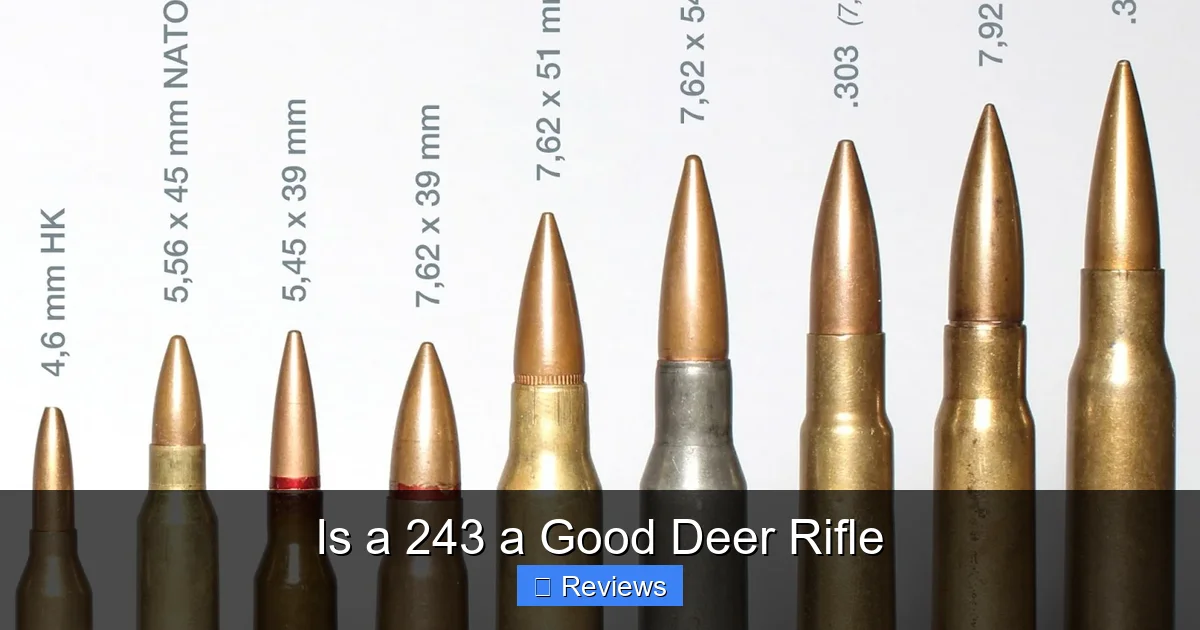
To truly understand if a 243 is a good deer rifle, we need to first understand its origins and what it brings to the table ballistically. The .243 Winchester was introduced by Winchester Repeating Arms in 1955. It’s essentially a .308 Winchester case necked down to accept a .243-inch (6mm) diameter bullet. This design immediately made it a versatile cartridge.
Origins and Purpose: The Dual-Purpose Dynamo
When Winchester created the .243, their goal was clear: to offer a truly dual-purpose cartridge. It was designed to be effective on varmints like groundhogs and coyotes with lighter, faster bullets, while also being capable of taking medium-sized game like deer with heavier, tougher bullets. This versatility quickly propelled it to popularity, making it an excellent choice for hunters who wanted one rifle for a variety of pursuits.
Key Ballistic Characteristics: Speed, Flatness, and Mild Manners
The .243 Winchester is renowned for several key ballistic traits:
- High Velocity: It launches bullets at impressive speeds, often exceeding 3,000 feet per second (fps) with lighter loads and staying well above 2,800 fps with heavier deer-hunting bullets.
- Flat Trajectory: This high velocity translates into a very flat trajectory. What does that mean for you? Less bullet drop over distance, which makes estimating range less critical and helps with shot placement, especially in open country.
- Relatively Light Recoil: This is one of the .243’s most significant advantages. Compared to larger deer cartridges like the .30-06 or .300 Win Mag, the .243’s recoil is exceptionally mild. This makes it comfortable to shoot, allowing for more practice, and is ideal for smaller-framed hunters, youth, or anyone sensitive to recoil.
Typical bullet weights for the .243 range from 55 grains for varmints all the way up to 100 or 105 grains for deer and other medium game. For deer hunting, you’ll almost exclusively want to focus on bullets in the 90-100 grain range, designed specifically for terminal performance on game animals.
Why Hunters Love the .243 for Deer
So, we know its background. Now, let’s explore why so many hunters confidently proclaim that a 243 is a good deer rifle and why it remains a top seller year after year.
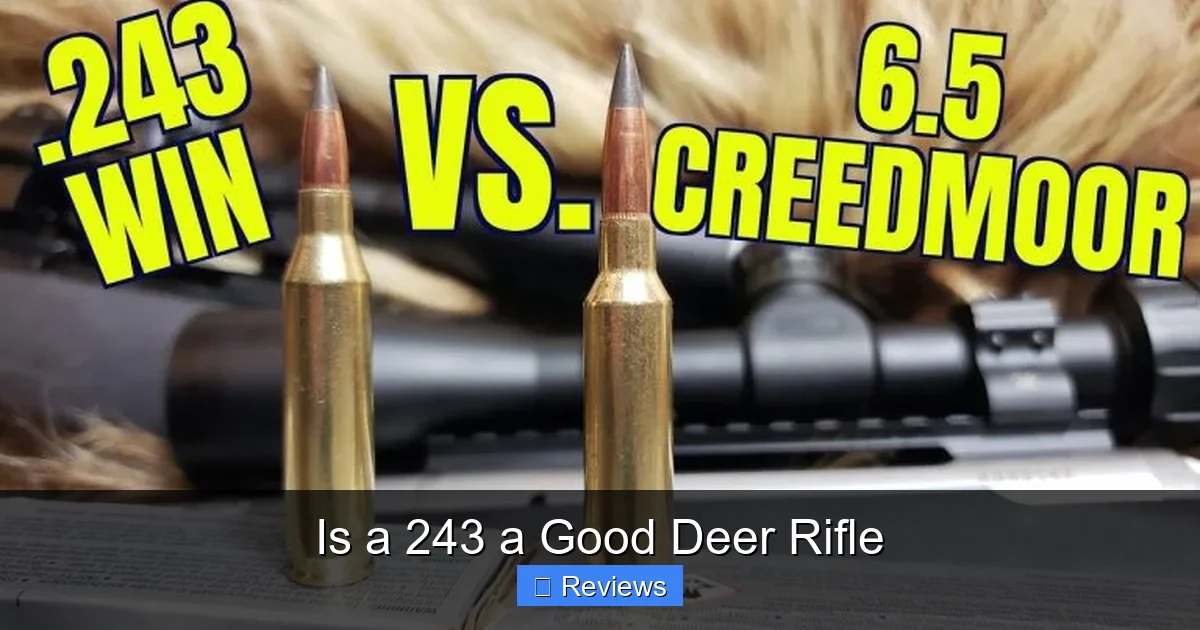
Visual guide about Is a 243 a Good Deer Rifle
Image source: thedeerhunting.com
Low Recoil: Comfort and Confidence
This cannot be overstated. Recoil, while manageable for most, can be a significant barrier for others. A flinching hunter is an inaccurate hunter. The .243’s gentle push, rather than a jarring kick, allows hunters to concentrate purely on sight picture and trigger control, leading to greater accuracy. For new shooters, women, and youth, it’s often the perfect entry point into centerfire deer hunting, building confidence without fear of discomfort. This alone makes a 243 a good deer rifle for many.
Flat Trajectory: Easier Aiming, Better Hits
Imagine being in the stand or field, seeing that buck of a lifetime, but unsure of the exact distance. With a flatter-shooting cartridge like the .243, minor errors in range estimation are more forgiving. You don’t have to hold as high or low to compensate for bullet drop, especially out to 200-250 yards. This characteristic is a major advantage for hunters who often find themselves in open terrain where shots can stretch a bit further.
Versatility: One Rifle, Many Pursuits
As mentioned, the .243 truly shines as a multi-purpose cartridge. If you enjoy hunting coyotes, groundhogs, or other small predators in addition to deer, the .243 can do it all. By simply switching ammunition—from a 55-grain V-Max for varmints to a 95-grain Partition for deer—you have a supremely capable rifle for diverse hunting scenarios. This cost-effectiveness and convenience are big reasons why a 243 is a good deer rifle for many who want a single, go-to firearm.
Availability and Affordability: Easy to Find, Easy on the Wallet
Because of its immense popularity, .243 Winchester ammunition and rifles are widely available. You can walk into almost any sporting goods store and find a variety of ammo options, often at more competitive prices than some niche calibers. The rifles chambered in .243 are also plentiful across various brands and price points, making it an accessible option for almost any budget.
Addressing the “Underpowered” Myth: Bullet Selection and Shot Placement
Now for the elephant in the room. Critics often label the .243 as “underpowered” for deer. While it’s true it doesn’t carry the same raw energy as a .30-06 or .300 Win Mag, this doesn’t mean it’s inadequate. The key lies in understanding how it achieves ethical kills and what you, as the hunter, must do to ensure success. This is where the debate about “is a 243 a good deer rifle” truly heats up.
The Power Debate: It’s About Energy Transfer, Not Just Muzzle Energy
The argument isn’t about whether a .243 can kill a deer; it absolutely can and does, cleanly, every season. The question is often about margin of error and energy transfer. A larger, heavier bullet from a magnum cartridge might offer a wider wound channel or deeper penetration on a marginal hit. However, with the .243, if you do your part, the bullet delivers more than enough energy to dispatch a deer quickly.
Modern bullet technology has dramatically improved the .243’s performance on game. We’re no longer limited to basic cup-and-core bullets that might over-expand or fragment too quickly. This brings us to the most critical point:
Crucial Role of Bullet Selection: Choose Wisely!
This is arguably the single most important factor when using a .243 for deer. You absolutely must use high-quality, controlled-expansion hunting bullets, typically in the 90-100 grain range. Forget the lightweight, frangible varmint bullets (like 55-grain or 70-grain V-Max or Ballistic Tips). While devastating on coyotes, they are not designed to penetrate deeply enough or hold together for deer-sized game.
Look for bullets like:
- Nosler Partition: A classic, dual-core bullet known for reliable expansion and deep penetration.
- Barnes TSX or TTSX: All-copper bullets that retain almost 100% of their weight, offering superb penetration and consistent expansion.
- Hornady InterLock or InterBond: Good controlled expansion with a mechanically locked core.
- Federal Fusion: A molecularly bonded bullet that offers excellent weight retention and expansion.
- Winchester Power-Point/Power Max Bonded: Reliable performers that are widely available.
These premium hunting bullets are designed to expand reliably while retaining enough weight to penetrate through hide, muscle, bone, and vitals, creating a lethal wound channel. With the right ammunition, the terminal performance of a .243 on deer is highly effective.
Shot Placement is Paramount: Precision over Power
This is where the .243 truly separates the disciplined hunter from the careless one. Unlike a heavier, faster magnum that might destroy a broader area of tissue, the .243 demands precision. A well-placed shot through the heart and lungs (the “boiler room”) will drop a deer quickly and humanely. A poor shot, however, will result in a wounded animal and a difficult tracking job, regardless of caliber. The .243 teaches and rewards good marksmanship.
It’s vital to practice regularly, understand your rifle’s capabilities, and always strive for the perfect broadside shot when deer hunting with a .243. This commitment to precision is what makes a 243 a good deer rifle in the hands of a responsible hunter.
Ethical Range Limits: Know Your Boundaries
While the .243’s flat trajectory makes it capable of hitting targets at extended ranges, its energy retention for ethical deer hunting has limits. Generally, most experienced hunters would advise keeping shots on deer within 200-250 yards, especially with standard hunting ammunition. Beyond this, energy drops off, and external factors like wind become more pronounced, increasing the risk of a non-lethal hit. Always know your rifle’s effective range and your personal shooting abilities, and never push beyond them.
Ideal Scenarios and Limitations for the .243
Understanding when and where the .243 shines, and when it might be less ideal, is key to answering “is a 243 a good deer rifle” definitively for your specific hunting style.
Best Use Cases: Where the .243 Excels
- Smaller-Bodied Deer: For whitetail does, smaller bucks, and mule deer yearlings, the .243 is absolutely superb. Its efficient energy transfer on these animals results in quick, humane kills.
- New or Recoil-Sensitive Hunters: As discussed, its mild recoil makes it an outstanding choice for introducing new hunters (youth or adults) to deer hunting. It fosters good shooting habits without fear of kick.
- Open Country Hunting: Its flat trajectory is a significant advantage in fields, clear cuts, or western landscapes where shots might be longer and deer more exposed.
- Mixed Bag Hunting: If you’re targeting deer but also might encounter coyotes or other small game, the .243’s versatility means you only need one rifle.
When to Reconsider: Limitations to Keep in Mind
- Large-Bodied Deer: For very large-bodied deer, such as mature northern whitetail bucks or big mule deer in certain regions, some hunters prefer a cartridge with more bullet mass and energy. While a .243 can certainly take them, the margin for error is smaller.
- Thick Brush: Lighter, faster bullets, including those from a .243, can be more prone to deflection if they hit twigs or branches before reaching the target. In dense woods, a heavier, slower bullet might be preferred by some.
- Extreme Long Range: While you can hit targets at 300+ yards, the .243’s terminal energy for ethical deer hunting significantly diminishes beyond 250 yards. If you regularly anticipate shots beyond this range, a different caliber might be a more responsible choice.
- Poor Shot Angles: The .243 relies on clean, broadside shots through the vitals. If you anticipate difficult shot angles (e.g., steep quartering shots), a cartridge with greater penetration potential might be safer.
The Ethical Hunter’s Mindset: Responsibility First
Regardless of caliber, an ethical hunter always prioritizes a clean, humane kill. This means knowing your equipment, knowing your limitations, and passing on questionable shots. If you have any doubt about whether a shot with your .243 (or any rifle) will result in a quick kill, don’t take it. Patience and discipline are paramount.
Tips for Maximizing the .243’s Effectiveness on Deer
So, you’ve decided a 243 is a good deer rifle for your needs. Great! Now, let’s talk about how to get the most out of it to ensure ethical and successful hunts.
Practice, Practice, Practice: Become Proficient
This is the golden rule for any hunting rifle, but especially crucial for the .243, which rewards precision. Spend time at the range, practicing from various positions you might encounter in the field (sitting, kneeling, off a bipod or shooting sticks). Practice shooting groups to understand your rifle’s accuracy and how different ammunition performs. Know your holdovers at different ranges.
Choose the Right Ammunition: Premium is Key
As emphasized, this is non-negotiable. For deer, always opt for heavy-for-caliber (90-100 grain), premium, controlled-expansion hunting bullets. Avoid varmint loads. Invest in a few boxes of different brands/types and see which shoots best in your rifle. Consistency is vital.
For example, if you know you’ll be hunting whitetails in an area where shots might be 150-200 yards, a 95-grain Federal Fusion or a 100-grain Hornady InterLock is an excellent starting point. Test them to confirm accuracy and ballistic performance from your specific rifle.
Invest in Good Optics: See Clearly, Shoot Accurately
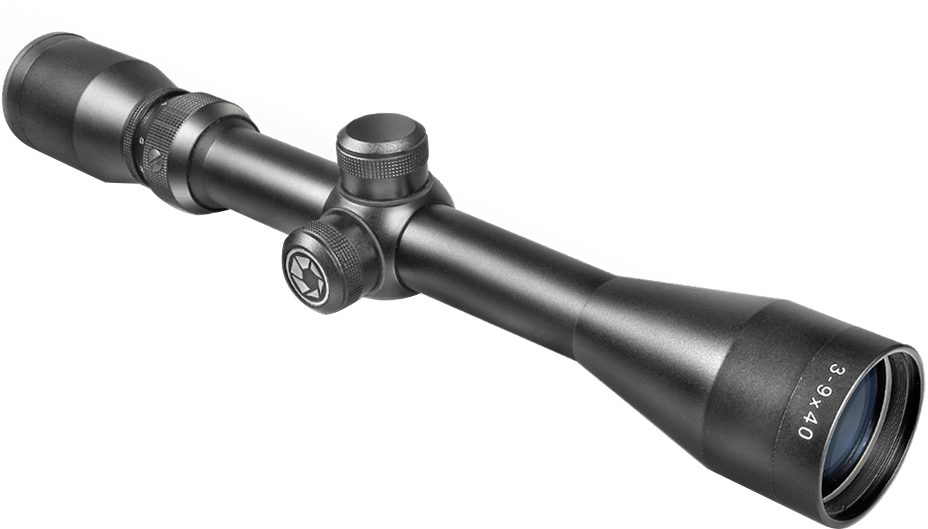
A clear, reliable scope is an invaluable tool for precision shooting. You don’t need the most expensive scope on the market, but choose one from a reputable brand that holds zero, gathers light well, and has clear glass. A good 3-9×40 or 4-12×40 scope is often perfect for a .243 deer rifle.
Know Your Limitations: Range, Angles, and Conditions
Every hunter and every cartridge has limits. Understand your rifle’s maximum effective range for a clean deer kill, and more importantly, understand your own personal maximum ethical shooting distance. Factor in wind, light conditions, and shot angles. A broadside shot at 150 yards is almost always better than a quartering-away shot at 75 yards, especially with a .243.
Hunt Smart: Get Closer, Wait for the Perfect Shot
Regardless of your rifle’s capabilities, the best hunting strategy involves getting as close as ethically possible to your quarry. This minimizes variables and increases your chances of a precise hit. Practice your stalking skills, set up in advantageous locations, and always wait for the deer to offer a clear, broadside shot at its vitals. Patience often leads to the best outcomes when deer hunting with a .243.
Conclusion
So, is a 243 a good deer rifle? Absolutely, yes, it can be an excellent deer rifle. For many hunters, especially those who appreciate light recoil, flat trajectories, and versatility, the .243 Winchester is not just good, but superb. It has proven its worth in countless deer camps over the decades and continues to be a favorite.
However, its effectiveness isn’t automatic. It’s a cartridge that demands respect, proper bullet selection, and, most importantly, a skilled and ethical hunter behind the trigger. Choose premium hunting ammunition, practice your marksmanship diligently, understand its limitations, and always prioritize precise shot placement. Do these things, and your .243 Winchester will reliably and humanely take deer, proving itself to be a truly commendable and effective hunting tool.
Ultimately, the best deer rifle is the one you shoot most accurately and ethically. For many, that rifle is indeed the trusty .243 Winchester.
Frequently Asked Questions
Is the .243 Winchester legal for deer hunting everywhere?
While the .243 Winchester is widely accepted for deer hunting across most of North America, it’s crucial to always check your local and state hunting regulations. Some jurisdictions may have minimum caliber or energy requirements, though the .243 almost always meets these for deer.
What kind of scope should I put on a .243 deer rifle?
For a .243 deer rifle, a versatile variable power scope in the range of 3-9×40 or 4-12×40 is often ideal. This provides sufficient magnification for accurate shots at typical deer hunting ranges, while also offering a wide field of view for closer encounters.
Can a .243 be used for bigger game than deer?
While some adventurous hunters might use a .243 for game slightly larger than deer, it is generally not recommended for animals like elk, moose, or bear. For these larger, tougher animals, a cartridge with significantly more bullet mass and energy is required for ethical and humane kills.
How does the .243 compare to a .30-30 for deer?
The .243 Winchester offers a much flatter trajectory and significantly more effective range than the .30-30 Winchester, which is typically a shorter-range brush gun. The .243 also has less recoil and uses spitzer bullets for better aerodynamics, making it superior for open country or longer shots.
Is a .243 a good rifle for a beginner deer hunter?
Absolutely, a .243 is often considered an excellent choice for beginner deer hunters. Its low recoil minimizes flinching, allowing new shooters to focus on fundamental marksmanship, while its flat trajectory simplifies aiming. This combination builds confidence and promotes better accuracy from the start.
What’s the best way to practice with my .243 for deer season?
The best way to practice is to regularly shoot your .243 from various field positions (not just a bench) at distances you expect to encounter deer. Use the same premium hunting ammunition you’ll use for hunting, and focus on consistent groups and ethical shot placement on a deer target.