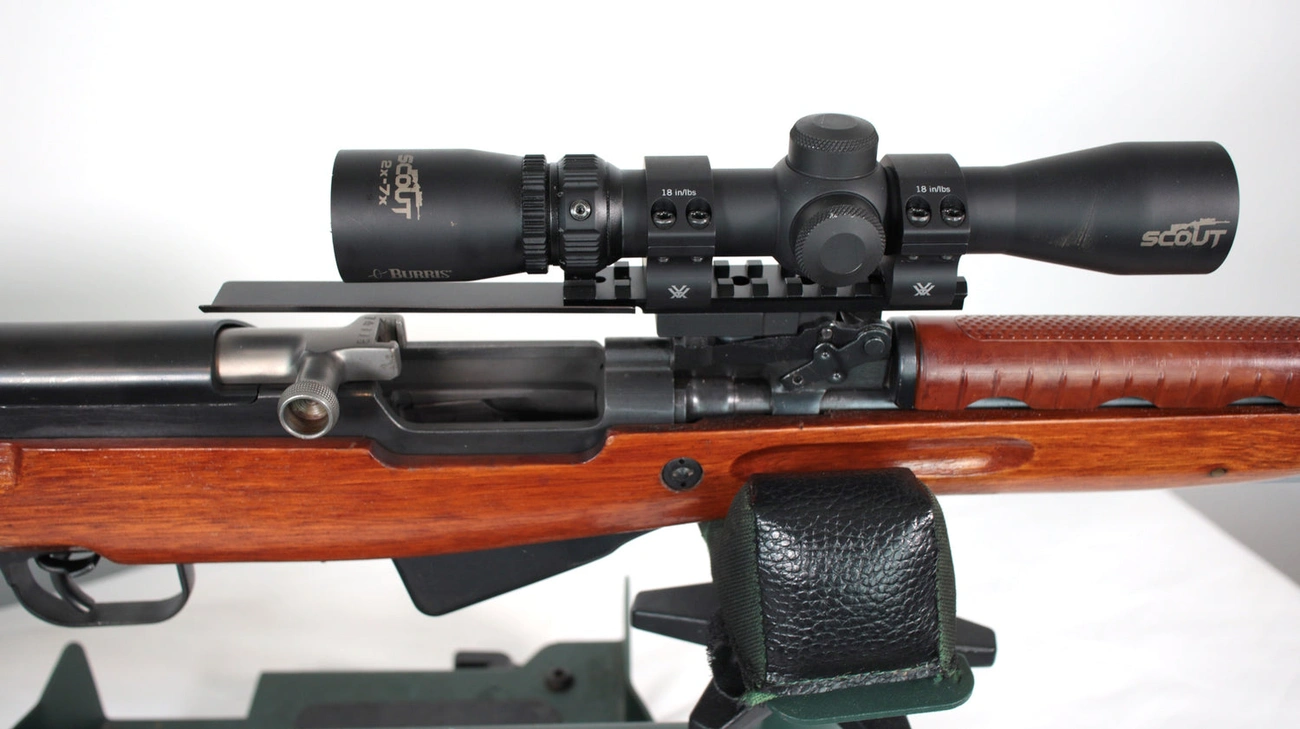
The scope on a scout rifle sits forward of the action to enable fast, both-eyes-open shooting. This position preserves peripheral awareness, keeps the action clear for rapid stripper-clip reloading, improves balance, and prevents the scope from striking the shooter’s brow during recoil.
The Origin of the Forward Mounted Scope
The forward mounted scope stands as the most distinctive feature of scout rifles, yet its origins extend beyond the popular narrative. Contrary to common belief, Lieutenant Colonel Jeff Cooper did not invent this configuration—he popularized it through his persuasive writing and comprehensive vision.
Jeff Cooper’s scout rifle concept
In the early 1980s, Cooper formalized the scout rifle concept after observing that rifles had changed little from those used by celebrated scouts a century earlier. His vision called for a general-purpose rifle capable of handling multiple practical shooting demands. Cooper assembled working groups at Gunsite in 1983 and 1984 to define his ideal scout rifle. The specifications were exacting: under 3 kilograms (6.6 pounds), less than 1 meter in length, chambered in .308 Winchester, and capable of 2 MOA accuracy.
Why the scope was moved forward
Cooper moved the scope forward for several practical reasons. Primarily, this positioning allowed shooters to maintain both eyes open, enhancing peripheral vision and situational awareness. Furthermore, the forward placement shifted weight distribution, improving balance and making the rifle easier to carry.
Another critical consideration was access to the action. During Cooper’s era, detachable magazine bolt actions weren’t readily available, necessitating clear access to the rifle’s breech for reloading with stripper clips or single rounds. The forward scope mount kept the ejection port unobstructed, facilitating faster reloading and clearing of jams.
Early adopters and historical use
Despite Cooper’s association with the concept, forward mounted scopes existed long before his advocacy. According to several accounts, this configuration appeared in military applications during World War II, with Germans using the “ZF 41” scope. Additionally, British hunters had employed similar setups prior to that conflict.
Many shooters experimented with forward mounted scopes decades before Cooper named them “scout scopes.” Indeed, some enthusiasts report using such configurations on rifles like the Model 94 .30-30 since the early 1960s—predating Cooper’s promotion of the concept.
Throughout history, the forward mounted scope has remained a specialized solution—valued by some for its unique advantages yet criticized by others as unnecessarily dogmatic in modern contexts.
How Scout Scopes Work in the Field
Scout scopes offer a unique shooting experience that differs fundamentally from traditional riflescopes. Understanding the mechanics of how they work in real-world conditions reveals both their strengths and limitations.
Both-eyes-open aiming explained
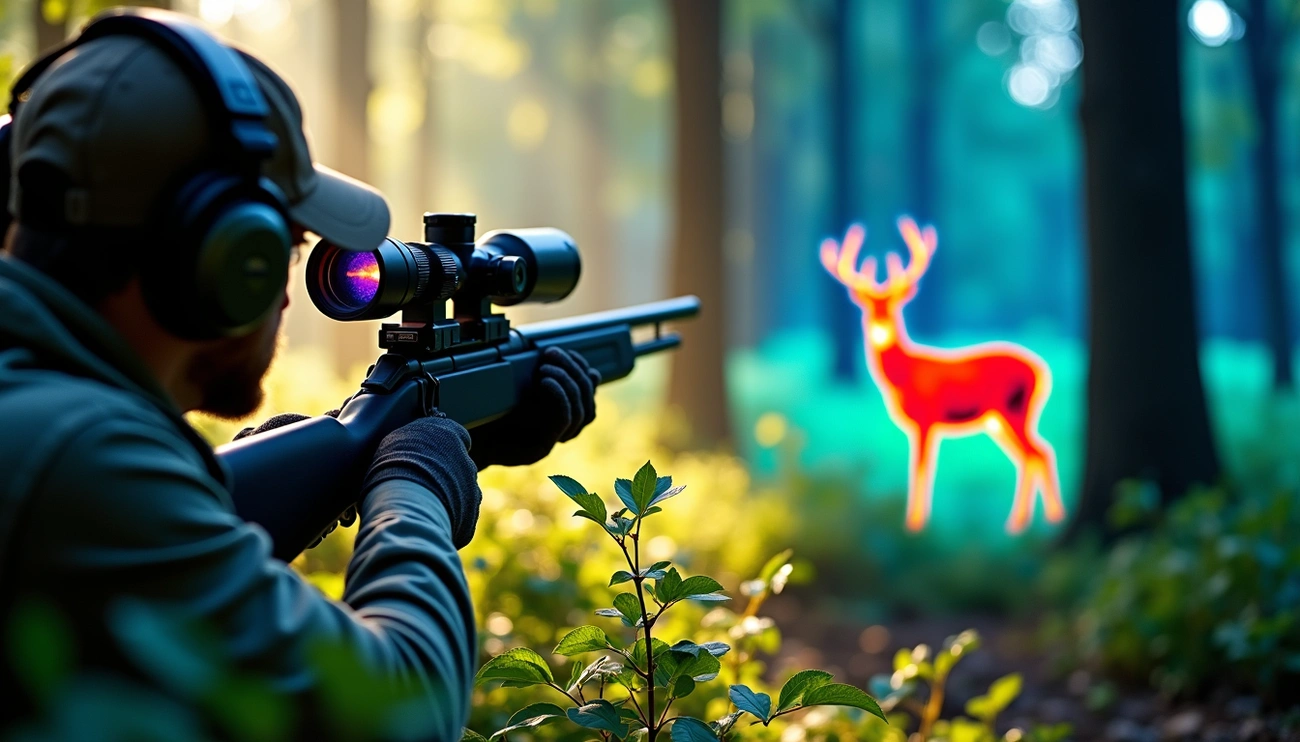
The forward placement of scout scopes enables a shooting technique known as “both-eyes-open” aiming. Unlike conventional scope usage, this approach maintains full peripheral vision while still providing magnification. The technique works through a concept first popularized by Glyn Bindon where the reticle appears to float in front of the rifle.
Your brain simultaneously processes two different images—one eye sees a magnified view (typically 1.5-2.5x) through the scope while your non-dominant eye sees an unmagnified view of the surroundings. Though this initially causes some visual confusion, with practice, your brain learns to integrate these images effectively.
Field of view and target acquisition
Though scout scopes have physically narrower fields of view than conventional scopes of similar magnification, the both-eyes-open technique creates a different perceptual experience. Rather than seeing the entire field magnified, it works more like “using a magnifying glass to view a selected region”.
This approach offers significant advantages for situational awareness. By maintaining peripheral vision, you can monitor surroundings while keeping the target in focus. First-time users often notice how quickly they can place the reticle on target without having to “find” it in the scope.
Impact on fast-moving targets
Opinion divides on how effectively scout scopes handle moving targets. Some experienced users report tracking running game through dense vegetation with remarkable efficiency, particularly at lower magnification settings. Consequently, many scout scopes feature illuminated reticles that draw the eye immediately to center.
Conversely, other experienced shooters find tracking fast-moving targets more difficult with scout scopes than with conventional optics, especially at short ranges. This discrepancy likely stems from differences in personal technique and practice with the system.
Comparing Scout Scopes to Conventional Scopes
Comparing a forward mounted scout scope to a conventional riflescope reveals fundamental differences in design philosophy and practical application.
Field of view differences
Scout scopes typically have a narrower physical field of view than conventional scopes of identical magnification. Nonetheless, the forward mounting position creates a different visual experience altogether. Although the scope itself shows less of the target area, your brain processes both the magnified view and your natural peripheral vision simultaneously. This creates what experienced users describe as “about 45 degrees of clear vision around the scope image”, offering better overall awareness than any conventional setup.
Eye relief and recoil safety
Perhaps the most striking difference lies in eye relief measurements. Standard hunting scopes typically provide 3.0 to 4.0 inches of eye relief, whereas scout scopes offer a dramatic 8.0 to 12.0 inches, with some extending beyond 14 inches. This extended distance primarily serves two functions: it enables the forward mounting position and provides exceptional recoil safety for powerful cartridges.
Accuracy at various distances
Scout scopes generally utilize lower magnification (typically 2-2.75x fixed or 2-7x variable), which presents limitations for precision shooting at extended ranges. Actually, many scout scope users report maintaining 6-inch groups at distances up to 150 yards, which proves sufficient for most hunting scenarios. For targets beyond 300 yards, conventional scopes with higher magnification hold a distinct advantage.
Ease of use for different shooters
The learning curve represents a notable difference between these optic systems. First-time scout scope users often struggle with the smaller sight picture and reduced magnification. Moreover, aging shooters sometimes prefer scout scopes because they eliminate the need to coordinate front and rear sights. Finally, for rifles with heavy recoil, the extended eye relief provides peace of mind that simply isn’t possible with conventional mounting positions.
When a Forward Mounted Scope Makes Sense
Forward mounted scout scopes solve specific problems that conventional optics cannot address in certain shooting scenarios. Let’s examine the practical situations where these unique optics make the most sense.
Rifles with limited receiver space
Some classic rifles simply weren’t designed with scope mounting in mind. For instance, the pre-1964 Winchester Model 94 lacks sufficient receiver space for traditional optics. In this case, mounting a scope forward of the receiver isn’t just a preference—it’s the only practical option for adding magnified optics while maintaining the rifle’s functionality.
Take-down rifles and barrel-mounted optics
Take-down rifles, where the barrel separates from the receiver, face a critical challenge: maintaining zero. Each reassembly can shift point of impact with receiver-mounted scopes. Forward mounting the scope on the barrel itself eliminates this problem. The Magpul Hunter X-22 Backpacker Optic Mount, for example, “eliminates Loss of Zero from Takedown to Reassembly”. This makes scout-style mounting ideal for travel rifles that frequently break down for transport.
Heavy recoil rifles and safety
Perhaps the most compelling safety argument for forward mounting involves powerful cartridges. With eye relief often exceeding 9 inches, scout scopes physically cannot strike your eyebrow, even with monster calibers like .458 Lapua or .460 Weatherby Magnum. As one experienced shooter notes, “That 6 to almost 7 inches of eye relief means no scope bite, period”.
Improved carry and balance in specific models
Forward mounting shifts weight distribution, making butt-heavy rifles more balanced. In addition, it allows easier carrying by gripping around the receiver—particularly beneficial for slender single-shot or lever-action rifles. Yet it’s worth noting this configuration can worsen balance on already muzzle-heavy designs.
Conclusion
Scout scopes certainly represent a specialized approach to rifle optics, offering unique advantages many shooters overlook. Throughout this article, we’ve examined why these forward-mounted optics make perfect sense in specific scenarios despite their unconventional appearance.
The extended eye relief and forward positioning allow shooters to maintain situational awareness while still benefiting from magnification. Although scout scopes have narrower fields of view compared to traditional optics, the ability to shoot with both eyes open effectively compensates for this limitation.
Scout scopes shine particularly well on rifles with limited receiver space, take-down models requiring consistent zero, and firearms with significant recoil. Most importantly, the safety factor cannot be overstated – that substantial eye relief eliminates any possibility of scope eye injuries regardless of caliber.