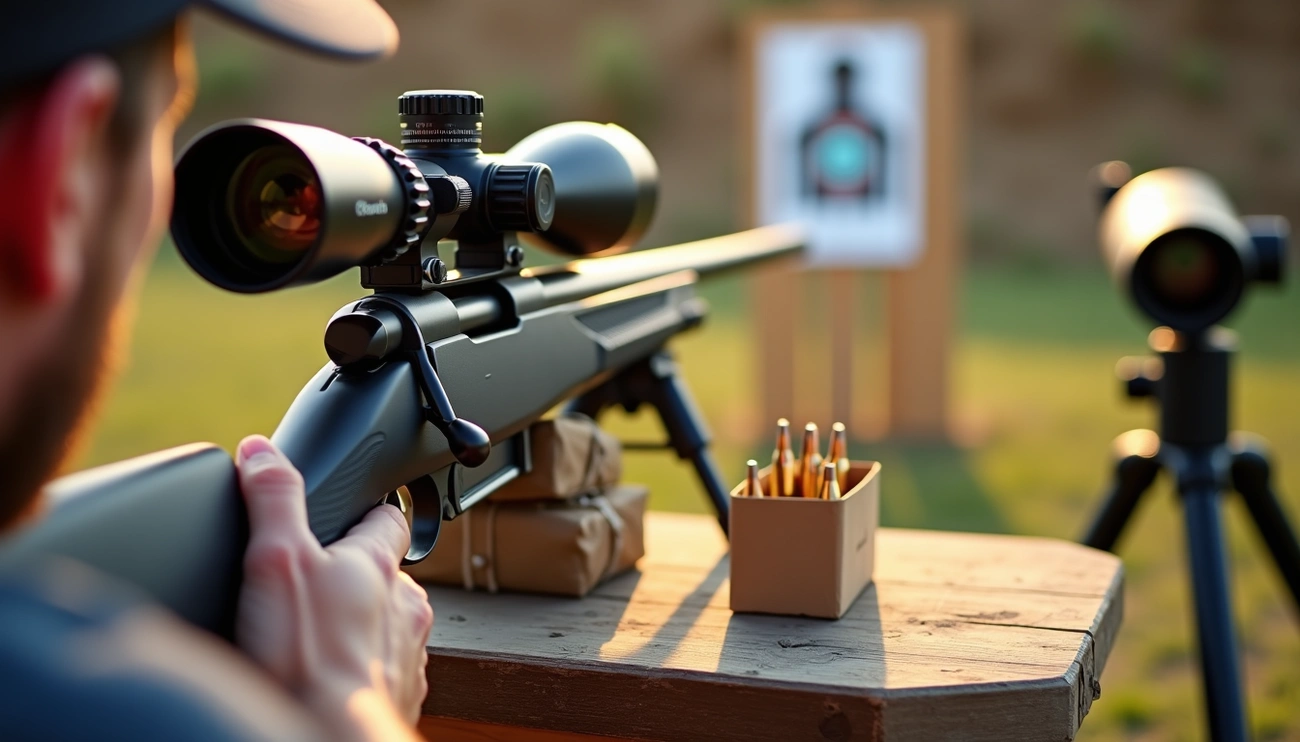
It’s because your eyeglasses, especially if they are Rx progressive bifocals, cause optical distortions that interfere with the scope’s precise focusing system. Your glasses are designed to correct your vision at specific distances, which may not align with the scope’s optics. This mismatch can make the view less clear. All rifle scopes have a built-in diopter that adjusts the focus directly for your naked eye, which is why you will see a sharper and clearer view.
Why does your scope look better without glasses?
As I mentioned before, our eyeglasses and the scope’s lenses do not match, causing optical distortions that interfere with the scope’s precise focusing system. This is a common issue among shooters who wear corrective eyewear.
How your eyes naturally compensate
Your eyes naturally adjust to what you see. When looking through a scope, they quickly try to focus the reticle, but this automatic adjustment can make it harder to set the scope correctly.
For most shooters with imperfect vision, automatic focusing can hide problems with scope settings. Because both eyes work together to sharpen what you see, your brain is always trying to create the clearest image possible.
This is why taking off your glasses can sometimes make the image clearer—your eyes can focus on the reticle directly without your lenses interfering, since glasses are made for different viewing distances.
The role of the diopter in vision correction
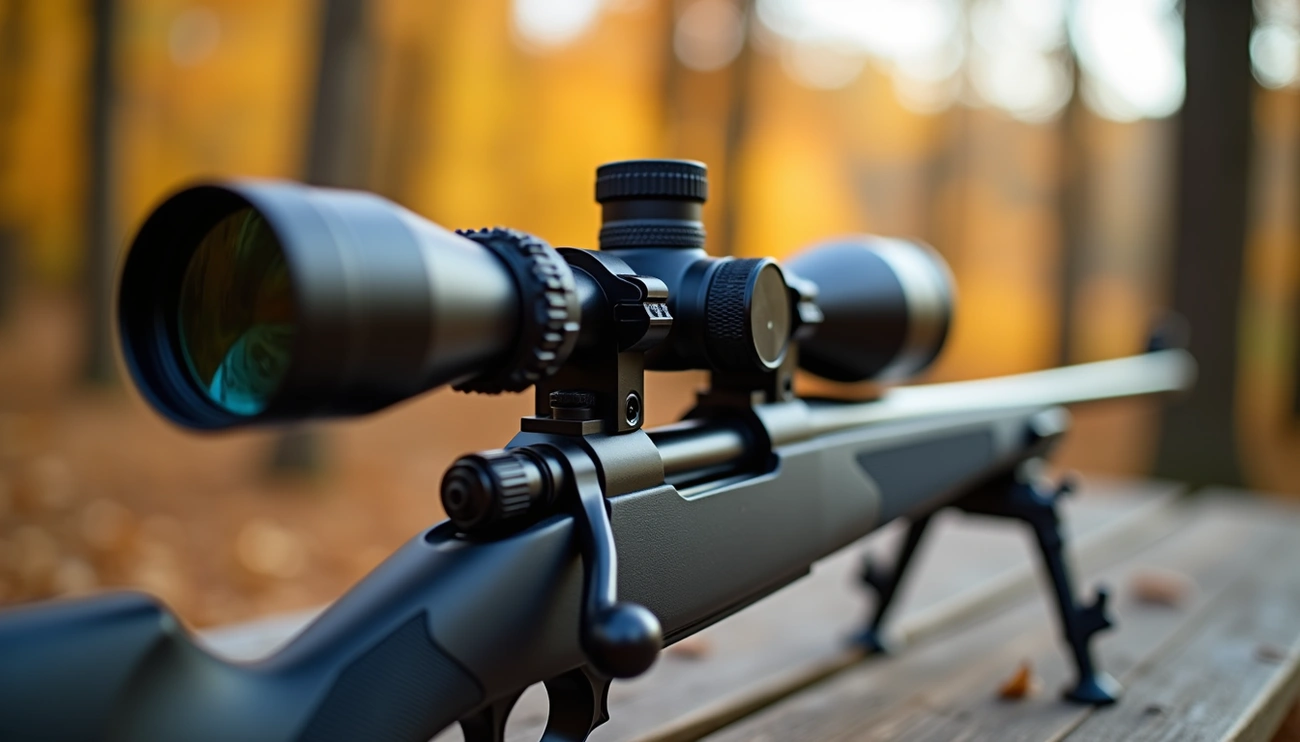
The diopter in the rifle scope works like built-in glasses. It’s at the eyepiece and is used only to make the reticle sharp for your eyes—like setting a custom prescription for your scope.
Most modern scopes have a diopter range of about ±2 to ±3, which covers many common vision needs but does not fix astigmatism. Younger shooters usually need a negative setting, while older shooters often need a positive one.
When you wear glasses, you’re using both your prescription lenses and the scope’s diopter at the same time. If the diopter isn’t set correctly, these two can interfere with each other rather than work together.
Understanding the diopter and its purpose
The diopter adjustment is perhaps the most misunderstood yet critical component of a rifle scope’s optical system. Many shooters don’t realize its true purpose, leading to unnecessary frustration and poor shooting experiences.
What is a diopter adjustment?
The diopter is at the eyepiece of your scope and works like a built-in prescription lens. Its only job is to make the reticle sharp for your eyes, unlike the parallax adjustment, which controls focus at different distances.
The diopter works like prescription glasses by adjusting the scope to your eyesight. Most modern scopes have a ±2 to ±3 diopter range, making this small adjustment the first and most important step when setting up a new scope.
How it affects reticle clarity
When set correctly, the diopter makes the reticle look very sharp. Many shooters adjust it too often, but it should be set once and left alone. This is especially important for First Focal Plane (FFP) scopes, which are more sensitive to diopter settings.
For best results, aim at a blank wall or clear sky to isolate the reticle and avoid distractions. Some shooters find the adjustment range broad, with the reticle staying sharp across multiple settings, which can make precise tuning difficult.
Why it matters for glasses wearers
If you wear corrective lenses, the diopter setting is especially important. Adjust it while wearing the same eyewear you’ll use when shooting. The diopter compensates for your vision, but it does not correct astigmatism.
If your prescription is within ±2 diopters, you may be able to shoot comfortably without glasses by using the scope’s diopter alone. However, if others use your rifle, the diopter must be readjusted for each shooter since everyone’s vision is different.
Common reasons your rifle scope is blurry.
When troubleshooting a blurry scope, several common issues may be affecting your sight picture. Let’s examine why your perfectly good scope might suddenly seem defective.
Incorrect diopter setting
Many shooters use their scopes with the diopter set wrong without realizing it. To set it correctly, aim at a blank background like the clear sky, turn the ocular all the way in, then make small adjustments while looking away between each one. This stops your eye from compensating. When set properly, the reticle looks sharp immediately with a relaxed eye.
Parallax not adjusted properly.
Parallax happens when the reticle seems to move on the target as you shift your head. It becomes an issue beyond about 150 yards because the reticle and target are on different focus planes. Most modern scopes correct this with a side focus knob or adjustable objective. When set properly, both the reticle and target stay sharp no matter how you look through the scope.
Magnification issues at close range
Most variable-power scopes struggle to focus at very close ranges (under 25 yards), even when they appear clear at low power. Your eye helps compensate at low magnification, but as magnification increases, the depth of field drops and the image becomes blurry. This is especially noticeable on scopes with fixed parallax set for longer distances.
Environmental factors like mirage
On hot days, rising heat creates mirages that distort and blur targets, especially at high magnification. Many shooters lower the magnification to reduce this effect. Scopes with high-quality ED glass can help lessen mirage distortion.
Poor scope quality or lens coatings
Regular glass reflects about 4% of light at each surface, and with many lenses, this results in noticeable brightness loss. High-quality anti-reflective coatings reduce this loss to almost nothing. Premium, fully multi-coated lenses also cut colour fringing and deliver sharper, clearer images. In general, better coatings cost more—an inexpensive scope can’t match the clarity of a higher-end one.
How to properly adjust your rifle scope for your eyes
Properly adjusting your rifle scope is a skill that dramatically improves shooting accuracy. As soon as you understand the fundamentals, you’ll be able to optimize your optics for crystal-clear vision—with or without glasses.
Step-by-step diopter adjustment
First, set the parallax to infinity (∞). Aim for a plain light background like the sky or a white wall. Turn the diopter all the way in, then slowly adjust it outward. Open and close your eyes between adjustments to prevent it from compensating.
Tips for glasses vs no glasses
Always adjust your scope under the same conditions you’ll shoot in. Wear your glasses if you normally use them. In some cases, the diopter may correct your vision well enough that glasses aren’t needed. Afterward, adjust parallax so both the reticle and target are sharp.
How to test for correct focus
To test focus, fully stabilize the rifle and look through the scope without touching it. Move your head slightly side to side—the reticle should stay fixed on the target. If it appears to float, the parallax is set incorrectly. For diopter testing, have a friend briefly cover and uncover the scope; the reticle should appear instantly sharp.
When to lock in your setting
Once adjusted correctly, lock the diopter immediately using the eyepiece lock ring or nut. This prevents it from being accidentally changed during handling or bumps.
Using markers for shared scopes
If a scope is shared, mark your personal settings. Use a paint pen, silver Sharpie, or waterproof tape. You can also label the turret with a trimmed address label covered by clear tape. These marks make it easy to quickly reset the scope when others use it.
Conclusion
If your scope looks clearer without glasses, it’s usually because the diopter setting is incorrect. The diopter works like a built-in prescription, focusing the reticle for your eyes. When it’s properly adjusted, the reticle will be sharp whether you wear glasses or not.
Your eyes can naturally compensate for poor settings, which is why removing glasses sometimes seems to help. Correct adjustment removes this confusion and improves clarity.
To fix this, follow the proper diopter adjustment steps: aim at a blank background, adjust slowly with short breaks, then lock the setting. Mark your adjustment if the scope is shared.
While vision issues, environmental conditions, and scope quality can affect clarity, a correctly set diopter greatly improves accuracy and comfort. With the right adjustment, your scope will be properly tuned to your vision.