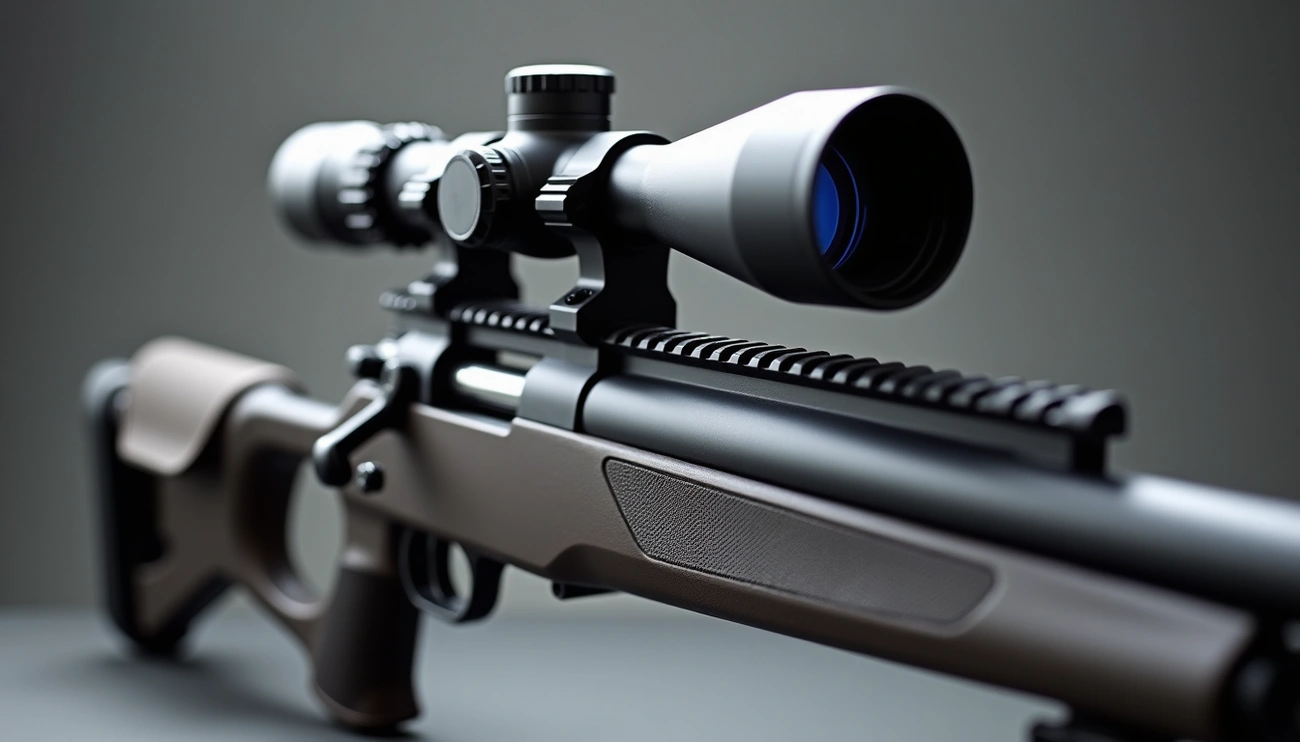
Scopes sit high on bullpup air rifles to create a proper cheek weld and eye alignment. Bullpup designs place the rail low relative to the shooter’s eye, so higher mounts improve ergonomics, clear large objective lenses, allow magazine access, and support accurate trajectory calculations.
Why bullpup rifles need different scope positioning
The unique configuration of bullpup air rifles fundamentally changes how scopes must be positioned. Understanding these differences helps explain why elevated optics are necessary rather than simply a design preference.
Bullpup design and compact layout
Bullpup rifles position the action and magazine behind the trigger assembly, closer to the shooter’s body. This ingenious arrangement shortens the overall length while maintaining the same barrel length as conventional rifles. Furthermore, this design shifts the center of balance rearward, making the rifle easier to control with one hand since the weight rests close to the shooter’s upper body.
The chamber’s rearward position eliminates the need for longer buttstocks, resulting in weapons that are more maneuverable in confined spaces. This compact configuration creates a completely different relationship between the shooter’s eye and the rifle’s barrel, necessitating adjustments in scope positioning.
How scope height affects shooting posture
With a bullpup properly shouldered, the rifle sits much closer to your chest than a conventional design. Consequently, a low-mounted scope would force you to cock your head awkwardly sideways to achieve proper sight alignment. As one experienced shooter notes, “You simply cannot use good shooting form cocking your head sideways to get it down onto the top of the receiver”.
The higher scope mount allows you to maintain a more natural, head-upright position while shooting. Most bullpups have significantly longer lengths of pull compared to conventional rifles, generally ranging from 15-16 inches versus the standard 13.5 inches. This altered ergonomic relationship between eye, shoulder, and trigger hand primarily drives the need for elevated optics.
Comparison with traditional rifle scope placement
Bullpup rifles typically feature a much higher sight offset compared to conventional designs. For instance, the IWI Tavor’s sights sit nearly 4 inches above the bore, whereas an AR-15’s sights are approximately 2.5 inches above. On most conventional rifles, the centerline of the scope typically sits 1.5-2 inches above the bore.
This substantial height difference impacts shooting mechanics, especially at close ranges where parallax becomes more pronounced. The greater height over bore creates a more significant offset between the point of aim and point of impact at varying distances. Additionally, when shooting through windows or other apertures, this height difference requires extra caution to ensure the muzzle clears any obstructions.
Key reasons scopes sit higher on bullpups
The technical aspects of bullpup designs create unique requirements for scope mounting. Let’s examine the primary reasons why are scopes so high on bullpup air rifles through their most important functional elements.
1. Eye relief and cheek weld alignment
When mounting a scope on a bullpup air rifle, proper head positioning becomes essential for consistent accuracy. Unlike traditional rifles, bullpups place the action much closer to your chest, making natural head alignment more challenging. I found that most shooters perform better with scope height that allows their head to remain in a fairly upright position while maintaining good stock position in the shoulder pocket. A simple test confirms this: face your target, close your eyes, shoulder the rifle naturally, then open your eyes—you should be looking directly through the middle of the scope. With too-low mounting, you’ll notice you’re looking through the top portion of the scope, forcing unnatural head adjustments.
2. Clearance over action and magazine
The compact architecture of bullpups requires additional clearance. As one experienced shooter notes, “When you shoulder a bullpup correctly, it sits pretty close to your chest. You simply cannot use good shooting form by cocking your head sideways to get down onto the receiver”. Moreover, many bullpup designs feature magazine placement that would interfere with a low-mounted scope, particularly those with 8-shot or larger magazines.
3. Scope tube and objective lens size
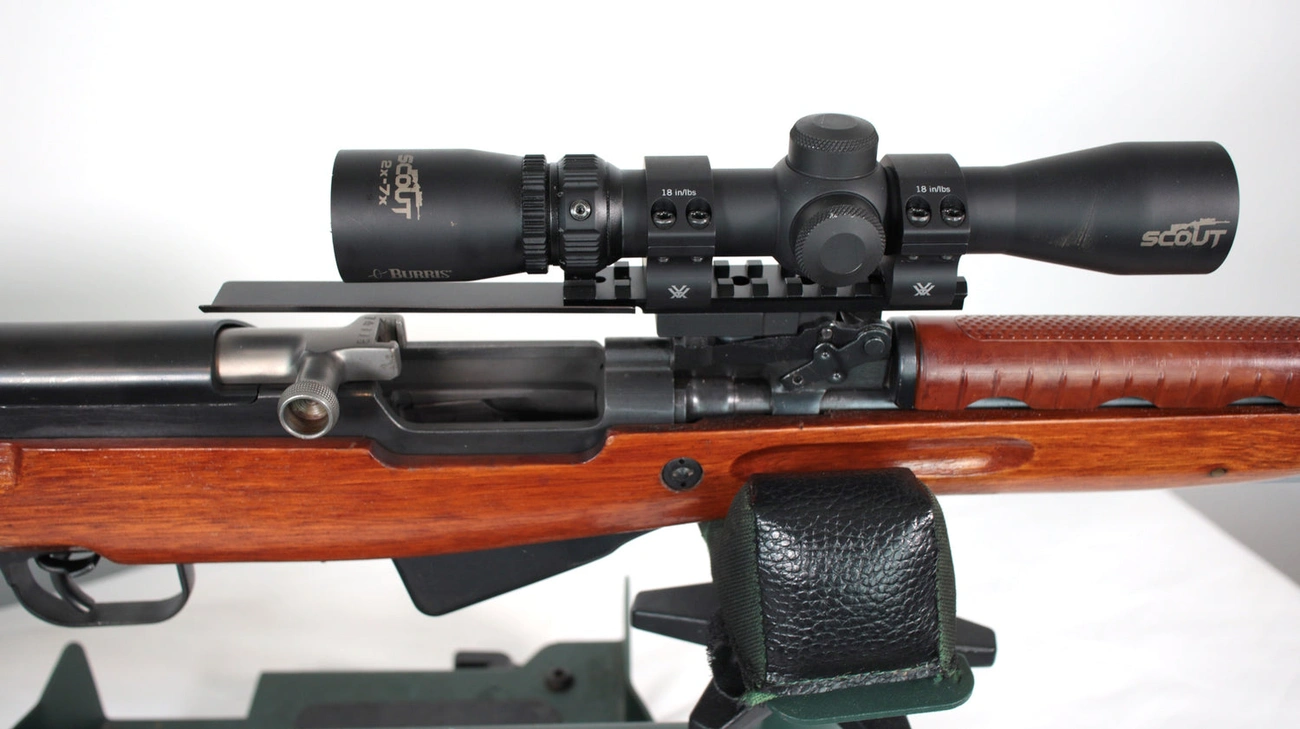
Scope dimensions directly impact mounting height requirements. High mounts work best with larger objective lenses (50mm or greater) because they provide necessary clearance over the stock and barrel. Medium mounts typically suffice for scopes with objectives of 44mm or less. Additionally, the tube diameter—either 1-inch or 30mm—influences the type of mount required.
4. Mounting rail height and design
Bullpups often utilize specialized mounting solutions. UTG Super Slim Riser Mounts, for instance, come in four different heights ranging from 0.5 inch to 1.0 inch. One-piece mounts offer superior stability for high-powered air rifles with velocities over 1000 FPS. Notably, finding the ideal mounting height involves aligning the scope perfectly to your individual shooting position and facial structure.
How high scope mounts affect shooting performance
The elevated position of scopes on bullpup air rifles significantly influences several aspects of shooting performance. Understanding these effects helps shooters adapt their technique accordingly.
Impact on zeroing and trajectory
High scope mounts create a greater distance between the scope’s line of sight and the barrel’s centerline. This increased “height over bore” fundamentally alters your zero points and trajectory. For instance, when shooting at targets closer than your zero distance, your point of impact will be lower than your point of aim. Conversely, beyond your zero, shots will impact higher. This effect becomes more pronounced at extreme distances—what might be a 50/200 yard zero on a standard mount could transform into a 50/225 yard zero with a higher mount.
Parallax error and sight picture
Parallax occurs when the reticle and target image aren’t on the same focal plane, causing the crosshairs to appear to move relative to the target when you shift your head position. With higher-mounted scopes, maintaining consistent cheek weld becomes challenging, potentially amplifying parallax issues. This is particularly problematic for LPVOs (Low Power Variable Optics) which typically have fixed parallax settings. Without proper head position, you might notice your groups falling in different spots despite good technique—minimal at 100 yards but potentially significant at 600 yards.
Field of view and target acquisition speed
Higher mounts offer a more upright, natural head position, typically resulting in faster target acquisition during dynamic shooting. However, they present substantial drawbacks for prone shooting—instead of a comfortable cheek weld, you’ll need an awkward “chin weld” that becomes increasingly uncomfortable during extended sessions. Additionally, certain shooting positions through barricades or port openings become more challenging due to the altered offset between your line of sight and the barrel.
Choosing the right scope and mount for bullpups
Finding the perfect scope and mount combination for your bullpup air rifle requires understanding several key factors. First and foremost, the mount height must align with your specific shooting needs.
Low vs high profile mounts
Low profile mounts work well with smaller objective lenses (44mm or less), whereas high profile mounts are essential for larger objectives (50mm+) to provide necessary clearance. The ideal mount height should allow you to shoulder the rifle comfortably with your eyes naturally aligning with the scope.
When to use a riser mount
Under those circumstances where even high rings aren’t sufficient, riser mounts become necessary. UTG Super Slim Picatinny Riser Mounts offer additional height ranging from 0.5 to 1.0 inches. These are particularly useful for bullpups like the Ataman B7 or Huben K1 where standard mounts simply don’t provide adequate elevation.
Best scope types for bullpup air rifles
Primarily, look for compact designs to prevent front-heaviness. The ideal bullpup scope features:
- Shorter profile (under 13″) to maintain balance
- 3-12x magnification range for most airgun tasks
- Generous eye relief (3.5-4″)
Air rifle scopes explained: what to look for
In essence, focus on adjustable parallax that can focus down to 10 yards. Mil-dot or BDC reticles help compensate for pellet drop. Of course, durability matters—choose scopes specifically rated for air rifle recoil.
Conclusion
Throughout this exploration of bullpup air rifle scope positioning, we’ve seen how their unique design creates specific mounting requirements. The rearward action placement fundamentally changes the shooter-rifle relationship, making elevated scopes a necessity rather than merely an esthetic choice.
Finding the perfect scope height for your bullpup ultimately depends on your physical build, shooting style, and the specific rifle model. Most shooters benefit from a mount that allows their head to remain fairly upright while maintaining proper shoulder pocket position. This natural alignment simply cannot happen with traditional mounting heights.
The higher scope position certainly affects ballistics and shooting mechanics. Therefore, understanding the increased height-over-bore relationship becomes essential for accurate shooting, especially at varying distances. At the same time, proper eye relief and cheek weld remain critical for consistent accuracy despite the elevated optic position.