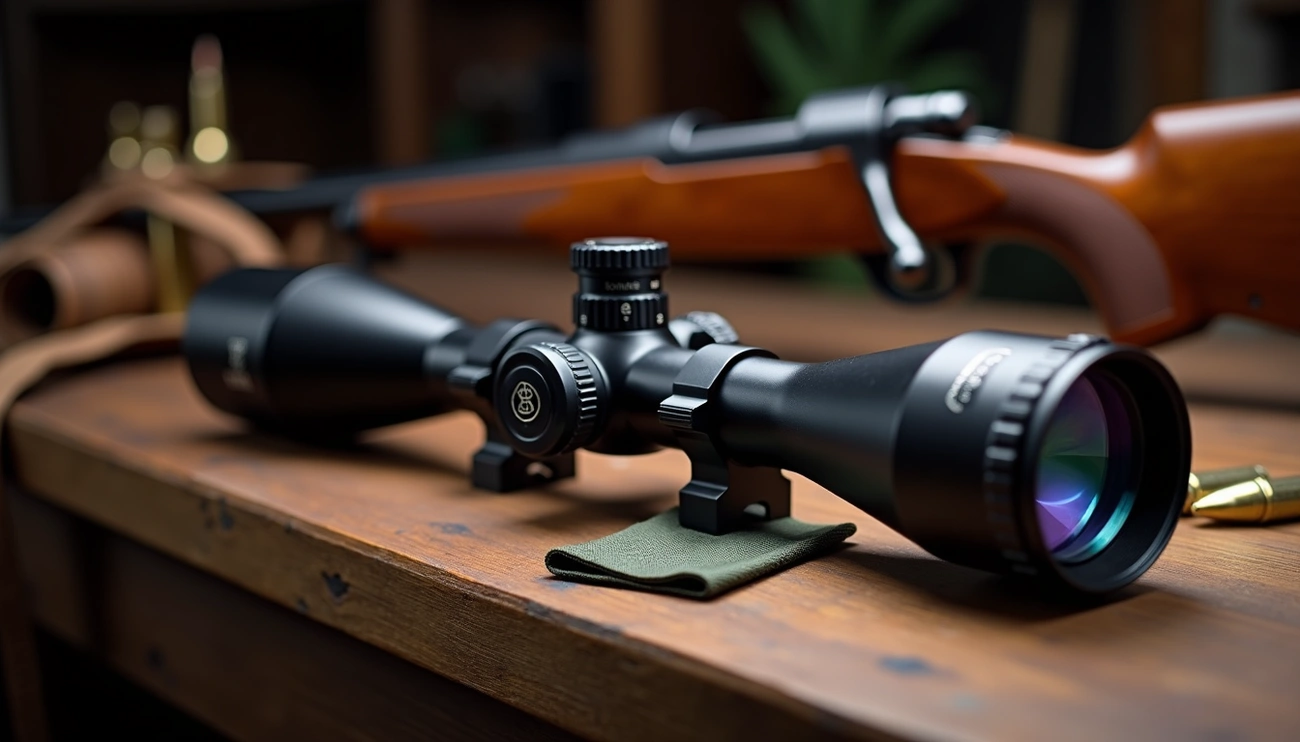
No single individual invented the rifle; its development was a gradual, evolutionary process spanning centuries. Early German gunsmiths in the late 15th and early 16th centuries pioneered the concept of rifling, creating spiral grooves inside the barrel to impart spin for greater accuracy. However, significant advancements in loading, projectile design (like the Minié ball), and firing mechanisms by numerous innovators transformed the rifle into the powerful and versatile firearm we recognize today.
Have you ever looked at a modern rifle and wondered, “Who invented the rifle?” It’s a natural question to ask, especially given the incredible impact this firearm has had on history, warfare, hunting, and sport. But here’s a little secret right off the bat: there isn’t one single inventor we can point to and say, “That’s the person who invented the rifle.”
Instead, the story of the rifle is a fascinating tapestry woven over centuries by countless innovators, gunsmiths, and engineers. It’s a tale of continuous problem-solving, from early attempts to improve accuracy to the sophisticated repeating firearms we see today. The journey of the rifle is less about a eureka moment and more about a long, winding road of incremental improvements, each building upon the last.
So, if you’re looking for a simple answer to who invented the rifle, you won’t find one. But if you’re ready to dive into a captivating history of ingenuity, struggle, and revolutionary breakthroughs, then settle in. We’re about to explore the amazing evolution that gave us this iconic and powerful tool.
Key Takeaways
- Evolutionary Process: The rifle was not invented by one person but evolved over hundreds of years through countless innovations and refinements.
- German Origins of Rifling: The core concept of rifling – spiral grooves in a barrel to spin a projectile – emerged from Germany in the late 15th and early 16th centuries.
- Early Challenges: Primitive rifles were difficult and slow to load due to the tight fit required for the bullet to engage the rifling, limiting their widespread adoption.
- The Minié Ball’s Impact: Claude-Étienne Minié’s invention of the Minié ball in the mid-19th century revolutionized rifle design by solving the loading problem, making rifled firearms practical for mass military use.
- Breech-Loading Revolution: The development of breech-loading mechanisms (loading from the rear of the barrel) drastically increased firing rates and safety, further transforming the rifle.
- Modern Rifle Development: Innovations like smokeless powder, repeating actions, and sophisticated bolt-action designs in the late 19th and early 20th centuries solidified the rifle’s status as a dominant firearm.
- Collective Human Ingenuity: The story of the rifle is a testament to continuous human ingenuity, problem-solving, and the incremental improvements made by diverse inventors and engineers across different eras.
Quick Answers to Common Questions
Was the rifle invented by a single person?
No, the rifle was not invented by a single individual. Its development was a gradual, evolutionary process spanning several centuries, involving numerous innovators and significant technological advancements.
Where did the concept of rifling first originate?
The concept of rifling, creating spiral grooves inside a gun barrel to impart spin on a projectile, originated in Germany during the late 15th and early 16th centuries.
What was the main significance of the Minié ball?
The Minié ball revolutionized rifle design by solving the critical problem of slow loading. It could be easily dropped down the barrel but expanded upon firing to engage the rifling, making rifles practical for widespread military use.
What does “breech-loading” mean for a rifle?
Breech-loading means that the rifle is loaded from the rear of the barrel (the breech) rather than the muzzle (the front). This significantly increased the rate of fire and safety compared to earlier muzzle-loading designs.
When did repeating rifles become widely adopted?
Practical repeating rifles, capable of firing multiple shots without individual reloading, began to be widely adopted in the mid to late 19th century, with designs like the Spencer and Winchester playing key roles.
📑 Table of Contents
- The Genesis of Rifling: Early Innovators and the Core Concept
- Overcoming Obstacles: Early Challenges and Limited Adoption
- The 18th Century – A Step Forward with the “Kentucky Rifle”
- The 19th Century Revolution: From Minié Ball to Breech-Loading
- The Modern Era: Smokeless Powder, Magazines, and Bolt-Actions
- The Enduring Legacy: Why “Who Invented the Rifle” Matters
The Genesis of Rifling: Early Innovators and the Core Concept
To understand who invented the rifle, we first need to understand the core innovation that makes a rifle a rifle: rifling. Before rifling, firearms had smooth bores, meaning the inside of the barrel was perfectly smooth. When a round bullet was fired from a smoothbore, it tumbled unpredictably through the air, making accuracy beyond short distances extremely difficult. Imagine throwing a softball – it wobbles and doesn’t fly perfectly straight.
The German Pioneers
The idea of making a bullet spin to stabilize its flight, much like a quarterback throws a spiral, emerged in Germany during the late 15th and early 16th centuries. Gunsmiths in places like Leipzig and Nuremberg began experimenting with cutting spiral grooves into the inside of gun barrels. These grooves, called “rifling” (from the German word “Riffelung” meaning groove or fluting), would grip the bullet and impart a spin as it traveled down the barrel.
- Gaspard Kollner of Vienna (circa 1500): Often cited as one of the very first to create rifled barrels, though specific details are scarce.
- Augustus Kotter of Nuremberg (early 17th century): He certainly refined the technique, creating elaborate rifling patterns.
These early innovators weren’t just making a gun; they were fundamentally changing how a projectile behaved in flight. This was the true birth of the concept that would eventually define the rifle. Their work laid the essential groundwork for all future developments in who invented the rifle.
The Purpose of Rifling
The immediate benefit of rifling was a dramatic increase in accuracy. A spinning bullet flies much truer and farther than a tumbling one. For specialized applications like target shooting or hunting, where precision was paramount, these early rifled firearms were a game-changer. They allowed hunters to take down game at greater distances and marksmen to hit smaller targets. This foundational principle is what sets the rifle apart from its smoothbore ancestors.
Overcoming Obstacles: Early Challenges and Limited Adoption
While the concept of rifling was brilliant, early rifles came with significant drawbacks. These challenges largely prevented them from replacing smoothbore muskets as the standard military firearm for centuries. So, even though we had “rifles” in a conceptual sense, the practical firearm that answered who invented the rifle was still a long way off.

Visual guide about Who Invented the Rifle
Image source: i.family-relation.com
Loading Difficulties
To ensure the bullet engaged the rifling and spun correctly, it had to fit very tightly in the barrel. This tight fit made loading incredibly difficult and slow. Imagine trying to force a slightly oversized ball down a long, narrow tube. Early rifled firearms required the shooter to use a mallet to hammer the bullet down the barrel, or to use a cloth patch and a ramrod with considerable force. This was a painstaking process, especially under pressure.
Practical Example: In a battlefield scenario, where speed of loading was vital, a soldier with a smoothbore musket could fire several shots for every single shot from an early rifle. This immense disparity in rate of fire made rifles unsuitable for the front lines of most armies.
Fouling and Maintenance
Black powder, the propellant used exclusively for centuries, left a significant amount of residue (fouling) in the barrel with each shot. This fouling quickly built up in the rifling grooves, making an already tight bore even tighter. After just a few shots, an early rifle could become almost impossible to load without extensive cleaning, further hindering its practicality.
The Niche Role
Because of these challenges, early rifled firearms remained specialized tools. They were primarily used by:
- Hunters: Who needed accuracy for taking game and could afford the time to load carefully.
- Target Shooters: For sport and demonstration of skill.
- Specialized Military Units: Such as Jaegers in German armies, who acted as skirmishers or sharpshooters, operating independently where precision was more important than sustained fire.
So, while the principle was sound, the practical rifle for general use was far from being fully “invented.” It needed further breakthroughs to overcome these inherent difficulties.
The 18th Century – A Step Forward with the “Kentucky Rifle”
The 18th century saw significant, albeit incremental, improvements in rifle design, particularly in the American colonies. While still not the definitive answer to who invented the rifle, these innovations made rifled firearms far more practical for everyday use on the frontier.
American Frontier Innovation
In the American wilderness, settlers faced a unique set of challenges. They needed a firearm that was accurate enough to hunt for food, defend against threats, and conserve precious ammunition. European-style rifles were often too heavy, too slow to load, and expensive. American gunsmiths, often German immigrants themselves, began to adapt and refine the design, leading to what became known as the “Pennsylvania Rifle” or, more famously, the “Kentucky Rifle.”
These rifles were characterized by:
- Longer Barrels: Often 40 inches or more, contributing to increased accuracy and efficient powder burn.
- Smaller Caliber: Compared to military muskets, using less lead and powder per shot.
- The Patched Round Ball: A crucial innovation. Instead of forcing a bare bullet down a tight bore, a slightly undersized lead ball was wrapped in a greased cloth or leather patch. The patch would engage the rifling, imparting spin, and also help clean the barrel with each shot. This made loading much easier and faster than with earlier designs.
Practical Improvements
The greased patch was a simple but revolutionary idea. It allowed for relatively quick loading compared to earlier methods, while still maintaining excellent accuracy. This made the Kentucky Rifle a highly effective and popular tool for frontiersmen, demonstrating how practical needs drive innovation in the development of the rifle.
Think about it: The ability to load a rifle in seconds rather than minutes meant the difference between a successful hunt and starvation, or effective defense versus vulnerability. These were crucial steps in the ongoing development of the rifle, making it a truly useful and versatile instrument for individuals.
The 19th Century Revolution: From Minié Ball to Breech-Loading
The 19th century witnessed the most significant leaps forward in rifle technology, finally solving the long-standing loading problem and paving the way for the rifle to dominate battlefields worldwide. This era truly shaped the answer to who invented the rifle as a mass-produced, effective weapon.
The Game-Changer: Claude-Étienne Minié and the Minié Ball
The single greatest breakthrough in making the rifle a viable military weapon came in the mid-19th century with the invention of the Minié ball (or Minié bullet). Developed by French Army Captain Claude-Étienne Minié in 1849, this conical bullet had a hollow base and a slightly smaller diameter than the rifle’s bore.
Here’s how it worked:
- Easy Loading: The Minié ball could be easily dropped down a fouled barrel, requiring no hammering or tight patching. This immediately solved the slow-loading problem.
- Expansion Upon Firing: When the powder was ignited, the expanding gases forced the hollow base of the bullet to expand outwards, “skirting” out to engage the rifling. This imparted the necessary spin for accuracy.
The Minié ball combined the accuracy of a rifle with the rapid loading of a smoothbore musket. It revolutionized infantry tactics and was famously used in the American Civil War, transforming the scope and lethality of who invented the rifle for military purposes. Now, entire armies could be equipped with accurate, fast-loading rifles.
The Rise of Breech-Loading
Even with the Minié ball, rifles were still loaded from the muzzle (muzzle-loading). The next major advancement was breech-loading, where the bullet and propellant (often combined in a cartridge) were inserted into the barrel from the rear (the breech). This was another massive leap forward for the rifle.
- The Dreyse Needle Gun (1841): Invented by Johann Nikolaus von Dreyse in Prussia, this was one of the first widely adopted breech-loading, bolt-action rifles. It used a self-contained paper cartridge and a long “needle” to ignite the primer at the base of the bullet. It offered a huge advantage in rate of fire and could be loaded while lying down, which was revolutionary.
- Snider-Enfield (1866): A conversion of the British Enfield muzzle-loading rifle to accept a metallic cartridge, highlighting the rapid adoption of breech-loading technology.
- Spencer Repeating Rifle (1860): An American innovation, this lever-action rifle was one of the first practical repeating rifles, holding several cartridges in a tube magazine, further increasing firepower.
- Winchester Repeating Rifle (1866): Building on earlier designs, the Winchester became an iconic symbol of the American West, offering rapid, reliable, multi-shot capability.
Breech-loading and the advent of self-contained metallic cartridges drastically increased the rate of fire, reliability, and safety of the rifle. Soldiers could now fire multiple shots per minute, drastically changing warfare. Hunters could take follow-up shots quickly, and the modern form of the rifle was truly beginning to emerge.
The Modern Era: Smokeless Powder, Magazines, and Bolt-Actions
As the 19th century turned into the 20th, the rifle continued its rapid evolution, embracing new propellants and sophisticated mechanical designs that cemented its place as the premier long-range firearm. This period is crucial when examining who invented the rifle in its most recognizable modern forms.
Propellant Evolution: Smokeless Powder
Until the late 19th century, black powder was the standard propellant. It produced vast clouds of smoke, fouled barrels quickly, and had relatively low energy. In 1884, French chemist Paul Vieille developed “Poudre B” (Powder B), the first successful smokeless powder. This new propellant was based on nitrocellulose, burned much cleaner, generated less smoke, and produced significantly higher velocities for bullets.
Impact: Smokeless powder allowed for smaller, lighter cartridges that still delivered immense power. It meant soldiers could see their targets after firing, and barrels remained cleaner for longer, making the rifle even more reliable and effective. It was a silent revolution that profoundly affected how the rifle performed.
Magazine Systems and Repeating Rifles
While early repeating rifles like the Spencer and Winchester showed the potential of multiple shots, the late 19th century saw the widespread adoption of robust magazine systems that could reliably feed cartridges into the action. These magazines, often box-shaped and integral to the rifle’s design, held 5 to 10 rounds, allowing for sustained firing without reloading after every shot.
This capability dramatically increased the firepower of individual soldiers and hunters. The repeating rifle became the standard, a far cry from the single-shot muzzle-loaders of just a few decades prior. The answer to who invented the rifle for rapid, multiple shots involves many engineers refining these feeding mechanisms.
The Bolt-Action Standard
The combination of smokeless powder, metallic cartridges, and reliable magazine systems coalesced into the quintessential military rifle of the late 19th and early 20th centuries: the bolt-action rifle. Designs like the German Mauser (developed by Paul Mauser), the British Lee-Enfield, and the American M1903 Springfield became legendary. These rifles were:
- Robust and Reliable: Simple, strong mechanisms that could withstand the rigors of combat.
- Accurate: Precision manufacturing and high-velocity smokeless ammunition made them incredibly accurate over long distances.
- Fast to Operate: A skilled marksman could operate the bolt and fire 15-20 aimed shots per minute.
These bolt-action designs solidified the rifle’s role as the primary infantry weapon for decades and are still popular today for hunting and sport shooting. They represent the culmination of centuries of effort to perfect who invented the rifle.
The Enduring Legacy: Why “Who Invented the Rifle” Matters
So, we’ve explored the long, winding path of rifle development. From those first spiral grooves in 16th-century Germany to the powerful bolt-action repeating rifles of the modern era, the journey is a testament to human ingenuity. No single genius, no singular moment, defines who invented the rifle.
Beyond the Core Invention
The story doesn’t even stop there! After the bolt-action came semi-automatic rifles (like the M1 Garand), then fully automatic assault rifles (like the AK-47 and M16), and specialized sniper rifles. Each step added layers of complexity, capability, and sometimes, controversy to the lineage of the rifle. New materials, advanced optics, and precision manufacturing continue to push the boundaries of what a rifle can do.
The question of who invented the rifle isn’t answered by a name, but by a collective of names, ideas, and generations. It’s a story of constant innovation, driven by the desire for greater accuracy, speed, and effectiveness.
The Collective Effort
This historical journey reminds us that many significant inventions are not born in a vacuum. They are products of their time, evolving through small, incremental steps and occasional giant leaps, made by diverse individuals building on the knowledge and failures of those who came before them. The rifle, in its multifaceted forms, stands as a prime example of this continuous human endeavor.
From the early gunsmiths meticulously carving grooves into steel to the brilliant minds designing the Minié ball, to the engineers perfecting modern repeating actions, each contributed a vital piece to the puzzle. They all played a part in the invention of the rifle as we know it today, making it one of the most enduring and impactful inventions in human history.
So next time you encounter a rifle, remember it’s not just a piece of machinery. It’s a tangible link to centuries of innovation, a symbol of human perseverance, and a powerful reminder that some of the most profound inventions are truly a collaborative effort across time.
Frequently Asked Questions
Why is a rifle more accurate than a smoothbore musket?
A rifle is more accurate because of its internal spiral grooves, known as rifling. These grooves impart a spin on the bullet as it travels down the barrel, stabilizing it in flight and preventing it from tumbling, which leads to a much truer trajectory over longer distances.
What was the primary challenge with early rifled firearms?
The primary challenge with early rifled firearms was their extremely slow and difficult loading process. The bullet had to fit very tightly into the rifling to engage the grooves, often requiring forceful hammering or extensive patching, making them impractical for rapid firing in military contexts.
Who developed the Minié ball and why was it important?
The Minié ball was developed by French Army Captain Claude-Étienne Minié in 1849. It was important because its hollow base expanded to engage the rifling upon firing, allowing it to be easily loaded from the muzzle while still achieving the accuracy benefits of rifling. This innovation made rifles viable for mass military use.
What is the “Kentucky Rifle” and how did it improve earlier designs?
The “Kentucky Rifle” (also known as the Pennsylvania Rifle) was an American adaptation of European rifle designs in the 18th century. It improved earlier designs by using longer barrels, smaller calibers, and, crucially, a greased patch wrapped around an undersized ball, making loading significantly easier and faster while retaining accuracy.
How did smokeless powder impact rifle design and performance?
Smokeless powder, developed in the late 19th century, dramatically impacted rifle design by burning cleaner, producing less smoke, and generating higher bullet velocities. This allowed for smaller, more powerful cartridges, reduced barrel fouling, and improved visibility for shooters, making rifles much more effective and reliable.
Which countries or regions were key in the early development of the rifle?
Germany was crucial in the early development of the rifle, particularly with the initial concept of rifling in the 15th and 16th centuries. The American colonies later played a significant role in refining practical designs like the “Kentucky Rifle.” France and other European nations also contributed major innovations like the Minié ball and breech-loading mechanisms.