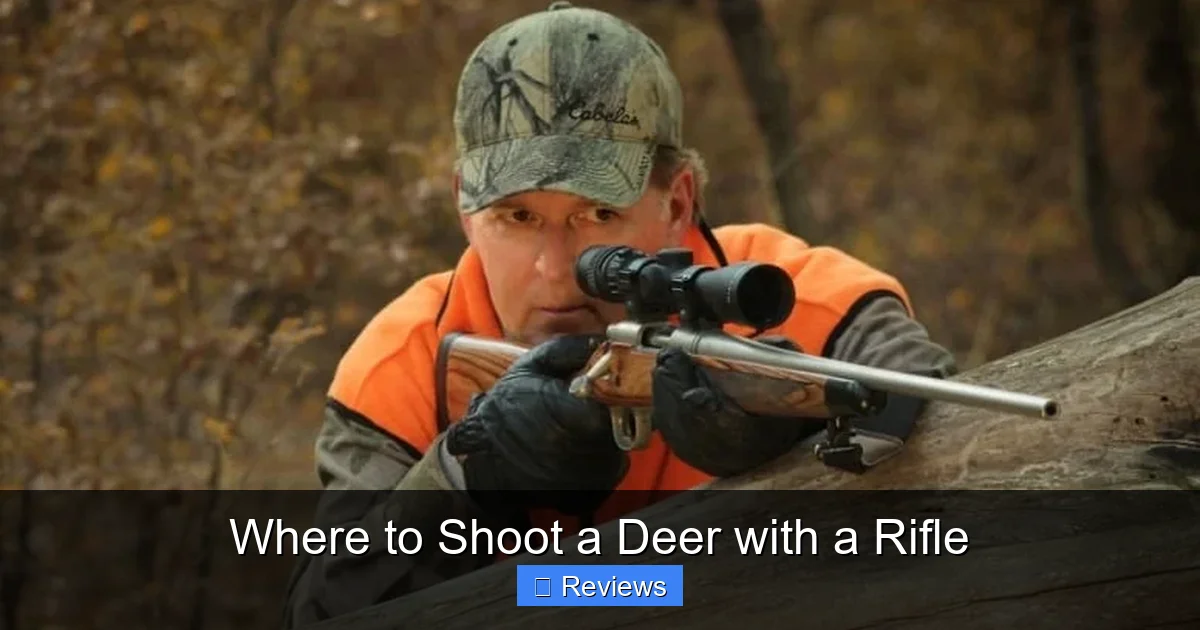
Achieving an ethical, clean kill when deer hunting with a rifle is paramount for any responsible hunter. Understanding exactly where to shoot a deer with a rifle involves detailed knowledge of deer anatomy to target vital organs like the heart and lungs effectively. Proper shot placement ensures a quick, humane harvest and minimizes tracking, making your hunt more successful and respectful of the animal.
Where to Shoot a Deer with a Rifle
Deer hunting is a cherished tradition for many, connecting us with nature and providing sustenance. But with this privilege comes immense responsibility. Every hunter aims for a quick, ethical, and clean kill, minimizing any potential suffering for the animal. Achieving this isn’t just about pulling the trigger; it’s about precision, knowledge, and respect.
The question of “where to shoot a deer with a rifle” is perhaps the most critical one a hunter can ask themselves. It goes beyond mere marksmanship; it delves into understanding anatomy, shot angles, and recognizing your own limitations. A well-placed shot means a quick end for the deer and a successful, guilt-free hunt for you. A poorly placed shot, however, can lead to prolonged suffering for the animal, an arduous tracking job, and often, a lost deer.
This comprehensive guide will break down the science and art of deer shot placement with a rifle. We’ll explore the vital organs, discuss different shot angles, talk about the factors that influence your decision, and emphasize the importance of preparation and ethical considerations. By the time you finish, you’ll have a much clearer understanding of where to shoot a deer with a rifle, helping you become a more effective and responsible hunter.
Key Takeaways
- Ethical Hunting First: Always prioritize a quick, humane kill to minimize suffering and respect the animal.
- Anatomy is Key: A deep understanding of deer anatomy, especially the location of the heart and lungs, is fundamental to successful shot placement.
- Heart-Lung Shot is Ideal: For most hunters, the broadside or quartering-away shot targeting the heart and lungs is the most reliable and ethical option.
- Practice Makes Perfect: Consistent practice at the shooting range, using anatomy targets, is crucial for improving accuracy and confidence.
- Know Your Limits: Only take shots within your effective range and comfort level, considering factors like distance, deer movement, and environmental conditions.
- Shot Angles Matter: The angle of the deer to your position dictates the optimal aim point for reaching vital organs.
- Follow-Up is Crucial: After the shot, observe the deer’s reaction, listen for sounds, and be prepared for tracking, even on seemingly perfect hits.
Quick Answers to Common Questions
What is the most recommended shot placement for a deer with a rifle?
The most recommended shot placement is the heart-lung area, typically achieved with a broadside or quartering-away shot, aiming behind the shoulder and about one-third of the way up the body. This provides the largest vital target for a quick, humane kill.
Should I ever take a headshot when deer hunting with a rifle?
Generally, headshots are not recommended for most rifle hunters. The brain is an extremely small target, and a slight miss can result in a horrific, non-fatal wound, causing severe suffering for the deer.
What should I do if the deer is quartering towards me?
A quartering towards shot carries higher risk. Many hunters will pass on this shot and wait for a better angle. If you must take it, aim for the point of the shoulder closest to you, visualizing the bullet traveling through the vitals, but be aware of the heavy bone that can stop or deflect your bullet.
Why is knowing deer anatomy so important for rifle hunting?
Knowing deer anatomy is crucial because it allows you to precisely target the vital organs (heart and lungs) that lead to a quick, humane kill. Without this knowledge, you risk taking a non-fatal shot, causing suffering and potentially losing the animal.
What is the first thing I should do immediately after taking a shot at a deer?
Immediately after taking a shot, keep your eyes on the deer to observe its reaction and the direction it runs. Listen for sounds of impact. Mark the exact spot where the deer was standing, then wait quietly for at least 15-30 minutes before beginning to track.
📑 Table of Contents
Understanding Deer Anatomy: Your Blueprint for Success
Before you even think about pulling the trigger, you need to understand what you’re aiming for. Deer anatomy is your most valuable map in the field. Knowing where the vital organs are located is paramount to ensuring a humane harvest. Think of the deer’s body as a target, and the vitals as the bullseye.
The Vitals: Heart and Lungs
The heart and lungs are the primary targets for rifle hunters, and for good reason. They are large, relatively easy to hit, and a successful shot to this area causes rapid blood loss and oxygen deprivation, leading to a quick, ethical death. These organs are nestled in the chest cavity, protected by the rib cage.
- Lungs: The lungs are the largest vital organs and make up the majority of the chest cavity. A shot through both lungs is often referred to as a “double-lung shot.” This causes massive internal bleeding and quickly renders the deer unconscious.
- Heart: The heart is smaller, located lower in the chest, slightly forward of the lungs and protected by the shoulder bone. A direct hit to the heart is almost instantly fatal, but it’s a smaller target than the lungs. Most ethical hunters aim for the larger heart-lung area to increase their chances of hitting either or both.
When considering where to shoot a deer with a rifle, remember that the heart-lung area is your bread and butter. It’s the most forgiving and reliable target.
The Spinal Column
The spinal column runs along the deer’s back, from the base of the skull down to the tail. A shot that severs the spinal cord will instantly drop the deer by paralyzing it. While effective, it’s a much smaller target than the heart-lung area. A slight miss can result in a crippling shot that doesn’t kill quickly, or worse, just a flesh wound.
The Brain
The brain is another instant kill zone, but it’s an incredibly small target, roughly the size of a golf ball, located within the deer’s skull. Even experienced sharpshooters often avoid brain shots due to the high risk of a non-fatal, debilitating wound if they miss slightly. A shot that just grazes the brain can leave the deer alive but suffering. For most hunters, aiming for the brain is too risky when deciding where to shoot a deer with a rifle.
Less Ideal Shot Placements
Understanding where *not* to shoot is just as important as knowing where to shoot a deer with a rifle. Shots to areas like the paunch (gut), legs, or hindquarters are highly unethical and irresponsible. These shots rarely result in a quick kill, causing immense suffering, spoiling meat, and leading to lost animals. Avoid these at all costs.
The Classic Shot: Heart-Lung Placement
For the vast majority of deer hunting scenarios, the heart-lung shot is the preferred method. It offers the largest vital target area and consistently leads to quick, humane kills when executed correctly. Your aim point for this shot will vary slightly depending on the deer’s angle relative to your position.
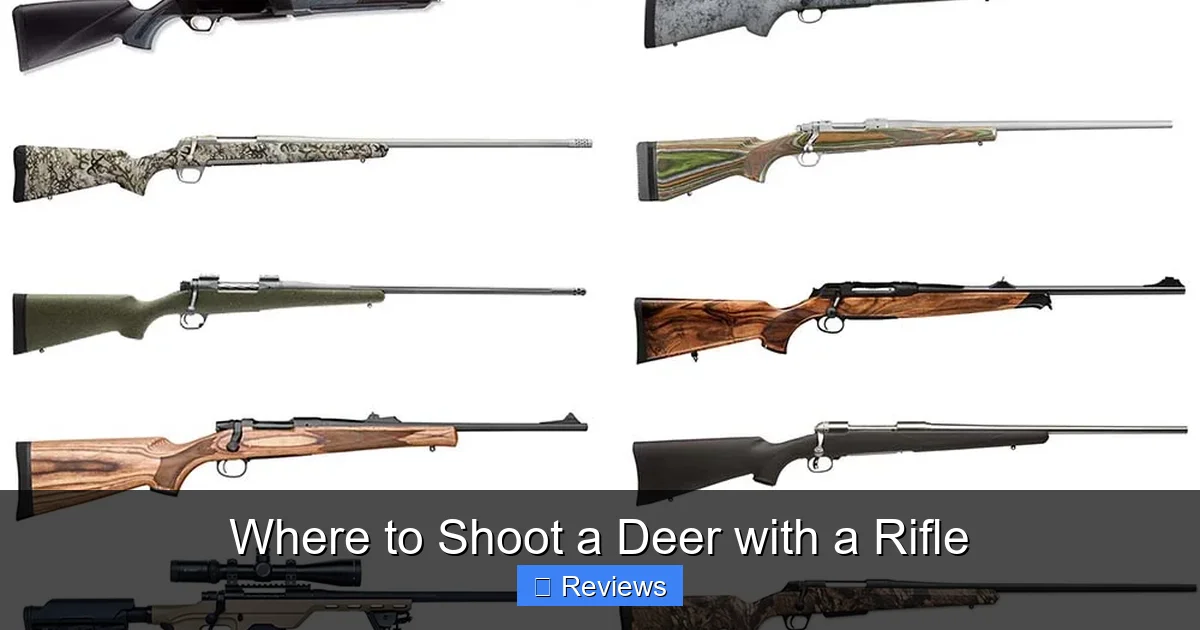
Visual guide about Where to Shoot a Deer with a Rifle
Image source: rifleshootermag.com
Broadside Shot (The Gold Standard)
A broadside shot means the deer is standing perfectly perpendicular to you, presenting its entire side. This is considered the ideal shot opportunity for where to shoot a deer with a rifle.
Aim Point: Imagine a line running straight up the deer’s front leg. Where this line intersects with a line about one-third of the way up the deer’s body from the belly is typically the sweet spot. This area puts you right in the center of the heart and lungs.
- Tip: Don’t aim too high, as you might miss the vitals and hit the spine or above. Don’t aim too far back, or you’ll hit the paunch.
Quartering Away Shot
A quartering away shot means the deer is angled away from you, with its hindquarters slightly farther away than its shoulders. This is also an excellent shot opportunity if you know where to aim.
Aim Point: You’ll want to aim behind the shoulder closest to you, directing your bullet through the vitals and out the opposite shoulder. The goal is to send the bullet through both lungs and potentially the heart. Think of aiming for the “exit hole” on the far side.
- Tip: This shot allows for good penetration through vital organs without hitting the heavy shoulder bone on the entry side.
Quartering Towards Shot (Higher Risk)
A quartering towards shot means the deer is angled towards you, with its front shoulders closer. This shot presents a smaller target and greater risk.
Aim Point: If you must take this shot, aim for the point of the shoulder closest to you, visualizing the bullet traveling through the vitals and exiting the deer’s flank. However, there’s a significant risk of hitting the heavy shoulder bone, which can stop or deflect your bullet, resulting in a non-fatal wound.
- Tip: Many experienced hunters will pass on a quartering towards shot unless the deer is very close, perfectly still, and they are extremely confident in their rifle and marksmanship. It’s often better to wait for a better angle or let the deer walk.
Frontal Shot (Avoid if Possible)
A frontal shot means the deer is facing directly towards you. While the vitals are technically accessible, the target area is extremely small, and the sternum and heavy muscle protect it.
Aim Point: If absolutely necessary (and only for very close, still deer, with excellent confidence), aim directly at the center of the chest where the neck meets the body, visualizing the bullet traveling straight back through the heart/lungs. The risk of hitting bone or missing vitals is very high. This is rarely the preferred option when considering where to shoot a deer with a rifle.
- Tip: Unless you’re an expert marksman at very close range, avoid frontal shots. The margin for error is simply too small.
Head and Neck Shots: High Risk, High Reward
While often discussed, head and neck shots are generally not recommended for the average rifle hunter due to the small target areas and high potential for debilitating, non-lethal wounds.
Brain Shot (Extremely Small Target)
As mentioned, the brain is a tiny target. While a successful hit is instant, a slight miss can result in a deer with a broken jaw, missing an eye, or other horrific injuries that cause prolonged suffering and almost certainly lead to a lost animal. For most ethical hunters, this is not where to shoot a deer with a rifle.
- When to Consider (Rarely): Some highly specialized snipers or experienced hunters might attempt this at extremely close range on a perfectly still animal for specific reasons, but it’s an exception, not the rule.
Spinal Shot (Paralysis vs. Instant Kill)
A shot to the spinal column will drop a deer instantly due to paralysis. However, a miss of even an inch can result in a non-fatal wound. If the bullet severs the spine, the deer is down but may still be alive and aware, requiring a quick follow-up shot to the vitals or brain to dispatch it humanely. If the shot misses the spinal cord but hits the vertebrae, it can break the back, leaving the deer alive and immobile, but not dead.
- When to Consider: This might be an option as a “stopper” shot on a wounded animal trying to escape, but it should not be your primary aim for a first shot.
Factors Influencing Your Shot Decision
Knowing where to shoot a deer with a rifle isn’t just about anatomy; it’s also about situational awareness. Several factors will influence whether you take a shot and exactly where you aim.
Distance and Accuracy
Every rifle and shooter has an “effective range.” This is the maximum distance at which you can consistently place your shots into a deer’s vital area. For many hunters, this might be 100-200 yards. Beyond that, bullet drop, wind, and human error increase exponentially. Know your rifle, know your ammunition, and most importantly, know your own limitations.
Deer Movement
A stationary deer offers the best shot opportunity. A walking deer requires leading the target, which adds another layer of complexity and potential for error. Never take a shot at a running deer; the chance of a clean kill is minimal, and the risk of wounding is extremely high.
Environmental Conditions (Wind, Cover)
Wind can significantly affect bullet trajectory, especially at longer ranges. Heavy cover can obscure your view, making it difficult to precisely identify your aim point. Rain or snow can affect visibility and rifle performance. Always consider how the environment impacts your ability to place a perfect shot.
Your Skill Level and Comfort
Be honest with yourself. Are you calm and collected? Do you have a steady rest? Are you confident you can make the shot? If there’s any doubt, it’s always better to pass and wait for a better opportunity. No deer is worth a potentially unethical shot.
Rifle and Ammunition Choice
The caliber of your rifle and the type of bullet you use also play a role. Larger calibers can offer more energy and penetration, which can be advantageous. However, bullet construction is often more important. Use good quality expanding bullets designed for deer hunting that will transfer energy efficiently and create a sufficient wound channel in the vitals. Your choice of equipment will influence your confidence in where to shoot a deer with a rifle.
Preparation and Practice: Honing Your Skills
Knowledge without practice is useless. To consistently make ethical, clean kills, you need to practice, practice, practice.
Range Time is Essential
Spend plenty of time at the shooting range. Don’t just sight in your rifle and call it a day. Practice shooting from various positions you might encounter in the field: prone, kneeling, sitting, and standing with a rest. This builds muscle memory and confidence.
Practice from Different Positions
In the field, you rarely get a perfect bench rest. Practice shooting off your pack, using a shooting stick, leaning against a tree, or even freehand if that’s a likely scenario. The more realistic your practice, the better prepared you’ll be.
Know Your Rifle’s Capabilities
Understand your rifle’s ballistic performance. How much does your bullet drop at 100, 200, or 300 yards? How does it react to wind? Knowing these details allows you to make precise adjustments in the field and confidently decide where to shoot a deer with a rifle.
Using Anatomy Targets
Invest in deer anatomy targets that show the actual placement of the heart, lungs, and other vital organs. This visual aid is invaluable for understanding where to aim from different angles and reinforcing your knowledge of where to shoot a deer with a rifle.
Ethical Considerations and Post-Shot Actions
The hunt doesn’t end when the rifle fires. A responsible hunter ensures a quick, humane end and follows through on their commitment.
Confirming the Hit
After you shoot, keep your eyes on the deer. Observe its reaction. Did it kick, stumble, or run off? Listen for any sounds, like a “thump” indicating a hit. Pay attention to the direction it ran and try to mark the exact spot where it was standing when you shot. This information is critical for tracking.
Tracking Your Deer
Even with a perfect shot, a deer might run a short distance. Give the deer some time (15-30 minutes for a suspected good hit, longer for a questionable hit) to expire before tracking. This prevents jumping a wounded animal and pushing it further. Look for blood trails, broken branches, or disturbed ground. If you’re unsure, ask an experienced hunter to help, or consider using a tracking dog if legal in your area.
Field Dressing and Respect
Once you’ve found your deer, the next step is field dressing to preserve the meat. Handle the animal with respect. This entire process, from shot placement to field dressing, is a testament to your ethical hunting practice. You’ve understood where to shoot a deer with a rifle, executed the shot responsibly, and now you’re honoring the animal by preparing it for consumption.
Conclusion
The question of “where to shoot a deer with a rifle” is at the very core of ethical and responsible deer hunting. It demands more than just aiming; it requires a deep understanding of deer anatomy, the ability to assess shot angles, and a commitment to continuous practice and self-improvement. By prioritizing a clean, humane kill, you not only ensure a successful hunt but also uphold the integrity of the hunting tradition.
Remember, patience is a hunter’s best friend. Don’t rush a shot, and never take one you’re not 100% confident in. Invest time in the shooting range, educate yourself on deer anatomy, and always strive to make the most ethical shot possible. Your dedication to understanding where to shoot a deer with a rifle will not only fill your freezer but also instill a profound sense of respect for the wildlife we are privileged to pursue.
Frequently Asked Questions
What is the most ethical shot placement when hunting deer with a rifle?
The most ethical shot placement is one that results in the quickest, most humane kill possible. For most rifle hunters, this means a broadside or quartering-away shot aimed at the heart-lung vital area. This maximizes the chances of a clean kill and minimizes suffering.
Can I still get a clean kill if I don’t hit the heart or lungs directly?
While the heart and lungs are ideal, a shot that passes through a major artery or vein in the chest cavity, even if it misses the organs themselves, can still result in a lethal wound due to rapid blood loss. However, aiming for the heart-lung mass greatly increases your chances of hitting these vital vessels as well.
How does bullet type affect where to shoot a deer with a rifle?
Bullet type plays a significant role in ethical hunting. Using a well-constructed expanding bullet designed for deer (e.g., soft point, bonded, or monolithic copper) ensures proper energy transfer and creates a sufficient wound channel. A bullet that fragments too quickly or fails to expand might not penetrate deep enough or cause enough damage to vital organs for a quick kill, regardless of where you shoot a deer with a rifle.
What is a “paunch shot” and why should I avoid it?
A “paunch shot” (or gut shot) is when the bullet hits the deer’s stomach or intestines. This shot is highly unethical because it rarely results in a quick kill, causing immense suffering, spoiling meat, and leading to a very difficult and often unsuccessful tracking job. Always avoid aiming for the gut, even if it means passing on a shot.
How can I practice deer shot placement at home without live ammunition?
You can effectively practice shot placement at home by using deer anatomy targets (paper or 3D foam) that clearly mark the vital organs. Use an unloaded rifle, practice sight alignment and trigger control from various field positions, and visualize where to shoot a deer with a rifle. Dry-fire practice helps build muscle memory and confidence.
Is it better to aim for the deer’s shoulder or behind it for a broadside shot?
For a broadside shot, it is generally better to aim just behind the shoulder, slightly low, rather than directly on the shoulder bone. Aiming behind the shoulder aims for the heart-lung area, avoiding the heavy shoulder bone which can stop or deflect your bullet. A shot that impacts the shoulder bone might not penetrate to the vitals for a quick, clean kill.