For many, Winchester evokes images of classic American craftsmanship, but the reality of where Winchester rifles are made today is a fascinating global story. While historically rooted in New Haven, Connecticut, modern Winchester firearms are predominantly manufactured by skilled artisans in Japan, Portugal, and Belgium, under the oversight of Browning and FN Herstal, maintaining the brand’s renowned quality. Winchester Ammunition, however, remains largely an American-made product.
Ah, Winchester. Just the name conjures up images of the American frontier, cowboys, intrepid explorers, and the classic spirit of the Old West. For generations, Winchester rifles have been synonymous with rugged reliability and an undeniable piece of American heritage. Many of us naturally assume that these legendary firearms are still forged right here in the USA, embodying that classic “Made in America” spirit. But like many iconic brands with a long and storied history, the reality of where Winchester rifles are made today is a little more complex, and frankly, a fascinating global journey.
The story of Winchester manufacturing is not just about geography; it’s about evolution, changing economies, global partnerships, and the unwavering pursuit of quality that has defined the brand for over a century and a half. If you’ve ever held a modern Winchester rifle or considered buying one, you might wonder about its true origins. Let’s embark on an adventure to uncover the precise locations and the intricate network of craftsmanship that brings these beloved firearms to life.
Key Takeaways
- Historical American Production: Winchester rifles were originally and famously made in New Haven, Connecticut, USA, from 1866 until the plant’s closure in 2006. This era solidified Winchester’s place in American history.
- Current Global Manufacturing: Modern Winchester Repeating Arms firearms are primarily manufactured internationally. Major production sites include Japan (Miroku) for many rifles and shotguns, and Portugal and Belgium (FN Herstal facilities) for specific models.
- Browning’s Oversight: The rights to manufacture and distribute Winchester Repeating Arms firearms are held by Browning, a subsidiary of the Belgian company FN Herstal, which dictates current production locations.
- Winchester Ammunition is Separate: It’s crucial to distinguish between Winchester firearms and Winchester Ammunition. Winchester Ammunition is produced by the Olin Corporation, largely in the United States (Illinois and Mississippi).
- Quality Remains Paramount: Despite the shift in manufacturing locations, the Winchester brand strives to maintain its reputation for high-quality, reliable firearms, leveraging the expertise of its international partners.
- Model-Specific Production: The exact country of origin can vary depending on the specific Winchester rifle or shotgun model. Buyers often need to check the markings on individual firearms.
Quick Answers to Common Questions
Where were Winchester rifles originally made?
Winchester rifles were originally and famously made in New Haven, Connecticut, USA, from 1866 until the factory closed in 2006.
Are new Winchester rifles made in the USA?
Most new Winchester Repeating Arms firearms are not made in the USA. They are primarily manufactured in Japan, Portugal, and Belgium.
Which country makes most Winchester lever-action rifles today?
Today, most Winchester lever-action rifles, such as the Model 1873 and Model 1894, are manufactured by Miroku in Japan.
Where are Winchester Ammunition products made?
Winchester Ammunition, a separate entity from Winchester Repeating Arms, is largely manufactured in the United States, specifically in facilities located in Illinois and Mississippi.
Who owns the Winchester Repeating Arms brand today?
The rights to manufacture and distribute Winchester Repeating Arms firearms are held by Browning, which is a subsidiary of the Belgian company FN Herstal.
📑 Table of Contents
- The Golden Age of American Manufacturing: New Haven, Connecticut
- A Global Transformation: Current Manufacturing Hubs
- Diving Deeper: Which Models are Made Where?
- Winchester Ammunition: A Separate Entity
- Why the Global Shift? Factors Influencing Production
- Understanding Your Winchester: Tips for Buyers
The Golden Age of American Manufacturing: New Haven, Connecticut
Birth of an Icon: Winchester Repeating Arms Company
To truly understand where Winchester rifles are made today, we must first look back to where it all began. The Winchester Repeating Arms Company was officially founded in 1866 by Oliver F. Winchester. Its home, its heart, and its manufacturing hub was New Haven, Connecticut. From this bustling New England city, Winchester began producing some of the most iconic firearms in history, starting with the legendary Model 1866 “Yellow Boy” lever-action rifle.
The New Haven factory quickly became a marvel of American industry. It was a place where skilled machinists, engineers, and craftsmen toiled, refining designs and perfecting manufacturing processes. The rifles produced here weren’t just tools; they were instruments that shaped a nation, helping pioneers settle new territories, defending homesteads, and playing a pivotal role in countless historical events. The very soul of Winchester, for over a century, was intrinsically tied to the American spirit of innovation and industrial prowess found in New Haven.
The New Haven Legacy: From 1866 to 2006
For a remarkable 140 years, the New Haven plant was the primary hub for where Winchester rifles were made. This facility produced an astounding array of firearms, from the famous lever-action rifles like the Model 1873 “Gun That Won the West” and the Model 1894, to the robust Model 70 bolt-action rifle, often called “The Rifleman’s Rifle.” Generations of American workers dedicated their lives to building these firearms, embedding a deep sense of national pride into every rifle that left the factory floor.
However, the economic landscape changed dramatically over the decades. Manufacturing costs in the United States steadily increased, and global competition became fiercer. By the late 20th and early 21st centuries, the historic New Haven facility faced significant challenges. Despite its storied past and the strong emotional ties to the brand, the decision was made by its then-owner, FN Herstal, to close the plant. The final Winchester rifle rolled off the New Haven production line in 2006, marking the end of an era and prompting the question: if not in New Haven, then where are Winchester rifles made now?
A Global Transformation: Current Manufacturing Hubs
Browning’s Role and FN Herstal
The story of modern Winchester manufacturing is closely intertwined with two other major players in the firearms industry: Browning and FN Herstal. Browning, another iconic firearms brand, is owned by the Belgian arms manufacturer FN Herstal. After the closure of the New Haven plant, FN Herstal, through its subsidiary Browning, retained the rights to manufacture and distribute Winchester Repeating Arms firearms. This crucial ownership change paved the way for a new, international manufacturing strategy.
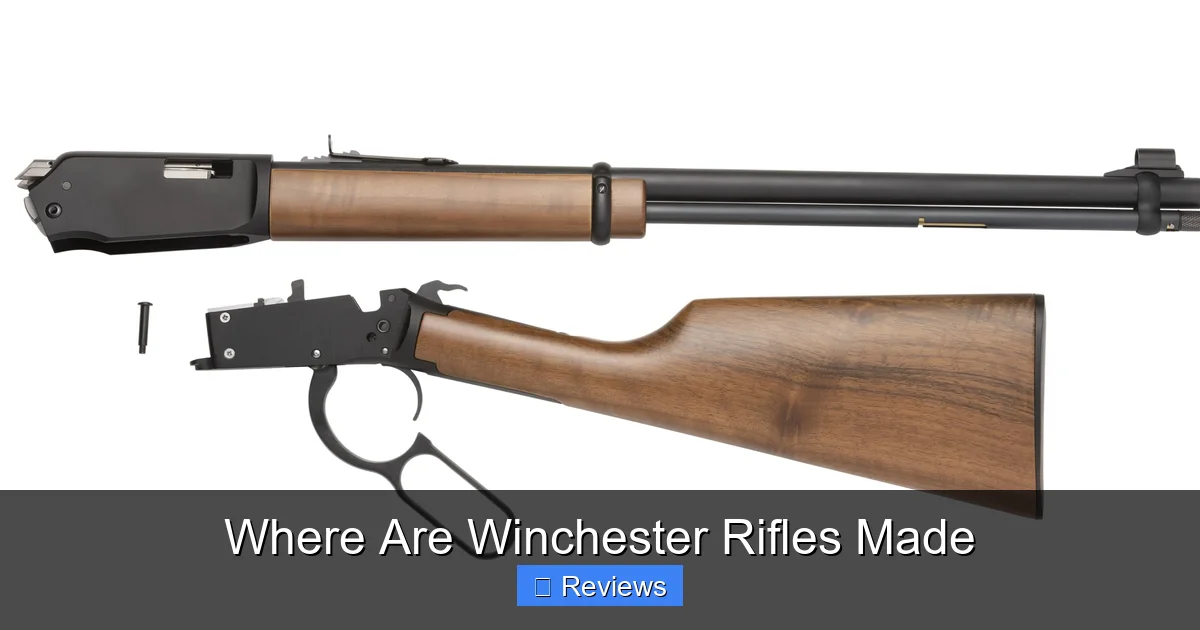
Visual guide about Where Are Winchester Rifles Made
Image source: winchesterguns.com
Rather than rebuilding a costly new factory in the U.S., FN Herstal leveraged its existing global network and partnerships to continue producing Winchester rifles and shotguns. This strategic decision allowed them to maintain quality standards while adapting to modern manufacturing realities. So, when you ask, “where are Winchester rifles made today?”, the answer points not to a single location, but to a highly specialized global network orchestrated by Browning and FN Herstal.
Made in Japan: Miroku’s Precision Engineering
Perhaps the most significant and surprising answer to where Winchester rifles are made for many enthusiasts is Japan. Since the 1970s, many Winchester firearms, especially lever-action rifles and certain shotguns, have been manufactured by the esteemed Japanese company Miroku. Miroku is renowned worldwide for its exceptionally high-quality firearm production and precision engineering, often surpassing the quality of some domestically produced firearms.
Miroku’s partnership with Winchester, initially for specific models, expanded significantly after the New Haven closure. Today, many of the classic Winchester lever-action models, such as the Model 1873, Model 1892, and Model 1894, as well as some of the high-end shotguns, bear the “Made in Japan” mark. This collaboration has ensured that the legacy of Winchester’s craftsmanship lives on, crafted with meticulous attention to detail and rigorous quality control by Japanese artisans.
European Craftsmanship: Portugal and Belgium
Beyond Japan, other European facilities also contribute to where Winchester rifles are made. Specific models, particularly some bolt-action rifles like the revered Model 70 and certain shotgun lines, see production in FN Herstal’s state-of-the-art facilities in Portugal and Belgium. These European plants are known for their advanced manufacturing capabilities and long tradition of firearm production, ensuring that Winchester maintains its reputation for quality and performance across its diverse product lines.
For example, some components or even entire assemblies for Winchester firearms might originate from these European locations. The Model 70, for instance, has had its production split or moved between various facilities, including those in Portugal, ensuring consistent quality even with geographical shifts. This intricate global supply chain is a testament to the brand’s commitment to sourcing the best manufacturing capabilities, wherever they may be.
Diving Deeper: Which Models are Made Where?
Lever-Action Rifles: The Japanese Connection
If you’re a fan of Winchester’s iconic lever-action rifles, chances are your modern firearm was crafted in Japan. Models like the beautiful Winchester Model 1873, Model 1892, and Model 1894, which evoke images of the Wild West, are expertly manufactured by Miroku. These reproductions are celebrated for their superb fit, finish, and historical accuracy, a direct result of Miroku’s dedication to precision engineering. When you pick up a new Winchester lever-action, you’ll almost certainly find “Made in Japan” stamped on the barrel.
This partnership has been incredibly successful, allowing Winchester to continue offering these legendary designs with a level of quality that satisfies even the most discerning collectors and shooters. The intricate mechanisms and classic lines of these rifles are faithfully recreated, demonstrating that the spirit of Winchester can thrive with global collaboration.
Bolt-Action Rifles: Precision from Across the Pond (and Japan)
The Winchester Model 70 bolt-action rifle, beloved by hunters and target shooters, has a more varied manufacturing story. While historically made in New Haven, its production has since been distributed. For a period, some Model 70s were manufactured in South Carolina, USA, and then production shifted to Portugal at FN Herstal’s Viana facility. More recently, some Model 70 components or complete rifles may originate from Miroku in Japan as well, alongside other specific variations. If you’re wondering where a specific Model 70 was made, checking the markings on the rifle itself is the most reliable way.
The key takeaway here is that the manufacturing location for the Model 70 can be fluid, reflecting the company’s strategy to optimize production and maintain quality standards across its different product lines. Regardless of the specific country, the emphasis remains on producing a reliable and accurate bolt-action rifle that lives up to the Winchester name.
Shotguns: A Blend of Global Expertise
Winchester also offers a popular line of shotguns, including the Super X series (SX3, SX4) and the SXP pump-action models. These shotguns are generally manufactured in FN Herstal’s facilities in Portugal. These modern, high-performance shotguns benefit from advanced manufacturing techniques and the skilled workforce found in these European plants. The focus here is on delivering reliability, smooth operation, and ergonomic design for hunters and sport shooters.
Occasionally, some specialized or higher-end Winchester shotguns, particularly over/under models, might also be produced by Miroku in Japan, known for their exquisite craftsmanship in double-barreled firearms. This global approach ensures that Winchester can leverage specialized expertise for different types of firearms, allowing them to offer a diverse and high-quality range of shotguns to the market.
Winchester Ammunition: A Separate Entity
Olin Corporation’s Role
It’s absolutely vital to make a clear distinction: when we talk about where Winchester rifles are made, we are discussing the firearms themselves, not the ammunition. Winchester Ammunition is a completely separate entity from Winchester Repeating Arms (the firearm manufacturer). Winchester Ammunition is owned by the Olin Corporation, a global manufacturer of chemicals and ammunition.
This separation dates back decades, with different companies holding the rights to the Winchester name for firearms versus ammunition. So, while the names are the same, their corporate structures and manufacturing locations are distinct. This often causes confusion among consumers, but understanding this difference is key to accurately tracking the origins of both products.
American Roots for American Rounds
Unlike Winchester firearms, a significant portion of Winchester Ammunition continues to be proudly made in the United States. Olin Corporation operates large ammunition manufacturing facilities in places like East Alton, Illinois, and Oxford, Mississippi. These plants are responsible for producing a vast array of cartridges, from popular hunting rounds to self-defense ammunition and competition loads, all bearing the iconic Winchester brand.
So, if you’re looking for an American-made Winchester product, the ammunition is largely it! While some components might be sourced globally, the primary manufacturing and assembly of Winchester Ammunition remain firmly rooted in American soil. This commitment helps ensure a steady supply for the domestic market and supports American manufacturing jobs.
Why the Global Shift? Factors Influencing Production
Economic Realities and Manufacturing Costs
The primary driver behind the shift in where Winchester rifles are made from a single American plant to a global network is, quite simply, economic reality. Manufacturing in high-wage economies like the United States can be significantly more expensive than in other parts of the world. Factors like labor costs, raw material expenses, environmental regulations, and infrastructure costs all contribute to the overall price of production.
By leveraging manufacturing facilities in countries like Japan and Portugal, Browning/FN Herstal can produce Winchester firearms more cost-effectively, allowing them to remain competitive in a global market. This doesn’t necessarily mean lower quality; it means optimizing resources to deliver a product that is both high-quality and priced accessibly for consumers.
Expertise and Specialized Manufacturing
Another crucial factor is access to specialized manufacturing expertise. Companies like Miroku in Japan have developed an incredible reputation for precision gunmaking, especially for complex designs like lever-action rifles and high-grade shotguns. Their skilled workforce and advanced machinery can produce firearms with a level of fit and finish that is world-class.
FN Herstal’s European facilities also bring extensive experience and advanced technology to the table, particularly for modern designs and high-volume production. By partnering with these established experts, Winchester ensures that its firearms benefit from the best available manufacturing practices, regardless of geographical location. This global talent pool directly contributes to the consistent quality of Winchester rifles.
Quality Control and Brand Reputation
Despite the changes in manufacturing locations, maintaining the Winchester brand’s reputation for quality has remained paramount. Browning and FN Herstal are themselves premium firearms manufacturers, and they understand the importance of strict quality control. They implement rigorous testing and inspection protocols at all their partner facilities to ensure that every Winchester firearm meets exacting standards.
The goal is to deliver a product that performs reliably, lasts for generations, and lives up to the Winchester legacy. The move to global manufacturing was not a compromise on quality but a strategic decision to sustain the brand by utilizing the most efficient and capable production resources available worldwide. When you ask where are Winchester rifles made, it’s not just about location, but about the quality control systems in place at those locations.
Understanding Your Winchester: Tips for Buyers
Checking Markings and Serial Numbers
If you’re curious about where a specific Winchester rifle was made, the best place to start is by examining the firearm itself. Most modern Winchester firearms will have markings on the barrel or receiver indicating the country of origin, such as “Made in Japan,” “Made in Portugal,” or “Made in Belgium.” Older models from the New Haven era will often be marked “Made in USA” or simply imply their U.S. origin through serial number ranges and the lack of foreign markings.
The serial number can also be a valuable tool. While not directly indicating the country, it can help you date the firearm, and knowing the production era can often narrow down the likely manufacturing location. Online resources and Winchester collector forums are excellent places to research specific serial numbers and model variations.
Researching Specific Models
As we’ve discussed, the manufacturing location can vary significantly between different Winchester models and even within the production run of a single model. If you’re considering purchasing a new or used Winchester, take the time to research that specific model. A quick online search for “[model name] manufacturing location” will often yield detailed information from forums, gun review sites, and official Winchester documentation.
Understanding these nuances will not only satisfy your curiosity but also help you make an informed purchasing decision. Whether it’s a lever-action from Japan, a bolt-action from Portugal, or an older American-made classic, knowing its origin adds to the story of your firearm.
The “American-Made” Versus “Winchester Quality” Debate
For many enthusiasts, there’s a strong desire for “American-made” firearms. This is understandable, given Winchester’s deep roots in American history. However, it’s important to separate national origin from inherent quality. The fact that a Winchester rifle is made in Japan or Portugal does not diminish its quality. In many cases, these internationally produced Winchesters exhibit exceptional craftsmanship and precision, often exceeding expectations.
The true “Winchester quality” now represents a global standard of excellence, overseen by Browning and FN Herstal, rather than being confined to a single factory or nation. While the emotional appeal of an American-made product is powerful, focusing on the overall quality, reliability, and performance of the firearm itself is often a more practical approach when making a purchasing decision.
The journey of Winchester rifles, from their birth in New Haven to their current global footprint, is a testament to the brand’s enduring legacy and adaptability. While the manufacturing locations have shifted dramatically over the decades, the commitment to producing high-quality, reliable firearms under the iconic Winchester name continues. So, the next time you hold a Winchester, remember that its story is a rich tapestry woven with threads from American history, Japanese precision, and European craftsmanship, all coming together to deliver a piece of shooting excellence.
Frequently Asked Questions
Are Winchester rifles still good quality even if not made in the USA?
Yes, modern Winchester rifles are generally considered to be of excellent quality. The manufacturing partners in Japan (Miroku) and Europe (FN Herstal facilities) are renowned for their precision engineering and adherence to high standards, ensuring the Winchester brand’s reputation for reliability and craftsmanship is maintained.
How can I tell where my specific Winchester rifle was made?
You can typically find the country of origin stamped on the barrel or receiver of your Winchester rifle. For older models, checking the serial number against historical records can help determine its manufacturing period and, consequently, its likely place of origin.
Why did Winchester stop making rifles in New Haven, Connecticut?
The historic New Haven plant faced increasing economic challenges, including rising manufacturing costs and competitive pressures. Its owner, FN Herstal, made the strategic decision to close the facility in 2006 to streamline production and leverage existing global manufacturing networks.
Is there any difference in quality between a Japanese-made and a European-made Winchester?
Generally, both Japanese-made (Miroku) and European-made (FN Herstal/Portugal) Winchester firearms are held to very high-quality standards. The choice of manufacturing location often depends on the specific type of firearm and the specialized expertise required, rather than an inherent difference in quality between the two regions.
Does Winchester still make its classic models like the Model 1894?
Yes, Winchester continues to produce many of its classic models, including the Model 1894 lever-action rifle. These modern reproductions are now primarily manufactured by Miroku in Japan, celebrated for their faithful recreation and high quality.
Are Winchester branded accessories or clothing also made in the same places as the rifles?
Not necessarily. Licensing agreements for Winchester-branded accessories, clothing, and other merchandise are typically separate from firearms manufacturing. These items can be produced by various manufacturers globally, often based on individual licensing deals, and their origin will vary.