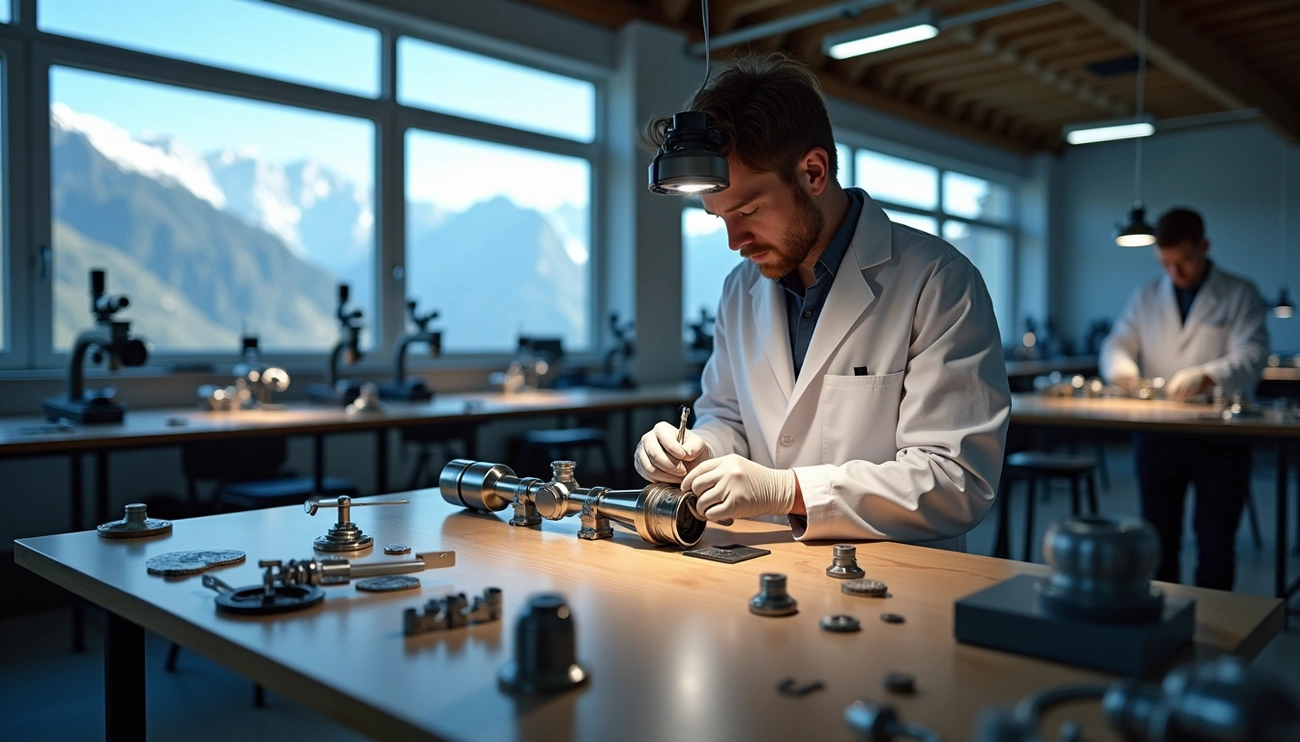
Swarovski rifle scopes are designed, manufactured, and assembled in Absam, Tyrol, Austria. Founded in 1949, Swarovski specializes in premium optical instruments and keeps production in Austria to maintain strict quality control, precision manufacturing, and consistent optical performance across its high-end rifle scopes.
Where Are Swarovski Rifle Scopes Made?
For discerning hunters and shooting enthusiasts, the origin of premium optical equipment is often as important as its performance. Swarovski rifle scopes have maintained their reputation for excellence partly because of where they’re manufactured.
Manufacturing location: Absam, Tyrol, Austria
The main production facility for Swarovski rifle scopes is located in Absam, a metropolitan area near Innsbruck in the Tyrol region of Austria. This isn’t a recent development—Swarovski Optik moved its operations from Wattens to Absam almost 75 years ago. Since then, the facility has grown alongside the local community, with production now taking place in the heart of a residential area.
The Absam facility serves as both the headquarters and primary manufacturing site for Swarovski Optik. It’s here that the company’s designers and engineers develop new products and technological innovations. Additionally, the company operates a specialized facility in Fiecht, also in Tyrol, which focuses on manufacturing optical components like lenses and prisms needed for their scopes.
Why Austria remains the production hub
Despite global manufacturing trends toward outsourcing, Swarovski has maintained its production in Austria for several compelling reasons. Foremost, as a family company with strong roots in Tyrol, Swarovski Optik takes a long-term view of its business operations. This approach prioritizes job security, market leadership, and sustainable growth over short-term cost savings.
The region’s traditional expertise also plays a crucial role. Tyrol has a long history of exquisite craftsmanship and manufacturing precision. Swarovski takes full advantage of this wealth of regional expertise, even sourcing some textile products from manufacturers just a stone’s throw from their Absam site.
Furthermore, keeping production local allows for stringent quality control. Each Swarovski scope undergoes meticulous assembly, with skilled craftsmen carefully checking individual components for accuracy and consistency. The company employs advanced technologies like “Plasma Coating,” a specialized process that enhances light transmission and reduces glare on their lenses.
Are Swarovski scopes made in China?
The short answer is no. Unlike many optical manufacturers who have moved production to Asia, Swarovski rifle scopes are not made in China. All Swarovski Optik products are manufactured entirely in Austria.
The company takes pride in completing all parts of the production and manufacturing processes in-house, making Swarovski one of only a handful of brands that use exclusively Austrian materials and labor. From design and development to assembly and quality testing, every aspect of scope production happens at their Austrian facilities.
This commitment to Austrian manufacturing is central to the Swarovski identity and quality assurance process. Although the company maintains a presence in the United States with a headquarters in Rhode Island, this serves primarily as a distribution and customer service center rather than a manufacturing facility.
The Craftsmanship Behind Every Scope
Behind each Swarovski rifle scope lies a century-old tradition of Austrian craftsmanship that combines traditional skills with cutting-edge technology. At the heart of this excellence is a manufacturing philosophy that prioritizes precision over production speed, quality over quantity.
Precision engineering and hand assembly
What truly sets Swarovski scopes apart is their meticulous assembly process. In contrast to mass production methods, skilled craftsmen carefully assemble each scope by hand at the Absam facility in Tyrol. This painstaking attention to detail ensures that every component fits perfectly and functions as intended.
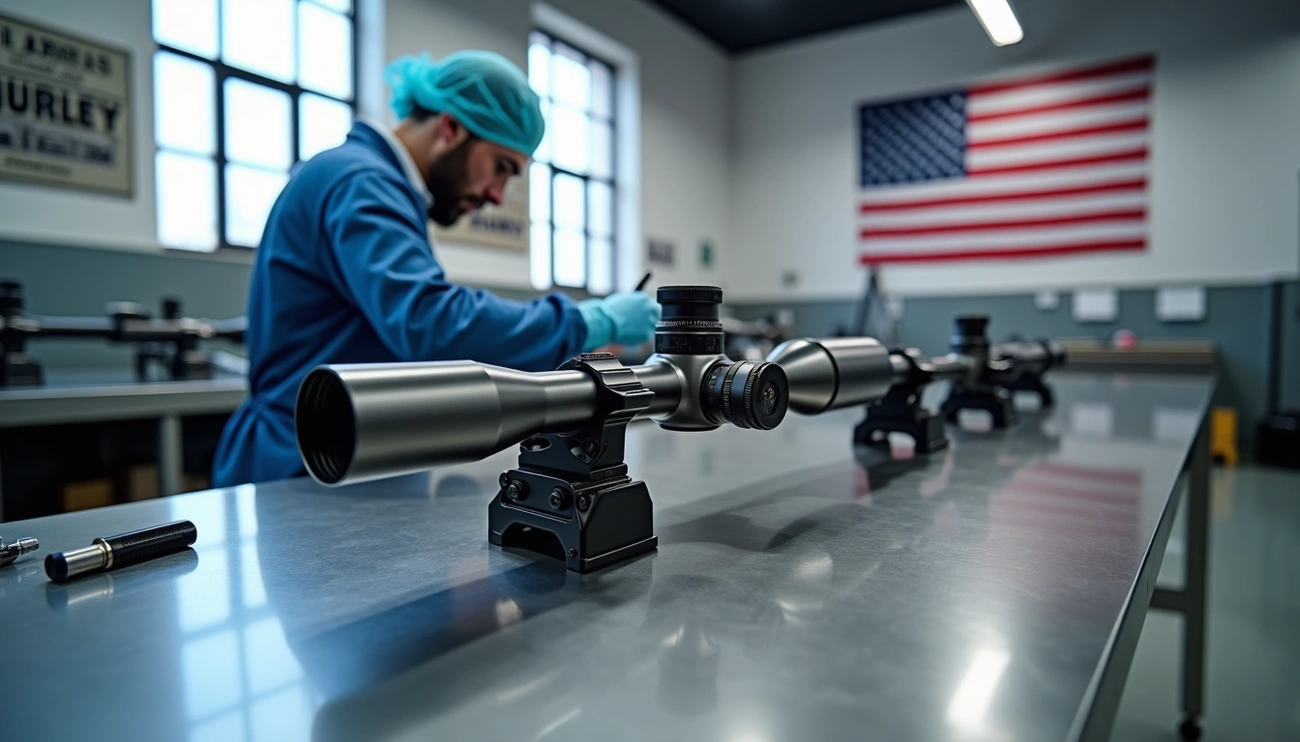
The assembly floor operates under strict conditions that would impress even medical facilities. Workers must wear standard attire including gloves and hair coverings in an atmosphere-controlled environment. These precautions aren’t merely procedural—they’re necessary to prevent even microscopic particles from compromising the optical elements or mechanical components.
For producing optical elements like lenses and prisms, Swarovski employs Optotech equipment that cuts and shapes high-quality glass with remarkable precision. These advanced machines achieve an accuracy tolerance of just 1 micron—far exceeding conventional methods. Moreover, this precision engineering is a direct continuation of the innovative spirit that Daniel Swarovski established with his early crystal cutting machines.
Use of high-grade materials
The quality of materials used in Swarovski scopes directly impacts their performance and durability. Instead of constructing the scope body from multiple pieces, Swarovski creates a single-piece shell made from robust metal alloys. This unified construction provides superior protection for the delicate internal components against the harsh recoil forces generated when firing.
All metallic parts undergo anodizing before assembly—a process that creates a permanent fine layer of oxide on metal surfaces. This protective layer shields the scope body against corrosion, scratches, and other damage that might occur in challenging field conditions.
Optical elements receive equally meticulous treatment. Swarovski employs a specialized “Plasma Coating” technology that enhances light transmission and reduces glare. Consequently, hunters and shooters benefit from clearer images, even in challenging lighting conditions at dawn or dusk.
Quality control and testing processes
Quality verification isn’t simply the final step at Swarovski—it’s integrated throughout the entire manufacturing process. Each component undergoes inspection at multiple stages, with defective parts immediately removed from production.
The final quality control department conducts a comprehensive series of tests on completed scopes:
- Visual inspections by trained specialists
- Instrument-based objective testing
- Performance verification under simulated field conditions
If inspectors discover any defects, the scope returns to the assembly area where problematic components are replaced. This uncompromising approach to quality has earned Swarovski Optik over 40 national and international awards recognizing their innovative technology, precision, quality, and design.
How Swarovski Scopes Evolved Over Time
The evolution of Swarovski rifle scopes represents a journey of continuous innovation spanning over six decades. From humble beginnings to technological marvels, these Austrian-made optics have consistently pushed boundaries in hunting and shooting technology.
The first Swarovski riflescope in 1959
Though Swarovski Optik was established in 1949, the company initially focused on producing binoculars. Their flagship Habicht 7×42 binoculars were the first product to emerge from the Absam factory. A decade after founding, Swarovski finally entered the riflescope market with their first model in 1959—a straightforward yet precise 4×32 scope. Prior to this commercial release, the company had manufactured optics for military rifles during World War II, but this marked their first entry into the consumer hunting market.
Technological advancements through the decades
Throughout subsequent decades, Swarovski consistently pioneered optical innovations from their Austrian headquarters. In 1993, the company unveiled their first hunting rifle scope with reticle illumination, greatly enhancing low-light shooting capabilities. This was quickly followed in 1995 by another breakthrough—the first rifle scope with an integrated laser range finder.
The dawn of the 21st century brought even more significant advancements. In 2007, Swarovski introduced their first rifle scope with 6× zoom capability. Nine years afterward, they pushed the envelope further with the introduction of their first 8× zoom scope in 2016, providing hunters unprecedented versatility in field conditions.
Modern product lines and innovations
Today’s Swarovski scopes continue to evolve at the same Absam facility where Wilhelm Swarovski first established operations. The company’s commitment to innovation earned them the prestigious ‘Red Dot Award’ in 2018 for their CL Companion binoculars. The jury specifically praised the “new sophisticated visual concept, intuitive use and ergonomic design language”.
The modern Swarovski has expanded substantially, growing into a company with approximately 850 employees and generating around 180 million euros in annual turnover. At the same time, they’ve maintained their core optical technologies, including specialized HD optics featuring fluoride-containing lenses that prevent chromatic aberrations and improve color fidelity.
Their development of apochromatic lenses, which bring three wavelengths into focus simultaneously, continues the tradition of optical excellence initiated by Wilhelm Swarovski over 70 years ago.
Why Hunters and Shooters Trust Swarovski
Hunters and shooting enthusiasts across the globe remain loyal to Swarovski optics for reasons that extend beyond their Austrian origins. The field performance of these precision instruments consistently validates their premium price point.
Optical clarity and light transmission
Ask any seasoned hunter about Swarovski glass, and you’ll likely hear superlatives. The company’s proprietary lens coatings enhance clarity, resolution, and light transmission to exceptional levels. Most impressively, Swarovski achieves 93% light transmission in models like the Z8i 2-16×50 P and Z8i+ 1-8×24. This extraordinary light-gathering capability proves crucial during dawn and dusk hunts.
Optical excellence comes partly from the HD (High Definition) elements in their lenses. These fluoride-containing components effectively eliminate chromatic aberration while enhancing contrast and delivering true-to-life color reproduction. The edge-to-edge sharpness remains consistent throughout the entire field of view, regardless of magnification level – particularly valuable when tracking moving targets through dense vegetation.
Durability in extreme conditions
Beyond optical performance, Swarovski scopes withstand punishing field conditions. Independent testing has subjected these instruments to concrete drops from waist height, yet they maintain zero after remounting. Notably, users report rifles falling from trucks and scopes surviving falls onto rock surfaces without losing zero.
The scopes handle extreme temperature variations gracefully – functioning flawlessly through 15°F morning hunts to 70°F afternoon sessions without internal fogging. Additionally, their waterproofing genuinely protects against moisture infiltration even during extended downpours.
Global reputation and user testimonials
Swarovski backs their quality claims with substantial warranty protection – a 5+5 year scope warranty (five years manufacturer’s warranty plus five additional years of goodwill coverage). This confidence reflects in user testimonials.
Experienced hunters consistently praise Swarovski’s low-light capabilities, with many reporting they can glass deer 30 minutes after sunset with sufficient clarity for ethical shot decisions. As one user succinctly stated, “When it comes to glass quality, hands down at low light, Swarovski takes them all”.
Conclusion
The story of Swarovski rifle scopes represents an impressive blend of tradition, innovation, and unwavering commitment to quality. Throughout their 125-year history, the company has maintained production in Austria rather than following the industry trend of outsourcing to countries with cheaper labor costs. This dedication to Austrian craftsmanship certainly pays off in the exceptional performance that hunters and shooters experience in the field.
Swarovski’s journey from crystal cutting to world-class optics demonstrates how family values and regional expertise can create truly remarkable products. The transition from Daniel Swarovski’s revolutionary crystal cutting machines to Wilhelm’s passion for optical instruments established a legacy that continues to this day in the Absam facility.