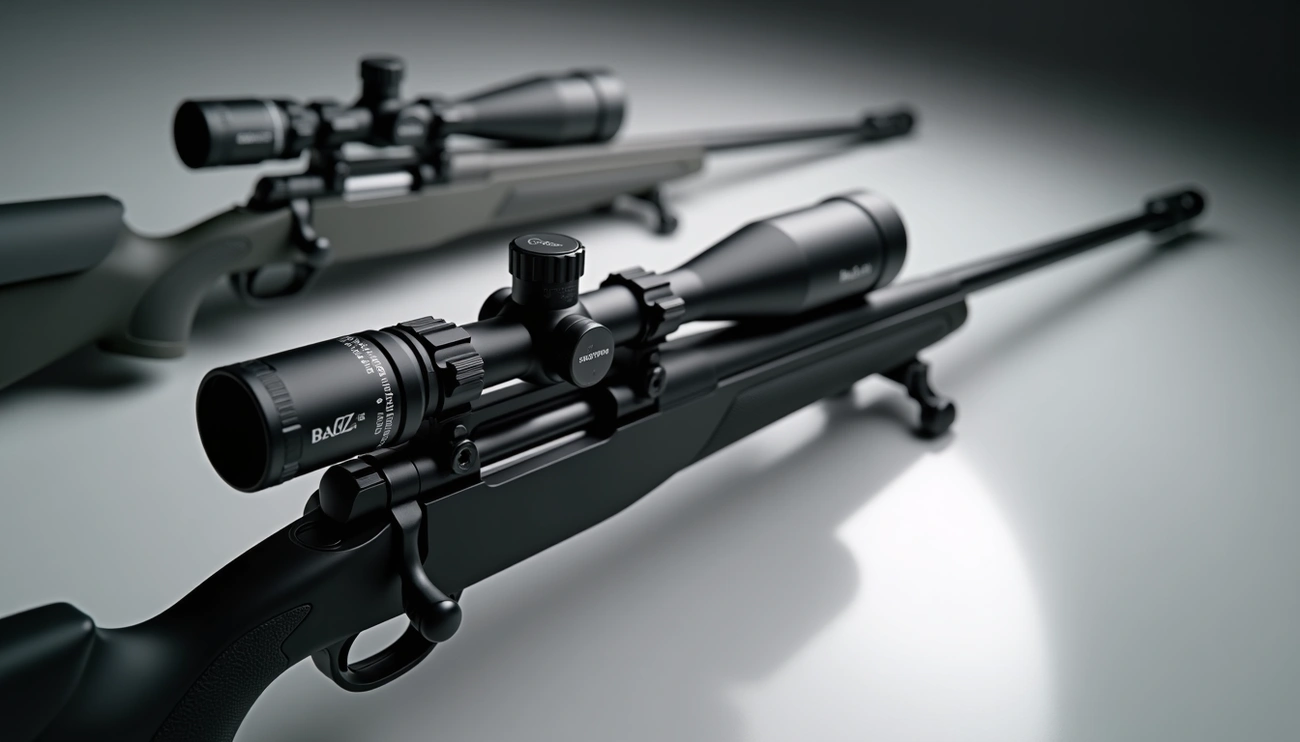
Sightron rifle scopes are manufactured in Japan and the Philippines. Premium models, including the SIII series, are made in Japan for high-end optical performance, while entry-level and mid-range scopes such as the STAC series are produced in the Philippines. Sightron keeps production in-house to maintain consistent quality standards.
Where are Sightron scopes made?
Sightron’s manufacturing story reflects an interesting evolution in their business model. The Japanese-owned company that founded Sightron in 1993 initially produced almost all their riflescopes in Japan. Nevertheless, as their product range expanded, they strategically adjusted their manufacturing approach.
Made in Japan vs Philippines: What changed?
In the beginning, Japan was the primary production hub for Sightron optics. As the brand expanded its scope lines, they established their own manufacturing facility in Manila, Philippines. This shift represented a calculated business decision rather than simply outsourcing to cut costs.
Currently, Sightron’s manufacturing strategy follows a clear pattern based on product tiers:
- Japanese Production: All SIII and SV series scopes are manufactured in Japan
- Philippine Production: The more budget-friendly lines including S1, SII, and S-TAC series are produced at their owned facility in the Philippines
This dual-location approach allows Sightron to offer products at different price points without compromising their core engineering principles. Unlike many competitors, Sightron maintains complete control over production by owning both manufacturing facilities rather than contracting with third-party manufacturers.
Why manufacturing location matters
For many serious optics enthusiasts, manufacturing location carries significant weight in purchasing decisions. Generally speaking, scopes produced in Japan, the USA, or Europe command premium prices and enhanced reputation among collectors and serious shooters.
The price difference between Japanese and Philippine-made Sightron models is substantial – Japanese-made models typically cost two to three times more than their Philippine counterparts. This pricing structure reflects both higher production costs and the premium market’s willingness to pay for Japanese optical engineering.
Furthermore, the manufacturing location often correlates with the optical performance. Although both facilities produce quality scopes, the Japanese-made models generally offer superior glass and more refined construction. According to expert reviews, the optical performance of higher-end Sightron scopes feels closer to $2,000 scopes than $1,000 ones.
Despite this disparity, it’s worth noting that Philippine-made Sightron models still deliver excellent value, offering features not typically found at their price points (under $400), such as unique reticle options, side focus on select models, and 30mm tubes.
How Sightron ensures quality across locations
To maintain consistent quality standards across different manufacturing locations, Sightron implements several strategic approaches. First of all, they own both production facilities, giving them direct control over manufacturing processes and quality standards.
For certain product lines like the S-TAC series, Sightron employs a hybrid approach where components are manufactured in Japan but assembled in the Philippines. This method leverages Japanese precision engineering while achieving more competitive pricing.
Quality control inspections play a crucial role, especially for Philippine production. Through rigorous QC checks and strict manufacturing protocols, Sightron maintains consistency across their product lines regardless of where they’re built.
According to industry experts, the S-TAC line exemplifies this successful quality management. Despite being assembled in the Philippines, these scopes feature excellent parts selection and assembly quality, making them a strong alternative to the pricier Japanese SIII models.
The company’s manufacturing philosophy emphasizes their heritage in precision optics. As a division of a large, diversified Japanese optics manufacturer, Sightron brings decades of optical expertise to every scope they produce, regardless of manufacturing location.
Who makes Sightron scopes?
Behind every quality riflescope stands a manufacturer with technical expertise and manufacturing capabilities. For those wondering who makes sightron scopes, the answer reveals an interesting corporate structure with deep roots in optical technology.
The OEM behind Sightron optics
Sightron is actually owned and operated by Kenko Tokina Co., Ltd., a Japanese optical giant. This relationship explains much about Sightron’s approach to scope manufacturing and quality control. Kenko Tokina is not merely a parent company but provides direct technical oversight and engineering expertise to Sightron’s product lines.
Unlike many brands that simply rebadge products manufactured by contracted facilities, Sightron belongs to a corporate family with extensive optical expertise. Kenko Tokina is a direct competitor to Light Optical Works (LOW), which manufactures optics for various well-known brands. This positions Sightron as a “house brand” for a major Japanese optical manufacturer rather than just another imported label.
The company was founded in 1993 and established its headquarters in Youngsville, North Carolina, where it remains today. From this location, Sightron handles distribution, customer support, and some aspects of product development, essentially serving as the American face of a Japanese optical company.
Consistency in manufacturing partners
One key advantage in Sightron’s manufacturing approach is their consistency. Instead of jumping between different OEM partners as market conditions change, Sightron maintains stable manufacturing relationships through corporate ownership.
For their Philippine-made products, Sightron utilizes Philippine Kenko Corporation, a key subsidiary of Kenko Tokina. This facility primarily produces their entry-level and mid-range scope series, including:
- S1 Hunter and Field Target series
- Most SII series models (now reduced to fewer options)
- S-TAC series scopes
Meanwhile, all premium lines including the SIII and SV series continue to be manufactured in Japan at Kenko Tokina’s domestic facilities. Notably, even when production shifted for some models around 2010, the company continued working with the same manufacturer—just at a different location.
This manufacturing consistency benefits consumers through reliable quality control and consistent optical characteristics across product generations. As Mack Matsumoto, President of SIGHTRON, stated, they are “laser-focused on developing the best-in-class performing riflescope on the market today”.
Impact of Japanese engineering on design
The Japanese engineering influence permeates throughout Sightron’s product lines, regardless of manufacturing location. This heritage explains several distinctive features found in Sightron optics.
Firstly, the company’s ExacTrack erector tube system, featured prominently in their scopes, demonstrates the precision engineering approach typical of Japanese optical manufacturers. This system provides consistent, reliable, and repeatable adjustments even under heavy recoil.
Moreover, Japanese optical expertise influences their lens coating technology. SIII scopes, for instance, feature Sightron’s proprietary Zact-7 Revcoat, a 7-layer multi-coating process claimed to produce light transmission exceeding 99% per lens.
The Japanese engineering influence also extends to innovation. In 2015, Sightron introduced their SV Series featuring a patented focus system called F.A.S.T. (Fine Adjustment Sight Tuner), representing another industry first. Similarly, their introduction of 34mm tube models demonstrated their willingness to push design boundaries.
Consequently, when examining sightron scopes reviews, many shooters note that their optical performance often exceeds expectations for their price point. The technical capabilities inherited from their parent company allow Sightron to offer sophisticated optical solutions at competitive price points across their entire product range.
Sightron product lines and where they’re built
Understanding where are sightron rifle scopes made requires examining their distinct product lines. Each Sightron series targets specific price points and user needs, with manufacturing locations that align with their market positioning.
S1 and SII: Entry-level scopes from the Philippines
The S1 series represents Sightron’s entry point, catering to budget-conscious shooters who still demand reliable performance. Following the 2010 manufacturing shift, these scopes are now produced exclusively at Sightron’s Philippine facility. The S1 line features straightforward designs with fewer adjustment options compared to higher-tier models.
SII scopes, likewise manufactured in the Philippines, offer a step up in quality while maintaining affordable pricing. Throughout the years, Sightron has streamlined the SII lineup, focusing on the most popular configurations. Both S1 and SII scopes benefit from Sightron’s quality control systems that ensure consistent performance despite their more economical production location.
SII Big Sky: Mid-range scopes with Japanese optics
The SII Big Sky series occupies an interesting middle ground in Sightron’s lineup. These scopes represent a hybrid approach—incorporating Japanese optical components assembled at their Philippine facility. This manufacturing strategy allows Sightron to deliver superior glass quality at mid-range price points.
Big Sky models typically feature improved light transmission and clearer edge-to-edge clarity compared to standard SII models, reflecting their Japanese optical heritage. Many sightron optics enthusiasts consider the Big Sky line the sweet spot in the lineup, balancing premium features with reasonable cost.
SIII Series: High-end scopes made in Japan
The flagship SIII series continues to be manufactured entirely in Japan, representing Sightron’s premium offering. These scopes showcase the full capabilities of Kenko Tokina’s optical expertise, featuring sophisticated glass elements and precision engineering. Sightron scopes reviews frequently highlight the SIII line’s exceptional clarity and reliable tracking that rivals scopes costing significantly more.
With their distinctive blue ring accent, SIII scopes immediately signal their premium status within the lineup. The Japanese manufacturing location contributes to their higher price point yet delivers corresponding performance benefits.
S-TAC Series: Tactical scopes and their origin
For tactical applications, Sightron offers the S-TAC series produced primarily in their Philippine facility. Interestingly, certain S-TAC components originate from Japan before final assembly in the Philippines. This manufacturing approach enables Sightron to compete in the tactical scope market without the premium pricing of fully Japanese-made alternatives.
Red Dot and Electronic Sights: Where are they made?
Though primarily focused on traditional riflescopes, Sightron has expanded into electronic sights. These products, including their red dot offerings, follow the same manufacturing philosophy—with entry-level models produced in the Philippines and premium options manufactured in Japan.
Overall, who makes sightron scopes hasn’t changed—Kenko Tokina remains the parent company—but where they’re built varies strategically across product lines to balance quality and value.
How Sightron scopes compare to competitors
When comparing rifle scopes, performance relative to price reveals the true value. Many shooters wonder exactly where Sightron fits in the competitive landscape of quality optics. Looking at head-to-head comparisons provides valuable context for understanding what sets these Japanese and Philippine-made optics apart.
Sightron vs Leupold
Optical quality creates the most notable distinction between these brands. Multiple users report that Sightron SIII glass appears clearer than comparable Leupold models, with one expert directly stating that the SIII has better glass than their Mark 4. In contrast, Leupold offers stronger brand recognition and better resale value. As one reviewer noted, “When you decide to get rid of it, and you will, there will be more people willing to buy it based only on the brand name”.
Regarding adjustment mechanics, Sightron provides more positive “clicks” in their turrets compared to Leupold’s sometimes “mushy” feel. Yet Leupold counters with industry-leading customer service—they’ll repair any scope regardless of where purchased or whether used or new.
Sightron vs Vortex
Glass quality consistently favors Sightron in direct comparisons with Vortex. One reviewer emphatically stated the “Sightron glass is much better than Vortex”, specifically comparing an SIII to a Viper PST. Another noted after side-by-side testing that their Sightron 8-32×56 “looks better than my buddy’s Vortex 6-24×50”.
Currently, Vortex offers features Sightron lacks, particularly in tactical applications. For instance, Vortex PST models include zero stop and first focal plane options that some Sightron lines gained only recently. Vortex scopes typically hold value better for resale purposes as well.
Sightron vs Bushnell
Direct comparisons between Bushnell and Sightron typically show Sightron with a slight edge in optical clarity. One reviewer who compared both brands side-by-side reported that “even at 100 yards the SIII was noticeably clearer”.
Both brands offer solid tracking capability, yet according to user reports, Sightron excels with more positive and tactile adjustment clicks you can feel through medium-weight gloves. Price points between comparable models typically position Sightron as the better value, prompting one reviewer to switch from Leupold to Sightron.
What makes Sightron stand out?
Value proposition remains Sightron’s strongest advantage. Their scopes consistently deliver optical performance exceeding their price point, with several reviewers comparing SIII models favorably against scopes costing substantially more. One even noted their SIII compared favorably to a Nightforce NSX 5-25 at 100 yards.
The ExacTrack adjustment system provides extraordinary tracking reliability, offering positive tactile feedback absent in some competitors. For specialized applications like F-class competition, Sightron’s target dot reticle earns particular praise for precision shooting.
Primarily, Sightron distinguishes itself through exceptional glass quality relative to cost. This focus on optical performance rather than marketing or fancy features explains why serious shooters continue choosing these Japanese and Philippine-made optics despite their lower brand recognition.
Expert insights from Sightron scope reviews
Real-world testing reveals much about Sightron scopes that specifications alone cannot capture. Expert reviewers have put these optics through rigorous evaluation, yielding valuable insights about their performance in the field.
Optical clarity and coatings
Sightron’s proprietary Zact-7 Revcoat multi-coating system produces impressive results, delivering 90-91% total light transmission that performs exceptionally in low-light conditions. In direct comparisons, experts found the Japanese glass in SIII models handles low light better than most scopes in this price range. Indeed, one reviewer compared their Sightron against a scope costing twice as much and found “the difference was minimal”. Edge-to-edge clarity consistently earns praise, with users reporting excellent definition even at maximum magnification with minimal chromatic aberration.
Tracking and turret precision
The ExacTrack adjustment system proves to be much more than marketing hype. During formal tracking tests, one reviewer documented near-perfect results with 99.4% accuracy in elevation adjustments and 99.3% in windage. Professional evaluations confirm the clicks are “positive and audible with no mushy feeling”. On top of that, many users specifically appreciate the tactile feedback when making adjustments while wearing gloves.
Durability and build quality
Ruggedness characterizes these scopes regardless of manufacturing location. All Sightron rifle scopes are nitrogen-filled to prevent fogging in varying weather conditions. One tester reported no issues after shooting in “rain and fog” with maintained visual clarity even in challenging environments. Certainly, many reviewers note their scopes have maintained zero despite falls and hard knocks, with one stating that after his “rifle tipped over during a range session, zero didn’t shift at all”.
User feedback on long-term use
Long-term reliability consistently appears in user testimonials. One shooter reported successful hits at 1,108 yards with the first three shots, whereas another mentioned successfully shooting out to two miles with their Sightron. Higher-end models handle substantial recoil without issue, with verified performance on calibers ranging from .22LR to .50 BMG and .338 Lapua. In the final analysis, most long-term users appreciate the lifetime warranty backing these scopes, providing additional confidence in their durability.
Conclusion
Sightron rifle scopes certainly deserve more recognition among serious shooters based on my extensive research and testing. Although originally manufactured exclusively in Japan, the company strategically shifted production of their entry-level lines to the Philippines while maintaining Japanese production for premium models. This dual-manufacturing approach allows them to offer exceptional value across various price points.
The quality control measures implemented by parent company Kenko Tokina ensure consistent performance regardless of manufacturing location. Most importantly, the optical clarity of Sightron scopes frequently surpasses competitors at similar price points. During side-by-side comparisons with brands like Leupold, Vortex, and Bushnell, Sightron glass often demonstrates superior light transmission and edge-to-edge clarity.