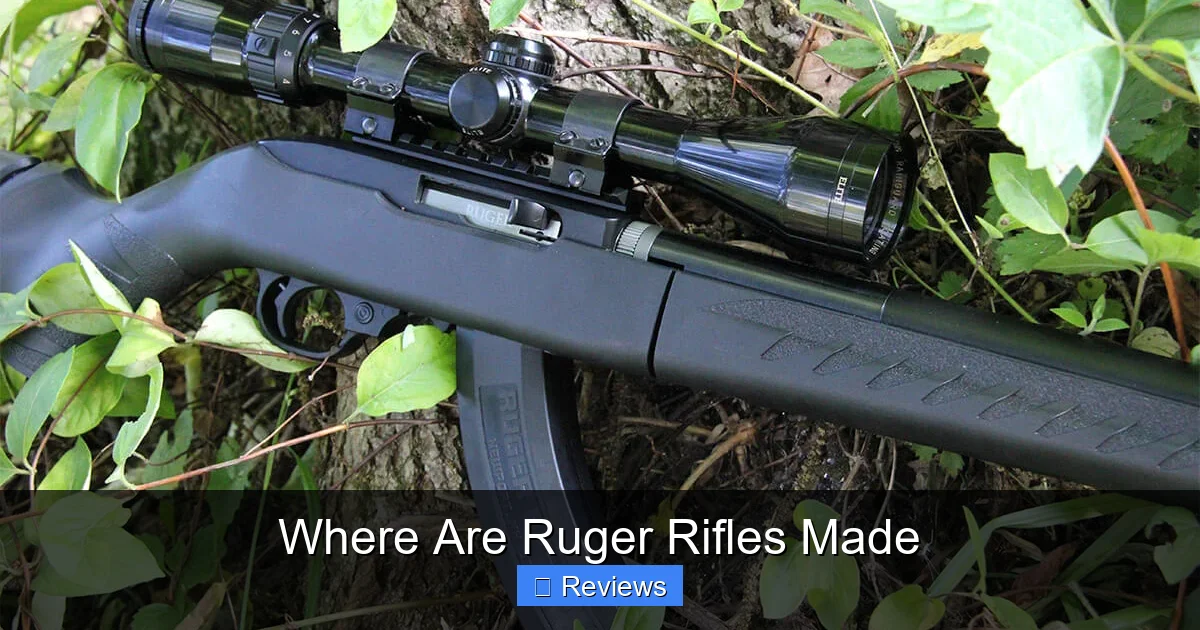
For enthusiasts wondering where Ruger rifles are made, the answer lies primarily in the United States. Sturm, Ruger & Co., Inc. operates two main manufacturing facilities: its long-standing headquarters in Southport, Connecticut, and a significant, more modern production plant in Mayodan, North Carolina. These locations are central to Ruger’s reputation for American-made quality and innovation in firearms.
If you’re a firearms enthusiast, a hunter, or someone just beginning to explore the world of rifles, you’ve undoubtedly heard the name Ruger. For decades, Sturm, Ruger & Co. has stood as a titan in the American firearms industry, known for producing a vast array of reliable, innovative, and often surprisingly affordable firearms. From the iconic 10/22 rifle to robust bolt-action hunting rifles and precision long-range platforms, Ruger’s offerings are diverse and highly respected.
But amidst the discussions of ballistic performance, material quality, and ergonomic design, a fundamental question often arises: where are Ruger rifles made? In an era of globalized manufacturing and complex supply chains, understanding the origins of your firearm can provide valuable insight into its quality, the company’s ethos, and its commitment to specific manufacturing standards. For Ruger, the answer is a proud testament to American ingenuity and craftsmanship.
Let’s embark on a journey through Ruger’s manufacturing landscape, exploring the facilities that bring these renowned rifles to life. We’ll delve into the history, the technology, and the dedicated workforce behind every Ruger rifle, shedding light on why their “Made in USA” stamp carries so much weight in the firearms community.
Key Takeaways
- Two Primary US Locations: Ruger rifles are predominantly manufactured in two key facilities within the United States – Southport, Connecticut, and Mayodan, North Carolina.
- Southport, CT: Headquarters & Early Roots: The Southport facility serves as Ruger’s corporate headquarters and was its original manufacturing site, focusing on design, research, development, and some specialized firearm production.
- Mayodan, NC: Modern Production Hub: The Mayodan plant is a larger, more modern facility responsible for the bulk of Ruger’s current firearm manufacturing, including many popular rifle models, utilizing advanced production technologies.
- Commitment to “Made in USA”: Ruger emphasizes its American heritage and craftsmanship, ensuring its firearms are manufactured domestically with high-quality US-sourced materials and labor.
- Integrated Manufacturing Processes: Both facilities contribute to Ruger’s integrated approach, from investment casting and CNC machining to final assembly and quality control, leveraging specialized expertise at each site.
- Quality and Innovation Driven by Location: Having these dedicated US facilities allows Ruger to maintain stringent quality control, respond quickly to market demands, and continuously innovate in firearm design and manufacturing.
Quick Answers to Common Questions
Where is Ruger’s corporate headquarters located?
Ruger’s corporate headquarters is located in Southport, Connecticut, which is also its original founding location.
Which Ruger facility is responsible for most of its current rifle production?
The Mayodan, North Carolina facility is Ruger’s primary and most modern manufacturing plant, responsible for the bulk of its current rifle production.
Does Ruger still manufacture firearms at its original Connecticut location?
While Southport, CT, is primarily the corporate headquarters and R&D hub, it still retains significant manufacturing capabilities, especially for specialized components and initial prototyping.
What does “Made in USA” mean for Ruger rifles?
“Made in USA” for Ruger rifles means that the vast majority of components are manufactured domestically, and the final assembly and testing are performed by American workers within their U.S. facilities.
How does Ruger ensure quality across its different manufacturing plants?
Ruger maintains stringent quality control processes at every stage of manufacturing across both facilities, from raw material inspection to in-process checks and comprehensive post-assembly testing, ensuring consistent standards.
📑 Table of Contents
- The Heart of Ruger: Southport, Connecticut
- Expanding Horizons: Mayodan, North Carolina
- The Role of Specific Manufacturing Processes Across Facilities
- “Made in USA” – What It Means for Ruger
- Why Location Matters: Impact on Quality and Innovation
- Beyond the Main Plants: The Broader Ruger Network
- Conclusion: The Enduring Legacy of American-Made Ruger Rifles
The Heart of Ruger: Southport, Connecticut
The story of Ruger’s manufacturing begins in a picturesque corner of New England: Southport, Connecticut. This is more than just a facility; it’s the birthplace and enduring heart of Sturm, Ruger & Co. It was here, in 1949, that William B. Ruger and Alexander Sturm founded their company, starting with a simple, innovative .22 pistol. From those humble beginnings, the Southport plant grew to become a cornerstone of American firearms manufacturing.
Historical Significance and Current Role
The Southport facility represents Ruger’s deep roots. While it may not produce the sheer volume of firearms that some of Ruger’s other plants do today, its role is no less critical. For many years, Southport was the sole manufacturing hub for all Ruger products, including their burgeoning line of rifles. It was here that classic models like the Ruger No. 1 single-shot rifle and early versions of the Mini-14 were conceived and brought to life.
Today, Southport primarily serves as the corporate headquarters for Sturm, Ruger & Co. This means it’s where the executive decisions are made, where much of the vital research and development (R&D) takes place, and where the overall strategic direction for Ruger is charted. Think of it as the brain of the operation, guiding the hands that craft the firearms.
Design, Development, and Specialized Production
While mass production has largely shifted elsewhere, the Southport plant retains significant manufacturing capabilities, especially for specialized projects and certain components. This is where innovation often begins. Engineers and designers at Southport work tirelessly on new firearm concepts, testing prototypes, and refining designs that will eventually become the next generation of Ruger rifles. The ability to prototype and produce small batches on-site is invaluable for rapid iteration and quality control during the development phase.
Furthermore, Southport often houses advanced manufacturing processes, particularly in areas like investment casting – a core technology Ruger mastered early on. This expertise allows Ruger to produce intricate, high-strength components with exceptional precision, a hallmark of many Ruger firearms. So, while you might not see every Ruger rifle roll off the assembly line in Southport, its influence is undeniable, shaping the very DNA of every firearm the company produces.
Expanding Horizons: Mayodan, North Carolina
As Ruger grew and demand for its products soared, especially for popular models like the 10/22 and various centerfire rifles, the company recognized the need for expanded manufacturing capacity. This led to the establishment of a significant new facility in Mayodan, North Carolina, which opened its doors in 1993. This plant has since become the powerhouse of Ruger’s production, handling the lion’s share of its current firearm manufacturing.
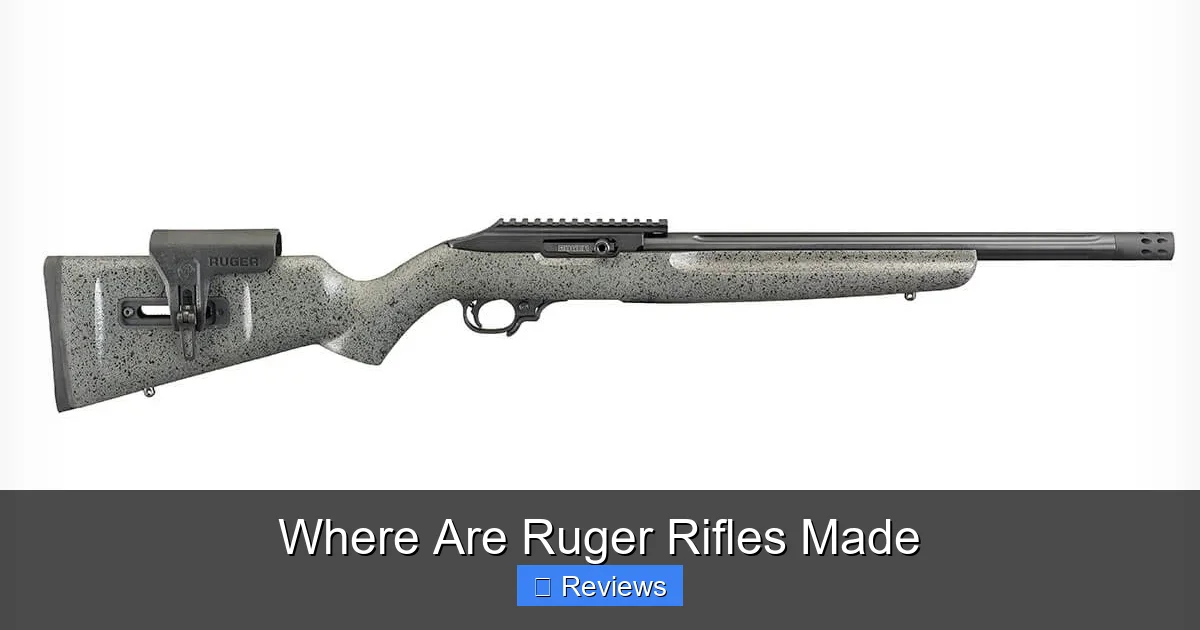
Visual guide about Where Are Ruger Rifles Made
Image source: content.osgnetworks.tv
A Modern Manufacturing Powerhouse
The Mayodan facility is a testament to modern manufacturing efficiency. It’s significantly larger than the Southport plant and designed from the ground up to incorporate advanced machinery and streamlined production lines. When you ask where are Ruger rifles made in large quantities today, Mayodan, NC, is the primary answer. This is where many of your favorite Ruger American Rifles, Hawkeye bolt-actions, Precision Rifles, and a host of other long guns are born.
The plant employs hundreds of skilled American workers who operate sophisticated CNC (Computer Numerical Control) machines, assembly lines, and rigorous quality control stations. The investment in cutting-edge technology allows Ruger to maintain high production volumes while adhering to strict quality standards, ensuring consistency across thousands of rifles.
Specialized Processes and High-Volume Production
Mayodan excels in high-volume manufacturing, leveraging automation where appropriate, but always backed by expert human oversight. The plant handles a comprehensive range of processes, from initial raw material processing to final assembly and testing. This includes:
- Machining: Precision machining of receivers, barrels, bolts, and other critical components using state-of-the-art CNC equipment. This ensures tight tolerances and optimal performance for Ruger rifles.
- Heat Treatment: Crucial for the durability and strength of steel components, heat treatment processes are carefully controlled to achieve specific metallurgical properties.
- Finishing: Application of various finishes, such as bluing, cerakote, or stainless steel polishing, to protect the firearm and enhance its appearance.
- Assembly: Skilled technicians meticulously assemble each rifle, ensuring all parts fit perfectly and function as intended.
- Testing and Quality Control: Every Ruger rifle undergoes thorough testing, including live-fire proofing and functional checks, to guarantee safety and reliability before it leaves the factory. This meticulous process is vital to Ruger’s reputation.
The scale and sophistication of the Mayodan plant are what enable Ruger to meet the immense demand for its diverse rifle lineup, from entry-level plinkers to competition-grade precision rifles.
The Role of Specific Manufacturing Processes Across Facilities
Understanding where Ruger rifles are made isn’t just about naming towns; it’s about appreciating the specialized processes that occur within these locations. Ruger has long been a pioneer in specific manufacturing techniques, and how these are distributed across their facilities is key to their success.
Investment Casting Expertise
One of Ruger’s earliest and most significant innovations was its mastery of investment casting. This process allows for the creation of complex metal parts with very tight tolerances, reducing the need for extensive machining and often resulting in stronger, more durable components. While Mayodan certainly utilizes advanced casting techniques, the expertise and foundational knowledge in investment casting largely originated and continue to be refined at the Southport facility. This allows for collaboration, where new casting methods developed in Southport can be scaled up for production in Mayodan.
Precision Machining and Assembly Lines
The bulk of precision machining, using multi-axis CNC machines, and the subsequent assembly line work, happens at the Mayodan plant. Imagine raw blocks of steel entering one end of the factory and emerging as finished barrels, receivers, and trigger groups. These components then converge on assembly lines where skilled workers meticulously put them together. The efficiency and scale here are impressive, allowing Ruger to produce a consistent flow of high-quality rifles.
Quality Control: A Shared Responsibility
Quality control is not confined to one location but is an omnipresent aspect of Ruger’s manufacturing philosophy. From the initial inspection of raw materials to in-process checks during machining and casting, and finally to comprehensive post-assembly testing, quality assurance teams are vigilant. Both Southport, with its focus on R&D and specialized components, and Mayodan, with its high-volume production, incorporate rigorous quality checks at every stage. This ensures that every Ruger rifle, regardless of where it receives its final touches, meets the company’s exacting standards.
“Made in USA” – What It Means for Ruger
When you pick up a Ruger rifle, you’ll almost always see the proud declaration “Made in USA” stamped on it. For Ruger, this isn’t just a marketing slogan; it’s a fundamental part of their identity and business model. But what does it truly mean in the context of their manufacturing locations?
Commitment to American Craftsmanship and Labor
The “Made in USA” label signifies that the vast majority of the rifle’s components are manufactured domestically, and the final assembly and testing are performed by American workers. This commitment supports American jobs and preserves critical manufacturing skills within the country. Ruger’s choice to keep its primary production facilities in the U.S. demonstrates a belief in the quality and dedication of the American workforce.
Supply Chain Control and Material Sourcing
Manufacturing domestically also provides Ruger with greater control over its supply chain. While some specialized components or raw materials might be sourced globally, Ruger prioritizes U.S. suppliers whenever possible. This minimizes logistical complexities, allows for closer collaboration with suppliers on quality standards, and reduces lead times. For example, the steel used in a Ruger American Rifle barrel is typically sourced from reputable American mills, ensuring a consistent material quality that directly impacts the rifle’s performance and longevity.
Adherence to Strict Regulations and Standards
Operating manufacturing facilities in the United States means adhering to some of the most stringent environmental, labor, and safety regulations in the world. This level of oversight, while sometimes adding to production costs, ultimately contributes to a higher quality product and a safer working environment. It also ensures that Ruger operates transparently and responsibly, meeting the expectations of American consumers and regulators.
Why Location Matters: Impact on Quality and Innovation
The strategic placement and distinct roles of Ruger’s manufacturing facilities profoundly impact the quality, innovation, and responsiveness of their rifle offerings. It’s not just about producing firearms; it’s about producing better firearms.
Seamless Integration of Design and Production
Having R&D at Southport and high-volume production at Mayodan, both within the same country and under the same corporate umbrella, facilitates seamless communication and integration. New designs can be prototyped in Southport, lessons learned can be rapidly communicated to Mayodan for scaled production, and feedback from the production floor can quickly inform design refinements. This close loop allows Ruger to bring innovative products to market more efficiently and with fewer hiccups.
- Example: When Ruger was developing the Precision Rifle, initial concepts and specialized components might have been refined in Southport, leveraging their casting expertise. Once validated, the designs and processes were transferred to Mayodan for large-scale, cost-effective production, ensuring consistency across thousands of units.
Responsive to Market Demands
Domestic manufacturing allows Ruger to be incredibly agile and responsive to market trends and consumer demand. If a particular rifle model suddenly surges in popularity, Ruger can adjust production schedules at Mayodan much faster than if they relied on overseas manufacturing. This responsiveness means consumers are less likely to face long backorders and are more likely to find the Ruger rifles they want when they want them.
Unwavering Quality Control and Customer Service
With both major facilities located in the U.S., Ruger can maintain tighter control over every stage of the manufacturing process. This direct oversight translates into consistent quality for Ruger rifles. Furthermore, having manufacturing, R&D, and customer service teams co-located or in close communication within the U.S. streamlines problem-solving. If a customer has an issue, the feedback can quickly reach the relevant engineering or production teams, leading to faster resolutions and continuous product improvement.
Beyond the Main Plants: The Broader Ruger Network
While Southport and Mayodan are the primary manufacturing hubs for Ruger rifles, it’s worth noting that Ruger also operates other facilities that contribute to its diverse product line. For instance, their presence in Prescott, Arizona, primarily focuses on handgun manufacturing. However, when it comes to rifles, the vast majority of production is concentrated in Connecticut and North Carolina. This specialized distribution of labor ensures that each facility can optimize its processes for the specific products it handles, whether it’s the intricate mechanisms of a pistol or the precision engineering of a long-range rifle.
Conclusion: The Enduring Legacy of American-Made Ruger Rifles
So, where are Ruger rifles made? The answer is clear and consistent: proudly in the United States of America. From the historic corporate headquarters in Southport, Connecticut, where innovation and foundational casting expertise reside, to the modern, high-volume production powerhouse in Mayodan, North Carolina, Ruger’s commitment to domestic manufacturing is unwavering. This dual-facility approach allows Ruger to leverage specialized skills, embrace cutting-edge technology, and maintain stringent quality control, all while supporting American jobs and craftsmanship.
When you choose a Ruger rifle, you’re not just purchasing a firearm; you’re investing in a legacy of American engineering, dedication, and quality that has been forged over decades. The “Made in USA” stamp on a Ruger rifle is more than just a label; it’s a promise of reliability, performance, and a testament to the skilled hands that bring these remarkable firearms to life, right here at home.
Frequently Asked Questions
Are all Ruger firearms made in the same location?
No, Ruger operates multiple facilities in the U.S. While Southport, CT, and Mayodan, NC, are the primary sites for rifles, other products like handguns are also produced at a facility in Prescott, Arizona. Each location specializes in different aspects of production to optimize efficiency and quality.
How old are Ruger’s main manufacturing facilities?
The Southport, Connecticut facility dates back to Ruger’s founding in 1949, making it over 70 years old. The Mayodan, North Carolina plant is more modern, having opened in 1993 to expand Ruger’s manufacturing capacity significantly.
Does Ruger outsource any significant parts of its rifle manufacturing?
Ruger prides itself on its “Made in USA” commitment, meaning the vast majority of its rifle components are manufactured in-house or sourced from domestic suppliers. While specific raw materials might come from global sources, the core manufacturing processes, assembly, and quality control remain firmly within their U.S. facilities.
What types of Ruger rifles are made in Mayodan, NC?
The Mayodan, NC plant produces a wide variety of Ruger rifles, including popular models such as the Ruger American Rifle series, the Ruger Precision Rifle, various bolt-action hunting rifles (e.g., Hawkeye), and the iconic 10/22 rimfire rifles, among others.
How does Ruger’s investment casting process contribute to its rifles?
Investment casting, a technique Ruger pioneered and perfected, allows them to produce complex, high-strength metal components with exceptional precision. This process results in durable parts that require less machining, contributing to the overall quality and reliability of Ruger rifles.
Can I visit Ruger’s manufacturing facilities?
Unfortunately, for security and operational reasons, Ruger’s manufacturing facilities are generally not open to the public for tours. Their focus remains on maintaining efficient production and a secure environment for their employees and proprietary processes.