When asked what sniper rifle did Chris Kyle use, it’s not just one answer. The legendary “American Sniper” utilized a range of precision firearms throughout his career, adapting to mission requirements. While often associated with the Mk 11 Mod 0 and eventually a custom .300 Win Mag, his true effectiveness lay in his unparalleled skill, rigorous training, and understanding of ballistics, not solely the rifle itself.
When we think of legendary military figures, certain images immediately spring to mind. For Chris Kyle, the Navy SEAL sniper widely known as the “American Sniper,” that image often includes a powerful, long-range rifle. People are naturally curious: what sniper rifle did Chris Kyle use to achieve his astonishing record of confirmed kills? It’s a question that delves into the tools of his trade, the technology, and the personal preferences of a man who became a legend in the annals of military history.
But to truly understand what sniper rifle Chris Kyle used, we must look beyond a single weapon. Kyle’s career spanned multiple tours in Iraq, each presenting different challenges and requiring adaptable solutions. A sniper’s rifle is a highly specialized tool, and like any craftsman, Kyle selected the right instrument for the job at hand. His arsenal evolved, reflecting advancements in firearm technology, his growing experience, and the specific demands of urban warfare and open-desert engagements. This article will take a deep dive into the various firearms Kyle deployed, exploring the reasons behind his choices and underscoring the vital truth that the shooter’s skill always outweighs the gear.
The Iconic Mk 11 Mod 0 / SR-25: Early Engagements
In the early stages of his career, particularly during his first tours in Iraq, Chris Kyle heavily relied on the **Knights Armament Company (KAC) Mk 11 Mod 0**. This rifle, which is essentially a military designation for a highly modified KAC SR-25, became one of his primary tools. It’s a semi-automatic precision rifle chambered in 7.62x51mm NATO (.308 Winchester), and it offered a unique combination of accuracy and rapid follow-up shot capability.
Why the Mk 11 Mod 0 was a good choice
The urban environments of Iraq often demanded quick engagements and the ability to engage multiple targets or follow up on a missed shot without having to cycle a bolt manually. The semi-automatic nature of the Mk 11 Mod 0 provided this advantage. Imagine a scenario where a target quickly ducks behind cover; a semi-auto allows a swift second shot if the first misses or if another threat emerges. This was critical in dynamic combat situations.
Another benefit was its cartridge. The 7.62x51mm NATO round is highly effective at intermediate ranges, typically up to 800-1,000 meters, which was a common engagement distance in many Iraqi locales. It offers a good balance of power, trajectory, and manageability, making it a reliable choice for a wide range of missions.
The Versatile .300 Winchester Magnum: A Preferred Caliber
As Kyle gained more experience and mission requirements shifted towards longer engagement distances, his preferences began to lean towards bolt-action rifles chambered in **.300 Winchester Magnum**. This powerful cartridge offers significantly better ballistic performance at extended ranges compared to the 7.62x51mm.
The Advantage of the .300 Win Mag
The .300 Win Mag delivers a flatter trajectory and retains more energy at longer distances, making it ideal for shots beyond 800 meters. This was crucial for Kyle’s roles, which often involved providing overwatch and engaging targets at considerable ranges. While a semi-automatic rifle has its place, the inherent mechanical precision of a bolt-action system often leads to greater accuracy, especially when combined with a powerful cartridge like the .300 Win Mag.
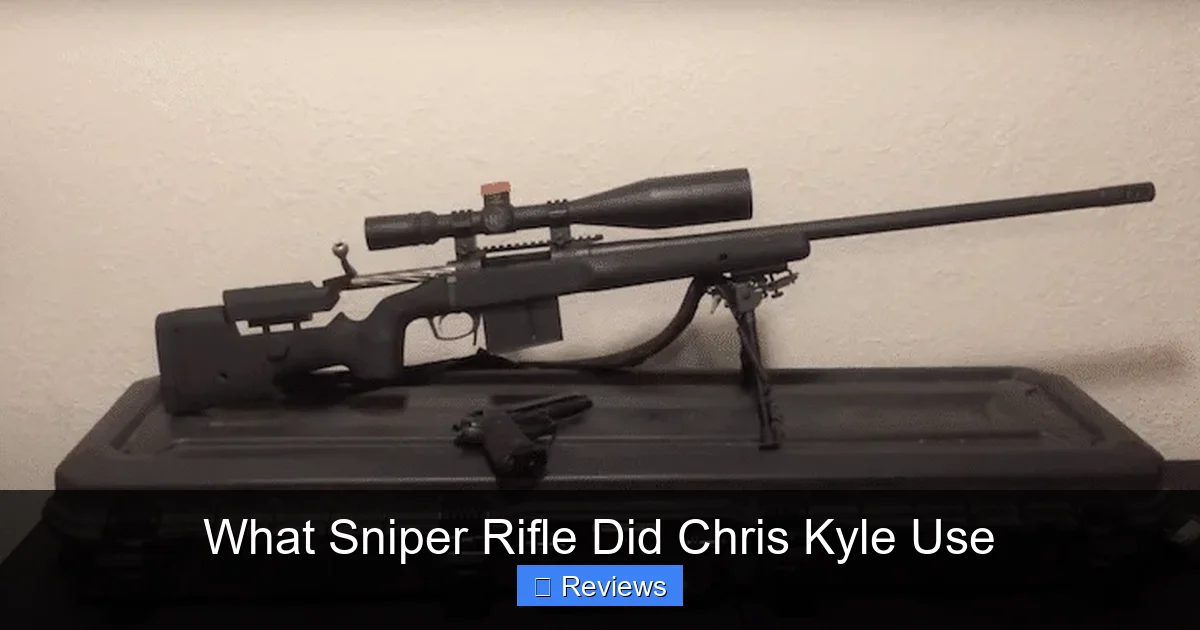
Chris Kyle himself expressed a strong preference for this caliber. He often spoke of using a custom bolt-action rifle, sometimes referred to as a “Larue Tactical OBR” in .300 Win Mag, though he also used other platforms. The emphasis was on the caliber’s capability. A common configuration would involve a high-quality custom action, a heavy match-grade barrel, and a robust stock, all designed to maximize accuracy and consistency.
Practical Tip: When considering what sniper rifle did Chris Kyle use, remember that the caliber is often more indicative of capability than the specific brand of rifle. The .300 Win Mag offered a significant leap in long-range effectiveness over the .308 for those crucial overwatch missions.
The .338 Lapua Magnum and Extreme Long-Range Shots
For the truly extreme long-range engagements – think 1,000 yards and beyond – Chris Kyle also utilized rifles chambered in **.338 Lapua Magnum**. This cartridge is a beast, specifically designed for military snipers to engage targets at very extended distances, well beyond what typical rifle rounds can achieve.
When the .338 Lapua Magnum Shined
The .338 Lapua Magnum is known for its incredible ballistic coefficient, meaning it resists drag exceptionally well, leading to a flatter trajectory and less wind drift at extreme ranges. This makes it a formidable choice for taking down targets from distances that seem almost impossible with lesser calibers. Kyle’s longest confirmed kill, at 2,100 yards (approximately 1.2 miles), was reportedly made with a .338 Lapua Magnum rifle, although specific details about that particular rifle model are less frequently disclosed.
Using a .338 Lapua Magnum requires immense skill, not just in shooting, but in understanding environmental factors like wind, temperature, humidity, and atmospheric pressure. These factors have a much greater impact on a bullet’s flight path over such vast distances. It’s a testament to Kyle’s dedication and mastery of external ballistics that he could consistently make such shots in combat.
When discussing what sniper rifle did Chris Kyle use, it’s clear he had a toolkit, not just a single hammer. The .338 Lapua Magnum was the precision instrument for those surgical, long-distance operations where no other caliber would suffice.
Beyond the Rifle: Kyle’s Philosophy and Skill
While the specific firearms are fascinating, it’s crucial to understand that Chris Kyle himself always emphasized that the *shooter* is far more important than the *rifle*. In his book, “American Sniper,” and in countless interviews, he consistently stated that even the best rifle in the world is useless without a highly trained individual behind it.
The Human Element: Training, Discipline, and Instinct
Kyle’s effectiveness wasn’t just about his choice of weapon; it was about his rigorous training, his understanding of ballistics, his ability to read wind and terrain, and his unwavering mental discipline under immense pressure. He spent countless hours perfecting his craft, both in training and in combat. His ability to remain calm and focused, to make split-second decisions, and to execute precise shots in life-or-death situations truly set him apart.
He often recounted how snipers would modify their rifles, not for a brand name, but for reliability and personal comfort – a custom stock, a specific trigger pull, or a favorite optic. These customizations were aimed at making the rifle an extension of the shooter, allowing for seamless operation and maximum accuracy. So, when people ask what sniper rifle did Chris Kyle use, the implicit answer should always include “and the extraordinary man operating it.”
Practical Example: A novice with a .338 Lapua Magnum rifle will likely miss a target at 500 yards, while a highly skilled shooter like Kyle, with a basic .308, could consistently hit targets at 800 yards. This highlights the paramount importance of skill over mere hardware.
Accessories and Customization: Optimizing Performance
A sniper rifle is rarely used in its “out-of-the-box” configuration. Chris Kyle’s rifles, like those of most military snipers, were equipped with a suite of accessories designed to enhance their performance and adaptability in the field. These aren’t just cosmetic additions; they are crucial tools that integrate with the rifle to create a complete system.
Essential Sniper Rifle Accessories
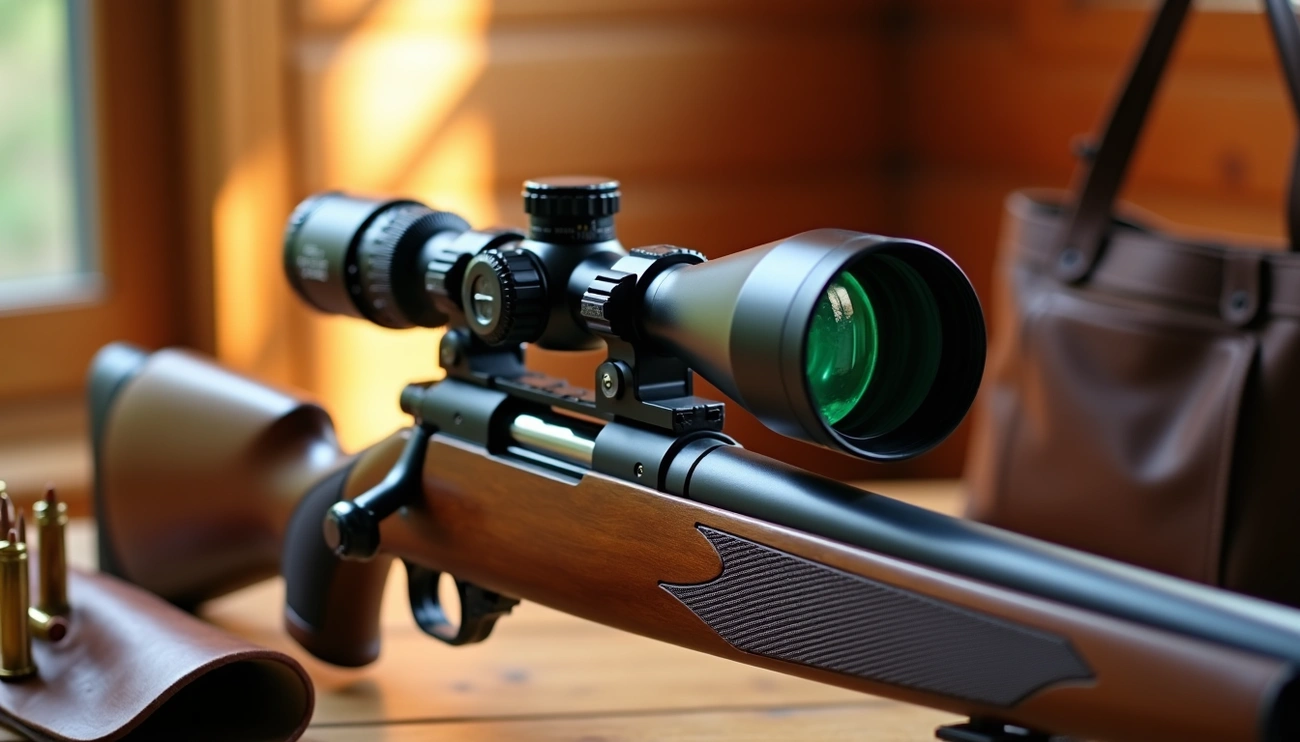
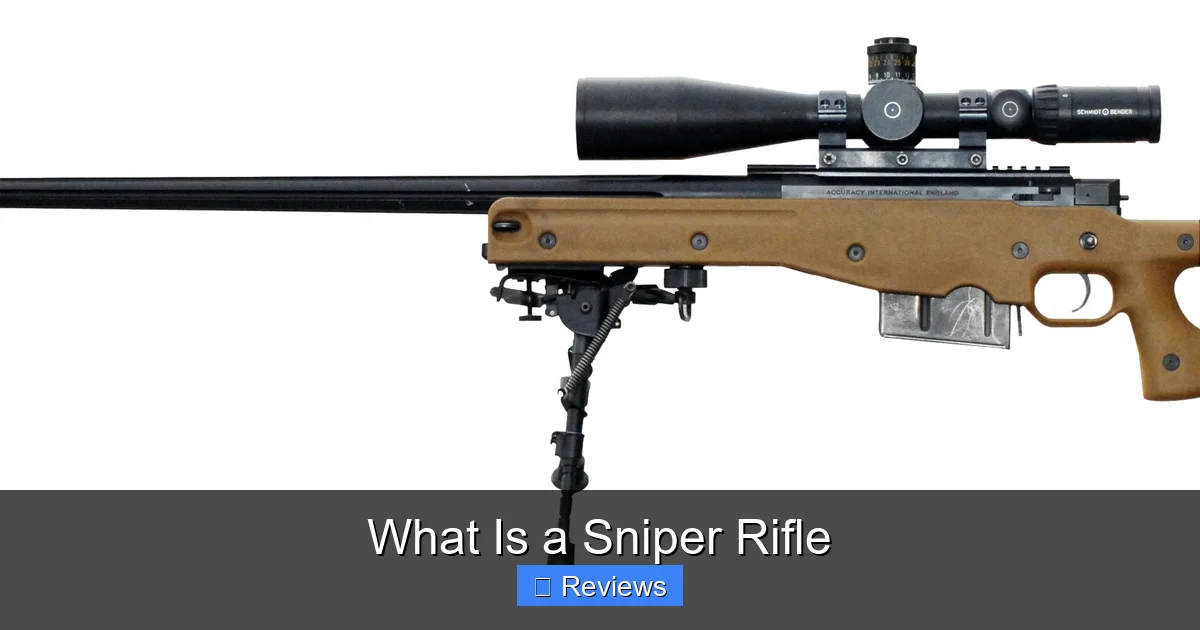
- Optics (Scopes): This is arguably the most critical accessory. Kyle used high-quality, variable-power scopes from manufacturers like Leupold, Nightforce, and Schmidt & Bender. These optics allowed for precise target acquisition and ranging at extreme distances, often featuring advanced reticles for holdovers and windage adjustments. The clarity, light transmission, and ruggedness of these scopes were paramount.
- Bipods: Essential for stability, bipods like Harris or Atlas models allowed Kyle to establish a stable firing platform from prone positions, drastically reducing shooter-induced movement.
- Suppressors: Also known as silencers, these devices reduce the muzzle flash and sound signature of the rifle. For a sniper, this is vital for concealment, preventing the enemy from pinpointing their location after a shot, and also protecting the sniper’s hearing during prolonged engagements.
- Sling: A good sling isn’t just for carrying; it can be used to create additional stability when shooting from unsupported positions.
- Ammunition: While not an accessory *on* the rifle, the choice of match-grade ammunition was critical. Kyle used specific types of ammunition (e.g., Mk 316 Mod 0 or Mk 248 Mod 1 for .300 Win Mag) that were known for their consistency and ballistic performance, ensuring every shot was as accurate as possible.
These components worked in harmony to create a complete sniper system. It’s not just what sniper rifle did Chris Kyle use, but how that rifle was outfitted and optimized for peak performance in combat.
The Legacy of a Legend: More Than Just a Weapon
Chris Kyle’s legacy is immense, not just for his combat record but for his dedication to his fellow servicemen and his post-military work. His story, including his choice of weapons, continues to inspire and inform. The firearms he used are an integral part of that story, representing the tools of a professional who excelled in one of the most demanding roles in combat.
The answer to what sniper rifle did Chris Kyle use is multifaceted, reflecting an evolution in tactics and technology. From the versatile Mk 11 Mod 0 for rapid engagement to the powerful .300 Win Mag for extended ranges, and even the formidable .338 Lapua Magnum for extreme distance shots, Kyle was a master of adaptation. He understood that while the rifle was critical, it was ultimately an extension of his own formidable skill and unwavering resolve. His choices highlight the importance of understanding specific mission requirements, adapting one’s tools, and above all, honing one’s craft to an unparalleled level. The rifles are part of the legend, but the man behind them is the true story.
Conclusion
In conclusion, understanding what sniper rifle Chris Kyle used reveals a professional who equipped himself with the best available tools for the job. He began with the reliable Mk 11 Mod 0, transitioned to the powerful .300 Winchester Magnum for most long-range duties, and employed the .338 Lapua Magnum for extreme distance engagements. Each choice was deliberate, aimed at maximizing effectiveness in the harsh realities of combat. Yet, perhaps the most profound lesson from Kyle’s experience is that the rifle, while vital, is only as good as the shooter. His unparalleled skill, unwavering focus, and deep understanding of ballistics truly made him the “American Sniper,” transforming these powerful firearms into instruments of precision and effectiveness.
Key Takeaways
- No Single Rifle: Chris Kyle did not use just one sniper rifle; his arsenal evolved based on mission, range, and operational needs throughout his four tours in Iraq.
- Mk 11 Mod 0 / SR-25: Early in his career, Kyle frequently employed the KAC Mk 11 Mod 0, a 7.62x51mm semi-automatic precision rifle, for its rapid follow-up shot capability.
- .300 Winchester Magnum: He later favored bolt-action rifles chambered in .300 Winchester Magnum for their superior range and power, especially for longer engagements.
- .338 Lapua Magnum: For extreme long-range shots, Kyle also utilized rifles chambered in .338 Lapua Magnum, known for its incredible ballistic performance at distances over 1,000 yards.
- Shooter Over Equipment: Kyle consistently emphasized that the skill, training, and mindset of the sniper were far more critical than the specific make or model of the rifle itself.
- Customization and Optics: His rifles were typically equipped with high-quality optics, bipods, and sometimes suppressors, chosen to optimize performance for specific mission profiles.
- Adaptability Was Key: Kyle’s success stemmed from his ability to adapt his choice of weapon, ammunition, and tactics to the dynamic and unpredictable combat environments he faced.
Quick Answers to Common Questions
What was Chris Kyle’s primary sniper rifle early in his career?
Early in his career, Chris Kyle frequently used the Knights Armament Company (KAC) Mk 11 Mod 0, which is a semi-automatic precision rifle chambered in 7.62x51mm NATO.
What caliber did Chris Kyle prefer for most long-range engagements?
For most long-range engagements, Chris Kyle preferred bolt-action rifles chambered in .300 Winchester Magnum due to its superior ballistic performance at extended distances.
Did Chris Kyle use a .338 Lapua Magnum?
Yes, Chris Kyle did use rifles chambered in .338 Lapua Magnum for extreme long-range shots, including his longest confirmed kill.
What was Chris Kyle’s longest confirmed kill range?
Chris Kyle’s longest confirmed kill was approximately 2,100 yards (around 1.2 miles), reportedly made with a .338 Lapua Magnum rifle.
Did Chris Kyle emphasize the rifle or the shooter’s skill?
Chris Kyle consistently emphasized that the shooter’s skill, training, and understanding of ballistics were far more important than the specific rifle itself.
🎥 Related Video: What Made The Best American Sniper (Chris Kyle) The Best
📺 Unchained Clips
Dr Peter Attia talks about the famous American Sniper (ex-Navy SEAL) that the movie was based on. Peter was talking to another …
Frequently Asked Questions
What were the main types of sniper rifles Chris Kyle used?
Chris Kyle primarily used three main types of sniper rifles during his career: the semi-automatic KAC Mk 11 Mod 0 (7.62x51mm), various bolt-action rifles chambered in .300 Winchester Magnum, and bolt-action rifles chambered in .338 Lapua Magnum for extreme long-range engagements.
Why did Chris Kyle switch between different calibers?
Kyle switched between different calibers to adapt to varying mission requirements. The 7.62x51mm was good for rapid follow-up shots in urban environments, the .300 Win Mag offered better range and power, and the .338 Lapua Magnum was for truly extreme distances.
Was the Mk 11 Mod 0 a bolt-action or semi-automatic rifle?
The Mk 11 Mod 0, also known as the SR-25, is a semi-automatic precision rifle. Its semi-automatic action allowed for faster follow-up shots compared to a bolt-action rifle, which was advantageous in dynamic combat situations.
What kind of optics did Chris Kyle use on his sniper rifles?
Chris Kyle used high-quality, durable optics from reputable manufacturers such as Leupold, Nightforce, and Schmidt & Bender. These scopes were essential for precise target acquisition, ranging, and holdover adjustments at long distances.
Did Chris Kyle customize his sniper rifles?
Yes, like many professional snipers, Kyle’s rifles were often customized and fitted with various accessories. These typically included high-quality scopes, bipods for stability, and sometimes suppressors to reduce muzzle flash and sound signature.
What is the significance of the .300 Winchester Magnum for snipers?
The .300 Winchester Magnum is significant for snipers due to its excellent ballistic performance at extended ranges. It offers a flatter trajectory and retains more energy at distances beyond 800 meters compared to the more common 7.62x51mm (.308 Win), making it a popular choice for long-range precision shooting.