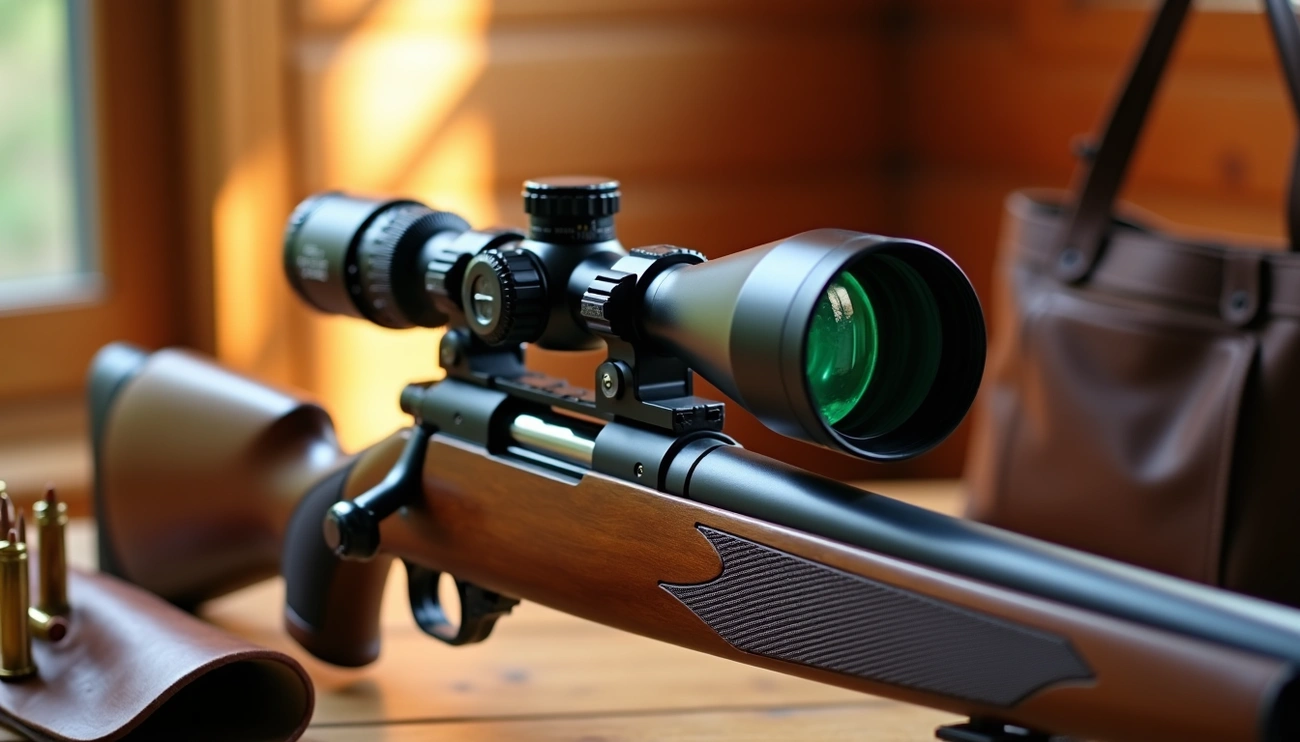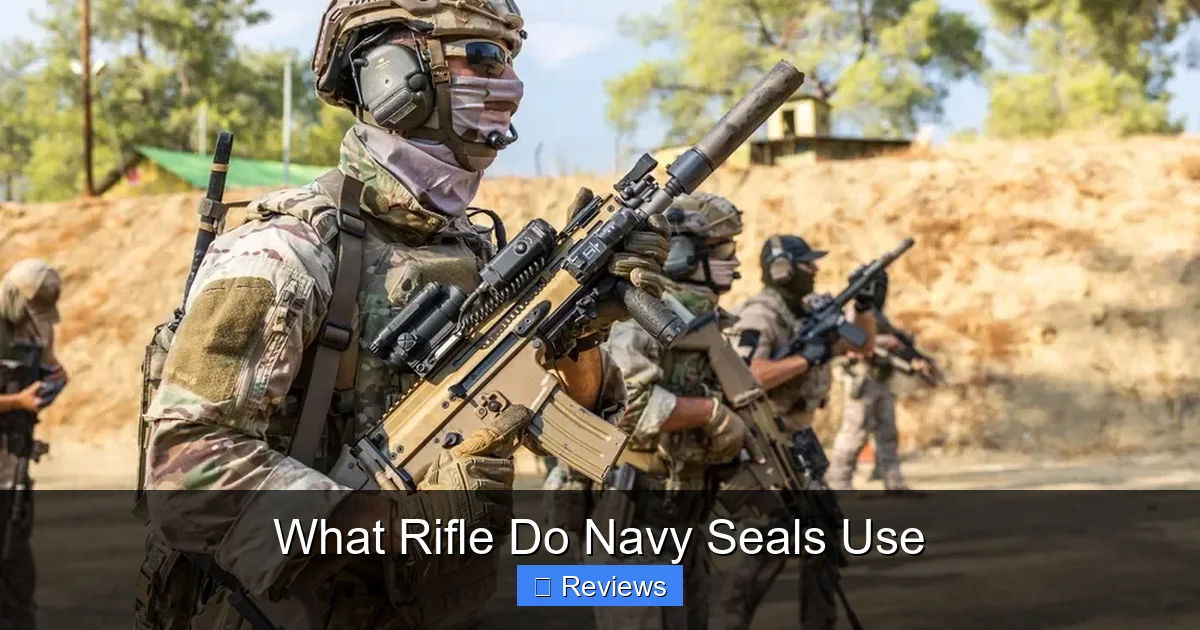
Navy SEALs don’t rely on a single rifle; their arsenal is diverse and mission-specific. While the M4 Carbine and its compact variants like the Mk 18 CQBR are primary choices for most operations, SEALs also utilize specialized firearms such as designated marksman and sniper rifles to meet the unique demands of their elite missions. Their rifle choice emphasizes adaptability, modularity, and operator proficiency over a one-size-fits-all approach, ensuring they always have the right tool for the job.
When you picture a Navy SEAL, what comes to mind? Often, it’s an image of an elite warrior, clad in tactical gear, moving with precision and purpose. And, almost invariably, they’re armed with a formidable rifle. This mental picture sparks a common question among firearms enthusiasts, military buffs, and even casual observers: “What rifle do Navy SEALs use?”
It’s a question that, on the surface, seems simple. But like much of the world of special operations, the reality is far more nuanced and fascinating than a single, straightforward answer. The truth is, there isn’t just one rifle that Navy SEALs use. Instead, their armories are vast, their choices are mission-specific, and their philosophy revolves around adaptability, modularity, and having the right tool for an incredibly diverse set of jobs.
This article will dive deep into the world of Navy SEAL firearms, exploring the primary rifles they employ, the specialized weapons for unique scenarios, and the underlying principles that guide their choices. We’ll unpack why these elite operators select certain platforms and how their training makes them masters of whatever weapon they carry. So, let’s pull back the curtain and uncover the impressive array of rifles wielded by the U.S. Navy SEALs.
Key Takeaways
- No Single Rifle: Navy SEALs employ a diverse array of rifles, chosen specifically for each mission’s unique requirements rather than a single standard issue.
- M4 Carbine is Primary: The M4 Carbine, particularly the compact Mk 18 Mod 0/1 CQBR variant, is the most common and versatile rifle in their inventory, ideal for close-quarters combat.
- Adaptability is Key: SEALs prioritize modularity and customizability, outfitting their rifles with various accessories (optics, lasers, suppressors) to suit different operational environments and mission profiles.
- Specialized Roles: Beyond standard carbines, they utilize designated marksman rifles (DMRs) like the Mk 12 SPR and Mk 20 SSR, and bolt-action sniper rifles like the Mk 13, for long-range precision engagements.
- Caliber Choice Matters: Both 5.56x45mm and 7.62x51mm NATO calibers are widely used, each selected for specific ballistic needs, range, and target effect, showcasing a pragmatic approach to firepower.
- Operator Skill is Paramount: The effectiveness of any rifle ultimately depends on the SEAL’s rigorous training, exceptional proficiency, and ability to maintain their gear under extreme conditions.
- Constantly Evolving: SEAL gear, including their rifle choices, is regularly updated and adapted to incorporate new technologies, tactical insights, and lessons learned from real-world operations.
Quick Answers to Common Questions
What is the primary rifle used by Navy SEALs?
The M4 Carbine and its shorter variant, the Mk 18 Mod 0/1 CQBR (Close Quarters Battle Receiver), are the most commonly used primary rifles by Navy SEALs.
Do Navy SEALs use bolt-action sniper rifles?
Yes, for extreme long-range precision, Navy SEALs utilize bolt-action sniper rifles such as the Mk 13, often chambered in powerful calibers like .300 Winchester Magnum or .338 Lapua Magnum.
Why do SEALs use different rifle calibers like 5.56mm and 7.62mm?
SEALs use different calibers based on mission requirements: 5.56mm for its lighter weight, lower recoil, and maneuverability in close quarters, and 7.62mm for its greater power, range, and penetration capabilities against harder targets or at longer distances.
Are suppressors commonly used on Navy SEAL rifles?
Yes, suppressors are almost universally used by Navy SEALs. They reduce muzzle flash for stealth and night vision compatibility, and mitigate sound to protect hearing and facilitate communication during operations.
Do Navy SEALs get to choose their specific rifle setup?
Within mission parameters and approved equipment lists, individual SEAL operators often have a degree of latitude to customize their rifle setup with preferred optics, grips, lights, and other accessories to best suit their shooting style and role within the team.
📑 Table of Contents
The SEAL Philosophy: Adaptability and Mission-Specific Gear
The core of understanding what rifle do Navy SEALs use lies in their operational philosophy: complete adaptability. SEALs operate in every imaginable environment – from arid deserts and dense jungles to urban landscapes, frozen tundras, and vast oceans. Each mission presents unique challenges, demanding specific tools and tactics. This means a “one-size-fits-all” approach to firearms simply doesn’t work.
Not a One-Size-Fits-All Approach
Unlike conventional infantry units who might carry a standard-issue rifle for most situations, Navy SEALs have the luxury – and the necessity – of choosing their equipment based on the objective at hand. Planning a clandestine raid on a ship? A compact, suppressed carbine might be ideal. Conducting overwatch from a distant perch? A precision sniper rifle is essential. Each scenario dictates a different requirement, and SEALs are equipped to meet them all. It’s less about “what rifle do Navy SEALs use” generally, and more about “what rifle did that specific SEAL use for that specific mission.”
This approach means their armory is a constantly evolving ecosystem of cutting-edge technology and proven, reliable platforms. They train extensively with a wide variety of weapon systems, ensuring that no matter the rifle they pick up, they are proficient masters of it.
The Importance of Modularity
Modularity is another cornerstone of the SEALs’ gear selection. Many of the rifles they use are designed to be highly customizable, allowing operators to quickly change components or add accessories to suit the mission. This could mean swapping out barrel lengths, attaching different optics for day or night operations, adding laser aiming modules, or equipping suppressors for stealth.
Think of it like a professional chef choosing their knives – they have a specific knife for every task, but they also have versatile knives that can be adapted for many uses. For SEALs, their rifles are often their primary “knife,” and they need to be able to transform it for delicate precision work or heavy-duty cutting, depending on the ingredients (or threats) they face.
The Legendary M4 Carbine and its Variants
Despite the emphasis on variety, if there’s one rifle that comes closest to being a “standard” for Navy SEALs, it’s the M4 Carbine and its various iterations. This platform, a shorter, lighter version of the M16 assault rifle, has been a workhorse for U.S. special operations forces for decades, and for good reason.
Visual guide about What Rifle Do Navy Seals Use
Image source: trendingbreeds.com
The Standard Issue M4
The M4 Carbine, chambered in 5.56x45mm NATO, offers an excellent balance of firepower, portability, and reliability. It’s effective at typical engagement ranges for infantry and highly maneuverable in urban environments or confined spaces. While it’s the standard for much of the U.S. military, SEALs often use highly customized versions.
For a long time, the M4 was often seen equipped with the SOPMOD (Special Operations Peculiar MODification) kit. This kit provided a standardized set of accessories – optics, foregrips, lasers, and weapon lights – allowing operators to configure their rifles as needed. This was an early practical example of the modularity principle in action.
The Mk 18 Mod 0/1 CQBR: The Close Quarters King
Perhaps the most iconic rifle variant used by Navy SEALs, especially in recent years, is the Mk 18 Mod 0 or Mod 1 Close Quarters Battle Receiver (CQBR). This is essentially an M4 with a significantly shorter barrel, typically 10.3 inches. Why such a short barrel?
- Maneuverability: In close-quarters battle (CQB) scenarios like room clearing, ship boarding (VBSS – Visit, Board, Search, and Seizure), or vehicle operations, a shorter rifle is immensely easier to handle. It reduces snagging on doorways, equipment, or fellow operators.
- Weight Reduction: A shorter barrel naturally makes the rifle lighter, reducing operator fatigue during prolonged missions.
- Concealment: While SEALs aren’t typically “concealing” their primary rifle in a conventional sense, a shorter weapon can be less obtrusive when operating in tight spaces or when dismounting from vehicles.
The Mk 18 is a favorite because it excels where maximum maneuverability is critical, proving that sometimes, less length means more effectiveness. When asked what rifle do Navy SEALs use for entry operations, the Mk 18 is often the answer.
Customization and Accessories
The M4/Mk 18 platform’s rail system allows for an incredible array of accessories. This is where the individual operator’s preference and mission requirements truly shine. Common additions include:
- Optics: Red dot sights (like Aimpoint or EOTech) for fast target acquisition in CQB, or magnified optics (like the ACOG or various low-power variable optics, LPVOs) for slightly longer engagements.
- Suppressors: These are almost universally used by SEALs. Suppressors reduce muzzle flash (important for stealth and night vision compatibility) and mitigate the deafening sound of gunfire, protecting the operators’ hearing and making communication easier.
- Laser Aiming Modules (LAMs): Devices like the PEQ-15 or MAWL provide visible and infrared lasers for aiming, especially useful with night vision devices.
- Weapon Lights: Essential for target identification in low-light conditions.
- Vertical Foregrips/Angled Foregrips: Improve weapon control and ergonomics.
The ability to mix and match these accessories is paramount. For example, a SEAL on a night raid might opt for a red dot, an IR laser, and a suppressor, while another on a daytime patrol might prefer an LPVO and a visible light. It’s all about tailoring the tool to the specific task, showcasing the true versatility of what rifle do Navy SEALs use.
Beyond the M4: Specialized Rifles for Specialized Missions
While the M4/Mk 18 handles a vast majority of engagements, there are situations where a different kind of firepower or precision is needed. This is where the truly specialized rifles enter the Navy SEALs’ arsenal.
Sniper and Designated Marksman Rifles (DMRs)
For long-range precision, SEALs deploy a range of sniper rifles and designated marksman rifles. These are designed to engage targets accurately at distances far beyond a standard carbine’s capability.
- Mk 12 SPR (Special Purpose Rifle): An evolution of the AR-15 platform, the Mk 12 is a highly accurate 5.56x45mm rifle used for designated marksman roles. It bridges the gap between a standard carbine and a dedicated sniper rifle, allowing SEALs to provide precision fire at intermediate ranges (300-600 meters).
- Mk 11 Mod 0/Mod 2 (SR-25): This is a semi-automatic precision rifle chambered in 7.62x51mm NATO. It offers rapid follow-up shots compared to bolt-action rifles, making it suitable for situations where multiple precise shots are needed at range. It’s often used by designated marksmen who need more reach and power than the Mk 12.
- Mk 20 SSR (Sniper Support Rifle): Part of the FN SCAR family, the Mk 20 is a 7.62x51mm semi-automatic precision rifle. It’s a newer addition, offering advanced ergonomics and modularity, designed to be highly accurate and reliable for long-range engagements.
- Mk 13 Mod 5/7: When absolute precision at extreme ranges is required, SEALs turn to bolt-action rifles. The Mk 13, typically chambered in .300 Winchester Magnum or .338 Lapua Magnum, is a dedicated sniper rifle used for anti-personnel and anti-materiel roles. Its superior ballistics allow for engagements out to 1500 meters or more, making it the answer to what rifle do Navy SEALs use for the longest shots.
These rifles are critical for overwatch, eliminating high-value targets, and providing suppressive precision fire, demonstrating the depth of what rifle do Navy SEALs use.
Heavy Hitting Rifles and Battle Rifles
Sometimes, the mission calls for more stopping power than the 5.56mm cartridge can provide, particularly against harder targets or at longer ranges where a semi-automatic platform is still preferred over a bolt-action sniper rifle.
- Mk 17 SCAR-H (Heavy): Chambered in 7.62x51mm NATO, the SCAR-H is a modern battle rifle that provides significant terminal ballistics and penetration. Its modular design allows for quick barrel changes, making it adaptable to various roles from a compact carbine to a designated marksman rifle. It’s a powerful and versatile option for situations demanding more punch.
- Mk 14 EBR (Enhanced Battle Rifle): An updated version of the venerable M14 rifle, the Mk 14 EBR in 7.62x51mm offers substantial firepower in a more compact, modern chassis. It’s known for its reliability and hard-hitting round, particularly useful in environments where engaging targets through light cover might be necessary.
These larger caliber rifles answer the question of what rifle do Navy SEALs use when 5.56mm isn’t quite enough, providing greater energy and range without sacrificing semi-automatic fire capability.
Caliber Choices and Their Implications
The choice of ammunition caliber is as crucial as the choice of rifle. SEALs meticulously consider the ballistic performance, weight, and target effects of different calibers when preparing for a mission. This decision directly impacts mission success and operator safety.
5.56x45mm NATO: The Standard
The 5.56mm cartridge is the most common caliber for military rifles worldwide, and for good reason. It offers:
- Lightweight: Operators can carry more ammunition for the same weight, which is critical for extended operations.
- Low Recoil: Easier to control, allowing for faster and more accurate follow-up shots.
- High Velocity: Provides a flat trajectory and effective range for most infantry engagements.
However, the 5.56mm round can sometimes be criticized for its terminal performance, particularly from very short barrels (like the Mk 18) and against tougher barriers. Despite this, its advantages make it the primary choice for what rifle do Navy SEALs use in most close to medium-range engagements.
7.62x51mm NATO: For Power and Range
When SEALs need more power, whether for increased range, better penetration, or greater terminal effect, they turn to the 7.62x51mm NATO round. This caliber offers:
- Greater Energy: Delivers more kinetic energy to the target, improving effectiveness against personnel and light vehicles.
- Superior Barrier Penetration: Better at defeating intermediate barriers like light cover, car doors, or certain building materials.
- Extended Effective Range: Maintains accuracy and energy at longer distances, making it ideal for DMRs and battle rifles.
The trade-offs are increased weight (both of the ammunition and the rifle itself) and greater recoil. Nonetheless, for certain missions, the benefits of the 7.62mm outweigh these drawbacks.
Other Specialized Calibers
Beyond the primary 5.56mm and 7.62mm, SEALs utilize other calibers for highly specialized roles:
- .300 Blackout: This round, often used in AR-platform rifles, is designed to perform well in short barrels and is particularly effective when suppressed. It offers a heavier projectile than 5.56mm, providing better terminal ballistics, especially at subsonic velocities, which are ideal for extremely quiet operations.
- .300 Winchester Magnum and .338 Lapua Magnum: These large, powerful cartridges are reserved for dedicated long-range sniper rifles (like the Mk 13). They are chosen for their exceptional accuracy and energy at extreme distances, allowing SEAL snipers to engage targets well beyond a kilometer.
The strategic selection of caliber underscores the tactical sophistication behind what rifle do Navy SEALs use, ensuring optimal performance for every conceivable scenario.
Training, Maintenance, and the Human Element
Ultimately, a rifle, no matter how advanced or specialized, is merely a tool. Its effectiveness is entirely dependent on the operator wielding it. This is where the rigorous training and meticulous care taken by Navy SEALs truly comes into play.
Rigorous Training and Proficiency
SEALs undergo arguably the most intense firearms training of any military unit in the world. They don’t just learn to shoot a rifle; they master it. This includes:
- Fundamentals: Perfecting grip, stance, sight picture, trigger control, and breathing.
- Dynamic Shooting: Engaging targets while moving, transitioning between targets, and shooting from unconventional positions.
- Low-Light and Night Vision Operations: Proficiency with various aiming devices under challenging conditions.
- Stress Inoculation: Training under extreme physical and psychological stress to ensure performance under real-world pressure.
They train with every rifle in their inventory, becoming intimately familiar with its nuances, strengths, and limitations. This high level of proficiency means that regardless of what rifle do Navy SEALs use for a particular mission, they will extract maximum performance from it.
Field Maintenance and Reliability
SEAL missions often take them to remote, unforgiving environments where resupply and extensive weapon repairs are impossible. Therefore, a deep understanding of weapon maintenance is crucial. SEALs are trained to:
- Field Strip and Clean: Perform routine cleaning and lubrication to prevent malfunctions.
- Troubleshoot: Quickly identify and clear stoppages or minor issues under combat conditions.
- Improvise Repairs: When necessary, make minor repairs with limited tools to keep the weapon operational.
Reliability of the rifle is paramount, but the operator’s ability to maintain that reliability in the field is equally important. A reliable rifle, poorly maintained, is a liability.
The Operator’s Preference and Expertise
Within the broad guidelines and mission-specific requirements, individual SEALs often have some latitude in customizing their weapon setup. This isn’t just about aesthetics; it’s about optimizing the tool for *their* body mechanics, *their* shooting style, and *their* specific role within a team. An experienced operator knows what works best for them in a high-stakes environment.
This personal touch, combined with their unparalleled training, truly defines what rifle do Navy SEALs use. It’s not about a list of gear; it’s about the symbiotic relationship between the elite operator and their highly tuned weapon system.
Conclusion
So, what rifle do Navy SEALs use? The definitive answer is: many. From the versatile M4 Carbine and its compact Mk 18 variant that dominates close-quarters engagements, to the precision of the Mk 13 sniper rifle for extreme distances, and the brute force of the Mk 17 SCAR-H, their arsenal is as diverse as the missions they undertake. Their choices are guided by an unwavering commitment to adaptability, modularity, and having the absolute best tool for every job.
But the true takeaway isn’t just about the hardware. It’s about the human element. The most advanced rifle in the world is useless without a skilled hand to wield it. Navy SEALs are masters of their craft, trained to push their equipment and themselves to the absolute limit. Their proficiency, their rigorous training, and their ability to maintain their weapons in the most hostile environments are what truly make them formidable. The rifle is just an extension of the warrior, and for the U.S. Navy SEALs, that extension is always meticulously chosen, expertly maintained, and flawlessly employed.
🎥 Related Video: SEAL Team 6’s Favorite Loadout
📺 NotEnoughMilitaryTalk
Frequently Asked Questions
What is the Mk 18 CQBR?
The Mk 18 CQBR (Close Quarters Battle Receiver) is a variant of the M4 Carbine with a significantly shorter barrel, typically 10.3 inches. This compact size makes it highly maneuverable and effective for close-quarters combat scenarios like room clearing or ship boarding.
Why do SEALs prefer modular rifle systems?
SEALs prefer modular rifle systems because they allow for rapid customization and adaptation to specific mission requirements. Operators can quickly swap barrels, optics, suppressors, and other accessories, ensuring their rifle is perfectly suited for any operational environment, from day to night or urban to maritime.
Are civilian versions of Navy SEAL rifles available?
While direct military-issue rifles are not available to civilians, many manufacturers produce civilian-legal semi-automatic versions of firearms similar to those used by SEALs, such as AR-15 platforms that can be configured to resemble M4s or Mk 18s. However, these often have different barrel lengths, select-fire capabilities, and other features to comply with civilian firearms laws.
Do SEALs ever use AK-47s?
While not a standard issue, Navy SEALs are extensively trained to operate a wide variety of foreign weapons, including the AK-47 and its variants. This proficiency is crucial for operating in regions where such weapons are common, allowing them to use captured enemy firearms or blend in when necessary, although it is not their preferred primary rifle.
How important is optic choice for a Navy SEAL?
Optic choice is extremely important for a Navy SEAL as it directly impacts target acquisition, accuracy, and performance in different lighting conditions. They use a range of optics, from unmagnified red dots for fast CQB to low-power variable optics (LPVOs) for versatile magnification, and powerful magnified scopes for precision long-range engagements.
What is the difference between a DMR and a sniper rifle in SEAL use?
In SEAL use, a Designated Marksman Rifle (DMR) like the Mk 12 or Mk 20 is typically a semi-automatic, highly accurate rifle used to engage targets at intermediate ranges (300-800 meters) to support a squad. A sniper rifle, like the bolt-action Mk 13, is designed for extreme precision and longer engagements (800+ meters), often used by a dedicated sniper team for specific high-value targets or overwatch.