Lee Harvey Oswald famously used a 6.5mm Italian Carcano M91/38 bolt-action rifle, specifically a short-barreled carbine model. This weapon, purchased mail-order under an alias, was equipped with a cheap telescopic sight and was central to the investigations following the assassination of President John F. Kennedy. Its identification and analysis have remained a critical piece of evidence in understanding the tragic events of November 22, 1963.
The assassination of President John F. Kennedy on November 22, 1963, remains one of the most studied and debated events in American history. Beyond the shock and grief, one of the immediate and enduring questions that arose was practical and urgent: what weapon was used to commit such a heinous act? The identification of the rifle played a pivotal role in unraveling the mystery and pointing towards Lee Harvey Oswald as the lone assassin.
For decades, this question has captivated historians, investigators, and the public alike. Understanding what rifle did Lee Harvey Oswald use is not just about naming a piece of hardware; it’s about delving into the forensic evidence, the capabilities of the weapon, and the narrative that shaped one of the 20th century’s most defining moments. Join us as we explore the specifics of this infamous firearm, from its origins to its role in the tragedy that unfolded in Dallas.
Key Takeaways
- The Specific Rifle: Lee Harvey Oswald used a 6.5mm Italian Carcano M91/38 bolt-action carbine rifle, a model known for its compact size and simplicity.
- Mail-Order Acquisition: Oswald purchased the rifle through a mail-order advertisement in *American Rifleman* magazine under the alias “A. Hidell” for approximately $19.95 in March 1963.
- Equipped with a Scope: The Carcano was fitted with an inexpensive 4x telescopic sight, which Oswald is believed to have attached himself, along with a simple leather sling.
- Forensic Identification: Ballistic evidence, including cartridge cases and bullet fragments recovered from the scene, definitively linked the assassination to Oswald’s Carcano rifle.
- Debate on Performance: While considered an unsophisticated and somewhat crude weapon, the Carcano was capable of the shots fired, though debates persist regarding the difficulty and accuracy of those shots under the circumstances.
- Central to Investigations: The rifle played a crucial role in the Warren Commission’s findings and subsequent investigations, providing tangible evidence directly connecting Oswald to the assassination.
Quick Answers to Common Questions
What was the exact model of the rifle Lee Harvey Oswald used?
Lee Harvey Oswald used a 6.5mm Italian Carcano M91/38 bolt-action carbine rifle.
How did Lee Harvey Oswald acquire the rifle?
He purchased the rifle for $19.95 through a mail-order advertisement in *American Rifleman* magazine from Klein’s Sporting Goods, using the alias “A. Hidell.”
Did the rifle have a scope?
Yes, the Carcano rifle found at the Texas School Book Depository was fitted with an inexpensive 4x telescopic sight, which Oswald is believed to have attached himself.
Was the Carcano rifle considered a high-quality or powerful weapon?
No, the Carcano M91/38 was a relatively common, inexpensive military surplus rifle, known for its simplicity and robustness rather than exceptional precision or power compared to other contemporary firearms.
Were the bullets fired from the rifle matched to Oswald’s Carcano?
Yes, forensic ballistic evidence, including bullet fragments and spent cartridge cases, conclusively matched them to the rifle found in the Texas School Book Depository, which was traced to Lee Harvey Oswald.
📑 Table of Contents
The Carcano Rifle: The Weapon Identified
When we talk about what rifle did Lee Harvey Oswald use, we’re talking about a specific model that became instantly recognizable and forever linked to the Dallas tragedy: the 6.5mm Italian Carcano M91/38 bolt-action carbine. This wasn’t a high-tech, custom-built sniper rifle of its time, but rather a relatively common, inexpensive military surplus weapon.
The Model and Caliber
The particular model of the Carcano rifle that Lee Harvey Oswald used was the M91/38 short rifle, chambered for the 6.5×52mm Carcano cartridge. This model was a carbine, meaning it had a shorter barrel than the standard infantry rifle, making it more maneuverable but potentially less accurate at very long ranges. The “M91/38” designation indicates its lineage from the original 1891 Carcano design, with modifications introduced in 1938.
The 6.5mm Carcano cartridge was a relatively low-velocity round compared to some contemporary military calibers. It used a round-nose bullet, which some ballistic experts have noted might have contributed to the peculiar nature of the wounds inflicted during the assassination. Despite its humble origins and common availability as surplus, this was undeniably what rifle did Lee Harvey Oswald use.
Design and Mechanics
The Carcano M91/38 is a bolt-action rifle, meaning that after each shot, the shooter must manually operate a bolt mechanism to extract the spent cartridge, cock the firing pin, and chamber a new round. It feeds from an internal, non-detachable box magazine that holds six rounds. These rounds are typically loaded using an *en bloc* clip, which is inserted into the magazine along with the cartridges and ejected automatically when the last round is chambered.
Its design is simple and robust, characteristic of military rifles designed for mass production and battlefield reliability. While not renowned for exceptional precision or smooth operation compared to some other bolt-action designs of the era, it was a functional firearm. The fact that this was what rifle did Lee Harvey Oswald use underscores that complex, custom weaponry was not a prerequisite for the assassination.
Oswald’s Specific Rifle: Acquisition and Modifications
The journey of this particular Carcano from a surplus dealer to the Texas School Book Depository is a key part of the story when asking what rifle did Lee Harvey Oswald use. Its acquisition and the simple modifications made tell us something about Oswald’s actions and intentions.

Visual guide about What Rifle Did Lee Harvey Oswald Use
Image source: cdn.britannica.com
The Mail-Order Purchase
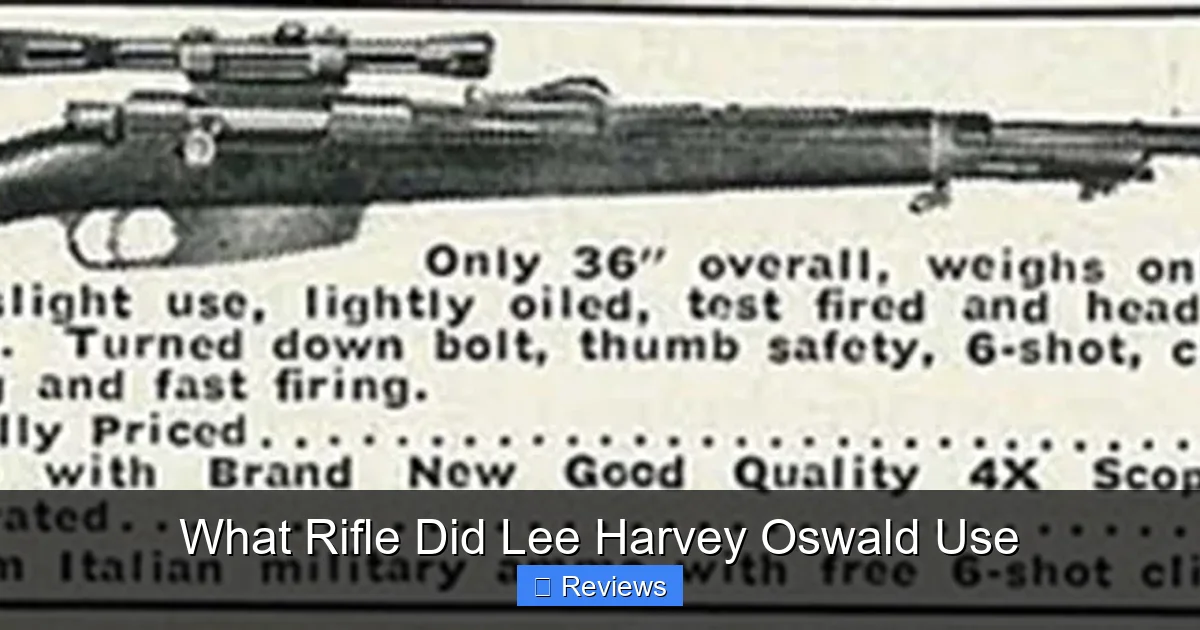
Lee Harvey Oswald obtained the Carcano rifle through a mail-order advertisement found in a February 1963 issue of *American Rifleman* magazine. He ordered it from a Chicago-based company called Klein’s Sporting Goods. To conceal his identity, he used the alias “A. Hidell” – a combination of his middle name “Harvey” and a slight misspelling of “Hildell,” a friend’s last name. The cost was a mere $19.95, plus shipping, a testament to the rifle’s status as readily available surplus.
The rifle was shipped to a post office box in Dallas, registered under Oswald’s alias. The fact that a weapon used in such a pivotal event was acquired so easily through mail order highlighted significant gaps in firearms regulations at the time. This detail is crucial in understanding not just what rifle did Lee Harvey Oswald use, but also how accessible such weapons were.
The Scope and Sling
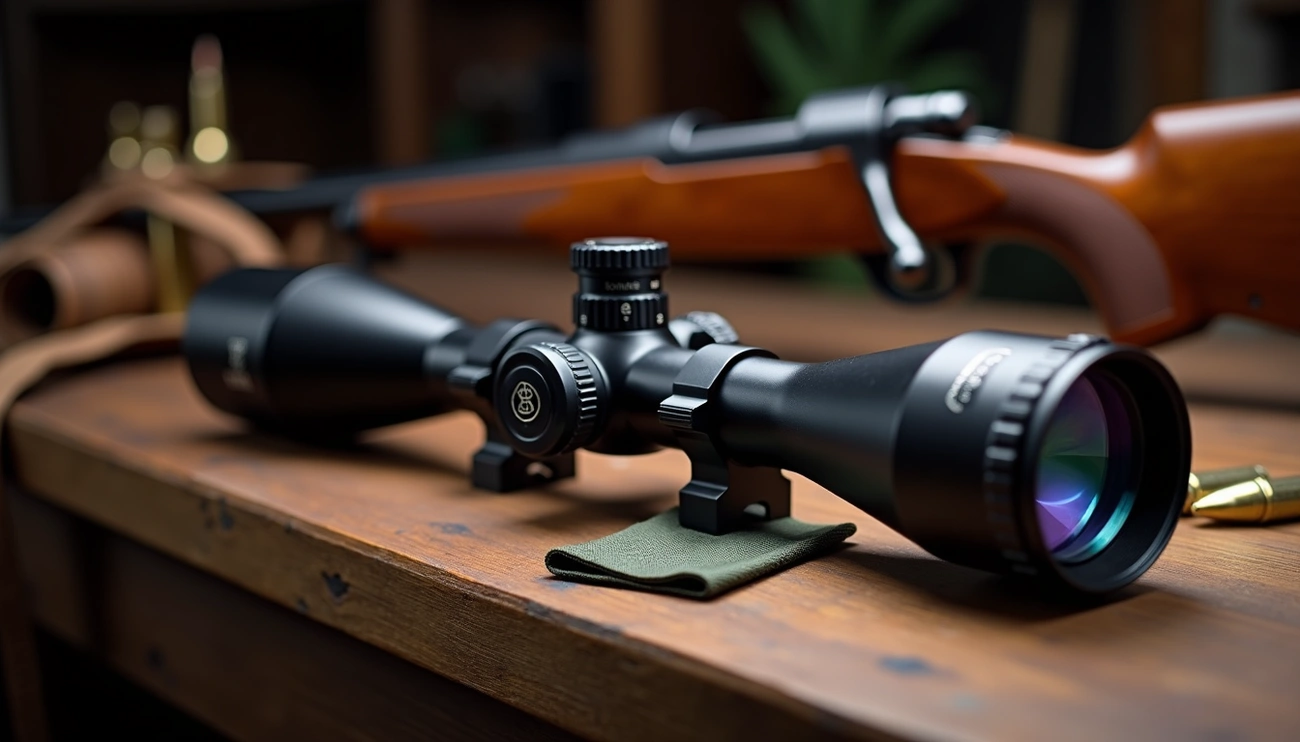
The Carcano rifle found in the Texas School Book Depository was not entirely stock. It had two notable additions: a cheap 4x telescopic sight and a leather sling. The telescopic sight, a rather rudimentary Japanese-made unit, was purchased separately from a sporting goods store and later mounted by Oswald himself. This was a common practice for surplus rifle owners looking to improve their aiming capabilities without investing heavily.
The sling was also a simple leather strap, likely attached by Oswald. This sling would have been useful for carrying the rifle and potentially for aiding in stabilization during aiming, although its primary purpose might have been ease of transport. These modifications, while minor, demonstrate Oswald’s intent to adapt the weapon for more precise shooting, confirming his preparation with the rifle Lee Harvey Oswald used.
Performance and Accuracy of the Carcano
The question of the Carcano’s performance and accuracy has been a subject of intense debate, particularly in the context of the shots fired during the assassination. Was this rifle capable of hitting a moving target three times from a significant distance in a matter of seconds?
Ballistics and Range
The 6.5×52mm Carcano cartridge, while not a powerhouse, was certainly capable of lethal force at the distances involved in the assassination. The range from the sixth-floor window of the Texas School Book Depository to President Kennedy’s limousine was approximately 177 to 266 feet (54 to 81 meters), depending on the exact location of the vehicle when each shot was fired. These are not extreme distances for a rifle, even for a relatively inexpensive one.
The round-nose bullet, while sometimes criticized for its aerodynamic properties compared to spitzer-style bullets, would have maintained sufficient energy and stability over these relatively short ranges. The trajectory would have been predictable enough for a shooter with some proficiency. Forensic tests and reenactments have repeatedly demonstrated that the rifle Lee Harvey Oswald used was capable of firing the shots.
Debate on Accuracy and Rate of Fire
The main point of contention regarding the Carcano’s performance has often revolved around the speed and accuracy of the shots. The Warren Commission concluded that Oswald fired three shots in approximately 5.6 seconds. This requires rapid bolt manipulation and reacquisition of the target between shots, especially given the presence of a telescopic sight which narrows the field of view.
Critics of the Warren Commission’s findings have often cited the Carcano’s alleged crudeness and Oswald’s presumed lack of marksmanship skills as reasons why he couldn’t have made those shots. However, numerous experts and reenactments, including those by the FBI and various sharpshooters, have shown that it is entirely possible to fire three aimed shots from the Carcano M91/38 within the timeframe, even by a shooter of average skill. Oswald, having served in the Marine Corps, possessed some level of rifle training, although his marksmanship scores were inconsistent.
The combination of a bolt-action rifle, a scope, and the critical time constraint creates a unique challenge. However, the consistent conclusion from forensic analysis is that what rifle did Lee Harvey Oswald use was indeed capable of the task.
The Carcano in the Investigations
The Carcano rifle was not just a prop in the assassination story; it was a central piece of forensic evidence that anchored the official investigations, particularly the Warren Commission’s findings.
Initial Identification
Shortly after the assassination, a rifle was discovered on the sixth floor of the Texas School Book Depository building. Initial reports incorrectly identified it as a German Mauser. However, careful examination by firearms experts quickly corrected this, identifying it as the 6.5mm Italian Carcano M91/38. This immediate identification was critical in directing the investigation.
The rifle was then traced through its serial number (C2766) back to Klein’s Sporting Goods and, eventually, to Lee Harvey Oswald, via his mail-order purchase under the alias “A. Hidell.” This unbroken chain of evidence linking the rifle found at the scene directly to Oswald was a cornerstone of the case against him.
Forensic Linkages and Testing
Forensic examination of the rifle and the evidence recovered from the scene provided conclusive proof. Bullet fragments and intact bullets recovered from President Kennedy’s body, Governor John Connally, and the limousine interior were ballistically matched to the Carcano rifle. The unique microscopic markings imparted by the rifle’s barrel on the bullets, known as rifling characteristics, were consistent with those of Oswald’s rifle. Furthermore, the spent cartridge cases found on the sixth floor were matched to the rifle’s firing pin and extractor marks.
Extensive testing, including firing the rifle, was conducted by forensic experts from the FBI and other agencies. These tests aimed to verify the rifle’s functionality, its accuracy, and the time required to fire multiple shots. These tests consistently demonstrated that what rifle did Lee Harvey Oswald use was in good working order and capable of producing the shots as described by witnesses and forensic evidence. Reenactments were also conducted, sometimes using experienced marksmen, to demonstrate the feasibility of the shooting timeline.
Beyond the Rifle: The Context of the Assassination
While the focus here is what rifle did Lee Harvey Oswald use, it’s important to briefly place this weapon within the broader context of the assassination and its enduring controversies. The Carcano, while central, is just one piece of a much larger, complex puzzle.
The Single Bullet Theory and the Rifle’s Role
The infamous “Single Bullet Theory,” also known as the “Magic Bullet Theory,” posits that a single bullet, fired from Oswald’s Carcano, struck President Kennedy and then went on to wound Governor Connally seven times. This theory, initially proposed by the Warren Commission, was crucial for explaining how all seven wounds could have been inflicted by just two bullets (one missing entirely, one hitting Kennedy and Connally) within the short timeframe available to a single shooter.
The Carcano’s 6.5mm round-nose bullet played a significant role in this theory. The bullet that supposedly caused these extensive injuries, CE 399, was found nearly pristine on a stretcher at Parkland Memorial Hospital. Its relatively undamaged condition after passing through two men has been a major point of contention and conspiracy theories. However, forensic analysis of the bullet and the rifle’s capabilities suggests that such a scenario, while improbable, was not impossible given the Carcano’s specific ammunition characteristics and the angles involved.
Enduring Questions and the Rifle’s Legacy
Despite the overwhelming forensic evidence linking the Carcano to the assassination and to Lee Harvey Oswald, questions and alternative theories have persisted for decades. These often focus on the perceived difficulty of the shots, Oswald’s marksmanship, or the possibility of a second shooter. However, no credible evidence has ever successfully refuted the fact that the Carcano rifle was the weapon used to fire the fatal shots.
The rifle itself, now housed in the National Archives, stands as a stark and silent witness to one of America’s darkest days. It serves as a tangible link to history, a physical answer to the persistent question: what rifle did Lee Harvey Oswald use? Its story is intertwined with the tragic events of November 22, 1963, and it remains a potent symbol of the assassination and its aftermath.
Conclusion
In conclusion, the question of what rifle did Lee Harvey Oswald use has a clear and definitive answer: a 6.5mm Italian Carcano M91/38 bolt-action carbine. This military surplus weapon, purchased for a modest sum via mail order, was modified with an inexpensive scope and sling. It was this rifle that left the ballistic signatures on the bullets and cartridge cases recovered from Dealey Plaza, forming the bedrock of the official investigations into President Kennedy’s assassination.
While debates about the difficulty of the shots, Oswald’s skills, or broader conspiracy theories continue, the physical evidence consistently points to the Carcano as the instrument of the crime. Understanding this specific rifle, its characteristics, and how it was acquired offers crucial insights into the tragic events of that fateful day. It reminds us that sometimes, even ordinary objects can become inextricably linked to extraordinary moments in history, forever etched into our collective memory.
🎥 Related Video: Lee Harvey Oswald's Rifle
📺 Mark Felton Productions
In this new series we examine what happened to weapons used in infamous crimes or incidents. In this episode, the fates of Lee …
Frequently Asked Questions
What caliber was Lee Harvey Oswald’s rifle?
Lee Harvey Oswald’s rifle was chambered for the 6.5×52mm Carcano cartridge. This specific caliber was common for Italian military firearms of that era and used a distinctive round-nose bullet.
Where was the rifle found after the assassination?
The Carcano rifle was discovered on the sixth floor of the Texas School Book Depository building in Dallas, Texas, partially hidden among boxes of books. It was found shortly after the assassination occurred.
Was Lee Harvey Oswald a skilled marksman?
Oswald had some rifle training from his time in the Marine Corps, but his marksmanship scores were inconsistent, sometimes being rated as “sharpshooter” and other times as “marksman” (a lower rating). While not an elite shooter, experts have concluded he was capable of firing the shots.
What happened to the rifle after the investigation?
After being a crucial piece of evidence in the Warren Commission and subsequent investigations, the Carcano rifle, along with other evidence related to the assassination, is now housed and preserved by the National Archives and Records Administration.
Why is there debate about the rifle’s capabilities?
Debate often centers on the perceived difficulty of firing three aimed shots from a bolt-action rifle with a basic scope in a short timeframe, as well as the unique wound characteristics. However, numerous reenactments and expert analyses have affirmed the Carcano’s capability to perform the task.
Could the Carcano M91/38 fire as rapidly as needed for the assassination?
Yes, despite being a bolt-action rifle, expert shooters and forensic tests have repeatedly demonstrated that it is possible to cycle the bolt, re-aim, and fire three shots from the Carcano M91/38 within the estimated timeframe of 5.6 seconds, particularly by a shooter with some rifle experience.