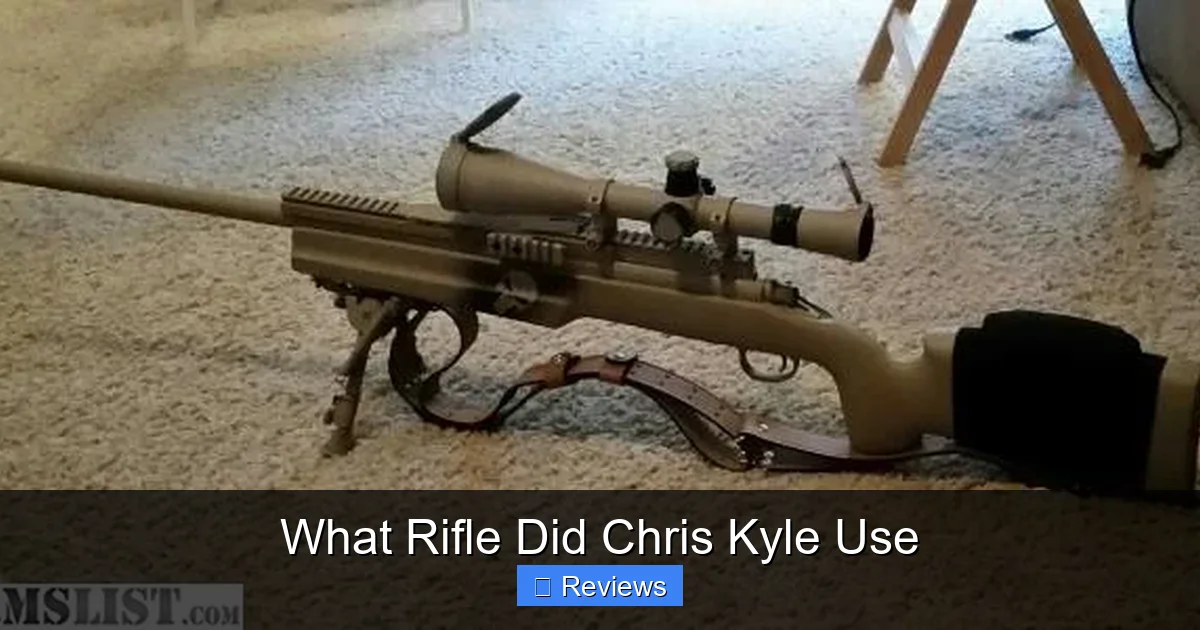
Chris Kyle, renowned as ‘The American Sniper,’ primarily relied on two powerful rifles during his storied career: the McMillan TAC-338 and a .300 Winchester Magnum bolt-action rifle. While the TAC-338, chambered in .338 Lapua Magnum, was favored for its extreme long-range capability, the .300 Win Mag served as a reliable workhorse, adaptable to various combat scenarios. These choices reflect his precision, power, and adaptability in the field, making his understanding of what rifle Chris Kyle used crucial to his effectiveness.
Chris Kyle, often called ‘The American Sniper,’ left an undeniable mark on military history. His four tours in Iraq as a Navy SEAL sniper made him a legend. With over 160 confirmed kills, he became the deadliest sniper in U.S. military history. When we think of such a skilled shooter, it’s natural to wonder about his tools. So, what rifle did Chris Kyle use to achieve such incredible feats?
It’s a question many firearms enthusiasts and military history buffs ask. The truth is, a sniper’s rifle is more than just a piece of equipment. It’s an extension of their skill, their training, and their mission. Chris Kyle, like any elite sniper, understood this deeply. He didn’t just pick one rifle; he used several, adapting to the demands of each situation. Let’s dive into the fascinating world of the firearms that accompanied this legendary figure.
Understanding what rifle Chris Kyle used gives us insight into the precision, power, and versatility required of a military sniper. It also highlights the importance of choosing the right tool for the job. Kyle’s preferences were shaped by real-world combat scenarios, reflecting the needs of an operator who had to perform under immense pressure. Let’s explore his arsenal, starting with his most famous sniper rifles.
Key Takeaways
- Primary Long-Range Rifle: Chris Kyle extensively used the McMillan TAC-338, chambered in .338 Lapua Magnum, for its exceptional accuracy and power at extreme distances.
- Versatile Combat Rifle: He also frequently employed a .300 Winchester Magnum bolt-action rifle, valued for its balance of range, accuracy, and stopping power in diverse combat situations.
- Adaptability in Weapon Choice: Kyle’s selection of rifles wasn’t static; he adapted his weaponry based on mission requirements, engagement distances, and available resources, demonstrating his practical approach to what rifle Chris Kyle used.
- Beyond the Rifle: His effectiveness wasn’t just about the rifle; superior optics, ammunition, and extensive training were crucial components of his legendary marksmanship.
- The Mark of a Sniper: Kyle’s rifle choices reflect the demanding requirements of military sniping, prioritizing precision, reliability, and ballistic performance in every weapon he chose.
- Legacy of His Gear: The weapons Chris Kyle used have become iconic, symbolizing his dedication and skill, and continue to inspire discussion among firearms enthusiasts and military historians.
Quick Answers to Common Questions
What was Chris Kyle’s primary sniper rifle?
Chris Kyle’s primary sniper rifle for extreme long-range engagements was the McMillan TAC-338, chambered in .338 Lapua Magnum.
Did Chris Kyle use more than one type of sniper rifle?
Yes, besides the McMillan TAC-338, Chris Kyle also frequently used a .300 Winchester Magnum bolt-action rifle for its versatility in various combat situations.
What caliber was the McMillan TAC-338 Chris Kyle used?
The McMillan TAC-338 Chris Kyle used was chambered in .338 Lapua Magnum, known for its powerful ballistic performance at extreme ranges.
What was the range of the rifles Chris Kyle used?
Rifles like the .338 Lapua Magnum TAC-338 were effective beyond 1,500 yards, with Kyle’s longest reported shot at 2,100 yards. The .300 Win Mag was effective beyond 1,000 yards.
Did Chris Kyle use any rifles other than sniper rifles?
Yes, as a Navy SEAL, Chris Kyle was proficient with and used various other firearms, including the M4 Carbine for close-quarters combat and sometimes the Mk 11 Mod 0 for designated marksman roles.
📑 Table of Contents
The McMillan TAC-338: Kyle’s Long-Range Beast
When most people ask, “what rifle did Chris Kyle use?”, the McMillan TAC-338 is often the first answer that comes to mind. This rifle, chambered in the powerful .338 Lapua Magnum, was Kyle’s go-to for extreme long-range engagements. It’s a rifle built for precision and raw power, designed to hit targets at distances where most other calibers struggle.
The .338 Lapua Magnum cartridge is truly impressive. It’s much larger and more powerful than standard rifle rounds like the .308 Winchester or even the .30-06 Springfield. This extra power translates directly into superior ballistics, especially at long distances. It can defeat body armor and is less affected by wind and gravity over range, making it ideal for taking out high-value targets from afar.
Unpacking the .338 Lapua Magnum Cartridge
The .338 Lapua Magnum was developed specifically for military long-range sniping. Its heavy bullet retains energy and velocity exceptionally well, allowing it to maintain accuracy and devastating impact even past 1,500 yards. This capability was crucial for Kyle in the vast, open environments of Iraq, where engaging targets at extreme ranges was often a necessity. The sheer power of this round means a significant recoil, but for a trained sniper like Kyle, managing it was part of the job.
Key Features of the McMillan TAC-338
The McMillan TAC-338 itself is a highly specialized piece of equipment. McMillan is known for producing high-quality, custom rifles, and the TAC-338 is no exception. It features a heavy barrel for consistent accuracy, a robust action that can handle the powerful .338 Lapua Magnum, and a custom stock designed for stability and shooter comfort. Kyle’s rifle would have been fitted with top-tier optics, often from companies like Leupold or Nightforce, which are essential for making those critical long-distance shots.
- Heavy Barrel: Reduces barrel whip and heat distortion, ensuring consistent accuracy over multiple shots.
- Robust Action: Built to withstand the intense pressures of the .338 Lapua Magnum cartridge.
- Adjustable Stock: Allows the shooter to customize fit for optimal comfort and stability, crucial for precision shooting.
- High-Quality Optics: A clear, powerful scope with precise adjustments is non-negotiable for long-range engagements.
When and Why Kyle Chose the TAC-338
Chris Kyle relied on the TAC-338 for missions requiring extreme precision and range. His longest confirmed kill, an insurgent sniper at 2,100 yards (about 1.2 miles!), was reportedly made with a .338 Lapua Magnum rifle, though the exact rifle model for that specific shot is debated. This incredible shot highlights why a rifle like the McMillan TAC-338 was so vital to his operations. When you needed to reach out and touch someone from a truly safe distance, this was the rifle to have. It provided both the capability and the confidence to engage targets that would be impossible with lesser firearms. This is a huge part of answering what rifle Chris Kyle used for his most famous shots.
The .300 Winchester Magnum: A Reliable Workhorse
While the McMillan TAC-338 might be the star for its extreme range, Chris Kyle also heavily used a .300 Winchester Magnum bolt-action rifle. This caliber is incredibly popular among military snipers and hunters alike due to its excellent balance of range, power, and availability. It’s a very practical choice for a wide variety of combat scenarios, making it a key answer to the question, “what rifle did Chris Kyle use?”
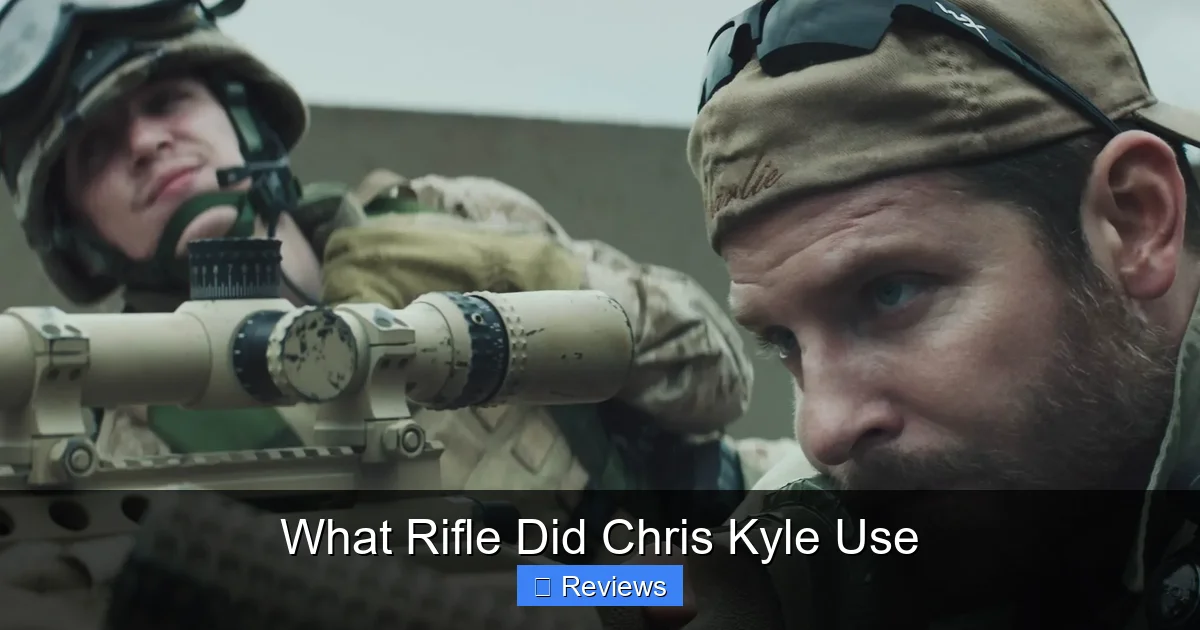
Visual guide about What Rifle Did Chris Kyle Use
Image source: api.time.com
The .300 Win Mag doesn’t have quite the same extreme reach as the .338 Lapua Magnum, but it’s still very effective at ranges well beyond 1,000 yards. What it offers is superior versatility. Ammunition is more common, and the rifles chambered in it tend to be slightly lighter and more manageable than their .338 counterparts. This made it an ideal choice for many of Kyle’s missions where extreme range wasn’t the only factor.
The .300 Win Mag’s Combat Advantages
The .300 Winchester Magnum cartridge offers a flatter trajectory and more energy than the common .308 Winchester, without the massive recoil and cost of the .338 Lapua Magnum. This makes it a great all-around cartridge for military sniping. It provides excellent stopping power against personnel and can even penetrate light barriers. Its ability to perform well across various distances, from medium to long-range, made it an indispensable part of Kyle’s arsenal.
Imagine being in an urban environment where engagement distances vary greatly. You might have a 200-yard shot one moment and an 800-yard shot the next. A .300 Win Mag rifle handles both scenarios effectively, giving the sniper flexibility without needing to swap weapons. This adaptability is key for special operations. Knowing what rifle Chris Kyle used often means understanding the tactical advantages of each.
Common Rifle Platforms for the .300 Win Mag
Unlike the custom McMillan TAC-338, the .300 Win Mag can be found in many different rifle platforms. Snipers in the military often use modified commercial rifles or purpose-built military sniper systems chambered in .300 Win Mag. For example, some units might use highly customized Remington 700 actions, which are renowned for their accuracy and modularity. Chris Kyle likely used various models, potentially including versions of the Mk 13 Mod 5, which is a common .300 Win Mag sniper rifle used by SEALs and other special operations forces.
- Remington 700-based systems: A popular choice for custom builds due to its strong action.
- Mk 13 Mod 5: A precision rifle specifically developed for USSOCOM, often chambered in .300 Win Mag.
- Custom Builds: Snipers often have access to highly customized rifles assembled from various top-tier components.
Adapting to the Mission: Why Versatility Mattered
Chris Kyle was not someone who stuck to just one tool if another was better suited. His choice of the .300 Win Mag alongside the .338 Lapua Magnum perfectly illustrates this. When the mission profile called for a weapon that was easier to maneuver, had more readily available ammunition, and could still deliver precision shots at considerable distances, the .300 Win Mag was his weapon of choice. It speaks volumes about his practical approach to combat and his understanding of exactly what rifle Chris Kyle used for optimal performance in diverse situations.
Beyond Sniper Rifles: Other Weapons in Kyle’s Arsenal
While sniper rifles are what Chris Kyle is most famous for, he was a Navy SEAL. This means he was proficient with a wide array of firearms. A SEAL’s mission can change rapidly, from long-range precision to close-quarters combat. Therefore, his arsenal was much broader than just his primary sniper rifles. It’s important to remember that asking “what rifle did Chris Kyle use” only covers part of his combat reality.
SEALs train extensively with many different weapon systems. They are expected to be masters of all of them. This means Kyle would have also used standard-issue assault rifles, submachine guns, and pistols depending on the operational requirements. His training would have covered everything from room-clearing with an M4 to providing suppressive fire. Let’s look at some other firearms he would have been familiar with and likely carried.
The Mk 11 Mod 0 and Designated Marksman Roles
The Mk 11 Mod 0 is another significant rifle often associated with Navy SEALs. This is a semi-automatic precision rifle chambered in .308 Winchester (7.62x51mm NATO). While not a bolt-action sniper rifle like the McMillan or .300 Win Mag, the Mk 11 is incredibly accurate and provides a higher rate of fire. It’s often used by designated marksmen who work closely with infantry squads, bridging the gap between standard riflemen and dedicated snipers.
Kyle, as a sniper, might have used the Mk 11 in situations where quicker follow-up shots were needed, or for supporting fire roles. It’s a very reliable and accurate platform, well-suited for engagements out to 800-1000 yards. This shows that the answer to what rifle Chris Kyle used isn’t always a single, specific model, but a selection based on strategic needs.
Standard Issue: The M4 Carbine
Every SEAL carries a primary assault rifle, and for Chris Kyle, this would most likely have been an M4 Carbine. The M4 is a gas-operated, magazine-fed, select-fire carbine chambered in 5.56x45mm NATO. It’s compact, reliable, and versatile, making it ideal for everything from vehicle operations to close-quarters battle (CQB). Even as a sniper, Kyle would have carried an M4 for self-defense and when his primary sniper rifle was not suitable for the immediate threat.
Imagine clearing a building; a long, heavy sniper rifle is not practical. An M4, often equipped with optics, lights, and lasers, would be the go-to weapon for such scenarios. It shows that even a specialist like Kyle needed general-purpose tools.
Close Quarters and Sidearms
For even closer engagements or as a backup, Chris Kyle would have carried a sidearm. While specific models can vary, SEALs are often issued pistols like the SIG Sauer P226 or the Heckler & Koch HK45. These pistols offer reliability and sufficient stopping power for close-range defensive situations. Having a pistol readily available is crucial for snipers, especially if they are compromised or need to transition quickly from their primary rifle.
This wide range of weaponry underscores the adaptability and comprehensive training of a Navy SEAL. Kyle’s mastery extended far beyond just his sniper rifles. He was a complete combat operator, skilled with any firearm he needed to employ.
The Sniper’s Edge: Optics, Ammo, and Training
When discussing what rifle Chris Kyle used, it’s easy to focus solely on the rifle itself. However, a rifle is just one piece of the puzzle. The true effectiveness of a sniper, especially one as legendary as Chris Kyle, comes from a combination of the rifle, the optics, the ammunition, and, most importantly, the sniper’s training and skill. Without these elements working together, even the best rifle in the world is just a fancy paperweight.
Think of it like a race car. The engine is crucial, but so are the tires, the suspension, and the driver. For a sniper, the rifle is the engine, but the optics are the eyes, the ammunition is the fuel, and the training is the driver’s skill. Each component is vital for achieving extreme precision and performance in combat.
The Critical Role of High-Quality Optics
A sniper rifle is only as good as the scope mounted on it. For Chris Kyle, high-quality optics were non-negotiable. Brands like Leupold, Nightforce, and Schmidt & Bender are often preferred by military snipers for their clarity, durability, and precise adjustment capabilities. These scopes allow snipers to see targets at extreme distances, compensate for bullet drop and wind, and make minute adjustments for perfect aim.
Without a clear, reliable scope, hitting a target at 1,000 yards or more is virtually impossible. The reticle patterns, illumination features, and rugged construction of these scopes are designed to withstand the harsh realities of combat. They are just as crucial as the barrel and action of the rifle itself. When considering what rifle Chris Kyle used, always remember the glass on top.
Ammunition Matters: Precision and Ballistics
Even with a perfect rifle and scope, using subpar ammunition will ruin any chance of accuracy. Snipers use specialized match-grade ammunition. This ammo is manufactured to extremely tight tolerances, ensuring consistency in bullet weight, powder charge, and primer seating. This consistency is vital for predictable ballistics, which is absolutely critical for hitting distant targets.
For the .338 Lapua Magnum and .300 Win Mag, Kyle would have used heavy, boat-tail projectiles designed for optimal aerodynamic performance. These bullets resist wind drift better and maintain velocity longer, leading to flatter trajectories and more consistent impacts at range. The ammunition choices Chris Kyle used were just as precise as his rifle choices.
The Unseen Weapon: Training and Mindset
Ultimately, the most important factor in Chris Kyle’s effectiveness was his own skill, training, and mindset. Years of rigorous training as a Navy SEAL sniper honed his ability to calculate wind, elevation, and lead. He mastered breath control, trigger discipline, and body positioning. He learned to remain calm under intense pressure, making critical decisions in life-or-death situations.
His ability to read the environment, understand ballistics, and adapt to changing conditions was unparalleled. The rifle was merely a tool in the hands of a master craftsman. His legend is not just about what rifle Chris Kyle used, but how he used it, coupled with his innate talent and relentless dedication to his craft.
The Enduring Legacy: Chris Kyle and His Rifles
Chris Kyle’s story, amplified by his autobiography and the film “American Sniper,” brought military sniping into mainstream discussion. His name became synonymous with elite marksmanship. As a result, the question of what rifle Chris Kyle used has taken on almost mythical status. These discussions highlight not only the man himself but also the advanced technology and rigorous training behind military sniping.
His choices in weaponry reflect the cutting edge of military sniper technology during his service. They showcase the progression from standard military rifles to highly specialized precision instruments capable of incredible accuracy at extreme ranges. Kyle’s legacy continues to influence how we understand and appreciate the role of the sniper in modern warfare.
Inspiring Future Marksmen
For many aspiring shooters and military personnel, Chris Kyle’s story serves as an inspiration. Learning about the specific rifles and calibers he favored helps them understand the demands of precision shooting. It encourages them to delve deeper into ballistics, rifle mechanics, and the importance of consistent training. The lessons derived from what rifle Chris Kyle used extend far beyond just identifying a model number; they speak to dedication and expertise.
His use of different rifles for different scenarios also teaches a valuable lesson: adaptability is key. There isn’t one perfect rifle for every situation. A true expert understands the strengths and weaknesses of various tools and selects the best one for the task at hand. This practical approach is a hallmark of truly effective operators.
Understanding Weaponry in Military Context
By studying the rifles Chris Kyle used, we also gain a better appreciation for the specific challenges and requirements of military sniping. It’s not just about pulling a trigger. It’s about precision engineering, advanced ballistics, and intense psychological and physical conditioning. The rifles he used are symbols of the incredible capabilities that modern military snipers possess.
His story helps demystify the equipment, showing that while technology is important, the human element—the skill, courage, and dedication of the individual—is paramount. The story of what rifle Chris Kyle used is ultimately a story of a warrior who mastered his craft with the best tools available.
Conclusion
So, what rifle did Chris Kyle use? The simple answer is not just one, but primarily two outstanding precision rifles: the McMillan TAC-338 for extreme long-range engagements with its powerful .338 Lapua Magnum cartridge, and a .300 Winchester Magnum bolt-action rifle for its versatile balance of range and power across various combat scenarios. Beyond these, he also utilized standard military firearms like the M4 Carbine and various pistols.
Chris Kyle’s effectiveness was a blend of top-tier weaponry, cutting-edge optics, specialized ammunition, and, most importantly, his unmatched skill and rigorous training. His choices in firearms were always strategic, reflecting the dynamic and demanding nature of his missions as a Navy SEAL sniper. He understood that the right tool, in the hands of a master, could make all the difference.
His legacy reminds us that while the rifle is a crucial instrument, it is the individual behind the scope, with their dedication, expertise, and unwavering resolve, who truly defines the legend. Understanding what rifle Chris Kyle used is an interesting look into his world, but his ultimate legacy is one of courage, precision, and unwavering commitment to his country.
🎥 Related Video: What Made The Best American Sniper (Chris Kyle) The Best
📺 Unchained Clips
Dr Peter Attia talks about the famous American Sniper (ex-Navy SEAL) that the movie was based on. Peter was talking to another …
Frequently Asked Questions
What made the McMillan TAC-338 special for Chris Kyle?
The McMillan TAC-338 was special for Chris Kyle because it was chambered in .338 Lapua Magnum, a round renowned for its extreme long-range accuracy and power. This rifle allowed him to engage targets at distances well over 1,500 yards, which was crucial for many of his missions.
Why did Chris Kyle also use a .300 Winchester Magnum rifle?
Chris Kyle used a .300 Winchester Magnum rifle for its exceptional versatility and balance of power and range. While not as extreme as the .338 Lapua Magnum, the .300 Win Mag offered excellent performance up to 1,000 yards or more, making it suitable for a wider variety of combat scenarios where adaptability was key.
Were the rifles Chris Kyle used custom-built?
Many of the precision rifles used by elite snipers like Chris Kyle, including the McMillan TAC-338, are often custom-built or highly customized from reputable manufacturers. This ensures the highest level of accuracy, reliability, and specific features tailored to military operational requirements.
What role did optics play in Chris Kyle’s accuracy?
Optics played a critical role in Chris Kyle’s accuracy. High-quality scopes from brands like Leupold or Nightforce were essential for seeing distant targets clearly, making precise adjustments for wind and elevation, and ensuring consistent shot placement at extreme ranges. Without superior optics, the capabilities of his rifles would be severely limited.
Did Chris Kyle use the same rifle throughout his career?
No, Chris Kyle did not use the exact same rifle throughout his entire career. Like most military snipers, he adapted his weapon choices based on mission specifics, operational environment, and available equipment. His arsenal included various sniper rifles, assault rifles, and pistols to meet diverse combat needs.
Is the .338 Lapua Magnum the most powerful sniper round available?
While the .338 Lapua Magnum is one of the most powerful and effective sniper rounds for extreme long range, there are even larger calibers, such as the .50 BMG (Browning Machine Gun), used in specialized anti-materiel rifles. The .338 Lapua Magnum strikes an excellent balance of ballistic performance and manageable rifle size for a human operator.