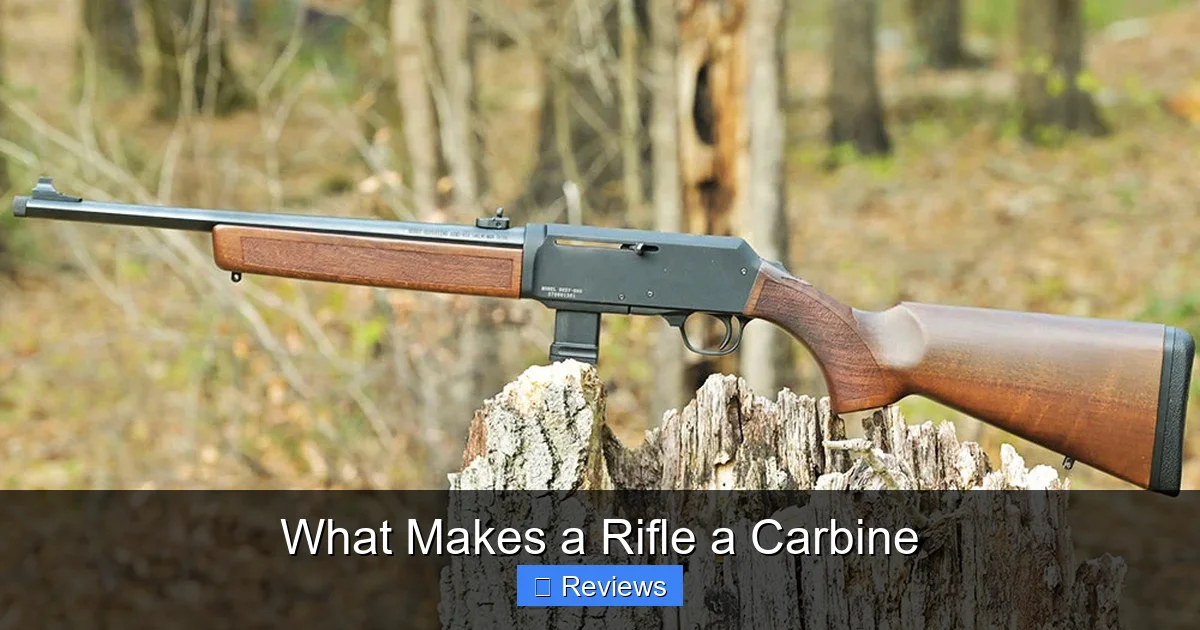
A carbine is essentially a shorter, lighter version of a traditional rifle, primarily distinguished by its barrel length. While rifles typically feature longer barrels for maximum velocity and range, carbines prioritize compactness and maneuverability, often sacrificing a bit of ballistic performance for ease of handling in tight spaces. This difference impacts everything from weight and balance to application, making carbines ideal for close-quarters use, vehicle operations, and general portability.
Have you ever found yourself admiring a sleek, compact firearm, only to hear someone call it a “carbine” while another, similar-looking one is referred to as a “rifle”? It’s a common point of confusion, and for good reason! The lines can seem blurry, especially in the vast world of modern firearms. But fear not, because understanding what makes a rifle a carbine isn’t nearly as complicated as it might first appear.
In essence, a carbine is like the agile, more compact cousin of the traditional rifle. Both are shoulder-fired firearms, designed for accuracy and power, but they diverge in some key areas that make them suited for different roles. This distinction isn’t just academic; it influences everything from how a firearm handles to its practical applications, and even its legal classification in some cases. So, if you’re curious about the nuances that separate these two popular categories, you’ve come to the right place.
Today, we’re going to dive deep into **what makes a rifle a carbine**. We’ll explore the defining characteristics, the historical context, and the practical implications of choosing one over the other. By the end of this article, you’ll not only confidently tell the difference but also understand why manufacturers design them this way and why specific users opt for a carbine over a full-sized rifle, or vice-versa. Let’s unravel this fascinating subject!
Key Takeaways
- Barrel Length is Primary: The most significant factor defining what makes a rifle a carbine is its shorter barrel, typically under 20 inches, with many falling between 14.5 and 16 inches.
- Enhanced Maneuverability: Carbines are designed for compactness and ease of handling, making them superior in close-quarters combat, dense brush, or when operating from vehicles.
- Reduced Weight and Overall Length: Shorter barrels and often lighter stocks contribute to a significantly lower overall weight and length compared to full-size rifles, improving portability and reducing fatigue.
- Ballistic Trade-offs: While more compact, carbines generally experience a slight reduction in muzzle velocity and effective range due to less time for propellant gases to accelerate the projectile.
- Versatile Applications: Carbines are popular among military, law enforcement, and civilians alike for self-defense, home defense, sport shooting, and certain hunting scenarios where compactness is key.
- Legal Considerations: Be aware that excessively short barrels (under 16 inches without a pinned and welded muzzle device to reach 16 inches) can classify a firearm as a Short-Barreled Rifle (SBR) under the NFA, requiring special registration.
Quick Answers to Common Questions
What is the primary difference between a rifle and a carbine?
The primary difference lies in barrel length. Carbines have significantly shorter barrels (typically under 20 inches) compared to full-sized rifles (generally 20 inches or longer), leading to greater compactness and maneuverability.
Are carbines less powerful than rifles?
Generally, carbines may experience a slight reduction in muzzle velocity and kinetic energy compared to rifles chambered in the same cartridge, due to the shorter barrel. However, for most practical ranges, this difference is often negligible and specific calibers are optimized for shorter barrels.
Can a carbine be used for hunting?
Yes, carbines are excellent for hunting, especially in dense brush or environments where maneuverability is key and long-range shots are uncommon. However, consult local hunting regulations regarding minimum barrel length or specific firearm types.
Is a pistol caliber carbine (PCC) considered a true carbine?
Yes, a pistol caliber carbine (PCC) absolutely fits the definition of a carbine. It’s a shoulder-fired firearm with a short barrel, designed to fire pistol cartridges, emphasizing compactness and ease of handling.
What is an SBR and how does it relate to carbines?
An SBR (Short-Barreled Rifle) is a rifle with a barrel shorter than 16 inches according to U.S. federal law (NFA). Many carbines technically fall into this category, meaning they require special registration and a tax stamp, unless their barrel is permanently extended to at least 16 inches with a muzzle device.
📑 Table of Contents
The Defining Characteristic: Barrel Length
When you ask an expert **what makes a rifle a carbine**, the very first thing they’ll likely mention is barrel length. This is, without a doubt, the primary and most universally recognized differentiator. While there isn’t one single, globally enforced legal definition that applies everywhere, the general rule of thumb is quite clear.
Historical Context of Barrel Length
Historically, carbines emerged from a need for mounted troops (cavalry) to carry a firearm that was more manageable on horseback than a long, cumbersome rifle. Imagine trying to wield a full-length musket or rifle while maneuvering a horse in battle – it was impractical, to say the least! To solve this, gunsmiths simply shortened the barrels of existing rifles, creating a more compact weapon that could be handled with one hand while on horseback, or easily slung and unsheathed. This historical origin really highlights the core purpose of a carbine: compactness and maneuverability.
Modern Barrel Length Standards
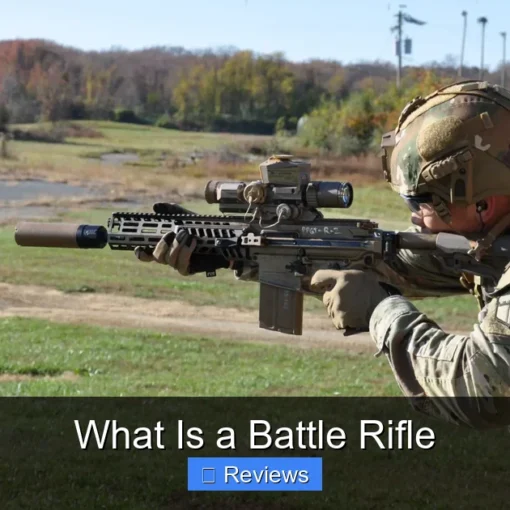
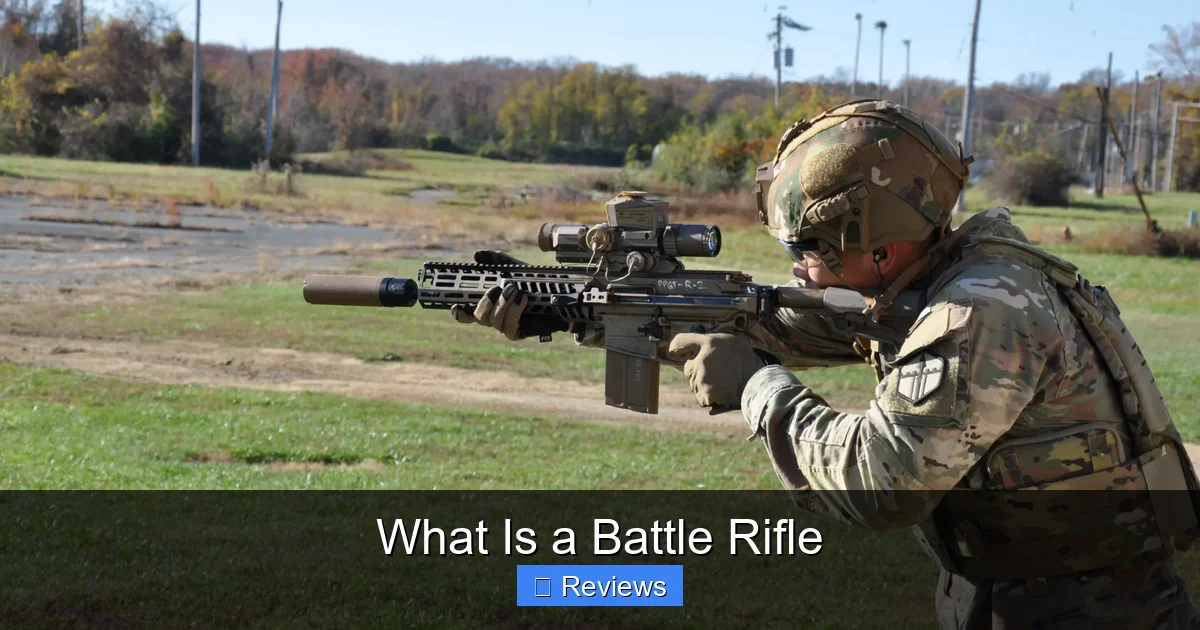
In modern terms, a full-sized rifle typically features a barrel length of 20 inches or more, often extending to 24 or even 26 inches for precision shooting. A carbine, on the other hand, almost universally features a barrel length under 20 inches. Many popular carbines, particularly in the AR-15 platform, have barrels around 14.5 inches (when permanently affixed to a muzzle device to meet 16 inches) or 16 inches. These lengths strike a balance, offering significant compactness without severely compromising ballistic performance. For example, a standard M4 carbine, widely used by military forces, sports a 14.5-inch barrel.
Legal Implications of Barrel Length
It’s crucial to understand that in the United States, barrel length isn’t just a matter of design; it’s a legal one. Under the National Firearms Act (NFA), a rifle with a barrel shorter than 16 inches is classified as a Short-Barreled Rifle (SBR). This designation requires special registration, a tax stamp, and a lengthy approval process, unless the barrel is permanently affixed with a muzzle device (like a flash hider or suppressor adapter) to bring its overall length to 16 inches or more. This is a very common practice for commercial 14.5-inch barrel carbines. So, while a 14.5-inch barrel might sound like a minor difference from a 16-inch one, legally, it’s a huge distinction that directly impacts **what makes a rifle a carbine** permissible for general sale without NFA paperwork.
Weight and Overall Length: More Than Just the Barrel
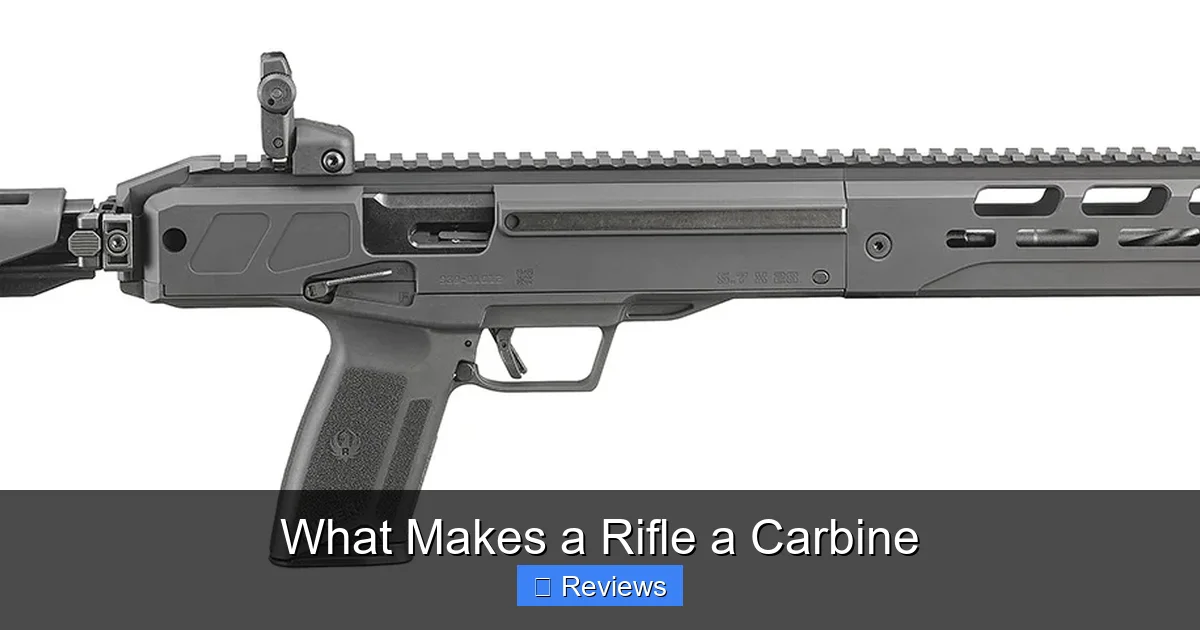
Visual guide about What Makes a Rifle a Carbine
Image source: ruger.com
While barrel length is king, it directly impacts two other critical factors: weight and overall length. These elements combine to define the carbine’s characteristic feel and function. It’s not just about the barrel itself; it’s about the entire package.
Impact on Overall Weight
A shorter barrel means less steel, which naturally translates to a lighter firearm. But it doesn’t stop there. Carbines are often designed from the ground up to be lightweight. This might involve using lighter materials for the handguard, receiver, or stock. For example, many carbines feature collapsible or folding stocks, which not only reduce the overall length but also often contribute to a lower weight compared to the fixed, longer stocks found on many traditional rifles. This reduction in weight makes a carbine much easier to carry for extended periods, reducing fatigue during long patrols, hunts, or training sessions.
Maneuverability in Tight Spaces
The combination of shorter barrel and overall length is where carbines truly shine. Imagine navigating a dense forest, clearing a building, or moving around inside a vehicle. A full-sized rifle, with its extended barrel, can easily snag on branches, walls, or vehicle interiors. A carbine, however, allows for much greater freedom of movement. Its compact nature means you can keep the firearm closer to your body, making it quicker to bring to bear and less likely to hinder your movement. This makes a huge difference in dynamic situations where split-second decisions and fluid movement are paramount. This enhanced maneuverability is a core answer to **what makes a rifle a carbine** so effective for specific applications.
Balance and Handling Characteristics
Weight distribution also plays a significant role. A longer barrel shifts the balance point further forward, making a rifle feel “nose-heavy.” A carbine, with its shorter barrel, generally has a more centered balance point, closer to the shooter’s body. This improves the firearm’s handling, making it feel more agile and easier to transition between targets. Recoil, while still present, can sometimes feel different due to the change in weight and balance, though the caliber itself is usually a bigger factor.
Caliber and Ballistics: The Power Trade-Off
When you shorten a barrel, you inevitably affect the ballistic performance of the cartridge. This is a trade-off that carbine designers carefully consider. While carbines can chamber nearly any rifle cartridge, certain calibers are often optimized for shorter barrels.
Velocity and Energy Loss
A shorter barrel means less time for the propellant gases to accelerate the bullet. This results in a reduction in muzzle velocity compared to the same cartridge fired from a longer rifle barrel. For example, a 5.56x45mm NATO round fired from a 14.5-inch carbine barrel will have a lower velocity than from a 20-inch rifle barrel. This velocity reduction directly translates to a decrease in kinetic energy and a slightly flatter trajectory over longer distances. For extreme long-range shooting, this difference can be significant. However, for the typical ranges carbines are used at (e.g., within 300 yards), the difference is often negligible for most practical purposes.
Flash and Concussion
Another consequence of a shorter barrel is that more unburnt powder exits the muzzle when the bullet does, leading to a larger muzzle flash and a more pronounced concussion (the blast wave). This can be mitigated with effective muzzle devices like flash suppressors or compensators, which are very common on carbines. High-quality hearing protection is always essential, but especially so when shooting carbines indoors or in enclosed spaces.
Optimized Calibers for Carbines
Some cartridges are specifically designed or perform exceptionally well in shorter barrels, almost as if they were made for **what makes a rifle a carbine** excel.
- .223/5.56mm: This is arguably the most common carbine cartridge. While it loses some velocity from shorter barrels, it remains highly effective for its intended ranges.
- 9mm Luger: Popular in Pistol Caliber Carbines (PCCs), 9mm doesn’t rely on long barrels for velocity and is extremely effective and manageable in carbine configurations.
- .300 Blackout (.300 BLK): This cartridge was specifically designed to perform efficiently in short barrels, especially when suppressed. It offers good energy and can be optimized for both supersonic and subsonic loads.
- 7.62x39mm: The AK-47, often considered a carbine (or assault rifle), performs well with its standard 16.3-inch barrel, as the 7.62x39mm round is designed for effective performance from shorter barrels.
Choosing a caliber that matches the barrel length of your carbine can help minimize the ballistic compromises and maximize its effectiveness for your intended use.
Maneuverability and Application: Why Choose a Carbine?
The real beauty of a carbine lies in its practical applications, which are largely dictated by its superior maneuverability. This is where the answer to **what makes a rifle a carbine** truly resonates with users across various fields.
Close-Quarters Environments
Carbines are undisputed champions in close-quarters battle (CQB) scenarios. Whether it’s military special operations, law enforcement room clearing, or home defense for civilians, the ability to rapidly point, aim, and shoot in confined spaces is paramount. A carbine allows a user to maintain a tighter profile, reducing the risk of snagging the firearm on doorways, furniture, or other obstacles. This enhances safety and effectiveness in dynamic, high-stress situations.
Vehicle Operations
For anyone operating from a vehicle – be it a military convoy, a police patrol car, or a civilian overlander – a carbine is far more practical than a full-sized rifle. It’s easier to store, deploy, and manipulate inside the cramped confines of a vehicle. This makes it ideal for quick reaction forces, security details, or anyone who might need to engage targets immediately after exiting a vehicle.
Hunting and Outdoor Activities
While many hunters still prefer long-barreled rifles for maximum range and velocity, carbines have a significant place in certain hunting scenarios. Hunting in dense brush, thick woods, or mountainous terrain where long shots are unlikely benefits greatly from a compact, lightweight firearm. A carbine is less likely to get tangled in undergrowth and easier to carry up steep inclines. Pistol caliber carbines are also excellent for small game or pest control where over-penetration is a concern.
General Portability and Storage
Beyond tactical or hunting applications, the enhanced portability of a carbine is a major draw for general users. It’s easier to transport to and from the range, takes up less space in a gun safe, and is simply more comfortable to carry for extended periods. This practicality makes carbines a popular choice for many recreational shooters and those looking for a versatile general-purpose firearm.
Ergonomics and User Experience
The design choices that define a carbine also significantly impact the user’s experience. From how it feels in your hands to how it handles recoil, these ergonomic considerations are a big part of **what makes a rifle a carbine** appealing.
Handling and Balance
As mentioned earlier, the more centered balance point of a carbine makes it feel lighter and more controllable. This can translate to less shooter fatigue during long training sessions or prolonged carrying. The ability to quickly shoulder the firearm and acquire targets is often improved due to this balance. For new shooters, a carbine can feel less intimidating and easier to manage than a longer, heavier rifle.
Adjustability Features
Carbines, especially those based on modular platforms like the AR-15, often come equipped with highly adjustable features. Collapsible stocks are a prime example, allowing the shooter to tailor the length of pull to their body type, clothing, or specific situation (e.g., wearing body armor). This adjustability further enhances the carbine’s versatility and user comfort. Many also feature adjustable gas blocks, allowing for tuning based on ammunition or if a suppressor is used.
Accessory Mounting Options
Modern carbines are typically designed with extensive accessory mounting capabilities. Picatinny rails, M-LOK, and KeyMod systems are common on handguards, allowing for easy attachment of optics, lights, lasers, foregrips, and slings. This modularity lets users customize their carbine to their exact preferences and mission requirements, enhancing its utility without adding excessive bulk or length. The ability to effectively accessorize without making the firearm unwieldy is another aspect of what makes a rifle a carbine so adaptable.
Legal and Practical Considerations for Ownership
Understanding the practical and legal landscape is vital when considering a carbine. While generally accessible, there are specific points to be aware of.
Navigating NFA Regulations
As highlighted earlier, the NFA (National Firearms Act) in the U.S. plays a significant role in what is considered a legal carbine without special registration. Any rifle with a barrel under 16 inches is an SBR (Short-Barreled Rifle) unless it has a muzzle device permanently attached to bring it to at least 16 inches. This is a critical distinction. If you’re considering building your own carbine or purchasing one with a shorter barrel, always verify compliance with federal and local laws. Building an SBR requires Form 1 submission, approval, and a tax stamp, while buying one (transferred from an FFL) requires Form 4.
State and Local Laws
Beyond federal law, individual states and even local municipalities can have their own regulations concerning barrel length, overall length, and specific features on firearms, including carbines. Some states have “assault weapon” bans that might target carbines based on features like pistol grips, collapsible stocks, or flash suppressors, regardless of barrel length. Always research your local laws before making a purchase or modifying a firearm.
Choosing the Right Carbine for Your Needs
When deciding on a carbine, consider your primary use case.
- Home Defense: A compact 9mm PCC or a 5.56/.223 carbine with a 14.5-16 inch barrel is excellent due to maneuverability.
- Hunting: Consider the game and terrain. A .300 BLK or 7.62x39mm carbine might be perfect for dense woods, while a longer barrel might be preferred for open fields.
- Sport Shooting/Recreation: The vast array of AR-platform carbines offers immense customization and versatility for range days.
- Training/Vehicle Use: Again, compactness is key, making 14.5-16 inch barrel carbines ideal.
Understanding **what makes a rifle a carbine** and your personal needs will guide you to the perfect firearm. Don’t forget to factor in ammunition availability, cost, and personal preferences regarding recoil and ergonomics.
Conclusion
So, **what makes a rifle a carbine**? It boils down to a commitment to compactness and maneuverability, primarily achieved through a shorter barrel length. While a traditional rifle prioritizes maximum ballistic performance and range, a carbine embraces a slight trade-off in velocity for superior handling in tight spaces, reduced weight, and enhanced portability.
From its historical roots with cavalry to its modern-day dominance in military, law enforcement, and civilian applications, the carbine has proven itself as an incredibly versatile and effective firearm. It’s the go-to choice when space is at a premium, when rapid movement is essential, or when you simply want a lighter, more manageable shooting experience. Understanding these distinctions not only enriches your firearms knowledge but also empowers you to make informed decisions about which type of firearm best suits your specific needs and interests. The carbine isn’t just a shorter rifle; it’s a distinct category with a unique set of advantages that continue to make it a beloved and crucial tool for countless shooters worldwide.
🎥 Related Video: Top 10 Deadliest Assault Rifles
📺 MILITARY CYPHER
In this video, we present the **Top 10 Deadliest Assault Rifles in the World**, used by militaries and special forces globally.
Frequently Asked Questions
What’s the general range of barrel lengths for a carbine?
While there’s no single strict rule, carbine barrel lengths typically fall between 10.5 inches and 18 inches, with 14.5-inch and 16-inch barrels being very common for commercially available models.
Do carbines have more recoil than rifles?
Not necessarily. While a lighter firearm might feel like it has more recoil, the caliber of the ammunition and the firearm’s design (e.g., gas system, muzzle device) are bigger factors than just barrel length. Many carbines are quite soft shooting.
Are carbines better for home defense?
Many experts consider carbines excellent for home defense due to their superior maneuverability in confined spaces and ease of control. Their compact size makes them less likely to snag on doorways or furniture, which is crucial in a defensive scenario.
Can you attach a suppressor to a carbine?
Absolutely! Carbines are frequently paired with suppressors, especially given that some calibers like .300 Blackout are optimized for short-barrel suppressed use. Remember, suppressors are NFA items and require separate registration and a tax stamp.
Are carbines more accurate than rifles?
Generally, longer barrels can contribute to slightly better accuracy potential due to a longer sight radius (if using iron sights) and more consistent bullet stabilization. However, modern carbines, especially high-quality ones, are incredibly accurate for their intended ranges, often capable of sub-MOA precision.
What are “pistol caliber carbines” and why are they popular?
Pistol caliber carbines (PCCs) are carbines chambered for pistol cartridges like 9mm or .45 ACP. They are popular because they offer low recoil, often share magazines with popular handguns, are affordable to shoot, and excel in close-quarters shooting competitions or home defense.