When pursuing large game, understanding what is the preferred rifle shot is paramount for an ethical and humane harvest. The general consensus among experienced hunters points to the broadside heart/lung shot as the most reliable option due to the large, forgiving target area and high probability of a quick, humane kill. While other shots exist, they often present greater risk and require exceptional skill and specific circumstances to be effective, always prioritizing a clean, ethical harvest.
Hey there, fellow hunter! Or perhaps you’re just starting your journey into the world of hunting, curious about how to make a clean, ethical harvest. Either way, you’ve landed in the right place. There’s a fundamental question every responsible hunter asks, and it’s one of the most critical aspects of our sport: what is the preferred rifle shot for large game? It’s a topic that stirs passionate discussions around campfires, but at its heart, it’s about respect – respect for the animal, for the land, and for the tradition of hunting.
Hunting large game isn’t just about pulling a trigger; it’s a deep responsibility. Our goal, above all else, is to ensure a humane and quick kill. This isn’t just a preference; it’s an ethical imperative. The shot you choose, and more importantly, where you place it, makes all the difference. A well-placed shot means minimal suffering for the animal and a clear conscience for the hunter. A poorly placed shot, however, can lead to a wounded animal, a prolonged search, and an outcome nobody wants. So, let’s dive deep into the science, the ethics, and the practical wisdom behind making that perfect shot.
Key Takeaways
- The Broadside Heart/Lung Shot is Preferred: This shot targets the largest, most forgiving vital area (heart and lungs) when the animal is standing perfectly perpendicular to the hunter, offering the highest probability of a quick, ethical kill.
- Understanding Anatomy is Crucial: Successful shot placement relies on a deep understanding of the target animal’s internal anatomy, identifying the precise location of the heart, lungs, and major arteries for maximum effectiveness.
- Ethical Hunting Guides All Decisions: The primary goal is always a humane, quick kill. This means taking only high-percentage shots, knowing your limits, and being prepared for tracking and follow-up if necessary.
- Alternative Shots Carry Higher Risk: While shots like quartering-away, spine, or head shots can be effective in specific scenarios, they require superior skill, precise judgment, and understanding of their unique challenges and reduced margin for error.
- Practice and Patience are Non-Negotiable: Regular range practice, familiarization with your rifle and ammunition, and the patience to wait for the ideal shot opportunity are more important than any specific shot placement technique.
- Factors Influence Shot Selection: Conditions such as animal behavior, hunter skill, rifle/caliber, distance, and environmental factors (wind, obstacles) all play a critical role in determining if a particular shot is ethical and feasible.
Quick Answers to Common Questions
What is the most recommended rifle shot for large game?
The broadside heart/lung shot is widely considered the most reliable and ethical option for large game.
Why is the broadside heart/lung shot preferred?
It targets a large, vital area, maximizing the chance of a quick, humane kill and often providing a good blood trail for tracking.
Are head shots recommended for large game?
Generally, head shots are discouraged for most hunters due to the small target size and high risk of merely wounding the animal.
What is a quartering-away shot?
A quartering-away shot is taken when the animal is angled slightly away from the hunter, exposing the vitals behind the shoulder on the opposite side.
How important is practice for shot placement?
Practice is critically important for building confidence, understanding your rifle’s capabilities, and being able to make an accurate, ethical shot under field conditions.
📑 Table of Contents
The Anatomy of a Clean Kill: Understanding Vital Zones
Before we even think about aiming, we need to understand our target. Large game animals, whether it’s a deer, elk, moose, or bear, share common vital areas. These are the regions where a bullet can quickly incapacitate the animal, leading to a humane kill. Knowing where these vitals are, and how they relate to the animal’s exterior, is absolutely non-negotiable.
The Heart-Lung Vitals: A Hunter’s Best Friend
The chest cavity of most large game animals contains the heart and lungs – often referred to as the “boiler room.” This is a relatively large target area, and a shot placed here is almost universally considered the gold standard for several reasons:
- Heart: This powerful muscle pumps blood throughout the body. A direct hit causes massive trauma, leading to immediate circulatory failure and unconsciousness.
- Lungs: These large, spongy organs are essential for oxygenation. A shot through both lungs causes severe hemorrhage and pneumothorax (collapsed lung), leading to rapid loss of consciousness and death.
- Major Arteries/Veins: Running through and around the heart-lung area are large blood vessels. Damage to these also results in significant blood loss, contributing to a quick ethical harvest.
The beauty of the heart-lung shot is its size. While not as large as the entire animal, it’s a much more forgiving target than, say, the brain. Even if your shot isn’t absolutely perfect, a hit within this zone often still results in a lethal wound, albeit perhaps with a slightly longer recovery time.
Other Critical Areas: Brain and Spine (and their risks)
Beyond the chest, there are other areas that can result in an instant kill, but they come with significant drawbacks:
- Brain: A shot to the brain is immediately fatal. However, the brain is a tiny target, even on a large animal. A slight miss can result in a jaw shot, an eye shot, or another non-fatal but debilitating wound that leaves the animal to suffer. It’s often reserved for specific scenarios or professional culling.
- Spine: A shot to the spine, particularly in the neck or shoulder region, can drop an animal instantly by severing the central nervous system. This causes immediate paralysis. The risk here is similar to the brain shot: a miss, even by a small margin, can wound the animal without killing it, leaving it immobilized but alive, necessitating a follow-up shot.
For most recreational hunters, especially those new to the sport, these high-risk, high-reward shots are generally discouraged in favor of the more reliable heart-lung placement.
The Broadside Heart/Lung Shot: Why It’s Preferred
When someone asks what is the preferred rifle shot for large game, more often than not, the answer you’ll hear is the “broadside heart/lung shot.” Let’s break down why this particular shot placement has earned its legendary status.
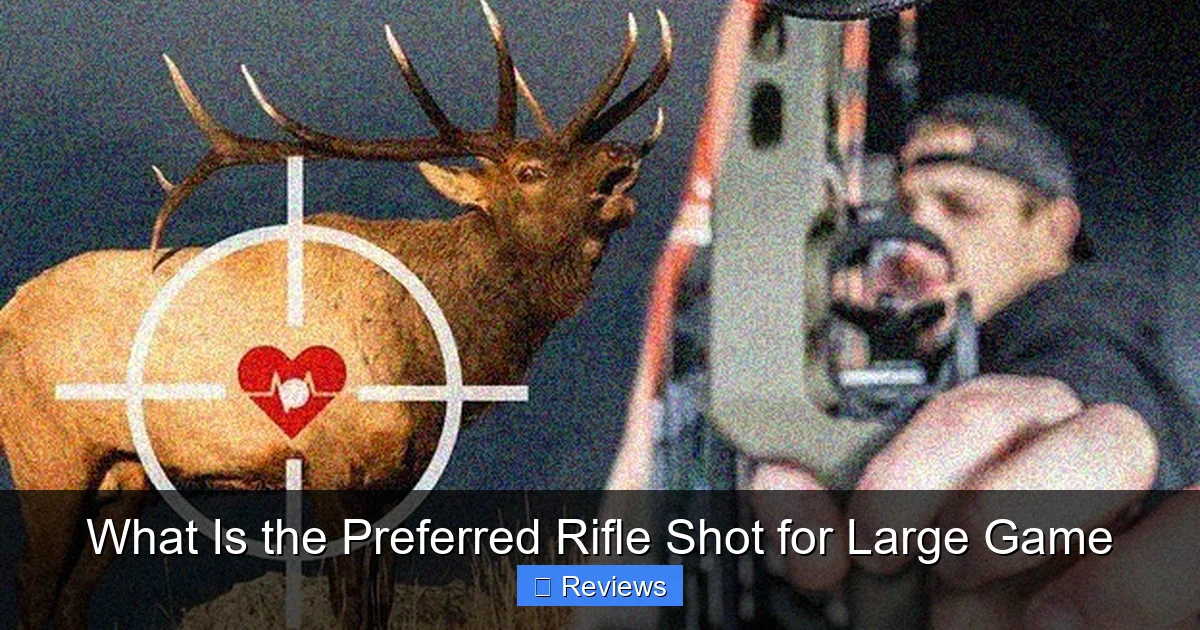
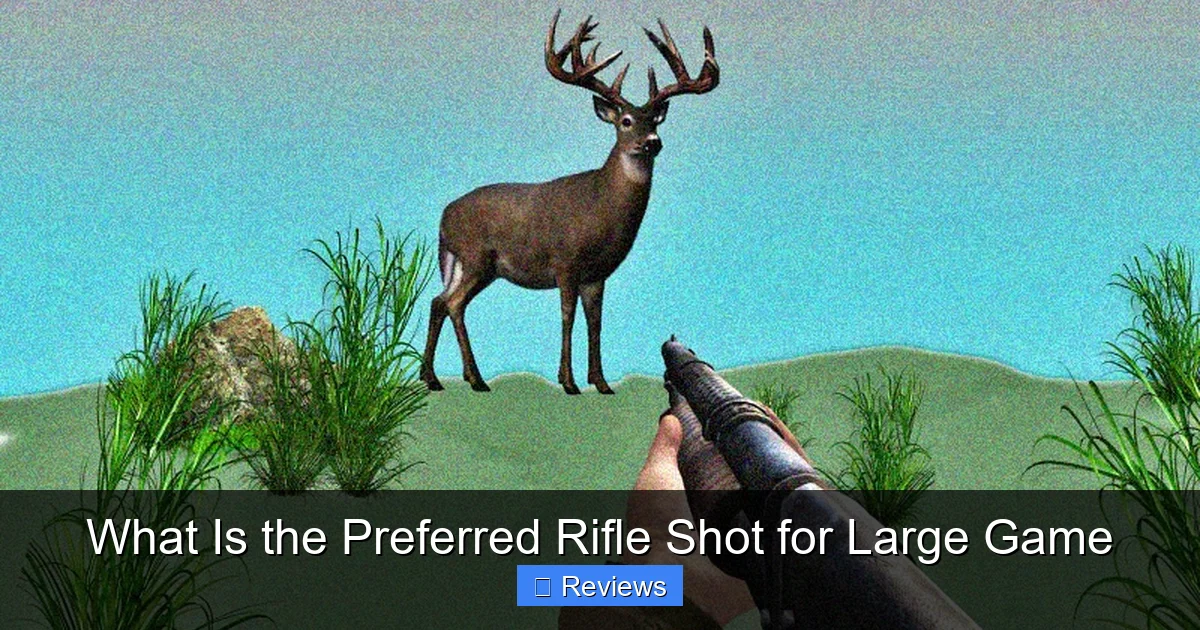
Visual guide about What Is the Preferred Rifle Shot for Large Game
Image source: rotorm.com
Anatomy of the Broadside Shot
Imagine the animal standing perfectly perpendicular to you, like a target at the shooting range. This is the broadside position. To locate the heart-lung area: draw an imaginary line up the front leg, about one-third of the way up the animal’s body. The vital zone is typically nestled right behind the shoulder blade, slightly forward and down from the center of the body. Aiming for this area means your bullet will typically pass through both lungs, and often the heart, before exiting.
Advantages: High Success Rate and Forgiveness
The broadside heart-lung shot offers several compelling advantages:
- Large Target Area: As discussed, the heart and lungs present a significant target, increasing your chances of a lethal hit.
- High Probability of Pass-Through: With modern rifle calibers and bullet designs, a broadside shot usually results in a complete pass-through, creating two holes (entry and exit). This is critical for leaving a blood trail, making tracking much easier if the animal runs a short distance.
- Quick, Humane Kill: Damage to these vital organs leads to rapid blood loss and oxygen deprivation, resulting in a swift and ethical harvest.
- Reduced Risk: Compared to brain or spine shots, there’s a much larger margin for error. A shot that’s slightly off-center within the chest cavity still typically hits vitals.
When to Take It: Ideal Conditions
The broadside shot is ideal when the animal is calm, stationary, and fully exposed, offering a clear, unobstructed view of its chest. This often occurs when an animal is grazing, browsing, or pausing to survey its surroundings. Patience is key here; waiting for the perfect broadside presentation, even if it means holding your shot for several minutes, greatly increases your chances of success and epitomizes what is the preferred rifle shot for large game.
Mastering Alternative Shot Angles: When and How
While the broadside shot is king, animals rarely cooperate by standing perfectly still and broadside for you. Sometimes, circumstances dictate a different approach. Understanding these alternative shots is part of being a well-rounded and ethical hunter, but always remember they come with increased risk.
The Quartering-Away Shot: Reaching the Vitals from Behind
A quartering-away shot occurs when the animal is angled away from you, with its rear end visible more than its front. This shot can be highly effective, as it exposes the vitals with a clear path.
- Placement: Aim for the opposite shoulder. The bullet enters behind the ribs on the near side, travels diagonally through the chest, hitting both lungs and potentially the heart, and ideally exits through the far shoulder.
- Advantages: Can be very lethal, creates a good wound channel, and can still lead to a pass-through.
- Disadvantages: Requires precise aim to avoid hitting internal organs that are less lethal (like the paunch) or having the bullet travel too far back.
The Quartering-Toward Shot: A Higher-Risk Option
This is when the animal is angled slightly towards you, with its front end more exposed. This is generally considered a higher-risk shot.
- Placement: Aim for the point of the near shoulder, angling the shot back towards the vitals on the far side. The goal is to drive the bullet through the shoulder bone and into the heart-lung area.
- Advantages: Can be effective if placed perfectly, potentially breaking the shoulder and anchoring the animal.
- Disadvantages: The thick shoulder bone can absorb significant energy or deflect the bullet, preventing it from reaching the vitals. It also presents less vital area. Many hunters avoid this shot if other options are available.
The Spine Shot: Instant Immobilization, But Difficult
A spine shot aims to sever the spinal cord, causing immediate paralysis. This is a very precise shot.
- Placement: Usually targeted at the base of the neck or along the upper back.
- Advantages: Instant drop of the animal, often allowing for a quick follow-up finishing shot.
- Disadvantages: The spinal column is a small target. A miss, even by an inch or two, can result in a non-lethal muscle wound, or worse, a devastating injury that leaves the animal unable to move but still alive and suffering. This shot requires extreme confidence and skill.
The Head Shot: High Risk, High Reward (Often Discouraged)
As mentioned earlier, a brain shot is instantly fatal. However, it’s critical to reiterate why it’s generally discouraged.
- Placement: Aims for the brain, typically between the eye and ear.
- Advantages: If perfectly executed, it’s the quickest kill.
- Disadvantages: The brain is incredibly small. The margin for error is almost non-existent. A miss can wound the jaw, eyes, or nose, leaving the animal to die a slow, agonizing death or escape to suffer. Unless you are a professional marksman in a controlled environment or dealing with an already downed animal that needs a finishing shot, it’s best to avoid head shots on large game. This directly impacts what is the preferred rifle shot for large game for ethical reasons.
Factors Beyond Placement: Making the Right Decision in the Field
Knowing where to aim is just one part of the equation. A myriad of other factors influence whether taking a shot is ethical and likely to be successful. A true understanding of what is the preferred rifle shot for large game extends far beyond a simple anatomical diagram.
Hunter Skill and Confidence: Know Your Limits
This is perhaps the most critical factor. What kind of shot can YOU make consistently under pressure? Be honest with yourself. If you can only confidently group shots within a 4-inch circle at 100 yards, don’t attempt a 300-yard shot, especially not a high-risk one like a spine shot. Your personal skill level, your familiarity with your rifle, and your ability to perform under the adrenaline rush of a hunting situation should dictate your shot selection.
Animal Behavior and Position: Waiting for the Ideal Moment
Sometimes, the animal simply isn’t offering a good shot. It might be moving too quickly, obscured by brush, or angled awkwardly. In these situations, patience is your best ally. Waiting for the animal to stop, clear obstructions, or present a better angle is almost always the right decision. A missed opportunity is always better than a wounded animal.
Equipment Matters: Rifle, Caliber, and Bullet Selection
Your equipment plays a role. Is your rifle accurately sighted in? Is your caliber appropriate for the size of game you’re pursuing? A .223 might be fine for small deer at close range but inadequate for elk or moose. More importantly, bullet construction is vital. A bullet designed for deep penetration and controlled expansion is crucial for reaching and effectively damaging vitals in large game. Using the wrong bullet can lead to insufficient penetration or over-expansion, both compromising a clean kill.
Environmental Conditions: Wind, Range, and Obstacles
Outdoor conditions are rarely perfect. Strong winds can significantly drift your bullet, especially at longer ranges. Obstacles like thick brush, small branches, or even tall grass can deflect a bullet, even if they seem insignificant. Always consider the potential for bullet deflection. Range estimation is also crucial; misjudging distance can lead to significant bullet drop, causing a miss or a non-lethal wound. Factor in all these elements before you even think about putting your crosshairs on an animal. This holistic approach further defines what is the preferred rifle shot for large game.
The Ethical Imperative: Practice, Patience, and Follow-Through
Ultimately, all discussions about what is the preferred rifle shot for large game boil down to ethics. Our responsibility as hunters is to cause the least amount of suffering possible. This commitment is reflected not just in the shot itself, but in all the preparations and actions that surround it.
Range Practice: It’s Not Just About Shooting Straight
Regular practice at the shooting range isn’t just about improving your accuracy; it’s about building confidence and familiarity with your rifle. Practice shooting from various field positions (standing, kneeling, prone) and at different distances. Simulate hunting scenarios. Understand how your bullet performs at different ranges. This consistent practice is what prepares you to make an ethical shot when the moment arrives. It also helps you understand your personal effective range, which is critical for making ethical decisions in the field.
Patience and Shot Selection: The Ultimate Test
The biggest test of an ethical hunter is often the ability to NOT take a shot. If the shot isn’t clean, if you’re not confident, or if the animal isn’t in an ideal position, wait. Let the animal walk away if necessary. The reward of a humane, quick harvest far outweighs the frustration of a missed opportunity or, worse, a wounded animal. Always err on the side of caution. An ethical harvest is paramount.
Tracking and Follow-Up: Your Responsibility
Even with the most perfect shot placement, animals can sometimes run a short distance. Your responsibility doesn’t end when the shot breaks. Always observe the animal’s reaction, listen for sounds, and mark the exact location where it was standing. Wait a reasonable amount of time (15-30 minutes for a good shot, longer for a questionable one) before beginning to track. Follow the blood trail meticulously, and be prepared to deliver a quick follow-up shot if the animal is still alive when you find it. This is a crucial part of the ethical hunting process.
Conclusion
So, what is the preferred rifle shot for large game? The answer, in most circumstances, is the broadside heart-lung shot. It offers the best combination of target size, lethality, and ethical outcome. However, being a skilled and ethical hunter means much more than just knowing this one shot. It involves a deep understanding of animal anatomy, mastering various shot angles with their associated risks, honestly assessing your own capabilities, and making informed decisions based on real-time field conditions.
Hunting is a privilege that comes with profound responsibilities. By prioritizing a clean, ethical harvest through diligent practice, careful shot selection, and unwavering patience, we honor the animals we pursue and uphold the integrity of our cherished tradition. Always remember: aim for the vitals, wait for the perfect moment, and hunt with respect.
Frequently Asked Questions
What factors should I consider before taking any shot at large game?
Before taking a shot, you should consider the animal’s angle and position, your personal skill level and confidence, the effective range of your rifle and ammunition, and environmental factors like wind and obstructions. Always prioritize a clear, ethical shot opportunity.
Why is a “pass-through” shot often desirable?
A pass-through shot, where the bullet exits the animal, is desirable because it creates two wound channels. This increases the severity of the wound and often leaves a clearer, more consistent blood trail, making tracking significantly easier if the animal runs after the shot.
Is it ethical to take a shot if I’m not 100% confident?
No, it is not ethical. If you are not 100% confident in your ability to make a clean, humane kill, you should not take the shot. An ethical hunter prioritizes minimizing animal suffering above all else, even if it means letting the animal walk away.
What is the “boiler room” when hunting large game?
The “boiler room” is a common term hunters use to refer to the vital chest cavity of large game, which contains the heart and lungs. It’s considered the primary target zone for a quick and ethical kill.
Should I wait after taking a shot before tracking an animal?
Yes, it’s generally recommended to wait a period of time (e.g., 15-30 minutes for an obviously good hit, longer for a questionable shot) before beginning to track. This allows the animal time to lie down and stiffen, reducing the chance of jumping it and making the tracking process more effective.
How does bullet type affect shot placement effectiveness?
Bullet type significantly affects effectiveness. A well-constructed hunting bullet designed for controlled expansion and deep penetration ensures that vital organs are effectively damaged. Using bullets not suited for large game can lead to insufficient penetration or excessive fragmentation, compromising a humane kill regardless of perfect shot placement.