When searching for what is the best hunting rifle, remember that “best” is subjective and depends on your individual needs. Factors like your target game, hunting environment, and personal preferences dictate the ideal choice. Focus on accuracy, reliability, and ergonomics, then match caliber and rifle action to your specific hunting style to find your perfect firearm.
Ah, the age-old question that sparks countless campfire debates and fills countless online forums: “What is the best hunting rifle?” If you’re new to hunting, or even if you’re a seasoned veteran looking for an upgrade, this question probably pops into your head quite often. It’s a natural inquiry, driven by the desire to make the most of your time in the field and ensure a successful, ethical hunt.
But here’s a spoiler right from the start: there isn’t one single, universally “best” hunting rifle. Just like there isn’t one best fishing lure, one best pair of hiking boots, or one best vehicle for everyone. The truth is, the best hunting rifle for you depends entirely on… well, you! It’s about your specific needs, the game you pursue, the terrain you navigate, and your personal preferences. Think of this article as your personal guide to navigating the vast and exciting world of hunting rifles, helping you pinpoint exactly what makes a rifle the “best” fit for your unique adventures.
We’ll break down the critical factors, explore popular options, and arm you with the knowledge to confidently answer “what is the best hunting rifle?” for yourself. So, grab a coffee, settle in, and let’s embark on this journey to find your perfect hunting companion.
Key Takeaways
- “Best” is Personal: The ideal hunting rifle is highly subjective, depending on your target game, hunting environment, budget, and personal preferences, not a single universal model.
- Accuracy and Reliability are Paramount: Regardless of type, a top hunting rifle must consistently place shots where intended and function flawlessly in varied conditions.
- Caliber Selection is Crucial: Matching the cartridge to the game you hunt (small, medium, or large) ensures ethical and effective harvesting, balancing power with recoil.
- Bolt-Action is a Popular Choice: For its inherent accuracy, robust design, and reliability, the bolt-action rifle remains a favorite among many hunters for a wide range of game.
- Ergonomics and Fit Matter: A rifle that feels comfortable, balances well, and fits your body type will enhance your shooting accuracy and overall hunting experience.
- Don’t Forget Optics and Ammunition: The rifle is only part of the equation; a quality scope and appropriate ammunition are essential companions for any great hunting rifle setup.
- Practice and Maintenance are Key: Even the best rifle needs regular practice to master and consistent maintenance to ensure peak performance and longevity.
Quick Answers to Common Questions
What caliber is best for deer hunting?
For deer hunting, popular and highly effective calibers include the .308 Winchester, .270 Winchester, .30-06 Springfield, and the 6.5 Creedmoor. These offer a good balance of power, trajectory, and manageable recoil for medium-sized game.
Are bolt-action rifles better than semi-automatics for hunting?
For most hunting scenarios, bolt-action rifles are often preferred due to their inherent accuracy, simplicity, and reliability. Semi-automatics offer faster follow-up shots but can be less accurate and more complex, depending on the model.
How much should I spend on a hunting rifle?
You can find excellent hunting rifles at various price points. Entry-level rifles (e.g., Ruger American, Savage Axis II) range from $400-$700. Mid-range options (e.g., Tikka T3x, Weatherby Vanguard) are typically $800-$1500, while premium rifles can cost $1500+. Consider your budget for optics and ammunition too.
What is MOA in rifle accuracy?
MOA stands for Minute of Angle, a unit of angular measurement. In rifle accuracy, 1 MOA means a rifle can consistently shoot groups that are approximately 1 inch in diameter at 100 yards. A “sub-MOA” rifle shoots even tighter groups, often less than 1 inch at 100 yards, indicating high precision.
Can I use an AR-style rifle for hunting?
Yes, AR-style rifles (like the AR-10 platform chambered in .308 Win, 6.5 Creedmoor, etc.) can be excellent hunting rifles, offering fast follow-up shots and modularity. However, some states have restrictions on magazine capacity or specific rifle features for hunting, so always check local regulations.
📑 Table of Contents
- Defining “Best” – It’s All About You and Your Hunt
- Key Characteristics of a Great Hunting Rifle
- Popular Rifle Actions for Hunting
- Caliber Selection: Matching the Cartridge to the Game
- Essential Accessories and Considerations
- Top Contenders: Examples of Excellent Hunting Rifles
- Conclusion: Your Best Hunting Rifle Awaits
Defining “Best” – It’s All About You and Your Hunt
Before we dive into specifics, let’s firmly establish that “best” is a highly subjective term when it comes to firearms. What might be perfect for a deer hunter in dense woods will be far from ideal for an elk hunter in open mountains. Understanding your personal context is the first and most crucial step in identifying what is the best hunting rifle for you.
Your Hunting Style and Experience
Are you a seasoned marksman who prefers long-range shots from a stable position? Or do you stalk through thick brush, requiring quick, close-range maneuvering? Your hunting style heavily influences the rifle’s weight, length, action type, and even the choice of optics. For a beginner, simplicity and manageable recoil are often priorities, while experienced hunters might prioritize specialized features or specific calibers.
Target Game
This is arguably the most critical factor. The size and toughness of the animal you’re hunting will dictate the appropriate caliber and, consequently, the type of rifle. You wouldn’t use a .22LR for bear, nor a .338 Lapua Magnum for squirrels. Ethical hunting demands using a caliber that delivers enough energy to ensure a clean, humane kill without excessive over-penetration or damage to the meat. This is central to understanding what is the best hunting rifle for specific prey.
- Small Game/Varmints: Think squirrels, rabbits, groundhogs. Low-recoil rimfire (e.g., .22LR, .17 HMR) or small centerfire cartridges (e.g., .223 Rem) are common.
- Medium Game: Deer, antelope, wild hogs. This is where most popular hunting calibers fall (e.g., .243 Win, .308 Win, .270 Win, .30-06 Sprg, 6.5 Creedmoor).
- Large Game: Elk, moose, bear. These require more powerful cartridges (e.g., .300 Win Mag, 7mm Rem Mag, .338 Win Mag).
- Dangerous Game: Cape buffalo, grizzly bear. Specialized heavy-hitting calibers and robust rifles are essential (e.g., .375 H&H Mag, .416 Rigby).
Hunting Environment/Terrain
Where you hunt matters. Are you in vast open plains where long shots are common? Dense forests with limited visibility? Mountainous regions requiring lightweight gear for arduous climbs? The environment affects rifle length, weight, finish (synthetic vs. wood), and even resistance to elements like rain, snow, or dust. A short, handy carbine might be best in thick woods, while a longer, heavier rifle with a high-magnification scope excels in open country, demonstrating the variety when considering what is the best hunting rifle.
Key Characteristics of a Great Hunting Rifle
While the “best” rifle is subjective, all truly great hunting rifles share some fundamental characteristics. These are the non-negotiables that contribute to safety, success, and satisfaction in the field.
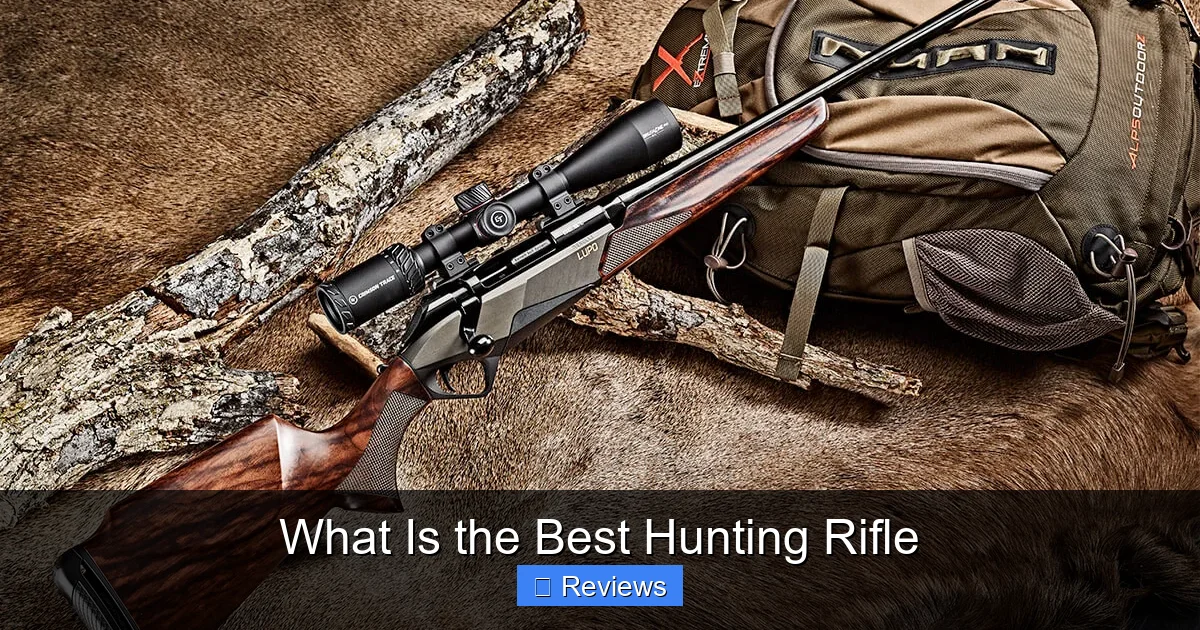
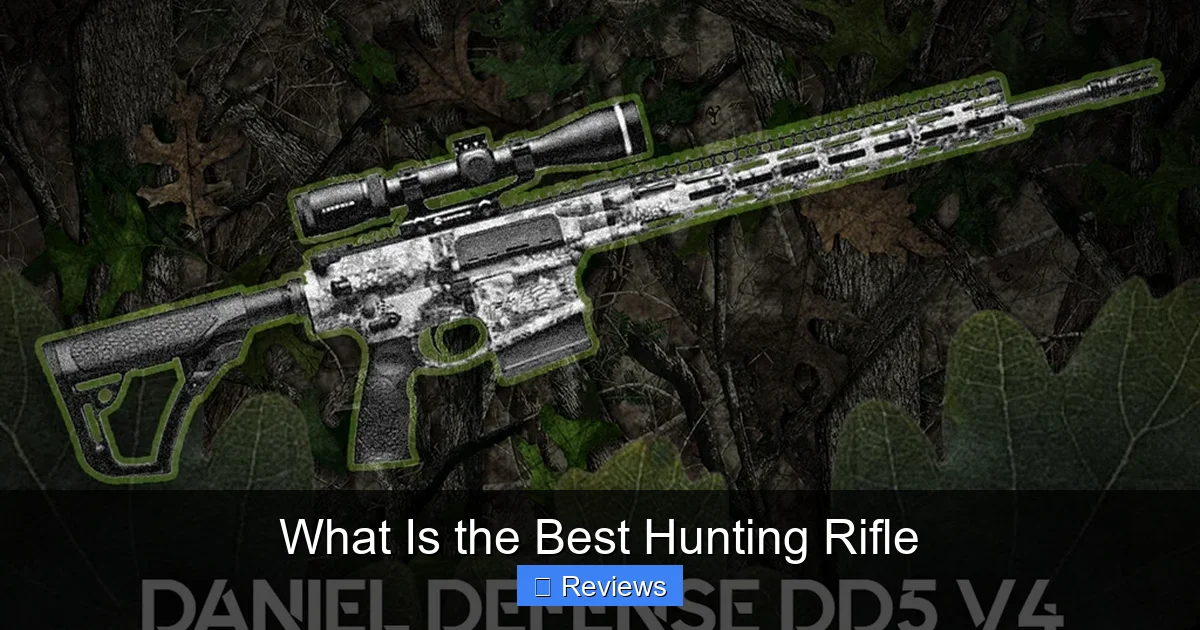
Visual guide about What Is the Best Hunting Rifle
Image source: content.osgnetworks.tv
Accuracy
This is paramount. A hunting rifle must be able to consistently place shots accurately at the intended range. Even the most powerful caliber is useless if you can’t hit your target. Factors affecting accuracy include barrel quality, manufacturing tolerances, stock fit, and the overall rifle design. Most modern rifles offer good “out-of-the-box” accuracy, but some are renowned for precision.
Reliability
Your rifle needs to work every time, in every condition. Imagine spending hours stalking an animal, finally getting a shot, and your rifle jams. Not good. Reliability means the rifle feeds, fires, and ejects cartridges flawlessly, even when dirty, cold, or wet. Simple, robust designs often contribute to higher reliability.
Ergonomics and Handling
How the rifle feels in your hands is critical. Does it balance well? Is the stock length appropriate for your reach? Are the controls (safety, bolt release) easy to operate without breaking your sight picture? A rifle that feels natural and comfortable to shoulder and shoot will significantly improve your performance and confidence. This is a subtle yet crucial aspect when determining what is the best hunting rifle for you.
Durability and Weather Resistance
Hunting can be rough on gear. Your rifle will likely encounter rain, snow, dust, bumps, and scrapes. A good hunting rifle is built to withstand these elements. Stainless steel components, synthetic stocks, and durable finishes like cerakote offer superior weather resistance compared to blued steel and wood, especially in harsh conditions.
Safety Features
While safe gun handling is ultimately the shooter’s responsibility, a well-designed rifle includes intuitive and effective safety mechanisms. This often includes a trigger safety, a firing pin block, and a visible indicator of the rifle’s status (e.g., cocked indicator). Simple, easily accessible safeties are preferred.
Popular Rifle Actions for Hunting
The “action” of a rifle refers to the mechanical components that load, fire, and eject cartridges. Each type has its advantages and disadvantages, influencing what is the best hunting rifle for certain scenarios.
Bolt-Action Rifles: The Gold Standard
Bolt-action rifles are, by far, the most popular choice for hunting worldwide, and often what people think of when asking what is the best hunting rifle. They operate by manually cycling a bolt to load a new round, extract a spent casing, and cock the firing pin.
- Pros: Renowned for their inherent accuracy due to a strong, rigid action and minimal moving parts during firing. They are highly reliable, simple to operate, and available in a vast array of calibers and configurations.
- Cons: Slower follow-up shots compared to semi-automatics or lever-actions.
- Examples: Remington Model 700, Winchester Model 70, Ruger American, Savage Axis/110, Bergara B14, Tikka T3x.
Lever-Action Rifles: Classic and Quick
Lever-action rifles use a lever, typically integrated into the trigger guard, to cycle the action. They are iconic, especially in North American hunting history.
- Pros: Very fast follow-up shots for a manual action. Compact and handy, often excellent for brush hunting or horseback carrying. Many are chambered in classic, effective calibers.
- Cons: Generally less accurate at long ranges than bolt-actions. Often limited to flat-nosed or round-nosed bullets in tubular magazines for safety reasons (to prevent bullet tips from igniting primers under recoil).
- Examples: Marlin 336, Winchester Model 1894, Henry Rifles.
Semi-Automatic Rifles: Fast Follow-Up Shots
Semi-automatic rifles fire one round with each pull of the trigger, automatically ejecting the spent casing and chambering a new one.
- Pros: Extremely fast follow-up shots. Reduced felt recoil compared to bolt-actions of the same caliber.
- Cons: Can be less inherently accurate than bolt-actions (though modern designs are closing the gap). More complex mechanisms can be prone to malfunctions if not kept clean, or with certain ammunition types. Often subject to magazine capacity restrictions for hunting in many states.
- Examples: AR-10 platform rifles, Browning BAR, Ruger Mini-14.
Caliber Selection: Matching the Cartridge to the Game
Choosing the right caliber is crucial for ethical hunting and is a major factor in what is the best hunting rifle for your target. It’s not just about power, but also about trajectory, recoil, and bullet construction.
Small Game and Varmints
For pests and small animals, you need accuracy and minimal recoil.
- .22LR: Inexpensive, very low recoil, perfect for plinking and small game within 100 yards.
- .17 HMR: Faster than .22LR, flatter trajectory, good for slightly longer shots on small varmints.
- .223 Remington / 5.56 NATO: Versatile centerfire. Great for varmints like coyotes and groundhogs, and sometimes for deer in specific conditions and with appropriate bullet types.
Medium Game
This category covers most popular big game animals. Here, balance is key: enough power for a clean kill, but manageable recoil.
- .243 Winchester: A light-recoiling, flat-shooting round excellent for deer, antelope, and predators.
- 6.5 Creedmoor: Gained immense popularity for its mild recoil, excellent long-range accuracy, and effectiveness on deer-sized game.
- .308 Winchester: A compact, efficient cartridge known for its accuracy and effectiveness on deer, elk, and bear at reasonable ranges. Very popular.
- .270 Winchester: A classic flat-shooting round, beloved by many for deer and elk, offering a good balance of power and manageable recoil.
- .30-06 Springfield: Another American classic, extremely versatile for nearly all North American game. It can handle heavy bullets for large animals.
- 7mm Remington Magnum: A powerful, flat-shooting magnum ideal for longer shots on elk, moose, and large deer.
Large/Dangerous Game
For the biggest and toughest animals, you need significant stopping power.
- .300 Winchester Magnum: A very popular magnum, excellent for all North American big game, especially at longer ranges.
- .338 Winchester Magnum: Significant power for large bear, moose, and elk. Recoil is substantial.
- .375 H&H Magnum: Often considered the minimum for dangerous game in Africa, also effective on large North American game.
Understanding Ballistics
Ballistics refers to the science of projectile motion. Factors like muzzle velocity, bullet weight, bullet shape (BC – ballistic coefficient), and sectional density all influence how a bullet flies and performs upon impact. For hunters, understanding basic trajectory and kinetic energy is crucial. Always choose a bullet designed for hunting, not just target shooting, as expansion and penetration are vital for ethical kills.
Essential Accessories and Considerations
A rifle is just one part of the hunting system. To truly create what is the best hunting rifle setup, you need the right accessories.
Optics: The Eye of Your Rifle
Unless you’re strictly hunting with open sights in dense cover, a quality scope is indispensable.
- Magnification: For most deer hunting, a 3-9x or 4-12x variable power scope is versatile. For long-range, higher magnification (e.g., 4-16x, 6-24x) may be preferred.
- Objective Lens Size: Larger lenses gather more light but add weight and bulk. Balance light gathering with practical size.
- Reticle: Standard duplex, BDC (bullet drop compensator), or মিল-dot reticles offer different aiming solutions.
- Clarity and Durability: Invest in the best optics you can afford. Clear glass, reliable adjustments, and robust construction are key. Brands like Leupold, Vortex, Nikon, and Zeiss are popular choices.
Ammunition: The Right Load Matters
Even the best rifle won’t perform if you use subpar ammunition. Match your bullet type to your game.
- Bullet Construction: Soft-point, hollow-point, bonded core, monolithic, and polymer-tipped bullets all perform differently on game. Research what works best for your chosen caliber and animal.
- Consistency: Stick with one brand and bullet type once your rifle is sighted in. Different loads can shoot to different points of impact.
Slings and Bipods
- Sling: Essential for carrying your rifle comfortably and securely in the field, freeing your hands. Look for durable, padded options.
- Bipod: Provides a stable shooting platform for prone or bench shooting, particularly useful for long-range accuracy or hunting in open terrain.
Cleaning and Maintenance
Regular cleaning and proper maintenance are vital for ensuring your rifle remains accurate, reliable, and safe. A well-maintained firearm is a happy firearm. Learn how to field strip, clean the bore, and lubricate moving parts according to your rifle’s manual.
Top Contenders: Examples of Excellent Hunting Rifles
While we stress that there’s no single answer to “what is the best hunting rifle,” some models consistently rise to the top of discussions due to their proven performance, reliability, and value. These are examples of excellent rifles that could be the “best” for many hunters.
Entry-Level Excellence
These rifles offer incredible value, often delivering accuracy far beyond their price point. They are perfect for beginners or hunters on a budget who still demand reliability and performance.
- Ruger American Rifle: Known for its great out-of-the-box accuracy, synthetic stock, and crisp trigger. Available in a wide range of calibers.
- Savage Axis II: Comes standard with Savage’s excellent AccuTrigger and often bundled with a scope, making it a fantastic ready-to-hunt package.
- Mossberg Patriot: Another strong contender in the budget category, offering good features and accuracy.
Mid-Range Performers
Stepping up a bit in price, these rifles often offer refined features, better materials, and enhanced aesthetics.
- Tikka T3x: A Finnish-made rifle praised for its superb accuracy, smooth bolt action, and lightweight design. A favorite among many.
- Weatherby Vanguard: Built to Weatherby’s demanding standards, these rifles guarantee sub-MOA (minute of angle) accuracy, meaning they can shoot very tight groups.
- Winchester Xpert: A solid, reliable performer building on Winchester’s legacy, offering excellent accuracy and durability.
Premium Options
For those willing to invest more, these rifles often feature exquisite craftsmanship, advanced materials, and exceptional precision.
- Bergara B14 Series: Often described as a custom rifle at a production price. Known for incredibly smooth actions and sub-MOA accuracy.
- Sako 85: A premium Finnish rifle known for its precision, quality materials, and innovative features.
- Custom Built Rifles: For the ultimate personalized experience, many hunters opt for a custom rifle built to their exact specifications, from action and barrel to stock and trigger.
Conclusion: Your Best Hunting Rifle Awaits
By now, you should have a much clearer understanding of why the question “what is the best hunting rifle?” doesn’t have a simple, one-size-fits-all answer. It’s a journey of self-discovery, matching your personal hunting profile with the vast array of firearms available.
The best hunting rifle for you will be one that fits your budget, is chambered in an appropriate caliber for your target game, feels comfortable in your hands, is accurate, and above all, is reliable. Take the time to research, handle different models at a local gun store, and ideally, shoot a few at a range before making a decision. Don’t forget the importance of quality optics and appropriate ammunition, as they are integral to the rifle’s performance.
Ultimately, the best rifle is the one you trust, the one you’ve practiced with, and the one that helps you hunt safely, ethically, and successfully. Happy hunting!
🎥 Related Video: What Is The BEST Deer Rifle? (I TEST THEM ALL !!!)
📺 Kentucky Ballistics
In today’s video we test multiple calibers against ballistics gel and find out which one is the best deer rifle! I hope you enjoy the …
Frequently Asked Questions
What features should I prioritize in a hunting rifle?
When selecting a hunting rifle, prioritize accuracy, reliability, and proper ergonomics that fit your body. Other important features include a suitable caliber for your target game, a durable and weather-resistant finish, and effective safety mechanisms. A good trigger is also a significant asset for accuracy.
Is a heavier rifle better for accuracy?
Generally, a heavier rifle can aid in accuracy by reducing felt recoil and allowing for a more stable shooting platform, which can be beneficial for long-range shots. However, a heavier rifle is also more challenging to carry over long distances or through dense terrain, so it’s a trade-off based on your hunting style.
How important is barrel length for a hunting rifle?
Barrel length affects muzzle velocity, rifle balance, and maneuverability. Longer barrels typically yield higher velocities and potentially better accuracy for specific cartridges, but are less handy in thick brush. Shorter barrels are lighter and easier to maneuver, ideal for dense environments, though they might slightly reduce velocity.
Should I choose a synthetic or wood stock?
Synthetic stocks are generally more durable, weather-resistant, and lighter than traditional wood stocks, making them a practical choice for most hunting conditions. Wood stocks offer classic aesthetics and a warmer feel, but can be susceptible to warping from moisture and are often heavier. The choice often comes down to personal preference and intended use.
What’s the difference between a hunting rifle and a target rifle?
Hunting rifles are designed for portability, durability, and humane kills in varied field conditions, often prioritizing lighter weight and weather resistance. Target rifles, conversely, focus purely on extreme accuracy and consistency, often featuring heavy barrels, specialized stocks, and precision triggers, with less emphasis on field-friendliness.
How often should I clean my hunting rifle?
It’s generally recommended to clean your hunting rifle after every use, especially after firing, to prevent corrosion and maintain accuracy. Even if not fired, a quick wipe-down and inspection after a day in the field, particularly in wet or dirty conditions, is good practice to ensure its longevity and reliable performance.