Choosing the best deer hunting rifle isn’t about finding a single ‘perfect’ option, but rather selecting the one that best fits your individual hunting style, location, and physical build. The ideal rifle balances effective caliber, comfortable ergonomics, reliable accuracy, and a suitable budget. Ultimately, it’s the rifle you shoot most confidently and proficiently, making your personal connection and practice far more critical than any specific model.
What Is the Best Deer Hunting Rifle
Every fall, as the crisp air signals the arrival of hunting season, countless discussions ignite among hunters about the ultimate piece of gear: “What is the best deer hunting rifle?” It’s a question as old as deer hunting itself, debated around campfires, in gun stores, and across online forums. The quest for the perfect rifle is a deeply personal journey, often filled with nostalgia for a grandfather’s old .30-30 or the excitement of a brand-new, high-tech long-range setup.
But here’s a truth you’ll hear from seasoned hunters: there isn’t one single “best deer hunting rifle” for everyone. The ideal choice is a complex equation, factoring in your specific hunting conditions, physical build, experience level, budget, and personal preferences. What works wonders for a hunter stalking whitetails in dense eastern woodlands might be entirely unsuitable for someone pursuing mule deer across vast Western plains. This article aims to cut through the noise, guiding you through the essential considerations to help you discover what makes the best deer hunting rifle *for you*.
We’ll explore the critical elements that define an excellent deer rifle, from the power and ballistics of different calibers to the various rifle action types. We’ll delve into the importance of rifle fit, accuracy, and accessories like optics, alongside the often-overlooked necessity of practice. Our goal is not to declare a single winner but to equip you with the knowledge to make an informed decision, ensuring your next deer season is successful, ethical, and enjoyable.
Key Takeaways
- No Single “Best” Rifle Exists: The ideal deer hunting rifle is highly personal, depending on your hunting style, environment, physical characteristics, and budget.
- Caliber is Crucial: Select a caliber that offers sufficient power for ethical deer harvest, manageable recoil for accurate shooting, and appropriate ballistics for your typical hunting distances.
- Bolt-Action Dominates: While other action types exist, bolt-action rifles are overwhelmingly popular for deer hunting due to their inherent accuracy, reliability, and robust design.
- Fit and Ergonomics Matter: A rifle that fits you well and feels comfortable to shoulder and shoot will significantly improve your accuracy and overall hunting experience.
- Accuracy is Paramount: Regardless of caliber or action, a rifle must be consistently accurate. This, combined with a quality scope and consistent practice, ensures ethical shot placement.
- Don’t Forget the Budget: A good deer hunting rifle doesn’t have to break the bank. Balance rifle cost with the equally important investment in quality optics and ammunition.
- Practice is Essential: The most important factor in effective deer hunting is a proficient shooter. Regular practice with your chosen rifle builds confidence and skill.
Quick Answers to Common Questions
What is the single best deer hunting rifle caliber?
There isn’t a single “best” caliber; it depends on factors like range, recoil tolerance, and local regulations. Popular choices include .30-06, .270, .308, and 6.5 Creedmoor.
Are semi-automatic rifles good for deer hunting?
Yes, semi-automatic rifles like the Browning BAR or AR-10 platforms can be effective for deer hunting, offering quick follow-up shots. However, their legality and ethical appropriateness depend on local laws and personal preference.
How much should I spend on a scope for my deer rifle?
A good rule of thumb is to spend at least as much on your scope as you do on your rifle, or even more. Quality optics significantly improve accuracy, light gathering, and overall hunting success.
Is a .223 Remington suitable for deer?
While a .223 Remington can technically kill a deer, it is generally considered underpowered for ethical deer hunting by most experts. Shot placement needs to be absolutely perfect, and its limited energy risks wounding rather than cleanly harvesting.
What is the most common action type for deer hunting rifles?
The bolt-action rifle is by far the most popular and commonly recommended action type for deer hunting due to its inherent accuracy, reliability, and robust design.
📑 Table of Contents
Understanding “Best”: It’s Personal and Contextual
Before we dive into specifics, let’s redefine “best.” In the context of a deer hunting rifle, “best” doesn’t mean the most expensive, the most powerful, or the one with the latest features. It means the rifle that allows *you* to ethically and consistently harvest deer under *your* typical hunting conditions.
Consider these factors that make the “best” rifle highly individual:
Your Hunting Environment
Are you hunting in thick brush where shots are rarely beyond 75 yards? Or are you in open country, where a 300-yard shot is a real possibility? The terrain dictates effective range and, consequently, your caliber and rifle choice. A short, handy carbine might be ideal for dense woods, while a longer-barreled, flatter-shooting rifle excels in open fields.
Your Physical Build and Recoil Tolerance
A smaller-framed hunter or someone sensitive to recoil might struggle with a magnum caliber, affecting accuracy and enjoyment. A lighter recoiling rifle that you can shoot accurately and comfortably is always superior to a powerful rifle you flinch with. The best deer hunting rifle is one you can handle confidently.
Your Experience Level
Newer hunters might benefit from a simpler, more forgiving rifle and caliber combination, while experienced hunters might seek specialized features or calibers for specific challenges.
Your Budget
This is a practical reality for most hunters. While quality often comes with a price, there are many excellent, affordable deer hunting rifle options available today. Remember to factor in the cost of a good scope, mounts, and ammunition, not just the rifle itself.
Key Factors to Consider When Choosing Your Deer Rifle
Now that we understand the personal nature of the choice, let’s break down the technical aspects. These are the elements you’ll be weighing as you search for what is the best deer hunting rifle for your needs.
Caliber Choice: The Heart of the Matter
The caliber you choose determines the projectile’s size, speed, and energy. For deer, you need a cartridge powerful enough to humanely dispatch the animal, but not so powerful that it creates excessive recoil, making accurate shooting difficult. Most deer hunting rifles fall within a sweet spot of effectiveness and manageability.
Visual guide about What Is the Best Deer Hunting Rifle
Image source: blogmedia.wideners.com
- Energy and Bullet Weight: Deer require sufficient energy for deep penetration and vital organ damage. Bullet weights typically range from 100 to 180 grains for common deer calibers.
- Recoil: Heavier recoil can lead to flinching, poor shot placement, and a less enjoyable shooting experience.
- Ballistics: How flat does the bullet shoot? How much does it drop over distance? This is crucial for longer shots.
Rifle Action Types: Reliability Meets Tradition
The action is the mechanical heart of your rifle, responsible for loading, firing, and ejecting cartridges. Different actions offer various advantages:
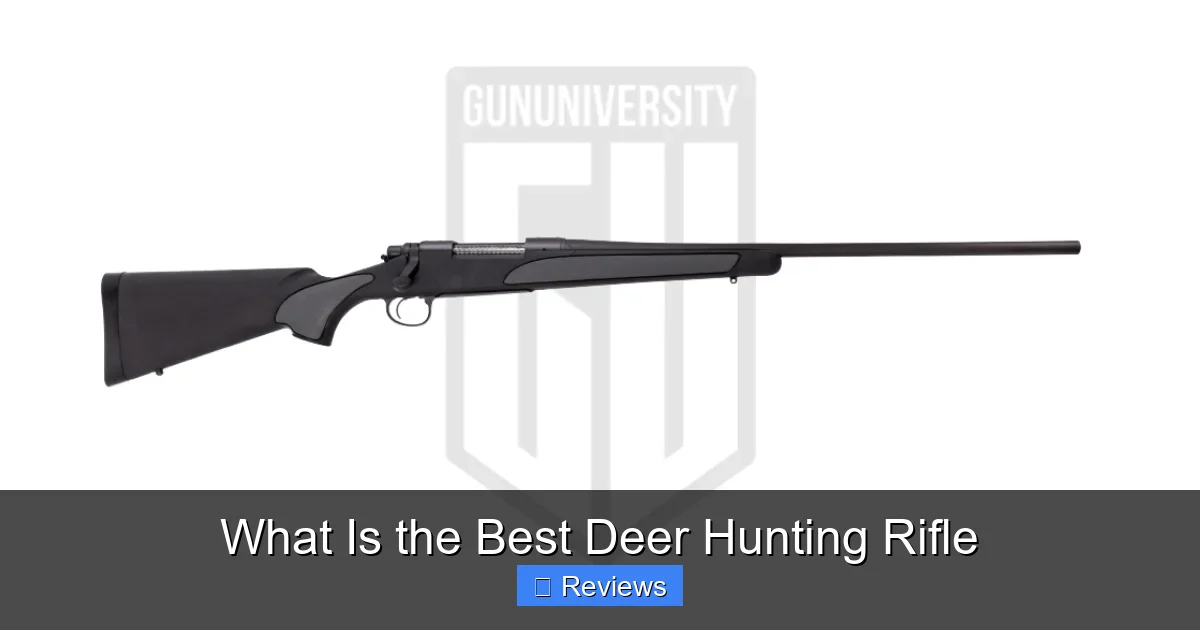
- Bolt-Action: The undisputed king for deer hunting. Bolt-action rifles are renowned for their accuracy, reliability, and strength. They are generally simple to operate, easy to maintain, and available in a vast array of calibers and price points. For many, a quality bolt-action defines what is the best deer hunting rifle.
- Lever-Action: A classic American design, lever-action rifles are fast-handling and iconic. They are excellent for brush hunting or in areas where quick follow-up shots might be needed. While often associated with pistol-calibers, many powerful rifle calibers are available.
- Semi-Automatic: Offering rapid follow-up shots, semi-automatic rifles (like AR-10 platforms or Browning BARs) are popular in some regions. Check local regulations, as these may be restricted in certain areas or for certain game.
- Single-Shot: Valued for their simplicity, reliability, and the challenge they present. A single-shot demands a perfect first shot, instilling discipline in the hunter.
Rifle Weight and Ergonomics: Comfort in the Field
You’ll be carrying your deer hunting rifle, often for miles. Its weight and how it fits your body are crucial. A lightweight rifle is easier to carry, but can have more felt recoil. A heavier rifle might be steadier for shooting but tiring to carry.
- Stock Fit: The length of pull (distance from the trigger to the buttpad) is critical. A rifle that’s too long or too short will be awkward to shoulder and shoot accurately.
- Balance: A well-balanced rifle feels natural when shouldered and points instinctively.
- Materials: Modern synthetic stocks are durable, weather-resistant, and often lighter than traditional wood stocks.
Accuracy and Reliability: Non-Negotiables for Ethical Hunting
Your deer hunting rifle *must* be consistently accurate. Ethical hunting demands precise shot placement to ensure a quick and humane harvest. Reliability means your rifle functions flawlessly when it matters most, in all weather conditions.
- Consistency: The ability to repeatedly place shots in the same tight group.
- Functionality: Smooth feeding, extraction, and firing without malfunctions.
Budget: Investing in Your Success
As mentioned, your budget is important. Decide how much you’re willing to invest in your deer hunting rifle, but remember to allocate funds for a quality scope (often as much as the rifle itself), scope mounts, and enough ammunition for practice. The total package contributes to what makes the best deer hunting rifle experience.
Top Contenders: Calibers and Rifle Platforms
Now, let’s talk about some of the most popular and effective choices that hunters consider when asking what is the best deer hunting rifle.
The Venerable .30-06 Springfield: The All-Around Workhorse
The .30-06 (pronounced “thirty-aught-six”) has been a staple in American hunting for over a century, and for good reason. It’s incredibly versatile, capable of taking everything from deer to elk and bear. It offers a wide range of bullet weights (150-180 grains being common for deer) and delivers ample energy without punishing recoil for most shooters. If you want one rifle that can do it all, the .30-06 is a strong contender for the title of best deer hunting rifle.
The Flat-Shooting .270 Winchester: Speed and Precision
Introduced by Winchester in 1925, the .270 Winchester quickly gained fame for its flat trajectory and excellent performance on deer-sized game. It typically uses 130-150 grain bullets, zipping them out at high velocities. This makes it a superb choice for open country where longer shots are common. Recoil is manageable for most, and its reputation as a deer and antelope cartridge is well-earned. Many consider it the quintessential deer hunting rifle caliber.
The Efficient .308 Winchester: Compact Powerhouse
The .308 Winchester is known for its excellent accuracy, moderate recoil, and compact size, making it ideal for shorter rifle actions. It’s a favorite among competitive shooters and hunters alike. With bullet weights typically from 150-180 grains, it offers plenty of punch for deer at common hunting ranges. Its efficiency and availability make it an exceptionally popular choice for those seeking a reliable deer hunting rifle.
The Modern Marvel 6.5 Creedmoor: Low Recoil, High Precision
The 6.5 Creedmoor has rapidly risen to prominence, particularly among newer hunters and those interested in longer-range shooting. It boasts excellent ballistic efficiency, which means its bullets maintain energy and resist wind drift very well. Crucially, it achieves this with significantly less recoil than the .308 or .30-06, making it easier to shoot accurately, especially for follow-up shots or longer engagements. For many, it’s quickly becoming the go-to answer for what is the best deer hunting rifle for modern hunting scenarios.
Other Excellent Calibers for Deer
- .243 Winchester: A great choice for smaller deer, younger hunters, or those highly sensitive to recoil. It’s fast and accurate, but shot placement is critical due to its lighter bullet weight.
- 7mm-08 Remington: Often described as a .308 case necked down to take a 7mm bullet, this cartridge offers a superb balance of moderate recoil and excellent ballistic performance, similar to the 6.5 Creedmoor but with slightly heavier bullet options.
- .350 Legend / .450 Bushmaster: These straight-wall cartridges are gaining popularity in states with specific regulations (e.g., Ohio, Michigan, Indiana) that restrict bottleneck cartridges for deer hunting. They offer impressive power at shorter ranges.
Popular Rifle Platforms: The Tools of the Trade
While we won’t endorse specific models as *the* best deer hunting rifle, certain types of bolt-action rifles have proven themselves repeatedly due to their design philosophy and features. Look for reputable manufacturers known for accuracy, durability, and a good warranty. Many modern bolt-action rifles, regardless of brand, offer excellent performance right out of the box. Examples include rifles from manufacturers like Savage (Axis, 110), Ruger (American, Hawkeye), Winchester (Model 70), Remington (700), and Bergara (B14). These often come with features like adjustable triggers, free-floated barrels, and strong, reliable actions that contribute to them being considered top contenders for the best deer hunting rifle.
Beyond the Rifle: Essential Accessories and Skills
A great deer hunting rifle is only one part of the equation. Several other factors are equally, if not more, important for a successful and ethical hunt.
The Importance of Quality Optics: See the Difference
A high-quality scope is arguably as important as the rifle itself. It allows you to precisely place your shot, especially in varying light conditions or at longer distances. Invest in a scope with clear glass, reliable adjustments, and appropriate magnification for your hunting environment. Don’t put a cheap scope on an expensive rifle; it’s a common mistake that severely limits the rifle’s potential. The best deer hunting rifle needs the best optics you can afford.
Ammunition Selection: The Right Bullet for the Job
Not all ammunition is created equal. For deer, you need hunting-specific ammunition with bullets designed for controlled expansion and deep penetration. Avoid varmint rounds, as they may fragment too quickly and not penetrate enough. Experiment with different bullet weights and brands in your deer hunting rifle to find what shoots most accurately.
Practice Makes Perfect: Sharpen Your Skills
The most sophisticated deer hunting rifle in the world is useless without a proficient shooter. Regular practice at the range, from various field positions, is absolutely vital. Understand your rifle’s capabilities, learn to control recoil, and master trigger control. Knowing your rifle intimately and being confident in your shot is the ultimate factor in being a successful deer hunter. This dedication truly defines what is the best deer hunting rifle for *you*.
Maintenance and Care: Keeping Your Investment Ready
A well-maintained rifle is a reliable rifle. Keep your deer hunting rifle clean, especially the bore, and store it properly to prevent rust and damage. A quick check and cleaning before and after each hunting trip will ensure it performs flawlessly when you need it most.
Making Your Final Decision
So, what is the best deer hunting rifle? It’s the one you pick up, shoulder, and feel an immediate connection with. It’s the rifle that fits your budget, handles the conditions you hunt in, and most importantly, the one you can shoot with utmost confidence and accuracy.
Don’t be afraid to visit local gun stores, shoulder different rifles, and even try shooting a few at a range if possible. Talk to experienced hunters, but always remember their “best” might not be your “best.” Trust your gut feeling, combined with the knowledge you’ve gained about calibers, actions, and features.
The journey to finding your ideal deer hunting rifle is part of the fun of hunting. Enjoy the process, make an informed choice, and prepare for many successful seasons ahead.
Conclusion
Ultimately, the question “what is the best deer hunting rifle” has a deeply personal answer. It’s not a single make or model, but rather a harmonious blend of caliber, action type, fit, accuracy, and optics, all tailored to your unique hunting style and physical comfort. The true measure of a great rifle lies in its ability to inspire confidence and facilitate ethical, accurate shots in the field.
Choose wisely, practice diligently, and hunt responsibly. Your perfect deer hunting rifle is out there, waiting for you to find it and create lasting memories in the great outdoors.
🎥 Related Video: What Is The BEST Deer Rifle? (I TEST THEM ALL !!!)
📺 Kentucky Ballistics
In today’s video we test multiple calibers against ballistics gel and find out which one is the best deer rifle! I hope you enjoy the …
Frequently Asked Questions
What makes a rifle “good” for deer?
A good deer rifle is one that is reliably accurate, chambers an appropriate caliber with sufficient energy for ethical harvest, fits the shooter comfortably, and is durable enough for field conditions. It’s primarily about ethical shot placement.
Should I prioritize accuracy or power in a deer hunting rifle?
You should prioritize accuracy first, ensuring the rifle consistently places shots where you aim. While sufficient power is necessary for ethical harvest, excessive power with poor accuracy is ineffective and irresponsible.
Can I use my old family rifle for deer hunting, even if it’s an older model?
Absolutely, many classic rifles remain highly effective deer hunting tools. Ensure it’s in safe working condition, chambered in an appropriate deer caliber, and that you can shoot it accurately. Often, an older, well-loved rifle can be the best deer hunting rifle due to its familiarity.
What’s the main difference between a .308 Winchester and a .30-06 Springfield?
The .30-06 typically has a longer case and can propel heavier bullets at slightly higher velocities, giving it a bit more power and range. The .308 offers similar performance in a more compact case, often resulting in slightly less recoil and fitting into shorter, lighter rifle actions.
Is heavy recoil always a bad thing when choosing a deer rifle?
Heavy recoil isn’t necessarily “bad,” but excessive recoil can lead to flinching, poor shooting habits, and reduced accuracy. For most hunters, a rifle with manageable recoil that they can shoot comfortably and accurately is always preferable, even if it’s not the most powerful option.
How often should I clean my deer rifle?
It’s generally recommended to clean your deer hunting rifle after every shooting session at the range, and always before and after hunting season. A quick wipe-down after a hunt in inclement weather is also a good practice to prevent rust and maintain reliability.