Finding the best air rifle isn’t about one superior model, but rather matching the right rifle to your specific needs and preferences. Factors like your intended use, power plant, caliber, and budget all play crucial roles in determining which air rifle will serve you best. This guide breaks down these elements to help you make an informed decision.
Ah, the age-old question that echoes through gun shops and online forums alike: “What is the best air rifle?” It’s a query as common as it is complex, because the truth is, there isn’t a single, universally “best” air rifle. Just like asking what the best car is – a race car, a pickup truck, or an economy commuter – the answer depends entirely on your specific needs, desires, and the tasks you plan to tackle.
Whether you’re looking to plink cans in the backyard, engage in serious pest control, hunt small game, or compete in precision target shooting, the perfect air rifle for you will be a unique blend of features, power, and handling. This article isn’t here to simply crown one model as the ultimate champion. Instead, our goal is to empower you with the knowledge to identify what makes an air rifle “best” for your individual circumstances, helping you navigate the vast world of airguns with confidence and make an informed decision.
So, let’s embark on this journey together. We’ll break down the crucial factors, explore different types of air rifles, discuss calibers, and highlight features that truly make a difference. By the end of this guide, you won’t just know what questions to ask; you’ll have a clear path to finding the air rifle that truly stands out as the best for you.
Key Takeaways
- “Best” is Subjective: There’s no single best air rifle for everyone; your ideal choice depends entirely on your specific purpose, whether it’s plinking, pest control, hunting, or target shooting.
- Intended Use Dictates Choice: Clearly define what you’ll use the air rifle for, as this will guide decisions on power, caliber, and features.
- Understand Power Plants: Familiarize yourself with spring-piston, gas ram, PCP, and CO2 air rifles, each offering distinct advantages and disadvantages in terms of power, recoil, and cost.
- Caliber Matters: Choose between .177, .22, .25, or larger calibers based on your target (e.g., paper targets vs. small game) and desired ballistics.
- Ergonomics and Features are Key: Pay attention to trigger quality, sights, stock design, weight, and noise level for an enjoyable and effective shooting experience.
- Budget and Maintenance: Consider your budget for both the air rifle and its accessories, and be aware of the maintenance requirements for different power plant types.
- Safety First: Always prioritize safety when handling any air rifle, treating it with the same respect as a firearm.
Quick Answers to Common Questions
Which air rifle is best for beginners?
For beginners, a .177 caliber spring-piston break barrel air rifle is often recommended due to its affordability, ease of use, and self-contained power source.
Can air rifles be used for hunting?
Yes, many air rifles are powerful enough for hunting small game and pests, provided they meet local regulations and have sufficient power for a humane kill.
What’s the main difference between spring-piston and PCP air rifles?
Spring-piston rifles are self-contained but have recoil, while PCP rifles require an external air source but offer superior accuracy due to being virtually recoil-free.
Is .177 or .22 caliber better?
The .177 is faster and flatter for target shooting and smaller pests, while the .22 offers more knockdown power for small game and larger pests.
Are air rifles loud?
The noise level varies by power plant; springers can be quite loud, while PCPs are often quieter, especially with sound moderation, and CO2 rifles are generally moderate.
📑 Table of Contents
Defining “Best”: It’s About Your Needs
Before we dive into technical specifications, the most critical step in finding the best air rifle is to clearly define its primary purpose. Your intended use will dictate everything from power requirements and caliber choice to the type of power plant and even budget. Let’s explore the common uses:
Plinking and Recreational Shooting
If your main goal is casual backyard fun, target practice with cans or paper targets, or simply introducing new shooters to the sport, your priorities will lean towards ease of use, safety, and affordability. For this, a less powerful, often lighter air rifle is perfectly adequate. You won’t need extreme accuracy at long ranges, nor will you require massive knockdown power.
- Key Considerations: Low cost, simple operation (often single-shot break barrel or CO2), decent accuracy at short to medium ranges, moderate noise level, and low maintenance. The best air rifle for plinking is usually forgiving and fun.
- Practical Tip: Look for air rifles with open sights or a bundled scope that’s easy to zero. Durability is a plus, especially if multiple people will be using it.
Pest Control and Small Game Hunting
When dealing with garden pests like squirrels, rats, or starlings, or if you’re venturing into small game hunting for rabbits or pigeons, you’ll need an air rifle with sufficient power and accuracy to ensure humane, ethical kills. This means higher velocity, greater energy transfer, and precision at various distances.
- Key Considerations: Higher muzzle energy (measured in foot-pounds or FPE), consistent accuracy at longer ranges (25-50 yards), appropriate caliber for the quarry, reliability, and potentially a scope for better targeting. The best air rifle for this task needs to be potent and precise.
- Practical Tip: Research local laws regarding airgun hunting. Ensure your chosen air rifle meets minimum energy requirements for the game you intend to hunt.
Serious Target Shooting and Competition
For those who chase tight groups on paper targets, whether in informal practice or organized competition, accuracy is king. Every other factor – power, recoil, shot count – takes a backseat to precision, shot-to-shot consistency, and a superb trigger. These air rifles are often specialized and can come with a higher price tag.
- Key Considerations: Exceptional accuracy, minimal recoil, a match-grade trigger, consistent velocity, high-quality barrel, and often a platform designed for mounting precision optics. The best air rifle for competition offers ultimate control and predictability.
- Practical Tip: Look for PCP (Pre-Charged Pneumatic) air rifles as they generally offer the highest levels of accuracy and shot consistency due to their recoil-free nature. Investing in a good scope is paramount.
Understanding Air Rifle Power Plants
The “engine” of an air rifle, known as its power plant, fundamentally affects its performance, feel, and the user experience. There are four main types, each with its own set of advantages and disadvantages. Understanding these is crucial to finding the best air rifle for your needs.
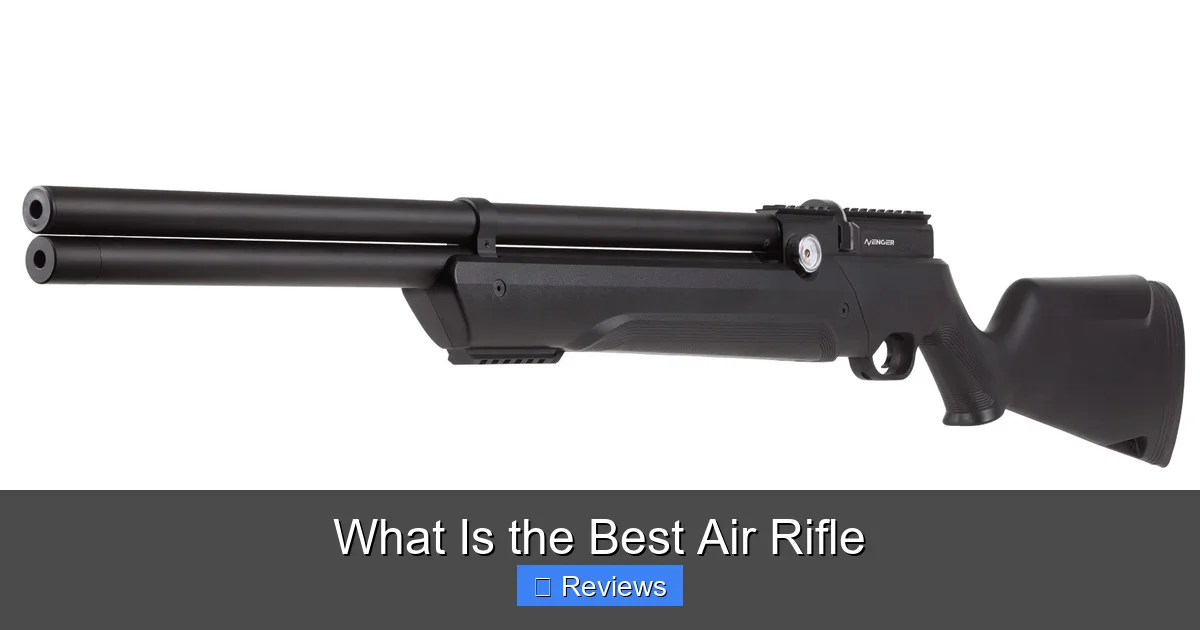
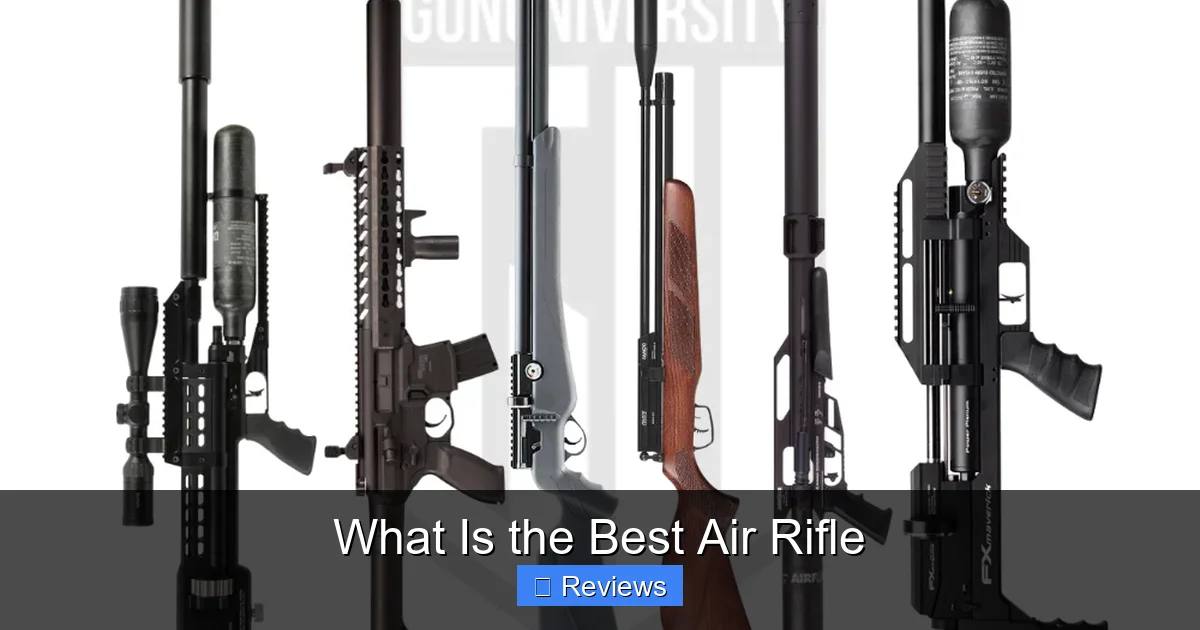
Visual guide about What Is the Best Air Rifle
Image source: pyramydair.com
Spring-Piston Air Rifles
These are perhaps the most common and traditional type. To cock a spring-piston air rifle, you compress a large internal spring, usually by “breaking” the barrel downwards (hence “break barrel”). When fired, the spring rapidly expands, driving a piston forward to compress air, which then propels the pellet.
- Pros: Self-contained (no external air tanks or CO2 cartridges needed), relatively affordable, powerful enough for pest control and small game.
- Cons: Significant recoil (a unique “double recoil” that can be challenging to master and hard on scopes), often heavy to cock, can be noisy, inconsistent shot-to-shot velocity compared to PCPs.
- Best For: Budget-conscious shooters, general plinking, and hunters who appreciate a self-sufficient system. A good spring-piston can be the best air rifle for learning traditional marksmanship.
Gas Ram (Nitro Piston) Air Rifles
A variation of the spring-piston design, gas ram air rifles replace the coiled spring with a sealed gas cylinder (like a miniature gas shock absorber). The principle is similar: cocking compresses the gas, which then expands to drive the piston.
- Pros: Smoother firing cycle than springers, less recoil (though still present), can be left cocked for longer periods without damaging the mechanism, often quieter than springers, better in cold weather than CO2.
- Cons: Still requires effort to cock, not entirely recoil-free, can be slightly more expensive than basic springers.
- Best For: Hunters and shooters looking for improved shootability and consistency over traditional springers without the need for external air sources. Many consider a gas ram to be the best air rifle in its category for convenience and performance.
Pre-Charged Pneumatic (PCP) Air Rifles
PCP air rifles are considered the pinnacle of airgun technology for many. They store highly compressed air in an onboard reservoir, which is then released in controlled bursts to propel the pellet. They require an external air source – usually a high-pressure hand pump, scuba tank, or carbon fiber tank – to fill the reservoir.
- Pros: Virtually recoil-free (leading to exceptional accuracy), consistent shot velocity, often multi-shot (magazine-fed), very powerful, relatively quiet, easy to cock.
- Cons: Higher initial cost (rifle plus filling equipment), requires external air source, can be heavy.
- Best For: Serious target shooters, pest controllers, and hunters who demand the highest levels of accuracy, power, and consistency. For many, the best air rifle for precision is a PCP.
CO2 Air Rifles
CO2 air rifles use readily available 12-gram or 88-gram CO2 cartridges to power the shot. These are often found in replicas of firearms and are popular for casual shooting due to their ease of use.
- Pros: Very easy to use (just pop in a cartridge), often semi-automatic or fully automatic, low recoil, affordable for casual use.
- Cons: Power output drops with temperature (poor performance in cold weather), limited power compared to springers or PCPs, ongoing cost of CO2 cartridges, velocity can drop as the cartridge empties.
- Best For: Backyard plinking, training, and fun recreational shooting where maximum power or long-range accuracy isn’t the primary concern. The best air rifle for rapid-fire fun often uses CO2.
Caliber Considerations: .177 vs. .22 vs. .25 and Beyond
The caliber of your air rifle refers to the diameter of the pellet it fires. This choice profoundly impacts velocity, energy, trajectory, and suitability for different tasks. It’s another crucial factor in determining the best air rifle for you.
The Speedy .177 Caliber
The .177 (4.5mm) is the smallest and most common air rifle caliber. It’s known for its high velocity and flat trajectory, especially with lighter pellets. Due to its speed, it can penetrate targets well, but its lighter mass means it carries less energy downrange.
- Pros: High velocity, very flat trajectory (less pellet drop), widely available and affordable pellets, excellent for paper target shooting and pest control where penetration is key (e.g., small birds, rats).
- Cons: Less knockdown power than larger calibers, more susceptible to wind drift at longer ranges.
- Best For: Precision target shooting, plinking, and small pests like starlings or mice. Many competitive shooters find a .177 to be the best air rifle for their sport.
The Versatile .22 Caliber
The .22 (5.5mm) caliber is often considered the most versatile for general-purpose airgunning. Its larger and heavier pellets carry more energy than .177, making it more effective for transferring knockdown power to pests and small game.
- Pros: Superior knockdown power for humane pest control and small game hunting, less affected by wind than .177 (due to higher ballistic coefficient), still good for general target practice.
- Cons: Lower velocity and more pronounced pellet drop compared to .177 (requires more trajectory compensation), pellets can be slightly more expensive.
- Best For: Small game hunting (rabbits, squirrels), pest control, and general outdoor shooting where a balance of power and accuracy is desired. Many hunters choose a .22 as the best air rifle for field use.
The Hard-Hitting .25 Caliber and Larger
Calibers like .25 (6.35mm), .30, and even larger “big bore” air rifles are designed for maximum power and energy transfer. These are serious tools for larger pests and game.
- Pros: Excellent knockdown power, ideal for larger small game and even some medium-sized game (where legal and appropriate), less wind drift than smaller calibers due to heavy pellets.
- Cons: Significantly lower velocity, very pronounced pellet drop, expensive and less common pellets, often require more powerful (and thus more expensive) air rifles.
- Best For: Hunting larger pests (e.g., raccoons, opossums) and appropriate small game, or for those who simply want maximum power. For hunting, a .25 or larger can truly be the best air rifle.
Key Features and Ergonomics to Look For
Beyond the power plant and caliber, several other features contribute significantly to the overall shooting experience and the effectiveness of an air rifle. Don’t overlook these details when trying to find the best air rifle.
Trigger Quality: The Unsung Hero
A good trigger can transform a mediocre air rifle into a joy to shoot, while a bad one can ruin an otherwise excellent gun. Look for a trigger that is crisp, predictable, and has a manageable pull weight. Two-stage adjustable triggers are highly desirable, allowing you to take up the initial slack before reaching a distinct “wall” where the shot will break.
- Practical Tip: Always try to dry-fire an air rifle (safely!) or at least feel the trigger pull before buying. A heavy, gritty, or inconsistent trigger will severely impact your accuracy and enjoyment.
Sights and Optics
Most air rifles come with either open sights (front and rear) or are designed to accept a scope. High-quality fiber optic open sights can be excellent for quick target acquisition, especially for plinking or close-range pest control. For anything requiring precision or longer distances, a good scope is almost essential.
- Practical Tip: If buying a break-barrel or gas ram, choose a scope specifically rated for airgun recoil, as the unique reverse recoil can destroy standard firearm scopes. PCP air rifles are gentler on optics.
Stock and Ergonomics
The stock is where the rifle meets your body, so its design and material affect comfort, handling, and consistency. Wooden stocks offer a classic look and feel, while synthetic stocks are lighter, more durable, and weather-resistant. Consider the length of pull, grip angle, and cheek weld. A comfortable and stable shooting platform helps you shoot more accurately, making it a strong contender for being the best air rifle for *your* fit.
- Practical Tip: If possible, shoulder different air rifles to see how they feel. Does it balance well? Can you comfortably reach the trigger and operate the safety?
Weight and Balance
An air rifle’s weight and how it’s distributed affect how easy it is to carry, hold steady, and shoot accurately, especially off-hand. Lighter rifles are easier to carry on hunts, but heavier rifles can absorb recoil better and feel more stable for target shooting.
- Practical Tip: Think about your physical strength and the typical duration of your shooting sessions. A heavier air rifle might be the best air rifle for bench shooting, but a lighter one is better for prolonged carrying.
Noise Level and Suppression
Air rifles are generally much quieter than firearms, but some can still be quite loud, especially powerful springers or PCPs without moderation. If you’ll be shooting in your backyard or near neighbors, a quieter air rifle might be a significant factor.
- Practical Tip: Look for air rifles with integrated sound suppression (often marketed as “silencers,” “moderators,” or “shrouds”). These can drastically reduce the muzzle report. Note that true firearm suppressors are regulated, but airgun moderators typically are not in most areas.
Top Contenders: What Kind of Air Rifle is Best for You?
While we won’t name specific models (as they change frequently and availability varies), we can describe the characteristics of the “best air rifle” for various common scenarios.
Best for Beginners and Backyard Fun
For someone just starting out or looking for a casual plinking experience, an easy-to-use, robust, and affordable air rifle is ideal. A reliable break-barrel spring piston in .177 caliber is often the go-to. Look for models that are not overly heavy to cock and have decent open sights or come with a basic, pre-mounted scope. CO2 rifles also shine here for their ease of loading and often semi-automatic action, providing lots of shooting fun without the cocking effort.
- Example Characteristics: .177 caliber, spring-piston or CO2, under $200, simple design, durable stock, decent open sights.
Best for Pest Control and Small Game
When humane pest control or small game hunting is the objective, power, accuracy, and reliability are paramount. A gas ram or a mid-range PCP air rifle in .22 caliber would be an excellent choice. These offer superior knockdown power and better accuracy than entry-level springers. Ensure it has enough muzzle energy to ethically take down your intended quarry at typical distances. A good quality scope is non-negotiable here.
- Example Characteristics: .22 caliber, gas ram or PCP, consistent power, good accuracy out to 50 yards, scope-ready, moderate noise level. The best air rifle for hunting balances power and precision.
Best for Serious Precision Shooting
For competitive target shooters or those who demand the absolute best in accuracy, a high-end PCP air rifle is almost always the answer. These rifles offer unparalleled precision, virtually no recoil, and adjustable triggers that can be tuned to perfection. They often come in .177 caliber for flatter trajectories and consistent pellet placement. Be prepared for the investment in the rifle itself and the necessary high-pressure air filling equipment.
- Example Characteristics: .177 or .22 caliber, PCP, match-grade barrel and trigger, high shot count, minimal recoil, designed for scope use, often higher price point. This is where you find the best air rifle for accuracy.
Best for Budget-Conscious Shooters
Even on a tight budget, you can find a capable air rifle. Entry-level spring-piston break barrels offer great value for money and are perfect for backyard plinking or even light pest control. While they might not have all the bells and whistles, many offer surprising accuracy for their price. Focus on reputable brands known for durability.
- Example Characteristics: .177 or .22 caliber, spring-piston, under $150-$200, simple features, robust construction. Finding the best air rifle on a budget means prioritizing core performance.
Safety First: Essential Air Rifle Practices
Regardless of which air rifle you choose, safety must always be your top priority. Air rifles are not toys; they are capable of causing serious injury or death. Always follow these fundamental safety rules:
- Treat every air rifle as if it’s loaded.
- Never point an air rifle at anything you don’t intend to shoot.
- Keep your finger off the trigger until you are ready to shoot.
- Be sure of your target and what’s beyond it.
- Wear appropriate eye protection.
- Store air rifles securely and unloaded, separate from pellets.
- Always read and understand the owner’s manual for your specific air rifle.
The best air rifle in the world is useless if not handled safely and responsibly.
Conclusion
So, what is the best air rifle? As we’ve thoroughly explored, the answer is a deeply personal one, shaped by your specific needs, budget, and intended use. There’s no magic bullet, no single air rifle that reigns supreme in every category. Instead, the “best” air rifle is the one that perfectly aligns with your expectations, provides the right balance of power and precision for your tasks, and offers an enjoyable and safe shooting experience.
By understanding the different power plants, choosing the appropriate caliber, paying attention to crucial features like trigger quality and ergonomics, and always prioritizing safety, you are now well-equipped to make an informed decision. Take your time, do your research, and consider what truly matters most to you. When you do, you’ll not only find an air rifle you love but one that truly stands as the best air rifle for you.
🎥 Related Video: World's Most Powerful Break Barrel Air Rifle! #gun #airgunning #airgun #shorts
📺 BLOCKETH OUTDOORS
Frequently Asked Questions
What is the legal age to buy an air rifle?
The legal age to purchase an air rifle varies by location. In many places, you must be 18 years old, but some jurisdictions may have different regulations. Always check your local and state laws before purchasing.
Do I need a license to own an air rifle?
In most parts of the United States and many other countries, you do not need a specific license to own a standard air rifle, unlike firearms. However, local regulations can vary significantly, especially regarding air rifles over a certain power level or in specific urban areas. It’s always best to verify local ordinances.
How often should I clean my air rifle?
The cleaning frequency depends on the type of air rifle and how often you shoot. Spring-piston and gas ram rifles generally require less barrel cleaning but benefit from external wipe-downs. PCP air rifles may need occasional barrel cleaning and internal O-ring lubrication. Always refer to your rifle’s manual for specific maintenance guidelines.
Can I use any pellet in my air rifle?
No, you should only use pellets specifically designed for air rifles and of the correct caliber for your particular rifle. Using the wrong size or type of projectile (like BBs in a pellet gun, unless explicitly designed for both) can damage your rifle or cause jams. Different pellet shapes and weights will also perform differently in your air rifle.
What’s the typical range of an air rifle?
The effective range of an air rifle varies widely based on its power, caliber, and the shooter’s skill. For plinking, effective range might be 10-25 yards. For pest control and small game, powerful air rifles can be effective out to 50-75 yards or even slightly more. Precision target shooting can occur at similar or even longer distances for specialized PCP models.
Are air rifles affected by weather conditions?
Yes, air rifles can be affected by weather. CO2 rifles are particularly susceptible to temperature changes, losing power in cold weather. Wind can significantly impact pellet trajectory, especially with lighter pellets or at longer distances. Humidity typically has less impact but can contribute to rust if not properly maintained.