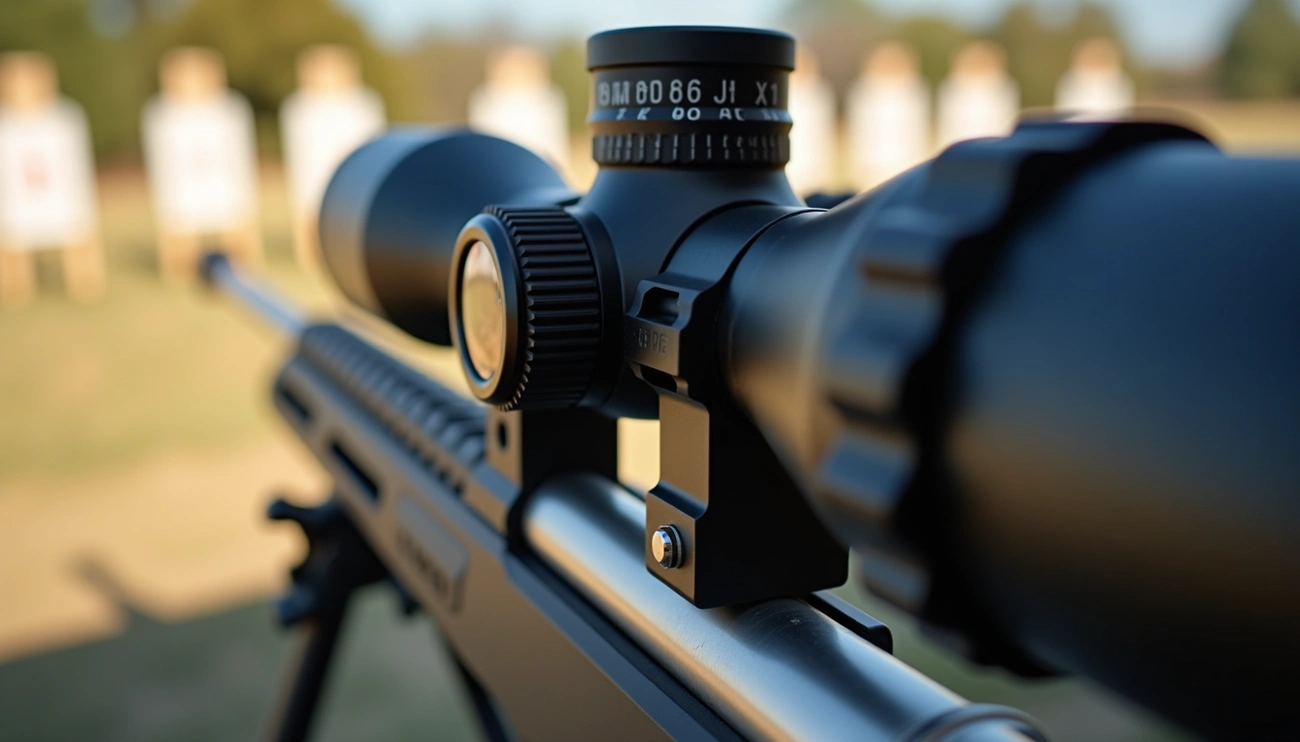
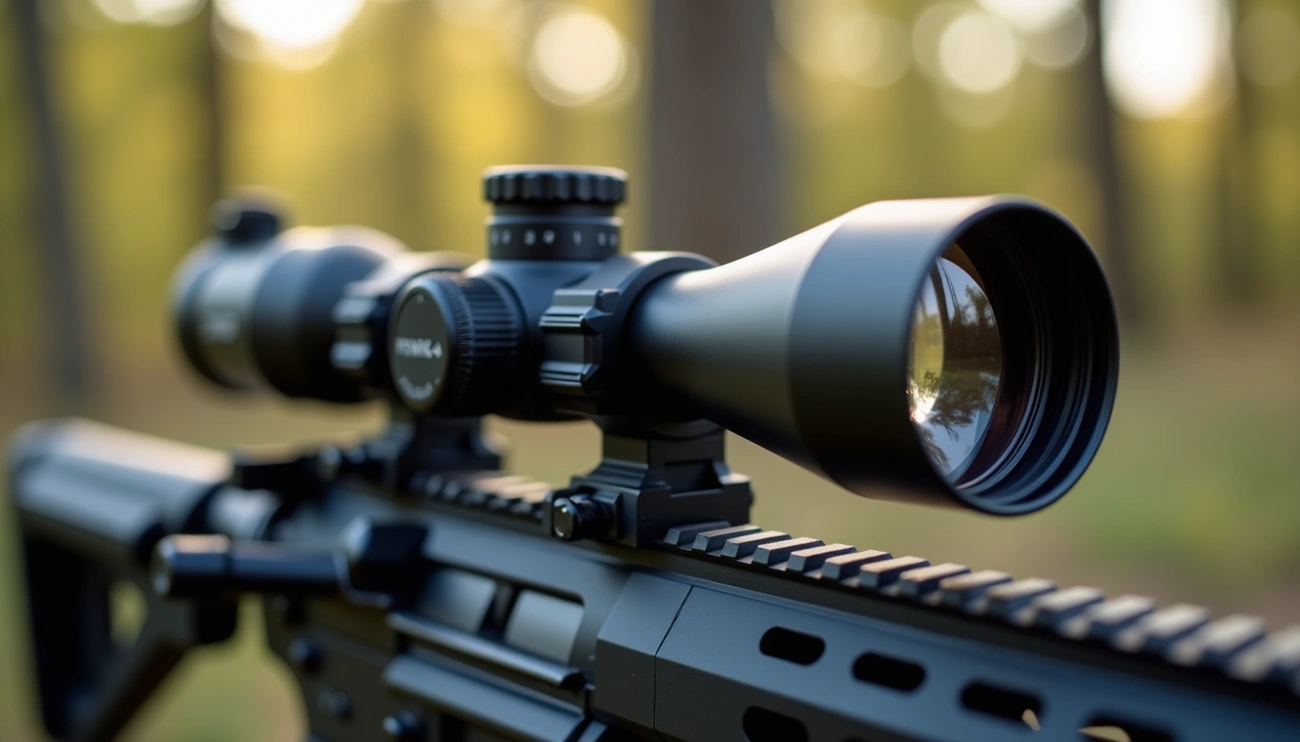
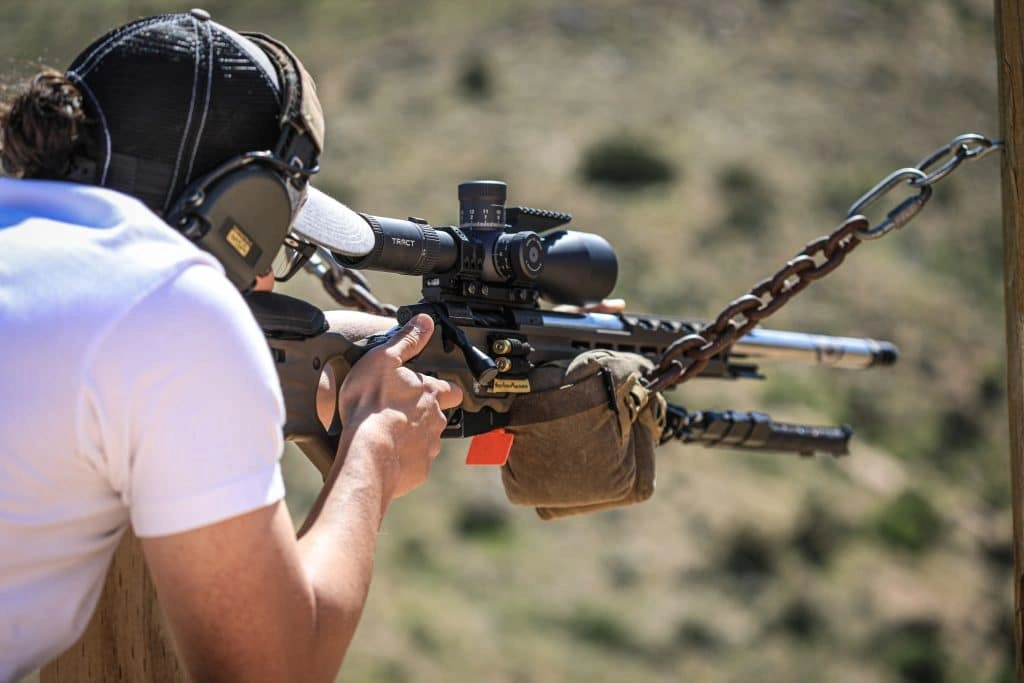
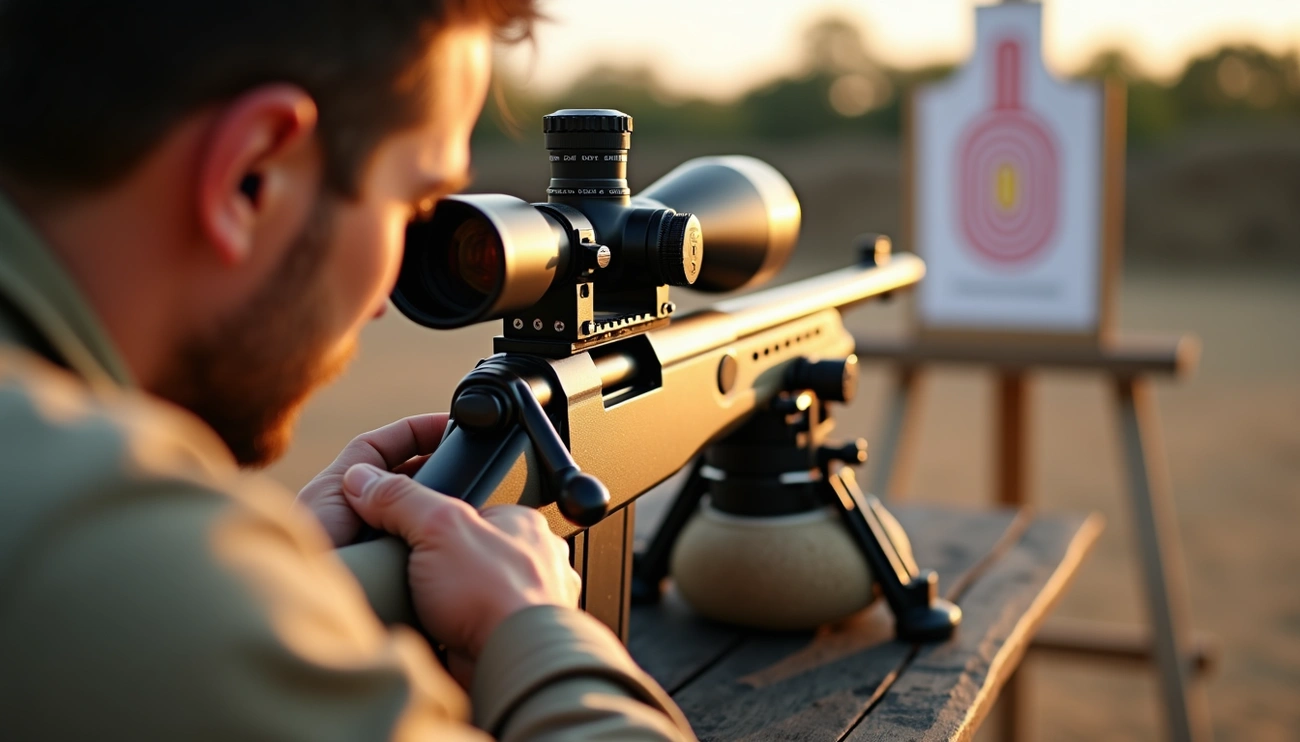
Parallax in a rifle scope is an optical error where the reticle and target are on different focal planes. This misalignment causes the reticle to appear to move when your eye shifts, reducing accuracy at varying distances. Shooters correct parallax using adjustable objective lenses or side focus knobs.
What is Parallax in a Rifle Scope?
Parallax is not just a technical term—it’s a phenomenon that can make or break your shot. Essentially, parallax refers to the apparent displacement of an object when viewed from different positions. First of all, let’s break down what this means for your shooting accuracy.
Understanding parallax in optics
In optical terms, parallax occurs when two objects positioned at different distances appear to shift relative to each other as your viewing angle changes. To grasp this concept, try a simple experiment: hold your cell phone at arm’s length and look at it with one eye at a time. Notice how objects beyond your phone seem to move from side to side as you switch eyes? That’s parallax in action.
This effect happens because your eyes are about 2.5 inches apart, giving each a different viewing position. In optical systems, including rifle scopes, the same principle applies but with different consequences.
How parallax appears in a scope
Inside your rifle scope, parallax manifests when the reticle (crosshair) and the target image are not focused on the same optical plane. When looking through your scope, you’re seeing a projected image created by light entering through the objective lens. The reticle typically sits between your eye and this projected image.
What you’ll actually observe when parallax is present:
- The target appears clear but the reticle looks blurry
- The reticle shifts position relative to the target when you move your head slightly
- The crosshair appears to “float” over the target rather than staying fixed
Most fixed-parallax scopes come from the factory preset to be parallax-free at distances between 50-150 yards (50 for rimfire, 150 for centerfire). Beyond these ranges, parallax becomes increasingly problematic.
Why it matters for accuracy
Parallax directly affects your accuracy because it creates a discrepancy between where your reticle appears to be pointing and where your rifle is actually aimed. At longer distances or with higher magnifications, this effect becomes significantly more pronounced.
For context, at 100 yards, parallax maximum error is around 2/10-inch, but as ranges increase beyond 300 yards, particularly with magnifications over 10x, the impact becomes substantial enough to cause complete misses. This is precisely why serious long-range shooters consider parallax adjustment an essential, not optional, feature of quality optics.
How Parallax Affects Your Shot
Ever noticed your reticle seeming to “float” over your target when you shift your head position? This floating effect isn’t just annoying—it directly impacts your shot placement.
Reticle shift and eye position
The core issue with parallax occurs when your eye position changes behind the scope. As you move your head slightly, the reticle appears to shift position relative to your target. This happens because the reticle and target image aren’t focused on the same optical plane. Even tiny head movements—which happen more often than you might think—create point-of-impact shifts that can transform a perfect shot into a frustrating miss.
To check for parallax issues, simply move your head slightly while looking through your scope. If the reticle appears to move against the target, parallax is present. This movement directly translates to inaccuracy on target.
Impact at different distances
Parallax error compounds dramatically as distance increases. While minimal at close ranges (inside ~100 yards), the effect becomes increasingly problematic beyond 150 yards.
At 100 yards, the parallax error might be negligible, yet at 600 yards, that same error can translate into a 6-inch miss. Competition shooters understand this reality—a 1-inch error at 100 yards becomes a 6-inch miss at 600 yards.
For hunters, the maximum parallax at 300 yards equals approximately the diameter of your scope’s objective lens—about 40mm or 1.5 inches. This margin of error can mean the difference between a clean hit and a complete miss.
Why magnification makes it worse
Higher magnification dramatically amplifies parallax problems. At low magnification, small shifts in eye position have little effect on point of impact. Conversely, at higher power settings, even tiny shifts get amplified.
This phenomenon creates a double challenge—most precision shooting happens at both long distances and higher magnifications, creating perfect conditions for parallax errors to manifest. When shooting beyond 150 yards with magnification over 10x, proper parallax adjustment becomes absolutely critical.
Furthermore, the eye strain caused by misaligned focal planes can lead to target confusion for inexperienced shooters, making accurate shot placement even more challenging.
How to Adjust for Parallax
Properly adjusting your scope’s parallax is crucial for consistent accuracy. Unlike what many shooters think, this adjustment requires a systematic approach.
Step 1: Set the diopter correctly
Begin by focusing your reticle through the diopter adjustment (ocular lens). Point your scope at a plain background—ideally a bright sky or white wall. Look through the scope briefly (2-3 seconds only), then look away. Repeat with small diopter adjustments until the reticle appears instantly sharp without your eye straining to focus it.
Step 2: Use the parallax adjustment knob
Most modern scopes feature a side-focus knob or adjustable objective (AO). Start by setting it to the approximate target distance. Look through your scope at your target with the rifle secured. Turn the parallax knob slowly until both the target and reticle appear sharp and clear. Set your magnification to the highest level during adjustment as this makes parallax errors more noticeable.
Step 3: Check for reticle movement
Verify your adjustment by moving your head slightly side-to-side while watching the reticle. If it appears to “float” or move relative to the target, continue fine-tuning until the reticle stays fixed regardless of small head movements.
Tips for quick field adjustments
Don’t rely solely on yardage markings—they’re approximations. Environmental conditions and individual eyesight can affect optimal settings. For hunting situations where time is limited, set the parallax to the estimated range and take the shot.
Common Mistakes and Misconceptions
Many shooters fall victim to common errors when dealing with parallax, ultimately affecting their shooting accuracy.
Confusing diopter with parallax adjustment
A fundamental misunderstanding occurs when shooters confuse the diopter with parallax adjustment. The diopter focuses the reticle to match your eye’s prescription, whereas parallax adjustment aligns the target image with the reticle plane. Even with a crystal-clear reticle, you can still experience parallax error if these two focal planes don’t align properly. When you adjust the diopter incorrectly to fix an out-of-focus target, you’ve actually unfocused the reticle, creating a compounding problem.
Over-relying on distance markings
Another pitfall is trusting the distance markings on your scope without verification. These markings serve as approximations since environmental conditions, target contrast, and individual eye characteristics affect the optimal setting. Instead of relying solely on these indicators, always fine-tune by observing whether the reticle moves relative to your target when shifting your head position.
Ignoring parallax at long range
Perhaps the most costly mistake is dismissing parallax adjustment altogether. Although some scopes are marketed as “parallax-free,” this typically applies only to distances between 50-150 yards. Beyond 150 yards—notably with magnifications exceeding 10x—parallax becomes increasingly problematic. At 300 yards, parallax error can equal the diameter of your scope’s objective lens—approximately 1.5 inches—enough to cause a complete miss.
Conclusion
Understanding parallax represents a critical step toward mastering long-range shooting. Throughout this article, we’ve seen how this optical phenomenon can significantly impact your accuracy, especially beyond 150 yards or when using magnifications above 10x. Undoubtedly, what might seem like a minor technical detail actually makes the difference between hitting your target consistently or experiencing frustrating misses.
After all, even the finest rifle with premium ammunition cannot overcome the physics of optical misalignment. Rather than dismissing parallax adjustment as unnecessary complexity, smart shooters embrace it as an essential skill. Before taking that long-range shot, check for reticle movement by slightly shifting your head position while looking through your scope. This simple habit will dramatically improve your shooting performance.
Though factory settings might suffice for casual shooting at moderate distances, serious shooters must master proper parallax adjustment. First, set your diopter correctly for a crisp reticle. Afterward, adjust your parallax knob until both reticle and target appear sharp simultaneously. Finally, verify by checking for reticle movement against the target.