Headspace in a rifle refers to the crucial distance between the breech face and a specific datum point in the chamber that supports the cartridge. This seemingly small measurement is paramount for both safety and performance, directly influencing how a cartridge fits and fires. Proper headspace prevents dangerous case ruptures and ensures consistent, reliable rifle operation.
Have you ever wondered about the intricate mechanics that make your rifle both safe and incredibly accurate? Perhaps you’ve heard seasoned shooters or gunsmiths drop terms like “headspace” and observed a slight nod of grave understanding among them. It’s a term that often sounds technical and complex, but understanding what headspace in a rifle is, is absolutely fundamental to appreciating firearm safety and performance.
Think of it this way: every component in your rifle plays a vital role, and they all have to work together with astonishing precision. From the moment you load a cartridge to the instant the firing pin strikes the primer, a complex dance of tolerances and pressures occurs. Among these critical elements, headspace stands out as a silent guardian, a tiny measurement that dictates whether your rifle operates flawlessly or risks a dangerous malfunction. Let’s pull back the curtain and demystify this crucial concept.
What Exactly *Is* Headspace? The Core Definition
At its simplest, headspace refers to a specific, critical dimension within a firearm’s chamber. More precisely, it’s the distance between the face of the bolt (the part that pushes the cartridge into the chamber) and a specific datum point in the chamber that supports the cartridge. This “datum point” varies depending on the cartridge design.
Let’s break down how headspace is measured for different cartridge types:
* **Rimmed Cartridges (e.g., .30-30 Winchester, .45-70 Government):** For these, headspace is measured from the bolt face to the front edge of the cartridge rim. The rim itself prevents the cartridge from moving too far forward into the chamber.
* **Rimless Bottleneck Cartridges (e.g., .308 Winchester, .223 Remington):** This is where it gets a bit more nuanced. Headspace for these cartridges is measured from the bolt face to a specific point on the shoulder of the cartridge case. This “shoulder” is what stops the cartridge from moving forward.
* **Rimless Straight-Walled Cartridges (e.g., .45 ACP, 9mm Luger):** Here, headspace is measured from the bolt face to the front edge of the cartridge case mouth, which seats against a corresponding shoulder cut into the chamber.
* **Belted Magnum Cartridges (e.g., .300 Winchester Magnum):** While many belted magnums also have a shoulder, their primary headspace control is typically from the bolt face to the front edge of the belt that encircles the cartridge near its base.
Regardless of the cartridge type, the principle remains the same: headspace ensures the cartridge is held securely in the chamber, neither too far forward nor too far back, before the firing pin impacts the primer.
Why Is Headspace So Important? Safety, Accuracy, and Reliability
Understanding what headspace in a rifle is, inevitably leads to the question of *why* it matters so much. The answer boils down to three core pillars: safety, accuracy, and reliability.
Safety: Preventing Catastrophic Failure
This is, without a doubt, the most critical reason headspace demands attention. When a cartridge fires, immense pressure builds within the case, pushing the bullet down the barrel. If the cartridge is not properly supported by the chamber and the bolt face, that pressure has nowhere to go but out – often in dangerous and uncontrolled ways.
* **Case Head Separation:** This is perhaps the most common and dangerous outcome of excessive headspace. If the cartridge is too far forward in the chamber, the case must stretch excessively to meet the bolt face when fired. This stretching can weaken the brass, causing the case to tear apart near its base. Hot gases and fragments can then escape backward into the rifle’s action, potentially injuring the shooter.
* **Primer Blowout:** With too much headspace, the primer can be forced out of its pocket in the case head, again allowing hot gases to escape rearward.
* **Excessive Pressure:** While less common with *too much* headspace, *too little* headspace can lead to dangerously high pressures. If the bolt cannot fully close or if the cartridge is compressed too tightly, ignition can result in pressures far exceeding safe limits, potentially rupturing the barrel or receiver.
* **Rifle Damage and Injury:** In extreme cases, improper headspace can lead to catastrophic failure of the rifle itself, potentially blowing apart components and causing serious injury or even death to the shooter or bystanders.
Accuracy: Consistency is Key
While not as immediately life-threatening as safety issues, inconsistent headspace can significantly degrade accuracy. If each cartridge seats slightly differently, the primer strike may be inconsistent, or the bullet may enter the rifling at a slightly different point, leading to variations in muzzle velocity and point of impact. For precision shooters, even a tiny variation can mean the difference between a bullseye and a miss.
Reliability: Smooth Operation
A rifle with proper headspace cycles smoothly. Cartridges chamber effortlessly, and spent cases extract reliably. If headspace is off, you might experience:
* **Failure to Chamber:** If headspace is too tight (too little), the cartridge may not fully enter the chamber, preventing the bolt from closing.
* **Hard Bolt Closure:** You might have to force the bolt closed, indicating that the cartridge is being unduly compressed. This can be dangerous as it can lead to high pressures.
* **Failure to Extract/Eject:** Cases that have stretched or ruptured due to excessive headspace might stick in the chamber, making extraction difficult or impossible.
Too Much Headspace vs. Too Little Headspace: The Extremes
Understanding what headspace in a rifle is means understanding the delicate balance required. Both ends of the spectrum – too much or too little – pose significant problems.
The Dangers of Excessive Headspace (Too Much Gap)
Imagine putting a tiny pebble in a hole that’s much too big for it. That’s essentially what happens with excessive headspace. The cartridge is positioned too far forward in the chamber, leaving too much space between the case head and the bolt face.
* **Symptoms:**
* **Loose Primer Pockets:** After firing, primers might appear flattened or even fall out easily.
* **Case Stretching Rings:** Inspecting fired brass might reveal a shiny, thin ring just above the case head, indicating severe stretching. This is a red flag for impending case head separation.
* **Difficulty Extracting:** Cases might stick in the chamber because they’ve stretched and expanded too much.
* **Poor Accuracy:** Inconsistent primer strikes and bullet seating can lead to erratic groups.
* **Scary Sounds/Gas to Face:** In severe cases, you might hear unusual sounds, feel gas escaping from the action, or even get powder residue blown back into your face.
* **Consequences:** As mentioned earlier, case head separation is the primary catastrophic risk here. When the case ruptures, hot, high-pressure gas escapes backward into the rifle’s action. This can destroy the magazine, warp the receiver, damage internal components, and, most importantly, cause severe injury to the shooter.
The Problems with Insufficient Headspace (Too Little Gap)
Now, imagine trying to fit a large block into a hole that’s slightly too small. This is the scenario with insufficient headspace. The chamber is effectively too short for the cartridge, or the cartridge is too long for the chamber.
* **Symptoms:**
* **Failure to Chamber:** The most obvious sign is that the bolt simply won’t close fully on a loaded cartridge.
* **Hard Bolt Closure:** You might be able to force the bolt closed, but it requires excessive effort. This is extremely dangerous as you are effectively compressing the cartridge components.
* **Bright “Smiley” Marks on Case Heads:** If you force the bolt closed, you might see crescent-shaped marks on the case head where it contacted the chamber edge.
* **Bulged or Expanded Cases:** The bullet might be jammed into the rifling upon chambering, leading to very high pressures when fired.
* **Consequences:** The primary danger here is dangerously high pressure. If the bullet is jammed into the rifling or the cartridge is over-compressed, ignition can cause pressures to spike far beyond safe limits. This can lead to barrel bulges, receiver cracks, bolt lug shearing, and even a catastrophic “kaboom” where the rifle literally explodes.
How Headspace Is Measured and Checked: Gauges and Gunsmiths
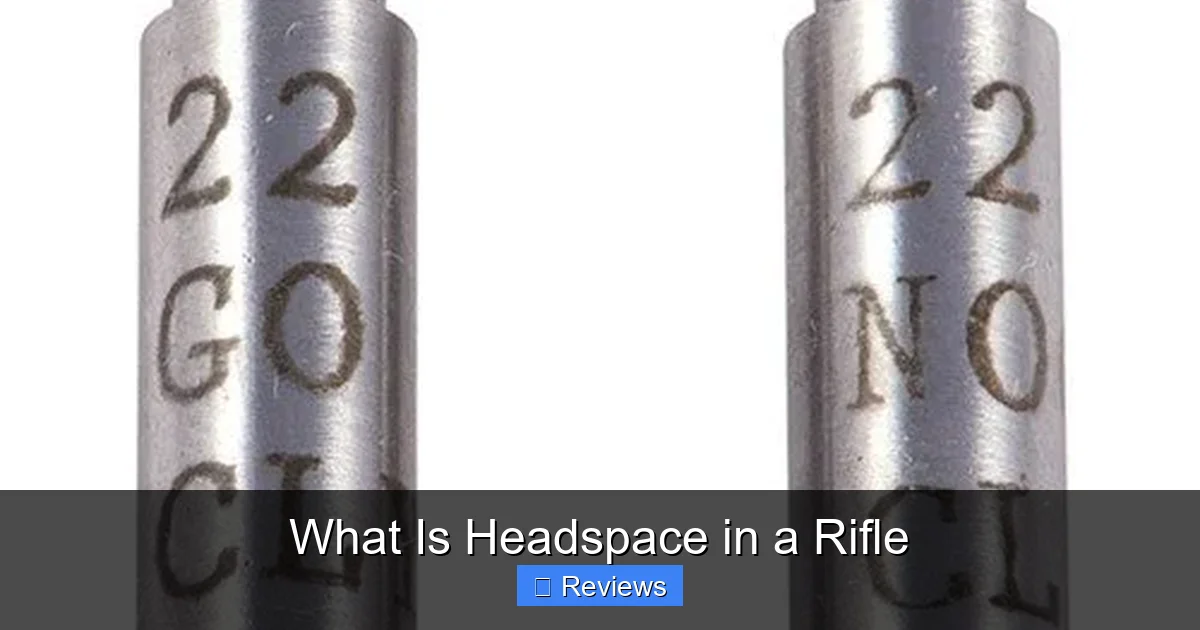
So, how do we ensure a rifle has proper headspace? This is where specialized tools called headspace gauges come into play. These are precisely machined steel cylinders that mimic the dimensions of a cartridge case.
The Three Types of Headspace Gauges:
1. **GO Gauge:** This gauge represents the minimum safe headspace. If the bolt closes freely on a GO gauge, it means the chamber is deep enough to accept a cartridge and allow the bolt to fully lock. This is the basic functional check.
2. **NO-GO Gauge:** This gauge represents the maximum *ideal* headspace for a new or well-maintained rifle. If the bolt *does not* close on a NO-GO gauge, it indicates that headspace is still within factory specifications. If the bolt *does* close on a NO-GO gauge, it means headspace is beyond ideal specifications, suggesting wear or an out-of-spec component. While the rifle might still be “safe” with a NO-GO closure, it’s operating at the edge of tolerance and warrants further investigation.
3. **FIELD Gauge:** This is the critical safety gauge, representing the absolute maximum headspace considered safe before the rifle becomes dangerous. If the bolt *does not* close on a FIELD gauge, the rifle is considered safe (though possibly worn). If the bolt *does* close on a FIELD gauge, the rifle is unequivocally unsafe and should be removed from service immediately until repaired by a qualified gunsmith.
The Headspace Checking Process:
* **Cleanliness is Key:** The chamber, bolt face, and bolt lugs must be immaculately clean. Any debris can give a false reading.
* **Remove Extractor/Ejector (Often):** For an accurate reading, it’s often necessary to remove the extractor and ejector from the bolt face. These parts can apply pressure to the gauge, preventing the bolt from closing even if headspace is technically within spec.
* **Insert Gauge:** Gently place the appropriate headspace gauge into the chamber.
* **Attempt to Close Bolt:** Slowly and *gently* attempt to close the bolt. Do not force it.
* If the bolt closes easily on the **GO gauge**, good.
* If the bolt *does not* close on the **NO-GO gauge**, even better.
* If the bolt *does* close on the **NO-GO gauge**, but *not* on the **FIELD gauge**, the rifle is considered “safe but worn” and potentially less accurate.
* If the bolt *does* close on the **FIELD gauge**, the rifle is unsafe and requires immediate attention.
Professional vs. DIY:
While headspace gauges are available for purchase, correctly interpreting the results and understanding the nuances of different rifle actions often requires experience. A qualified gunsmith has the tools, knowledge, and expertise to accurately check headspace and diagnose any issues. They can also adjust headspace if necessary, typically by replacing or modifying barrel extensions, bolts, or re-cutting chambers.
Factors Affecting Headspace and When to Check It
Headspace isn’t a static measurement; it can change over time or with modifications. Knowing what headspace in a rifle is includes understanding these variables.
Factors That Can Alter Headspace:
* **Barrel Wear:** Over thousands of rounds, especially with high-pressure cartridges, the chamber and throat of the barrel can erode, effectively lengthening the chamber and increasing headspace.
* **Bolt Lug Wear/Setback:** The locking lugs on the bolt and in the receiver can wear down or “set back” slightly over time, increasing the distance between the bolt face and the chamber.
* **Receiver Stretching:** In rare instances, particularly with older rifles or those subjected to very high pressures, the receiver itself can stretch minutely, which will increase headspace.
* **New Components:** Replacing a barrel, bolt, or even certain receiver components can drastically alter headspace. This is why headspace *must* be checked any time a new barrel is installed.
* **Reloading Practices:** While not affecting the rifle’s headspace directly, improperly sized reloaded cases can act as if the rifle has incorrect headspace. For instance, if you don’t full-length size your cases sufficiently, they might behave like they are too long for the chamber, mimicking insufficient headspace. Conversely, over-sizing cases can lead to excessive case stretching, mimicking too much headspace in a rifle.
When Should You Check Headspace?
* **New Barrel Installation:** This is non-negotiable. Anytime a new barrel is installed on a receiver, headspace *must* be checked. Barrels are often manufactured slightly “long” and then fit precisely by a gunsmith to achieve correct headspace.
* **New or Used Rifle Purchase:** Especially when buying a used rifle, checking headspace is a wise precaution to ensure it’s safe to shoot. A new rifle from a reputable manufacturer usually comes with correct headspace, but it doesn’t hurt to verify.
* **After Gunsmithing/Repair:** If your rifle has undergone any significant work on the action, bolt, or chamber, headspace should be re-verified.
* **If You Suspect an Issue:** Any of the symptoms of incorrect headspace (hard bolt closure, difficult extraction, flattened primers, case stretching, poor accuracy) should prompt an immediate headspace check.
* **High-Volume Shooters:** If you shoot thousands of rounds through a rifle, especially a magnum or high-pressure cartridge, a periodic headspace check (every few thousand rounds, or annually) can be a good preventative measure.
Conclusion: A Small Measurement with Enormous Impact
So, what is headspace in a rifle? It’s a tiny, often overlooked dimension that holds immense power over the safety, reliability, and accuracy of your firearm. It’s the critical buffer that ensures your cartridge is perfectly supported when a minuscule spark ignites a controlled explosion of propellant, sending a projectile screaming down the barrel.
Ignoring headspace is like ignoring the foundational strength of a building. While it might seem fine for a while, eventually, the inherent weakness will manifest, potentially with devastating consequences. Whether you’re a seasoned enthusiast, a new gun owner, or an aspiring marksman, understanding and respecting headspace is a hallmark of responsible firearm ownership. When in doubt, always consult a qualified gunsmith to ensure your rifle is operating safely and within its optimal parameters. Your safety, and the longevity of your rifle, depend on it.
Key Takeaways
- Definition: Headspace is the precise distance from the bolt face to a datum line or shoulder in the rifle’s chamber, ensuring the cartridge is correctly supported.
- Safety First: Incorrect headspace is a major safety hazard, potentially leading to catastrophic rifle failure, case ruptures, and injury due to excessive pressure or unsupported cartridge bases.
- Too Much Headspace: Excessive headspace causes cartridge cases to stretch dangerously upon firing, increasing the risk of case head separation, primer blowouts, and a loss of accuracy.
- Too Little Headspace: Insufficient headspace prevents the cartridge from fully seating or the bolt from closing completely, leading to failures to chamber, hard bolt closure, and potentially dangerously high pressures.
- Headspace Gauges: Specialized GO, NO-GO, and FIELD gauges are used to measure and verify headspace, ensuring the rifle operates within safe and acceptable manufacturing tolerances.
- Factors & Checks: Headspace can be affected by barrel wear, bolt wear, new components, or custom work. It should be checked when buying a used rifle, installing a new barrel, or if safety concerns arise.
- Professional Inspection: While gauges are available, checking headspace correctly requires understanding and precision. It’s often best left to a qualified gunsmith to ensure accurate and safe assessment.
Quick Answers to Common Questions
What is the primary danger of too much headspace?
The primary danger of too much headspace is case head separation, where the cartridge case ruptures at its base during firing, allowing high-pressure gas to escape backward into the rifle’s action, posing a serious injury risk to the shooter.
Can I check headspace myself?
While headspace gauges are available for purchase, correctly using them and interpreting the results requires knowledge and precision. It’s often recommended to have a qualified gunsmith check headspace, especially for critical assessments or adjustments.
What are the three main types of headspace gauges?
The three main types of headspace gauges are the GO gauge (minimum safe headspace), the NO-GO gauge (maximum ideal headspace), and the FIELD gauge (absolute maximum safe headspace).
Does headspace affect accuracy?
Yes, inconsistent headspace can negatively affect accuracy. If cartridges seat differently each time, it can lead to variations in primer strike, bullet seating depth, and overall pressure, resulting in inconsistent muzzle velocity and point of impact.
When should headspace be checked?
Headspace should always be checked after installing a new barrel, when buying a used rifle, after any significant gunsmithing on the action or chamber, or if you notice symptoms like hard bolt closure, difficult extraction, or unusual primer conditions.
🎥 Related Video: Ask Ian: What is Headspace? (And Why It Matters)
📺 Forgotten Weapons
https://utreon.com/c/forgottenweapons/ http://www.patreon.com/ForgottenWeapons …
Frequently Asked Questions
What causes headspace to change over time?
Headspace can change due to wear and tear on the rifle’s components over time, primarily barrel erosion from firing and wear or “setback” of the bolt’s locking lugs in the receiver. In rare cases, receiver stretching can also contribute.
Can reloading practices affect headspace?
Yes, while reloading doesn’t change the rifle’s inherent headspace, improper sizing of reloaded cases can mimic headspace problems. Cases that are not resized enough can act like they’re too long, causing tight chambering, while over-sized cases can stretch dangerously, similar to excessive headspace.
Is it normal for a rifle to close on a NO-GO gauge but not a FIELD gauge?
If a rifle closes on a NO-GO gauge but not on a FIELD gauge, it indicates that the headspace is beyond factory ideal specifications but still within the absolute safe limits. Such a rifle is considered “safe but worn” and might exhibit reduced accuracy or shortened case life for reloaded ammunition.
What’s the difference between headspace and chamber length?
Headspace is a specific measurement from the bolt face to a datum point on the chamber that supports the cartridge base or shoulder. Chamber length refers to the total length of the chamber from the breech to the point where the bullet engages the rifling. Headspace gauges measure the critical support dimension, not the overall chamber length.
Can a gunsmith adjust headspace?
Yes, a qualified gunsmith can often adjust headspace. This typically involves techniques like setting back the barrel and re-threading the chamber, replacing the barrel or bolt, or using shims in some specific rifle designs. It is a precise task that requires specialized tools and expertise.
What are the immediate signs of insufficient headspace?
The most immediate and obvious sign of insufficient headspace is a failure to fully chamber a cartridge, meaning the bolt will not close completely on a loaded round. Another sign is needing to force the bolt closed, which is very dangerous and should never be done.