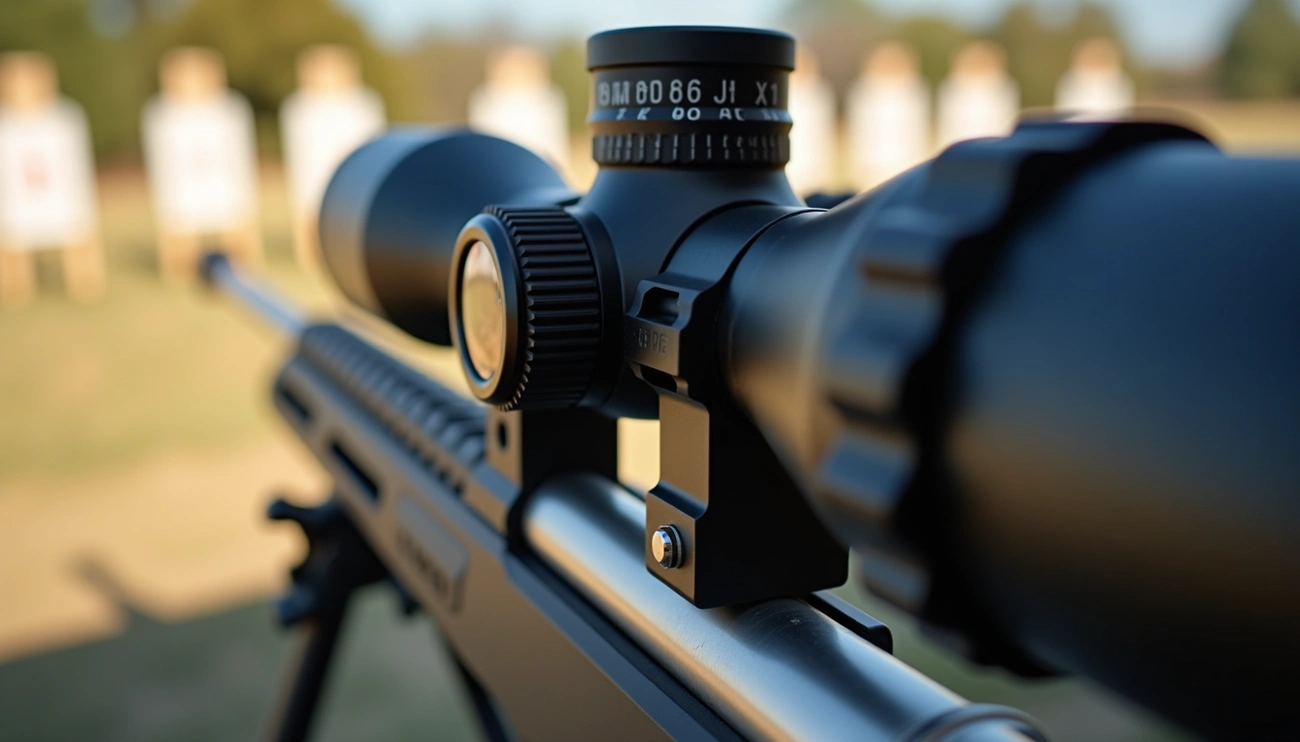
What is BDC on a rifle scope? BDC stands for bullet drop compensator, and it’s a specialized reticle design that can dramatically improve your shooting efficiency at varying distances. When I’m shooting at targets within 600 yards in fast-paced environments, I find BDC reticles particularly valuable for quick target acquisition.
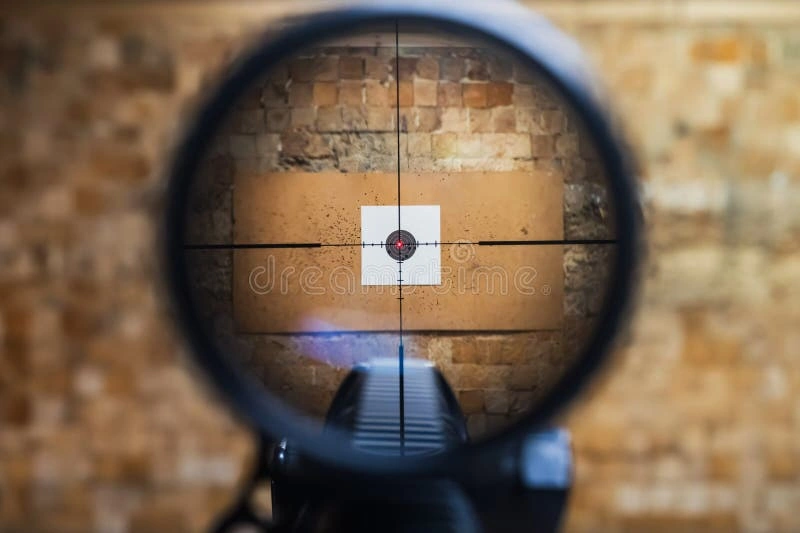
Essentially, a bullet drop compensator scope features a center cross-hair with additional reference points below the horizontal plane along the vertical line. These markings allow us to compensate for bullet drop at extended ranges without adjusting the turrets. Depending on the optic, the BDC stadia can compensate for distances up to 1,000 yards, although most are calibrated in 100-yard increments.
However, it’s important to note that BDC reticles are calibrated to the ballistics of specific cartridges and loads. This means that, for consistent shooting, we must use specific rounds with rifles of specific barrel lengths. In this comprehensive guide, I’ll explain how BDC reticles work, when to use them, and why they prioritize engagement speed over high precision.
What does BDC mean on a rifle scope?
Bullet Drop Compensator (BDC) reticles are specialized scope designs featuring multiple aiming points stacked beneath the main crosshair. These additional reference points allow shooters to compensate for the way gravity affects bullet trajectory over distance. BDC reticles typically come in two primary styles: absolute hash marks and unspecified hash marks.
Absolute hash marks represent specific measurements in either minutes of angle (MOA) or milradians (MRAD), working similarly to adjustable turrets. Unspecified hash marks, meanwhile, are fixed-position markings with no absolute distance indicated between each line. These require ballistic program verification to determine what each marking represents with your specific setup.
How BDC reticles differ from MOA and MIL
Unlike MOA or MIL reticles that use fixed equal measurements in minutes of angle or milliradians, respectively, BDC reticles are specifically calibrated to match the ballistics of particular cartridges and loads. This fundamental difference changes how shooters approach targets at varying distances.
In contrast to MOA and MIL systems, which excel in extremely fine precision but require complex calculations, BDC reticles prioritize engagement speed over high precision. Furthermore, MOA and MIL users must memorize ballistic tables or perform mental math to engage targets effectively. BDC users simply select the appropriate aiming point for their target’s distance.
As one manufacturer notes, “BDC scopes are great for the hobbyist, while MIL scopes are better for the serious shooter.
Why BDC is popular among hunters and sport shooters
The practical advantages of BDC reticles make them particularly appealing to hunters and competitive shooters. Specifically, they allow for:
- Fast target acquisition without manual scope adjustments
- Simplified aiming process that eliminates complex calculations
- Quick transitions between targets at varying distances
- Effective performance in fast-paced hunting scenarios where time is limited
BDC reticles shine in practical applications like hunting and tactical carbine competitions. Moreover, for AR-15 shooters using consistent ammunition, BDC scopes are massive time-savers – instead of dialling elevation or calculating holdovers, you simply aim using the correct reticle mark.
The design is especially beneficial for hunters targeting game at variable but known distances (like deer at 100-300 yards), as the pre-calibrated marks enable faster shots with less guesswork when time is limited. Subsequently, this results in quicker follow-up shots with fewer field adjustments needed.
How does a BDC scope work?
A bullet drop compensator (BDC) scope simplifies long-range shooting by eliminating the need for manual elevation adjustments. Once properly set up, these specialized scopes let you aim directly at targets at varying distances using pre-calculated reference points.
Understanding stadia lines and holdover points
The core feature of BDC scopes is their distinctive reticle pattern with multiple aiming points stacked vertically below the main crosshair. These reference marks—known as stadia lines or holdover points—correspond to bullet impact points at predetermined distances. Think of them as multiple reticles inside the main reticle.
To effectively use these holdover points, I place the appropriate stadia line on my target rather than adjusting turrets. For instance, if I’m sighted in at 100 yards and shooting at a target 300 yards away, I’ll use the third stadia line down from center.
Calibre-specific calibration explained
Beyond that, BDC reticles are calibrated for specific cartridges and loads to maximize accuracy. For example, some reticles are designed for long-range calibres like 6.5 Creedmoor, while others are optimized for the trajectory of .308 Winchester or 5.56 NATO.
For optimal performance, manufacturers design BDC reticles considering three key factors:
- The bullet’s ballistic coefficient (BC)
- Muzzle velocity
- Typical environmental conditions
This calibration ensures that the scope’s holdover points actually match your bullet’s flight path at various distances.
BDC in first vs second focal plane scopes
First focal plane (FFP) and second focal plane (SFP) scopes handle BDC reticles quite differently. In effect, FFP reticles maintain consistent values regardless of magnification—if I need to hold 0.5 mil of wind at 300 yards, that measurement remains the same whether I’m at 3x or 10x magnification.
In contrast, SFP reticles maintain accurate BDC measurements only at a single magnification setting—typically the maximum power. At lower magnifications, the holdover values change proportionally, requiring either consistent use at maximum power or mathematical adjustments.
How to use a BDC reticle effectively
Maximizing the performance of your BDC reticle demands proper setup and understanding of several key factors. Let’s explore how to use this system effectively.
Zeroing your rifle for BDC accuracy
Proper zeroing is fundamental to BDC performance. Popular zero distances include 36 yards, 50 yards, and 100 yards, each offering different advantages. Interestingly, many shooters find that zeroing at distances other than the manufacturer’s recommendation can better align the BDC marks with their specific ammunition. For instance, a 220-yard zero might align stadia lines within 5 yards of accuracy out to 600 yards.
Using ballistic calculators and subtension charts
Ballistic calculators like Strelok Pro, Hornady 4DOF, or Bushnell’s app transform raw ammunition data into practical scope adjustments. These tools allow you to input bullet weight, velocity, and environmental conditions to determine exactly where each stadia line will impact. The calculated data becomes your roadmap for precision shooting with your BDC reticle.
Adjusting for different ammunition types
When switching ammunition, document how each bullet weight performs with your BDC marks. Since BDC reticles are calibrated for specific loads, changing bullet weights requires adjustment. As one expert notes, “BDC reticles are calibre and load specific, meaning you’ll need to create reference points for each ammunition type you use.
Compensating for wind and environmental factors
Many BDC reticles include windage marks for 5mph, 10mph, and 15mph conditions. Remember to hold into the wind—if the wind blows left to right, adjust your aim to the left. Density altitude (combining pressure, humidity, temperature, and altitude) affects your bullet trajectory and may require additional compensation.
Recording and testing your DOPE
DOPE (Data On Previous Engagements) becomes your personal ballistic profile. To build yours:
- Shoot targets at varying distances from near to far.
- Record actual impact points for each stadia line
- Note the environmental conditions for each shooting session.
- Document wind holds that proved effective.
This methodical approach transforms a generalized BDC reticle into a personalized precision tool.
Pros, cons, and alternatives to BDC scopes
BDC scopes offer several distinct advantages alongside notable limitations, making them ideal for certain shooting scenarios yet less suitable for others. Understanding these trade-offs helps in selecting the right reticle for your specific needs.
Advantages of BDC scopes for quick engagement
BDC reticles excel in fast-paced environments where targets appear at varying distances. They allow quick compensation for long-distance shots without adjusting elevation turrets. Additionally, the pre-calibrated markings eliminate the need for complex calculations or memorizing ballistic formulas. This makes BDC particularly valuable for hunting or tactical carbine competitions where speed matters more than extreme precision.
Limitations in precision and customization
Despite their benefits, BDC reticles are generalizations of bullet trajectory and only estimate bullet drop in specific circumstances. The primary limitation is their dependency on matching the scope to your specific ammunition and barrel length. Furthermore, in second focal plane scopes, BDC markings are only accurate at one specific magnification setting, typically the highest power. Environmental factors like altitude and temperature also affect accuracy unless compensated for.
When to choose MIL or MOA instead
MIL and MOA reticles provide unmatched precision for long-range engagement. These systems excel when you need extreme accuracy or frequently change ammunition types. Consequently, competitive long-range shooters and advanced enthusiasts generally prefer these reticles over BDC. According to experts, MIL/MOA reticles are better suited for shooters seeking ultimate precision and customization for handloads or extreme environmental conditions.
Best use cases for BDC vs other reticles
BDC reticles perform best for hunting and recreational shooting at distances up to 600 yards. Conversely, MIL/MOA systems are preferable for precision shooting beyond those distances. For AR-15 shooters using consistent ammunition, BDC scopes offer significant time-saving advantages. Ultimately, BDC works exceptionally well for hunters targeting game at variable but known distances, enabling faster shots with less guesswork when time is limited.
Conclusion
BDC reticles offer remarkable advantages for shooters who need quick target acquisition at various distances. Throughout this guide, we’ve explored how these specialized scopes work and when they truly shine. Undoubtedly, the ability to compensate for bullet drop without adjusting turrets makes BDC an excellent choice for hunting and tactical scenarios where speed matters.
Nevertheless, success with a BDC scope requires understanding its limitations. Since these reticles work best with specific ammunition and barrel lengths, you must match your setup accordingly. Additionally, proper zeroing and consistent practice will transform your BDC scope from a general-purpose tool into a precision instrument tailored to your needs.
While MIL and MOA systems might offer greater precision for dedicated long-range shooters, BDC reticles provide an intuitive solution for most practical applications within 600 yards. After all, the best reticle is one that works effectively for your specific shooting requirements.
Whether you’re a hunter tracking game at variable distances or a competitive shooter needing fast transitions between targets, a well-understood BDC reticle can significantly improve your shooting efficiency. The time saved by eliminating complex calculations and turret adjustments often makes the difference between a successful shot and a missed opportunity.