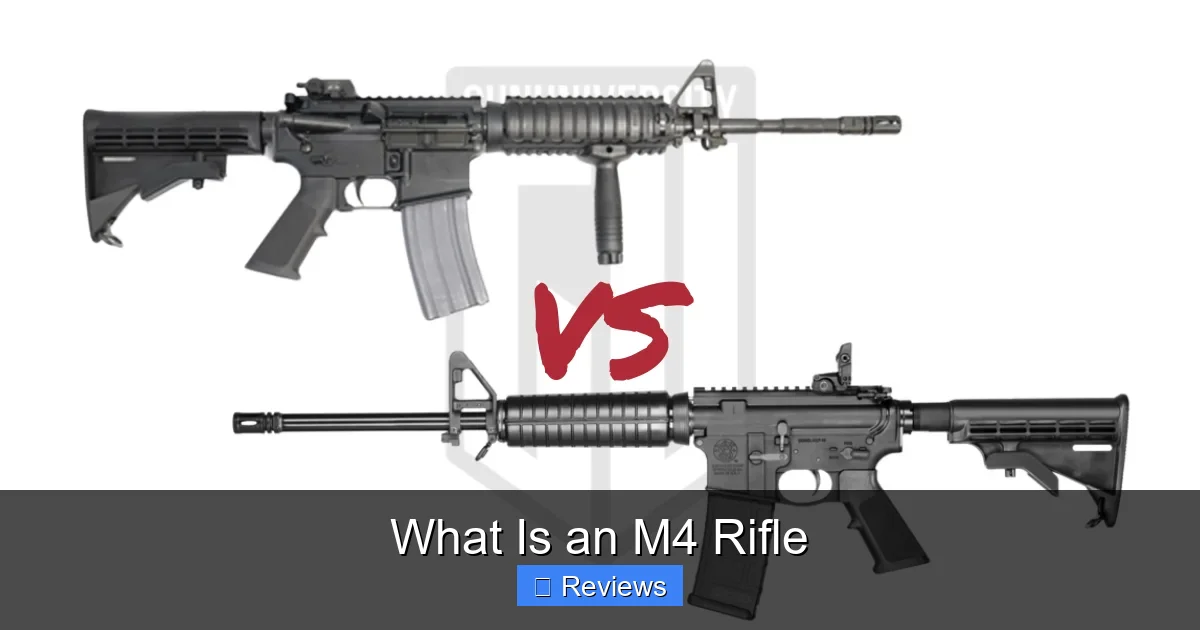
The M4 rifle is a versatile and compact carbine, primarily used by the U.S. military and law enforcement. Evolving from the AR-15 and M16 platforms, it’s known for its lightweight design, modularity, and effectiveness in various combat scenarios. Firing 5.56x45mm NATO rounds, the M4’s direct impingement gas system and retractable stock make it a highly adaptable and widely recognized firearm.
What Is an M4 Rifle?
Have you ever wondered about the sleek, powerful rifle you often see in movies, video games, or in the hands of soldiers? Chances are, you’re looking at an M4 rifle. This isn’t just another firearm; it’s an icon, a symbol of modern military power, and a highly adaptable tool that has reshaped how ground forces operate around the globe. But what exactly is an M4 rifle, and what makes it so special?
From its distinctive look to its remarkable performance, the M4 rifle holds a significant place in the history of firearms. It’s a weapon designed for versatility, perfect for everything from close-quarters combat to mid-range engagements. If you’re curious about its origins, how it works, or why it’s become so prevalent, you’ve come to the right place. Let’s dive deep into the world of the M4 rifle and uncover what makes it such a formidable and enduring piece of engineering.
In this article, we’ll explore the complete story of the M4 rifle. We’ll trace its lineage from earlier designs, break down its key features and technical specifications, explain how it operates, and discuss its various roles in military and law enforcement. We’ll also touch upon its civilian counterparts and offer some practical tips for care and maintenance. By the end, you’ll have a clear understanding of what an M4 rifle is and why it remains a cornerstone of modern armed forces.
Key Takeaways
- Iconic Carbine: The M4 rifle is a standard issue firearm for the U.S. military, widely recognized for its compact size and versatility.
- Evolutionary Design: It is a direct descendant of the AR-15 and M16 rifle, incorporating improvements for modern combat needs, particularly a shorter barrel and collapsible stock.
- Chambered in 5.56mm NATO: The M4 rifle fires the 5.56x45mm NATO cartridge, a common military round known for its balance of power and manageable recoil.
- Direct Impingement Gas System: Most M4 rifles utilize a direct impingement system, where gas from firing cycles the action, contributing to its lightweight design but requiring regular cleaning.
- Highly Modular: Equipped with Picatinny rails, the M4 rifle can be easily customized with various accessories like optics, lights, and grips, adapting to different mission requirements.
- Versatile Applications: While primarily a military weapon for infantry and special operations, civilian legal semi-automatic variants (AR-15 style carbines) are popular for sport shooting and self-defense.
- Ease of Use and Maintenance: Despite its sophisticated design, the M4 rifle is known for its relatively straightforward field stripping and maintenance, crucial for reliability in demanding environments.
Quick Answers to Common Questions
What does M4 stand for?
The “M” in M4 rifle stands for “Model,” indicating it is a standardized military designation for a particular piece of equipment. The “4” refers to its sequential model number in the carbine series based on the M16 platform.
Is the M4 rifle fully automatic?
Military issue M4 rifles typically have a “safe,” “semi-automatic,” and “3-round burst” firing mode. Some specialized variants, particularly the M4A1 used by special operations forces, can be fully automatic instead of burst. Civilian AR-15 style carbines are strictly semi-automatic.
What caliber does the M4 rifle use?
The M4 rifle is chambered for the 5.56x45mm NATO cartridge. This is a standard military caliber known for its high velocity and relatively low recoil, making it effective for a variety of combat situations.
What is the effective range of an M4 rifle?
The effective range of an M4 rifle depends on the specific ammunition, shooter skill, and environmental conditions. Generally, for an average soldier, it is considered effective out to about 500-600 meters (about 550-650 yards) for point targets and up to 800 meters for area targets.
What is the main difference between an M4 rifle and an AR-15?
The primary difference is that the M4 rifle is a military select-fire carbine (capable of semi-automatic and burst/full-automatic fire) with a 14.5-inch barrel, restricted for military/LE use. An AR-15 is the civilian semi-automatic-only version, typically with a 16-inch or longer barrel to comply with federal regulations, though they share the same basic platform and design.
📑 Table of Contents
The M4 Rifle: An Icon of Modern Warfare
The M4 rifle is, without a doubt, one of the most recognizable and influential firearms of our time. It’s not just a military weapon; it has seeped into popular culture, becoming a shorthand for an effective, modern carbine. For anyone serving in the U.S. armed forces today, the M4 rifle is often their primary tool, a testament to its reliability and adaptability in the most challenging environments.
What sets the M4 rifle apart is its balance of power, portability, and modularity. It offers the punch of a full-sized rifle in a package that’s much easier to handle, especially in tight spaces or when moving quickly. This combination makes the M4 rifle exceptionally effective for infantry, special operations forces, and law enforcement agencies alike. Its widespread adoption highlights its successful design and enduring relevance.
Why the M4 Rifle is So Important
The M4 rifle gained prominence by addressing a critical need: a compact, lightweight weapon that could still deliver effective firepower. Soldiers operating in urban environments, inside vehicles, or in dense terrain found the longer M16 rifle cumbersome. The M4 rifle offered a solution, providing similar capabilities in a more manageable form factor. Its ability to accept a wide array of accessories further cemented its role as the go-to firearm for many combat units. This adaptability means an M4 rifle can be configured for almost any mission profile, from precision marksman to grenadier.
Tracing the Roots: From AR-15 to M16 to M4
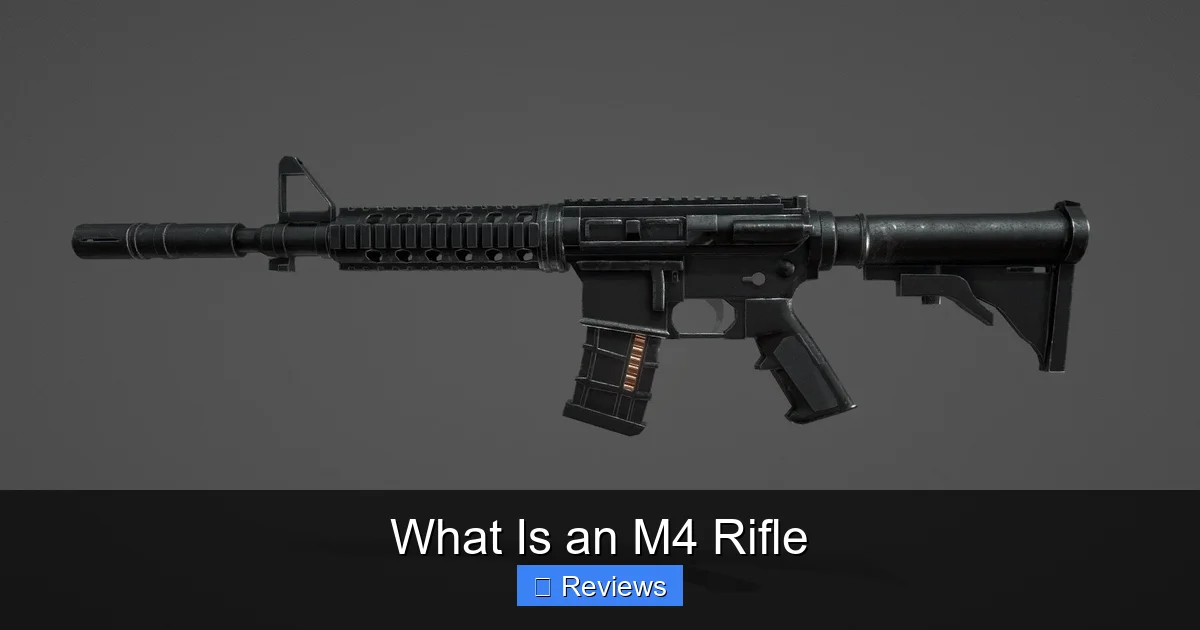
Visual guide about What Is an M4 Rifle
Image source: media.sketchfab.com
Understanding the M4 rifle means looking back at its impressive family tree. The M4 didn’t just appear out of nowhere; it’s the culmination of decades of development, refinement, and battlefield experience, all starting with a revolutionary design in the 1950s.
The Genesis of the AR Platform
Our story begins with Eugene Stoner and his work at ArmaLite in the mid-1950s. Stoner’s vision was to create a lightweight, high-velocity rifle using composite materials and an innovative direct impingement gas system. This gave birth to the AR-10, chambered in 7.62x51mm NATO. When the military expressed interest in a smaller caliber, ArmaLite scaled down the design, creating the AR-15, which fired the then-new .223 Remington cartridge (which later evolved into 5.56x45mm NATO). The AR-15 was revolutionary for its time, combining light weight, low recoil, and a high rate of fire.
The M16’s Service and Evolution
Despite initial skepticism, the AR-15 was eventually adopted by the U.S. Air Force and then, more widely, by the U.S. Army during the Vietnam War. Renamed the M16, it became the standard service rifle. Early versions of the M16 faced some teething problems, largely due to misunderstood maintenance requirements and incorrect ammunition. However, through continuous improvements, including chrome-lined barrels and better ammunition, the M16 evolved into a highly reliable and effective combat rifle. The M16A1, M16A2, M16A3, and M16A4 all represent significant steps in its development, each bringing enhancements in terms of accuracy, durability, and ergonomic features. The M16’s long barrel (20 inches) provided excellent ballistic performance but proved less ideal for specific combat scenarios.
The Birth of the M4 Rifle
As military doctrine shifted towards more urban combat and close-quarters battle (CQB), there was a growing demand for a more compact version of the M16. Special operations forces, vehicle crews, and paratroopers needed a weapon that was easier to maneuver without sacrificing too much firepower. This need led to the development of the M4 carbine in the late 1980s and early 1990s.
The M4 rifle effectively miniaturized the M16. It retained the core direct impingement operating system but featured a shorter 14.5-inch barrel and a collapsible stock. This made the M4 rifle much more manageable in tight spaces, allowing soldiers to move and deploy more easily from vehicles. The M4 rifle was officially adopted by the U.S. military in 1994, and it quickly began to replace the M16 in many units. Its success led to its widespread adoption across all branches, solidifying its status as the primary individual weapon for U.S. ground forces.
Dissecting the M4: Key Features and Specifications
To truly appreciate the M4 rifle, we need to look at its core components and technical specifications. These details are what make it such an effective and versatile weapon system.
Caliber and Ammunition
The M4 rifle is chambered for the 5.56x45mm NATO cartridge. This is a small, high-velocity round that offers a good balance of terminal performance and manageable recoil. The standard military loading for the 5.56mm is the M855 round, which has a steel penetrator tip designed for better penetration against light body armor and helmets. There are also specialized rounds like the M855A1, which improves soft target performance. Using this common NATO caliber ensures interoperability with allied forces and a vast supply chain for ammunition.
Barrel Length and Design
One of the defining characteristics of the M4 rifle is its 14.5-inch barrel. This is significantly shorter than the M16’s 20-inch barrel, contributing greatly to the M4’s compact size. While a shorter barrel does slightly reduce muzzle velocity and effective range compared to the M16, the trade-off in maneuverability is generally considered worthwhile for most modern combat roles. Most M4 rifle barrels are chrome-lined for enhanced durability and easier cleaning, resisting corrosion and wear. The barrel also features a “step-down” profile in front of the front sight post, specifically designed to mount an M203 grenade launcher.
Retractable Stock and Ergonomics
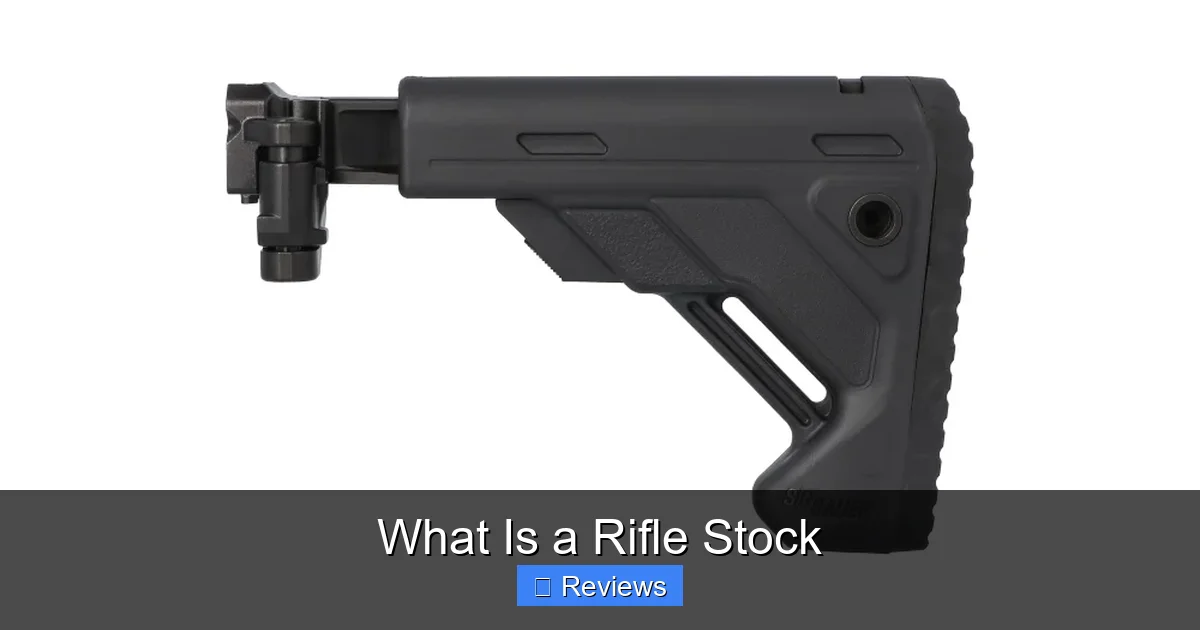
The M4 rifle features a multi-position collapsible stock, usually with four or six positions. This allows soldiers of different statures to adjust the length of pull, and more importantly, enables the weapon to be shortened for use in vehicles, when wearing body armor, or for better handling in CQB scenarios. The ergonomic pistol grip and overall balanced design make the M4 rifle comfortable to hold and shoot, reducing fatigue during prolonged operations.
Gas System: Direct Impingement (DI)
Like its M16 predecessor, the standard M4 rifle uses a direct impingement (DI) gas system. When a round is fired, a small amount of gas is siphoned off the barrel and directed back into the upper receiver through a gas tube. This gas then pushes directly against the bolt carrier group, cycling the action, ejecting the spent casing, and chambering a new round. The DI system is simpler and lighter than a piston system, contributing to the M4’s overall reduced weight. However, it also means that hot, dirty gas is blown directly into the receiver, requiring more frequent cleaning to maintain reliability.
Rail System and Modularity
Perhaps the most significant feature enhancing the M4 rifle’s versatility is its Picatinny (MIL-STD-1913) rail system. Early M4s featured a fixed carry handle and basic handguards. Modern M4s, particularly the M4A1 and those equipped with the SOPMOD (Special Operations Peculiar MODification) kit, come with quad-rail handguards or free-float rail systems. These rails allow soldiers to quickly attach a wide array of accessories:
- Optics: Red dot sights, holographic sights, magnified scopes.
- Lights: Tactical flashlights for low-light conditions.
- Lasers: Visible or infrared laser aiming modules for quick target acquisition.
- Foregrips: Vertical or angled grips for improved weapon control.
- Bipods: For stability during precision shooting.
- Under-barrel attachments: Such as the M203 or M320 grenade launchers.
This modularity means an M4 rifle can be easily adapted to specific mission requirements without needing to change the entire weapon, saving time and resources.
Weight and Dimensions
An unloaded M4 rifle typically weighs around 6.5 to 7 pounds (2.9 to 3.2 kg). Its length varies from about 29.8 inches (75.7 cm) with the stock collapsed to 33 inches (83.8 cm) with the stock extended. This compact size and light weight are crucial factors in its effectiveness, especially for soldiers who often carry heavy loads of other gear.
How the M4 Rifle Works: A Glimpse Inside
Understanding the internal mechanics of the M4 rifle helps appreciate its clever engineering. While it might seem complex, its operation follows a reliable sequence of events.
The Direct Impingement System Explained
As mentioned, the M4 rifle uses a direct impingement gas system. Here’s a slightly more detailed look:
- When a cartridge is fired, propellant gases push the bullet down the barrel.
- As the bullet passes a gas port hole near the muzzle, a small amount of high-pressure gas is diverted from the barrel.
- This gas travels through a gas tube, running above the barrel, all the way back into the upper receiver.
- Inside the upper receiver, the gas enters the gas key on top of the bolt carrier group.
- It then expands into the bolt carrier’s internal cavity, pushing the bolt carrier backward.
- As the bolt carrier moves rearward, it unlocks the bolt from the barrel extension.
- The spent casing is extracted and ejected from the rifle.
- The rearward motion also compresses the buffer spring and cocks the hammer.
- Once the spring fully extends, it pushes the bolt carrier group forward, stripping a new round from the magazine and chambering it.
- The bolt then locks into the barrel extension, and the M4 rifle is ready to fire again.
This elegant system provides a smooth recoil impulse and allows for a relatively lightweight design.
Firing Modes
Military issue M4 rifles typically have three firing modes:
- Safe: Prevents the rifle from firing.
- Semi-Automatic: Fires one round for each pull of the trigger.
- 3-Round Burst: Fires three rounds with a single pull of the trigger. This mode was introduced on the M16A2 and carried over to the M4 rifle to promote ammunition conservation compared to full-automatic fire. Some specialized M4A1 variants for special operations forces may have a full-automatic option instead of burst.
Civilian legal AR-15 style carbines, which share much of the M4 rifle’s design, are almost exclusively semi-automatic only, adhering to firearm laws.
Magazine System
The M4 rifle uses detachable box magazines that comply with STANAG (Standardization Agreement) 4179. This means that magazines from various manufacturers that adhere to this standard are interchangeable, a critical feature for military interoperability. Standard capacity magazines hold 30 rounds of 5.56mm ammunition. Lighter aluminum magazines were common, but polymer magazines have gained popularity due to their durability and often better reliability.
The M4 Rifle in Action: Roles and Applications
The M4 rifle’s versatility means it excels in a wide array of roles, both on the battlefield and in domestic law enforcement.
Military Service
The M4 rifle is the workhorse of the U.S. Army, Marine Corps, Air Force, and Navy. Its compact size makes it ideal for:
- Infantry: Providing a balance of range and maneuverability for ground troops.
- Special Operations Forces: The M4A1, a variant of the M4 rifle, is favored by units like Navy SEALs, Army Rangers, and Delta Force due to its full-automatic capability (instead of burst) and extreme modularity, often kitted out with the SOPMOD accessories.
- Vehicle Crews: Its short length allows personnel to quickly deploy it from tanks, armored personnel carriers, and helicopters.
- Close-Quarters Battle (CQB): In urban environments or building clearing, the M4 rifle’s short barrel and collapsible stock give operators a critical advantage in navigating tight spaces.
The M4 rifle has seen extensive combat in conflicts from Afghanistan and Iraq to various counter-terrorism operations worldwide, proving its effectiveness in diverse and challenging conditions.
Law Enforcement Use
Beyond the military, the M4 rifle (or its semi-automatic AR-15 style carbine counterparts) is widely used by law enforcement agencies across the United States and globally.
- Patrol Officers: Many departments issue carbines to patrol officers for situations requiring more firepower or accuracy than a handgun, such as active shooter incidents or long-range engagements.
- SWAT Teams: Specialized tactical units rely heavily on the M4 rifle for its accuracy, firepower, and ability to be accessorized for specific operations, including hostage rescue and high-risk warrant service.
The M4 rifle’s modularity allows law enforcement to equip it with specific optics, lights, and less-lethal attachments tailored to their unique needs.
Civilian Market: AR-15 Style Carbines
While the military M4 rifle is a select-fire weapon (capable of semi-automatic and burst/full-automatic fire) and is tightly restricted, its semi-automatic-only cousin, the AR-15 style carbine, is extremely popular in the civilian market. These firearms share the same basic platform, ergonomics, and modularity as the M4 rifle.
- Sport Shooting: AR-15 style rifles are widely used for competitive shooting, target practice, and recreational shooting.
- Home Defense: Many individuals choose AR-15 style carbines for home defense due to their reliability, ease of use, and effective cartridge.
- Hunting: Certain configurations and calibers of AR-15 style rifles are used for hunting small to medium-sized game.
It’s important to note that while these civilian carbines look almost identical to the M4 rifle, they lack the burst or full-automatic firing capability, which is restricted to military and licensed law enforcement/commercial users.
Maintaining Your M4: Care and Best Practices
Like any precision instrument, the M4 rifle requires proper care and maintenance to ensure its reliability and longevity. Given its direct impingement system, which vents gas directly into the receiver, keeping it clean is especially important.
Routine Cleaning
Regular cleaning is paramount for an M4 rifle. Carbon fouling from the spent gas can build up quickly, potentially leading to malfunctions.
- Bore Cleaning: Use a bore snake or cleaning rod with patches and bore cleaner to remove carbon and copper fouling from the barrel. Always clean from the chamber end if possible to protect the crown.
- Bolt Carrier Group (BCG): This is the heart of the direct impingement system and accumulates the most carbon. Disassemble the BCG (bolt, bolt carrier, firing pin, cam pin, firing pin retaining pin) and thoroughly clean all components, paying close attention to the bolt tail, inside the bolt carrier, and the gas rings.
- Receiver: Wipe down the inside of the upper and lower receivers to remove any loose carbon or debris.
- Chamber: Use a chamber brush to clean the chamber area where the cartridge sits.
A good cleaning kit for an M4 rifle will typically include a bore brush, chamber brush, cleaning rod, patches, bore solvent, and gun oil.
Lubrication
Once clean, proper lubrication is essential. The M4 rifle operates under high pressure and heat, so key contact points need to be well-oiled to reduce friction and prevent wear.
- Bolt Carrier Group: Apply a generous amount of lubricant to the bolt carrier’s rails, the bolt’s cam pin, and the outside of the bolt itself, especially where the gas rings are located.
- Charging Handle: Lubricate the channels where the charging handle slides.
- Trigger Group: A light coat of oil on the hammer and trigger components can help, but avoid over-lubricating this area to prevent attracting debris.
The general rule for M4 rifle lubrication is “wet is good.” Better to have slightly too much lubricant than too little, especially in harsh conditions.
Inspections and Parts Replacement
Periodically inspect your M4 rifle for wear and tear.
- Gas Rings: Check the three gas rings on the bolt for breakage or excessive wear. Worn gas rings can lead to short stroking (the bolt not traveling back far enough to pick up a new round).
- Extractor: Ensure the extractor (the small hook that pulls the spent casing from the chamber) and its spring are in good condition.
- Buffer Spring: Check the buffer spring in the stock for kinks or signs of weakness.
- Barrel: Look for any signs of pitting or erosion in the barrel, especially if using corrosive ammunition (though rare for modern 5.56mm).
Replacing worn parts proactively can prevent serious malfunctions down the line and ensure your M4 rifle remains reliable.
Storage Tips
Proper storage protects your M4 rifle from environmental damage and unauthorized access.
- Clean and Lubricate: Always store a clean and lightly lubricated M4 rifle.
- Dry Environment: Store it in a dry place to prevent rust. Desiccants can be used in gun safes to absorb moisture.
- Safety: Store unloaded, with the safety engaged, and ideally locked in a gun safe or cabinet, separate from ammunition, to prevent accidents and theft.
Following these practices will ensure that your M4 rifle, whether it’s a military issue or a civilian AR-15, remains a dependable and effective tool for years to come.
Conclusion
The M4 rifle is more than just a firearm; it’s a testament to continuous innovation and adaptation in the world of military hardware. From its humble beginnings as Eugene Stoner’s AR-15 to its evolution into the M16, and finally to the compact, versatile M4 carbine, its journey reflects the changing demands of combat. It has served with distinction in countless operations, proving itself a reliable and effective weapon in the hands of soldiers and law enforcement alike.
Its blend of lightweight design, manageable caliber, and unparalleled modularity has cemented the M4 rifle’s place as a modern classic. Whether you encounter it in a history book, a video game, or see its civilian counterparts at a shooting range, the legacy and influence of the M4 rifle are undeniable. It truly stands as an icon, representing the cutting edge of carbine design and continuing to serve as a vital tool for those who protect and serve. Understanding what an M4 rifle is provides a deeper appreciation for the engineering and tactical considerations that go into creating such a powerful and versatile weapon.
🎥 Related Video: How an AR-15 Works
📺 Matt Rittman
A 3D animation showing how an AR-15 works. Cinema 4D was used to create each individual part, as well as animating …
Frequently Asked Questions
Is the M4 rifle considered an assault rifle?
Yes, by definition, the M4 rifle is considered an assault rifle. An assault rifle is generally defined as a selective-fire (meaning it can switch between semi-automatic and full-automatic or burst fire) rifle that uses an intermediate cartridge and has a detachable magazine. The M4 rifle fits all these criteria as a military weapon.
Why is the M4 rifle so popular with the military?
The M4 rifle is popular due to its excellent balance of compactness, light weight, and effective firepower. Its modular design allows for extensive customization with optics and accessories, making it highly adaptable for various missions and combat environments, from urban settings to open terrain.
What are the pros and cons of the M4 rifle’s direct impingement gas system?
The direct impingement system makes the M4 rifle lighter and simpler mechanically, contributing to less recoil and a better-balanced weapon. However, the direct venting of hot, dirty gas into the receiver means the rifle can get dirtier faster, potentially leading to reliability issues if not cleaned and lubricated regularly, especially in harsh conditions.
Are M4 rifles used by other countries besides the U.S.?
Yes, the M4 rifle, or licensed variants and copies, are widely used by military and law enforcement forces in numerous countries around the world. Its proven design and effectiveness have made it a popular choice for many allied nations seeking a reliable and modern carbine.
Can civilians own an M4 rifle?
Civilians cannot legally own a military-issue M4 rifle, which is a select-fire weapon. However, civilians can own semi-automatic AR-15 style carbines, which share the M4’s basic design, ergonomics, and modularity, but lack the burst or full-automatic firing capability and typically have a longer barrel to comply with federal firearm laws.
What are common accessories added to an M4 rifle?
Common accessories for an M4 rifle include various optics (red dot sights, holographic sights, magnified scopes), tactical lights, laser aiming modules (visible or infrared), foregrips (vertical or angled), and often an under-barrel grenade launcher like the M203 or M320. These accessories significantly enhance the weapon’s capabilities for different tactical situations.