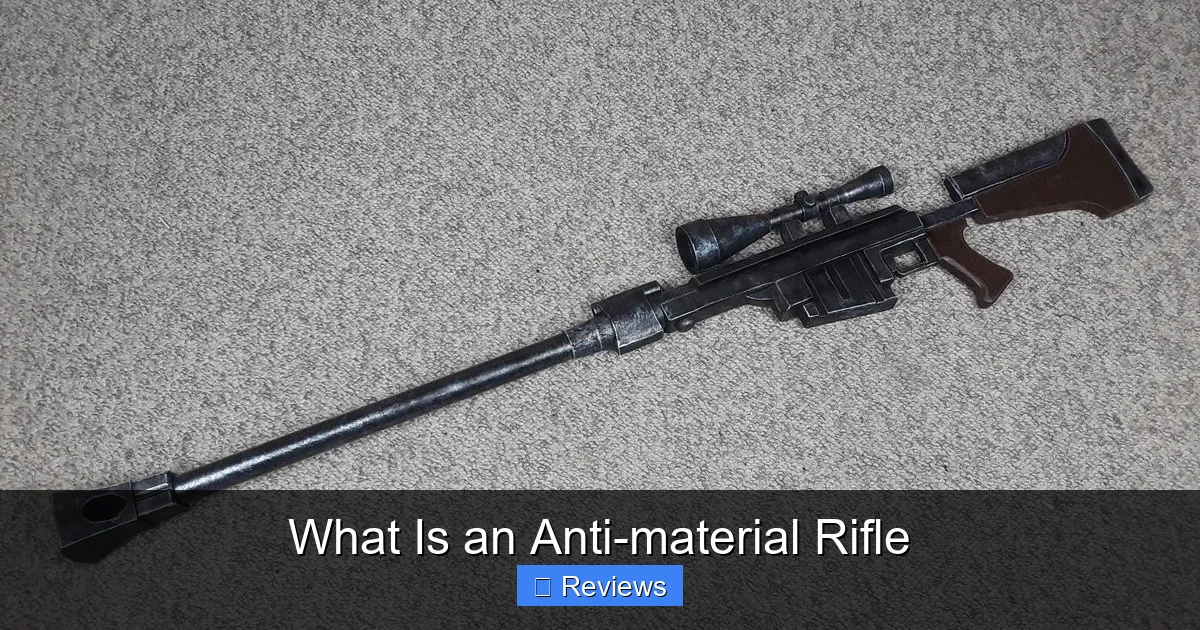
An anti-material rifle is a specialized, high-caliber firearm designed not for targeting personnel, but for disabling or destroying enemy equipment, vehicles, and hardened targets. These powerful rifles use large cartridges to deliver immense kinetic energy, allowing them to penetrate light armor, destroy sensitive components, and neutralize threats from a safe distance. Their primary role is tactical disruption rather than direct combat.
What Is an Anti-material Rifle?
Imagine a rifle so powerful it could punch a hole through an engine block, disable a radar dish from a mile away, or even detonate unexploded ordnance safely. This isn’t science fiction; it’s the reality of the anti-material rifle. These aren’t your typical hunting rifles or even standard military assault weapons. They are specialized tools, purpose-built for a very specific and destructive job.
At its core, an anti-material rifle is a firearm designed to engage and neutralize inanimate objects—what the military calls “material”—rather than living targets. Think vehicles, equipment, hardened positions, or even enemy infrastructure. They achieve this through sheer power, firing massive rounds that deliver incredible kinetic energy upon impact. This article will delve deep into what makes an anti-material rifle so unique, its history, its capabilities, and why it plays such a critical role in modern military operations.
So, if you’ve ever wondered about those massive rifles you sometimes see in movies or documentaries, the ones that seem to defy what you thought a rifle could do, you’re about to get a fascinating insight into the world of the anti-material rifle. We’ll explore their design, their ammunition, and the crucial missions they undertake, all while keeping things simple and easy to understand.
Key Takeaways
- Purpose-Built Power: An anti-material rifle is designed specifically to disable or destroy inanimate objects like vehicles, equipment, and fortifications, not primarily for use against personnel.
- Large Caliber Ammunition: These rifles fire heavy, high-velocity rounds (e.g., .50 BMG, .416 Barrett) engineered to penetrate hardened targets and inflict significant damage upon impact.
- Distinct from Sniper Rifles: While often mistaken for large sniper rifles, an anti-material rifle’s primary goal is material destruction, whereas a sniper rifle focuses on extreme precision against human targets.
- Tactical Applications: Key uses include disabling radar systems, communications equipment, unexploded ordnance, light armored vehicles, and even aircraft on the ground.
- Design Features: They typically feature heavy barrels for accuracy and heat dissipation, robust actions, advanced recoil reduction systems, and specialized optics for long-range engagement.
- High Precision and Range: Despite their power, modern anti-material rifles offer exceptional accuracy at extended ranges, allowing operators to engage targets from a safe standoff distance.
- Evolutionary Path: The concept evolved from early anti-tank rifles and has adapted to modern warfare, becoming an indispensable tool for specialized military units worldwide.
Quick Answers to Common Questions
What caliber does an anti-material rifle typically use?
An anti-material rifle commonly uses large calibers such as the .50 BMG (Browning Machine Gun), but can also include rounds like the .416 Barrett or the .338 Lapua Magnum, depending on the specific rifle and intended use.
Is an anti-material rifle the same as a sniper rifle?
No, an anti-material rifle is not the same as a sniper rifle. While both are precision, long-range firearms, an anti-material rifle is designed to destroy or disable equipment and materials, whereas a sniper rifle is primarily used for precision targeting of personnel.
What kind of targets does an anti-material rifle engage?
An anti-material rifle engages inanimate targets such as light armored vehicles, radar dishes, communications equipment, fuel depots, unexploded ordnance, and other critical enemy infrastructure or equipment.
How does an anti-material rifle manage recoil?
An anti-material rifle manages recoil through several design features, including large, efficient muzzle brakes, the rifle’s heavy overall weight, and sometimes internal recoil absorption systems like springs and buffers, especially in semi-automatic models.
Are anti-material rifles effective against main battle tanks?
No, anti-material rifles are generally not effective against modern main battle tanks. Their armor is too thick and sophisticated to be penetrated by anti-material rifle rounds. They are primarily effective against lightly armored vehicles and other less protected material targets.
📑 Table of Contents
Defining the Anti-material Rifle: More Than Just a Big Gun
When you first see an anti-material rifle, its size is often the most striking feature. These aren’t compact weapons; they are typically long, heavy, and robust. But their identity goes far beyond their physical dimensions. An anti-material rifle is fundamentally defined by its purpose: to destroy or disable equipment. This core mission dictates every aspect of its design, from the ammunition it fires to the materials it’s constructed from.
Not Just a Big Sniper Rifle
It’s a common misconception that an anti-material rifle is just a very large sniper rifle. While both are precision instruments used at long ranges, their primary targets and effects are different. A sniper rifle aims for extreme accuracy to incapacitate personnel with minimal collateral damage. An anti-material rifle, on the other hand, aims to destroy, damage, or neutralize the functionality of non-living targets. It doesn’t just hit a target; it endeavors to obliterate or disable a key component within it. The bullet fired by an anti-material rifle is designed to penetrate, explode, or otherwise incapacitate the target material, whether it’s a vehicle engine or a communications antenna.
The Power Behind the Punch: Ammunition
The heart of any anti-material rifle is its ammunition. These rifles chamber cartridges far larger and more powerful than those found in standard military firearms. The most famous example is the .50 BMG (Browning Machine Gun) cartridge, originally developed for heavy machine guns. Other calibers exist, such as the .416 Barrett or the .338 Lapua Magnum, though the .50 BMG is arguably the most iconic for an anti-material rifle.
These rounds are designed with specific terminal effects in mind. They can include:
- Armor-Piercing (AP): Features a hardened steel or tungsten core to penetrate armor.
- Incendiary (I): Contains a chemical compound that ignites upon impact, designed to start fires in fuel tanks or equipment.
- High-Explosive Incendiary (HEI): A combination round that explodes and ignites.
- API (Armor-Piercing Incendiary): A round with a hardened core and an incendiary compound.
The choice of ammunition for an anti-material rifle depends entirely on the target. Against a radar dish, an explosive incendiary round might be perfect to destroy its sensitive electronics. Against a light armored vehicle, an armor-piercing round would be selected to punch through its hull and damage internal components. This specialized ammunition is what truly differentiates an anti-material rifle from other firearms.
Key Characteristics and Design Principles
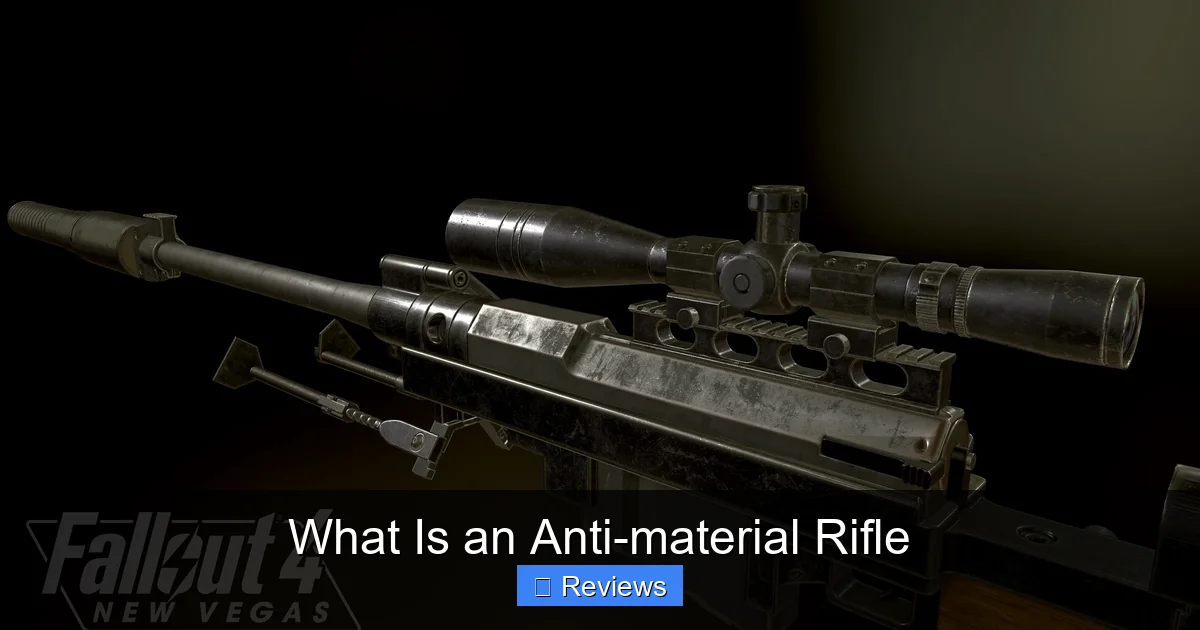
Visual guide about What Is an Anti-material Rifle
Image source: i.kym-cdn.com
Building a weapon that can launch such powerful rounds with precision requires very specific engineering. An anti-material rifle is a marvel of ballistics and mechanical design, crafted to manage immense forces and deliver consistent accuracy.
Caliber and Cartridge Design
As mentioned, large calibers are standard for an anti-material rifle. The sheer mass and velocity of these projectiles give them the kinetic energy needed to achieve their destructive purpose. The cartridges themselves are robust, designed to withstand the immense pressures generated when fired. The bullet’s design is also optimized for penetration and terminal effect, often featuring pointed, boat-tail shapes for ballistic efficiency at long ranges.
Recoil Management
Firing a round like the .50 BMG produces a tremendous amount of recoil. Without effective recoil management, an anti-material rifle would be practically unusable, risking injury to the shooter and making follow-up shots impossible. Modern anti-material rifles employ several strategies:
- Muzzle Brakes: These devices redirect propellant gases backward and to the sides, significantly reducing felt recoil. The iconic multi-port muzzle brake on a Barrett M82 is a prime example.
- Heavy Weight: The sheer mass of the rifle itself helps absorb recoil. A heavier rifle moves less when fired.
- Recoil Springs/Buffers: Some designs, particularly semi-automatic anti-material rifles, incorporate spring-and-buffer systems within the action to further mitigate recoil.
Optics and Precision
While designed for material destruction, accuracy is paramount for an anti-material rifle. To hit a specific component on a vehicle from a mile away, high-quality optics are essential. These rifles are typically paired with powerful telescopic sights, often featuring advanced reticles for range estimation and windage adjustments. The rifle itself must also be inherently accurate, with free-floating, heavy barrels that resist vibration and heat deformation, ensuring consistent bullet flight.
Durability and Portability (Relative)
An anti-material rifle must be tough enough to withstand military use in harsh environments. They are built with robust materials and simple, reliable mechanisms. While “portable” might seem a strange term for a rifle that can weigh 30 pounds or more, modern designs aim to be as manageable as possible for deployment by a two-man team. Many are designed to be easily disassembled for transport and quickly reassembled without loss of zero.
Primary Applications and Tactical Roles
The unique capabilities of an anti-material rifle translate into a variety of crucial tactical applications on the modern battlefield. They offer a standoff capability, allowing operators to neutralize threats from a safe distance, minimizing risk to personnel.
Disabling Enemy Equipment
This is the bread and butter of the anti-material rifle. Operators can target:
- Communications Gear: Satellite dishes, radio antennas, and transmitters can be disabled, crippling enemy command and control.
- Radar Systems: Essential for air defense and surveillance, radar units can be rendered inoperable.
- Unmanned Aerial Vehicles (UAVs) on the Ground: Destroying drones before they can take off or while they are being serviced.
- Fuel and Munitions Dumps: Incendiary rounds can be used to ignite enemy supplies.
- Generator Sets: Cutting power to forward operating bases or critical systems.
- Weapon Systems: Targeting fire control systems on artillery pieces or missile launchers.
The ability to precisely destroy critical components of such systems without needing to directly engage a fortified position is incredibly valuable.
Counter-Sniper Operations (Less Common but Possible)
While not its primary role, an anti-material rifle can sometimes be used in counter-sniper scenarios. If an enemy sniper is entrenched behind significant cover that smaller caliber rounds cannot penetrate, an anti-material rifle might be used to breach that cover or suppress the position, allowing other forces to move. However, most dedicated counter-sniper operations rely on standard precision rifles.
Explosive Ordnance Disposal (EOD) Support
One of the less-known but vital roles for an anti-material rifle is in assisting EOD teams. Improvised Explosive Devices (IEDs) or unexploded ordnance can often be safely detonated or disrupted from a distance using an anti-material rifle. This allows EOD technicians to clear dangerous areas without putting themselves directly in harm’s way, showcasing the weapon’s utility beyond direct combat.
Vehicle Interdiction (Lightly Armored)
An anti-material rifle can effectively engage and disable lightly armored vehicles. This includes armored personnel carriers, technicals (pickup trucks with mounted weapons), and even some reconnaissance vehicles. Targeting engine blocks, fuel tanks, or tire assemblies can immobilize a vehicle, making it vulnerable to other attacks or preventing its escape. It’s important to note, however, that these rifles are generally ineffective against main battle tanks or heavily armored vehicles.
Historical Context and Evolution
The concept of a rifle designed to defeat material targets isn’t new. It has a rich history rooted in the demands of warfare against increasingly armored threats.
Early Anti-Tank Rifles
The earliest ancestors of the modern anti-material rifle emerged during World War I. As tanks made their debut on the battlefield, infantry found themselves without an effective weapon to counter these new armored behemoths. The solution was the anti-tank rifle, a large-caliber, bolt-action rifle designed to pierce the relatively thin armor of early tanks. Examples include the German Mauser 1918 T-Gewehr and the British Boys Anti-Tank Rifle. These weapons were often incredibly heavy, produced punishing recoil, and required immense strength to operate.
Post-WWII Development and Modern Role
After World War II, dedicated anti-tank rifles largely faded from use as advancements in tank armor made them obsolete, replaced by more effective anti-tank guided missiles and rocket launchers. However, the development of the .50 BMG cartridge for heavy machine guns (like the M2 Browning) kept the idea of a large-caliber rifle cartridge alive.
The modern anti-material rifle truly re-emerged in the late 20th century, notably with the development of the Barrett M82. This rifle capitalized on the power of the .50 BMG round but combined it with semi-automatic action, effective recoil reduction, and a focus on precision, redefining the category. It wasn’t intended to fight tanks, but rather the vast array of other “material” targets on the battlefield. It offered a unique capability that traditional small arms or dedicated anti-tank weapons couldn’t replicate: precise, long-range destruction of specific components.
Today, an anti-material rifle is a staple in the arsenals of many special operations forces and military units worldwide, valued for its versatility and destructive power against non-human threats.
Notable Examples and Their Impact
While many manufacturers produce anti-material rifles, a few models have become particularly iconic, defining the category and influencing subsequent designs.
The Barrett M82: An Icon
Without a doubt, the Barrett M82 (also known as the “Light Fifty”) is the most famous and widely recognized anti-material rifle. Developed by Ronnie Barrett in the early 1980s, it revolutionized the concept. The M82 is a semi-automatic, recoil-operated rifle chambered in .50 BMG. Its distinctive muzzle brake, long barrel, and robust design make it instantly recognizable. It gained widespread adoption by the U.S. military (as the M107) and numerous other armed forces globally. Its effectiveness in disabling vehicles, unexploded ordnance, and other equipment from extreme ranges cemented the role of the modern anti-material rifle.
Other Key Players
While Barrett might be the most famous, other manufacturers also produce excellent anti-material rifle systems:
- McMillan TAC-50: A bolt-action anti-material rifle chambered in .50 BMG, known for its extreme accuracy. It holds the record for the longest confirmed sniper kill in history, demonstrating the inherent precision possible with these large-caliber systems, even if its primary role is material destruction.
- CheyTac M200 Intervention: This rifle, often chambered in .408 CheyTac or .375 CheyTac, focuses on extreme long-range accuracy against both material and personnel targets, blurring the lines somewhat but still capable of significant material damage.
- Accuracy International AX50: A highly regarded bolt-action .50 BMG rifle from the British manufacturer known for its robust and accurate firearms.
These rifles, and others like them, continue to evolve, incorporating lighter materials, improved ergonomics, and advanced optics, ensuring the anti-material rifle remains a relevant and powerful tool for modern warfare.
Conclusion
The anti-material rifle is a fascinating and potent example of specialized firearm design. It stands apart from other rifles not just because of its imposing size and immense power, but because of its singular focus: the destruction and disablement of equipment and infrastructure. From its origins as an anti-tank weapon to its modern role as a surgical tool for disabling critical enemy assets, the anti-material rifle has consistently proven its worth on the battlefield.
By understanding what an anti-material rifle is and how it functions, we gain appreciation for the specific challenges of modern warfare and the ingenious engineering solutions developed to overcome them. These powerful firearms are not mere instruments of brute force; they are precision tools that allow military units to achieve tactical objectives, neutralize threats, and protect personnel from a safe and effective distance. The anti-material rifle truly is a testament to the ongoing evolution of military technology, always adapting to meet new demands.
🎥 Related Video: Why Antitank Rifles Were Not Sniper Rifles
📺 Forgotten Weapons
http://www.patreon.com/ForgottenWeapons https://www.floatplane.com/channel/ForgottenWeapons/home Cool Forgotten …
Frequently Asked Questions
What does “anti-material” mean in this context?
“Anti-material” refers to the rifle’s primary purpose: to engage and neutralize inanimate objects, or “material,” rather than living targets. This includes things like vehicles, equipment, hardened structures, and other enemy assets that are not personnel.
Why are anti-material rifles so large and heavy?
Anti-material rifles are large and heavy primarily because they must fire very powerful, large-caliber ammunition. Their robust construction is needed to contain the immense pressures of these rounds, and their weight helps manage the substantial recoil, making them more stable and controllable for the shooter.
Can civilians own an anti-material rifle?
The legality of civilian ownership of an anti-material rifle like a .50 BMG varies significantly by country and even by state or region within a country. In some places, they are legal with proper licensing and background checks, while in others, they may be heavily restricted or entirely prohibited due to their power and military association.
What is the typical effective range of an anti-material rifle?
The typical effective range of an anti-material rifle can vary greatly depending on the specific model, caliber, ammunition, and shooter’s skill, but many are capable of accurate engagement beyond 1,500 meters (approximately 1 mile) and some can exceed 2,000 meters.
How do anti-material rifles contribute to safety for military personnel?
Anti-material rifles contribute to safety by allowing military personnel to neutralize dangerous threats, such as unexploded ordnance or critical enemy equipment, from a safe standoff distance. This minimizes the risk of direct engagement with hazardous materials or well-defended positions.
What types of special ammunition are used with an anti-material rifle?
Special types of ammunition used with an anti-material rifle include armor-piercing (AP) rounds to penetrate hardened targets, incendiary (I) rounds to start fires, and combinations like armor-piercing incendiary (API) or high-explosive incendiary (HEI) rounds for destructive and flammable effects upon impact.