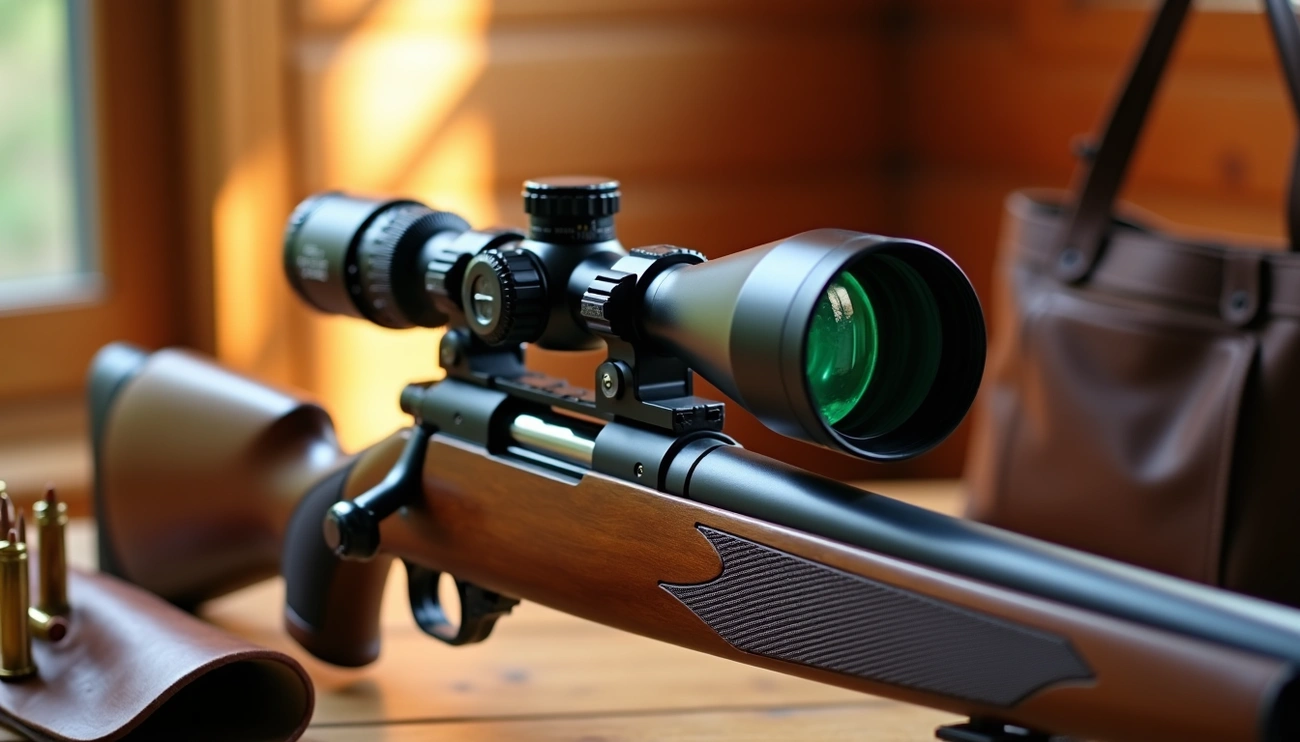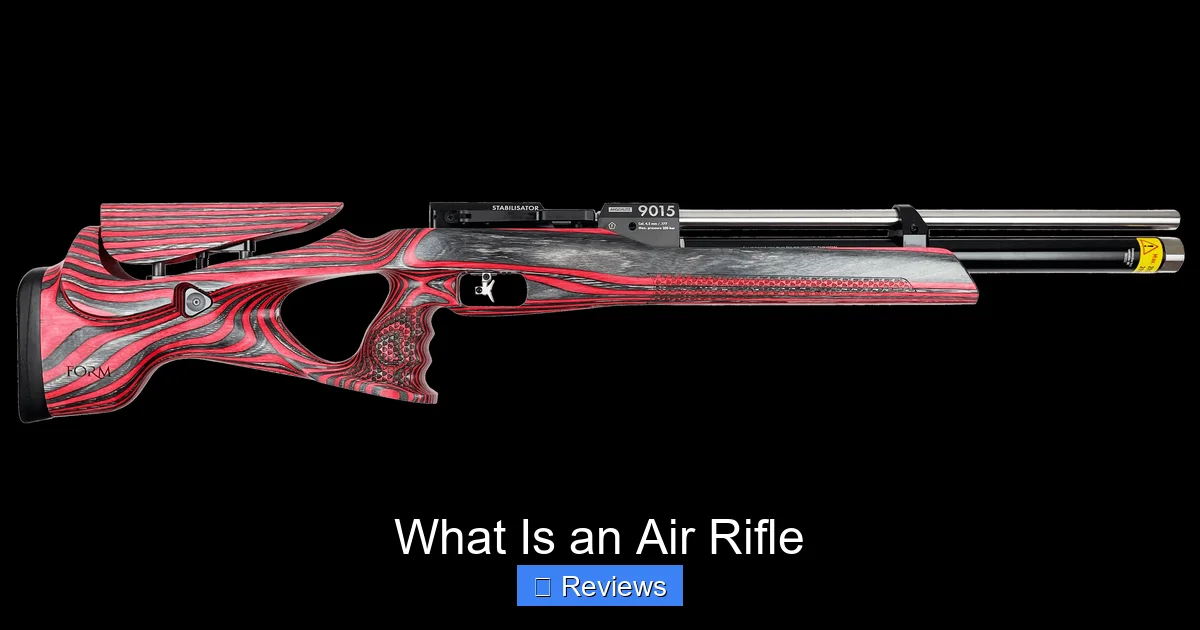
An air rifle is a firearm that uses compressed air or gas, rather than gunpowder, to propel a projectile. These versatile devices come in various types, including spring-piston, gas-ram, PCP, and CO2, each offering unique shooting experiences. From target practice and pest control to small game hunting and training, air rifles are a popular, accessible, and often more cost-effective alternative to traditional firearms, emphasizing precision and responsible ownership.
Have you ever heard the distinct *thwack* of a pellet hitting a target, or perhaps seen someone quietly dispatch a garden pest with impressive precision? Chances are, an air rifle was involved. These fascinating devices often spark curiosity, sometimes misconception, but always offer a unique entry point into the world of shooting sports. Far from being mere toys, modern air rifles are sophisticated tools, capable of surprising power and accuracy.
Whether you’re a seasoned shooter looking for a new challenge, a complete beginner curious about getting started, or simply someone who wants to understand what makes these rifles tick, you’ve come to the right place. We’re going to pull back the curtain on the world of air rifles, exploring everything from how they work to what you can do with them, and even what you need to consider before owning one. So, let’s dive in and demystify the humble, yet mighty, air rifle.
What Exactly Is an Air Rifle?
An air rifle, at its core, is a type of gun that uses compressed air or gas to propel a projectile, typically a pellet or a BB, down its barrel. Unlike traditional firearms that rely on the chemical reaction of gunpowder combustion, an air rifle uses mechanical force to compress air, or utilizes pre-compressed gas, to achieve its power. This fundamental difference is what sets them apart and gives them their unique characteristics.
Air Rifles vs. Firearms: The Key Distinction
The biggest difference between an air rifle and a traditional firearm is the power source. Firearms use an explosive primer and gunpowder to create a rapid expansion of gas, pushing a bullet out at very high speeds. Air rifles, on the other hand, use physical compression or contained gas. This often means lower muzzle velocities and energy compared to many firearms, but it also translates to less recoil, quieter operation, and significantly lower ammunition costs. Because of these differences, air rifles are often regulated differently than powder-burning firearms, though their power should never be underestimated. They are not toys and can cause serious injury or death.
The Inner Workings: How Do Air Rifles Shoot?
Understanding how an air rifle works is key to appreciating its design and choosing the right one for your needs. There are several primary mechanisms used to generate the compressed air or gas needed to fire a pellet. Each system has its own advantages and disadvantages in terms of power, consistency, recoil, and ease of use.
Spring-Piston Air Rifles
This is arguably the most common and oldest type of air rifle mechanism. Inside a spring-piston air rifle, there’s a powerful coiled spring, a piston, and a compression chamber. When you cock the rifle (usually by breaking the barrel or using an underlever), the spring is compressed, and the piston is pulled back. When the trigger is pulled, the spring rapidly expands, pushing the piston forward. This action compresses the air in the chamber, and this sudden burst of high-pressure air propels the pellet out of the barrel.
- Pros: Self-contained (no external air tanks or CO2 needed), generally robust and reliable, good for learning fundamentals.
- Cons: Significant recoil (often a “double recoil” from the spring and piston movement), can be hard to cock, usually noisier than other air rifles, can be sensitive to hold (needs a specific “artillery hold”).
Gas-Ram (Gas-Piston) Air Rifles
Gas-ram air rifles are an evolution of the spring-piston design. Instead of a coiled spring, they use a sealed cylinder of inert gas (like nitrogen) with a piston inside. When cocked, this gas is compressed. When fired, the gas expands, pushing the piston forward to compress air and propel the pellet.
- Pros: Smoother firing cycle than springers, less recoil, often quieter, can be left cocked for longer periods without spring fatigue, better in cold weather than CO2.
- Cons: Still requires cocking effort, can be slightly more expensive than basic springers.
Pre-Charged Pneumatic (PCP) Air Rifles
PCP air rifles are considered the pinnacle of air rifle technology by many enthusiasts. These air rifles have an onboard air reservoir (a cylinder or bottle) that is pre-filled with highly compressed air from an external source, such as a hand pump, a scuba tank, or a dedicated compressor. Each shot releases a small, consistent amount of this high-pressure air to propel the pellet.
- Pros: Extremely accurate, very little recoil, consistent power output, multi-shot capabilities, very quiet (especially when suppressed), often incredibly powerful.
- Cons: Requires external air source (can be expensive initially), need to monitor air pressure, can be heavier due to air tank.
CO2 Air Rifles
CO2 air rifles use readily available disposable cartridges of compressed carbon dioxide. Each cartridge provides a number of shots before it needs to be replaced. When the trigger is pulled, a small valve releases a burst of CO2 gas to propel the pellet or BB.
- Pros: Easy to use, no cocking effort for each shot, often semi-automatic or fully automatic (for BB guns), relatively inexpensive entry point.
- Cons: Power output drops with temperature (poor performance in cold), inconsistent power as the cartridge empties, ongoing cost of CO2 cartridges, usually less powerful than springers or PCPs.
Types of Air Rifles: Finding Your Perfect Match
Beyond the power plant, air rifles come in many forms, each designed for specific purposes and shooters. When choosing an air rifle, consider what you’ll use it for, your budget, and your experience level.
Break-Barrel Air Rifles
These are the most common type of spring-piston or gas-ram air rifle. To cock them, you literally “break” the barrel downwards, compressing the spring or gas ram. They are simple, robust, and often a great starting point for many shooters.
Underlever Air Rifles
Similar to break-barrels in operation (spring or gas-ram powered), but instead of the barrel, a separate lever beneath the barrel is used to cock the rifle. This design can sometimes offer a more rigid barrel, theoretically leading to better accuracy as the barrel doesn’t move during cocking.
Sidelever Air Rifles
Another variation of spring-piston or gas-ram designs, where a lever on the side of the action is used to cock the rifle. Like underlevers, this keeps the barrel fixed, which some shooters prefer for accuracy.
PCP Rifles (Bolt-Action, Lever-Action, etc.)
PCP air rifles come in a vast array of designs, often mimicking traditional firearms. They can be single-shot or have multi-shot magazines. Their diverse designs cater to specific needs, from compact hunting rifles to bench-rest target models.
BB Guns vs. Pellet Rifles
While often grouped together, there’s a significant difference. BB guns typically shoot spherical steel BBs, often with smoothbore barrels. They are generally less accurate and have lower power. Pellet rifles, designed to shoot diabolo-shaped lead or alloy pellets, usually have rifled barrels (grooves that spin the projectile for accuracy) and are much more precise and powerful. Most serious shooting with an air rifle involves pellets.
Calibers and Ammunition: The Right Pellet for the Job
Just like firearms, air rifles come in various calibers, each suited for different tasks. The choice of caliber directly impacts the rifle’s power, trajectory, and effectiveness for its intended use.
.177 Caliber (4.5mm)
This is the smallest and most common air rifle caliber. Its lightweight pellets travel at high velocities, resulting in a flatter trajectory, which is excellent for target shooting and plinking. It’s also suitable for dispatching very small pests.
- Pros: Very flat trajectory, low recoil, inexpensive pellets, widely available, good for accuracy.
- Cons: Less energy transfer for hunting, can be affected more by wind.
.22 Caliber (5.5mm)
The .22 caliber is a highly versatile option. Its heavier pellets carry more kinetic energy, making it a popular choice for small game hunting (where legal) and pest control. The trajectory is more loopy than a .177, requiring more practice with holdover/under.
- Pros: Good balance of power and trajectory, excellent for pest control and small game, good energy transfer.
- Cons: Heavier pellets mean more pronounced trajectory drop, can be more expensive than .177.
.25 Caliber (6.35mm)
Moving up in power, the .25 caliber delivers even more energy. These heavier pellets are ideal for larger small game or more robust pests, offering superior knockdown power. They are often found in more powerful PCP air rifles.
- Pros: Excellent stopping power, good for larger small game, less susceptible to wind drift.
- Cons: Loopy trajectory, fewer pellet choices, generally found in more expensive, powerful air rifles.
Beyond .25 Caliber
For serious airgun hunters, calibers like .30, .357, .45, and even .50 are available in powerful PCP platforms. These are designed for hunting medium-sized game (where legally permitted) and are a specialized niche within the air rifle world.
Pellet Types
The shape of a pellet significantly affects its performance.
- Diabolo (Waisted) Pellets: The most common type, with an hourglass shape. The skirt (rear) expands to seal the bore, and the head provides accuracy.
- Domed Pellets: Good all-around pellets, offering a balance of accuracy and energy retention, suitable for hunting and target shooting.
- Pointed Pellets: Designed for penetration, often used for hunting or pest control where deeper penetration is desired.
- Hollow-Point Pellets: Designed for expansion upon impact, maximizing energy transfer and creating a larger wound channel, suitable for hunting.
- Flat-Head (Wadcutter) Pellets: Ideal for paper targets because they cut a clean, round hole, making scoring easier. Excellent for short-range accuracy.
Uses and Applications: More Than Just Plinking
An air rifle is far more versatile than many people realize. While casual target shooting (often called “plinking”) is a popular pastime, air rifles excel in several other areas.
Recreational Plinking and Target Shooting
This is perhaps the most common use. Setting up soda cans, spinners, or paper targets in a safe backyard or designated range is a fantastic way to enjoy shooting. It’s relaxing, a great stress reliever, and helps build fundamental marksmanship skills.
Pest Control
For many property owners, an air rifle is an invaluable tool for humane pest control. From nuisance squirrels and starlings to rats and mice, a properly chosen air rifle and pellet can effectively and safely manage common pests without the noise or legal complexities of firearms. Always check local laws regarding pest control with air rifles.
Small Game Hunting
In many regions, air rifles are legal for hunting small game like rabbits, squirrels, and birds. Their quiet nature and precise accuracy make them excellent tools for ethical hunting within their effective range. It’s crucial to use an air rifle with sufficient power and the correct caliber for the target animal to ensure a humane kill. Always verify local hunting regulations.
Marksmanship Training
Air rifles are fantastic training tools for aspiring shooters. They teach discipline, breath control, trigger squeeze, and sight alignment without the loud report, heavy recoil, or high cost of ammunition associated with powder-burning firearms. Many competitive shooters, even Olympic rifle competitors, start with or regularly train with air rifles.
Competitive Shooting
Air rifle competitions, particularly those using .177 caliber precision rifles, are highly popular worldwide. Olympic 10-meter air rifle events showcase incredible skill and focus, proving that air rifles are serious precision instruments.
Safety, Maintenance, and Legality: Responsible Air Rifle Ownership
Owning an air rifle comes with responsibilities. Treating it with the same respect as a traditional firearm is paramount for safety, longevity, and adherence to the law.
Always Practice Air Rifle Safety
- Treat every air rifle as if it’s loaded: Even if you think it’s empty, always assume it’s capable of firing.
- Never point an air rifle at anything you don’t intend to shoot: This is the golden rule.
- Keep your finger off the trigger until ready to shoot: The trigger finger should rest outside the trigger guard until your sights are on the target.
- Be sure of your target and what is beyond it: Pellets can travel significant distances and pass through many materials. Always have a safe backstop.
- Wear eye protection: Ricochets are always a possibility, especially with BB guns. Eye protection is non-negotiable.
- Store securely: Keep air rifles unloaded and secured from unauthorized access, especially children.
Essential Maintenance for Your Air Rifle
Regular maintenance ensures your air rifle remains accurate and reliable.
- Barrel Cleaning: Periodically clean the barrel to remove lead fouling. Use specific airgun cleaning kits and patches, never harsh brushes meant for firearms.
- Lubrication: Moving parts, like the pivot points on a break-barrel or the charging handle on a PCP, benefit from a small amount of appropriate lubricant. Refer to your rifle’s manual.
- Seal Care: For springers and gas-rams, the piston seal is crucial. For PCPs, O-rings need to be in good condition. Avoid petroleum-based oils on rubber seals, as they can degrade them.
- External Cleaning: Wipe down the exterior to prevent rust and keep the stock in good condition.
- PCP Air Tank Maintenance: If you have a PCP, regularly check the fill pressure and ensure your air tanks are filled safely and hydro-tested as required.
Understanding Air Rifle Legality
The legal landscape for air rifles varies dramatically. What’s legal in one country or state might be strictly regulated or even prohibited in another.
- Age Restrictions: Most places have age restrictions for purchasing and owning an air rifle.
- Power Limits: Some countries (e.g., the UK, Germany) have specific power limits (measured in joules or foot-pounds) beyond which an air rifle is considered a firearm and requires a license.
- Hunting Laws: Regulations dictate what animals can be hunted with air rifles, what calibers are allowed, and during which seasons.
- Public Use: Discharging an air rifle in public areas, including some backyards, can be illegal and lead to serious charges. Always understand local ordinances.
Always research and understand the specific laws in your local jurisdiction *before* purchasing or using an air rifle. Ignorance of the law is not an excuse.
The Air Rifle: A Gateway to Shooting Enjoyment
As we’ve explored, the world of the air rifle is rich with options, applications, and opportunities for enjoyment. From the simple satisfaction of hitting a target with a break-barrel air rifle to the precision of a high-end PCP for competitive shooting or hunting, there’s an air rifle for nearly every interest and skill level.
They offer a fantastic blend of accessibility, skill development, and responsible sport. By understanding their mechanisms, types, and the crucial aspects of safety and legality, you’re well-equipped to embark on your own air rifle journey. Remember, whether you’re plinking in the backyard or pursuing small game, treating your air rifle with respect and adhering to safety principles will ensure years of safe and enjoyable shooting. Welcome to the compelling world of the air rifle!
Key Takeaways
- Definition: An air rifle uses compressed air or gas (not gunpowder) to shoot pellets or BBs, making it distinct from traditional firearms.
- Power Sources: They are powered by different mechanisms like spring-piston, gas-ram, pre-charged pneumatic (PCP), or CO2 cartridges, each with unique performance characteristics.
- Versatility: Air rifles are suitable for a wide range of activities, including recreational plinking, target shooting, pest control, small game hunting, and marksmanship training.
- Calibers and Ammunition: Common calibers include .177, .22, and .25, each designed for specific uses, with various pellet types impacting accuracy and stopping power.
- Accessibility and Cost: Compared to powder-burning firearms, air rifles are generally more affordable, easier to acquire in many regions, and have lower ammunition costs, making them popular for beginners.
- Safety First: Despite not using gunpowder, air rifles are powerful tools that demand the same respect and safety protocols as any firearm to prevent accidents.
- Legality Varies: Ownership and usage laws for air rifles differ significantly by country, state, and even local municipality, so always check local regulations.
Quick Answers to Common Questions
Are air rifles dangerous?
Yes, air rifles are powerful tools capable of causing serious injury or even death if misused. They should always be handled with the same respect and adherence to safety rules as traditional firearms.
Are air rifles considered firearms?
Legally, this varies significantly by jurisdiction. In some places, high-power air rifles are indeed considered firearms and require licensing, while in others, they are regulated separately or less strictly.
What is the best caliber for an air rifle?
There isn’t a single “best” caliber; it depends on your intended use. .177 is excellent for target shooting, while .22 is versatile for pest control and small game. Larger calibers offer more power for specific hunting applications.
Can you hunt with an air rifle?
Yes, in many regions, hunting small game like rabbits, squirrels, and certain birds with an air rifle is legal. However, it is crucial to verify local hunting regulations and ensure your air rifle has adequate power for a humane kill.
How often should I clean my air rifle?
Regular cleaning is recommended, especially for the barrel. A light cleaning after every few hundred shots, or if accuracy declines, is a good practice. Always refer to your rifle’s manual for specific cleaning instructions.
🎥 Related Video: World's Most Powerful Break Barrel Air Rifle! #gun #airgunning #airgun #shorts
📺 BLOCKETH OUTDOORS
Frequently Asked Questions
What is the typical range of an air rifle?
The effective range of an air rifle varies greatly depending on its power, caliber, and the shooter’s skill. For .177 and .22 calibers, effective ranges for target shooting can be anywhere from 25 to 75 yards, while powerful PCP air rifles in larger calibers might be effective beyond 100 yards for hunting.
Do air rifles require a license or permit?
In many parts of the world, especially for lower-powered models, air rifles do not require a specific license or permit. However, some countries, states, or even cities impose age restrictions, power limits, or require licenses for air rifles exceeding certain energy levels. Always research your local laws before purchasing or using one.
How accurate are air rifles compared to firearms?
High-quality air rifles, particularly PCP models, can be incredibly accurate, often rivaling or even surpassing the accuracy of many rimfire firearms at shorter ranges. Precision air rifles are used in Olympic competitions, demonstrating their capability for extreme accuracy. Factors like pellet quality, shooter skill, and environmental conditions significantly influence accuracy.
Can air rifles be modified for more power?
Modifying an air rifle to increase its power can be complex, potentially unsafe, and often illegal without proper licensing, especially if it pushes the rifle above local power limits. Such modifications can also compromise the rifle’s structural integrity, safety mechanisms, and void warranties, so it is generally not recommended.
What is the lifespan of an air rifle?
With proper care and maintenance, a well-built air rifle can last for decades. Spring-piston rifles might eventually need a new spring or seals, while PCP rifles may require O-ring replacements. The lifespan depends heavily on the quality of the rifle, how often it’s used, and how well it’s maintained.
What essential accessories should I consider for an air rifle?
Essential accessories include a good quality scope (if not included), eye protection, appropriate pellets for your rifle and intended use, a safe and robust pellet trap or backstop, and a cleaning kit. For PCP rifles, an external air source (hand pump, scuba tank, or compressor) is also necessary.