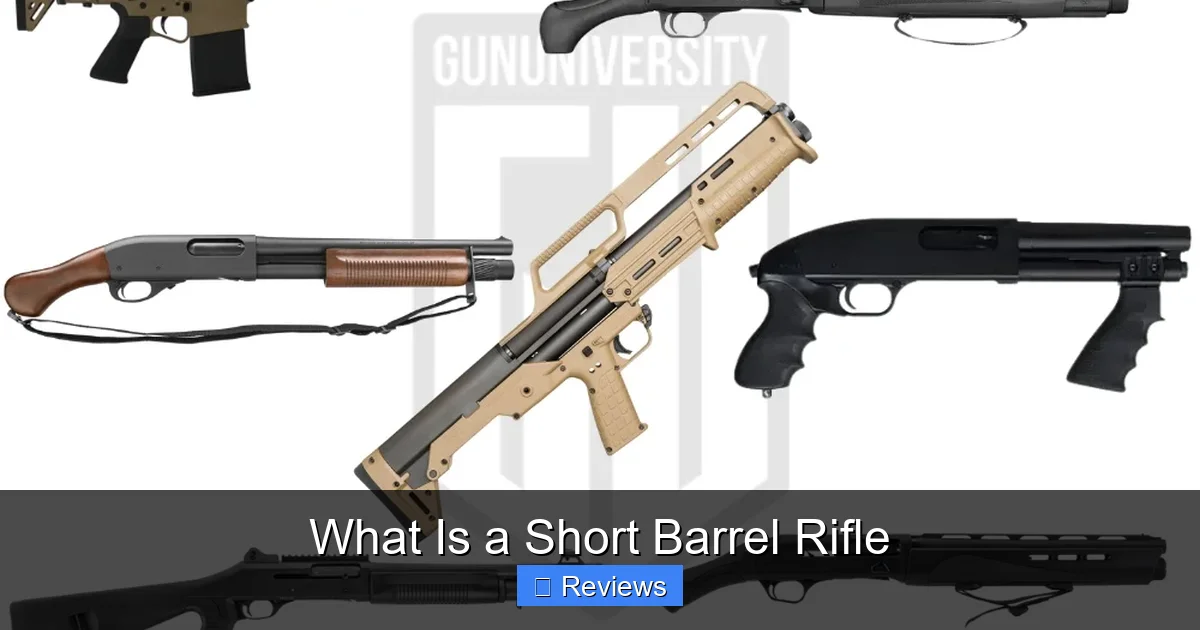
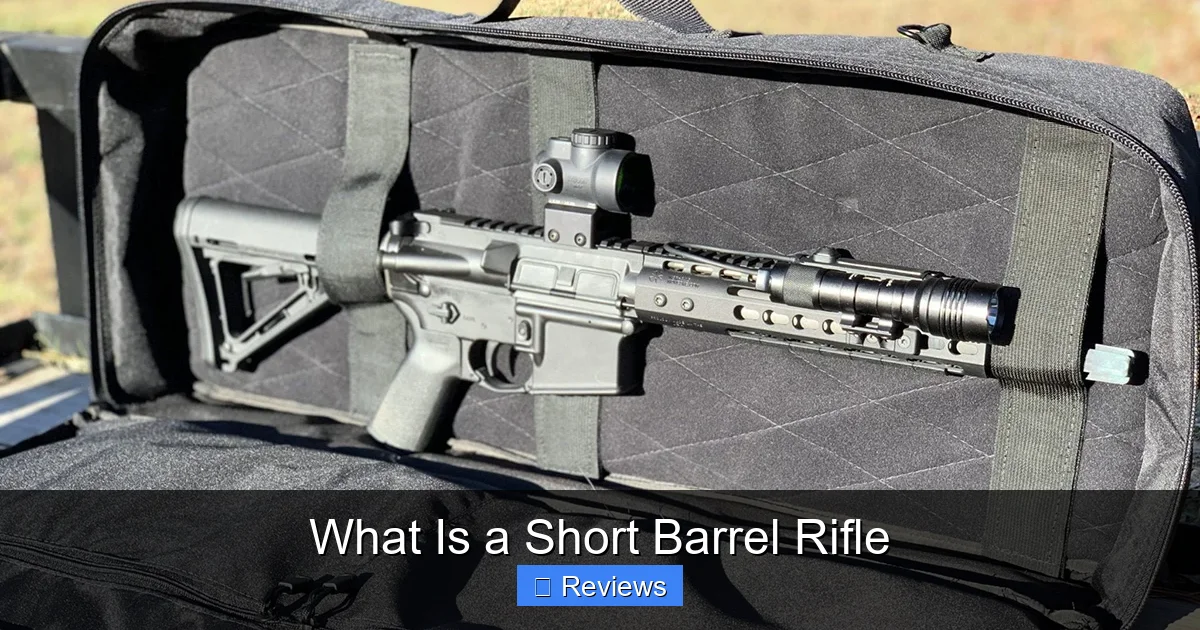
A Short Barrel Rifle (SBR) is a specific type of firearm legally defined by its barrel length (under 16 inches) or overall length (under 26 inches). These compact rifles offer unique advantages in maneuverability but come with stringent federal regulations, requiring a special tax stamp and registration through the ATF. Understanding these rules is crucial for legal ownership and enjoyment of an SBR.
Ever found yourself scrolling through firearm forums, seeing terms like “SBR” or “NFA item,” and wondering what all the fuss is about? Perhaps you’ve admired the sleek, compact look of a carbine with a super-short barrel and thought, “Can I even own one of those?” You’re not alone! The world of firearms, especially when it ventures into the realm of federally regulated items, can feel like navigating a legal labyrinth. One of the most common and often misunderstood items in this category is the short barrel rifle.
Today, we’re going to pull back the curtain and demystify what is a short barrel rifle. We’ll explore not just the dry legal definitions, but also the history, the “why” behind their regulation, and the practicalities of owning one. Think of this as your friendly guide to understanding these fascinating and highly capable firearms. By the end of our chat, you’ll have a clear picture of what an SBR is, why someone might want one, and exactly what it takes to own one legally and responsibly.
So, grab a coffee, get comfortable, and let’s dive into everything you need to know about the short barrel rifle. We’ll break down the complexities into easy-to-understand chunks, ensuring you feel confident in your knowledge about these unique pieces of American firearm culture.
Key Takeaways
- Legal Definition: A short barrel rifle is federally defined as a rifle with a barrel less than 16 inches in length or an overall length (OAL) of less than 26 inches.
- NFA Regulation: SBRs are regulated under the National Firearms Act (NFA) of 1934, alongside items like machine guns and suppressors, due to their perceived concealability.
- ATF Approval Required: To legally own or build a short barrel rifle, you must obtain prior approval from the Bureau of Alcohol, Tobacco, Firearms and Explosives (ATF) and pay a $200 tax stamp.
- Form 1 vs. Form 4: You can either “make” your own SBR (Form 1) by modifying a rifle or pistol, or “buy” a factory-made SBR (Form 4) from a dealer.
- Advantages: SBRs offer enhanced maneuverability, compactness, and reduced weight, making them suitable for close quarters or transport.
- Disadvantages: They typically come with reduced ballistic performance (lower velocity), increased muzzle blast, and a complex legal acquisition process.
- Varying State Laws: While federally legal with the proper paperwork, some states prohibit SBR ownership altogether, so always check local laws.
Quick Answers to Common Questions
What is the minimum legal barrel length for a rifle without being an SBR?
The minimum legal barrel length for a rifle to avoid being classified as a short barrel rifle (SBR) is 16 inches. If the barrel is shorter than 16 inches, or the overall length is less than 26 inches, it falls under the SBR definition.
Do I need a special license to own a short barrel rifle?
You don’t need a special “license” in the traditional sense, but you do need federal approval from the ATF and a paid $200 tax stamp for each short barrel rifle you own. This process involves a background check, fingerprints, photos, and registration of the firearm.
Can I convert a regular pistol into a short barrel rifle?
Yes, you can convert a pistol into a short barrel rifle, but only after receiving an approved ATF Form 1 (Application to Make and Register a Firearm) and paying the $200 tax stamp. Attaching a stock to a pistol with a barrel under 16 inches without prior ATF approval is a federal felony.
Are short barrel rifles legal in all U.S. states?
No, short barrel rifles are not legal in all U.S. states. While they are federally legal with proper ATF approval, some states have their own laws that prohibit or further restrict SBR ownership. Always check your specific state and local laws.
What’s the difference between a Form 1 and a Form 4 for SBRs?
An ATF Form 1 is used when you, as an individual or trust, “make” a short barrel rifle (e.g., convert a pistol or build one from a receiver). An ATF Form 4 is used when you “buy” an already manufactured and registered short barrel rifle from a licensed dealer.
📑 Table of Contents
- What Exactly Defines a Short Barrel Rifle? The NFA Perspective
- The History and Regulation of Short Barrel Rifles
- Why Own a Short Barrel Rifle? Advantages and Disadvantages
- The Process of Legally Acquiring an SBR
- Building Your Own SBR vs. Buying a Factory SBR
- Important Legal Considerations and Responsible Ownership
- Conclusion
What Exactly Defines a Short Barrel Rifle? The NFA Perspective
When someone talks about a “short barrel rifle” (SBR), they’re not just referring to any rifle with a shorter-than-average barrel. In the United States, this term carries a very specific legal meaning, primarily defined by the National Firearms Act (NFA) of 1934. Understanding this definition is the first, and arguably most important, step.
The Federal Standard: Barrel Length and Overall Length
According to federal law, specifically the NFA and enforced by the Bureau of Alcohol, Tobacco, Firearms and Explosives (ATF), a rifle is classified as a short barrel rifle if it meets one of two criteria:
- Barrel Length: The rifled barrel is less than 16 inches in length.
- Overall Length (OAL): The rifle has an overall length of less than 26 inches.
These two measurements are critical. If your firearm, designed to be fired from the shoulder (the definition of a rifle), falls under either of these thresholds, it’s considered an SBR. This means it’s an NFA item, subject to stricter regulations than a standard rifle. It’s important to remember that this definition applies regardless of caliber, action type, or any other feature. If it’s a rifle and it’s short, it’s an SBR.
What About Pistols and “Other Firearms”?
This is where things can get a little confusing, especially with modern firearm designs. A pistol, by definition, is designed to be fired with one hand. It typically does not have a stock. If you take a pistol and attach a stock to it, and its barrel is under 16 inches, or its overall length is under 26 inches, it immediately becomes a short barrel rifle in the eyes of the law. This is a common way people “make” an SBR using a pistol as a starting point. This legal reclassification is a big deal, and it’s why proper paperwork is absolutely essential before making such a change.
There are also “other firearms” which are neither rifles nor pistols, but this is a more complex topic usually involving specific brace setups or overall length combinations that keep them outside the SBR definition. For our purposes, just remember that adding a stock to a pistol with a barrel shorter than 16 inches makes it a short barrel rifle, requiring NFA registration.
The History and Regulation of Short Barrel Rifles
Why are short barrel rifles regulated so heavily? To understand this, we need to take a quick trip back to the tumultuous 1920s and early 1930s in American history. This era, often associated with Prohibition, speakeasies, and organized crime, saw a rise in violent gangster activity. The weapons of choice for many of these criminals were often easily concealable, high-powered firearms.
Visual guide about What Is a Short Barrel Rifle
Image source: lynxdefense.com
The Rise of the NFA of 1934
At the time, notorious figures like Al Capone and John Dillinger were making headlines, often using fully automatic “Tommy Guns” (Thompson submachine guns) and shotguns with sawed-off barrels. These compact, potent weapons were easy to hide under a coat or carry in a car, making them ideal for drive-by shootings and other illicit activities. In response to this perceived threat to public safety, Congress passed the National Firearms Act (NFA) in 1934.
The NFA aimed to regulate what were considered “gangster weapons.” These included machine guns, suppressors (silencers), destructive devices (like grenades), and short-barreled shotguns. And, you guessed it, the short barrel rifle was also included in this legislative effort. The idea was that these types of firearms, due to their concealability and firepower, posed a greater threat than standard sporting rifles or handguns. The NFA didn’t ban these items outright; instead, it imposed a federal tax and registration requirement, making them difficult and expensive for criminals to acquire legally.
Current ATF Regulations and Oversight
Today, the NFA still governs short barrel rifles. The Bureau of Alcohol, Tobacco, Firearms and Explosives (ATF) is the federal agency responsible for enforcing these regulations. If you want to own an SBR, you must go through a rigorous application process. This involves:
- Submitting an application form (Form 1 for making one, Form 4 for buying one).
- Paying a one-time $200 tax stamp.
- Undergoing a federal background check (NICS).
- Submitting fingerprints and photographs.
- Registering the firearm with the ATF.
It’s a process designed for strict oversight. The $200 tax stamp hasn’t changed since 1934, which is a fun historical tidbit. While the original intent was to make these items prohibitively expensive for criminals, in today’s dollars, $200 is a much smaller barrier. Nevertheless, the registration and background check process remains robust, ensuring that only law-abiding citizens can acquire an SBR.
Why Own a Short Barrel Rifle? Advantages and Disadvantages
With all the hoops you have to jump through to legally own a short barrel rifle, you might wonder why anyone would bother. The truth is, SBRs offer some compelling advantages that make them a popular choice for many firearm enthusiasts, alongside some notable drawbacks.
The Upsides: Why Compactness Matters
- Maneuverability: This is arguably the biggest advantage. A shorter barrel and overall length make an SBR incredibly agile. Imagine navigating tight spaces, like indoors, a vehicle, or dense brush; a standard 16-inch or longer rifle can feel cumbersome. A short barrel rifle, on the other hand, allows for quicker movement and easier handling, making it highly effective in close-quarters situations.
- Compactness for Storage and Transport: An SBR takes up less space. This is a practical benefit for storage in safes, gun cases, or when transporting the firearm. It can fit into smaller bags or vehicle compartments more easily, which is a convenience factor for many owners.
- Reduced Weight: Generally, a shorter barrel means less material, which translates to a lighter firearm. While the difference might seem marginal, ounces can add up during extended use or when carrying the rifle for long periods. A lighter rifle is often easier to shoulder, aim, and control.
- Aesthetics: Let’s be honest, for many, the “cool factor” of a compact, suppressed SBR is a big draw. They just look good, fitting into a modern, tactical aesthetic that appeals to a wide segment of the shooting community.
- Specific Use Cases: Beyond general handling, SBRs excel in certain roles. For military and law enforcement, they are invaluable for urban operations or entry teams. For civilians, they can be excellent for home defense where space is at a premium, or for certain hunting scenarios where dense cover requires a more compact firearm.
The Downsides: Ballistics, Blast, and Bureaucracy
- Ballistic Performance Degradation: This is the primary functional drawback. A shorter barrel means less time for the propellant gases to accelerate the bullet. This typically results in lower muzzle velocity, reduced effective range, and sometimes less kinetic energy at the target compared to the same cartridge fired from a longer barrel. For cartridges like 5.56 NATO, this can be quite pronounced, though calibers like .300 Blackout are designed to perform well in shorter barrels.
- Increased Muzzle Blast and Flash: With less barrel length to contain the expanding gases, an SBR often produces a much louder report and a more significant muzzle flash. This can be jarring for the shooter and those nearby, especially in indoor environments. A good muzzle device or suppressor becomes even more crucial on an SBR.
- Greater Recoil and Noise: While the overall rifle weight might be less, the perceived recoil can sometimes feel sharper due to the faster pressure drop. The increased sound signature is also something to consider, making hearing protection absolutely essential.
- NFA Hurdles and Wait Times: The application process is not just a form and a fee. It involves significant wait times, often stretching from several months to over a year, depending on ATF processing speeds. This requires patience and foresight.
- Cost: Beyond the $200 tax stamp, SBR components (especially barrels) can sometimes be more specialized and thus pricier. If you opt for a factory SBR, you’re paying for the convenience of an already-registered NFA item.
- Legal Complexity: Interstate travel with an SBR requires notifying the ATF beforehand. You can’t just throw it in your trunk and cross state lines without approval, unlike a standard rifle. State laws also vary wildly; some states prohibit SBRs entirely, even if federally approved.
So, while the advantages of a compact, highly maneuverable firearm are clear, they come with a distinct set of compromises and legal obligations. The decision to own a short barrel rifle often boils down to weighing these factors against your specific needs and preferences.
The Process of Legally Acquiring an SBR
So, you’ve decided the advantages outweigh the disadvantages, and you’re ready to get your hands on a short barrel rifle. Great! Now let’s talk about the specific steps you’ll need to take to do it legally. There are two primary paths: building your own or buying one off the shelf.
Path 1: Making Your Own SBR (ATF Form 1)
Many enthusiasts choose to “make” their own SBR. This typically involves taking a standard rifle (that meets certain criteria) or a pistol and converting it into a short barrel rifle. The key is that the firearm starts out *not* as an SBR. This is done via ATF Form 1 (Application to Make and Register a Firearm).
- Starting Point: You can use a legally owned rifle receiver, a stripped lower receiver (which is initially just an “other” firearm and not a rifle or pistol), or a pistol. You cannot convert a rifle that was previously manufactured as a rifle to an SBR without registering it first. If you start with a pistol, you can put a shorter barrel and a stock on it after approval. If you start with a stripped lower, you can build it into an SBR from the get-go.
- Prepare Your Application: Fill out Form 1, providing details about yourself (or your trust/entity), the firearm you intend to make (caliber, desired barrel length, overall length), and pay the $200 tax stamp.
- Fingerprints and Photos: You’ll need to submit fingerprints (usually via an electronic service like Silencer Shop’s kiosks or traditional ink cards) and a passport-style photograph.
- Responsible Persons Questionnaire: If you’re filing as an individual, this section applies to you. If you’re filing under a trust or corporation, all “responsible persons” within that entity will need to submit their information, fingerprints, and photos.
- Chief Law Enforcement Officer (CLEO) Notification: You must notify your local CLEO (Sheriff, Chief of Police) of your intent to make an SBR. They no longer have the power to veto your application, but they must be informed.
- The Wait: Once submitted, you wait for ATF approval. This can take several months to over a year.
- Approval and Engraving: Once approved, you’ll receive your stamped Form 1. At this point, you can legally assemble or modify your firearm into an SBR. You must also engrave your name/entity name and city/state on the receiver, as well as the model and caliber if you changed them, as the “maker” of the SBR.
Path 2: Buying a Factory-Made SBR (ATF Form 4)
If you prefer to buy a ready-made short barrel rifle, you’ll go through a licensed dealer. This involves ATF Form 4 (Application for Tax Paid Transfer and Registration of Firearm).
- Find a Dealer: Locate a Federal Firearm License (FFL) holder who is also a Special Occupational Taxpayer (SOT) and deals in NFA items.
- Select Your SBR: Choose the factory-made SBR you wish to purchase.
- Dealer Facilitation: Your dealer will assist you in filling out Form 4, which is essentially transferring the already-registered SBR from their inventory to your name (or trust/entity).
- Fingerprints, Photos, and CLEO: Similar to Form 1, you’ll need to provide fingerprints, photos, and notify your CLEO. The dealer typically helps with this paperwork.
- The Wait (Again): This wait is often even longer than a Form 1, as it involves the transfer of an already manufactured NFA item. Be prepared for patience.
- Approval and Pickup: Once approved, the ATF will send the stamped Form 4 back to your dealer, who can then legally transfer the SBR to you.
Trust vs. Individual Ownership
A common decision point is whether to register the SBR as an individual or under a NFA trust (or corporation). An NFA trust allows multiple people (trustees) to legally possess and use the SBR, which is a major advantage for families or friends who want to share access. It also simplifies estate planning. Individual ownership is simpler initially but means only the registered individual can legally possess the SBR. Discussing these options with an NFA attorney is highly recommended to determine the best path for your specific situation.
Building Your Own SBR vs. Buying a Factory SBR
Once you’ve committed to the SBR process, another common decision arises: should you build one yourself using a Form 1, or purchase a complete, factory-made unit on a Form 4? Both have their unique appeals and considerations.
The DIY Route: Building Your Own SBR
Building your own short barrel rifle offers a significant degree of personalization and satisfaction. Here’s why many choose this path:
- Customization and Control: When you build, you choose every component: the lower receiver, the barrel length, the handguard, the stock, the trigger, and so on. This allows for a highly customized firearm perfectly tailored to your preferences and intended use.
- Cost Efficiency (Potentially): Often, building an SBR can be more cost-effective than buying a pre-built one, especially if you already own components like a lower receiver or a pistol that can be converted. You can also source parts over time, spreading out the cost.
- Educational Experience: Assembling a firearm from components is a great way to learn about its mechanics and how different parts interact. It deepens your understanding and appreciation for the engineering involved.
- Faster Approval Times (Historically): While not a guarantee, Form 1 applications (making an SBR) have historically seen shorter processing times compared to Form 4 transfers (buying an SBR). However, ATF processing times fluctuate, so this isn’t always the case.
Keep in mind that when you build, you become the “maker” and are responsible for ensuring all federal and state laws are followed, including the engraving requirements once your Form 1 is approved.
The Convenience Route: Buying a Factory SBR
For those who prefer a more straightforward process, purchasing a factory-made short barrel rifle is the way to go:
- Ready-to-Go: A factory SBR comes complete, tested, and ready for use once transferred to you. There’s no assembly required on your part.
- Manufacturer Warranty: You benefit from the manufacturer’s warranty and customer support. If there are any issues, you typically have recourse through the company.
- Proven Performance: Factory SBRs are designed and engineered as complete systems, often optimized for reliability and performance. You’re buying a product with a known track record.
- Simplified Process (for you): While the wait is still long, your NFA dealer handles much of the paperwork and ensures proper registration. You’re simply filling out your portion and waiting for approval.
The main drawback here is often the higher upfront cost, as you’re paying for the convenience, the manufacturer’s R&D, and the assembly. Also, as mentioned, Form 4 transfers traditionally take longer for approval.
Ultimately, the choice between building and buying an SBR depends on your budget, your desire for customization, your mechanical aptitude, and your patience for the bureaucratic process. Both paths lead to legal ownership of a fantastic short barrel rifle.
Important Legal Considerations and Responsible Ownership
Owning a short barrel rifle is a privilege that comes with significant responsibility. Beyond the initial acquisition, there are ongoing legal obligations and best practices for responsible ownership that you absolutely must understand to stay within the bounds of the law.
Understanding State and Local Laws
Federal law dictates the NFA process, but state and local laws can be even more restrictive. While a short barrel rifle may be federally approved for you, your state might have its own rules:
- Prohibitions: Some states completely prohibit SBRs, even with federal approval. States like California, New York, New Jersey, and others have strict bans on various NFA items, including SBRs. Always check your specific state and even local ordinances before beginning the NFA process.
- Additional Requirements: Other states might allow SBRs but have additional licensing, registration, or storage requirements. Don’t assume federal approval means you’re clear on all fronts.
Ignorance of the law is not a valid defense. It is your responsibility as the owner to know and comply with all applicable laws where you live and where you travel.
Interstate Travel with an SBR
This is a big one. Unlike a standard rifle, you cannot simply take your short barrel rifle across state lines on a whim. The NFA requires you to notify the ATF beforehand by submitting an ATF Form 5320.20 (Application to Transport National Firearms Act Firearm). This form requests information about where you’re going, when, and for how long. The ATF must approve this travel in advance.
There are some exceptions, such as temporary transfers for repair, but for general travel, always file the Form 5320.20. Failing to do so can result in serious legal penalties, including federal felony charges. If you’re traveling to a state where SBRs are prohibited, even with federal approval, you cannot take your SBR there, even if you have an approved Form 5320.20. The state law overrides federal travel permission in this case.
Storage, Transportation, and Lending
- Secure Storage: Like all firearms, SBRs should be stored securely to prevent unauthorized access. This is especially important for NFA items. Use a high-quality safe or lockable container.
- Transportation within State: While intrastate travel doesn’t typically require a Form 5320.20, your SBR should always be transported in a secure, non-accessible manner (e.g., locked case in the trunk) in accordance with state and local laws.
- Lending/Possession: If you registered your SBR as an individual, only you can legally possess it. If you want others to use or possess it, even temporarily, they must be included in an NFA trust (as a trustee) or have a separate NFA registration for that specific SBR. Lending an individually registered SBR to another person, even a spouse or close friend, is a federal felony.
Temporary Configurations and Barrel Swaps
One of the beauties of modern modular rifle platforms is the ability to swap components. You can have multiple upper receivers with different barrel lengths for your registered short barrel rifle lower. This is perfectly legal, provided the lower is registered as an SBR. You can even put a longer (16+ inch) upper on your SBR lower, and it’s still legally considered an SBR due to the registered lower receiver. However, if you take a non-NFA pistol or rifle lower and temporarily attach a barrel shorter than 16 inches, you have created an unregistered SBR, which is a felony. This is a critical distinction.
Responsible ownership means not just following the letter of the law, but also understanding its spirit. Be diligent, be informed, and always err on the side of caution when dealing with NFA items like a short barrel rifle. They are powerful tools, and with that power comes great responsibility.
Conclusion
Phew! We’ve covered a lot of ground today, from the precise legal definition of what is a short barrel rifle to the intricate dance of NFA paperwork and the practical considerations of ownership. By now, you should have a solid understanding of these unique firearms. We’ve seen that SBRs are not just “short guns” but federally regulated items with a history rooted in a specific era of American law enforcement.
The journey to owning a short barrel rifle, whether by making one yourself or buying a factory model, requires patience, attention to detail, and a commitment to adhering to all federal, state, and local laws. While the advantages of compactness, maneuverability, and a “cool factor” are undeniable, they come with trade-offs in ballistic performance and, most notably, a complex legal framework. However, for many enthusiasts, these trade-offs are well worth the effort for the unique capabilities an SBR offers.
Ultimately, the world of short barrel rifles is fascinating and rewarding for responsible firearm owners. By arming yourself with knowledge, understanding the regulations, and committing to safe and legal practices, you can confidently navigate this corner of the shooting sports world. Remember, always prioritize safety, legality, and ongoing education. Happy shooting!
🎥 Related Video: Why Are Short Barreled Rifles Actually Regulated in the US?
📺 Forgotten Weapons
https://utreon.com/c/forgottenweapons/ http://www.patreon.com/ForgottenWeapons …
Frequently Asked Questions
What are the primary advantages of a short barrel rifle?
The primary advantages of a short barrel rifle include enhanced maneuverability in confined spaces, a more compact size for storage and transport, and reduced weight, making them easier to handle. These qualities make SBRs suitable for close-quarters applications and specialized tactical uses.
What are the main disadvantages of using a short barrel rifle?
The main disadvantages of a short barrel rifle typically involve reduced ballistic performance, such as lower muzzle velocity and effective range, especially with cartridges like 5.56 NATO. They also often produce increased muzzle blast and flash, and require navigating a complex federal acquisition process.
How long does it typically take to get ATF approval for an SBR?
ATF approval times for SBRs can vary significantly, ranging from several months to well over a year. The processing speed depends on current ATF backlogs, the type of form submitted (Form 1 or Form 4), and whether it’s filed as an individual or through an NFA trust.
Can I travel across state lines with my SBR?
Yes, you can travel across state lines with your SBR, but you must first obtain prior approval from the ATF by submitting an ATF Form 5320.20 (Application to Transport National Firearms Act Firearm). Additionally, you cannot travel to states where SBRs are prohibited, regardless of federal approval.
Do I need to engrave my SBR if I build it myself?
Yes, if you “make” your own short barrel rifle via an ATF Form 1, federal law requires you to engrave your name (or trust/entity name) and the city and state of the maker on the receiver. This must be done to specific depth and size requirements once your Form 1 is approved.
What happens if I put a stock on a pistol without NFA approval?
If you attach a stock to a pistol with a barrel shorter than 16 inches (or an overall length under 26 inches) without first obtaining an approved ATF Form 1 and paying the $200 tax stamp, you have created an unregistered short barrel rifle. This is a federal felony and carries severe penalties.