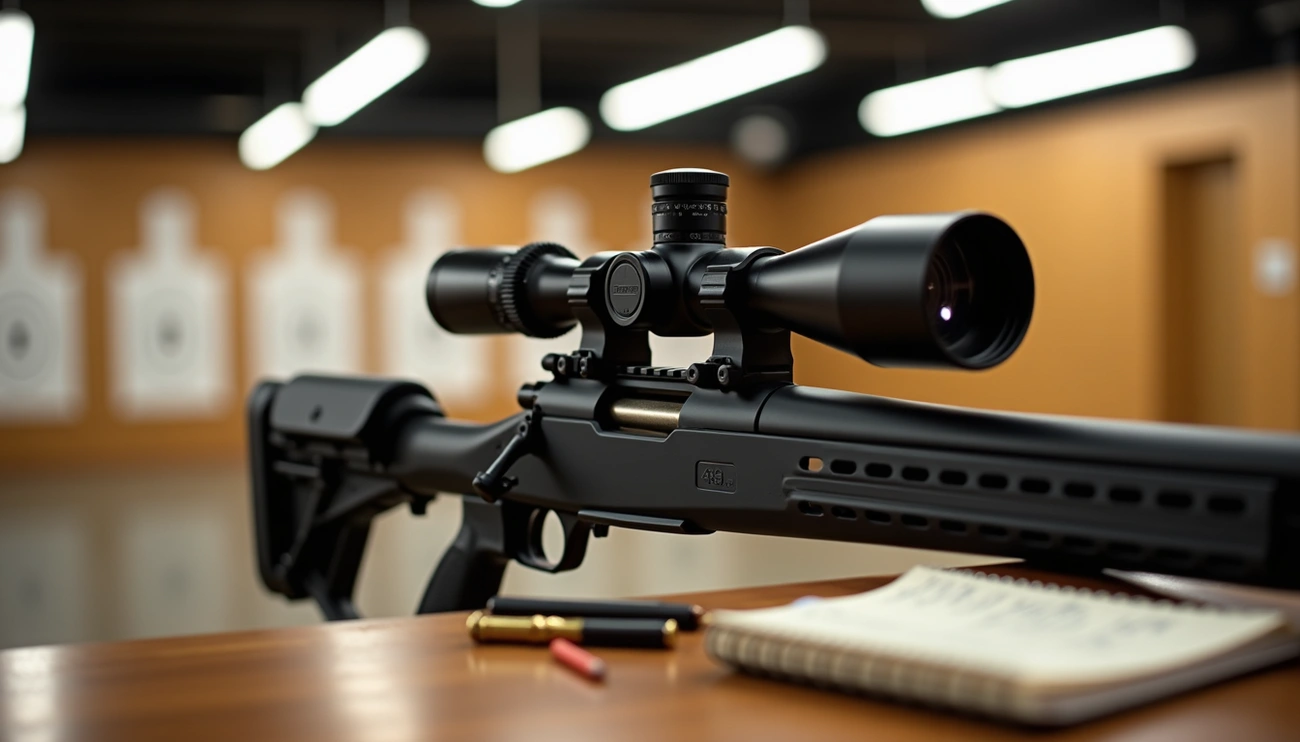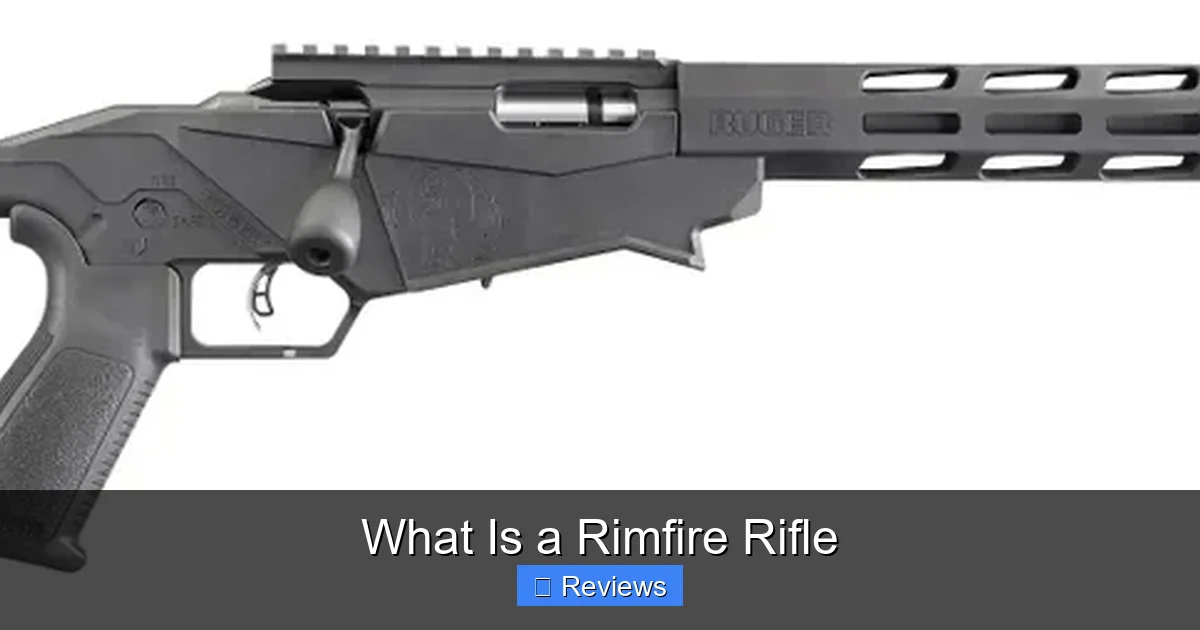
A rimfire rifle is a popular type of firearm distinguished by its ammunition, where the firing pin strikes the rim of the cartridge to ignite the primer. Known for their low recoil, affordability, and reduced noise, rimfire rifles are excellent for beginners, plinking, small game hunting, and cost-effective target practice. They offer incredible versatility and are a staple for many shooting enthusiasts, from novice to experienced.
Ever wondered about the fascinating world of firearms but felt a bit overwhelmed by all the different types? Or perhaps you’re an experienced shooter looking for an economical way to hone your skills without breaking the bank? Well, today we’re going to dive deep into a particular class of firearm that holds a special place in the hearts of many enthusiasts: the rimfire rifle.
You might have heard the term “rimfire” tossed around, especially when people talk about the super popular .22 Long Rifle. But what exactly does it mean? What makes a rimfire rifle different from other rifles you might encounter? And why are they so incredibly popular, loved by everyone from seasoned hunters to first-time plinkers? Let’s pull back the curtain and uncover everything you need to know about these versatile and enjoyable firearms.
Think of this as your friendly guide to understanding the magic behind the rimfire rifle. We’ll explore its unique design, unravel why it’s such an excellent choice for a variety of activities, discuss the different calibers available, and even give you some pointers on choosing your very first one. By the end of this, you’ll not only know what a rimfire rifle is, but you’ll also understand why it’s a must-have for so many.
Key Takeaways
- Unique Ammunition Design: Rimfire rifles use cartridges where the primer is located within the rim of the casing, ignited by a strike to the rim, unlike centerfire cartridges where the primer is in the center of the case head.
- Cost-Effective Shooting: Ammunition for rimfire rifles, especially the ubiquitous .22 LR, is significantly less expensive than centerfire rounds, making them ideal for high-volume practice, plinking, and general range fun.
- Low Recoil and Noise: Due to their smaller cartridges and lighter bullet weights, rimfire rifles produce very little recoil and a quieter report, making them comfortable for new shooters, children, and extended shooting sessions.
- Versatile Applications: Rimfire rifles are incredibly versatile, perfect for teaching shooting fundamentals, casual plinking, effective small game hunting (like squirrels and rabbits), pest control, and even some competitive shooting disciplines.
- Beginner-Friendly: Their ease of use, low cost, and gentle shooting characteristics make rimfire rifles an excellent choice for first-time firearm owners and for introducing new shooters to the sport.
- Variety of Calibers and Actions: While the .22 LR is king, other rimfire calibers like .22 WMR and .17 HMR offer increased power and range. They also come in various action types, including semi-automatic, bolt-action, and lever-action, suiting different preferences and uses.
- Essential for Every Collection: Many experienced shooters consider a rimfire rifle an essential part of any firearm collection, valued for its practicality, historical significance, and sheer enjoyment it brings to shooting.
Quick Answers to Common Questions
What is the main difference between rimfire and centerfire ammunition?
The primary difference lies in the primer’s location. Rimfire ammunition has the primer compound integrated into the hollow rim of the cartridge case, which is struck by the firing pin. Centerfire ammunition has a separate, distinct primer cap pressed into the center of the cartridge’s base.
Is a rimfire rifle good for beginners?
Absolutely! Rimfire rifles are highly recommended for beginners due to their low recoil, reduced noise, and affordable ammunition. These characteristics allow new shooters to comfortably focus on fundamental shooting skills without being intimidated.
What is the most common rimfire caliber?
The most common and widely recognized rimfire caliber is the .22 Long Rifle (.22 LR). It is incredibly popular for plinking, training, and small game hunting due to its availability, low cost, and mild characteristics.
Can I hunt with a rimfire rifle?
Yes, many rimfire rifles are excellent for hunting small game such as squirrels, rabbits, and even larger varmints like groundhogs and coyotes (depending on the caliber, like .22 WMR or .17 HMR, and local regulations). Ethical shot placement is always crucial.
Are rimfire rifles accurate?
Yes, many rimfire rifles are surprisingly accurate, especially bolt-action models designed for precision. While generally limited to shorter ranges compared to centerfire rifles, they are capable of very tight groups and are used in various competitive shooting disciplines that demand high accuracy.
📑 Table of Contents
What Exactly Makes a Rimfire Rifle “Rimfire”?
The very heart of understanding a rimfire rifle lies in its name: “rimfire.” This term doesn’t refer to the rifle itself as much as it does to the ammunition it uses. Unlike centerfire cartridges, which have a small, replaceable primer cup pressed into the center of the cartridge base, rimfire cartridges have their primer compound spun into the hollow rim of the casing itself. It’s a fundamental difference that dictates how the cartridge is ignited and, consequently, how the firearm is designed.
When you pull the trigger on a rimfire rifle, the firing pin strikes the thin, flattened rim of the cartridge. This impact crushes the primer compound located inside that rim against the breech face of the barrel, igniting it. This ignition then sends a flash of hot gas into the main powder charge, which in turn propels the bullet down the barrel. It’s a simple yet incredibly effective design that has stood the test of time, particularly with the .22 Long Rifle caliber.
How Rimfire Ammunition Differs from Centerfire
To really grasp the uniqueness of a rimfire rifle, it’s helpful to contrast its ammunition with the more common centerfire type. Imagine holding two cartridges: a .22 LR rimfire and a .30-06 centerfire. The most obvious difference at first glance might be size, but look closely at the base.
- Rimfire: The base of a rimfire cartridge is typically thinner and has a distinct, often hollow-looking rim. The primer is embedded within this rim. Once fired, the rim is crushed and cannot be reliably reloaded, making rimfire ammunition a single-use affair.
- Centerfire: A centerfire cartridge has a visibly separate primer cap in the center of its base. This cap contains the priming compound. After firing, this spent primer can be removed, and a new one inserted, allowing the cartridge case to be reloaded multiple times by hobbyists.
This difference in primer placement affects everything from manufacturing cost to reloadability. Rimfire ammunition is generally less expensive to produce because of its simpler design and non-reloading nature. This cost-effectiveness is a huge factor in the popularity of the rimfire rifle.
The Anatomy of a Rimfire Cartridge
Let’s briefly look inside a typical rimfire cartridge, like the beloved .22 LR. It consists of four main components, just like any other cartridge, but with that crucial difference:
- Bullet: The projectile that exits the barrel. Rimfire bullets are typically lead or copper-plated lead.
- Casing: The metal container (usually brass or copper-washed steel) that holds all the components. Its hollow rim contains the primer.
- Propellant (Powder): The main explosive charge that, when ignited, creates the gas pressure to push the bullet.
- Primer: The ignition compound, located inside the rim of the casing, that initiates the main powder charge when struck by the firing pin.
This design makes the rimfire rifle a very specific tool, and understanding its ammunition is key to appreciating its role in the shooting world.
Why Are Rimfire Rifles So Popular?
If you’ve spent any time at a shooting range or talked to firearm enthusiasts, you’ve probably heard glowing recommendations for a rimfire rifle, especially a .22 LR. Their popularity isn’t just a coincidence; it’s due to a combination of practical advantages that make them incredibly appealing to a wide range of shooters.
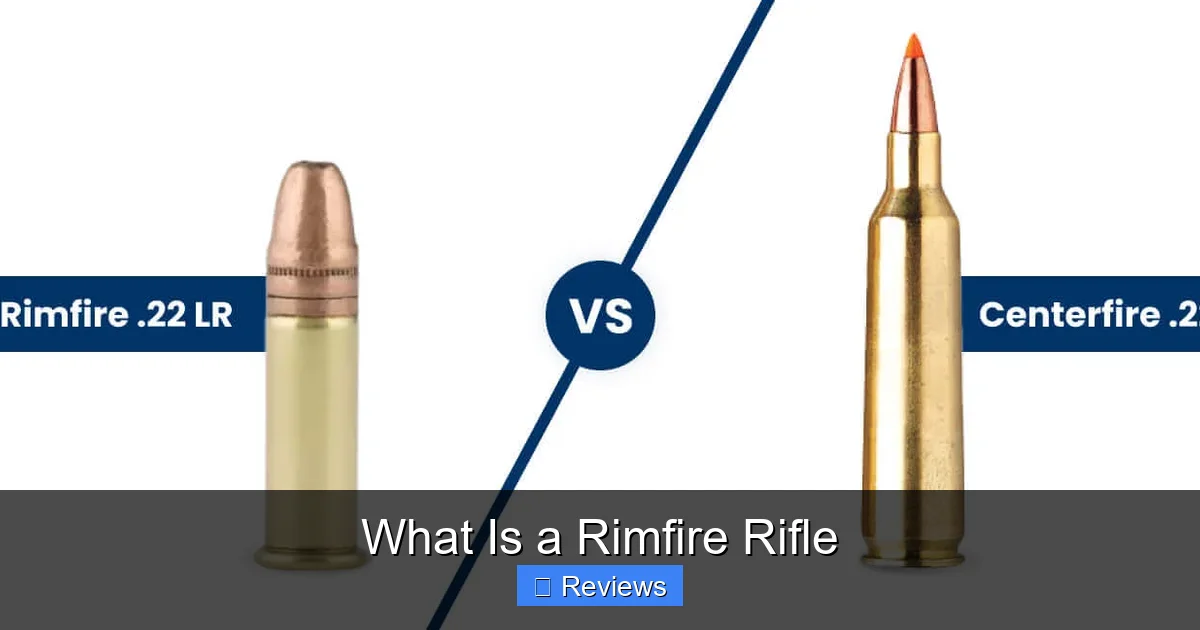
Visual guide about What Is a Rimfire Rifle
Image source: images.contentstack.io
Cost-Effectiveness for Shooting Enthusiasts
Let’s be honest, shooting can be an expensive hobby. Centerfire ammunition, particularly for larger calibers, can quickly add up, making frequent range trips a significant investment. This is where the rimfire rifle truly shines. Rimfire ammunition, especially the .22 LR, is by far the most affordable ammunition on the market. You can often buy hundreds, even thousands, of rounds for the price of a few boxes of centerfire cartridges.
This low cost per round means you can shoot more often, for longer periods, without worrying about your budget. It’s perfect for extended plinking sessions, serious target practice, or just having fun without the financial strain. Many shooters use a rimfire rifle as a training tool to practice fundamentals without the high cost of larger caliber ammunition.
Low Recoil and Beginner-Friendliness
Recoil – that backward kick you feel when a firearm discharges – can be intimidating, especially for new shooters or those with a smaller stature. Larger centerfire rifles can produce significant recoil, which can lead to flinching, poor shooting habits, and an overall unpleasant experience for beginners. A rimfire rifle, however, produces very little recoil.
The minimal kick makes rimfire rifles incredibly comfortable and easy to shoot. This gentle nature is why they are often the first firearm given to children or new shooters. It allows them to focus on critical shooting fundamentals like stance, grip, sight alignment, and trigger control without the distraction or discomfort of heavy recoil. It builds confidence and makes the learning process enjoyable.
Reduced Noise Signature
Along with low recoil, rimfire rifles also produce a significantly quieter report compared to most centerfire firearms. While hearing protection is always essential when shooting any firearm, the reduced noise from a rimfire rifle is a definite advantage.
This quieter operation makes them more suitable for shooting in areas where noise might be a concern (always check local regulations!), and it’s generally more pleasant for the shooter and anyone nearby. For small game hunting or pest control, the lower noise can also be less disruptive to the environment and less likely to spook other animals in the vicinity.
Common Rimfire Calibers and Their Uses
While the term “rimfire rifle” often conjures images of the .22 LR, it’s important to remember that there are a few different rimfire calibers available, each with its own characteristics and ideal applications. Let’s explore the most common ones.
The Ever-Popular .22 Long Rifle (.22 LR)
The .22 Long Rifle is, without a doubt, the king of rimfire ammunition. Introduced way back in 1887, it remains one of the most widely produced and used cartridges in the world. It’s the quintessential example of what a rimfire rifle is all about.
- Versatility: From target shooting and plinking to small game hunting (squirrels, rabbits) and pest control, the .22 LR does it all.
- Affordability: As mentioned, it’s incredibly cheap, making it perfect for high-volume practice.
- Low Recoil/Noise: Excellent for beginners and comfortable for extended shooting.
- Accuracy: Many .22 LR rimfire rifles are surprisingly accurate, capable of tight groups at appropriate ranges (typically up to 100 yards).
If you’re looking for a general-purpose rimfire rifle, a .22 LR is almost always the answer. Its universal appeal and widespread availability of firearms and ammunition make it an undeniable staple.
Stepping Up to .22 Magnum (.22 WMR)
Sometimes, shooters want a bit more punch than the standard .22 LR can offer, without jumping to a centerfire cartridge. That’s where the .22 Winchester Magnum Rimfire (.22 WMR), often just called .22 Magnum, comes into play. It was introduced in 1959 and is essentially a longer, more powerful version of the .22 LR, using a wider casing.
- Increased Power: The .22 WMR delivers higher velocities and more energy than the .22 LR, extending its effective range.
- Enhanced Hunting: It’s a popular choice for larger small game, such as coyotes or foxes, and for varmint control at slightly longer distances.
- Flatter Trajectory: The higher velocity translates to a flatter bullet trajectory, simplifying longer shots.
While .22 WMR ammunition is more expensive than .22 LR, it’s still generally more affordable than comparable centerfire cartridges. Keep in mind that a .22 WMR rimfire rifle cannot fire .22 LR ammunition due to case dimension differences.
The Speedy .17 HMR
For those seeking extreme velocity and a flat trajectory in a rimfire package, the .17 Hornady Magnum Rimfire (.17 HMR) is the answer. Introduced in 2002, this cartridge is essentially a .22 WMR necked down to accept a much smaller, lighter .17 caliber bullet.
- Blazing Speed: The .17 HMR is incredibly fast, often reaching velocities over 2,500 feet per second.
- Flat Trajectory: This speed results in a very flat trajectory, making it excellent for precision shooting at longer rimfire ranges (often out to 200 yards with practice).
- Varmint Special: It’s highly favored for varmint hunting (prairie dogs, groundhogs) where precision and minimal bullet drop at extended distances are crucial.
The .17 HMR’s lightweight bullets are susceptible to wind drift, which is something to consider. Ammunition costs are comparable to .22 WMR, making it a specialized, but highly effective, rimfire option for specific uses.
Applications and Versatility of Rimfire Rifles
The beauty of a rimfire rifle lies not just in its cost or ease of use, but in its incredible versatility. These firearms can serve a multitude of purposes, making them a truly valuable addition to any shooter’s collection.
Mastering the Basics: Training and Plinking
For many, the first interaction with a firearm is often a rimfire rifle. Their low recoil and minimal noise create an ideal environment for learning the fundamentals of shooting. Instructors frequently use them to teach:
- Safety Rules: Reinforcing the golden rules of firearm safety from the start.
- Sight Picture and Alignment: How to properly aim and align the sights with the target.
- Trigger Control: Smoothly pressing the trigger without disturbing the rifle’s aim.
- Stance and Grip: Establishing a stable shooting platform.
Beyond formal training, rimfire rifles are the quintessential “plinking” firearms. “Plinking” refers to informal target shooting, often at reactive targets like soda cans, clay pigeons, or steel plates that provide satisfying feedback. It’s pure, unadulterated fun, and the low cost of ammunition means you can plink to your heart’s content.
Small Game Hunting and Pest Control
While they might not have the raw power of larger centerfire rifles, rimfire rifles – particularly the .22 LR and .22 WMR – are incredibly effective tools for small game hunting and pest control. They are perfect for:
- Squirrels and Rabbits: A well-placed shot from a .22 LR rimfire rifle is more than sufficient for harvesting these common game animals.
- Raccoons and Opossums: The .22 WMR provides enough power for larger small game.
- Pest Control: Rimfire rifles are excellent for dispatching nuisance animals like rats, groundhogs, and sometimes even birds (where legal and safe). Their quieter report is also an advantage in rural areas where loud shots might disturb neighbors.
When using a rimfire rifle for hunting, ethical shots are paramount. Always know your effective range and understand the limitations of your chosen caliber to ensure a clean, humane harvest.
Competitive Shooting Disciplines
Don’t let their “beginner” label fool you; rimfire rifles are also serious tools in competitive shooting. Various disciplines are built around the accuracy and precision of rimfire firearms:
- Bullseye Pistol and Rifle: Focusing on extreme accuracy at fixed distances.
- Smallbore Rifle Silhouette: Shooting at animal-shaped steel targets at varying ranges.
- Precision Rimfire Series: A growing sport that simulates long-range centerfire rifle shooting but at scaled-down distances with rimfire rifles, making it accessible and affordable.
These competitions push the limits of both the shooter and the rimfire rifle, demonstrating that these firearms are capable of incredible precision in the right hands.
Choosing Your First Rimfire Rifle
So, you’re convinced a rimfire rifle is for you. Great! But with so many options out there, how do you choose the right one? Here are some key factors to consider.
Understanding Action Types: Bolt-Action, Semi-Automatic, Lever-Action
Rimfire rifles come in various action types, each offering a different shooting experience and set of advantages:
- Semi-Automatic: These are incredibly popular for plinking and fast-paced shooting. With a semi-automatic rimfire rifle, each pull of the trigger fires a round, ejects the spent casing, and loads a new one from the magazine. The Ruger 10/22 is the undisputed champion in this category. They are fun, easy to shoot, and great for quick follow-up shots.
- Bolt-Action: Favored for accuracy and hunting, a bolt-action rimfire rifle requires the shooter to manually cycle the bolt between shots. This action is simple, extremely reliable, and often leads to greater inherent accuracy because fewer moving parts interact during the firing sequence. Many precision rimfire rifles are bolt-actions.
- Lever-Action: If you appreciate classic styling and smooth mechanical operation, a lever-action rimfire rifle might be for you. These rifles are operated by cycling a lever beneath the receiver, reminiscent of old Western films. They are often slower to operate than semi-autos but offer a unique, enjoyable shooting experience, often found in .22 LR.
- Pump-Action: Less common but still available, pump-action rimfire rifles operate like a pump-action shotgun, requiring the fore-end to be manually slid back and forth to cycle rounds.
Consider your primary use: plinking fun often leans semi-auto, while precision and hunting might favor bolt-action.
Factors for Consideration: Budget, Ergonomics, and Accessories
Beyond the action type, a few other things should guide your decision when purchasing a rimfire rifle:
- Budget: Rimfire rifles vary widely in price, from budget-friendly models under $200 to highly specialized, competition-grade rifles costing well over $1,000. Decide how much you’re comfortable spending. Remember to factor in the cost of a scope, ammunition, and accessories.
- Ergonomics and Fit: Just like any other rifle, a rimfire rifle should feel comfortable in your hands and against your shoulder. The length of pull (distance from the trigger to the butt of the stock), weight, and overall balance are important. If possible, shoulder a few different models to see what feels best.
- Intended Use: Will it be a dedicated plinker? A small game hunter? A trainer for a new shooter? Your primary use will heavily influence the ideal action type, barrel length, and features you’ll need.
- Accessories and Aftermarket Support: Some rimfire rifles, like the Ruger 10/22, have a vast aftermarket with endless customization options (stocks, barrels, triggers). If you enjoy tinkering and upgrading, this might be a significant factor. Most rimfire rifles also benefit from a good scope, especially if you plan on precision shooting or hunting.
Care and Maintenance for Your Rimfire Rifle
Like any firearm, your rimfire rifle needs proper care and maintenance to ensure its longevity, reliability, and accuracy. The good news is that cleaning a rimfire rifle is generally straightforward.
Rimfire ammunition, especially .22 LR, can be a bit “dirtier” than centerfire, often leaving behind more lead and powder residue. This means more frequent cleaning might be necessary, particularly the bore and the action.
- Bore Cleaning: Use a cleaning rod, appropriate caliber brush, and patches with a good bore solvent. Follow with dry patches until clean.
- Action Cleaning: Focus on the chamber, bolt face, and any moving parts. Remove built-up carbon and residue. Light lubrication on moving parts is crucial but don’t over-lubricate, as this can attract more fouling.
- Magazines: Keep magazines clean and free of dirt or debris, as this can cause feeding issues.
A little regular maintenance goes a long way in keeping your rimfire rifle shooting smoothly and accurately for years to come.
Conclusion
There you have it: the complete picture of what a rimfire rifle is all about. From its unique ammunition design to its unparalleled versatility and affordability, it’s easy to see why these firearms have such enduring appeal. Whether you’re a seasoned marksman or just starting your shooting journey, a rimfire rifle offers an accessible, enjoyable, and cost-effective way to engage with the shooting sports.
Their low recoil and noise make them perfect for introducing new shooters, while their precision and reliability are valued by hunters and competitive shooters alike. Owning a rimfire rifle, particularly a reliable .22 LR, is often considered a rite of passage and a fundamental part of any well-rounded firearm collection.
So, if you’re looking for endless hours of fun plinking, an excellent training tool, or an effective small game hunter, look no further. The rimfire rifle awaits, ready to deliver enjoyment and skill-building in equal measure. Happy shooting!
🎥 Related Video: .22 LR Caliber American Rimfire Semi-automatic Pistol | Ruger Mk III | How It Works
📺 The Most
The Ruger Standard Model is a rimfire semi-automatic pistol introduced in 1949 as the first product manufactured by Sturm, Ruger …
Frequently Asked Questions
What does “rimfire” actually mean?
The term “rimfire” refers to the way the ammunition is ignited. The primer compound is located inside the rim of the cartridge casing. When the firing pin strikes and crushes this rim, it ignites the primer and subsequently the main powder charge.
Why are .22 LR rimfire rifles so popular?
.22 LR rimfire rifles are popular because of their extremely low ammunition cost, minimal recoil, and reduced noise, making them ideal for training, plinking, small game hunting, and pest control. Their versatility and ease of use appeal to a broad range of shooters.
Can a .22 LR rifle shoot .22 WMR ammunition?
No, a .22 LR rimfire rifle cannot shoot .22 WMR (Winchester Magnum Rimfire) ammunition. Although both are .22 caliber rimfire rounds, they have different case dimensions and pressures. Attempting to chamber the wrong ammunition can damage the firearm and be extremely dangerous.
What are the best uses for a .17 HMR rimfire rifle?
The .17 HMR rimfire rifle is best used for varmint hunting and precision target shooting at extended rimfire ranges, often out to 200 yards. Its high velocity and flat trajectory make it excellent for dispatching small, fast-moving pests with accuracy.
Are rimfire rifles safe for young shooters?
Under proper adult supervision and with appropriate instruction, rimfire rifles are an excellent and safe choice for introducing young shooters to firearms. Their low recoil and manageable report help build confidence and allow youngsters to focus on safety and shooting fundamentals without discomfort.
Do rimfire rifles require special cleaning?
While standard firearm cleaning kits work, rimfire ammunition can be dirtier, often leaving more lead and powder residue, especially in the bore and action. Regular and thorough cleaning, particularly after extensive shooting, is important to maintain accuracy and prevent fouling issues specific to rimfire firearms.