A recoilless rifle is a specialized firearm designed to eliminate recoil by venting propellant gases out the rear of the weapon. Unlike conventional cannons that absorb recoil internally, this innovative design allows for lighter, more portable, and more stable platforms, making it an invaluable tool for infantry and special forces seeking potent anti-tank or anti-personnel capabilities without the bulk of heavy artillery.
What Is a Recoilless Rifle?
Have you ever wondered how a soldier can fire a large projectile, often comparable to an artillery shell, from their shoulder or a lightweight tripod without being knocked flat on their back? It sounds like magic, but it’s pure genius in engineering. This marvel of military technology is known as a recoilless rifle, and it represents a fascinating chapter in the quest for portable, powerful firepower.
Imagine the sheer force generated when a heavy shell is propelled from a cannon. According to Newton’s Third Law, for every action, there’s an equal and opposite reaction. This “reaction” is what we call recoil, and it’s a massive problem for weapon designers. Heavy artillery pieces need robust, often massive, recoil mechanisms and substantial weight to absorb this backward kick. This makes them cumbersome, difficult to move, and impossible for a single person to operate effectively. But what if you could just… eliminate that recoil?
That’s precisely what a recoilless rifle achieves. It’s not a rifle in the traditional sense, despite the name, but rather a type of lightweight artillery piece that uses a clever trick to defy the laws of physics as they apply to conventional firearms. By venting a portion of the propellant gases rearward, it generates a forward thrust that perfectly cancels out the backward thrust (recoil) created by the projectile moving forward. The result? A weapon that delivers impressive punch without the painful kickback, making powerful anti-tank and support weapons accessible to smaller units.
Key Takeaways
- No Recoil by Design: A recoilless rifle works by expelling a portion of its propellant gases backwards, counteracting the forward momentum of the projectile and eliminating felt recoil.
- Newton’s Third Law in Action: The design leverages Newton’s Third Law of Motion, ensuring that for every action (projectile forward), there’s an equal and opposite reaction (gases backward), resulting in net zero recoil.
- Enhanced Portability: By removing the need for heavy recoil absorption mechanisms, recoilless rifles are significantly lighter and more portable than conventional cannons of comparable firepower.
- Ideal for Infantry: This portability makes them perfect for infantry units, special forces, and situations requiring potent anti-tank or anti-fortification capabilities in challenging terrain.
- Distinct Backblast: A key characteristic and limitation is the significant “backblast” area behind the weapon, which is dangerous to personnel and reveals the firing position.
- Specialized Ammunition: Recoilless rifles use unique ammunition with perforated cartridges that allow gases to escape both forward (propelling the round) and backward (eliminating recoil).
- Versatile Applications: While originally developed for anti-tank roles, modern recoilless rifles are adaptable for anti-personnel, smoke, and illumination rounds, making them highly versatile.
Quick Answers to Common Questions
What is the main principle behind a recoilless rifle?
The main principle is to vent a portion of the propellant gases out the rear of the weapon upon firing. This rearward thrust perfectly counters the forward recoil generated by the projectile, resulting in zero or negligible felt recoil.
Are recoilless rifles actually “rifled”?
Despite the name “rifle,” most recoilless rifles do have rifled barrels to impart spin and stability to the projectile. The term “rifle” in this context refers more to its role as a direct-fire support weapon than its internal barrel structure.
What is “backblast” in the context of a recoilless rifle?
Backblast is the dangerous area behind the recoilless rifle where hot, high-pressure gases are violently expelled. It poses a severe hazard to anyone standing in this zone and also creates a visible signature.
Can a recoilless rifle be fired inside a building?
Generally, no. Due to the significant backblast, firing a recoilless rifle inside an enclosed space is extremely dangerous and can cause severe injury or death to the operator and anyone nearby. Some modern versions have “confined space” ammunition or blast deflectors but are still usually limited.
What is a common modern example of a recoilless rifle?
The Carl Gustaf recoilless rifle, developed in Sweden, is one of the most well-known and widely used modern examples. It’s highly versatile and employed by numerous armies and special forces worldwide.
📑 Table of Contents
The Core Concept: How a Recoilless Rifle Works
At its heart, the recoilless rifle is a brilliant application of physics, specifically Newton’s Third Law of Motion. When a conventional firearm is fired, the expanding gases push the projectile forward, and simultaneously, they push the weapon backward. This backward push is the recoil. To counteract this, traditional artillery pieces use heavy barrels, robust frames, and intricate hydraulic or spring recoil systems to absorb and dissipate this energy.
The recoilless rifle takes a different approach. Instead of absorbing the recoil, it cancels it out before it even reaches the shooter. It achieves this by intentionally allowing a significant portion of the propellant gases to escape through an open breech at the rear of the weapon. These gases exit with high velocity, creating a forward thrust that is precisely equal and opposite to the recoil force generated by the projectile moving down the barrel. The net effect is zero or negligible recoil.
Newton’s Third Law and its Bypass
Let’s break down the magic of Newton’s Third Law. The law states: “For every action, there is an equal and opposite reaction.”
* **Action 1:** Expanding gases push the projectile forward. This creates a backward force (recoil) on the weapon.
* **Action 2:** Simultaneously, a controlled amount of expanding gases are deliberately vented out the rear of the weapon. This creates a *forward* force on the weapon.
By carefully designing the weapon, the propellant charge, and the rear venting system, engineers ensure that the forward force from the escaping gases perfectly balances the backward force from the projectile. It’s like having two opposing forces cancel each other out, leaving the weapon stationary relative to the ground (or the shooter).
Counter-Mass vs. Venting
Early attempts at recoilless design sometimes involved ejecting a counter-mass backward, like sand or a slug of grease, to absorb recoil. While this concept worked to some extent, it was impractical due to the need for bulky counter-mass materials and complex feeding mechanisms. The more elegant solution, and the one that defines modern recoilless rifles, is gas venting.
Gas venting is far more efficient and cleaner. The gases themselves act as the counter-mass, moving at high velocity to provide the necessary opposing thrust. This eliminates the need for any physical “recoil absorber” other than the gases themselves. This principle is fundamental to understanding why a recoilless rifle can be so much lighter and simpler than a conventional cannon of equivalent power.
A Closer Look at Recoilless Rifle Design and Components

Visual guide about What Is a Recoilless Rifle
Image source: divers.gg
While the core principle is straightforward, the actual design of a recoilless rifle involves several specialized components working in harmony. It’s not just a pipe with a hole in the back; there’s a good deal of precision involved.
The Open Breech
The most distinctive feature of a recoilless rifle is its open breech. Unlike conventional firearms where the breech is sealed to contain all the propellant gases and direct them forward, the recoilless rifle’s breech is designed to be open or to open instantly upon firing. This allows the gases to escape rearward through a specially designed nozzle. This open design is critical to the recoil-canceling mechanism.
Venturi Nozzle
Behind the open breech, you’ll find a venturi nozzle, or a series of vent holes and baffles. This isn’t just a simple hole; it’s carefully shaped to accelerate the escaping gases efficiently. Think of it like a jet engine’s nozzle, but in reverse. The venturi effect helps ensure that the gases are expelled with enough velocity and in a controlled manner to generate the precise amount of forward thrust needed to neutralize recoil. The design of these nozzles can vary significantly between different recoilless rifle models, optimizing for gas flow and minimizing the spread of the backblast.
Specialized Ammunition
A conventional cartridge case is designed to be very strong, sealing the breech and containing all the propellant gases. Recoilless rifle ammunition is quite different. It typically features a cartridge case with a perforated rear section or a bursting disc. When the primer ignites the propellant, gases push the projectile forward, but a substantial portion of these gases also escape through the perforations or burst through the disc into the open breech, and then out through the rear venturi nozzle. This unique ammunition design is integral to the recoilless principle. Without it, the weapon would simply explode or generate immense recoil.
Ignition System
Like any firearm, a recoilless rifle needs an ignition system to fire the propellant. This is usually a percussion-based system, much like a conventional rifle, where a firing pin strikes a primer to ignite the main propellant charge. The timing and reliability of this ignition are crucial to ensure the correct expansion of gases and the coordinated action of projectile launch and rearward gas venting.
Advantages of the Recoilless Rifle
The unique design of the recoilless rifle offers several compelling advantages, which have kept it relevant on battlefields for decades, especially for infantry and specialized units.
Portability and Weight Reduction
This is arguably the biggest advantage. Because there’s no significant recoil to absorb, recoilless rifles don’t need heavy barrels, reinforced frames, or complex recoil mechanisms. This makes them incredibly lightweight compared to conventional artillery pieces or even heavy machine guns with similar destructive power. A soldier or a small team can easily carry and deploy a recoilless rifle where heavier weapons cannot go, such as dense jungles, mountainous terrain, or urban environments. This portability directly translates to greater tactical flexibility and responsiveness for infantry units.
Simplicity and Cost-Effectiveness
Without the need for intricate hydraulic systems, springs, buffers, and massive structural components, recoilless rifles are relatively simple to manufacture and maintain. This simplicity contributes to lower production costs and reduced logistical burdens in the field. Fewer moving parts mean less likelihood of mechanical failure and easier field stripping and cleaning. For militaries looking to equip large numbers of infantry with potent anti-armor capabilities, this simplicity is a significant draw.
Accuracy and Stability
The absence of recoil means the weapon remains relatively stable during firing. Unlike a recoiling weapon that jumps and moves, requiring the shooter to re-acquire the target, a recoilless rifle maintains its position. This stability can lead to greater accuracy, especially during rapid follow-up shots if the system allows. Furthermore, it reduces shooter fatigue and improves morale, as there’s no painful kick to endure. The shooter can concentrate purely on aiming and hitting the target.
Versatility in Deployment
Due to their light weight, recoilless rifles can be mounted on a variety of platforms that would be unsuitable for conventional cannons. They can be shoulder-fired, mounted on lightweight tripods, affixed to small vehicles (like jeeps or ATVs), or even integrated into specialized armored vehicles as secondary armament. This versatility makes them adaptable to diverse combat scenarios, from engaging tanks in open fields to blasting through fortifications in urban close-quarters combat.
Disadvantages and Limitations
While powerful and portable, recoilless rifles are not without their drawbacks. These limitations are critical considerations for their tactical deployment and design.
Backblast Area
The most significant disadvantage is the “backblast” area. Because gases are violently expelled from the rear, a dangerous zone of hot gas, pressure, and sometimes even debris extends many meters behind the weapon. Anyone standing in this backblast zone risks serious injury or death. This limits where a recoilless rifle can be fired – it cannot be used safely inside enclosed spaces, against a wall, or near friendly troops without extreme caution. This often restricts their use to open ground or specially designed bunkers, which can limit their utility in urban combat or when operating from cover.
Reduced Muzzle Velocity
To achieve the recoilless effect, a portion of the propellant gases is vented backward instead of entirely focusing on propelling the projectile forward. This inevitably means that the projectile leaves the barrel at a lower muzzle velocity compared to a conventional cannon of the same caliber. Lower muzzle velocity generally translates to a more curved trajectory and a shorter effective range for direct fire. It also means less penetration for kinetic energy penetrators, although most recoilless rifle rounds are shaped charges (HEAT) which rely less on velocity for penetration.
Visibility and Signature
The backblast isn’t just dangerous; it’s also highly visible. The flash, smoke, and dust kicked up by the escaping gases create a very obvious signature that reveals the firing position to the enemy. This makes the recoilless rifle user vulnerable to counter-fire immediately after shooting, limiting its “shoot and scoot” capability compared to more discreet anti-tank missiles. The noise generated can also be substantial, further drawing attention.
Specialized Ammunition Requirements
As discussed, recoilless rifles require specialized ammunition with perforated cartridge cases. This ammunition is not interchangeable with conventional artillery rounds, which adds complexity to logistics and supply chains. It also means that the rounds themselves might be more expensive or complex to manufacture than standard munitions. This lack of commonality can be a significant factor in military planning.
Historical Development and Notable Examples
The concept of recoilless weapons isn’t entirely new, with some early ideas surfacing in the late 19th and early 20th centuries. However, it was during World War II that the recoilless rifle truly came into its own.
Early Concepts and World War II Innovations
One of the earliest practical recoilless designs was developed by Commander Peter N. Deleanu of the U.S. Navy in the 1910s, though it didn’t see widespread adoption. The true breakthroughs came during World War II, driven by the desperate need for lightweight anti-tank weapons that could counter increasingly formidable enemy armor. Both Germany and the United States independently developed successful recoilless rifles.
Germany’s *Leichtgeschütz 40* (LG 40) and later the *Leichtgeschütz 42* (LG 42) were 7.5 cm and 10.5 cm recoilless guns, primarily used by paratroopers due to their lightweight design. The Americans developed the 57mm M18 and 75mm M20 recoilless rifles, which saw action late in the war. These early models proved the viability of the recoilless principle, offering significant firepower to infantry who previously relied on less effective anti-tank grenades or cumbersome bazookas.
Post-War Proliferation
After World War II, the recoilless rifle concept spread globally. Many nations, particularly those forming light infantry and special forces units, recognized their value. The Korean and Vietnam Wars further cemented their role as versatile support weapons. The Soviet Union developed several recoilless rifles, like the B-10 and B-11, which were widely exported to Warsaw Pact nations and other allied countries. The simplicity and effectiveness of these weapons made them popular in many conflicts around the world.
Iconic Recoilless Rifles
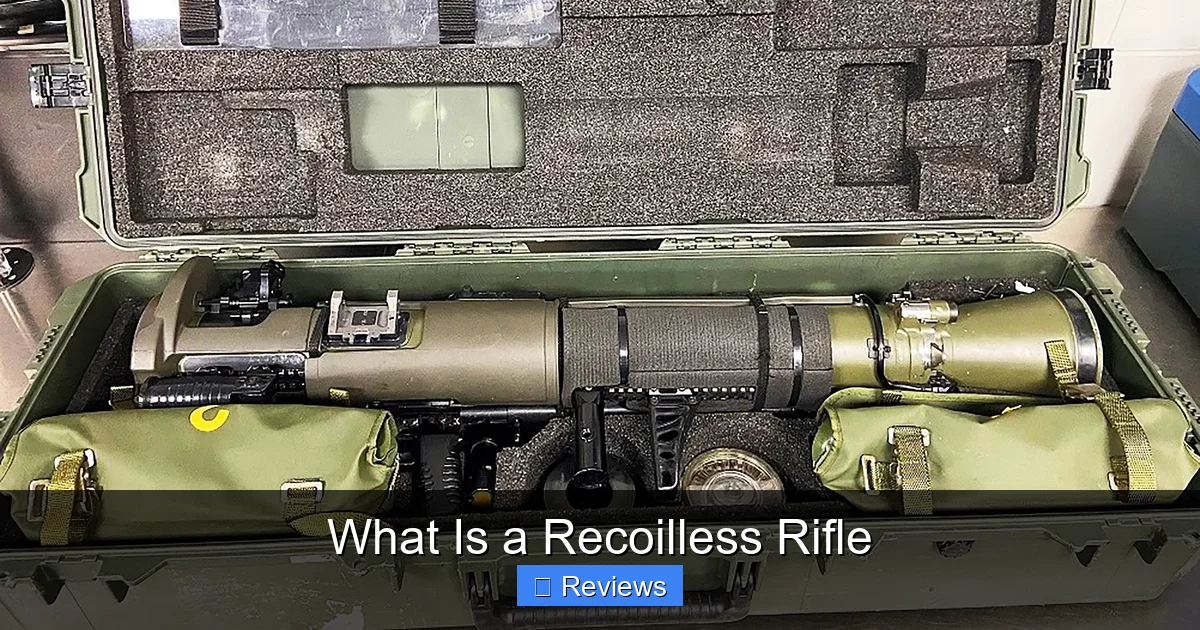
* **Carl Gustaf Recoilless Rifle (Sweden):** Perhaps the most famous and widely used recoilless rifle in the world, the Carl Gustaf has been in service since 1946 and continues to be updated. It’s renowned for its versatility, offering a wide range of ammunition types including HEAT (High-Explosive Anti-Tank), HEDP (High-Explosive Dual Purpose), smoke, and illumination rounds. It’s a staple for many special forces and infantry units globally.
* **M40 Recoilless Rifle (USA):** A 106mm recoilless rifle developed after WWII, the M40 was widely used by the U.S. and its allies. It was often mounted on jeeps or tripods due to its slightly heavier weight, providing powerful anti-tank support.
* **SPG-9 Kopye (Soviet Union):** A 73mm recoilless rifle, the SPG-9 is a ubiquitous weapon in many militaries, known for its ruggedness and effectiveness. It’s often seen mounted on light vehicles or operated from a tripod.
Modern Applications and Legacy
While advancements in anti-tank guided missiles (ATGMs) have taken over the primary anti-armor role in many modern armies, the recoilless rifle still holds a crucial place, particularly for light infantry and special operations forces.
Anti-Tank and Anti-Personnel Roles
Even with the rise of ATGMs, the recoilless rifle remains a cost-effective and immediate solution for engaging armored targets at closer ranges. The ability to quickly deploy and fire, without the complex guidance systems of missiles, makes them valuable in dynamic combat situations. Moreover, with high-explosive and anti-personnel rounds, they are highly effective against fortified positions, bunkers, and enemy troop concentrations, providing invaluable direct fire support for infantry assaults.
Special Forces and Light Infantry
For units operating far from traditional supply lines or needing to maintain a low profile, the portability and relative simplicity of a recoilless rifle are invaluable. Special forces often prioritize lightweight, versatile firepower, and the ability to carry a powerful weapon like the Carl Gustaf over long distances makes it an ideal choice. Light infantry units, especially those deployed in difficult terrain, also benefit immensely from the recoilless rifle’s ability to bring heavy firepower to bear without the logistical burden of heavier crew-served weapons.
Training and Demilitarized Versions
The principles learned from recoilless rifle technology have also influenced other areas. While not directly “recoilless,” systems like some shoulder-fired rocket launchers (e.g., RPGs) use similar backblast principles to mitigate recoil, even if they don’t achieve zero recoil. Many militaries still use recoilless rifles for training purposes, especially to familiarize soldiers with direct fire support roles and the tactics associated with engaging hard targets. Demilitarized versions can sometimes be found in museums or private collections, providing a glimpse into this unique weapon category.
Conclusion
The recoilless rifle stands as a testament to ingenious engineering, solving a fundamental problem in weaponry: how to deliver powerful projectiles without the crippling effect of recoil. By skillfully manipulating Newton’s Third Law and venting propellant gases rearward, it transformed heavy artillery into a portable, infantry-friendly package. From the battlefields of World War II to modern conflicts, its advantages in portability, simplicity, and direct fire support have ensured its enduring relevance. While its characteristic backblast and lower muzzle velocity present challenges, the recoilless rifle remains a formidable and fascinating piece of military hardware, continuing to provide essential firepower to soldiers around the globe. It’s a true workhorse, enabling a small team to pack a serious punch against formidable adversaries.
🎥 Related Video: How Do "Recoilless" Rifles Work? 🎯💥🔫🤷♂️
📺 Jack O’Mural
This Is a Recoilless Rifle, and Its Job Is to Destroy Tanks—But Why Is It Called “Recoilless”? A regular rifle contains the explosion …
Frequently Asked Questions
How does a recoilless rifle differ from a bazooka or RPG?
A recoilless rifle is a gun that fires a projectile, often rifled, from a barrel using a contained propellant charge, venting gases to eliminate recoil. A bazooka or RPG (Rocket-Propelled Grenade) is a rocket launcher, where the projectile is a self-contained rocket motor that ignites and propels itself out of the tube, generating its own thrust rather than relying solely on barrel propulsion.
What types of ammunition do recoilless rifles use?
Recoilless rifles use a variety of specialized ammunition, including High-Explosive Anti-Tank (HEAT) rounds for armored targets, High-Explosive Dual Purpose (HEDP) rounds for general-purpose use against fortifications or personnel, and sometimes smoke or illumination rounds for tactical support.
Are recoilless rifles still relevant in modern warfare with advanced missiles?
Yes, recoilless rifles remain relevant, especially for light infantry and special forces. They offer a cost-effective, immediate, and versatile direct fire solution for close-to-medium range engagements against a variety of targets, often where the weight and complexity of anti-tank guided missiles are impractical.
What is the effective range of a recoilless rifle?
The effective range of a recoilless rifle varies significantly depending on the caliber, ammunition type, and specific model. While some can engage targets out to 1,000-2,000 meters or more with advanced optics, their primary utility often lies in direct-fire engagements within a few hundred meters, where their accuracy and rapid deployment are most beneficial.
Why are they called “rifles” if they are more like cannons?
The term “rifle” in “recoilless rifle” is somewhat historical and can be misleading. While many do have rifled barrels to spin the projectile for accuracy, their large caliber and function as direct-fire support weapons make them more akin to lightweight cannons or artillery pieces than traditional shoulder-fired rifles. The name likely stuck from early iterations or to differentiate them from heavy crew-served artillery.
What safety precautions are necessary when operating a recoilless rifle?
Operating a recoilless rifle requires strict adherence to safety protocols, primarily due to the severe backblast. This includes ensuring a clear backblast area free of personnel, obstacles, or flammable materials, wearing appropriate hearing protection, and being aware of the weapon’s loud muzzle blast and flash signature.
=== META DESCRIPTION ===
Discover what a recoilless rifle is and how this ingenious weapon defies traditional recoil, offering powerful, portable firepower for modern infantry.
=== QUICK SUMMARY ===
A recoilless rifle is a specialized firearm designed to eliminate recoil by venting propellant gases out the rear of the weapon. Unlike conventional cannons that absorb recoil internally, this innovative design allows for lighter, more portable, and more stable platforms, making it an invaluable tool for infantry and special forces seeking potent anti-tank or anti-personnel capabilities without the bulk of heavy artillery.
=== KEY TAKEAWAYS ===
Key Takeaways
- No Recoil by Design: A recoilless rifle works by expelling a portion of its propellant gases backwards, counteracting the forward momentum of the projectile and eliminating felt recoil.
- Newton’s Third Law in Action: The design leverages Newton’s Third Law of Motion, ensuring that for every action (projectile forward), there’s an equal and opposite reaction (gases backward), resulting in net zero recoil.
- Enhanced Portability: By removing the need for heavy recoil absorption mechanisms, recoilless rifles are significantly lighter and more portable than conventional cannons of comparable firepower.
- Ideal for Infantry: This portability makes them perfect for infantry units, special forces, and situations requiring potent anti-tank or anti-fortification capabilities in challenging terrain.
- Distinct Backblast: A key characteristic and limitation is the significant “backblast” area behind the weapon, which is dangerous to personnel and reveals the firing position.
- Specialized Ammunition: Recoilless rifles use unique ammunition with perforated cartridges that allow gases to escape both forward (propelling the round) and backward (eliminating recoil).
- Versatile Applications: While originally developed for anti-tank roles, modern recoilless rifles are adaptable for anti-personnel, smoke, and illumination rounds, making them highly versatile.
=== MAIN CONTENT ===
[FEATURED_IMAGE_PLACEHOLDER]
What Is a Recoilless Rifle?
Have you ever wondered how a soldier can fire a large projectile, often comparable to an artillery shell, from their shoulder or a lightweight tripod without being knocked flat on their back? It sounds like magic, but it’s pure genius in engineering. This marvel of military technology is known as a recoilless rifle, and it represents a fascinating chapter in the quest for portable, powerful firepower.
Imagine the sheer force generated when a heavy shell is propelled from a cannon. According to Newton’s Third Law, for every action, there’s an equal and opposite reaction. This “reaction” is what we call recoil, and it’s a massive problem for weapon designers. Heavy artillery pieces need robust, often massive, recoil mechanisms and substantial weight to absorb this backward kick. This makes them cumbersome, difficult to move, and impossible for a single person to operate effectively. But what if you could just… eliminate that recoil?
That’s precisely what a recoilless rifle achieves. It’s not a rifle in the traditional sense, despite the name, but rather a type of lightweight artillery piece that uses a clever trick to defy the laws of physics as they apply to conventional firearms. By venting a portion of the propellant gases rearward, it generates a forward thrust that perfectly cancels out the backward thrust (recoil) created by the projectile moving forward. The result? A weapon that delivers impressive punch without the painful kickback, making powerful anti-tank and support weapons accessible to smaller units.
The Core Concept: How a Recoilless Rifle Works
At its heart, the recoilless rifle is a brilliant application of physics, specifically Newton’s Third Law of Motion. When a conventional firearm is fired, the expanding gases push the projectile forward, and simultaneously, they push the weapon backward. This backward push is the recoil. To counteract this, traditional artillery pieces use heavy barrels, robust frames, and intricate hydraulic or spring recoil systems to absorb and dissipate this energy.
The recoilless rifle takes a different approach. Instead of absorbing the recoil, it cancels it out before it even reaches the shooter. It achieves this by intentionally allowing a significant portion of the propellant gases to escape through an open breech at the rear of the weapon. These gases exit with high velocity, creating a forward thrust that is precisely equal and opposite to the recoil force generated by the projectile moving down the barrel. The net effect is zero or negligible recoil.
Newton’s Third Law and its Bypass
Let’s break down the magic of Newton’s Third Law. The law states: “For every action, there is an equal and opposite reaction.”
* Action 1: Expanding gases push the projectile forward. This creates a backward force (recoil) on the weapon.
* Action 2: Simultaneously, a controlled amount of expanding gases are deliberately vented out the rear of the weapon. This creates a forward force on the weapon.
By carefully designing the weapon, the propellant charge, and the rear venting system, engineers ensure that the forward force from the escaping gases perfectly balances the backward force from the projectile. It’s like having two opposing forces cancel each other out, leaving the weapon stationary relative to the ground (or the shooter).
Counter-Mass vs. Venting
Early attempts at recoilless design sometimes involved ejecting a counter-mass backward, like sand or a slug of grease, to absorb recoil. While this concept worked to some extent, it was impractical due to the need for bulky counter-mass materials and complex feeding mechanisms. The more elegant solution, and the one that defines modern recoilless rifles, is gas venting.
Gas venting is far more efficient and cleaner. The gases themselves act as the counter-mass, moving at high velocity to provide the necessary opposing thrust. This eliminates the need for any physical “recoil absorber” other than the gases themselves. This principle is fundamental to understanding why a recoilless rifle can be so much lighter and simpler than a conventional cannon of equivalent power.
A Closer Look at Recoilless Rifle Design and Components
While the core principle is straightforward, the actual design of a recoilless rifle involves several specialized components working in harmony. It’s not just a pipe with a hole in the back; there’s a good deal of precision involved.
The Open Breech
The most distinctive feature of a recoilless rifle is its open breech. Unlike conventional firearms where the breech is sealed to contain all the propellant gases and direct them forward, the recoilless rifle’s breech is designed to be open or to open instantly upon firing. This allows the gases to escape rearward through a specially designed nozzle. This open design is critical to the recoil-canceling mechanism.
Venturi Nozzle
Behind the open breech, you’ll find a venturi nozzle, or a series of vent holes and baffles. This isn’t just a simple hole; it’s carefully shaped to accelerate the escaping gases efficiently. Think of it like a jet engine’s nozzle, but in reverse. The venturi effect helps ensure that the gases are expelled with enough velocity and in a controlled manner to generate the precise amount of forward thrust needed to neutralize recoil. The design of these nozzles can vary significantly between different recoilless rifle models, optimizing for gas flow and minimizing the spread of the backblast.
Specialized Ammunition
A conventional cartridge case is designed to be very strong, sealing the breech and containing all the propellant gases. Recoilless rifle ammunition is quite different. It typically features a cartridge case with a perforated rear section or a bursting disc. When the primer ignites the propellant, gases push the projectile forward, but a substantial portion of these gases also escape through the perforations or burst through the disc into the open breech, and then out through the rear venturi nozzle. This unique ammunition design is integral to the recoilless principle. Without it, the weapon would simply explode or generate immense recoil.
Ignition System
Like any firearm, a recoilless rifle needs an ignition system to fire the propellant. This is usually a percussion-based system, much like a conventional rifle, where a firing pin strikes a primer to ignite the main propellant charge. The timing and reliability of this ignition are crucial to ensure the correct expansion of gases and the coordinated action of projectile launch and rearward gas venting.
Advantages of the Recoilless Rifle
The unique design of the recoilless rifle offers several compelling advantages, which have kept it relevant on battlefields for decades, especially for infantry and specialized units.
Portability and Weight Reduction
This is arguably the biggest advantage. Because there’s no significant recoil to absorb, recoilless rifles don’t need heavy barrels, reinforced frames, or complex recoil mechanisms. This makes them incredibly lightweight compared to conventional artillery pieces or even heavy machine guns with similar destructive power. A soldier or a small team can easily carry and deploy a recoilless rifle where heavier weapons cannot go, such as dense jungles, mountainous terrain, or urban environments. This portability directly translates to greater tactical flexibility and responsiveness for infantry units.
Simplicity and Cost-Effectiveness
Without the need for intricate hydraulic systems, springs, buffers, and massive structural components, recoilless rifles are relatively simple to manufacture and maintain. This simplicity contributes to lower production costs and reduced logistical burdens in the field. Fewer moving parts mean less likelihood of mechanical failure and easier field stripping and cleaning. For militaries looking to equip large numbers of infantry with potent anti-armor capabilities, this simplicity is a significant draw.
Accuracy and Stability
The absence of recoil means the weapon remains relatively stable during firing. Unlike a recoiling weapon that jumps and moves, requiring the shooter to re-acquire the target, a recoilless rifle maintains its position. This stability can lead to greater accuracy, especially during rapid follow-up shots if the system allows. Furthermore, it reduces shooter fatigue and improves morale, as there’s no painful kick to endure. The shooter can concentrate purely on aiming and hitting the target.
Versatility in Deployment
Due to their light weight, recoilless rifles can be mounted on a variety of platforms that would be unsuitable for conventional cannons. They can be shoulder-fired, mounted on lightweight tripods, affixed to small vehicles (like jeeps or ATVs), or even integrated into specialized armored vehicles as secondary armament. This versatility makes them adaptable to diverse combat scenarios, from engaging tanks in open fields to blasting through fortifications in urban close-quarters combat.
Disadvantages and Limitations
While powerful and portable, recoilless rifles are not without their drawbacks. These limitations are critical considerations for their tactical deployment and design.
Backblast Area
The most significant disadvantage is the “backblast” area. Because gases are violently expelled from the rear, a dangerous zone of hot gas, pressure, and sometimes even debris extends many meters behind the weapon. Anyone standing in this backblast zone risks serious injury or death. This limits where a recoilless rifle can be fired – it cannot be used safely inside enclosed spaces, against a wall, or near friendly troops without extreme caution. This often restricts their use to open ground or specially designed bunkers, which can limit their utility in urban combat or when operating from cover.
Reduced Muzzle Velocity
To achieve the recoilless effect, a portion of the propellant gases is vented backward instead of entirely focusing on propelling the projectile forward. This inevitably means that the projectile leaves the barrel at a lower muzzle velocity compared to a conventional cannon of the same caliber. Lower muzzle velocity generally translates to a more curved trajectory and a shorter effective range for direct fire. It also means less penetration for kinetic energy penetrators, although most recoilless rifle rounds are shaped charges (HEAT) which rely less on velocity for penetration.
Visibility and Signature
The backblast isn’t just dangerous; it’s also highly visible. The flash, smoke, and dust kicked up by the escaping gases create a very obvious signature that reveals the firing position to the enemy. This makes the recoilless rifle user vulnerable to counter-fire immediately after shooting, limiting its “shoot and scoot” capability compared to more discreet anti-tank missiles. The noise generated can also be substantial, further drawing attention.
Specialized Ammunition Requirements
As discussed, recoilless rifles require specialized ammunition with perforated cartridge cases. This ammunition is not interchangeable with conventional artillery rounds, which adds complexity to logistics and supply chains. It also means that the rounds themselves might be more expensive or complex to manufacture than standard munitions. This lack of commonality can be a significant factor in military planning.
Historical Development and Notable Examples
The concept of recoilless weapons isn’t entirely new, with some early ideas surfacing in the late 19th and early 20th centuries. However, it was during World War II that the recoilless rifle truly came into its own.
Early Concepts and World War II Innovations
One of the earliest practical recoilless designs was developed by Commander Peter N. Deleanu of the U.S. Navy in the 1910s, though it didn’t see widespread adoption. The true breakthroughs came during World War II, driven by the desperate need for lightweight anti-tank weapons that could counter increasingly formidable enemy armor. Both Germany and the United States independently developed successful recoilless rifles.
Germany’s Leichtgeschütz 40 (LG 40) and later the Leichtgeschütz 42 (LG 42) were 7.5 cm and 10.5 cm recoilless guns, primarily used by paratroopers due to their lightweight design. The Americans developed the 57mm M18 and 75mm M20 recoilless rifles, which saw action late in the war. These early models proved the viability of the recoilless principle, offering significant firepower to infantry who previously relied on less effective anti-tank grenades or cumbersome bazookas.
Post-War Proliferation
After World War II, the recoilless rifle concept spread globally. Many nations, particularly those forming light infantry and special forces units, recognized their value. The Korean and Vietnam Wars further cemented their role as versatile support weapons. The Soviet Union developed several recoilless rifles, like the B-10 and B-11, which were widely exported to Warsaw Pact nations and other allied countries. The simplicity and effectiveness of these weapons made them popular in many conflicts around the world.
Iconic Recoilless Rifles
* Carl Gustaf Recoilless Rifle (Sweden): Perhaps the most famous and widely used recoilless rifle in the world, the Carl Gustaf has been in service since 1946 and continues to be updated. It’s renowned for its versatility, offering a wide range of ammunition types including HEAT (High-Explosive Anti-Tank), HEDP (High-Explosive Dual Purpose), smoke, and illumination rounds. It’s a staple for many special forces and infantry units globally.
* M40 Recoilless Rifle (USA): A 106mm recoilless rifle developed after WWII, the M40 was widely used by the U.S. and its allies. It was often mounted on jeeps or tripods due to its slightly heavier weight, providing powerful anti-tank support.
* SPG-9 Kopye (Soviet Union): A 73mm recoilless rifle, the SPG-9 is a ubiquitous weapon in many militaries, known for its ruggedness and effectiveness. It’s often seen mounted on light vehicles or operated from a tripod.
Modern Applications and Legacy
While advancements in anti-tank guided missiles (ATGMs) have taken over the primary anti-armor role in many modern armies, the recoilless rifle still holds a crucial place, particularly for light infantry and special operations forces.
Anti-Tank and Anti-Personnel Roles
Even with the rise of ATGMs, the recoilless rifle remains a cost-effective and immediate solution for engaging armored targets at closer ranges. The ability to quickly deploy and fire, without the complex guidance systems of missiles, makes them valuable in dynamic combat situations. Moreover, with high-explosive and anti-personnel rounds, they are highly effective against fortified positions, bunkers, and enemy troop concentrations, providing invaluable direct fire support for infantry assaults.
Special Forces and Light Infantry
For units operating far from traditional supply lines or needing to maintain a low profile, the portability and relative simplicity of a recoilless rifle are invaluable. Special forces often prioritize lightweight, versatile firepower, and the ability to carry a powerful weapon like the Carl Gustaf over long distances makes it an ideal choice. Light infantry units, especially those deployed in difficult terrain, also benefit immensely from the recoilless rifle’s ability to bring heavy firepower to bear without the logistical burden of heavier crew-served weapons.
Training and Demilitarized Versions
The principles learned from recoilless rifle technology have also influenced other areas. While not directly “recoilless,” systems like some shoulder-fired rocket launchers (e.g., RPGs) use similar backblast principles to mitigate recoil, even if they don’t achieve zero recoil. Many militaries still use recoilless rifles for training purposes, especially to familiarize soldiers with direct fire support roles and the tactics associated with engaging hard targets. Demilitarized versions can sometimes be found in museums or private collections, providing a glimpse into this unique weapon category.
Conclusion
The recoilless rifle stands as a testament to ingenious engineering, solving a fundamental problem in weaponry: how to deliver powerful projectiles without the crippling effect of recoil. By skillfully manipulating Newton’s Third Law and venting propellant gases rearward, it transformed heavy artillery into a portable, infantry-friendly package. From the battlefields of World War II to modern conflicts, its advantages in portability, simplicity, and direct fire support have ensured its enduring relevance. While its characteristic backblast and lower muzzle velocity present challenges, the recoilless rifle remains a formidable and fascinating piece of military hardware, continuing to provide essential firepower to soldiers around the globe. It’s a true workhorse, enabling a small team to pack a serious punch against formidable adversaries.
=== QUICK Q&A ===
What is the main principle behind a recoilless rifle?
The main principle is to vent a portion of the propellant gases out the rear of the weapon upon firing. This rearward thrust perfectly counters the forward recoil generated by the projectile, resulting in zero or negligible felt recoil.
Are recoilless rifles actually “rifled”?
Despite the name “rifle,” most recoilless rifles do have rifled barrels to impart spin and stability to the projectile. The term “rifle” in this context refers more to its role as a direct-fire support weapon than its internal barrel structure.
What is “backblast” in the context of a recoilless rifle?
Backblast is the dangerous area behind the recoilless rifle where hot, high-pressure gases are violently expelled. It poses a severe hazard to anyone standing in this zone and also creates a visible signature.
Can a recoilless rifle be fired inside a building?
Generally, no. Due to the significant backblast, firing a recoilless rifle inside an enclosed space is extremely dangerous and can cause severe injury or death to the operator and anyone nearby. Some modern versions have “confined space” ammunition or blast deflectors but are still usually limited.
What is a common modern example of a recoilless rifle?
The Carl Gustaf recoilless rifle, developed in Sweden, is one of the most well-known and widely used modern examples. It’s highly versatile and employed by numerous armies and special forces worldwide.
=== FAQS ===
How does a recoilless rifle differ from a bazooka or RPG?
A recoilless rifle is a gun that fires a projectile, often rifled, from a barrel using a contained propellant charge, venting gases to eliminate recoil. A bazooka or RPG (Rocket-Propelled Grenade) is a rocket launcher, where the projectile is a self-contained rocket motor that ignites and propels itself out of the tube, generating its own thrust rather than relying solely on barrel propulsion.
What types of ammunition do recoilless rifles use?
Recoilless rifles use a variety of specialized ammunition, including High-Explosive Anti-Tank (HEAT) rounds for armored targets, High-Explosive Dual Purpose (HEDP) rounds for general-purpose use against fortifications or personnel, and sometimes smoke or illumination rounds for tactical support.
Are recoilless rifles still relevant in modern warfare with advanced missiles?
Yes, recoilless rifles remain relevant, especially for light infantry and special forces. They offer a cost-effective, immediate, and versatile direct fire solution for close-to-medium range engagements against a variety of targets, often where the weight and complexity of anti-tank guided missiles are impractical.
What is the effective range of a recoilless rifle?
The effective range of a recoilless rifle varies significantly depending on the caliber, ammunition type, and specific model. While some can engage targets out to 1,000-2,000 meters or more with advanced optics, their primary utility often lies in direct-fire engagements within a few hundred meters, where their accuracy and rapid deployment are most beneficial.
Why are they called “rifles” if they are more like cannons?
The term “rifle” in “recoilless rifle” is somewhat historical and can be misleading. While many do have rifled barrels to spin the projectile for accuracy, their large caliber and function as direct-fire support weapons make them more akin to lightweight cannons or artillery pieces than traditional shoulder-fired rifles. The name likely stuck from early iterations or to differentiate them from heavy crew-served artillery.
What safety precautions are necessary when operating a recoilless rifle?
Operating a recoilless rifle requires strict adherence to safety protocols, primarily due to the severe backblast. This includes ensuring a clear backblast area free of personnel, obstacles, or flammable materials, wearing appropriate hearing protection, and being aware of the weapon’s loud muzzle blast and flash signature.