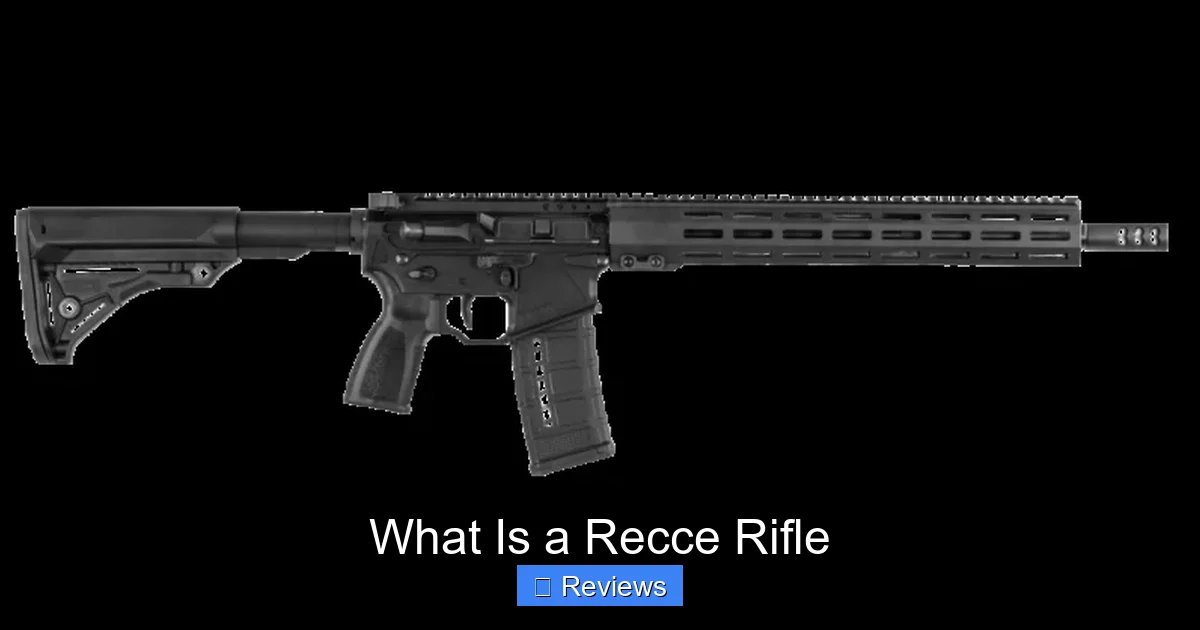
A recce rifle is a highly versatile AR-platform firearm designed for both precision at mid-range and general-purpose utility. It strikes a unique balance between a compact carbine and a dedicated precision rifle, often featuring an 11.5 to 16-inch barrel, quality magnified optics, and robust accessories. Originating from military reconnaissance units, it excels in scenarios requiring accuracy, maneuverability, and adaptability.
Picture this: you’re out in the field, maybe on a hunt, maybe participating in a tactical carbine course, or simply enjoying some precision shooting at the range. You need a rifle that can do a little bit of everything. Something that’s light enough to carry all day, maneuverable enough for tighter spaces, but still accurate enough to make those challenging shots at a couple hundred yards. This isn’t just a pipe dream for rifle enthusiasts; it’s the very essence of what a recce rifle aims to achieve.
The term “recce” itself is short for “reconnaissance,” a military term for scouting or exploring to gain information about an enemy or an area. Just like its namesake, the recce rifle is all about versatility, adaptability, and being able to perform a variety of tasks effectively. It’s not a one-trick pony; instead, it’s designed to be a highly capable general-purpose rifle that excels when you don’t know exactly what challenges lie ahead.
So, what exactly is a recce rifle? It’s a concept, more than a specific model. It represents a philosophy of building an AR-platform rifle that bridges the gap between a compact carbine and a dedicated precision marksman rifle. It’s for the shooter who demands both agility and accuracy, who needs to be fast on their feet but still capable of making those critical, precise shots. Let’s dive deep into the world of the recce rifle and explore what makes it such a compelling choice for so many.
Key Takeaways
- Hybrid Performance: A recce rifle is a jack-of-all-trades, blending the maneuverability of a carbine with the mid-range precision of a designated marksman rifle. It’s designed for versatility.
- Optimal Barrel Length: Typically features an 11.5 to 16-inch barrel, often 14.5 or 16 inches, optimized for a balance of velocity, accuracy, and handling in diverse environments.
- Magnified Optics are Key: High-quality Low Power Variable Optics (LPVOs) or fixed-power magnified scopes are central to the recce concept, providing the ability to engage targets accurately at distance while maintaining situational awareness up close.
- Military Origins, Civilian Adaptation: Born from the needs of special operations units for reconnaissance and light precision work, the recce rifle concept has been widely adopted by civilian shooters for hunting, competition, and general-purpose use.
- Modular and Adaptable: Recce rifles are often built with free-float handguards and equipped with accessories like suppressors, bipods, and weapon lights, enhancing their utility for various tasks.
- Accuracy and Reliability: While not a dedicated long-range precision rifle, a well-built recce rifle is expected to deliver consistent sub-MOA (Minute of Angle) accuracy with quality ammunition, paired with the inherent reliability of the AR platform.
- Personalized Builds: There isn’t one “correct” recce rifle; instead, it’s a concept that encourages customization to suit an individual’s specific needs, preferences, and operational environment.
Quick Answers to Common Questions
What does “recce” stand for?
Recce is short for “reconnaissance,” a military term referring to scouting or exploring to gain information about an area or enemy.
What is the typical barrel length for a recce rifle?
Recce rifles commonly feature barrel lengths between 11.5 and 16 inches, with 14.5-inch and 16-inch barrels being the most popular choices for balancing maneuverability and velocity.
What kind of optic is best for a recce rifle?
Low Power Variable Optics (LPVOs) like 1-6x, 1-8x, or 1-10x are widely considered ideal for recce rifles, offering versatility for both close-quarters and mid-range engagements.
Is a recce rifle primarily for military use?
While originating from military special operations, the recce rifle concept has been widely adopted by civilian shooters for hunting, competitive shooting, and general-purpose use due to its versatility.
Can I build my own recce rifle?
Absolutely! Many enthusiasts build their own recce rifles by selecting high-quality components like match-grade barrels, free-float handguards, and precision optics to suit their specific needs.
📑 Table of Contents
The Origins and Evolution of the Recce Concept
To truly understand the recce rifle, we need to look back at its roots. The concept largely originated within special operations forces (SOF), particularly the U.S. Navy SEALs, in the early 2000s. These elite units found themselves in situations where their standard M4 carbines lacked the necessary precision and range, while their heavier, longer-barreled designated marksman rifles (DMRs) were often too cumbersome for close-quarters reconnaissance and direct action.
Early Influences and Military Needs
The solution was to create something in between. They needed a rifle that could be carried easily during reconnaissance missions, provide accurate observation, and, if necessary, engage targets with precision out to medium ranges (typically 300-600 yards). This led to the development of a rifle platform that combined the best elements of both worlds: a relatively short barrel for maneuverability, but with accuracy enhancements and quality optics to extend its effective range.
These early military recce rifle builds were often highly customized AR-15 variants, featuring match-grade barrels, free-float handguards, and powerful optics. They were tools built for specific, demanding missions where failure was not an option. The rifle’s purpose was to provide the operator with superior situational awareness and the ability to respond effectively to threats at varying distances, without being bogged down by a heavy, long-barreled system.
Transition to Civilian Use
As often happens with successful military innovations, the recce rifle concept eventually trickled down to the civilian market. Shooters, recognizing the inherent versatility and effectiveness of this design, began to adopt and adapt it for their own needs. Whether for competitive shooting (like 3-Gun), hunting, or simply as a highly capable all-around rifle, the recce rifle offered an appealing balance that many enthusiasts were seeking.
Today, the term “recce rifle” is used broadly to describe AR-15 builds that embody this philosophy: a focus on a versatile barrel length, precision-oriented components, and high-quality optics, all while maintaining good ergonomics and adaptability. It’s a testament to the idea that a single rifle can truly be a master of many trades.
Defining the Recce Rifle: Key Characteristics
While there isn’t a strict spec sheet for a recce rifle, several core characteristics define the concept. Think of these as the ingredients that make up this special blend of versatility and precision.

Visual guide about What Is a Recce Rifle
Image source: blogmedia.wideners.com
Barrel Length: The Sweet Spot
Perhaps the most defining characteristic of a recce rifle is its barrel length. Unlike carbines with 10.3 or 10.5-inch barrels, or DMRs that might stretch to 18 or 20 inches, the recce rifle typically sports a barrel between 11.5 and 16 inches. The 14.5-inch and 16-inch lengths are particularly popular. Why this range?
- 14.5-inch barrel: Offers an excellent balance of velocity retention for effective terminal ballistics at mid-range, while still being compact enough for easier movement. Many 14.5-inch barrels are pin-and-welded with a muzzle device to meet the 16-inch legal minimum for non-NFA rifles.
- 16-inch barrel: A common and straightforward choice, as it doesn’t require NFA paperwork or pin-and-welding. It provides slightly better velocity than a 14.5-inch, contributing to improved accuracy and range, without becoming excessively long.
Regardless of the exact length, the barrel is almost always a high-quality, often match-grade, free-floated barrel. This ensures consistent accuracy, which is paramount for the recce concept.
Optics: Precision and Versatility
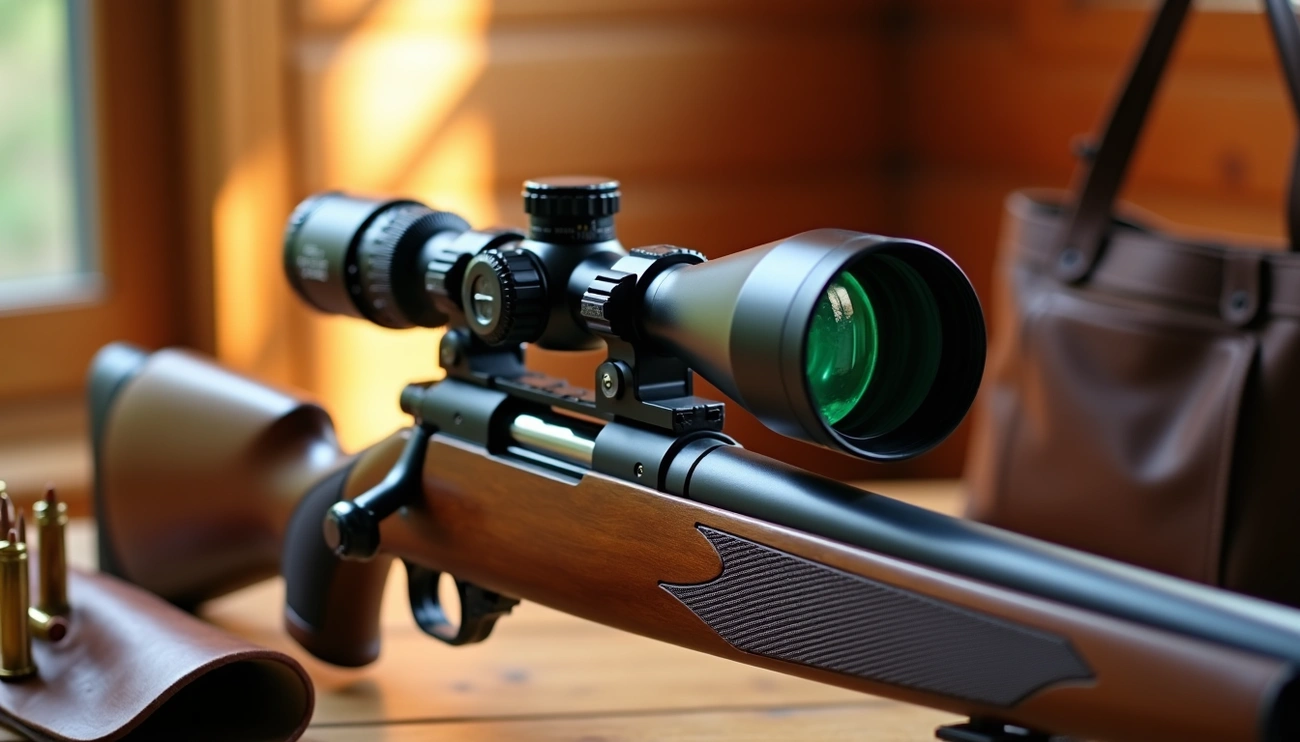
The optic choice on a recce rifle is critical. This is where the rifle truly shines in its dual role of close-to-mid-range engagement and target identification. Low Power Variable Optics (LPVOs) are the go-to choice for many recce builds.
- LPVOs (e.g., 1-6x, 1-8x, 1-10x): These scopes allow for true 1x magnification, similar to a red dot sight, for fast target acquisition up close. Then, with a quick turn of a dial, they can magnify targets out to 6x, 8x, or even 10x, enabling precise shots at extended distances. This versatility is exactly what a recce rifle needs.
- Fixed Power Magnified Optics: Some traditional recce rifle builds might feature a fixed-power magnified optic (like a 2.5x or 3x ACOG) for ruggedness and simplicity, sometimes paired with an offset red dot for close-quarters. However, LPVOs have largely become the preferred option due to their single-unit versatility.
The optic is typically mounted in a robust, high-quality mount that ensures a solid zero and provides proper eye relief for the shooter.
Suppressors: Quiet Confidence
While not strictly mandatory, a suppressor is a very common and highly desirable accessory on a recce rifle. Suppressors reduce sound signature, muzzle flash, and recoil, making the shooting experience more pleasant and tactically advantageous. For reconnaissance missions, reducing noise and flash is often critical, and these benefits translate well to civilian uses like hunting or reducing noise pollution at the range.
Rails and Accessories: Modular Adaptability
A free-float M-LOK or Picatinny rail system is standard. This allows for the attachment of various accessories without affecting barrel harmonics, thus preserving accuracy. Common accessories include:
- Weapon Lights: Essential for target identification in low-light conditions.
- Bipods: For stable shooting positions when precision is paramount, often quick-detach.
- Foregrips/Handstops: For improved ergonomics and recoil control.
- Sling Mounts: For comfortable and efficient rifle carry.
The ability to easily add or remove these tools makes the recce rifle incredibly adaptable to different scenarios.
Ergonomics and Controls
A comfortable and controllable rifle is an accurate rifle. Recce builds often pay attention to ergonomics, including:
- Trigger: A high-quality, crisp trigger (often a single-stage or light two-stage) is crucial for precision shooting.
- Stock and Grip: Choices that fit the shooter’s body mechanics and provide good control.
- Ambidextrous Controls: Sometimes included for greater flexibility.
Why Choose a Recce Rifle? The Advantages
With all these characteristics, what are the real-world benefits of opting for a recce rifle?
Versatility Across Scenarios
This is the recce rifle’s superpower. Imagine you’re on a hunting trip where you might encounter game at close range in thick brush or need to take a longer shot across an open field. A recce rifle, with its LPVO, can handle both. Or consider a dynamic shooting competition: you need to clear a room efficiently and then engage steel targets at 300 yards. The recce rifle is designed for exactly this kind of varied challenge.
Accuracy at Mid-Range
While it won’t replace a dedicated bolt-action sniper rifle for extreme long-range, a well-built recce rifle is more than capable of delivering sub-MOA accuracy out to 500-600 yards with good ammunition and a skilled shooter. This level of precision is ample for most practical applications, making it incredibly effective for a wide range of tasks.
Portability and Maneuverability
Compared to heavier precision rifles, the recce rifle maintains a relatively light weight and a shorter overall length. This makes it easier to carry for extended periods, quicker to bring to bear, and more agile in confined spaces. It’s a rifle you can comfortably move with, which is a significant advantage in dynamic environments.
The “Jack of All Trades” Rifle
If you’re looking for one AR-15 platform rifle that can truly do almost anything well, the recce rifle is it. It can serve as a primary home defense rifle, a capable hunting rifle, a competitive shooting platform, or a reliable general-purpose rifle for anything else you might encounter. It’s built to adapt, just like the missions it was originally designed for.
Building Your Own Recce Rifle: Components and Considerations
One of the most exciting aspects of the recce rifle concept is the freedom it gives you to build a rifle perfectly tailored to your needs. Here’s a breakdown of what to consider if you’re planning your own recce build.
Starting with the Right Receiver Set
You’ll need a good quality upper and lower receiver. While any mil-spec receiver set can work, many builders opt for forged or billet sets from reputable manufacturers known for their tight tolerances. These provide a solid foundation for accuracy.
Barrel Selection: Twist Rate and Profile
As discussed, 14.5-inch or 16-inch barrels are ideal. Look for match-grade barrels, often made from stainless steel or high-quality chrome-moly vanadium steel. Consider the barrel profile – a lighter “pencil” profile saves weight but might heat up faster, while a heavier “government” or “medium contour” profile offers better heat dissipation and sustained accuracy at the cost of added weight. A 1:7 or 1:8 twist rate is versatile for stabilizing a wide range of common 5.56mm/.223 projectiles.
Handguard Choice
A free-float M-LOK or Picatinny handguard is non-negotiable for accuracy. Choose a length that extends close to the muzzle to provide ample space for your support hand and accessories. Reputable brands offer robust and lightweight options.
Optic Mounting Solutions
Once you’ve chosen your LPVO, invest in a high-quality mount. Brands like Geissele, ADM (American Defense Mfg.), Larue Tactical, and Badger Ordnance make excellent one-piece mounts that ensure your optic stays zeroed, even under hard use. Consider the height of the mount to ensure comfortable eye relief and head position.
Trigger Upgrade
The standard mil-spec trigger is often gritty and heavy, which isn’t conducive to precision shooting. An upgraded trigger, such as a Geissele SSA-E, LaRue MBT-2S, or an ACT (Advanced Combat Trigger), can dramatically improve your ability to make precise shots. A crisp, predictable trigger break is paramount for accuracy.
Ammunition Considerations
A recce rifle, being a precision-oriented platform, will benefit greatly from match-grade ammunition. While it will run standard ball ammo reliably, to achieve its full accuracy potential, pairing it with quality 69-grain, 75-grain, or 77-grain OTM (Open Tip Match) rounds will make a noticeable difference.
Recce Rifle vs. Other AR-15 Builds
It’s helpful to understand how the recce rifle fits into the broader spectrum of AR-15 configurations. While there’s overlap, each type has a distinct focus.
Recce vs. SPR (Special Purpose Rifle)
The SPR is arguably the recce’s closest cousin. The SPR, specifically the military’s Mk 12 SPR, was designed for dedicated precision marksman roles. It typically features an 18-inch barrel (often heavier profile), powerful higher-magnification fixed-power optics (like a Leupold Mk4), and a bipod permanently affixed. The SPR prioritizes accuracy and extended range above all else, often making it heavier and less maneuverable than a recce. The recce trades a bit of that extreme range and precision for increased agility and versatility with its shorter barrel and LPVO.
Recce vs. Standard Carbine
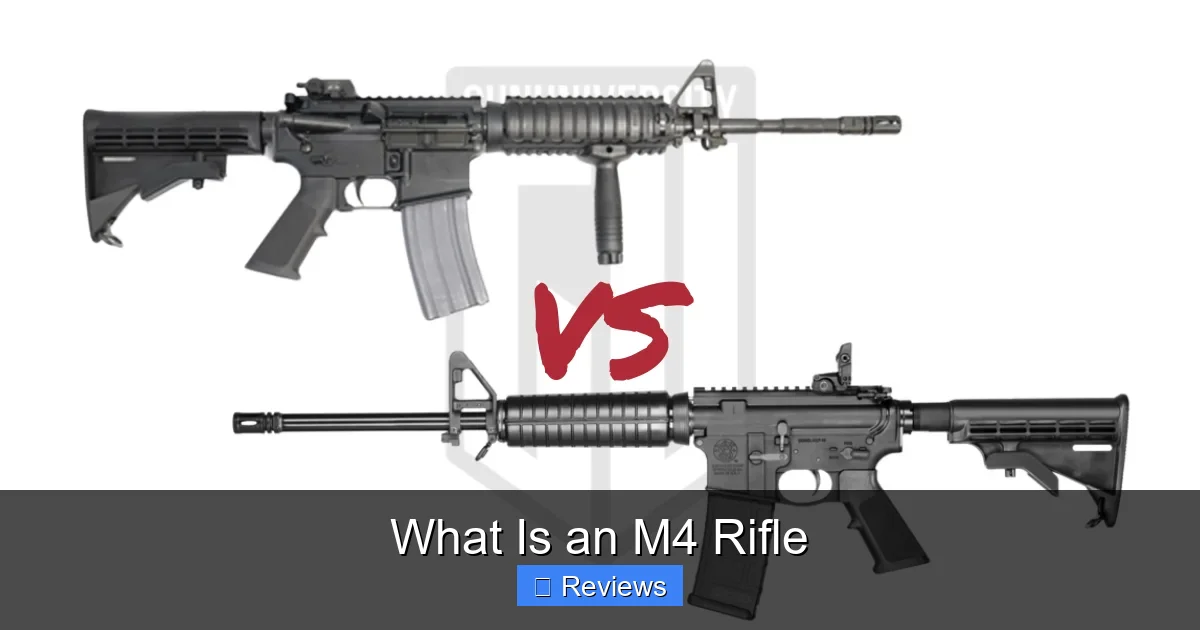
A standard M4-style carbine (14.5-inch or 16-inch barrel) typically focuses on reliability, compact size, and rapid target acquisition with a red dot or holographic sight. While very capable for close-to-mid-range engagements, it lacks the precision focus of a recce rifle due to often having a standard barrel, trigger, and minimal magnification. The recce takes the carbine’s footprint and enhances its accuracy and magnified optical capability.
Recce vs. DMR (Designated Marksman Rifle)
A DMR is typically a heavier, longer-barreled rifle (18-20 inches, sometimes even 22 inches) with a higher-magnification scope, designed for engaging targets at longer ranges (600-800+ yards) with high precision. While the recce offers some precision capability, a DMR is fully dedicated to it, often at the expense of maneuverability. The recce is a lighter, more adaptable tool compared to a dedicated DMR.
Conclusion
The recce rifle is more than just a collection of parts; it’s a philosophy. It embodies the idea of a highly adaptable, accurate, and reliable AR-platform rifle that can truly excel in a wide array of situations. From its military origins born out of the need for versatile reconnaissance tools to its current popularity among civilian enthusiasts, the recce rifle has proven its worth as a “do-it-all” firearm.
Whether you’re building one from scratch or looking to configure an existing AR-15, focusing on a quality barrel, versatile optics, and ergonomic accessories will help you create a rifle that can handle anything you throw at it. The recce rifle isn’t just a trend; it’s a testament to practical design and the enduring appeal of a rifle that can be both precise when it counts and nimble when you need it most. It’s a concept that empowers the shooter to tackle diverse challenges with confidence and capability.
🎥 Related Video: What Is RECCE? #shorts #navyseals #recce
📺 American Outlaw
Frequently Asked Questions
What makes a recce rifle different from a standard AR-15 carbine?
A recce rifle differentiates itself by emphasizing a balance of precision and versatility. It typically features a higher-quality, often match-grade, barrel (usually 14.5-16 inches) and is paired with a magnified optic, often an LPVO, to enable accurate shooting at mid-ranges while maintaining close-quarters capability. A standard AR-15 carbine often prioritizes compactness and rapid target acquisition with a red dot, without the same focus on mid-range precision components.
Are recce rifles considered precision rifles?
Recce rifles are precision-oriented, but they are not dedicated long-range precision rifles like a bolt-action sniper rifle or even a military SPR (Special Purpose Rifle). They are designed for precision at mid-ranges (typically 300-600 yards), aiming for sub-MOA accuracy with good ammunition, while also maintaining the versatility and maneuverability of a carbine.
Do I need a suppressor for a recce rifle?
While not strictly necessary, a suppressor is a very common and highly recommended accessory for a recce rifle. It reduces sound, muzzle flash, and recoil, enhancing the shooter’s experience and providing tactical advantages. Many consider it a core component that aligns with the reconnaissance aspect of the rifle.
What is the ideal ammunition for a recce rifle?
To maximize the precision capabilities of a recce rifle, match-grade ammunition is recommended. This often includes heavier bullets like 69-grain, 75-grain, or 77-grain Open Tip Match (OTM) projectiles. While it will function reliably with standard ball ammunition, premium ammo will unlock its full accuracy potential.
Is a recce rifle good for hunting?
Yes, a recce rifle can be an excellent choice for hunting, particularly for medium-sized game where shots might range from close quarters to several hundred yards. Its combination of maneuverability, sufficient terminal ballistics from its barrel length, and the versatility of a magnified optic makes it highly adaptable to various hunting scenarios.
What’s the best way to start building a recce rifle?
The best way to start building a recce rifle is to define your budget and primary use cases. Begin by selecting a high-quality upper and lower receiver, followed by a match-grade barrel in the 14.5-16 inch range. Then, choose a free-float handguard and invest in a good LPVO optic along with a solid mount. Finally, consider trigger upgrades and any accessories like a light or bipod to complete your custom build.