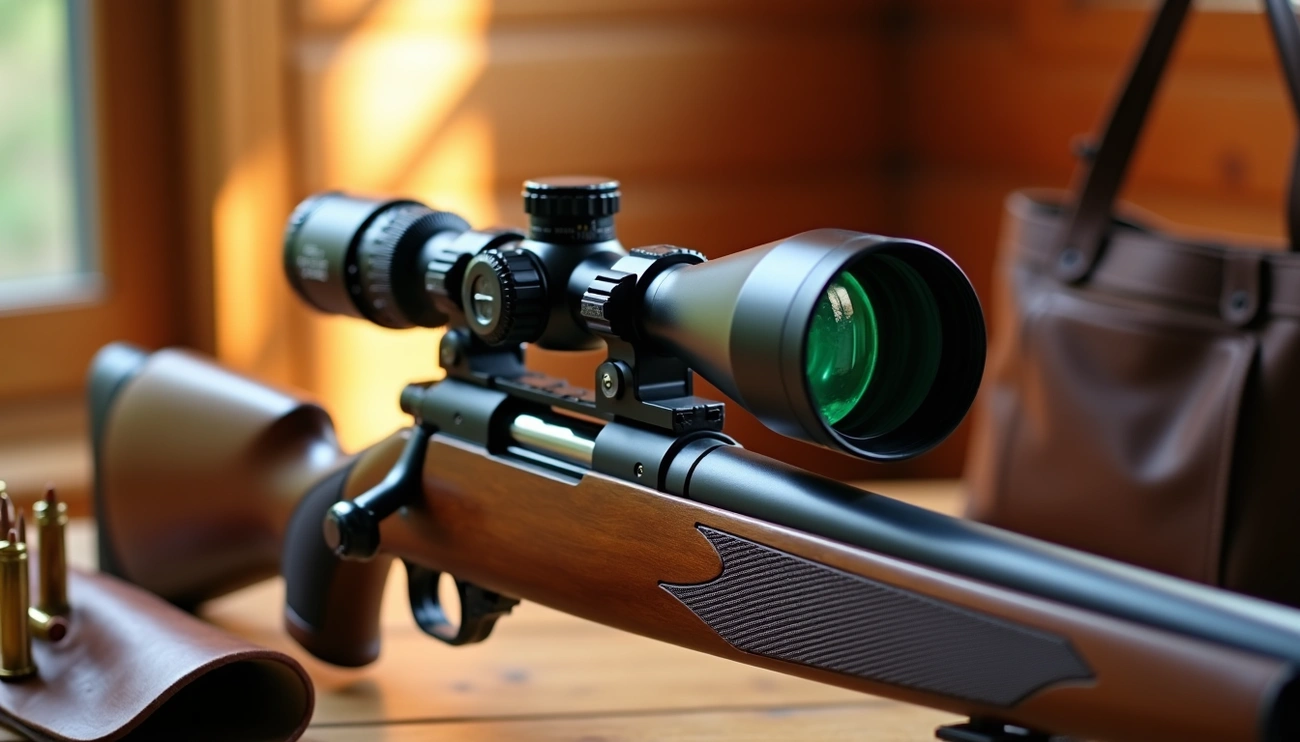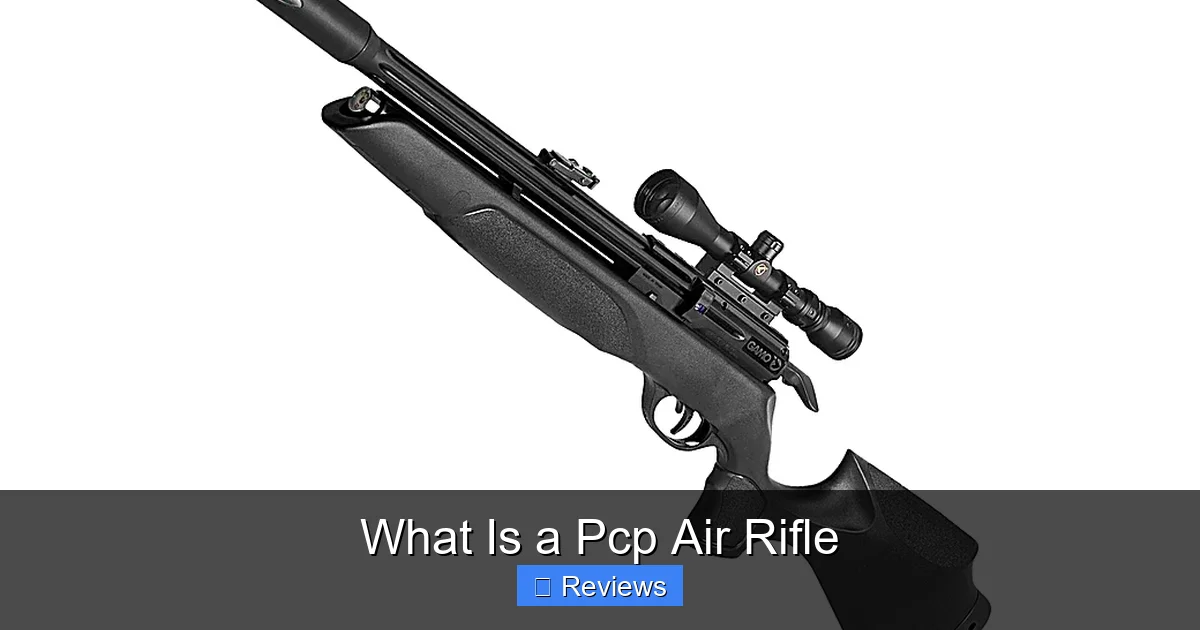
A PCP air rifle is a modern airgun powered by highly compressed air, offering unparalleled accuracy and consistent power for various shooting activities. Unlike spring-piston or CO2 models, they provide multiple shots without needing to re-cock, minimal recoil, and impressive quietness, making them a favorite for both serious enthusiasts and casual plinkers.
Have you ever heard the term “PCP air rifle” and wondered what all the fuss is about? Perhaps you’re an avid shooter looking to upgrade, or maybe you’re just starting your journey into the world of airguns. Whatever your reason, you’ve come to the right place! We’re about to dive deep into what makes a PCP air rifle a truly special piece of equipment, explaining everything in a friendly, easy-to-understand way.
For many years, air rifles were primarily known for their spring-piston or CO2 power sources. These are great, don’t get me wrong, and they’ve introduced countless people to the joys of shooting. But then came the Pre-Charged Pneumatic, or PCP, air rifle, which changed the game entirely. Imagine an airgun that offers astounding accuracy, consistent power shot after shot, and feels incredibly smooth to operate. That’s the promise of a PCP air rifle, and it delivers!
In this comprehensive guide, we’ll break down the technology behind a PCP air rifle, explore its many benefits, discuss how to keep it charged, and help you decide if this high-performance airgun is the perfect addition to your shooting arsenal. Get ready to discover why so many enthusiasts are making the switch and falling in love with the precision and power these remarkable air rifles offer.
Key Takeaways
- PCP Stands for Pre-Charged Pneumatic: These air rifles use an internal reservoir filled with highly compressed air to power each shot, unlike spring-piston or CO2 models.
- Superior Accuracy and Consistency: PCP air rifles are renowned for their exceptional accuracy, shot-to-shot consistency, and flatter trajectories, making them ideal for precision shooting.
- Low Recoil and Quiet Operation: The absence of a large spring or CO2 cartridge movement means significantly reduced recoil and noise compared to other airgun types, enhancing the shooting experience.
- Multiple Shots Per Fill: Depending on the model and caliber, a single air fill can provide dozens to over a hundred consistent shots, making extended shooting sessions more convenient.
- Recharging Methods Vary: Users can recharge their PCP air rifle using a hand pump, a scuba tank, or a dedicated high-pressure compressor, each with its own advantages and considerations.
- Versatile for Many Uses: From target shooting and pest control to small game hunting, PCP air rifles come in various calibers and power levels to suit a wide range of applications.
- Initial Investment and Maintenance: While the upfront cost can be higher, and a bit of maintenance is needed, the performance and enjoyment offered by a PCP air rifle often justify the investment for enthusiasts.
Quick Answers to Common Questions
What does PCP stand for?
PCP stands for Pre-Charged Pneumatic, referring to air rifles that use an internal reservoir filled with highly compressed air as their power source.
Are PCP air rifles louder than spring-piston air rifles?
No, PCP air rifles are generally much quieter than spring-piston air rifles because they lack the loud mechanical “twang” and vibration of a spring-powered system.
Can you hunt with a PCP air rifle?
Yes, PCP air rifles, especially in .22 caliber and above, are very effective for hunting small game and pest control, and certain big-bore models can even be used for medium to large game.
How do you refill a PCP air rifle?
A PCP air rifle can be refilled using a manual hand pump, a large scuba or carbon fiber tank with a fill station, or a dedicated high-pressure electric compressor.
Do PCP air rifles have recoil?
PCP air rifles have very little to no felt recoil, making them comfortable to shoot and easier for maintaining accuracy compared to firearms or even spring-piston air rifles.
📑 Table of Contents
What Exactly Is a PCP Air Rifle? The Heart of the Technology
Let’s get straight to the core question: what is a PCP air rifle? The acronym PCP stands for Pre-Charged Pneumatic. This simply means that these air rifles don’t create their power on demand like a spring-piston gun (which you cock before each shot) or use disposable CO2 cartridges. Instead, a PCP air rifle stores a large volume of highly compressed air in an onboard reservoir.
Think of it like a small, high-pressure air tank built right into the rifle itself. When you take a shot, a precisely metered amount of this compressed air is released behind the pellet, propelling it down the barrel with incredible force and consistency. This fundamental difference in power delivery is what sets PCP air rifles apart and accounts for their superior performance characteristics.
The Power Source: Compressed Air
The magic of a PCP air rifle truly lies in its power source: compressed air. This isn’t just regular air; it’s air squeezed to incredibly high pressures, typically ranging from 2,000 PSI (pounds per square inch) all the way up to 4,500 PSI. To put that into perspective, your car tires might be around 30-40 PSI. This immense pressure is what gives a PCP air rifle its punch.
The air is stored in a cylindrical air reservoir, often located beneath the barrel or integrated into the stock. This reservoir needs to be filled before you can shoot. Once filled, it holds enough air for multiple shots – sometimes dozens, sometimes even over a hundred, depending on the rifle’s design and caliber. This means less downtime between shots and more time enjoying your shooting experience.
How It Works: A Simple Explanation
The operation of a PCP air rifle is quite elegant in its simplicity. Here’s a quick rundown of the basic steps:
- Charging: First, the air reservoir is filled with compressed air using a hand pump, scuba tank, or compressor.
- Loading: A pellet is loaded into the breech, typically by operating a bolt or lever. Many PCP air rifles are multi-shot, using a magazine to feed pellets automatically.
- Trigger Pull: When you pull the trigger, it releases a small hammer inside the rifle.
- Valve Opening: The hammer strikes a valve, briefly opening it.
- Air Release: A controlled burst of high-pressure air rushes from the reservoir into the barrel, behind the pellet.
- Pellet Propulsion: This sudden expansion of air propels the pellet down the barrel and out the muzzle at high velocity.
Because only a small amount of air is released with each shot, the pressure in the reservoir drops gradually. Many high-end PCP air rifles feature a “regulator,” which is a device that ensures the air pressure delivered to the pellet remains constant for a set number of shots, even as the main reservoir pressure drops. This is key to maintaining shot-to-shot consistency and pinpoint accuracy.
Key Components of a PCP Air Rifle
While models vary, most PCP air rifles share these essential components:
- Air Reservoir: The tank that holds the compressed air.
- Filling Port: Where you connect your air source (pump, tank, compressor) to fill the reservoir.
- Pressure Gauge: Shows the current pressure in the air reservoir, so you know when to refill.
- Valve System: Controls the release of air to propel the pellet.
- Hammer: Strikes the valve to open it.
- Trigger Mechanism: Your interface to initiate the shot.
- Barrel: The tube through which the pellet travels. Often rifled for accuracy.
- Stock: The part you hold, made from wood, synthetic materials, or laminates.
- Loading Mechanism: A bolt-action, side-lever, or other system to load pellets, often with a magazine.
Understanding these parts helps you appreciate the engineering behind a PCP air rifle and why it performs so well.
Why Choose a PCP Air Rifle? Unpacking the Benefits
Now that we understand how a PCP air rifle works, let’s explore why so many shooters consider them the pinnacle of airgun technology. The advantages are numerous and often significantly impact the shooting experience.
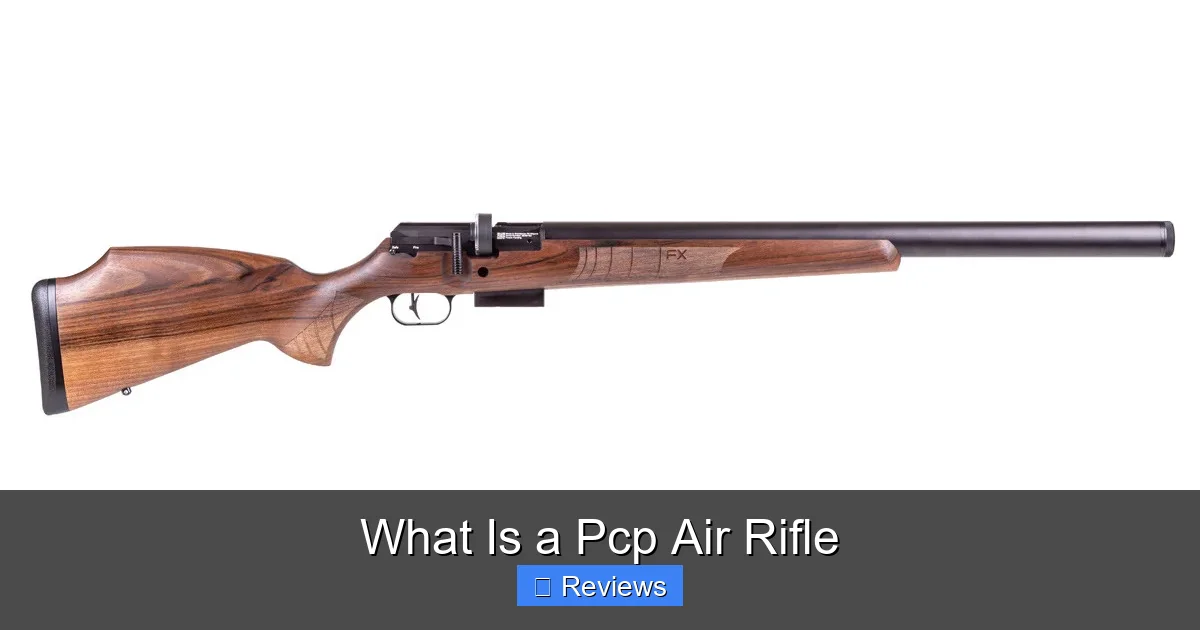
Visual guide about What Is a Pcp Air Rifle
Image source: cdn.airgundepot.com
Unmatched Accuracy
This is arguably the biggest selling point of a PCP air rifle. The way they deliver power is incredibly smooth and consistent. Unlike spring guns, there’s no large spring unwinding, no “twang,” and no piston slamming forward. This means very little internal movement or vibration to disrupt the pellet’s flight. The result? Outstanding accuracy, often rivaling that of quality firearms. Shooters frequently report being able to consistently hit small targets at extended ranges, making a PCP air rifle perfect for precision target shooting or competitive events.
Consistent Power and Velocity
Remember that regulator we mentioned? Many PCP air rifles come equipped with one, which ensures that each shot receives the exact same amount of air pressure, regardless of the overall pressure remaining in the main reservoir (until it drops below the regulated pressure). This translates directly into consistent pellet velocity shot after shot. Consistent velocity means a flatter trajectory and predictable point of impact, which is crucial for accuracy, especially at varying distances. You won’t experience the noticeable power drop-off often seen with CO2 guns as the cartridge gets cold or depletes.
Low Recoil and Noise
Compared to a firearm, all air rifles have low recoil. But a PCP air rifle takes this a step further. Because there are no heavy internal parts moving violently forward (like a spring-piston), the felt recoil is virtually nonexistent. This makes them incredibly comfortable to shoot, reduces shooter fatigue, and allows for faster follow-up shots. Furthermore, PCP air rifles are generally much quieter than spring-piston models, and with the addition of a suppressor (where legal), they can be whisper-quiet, making them ideal for backyard plinking, pest control, or hunting without disturbing others.
Multi-Shot Capability
Most modern PCP air rifles come equipped with magazines that allow for multiple shots without needing to reload a single pellet after each shot. Simply cycle the bolt or lever, and the next pellet is chambered. This feature significantly speeds up shooting sessions, making them more enjoyable and practical for scenarios like hunting or rapid target acquisition. Some magazines hold 8, 10, 12, or even more pellets, providing extended shooting before needing to pause and reload.
Customization and Versatility
The world of PCP air rifles is vast and diverse. You’ll find models in a multitude of calibers, from common .177 and .22 to larger .25, .30, .357, and even big-bore calibers like .45 and .50 for serious hunting. Many PCP air rifles also offer adjustability, allowing you to fine-tune power output, trigger pull, and other settings. They are also incredibly friendly to aftermarket accessories like scopes, bipods, and custom stocks, allowing you to tailor your rifle exactly to your preferences and intended use. Whether you want a compact rifle for field use or a heavy benchrest precision machine, there’s a PCP air rifle for you.
The Practical Side: Charging Your PCP Air Rifle
One of the unique aspects of owning a PCP air rifle is the need to keep its internal reservoir filled with high-pressure air. This might seem like an extra step, but with the right equipment, it’s quite straightforward. Let’s look at the most common methods for charging a PCP air rifle.
Manual Pump: The Workout Option
A hand pump is the most affordable and portable way to fill your PCP air rifle. These are specialized high-pressure pumps designed to reach the necessary pressures (up to 4,500 PSI). They work much like a bicycle pump, but require significantly more effort. You’ll attach the pump to your rifle’s fill port and pump manually until the desired pressure is reached.
Pros: Inexpensive, completely portable, no need for external power.
Cons: Physically demanding (can be a workout!), takes time, generates heat (which needs to dissipate).
Tip: Take breaks while pumping to allow the pump to cool down and prevent moisture buildup. It’s often recommended for smaller air reservoirs or when you only shoot occasionally.
Scuba Tank/Carbon Fiber Tank: The Convenient Choice
Many PCP air rifle owners opt for a dedicated scuba tank or a lighter carbon fiber tank (often called an HPA tank, for High-Pressure Air) to refill their rifles. These tanks come pre-filled with compressed air from a dive shop or specialized airgun supplier. You’ll need a fill station (an adapter with a hose and pressure gauge) to safely transfer air from the large tank to your rifle.
Pros: Fast and easy fills, provides many refills before needing to be refilled itself, very portable once filled.
Cons: Initial cost of the tank and fill station, requires access to a filling station (like a dive shop) for the main tank.
Tip: Always check the fill pressure and ensure your tank’s rating matches or exceeds your rifle’s maximum fill pressure. Carbon fiber tanks are lighter but more expensive.
High-Pressure Compressor: The Ultimate Solution
For the ultimate convenience, a high-pressure air compressor designed specifically for PCP air rifles is the way to go. These electric compressors automatically fill your rifle’s reservoir to the desired pressure. Some can even fill larger scuba tanks.
Pros: Effortless filling, fills rifles and sometimes larger tanks, always available at home.
Cons: Highest initial cost, requires electrical power, can be noisy.
Tip: Invest in a compressor with a good filtration system to ensure clean, dry air, which is crucial for the longevity of your PCP air rifle. Read the manual carefully for proper operation and maintenance.
Safety First: Tips for Charging
Working with high-pressure air demands respect and adherence to safety protocols. Always:
- Read the instructions for your specific rifle, pump, or tank.
- Never exceed your rifle’s maximum fill pressure.
- Use only clean, dry air to prevent rust and damage to internal components.
- Inspect hoses and connections for wear or damage before each fill.
- Charge in a well-ventilated area.
- Keep your face and body away from gauges and fill ports during charging.
Important Considerations Before Buying a PCP Air Rifle
Jumping into the world of PCP air rifles can be exciting, but it’s wise to consider a few key factors before making a purchase. This will ensure you choose a PCP air rifle that perfectly matches your needs and budget.
Budget: Initial Cost and Ongoing Expenses
PCP air rifles generally represent a higher initial investment than traditional spring-piston or CO2 airguns. Prices can range from a few hundred dollars for entry-level models to several thousand for high-end, competition-grade rifles. Remember, you also need to factor in the cost of a charging system (pump, tank, or compressor) if you don’t already have one, as well as a good scope, pellets, and maintenance supplies. While the upfront cost can be higher, the long-term enjoyment and performance often justify it for dedicated shooters.
Intended Use: Target Shooting, Hunting, or Plinking?
Your primary reason for wanting a PCP air rifle will heavily influence your choice.
- Target Shooting: If precision at the range is your goal, look for rifles known for exceptional accuracy, often with adjustable triggers, high-quality barrels, and consistent regulators.
- Small Game Hunting/Pest Control: You’ll need sufficient power and the right caliber for ethical hunting. .22 and .25 calibers are popular choices, offering a good balance of power and pellet weight. A multi-shot magazine can be very useful here.
- Plinking/Recreational Shooting: For casual fun, a more affordable, user-friendly PCP air rifle might be perfect. Simplicity and reliability are key.
Caliber Choices: .177, .22, .25, and Beyond
The caliber you choose for your PCP air rifle is critical.
- .177 Caliber: Offers the fastest velocities and a very flat trajectory. Great for target shooting and pest control where minimal damage is desired. Pellets are generally cheaper.
- .22 Caliber: The most popular and versatile caliber. Offers a good balance of speed, energy, and trajectory. Excellent for hunting small game and target shooting. Wide variety of pellets available.
- .25 Caliber: Provides more knockdown power and energy, making it suitable for larger small game. Trajectory is more arced, requiring more range estimation.
- Big Bore Calibers (.30, .357, .45, .50): These are specialized for hunting medium to large game, requiring significant power and heavier projectiles. They consume more air per shot and generally have fewer shots per fill.
Consider what you’ll be shooting and at what distance when deciding on a caliber.
Shot Count and Air Efficiency
How many shots can you get from a single fill of compressed air? This is the “shot count.” Some PCP air rifles prioritize a high shot count, offering dozens or even hundreds of consistent shots. Others sacrifice some shot count for raw power. Air efficiency also plays a role; a well-designed rifle uses air more effectively. If you’re hunting or plan long shooting sessions away from your air source, a high shot count PCP air rifle will be a significant advantage. If you’re mostly bench shooting near your compressor, it might be less critical.
Regulator vs. Unregulated Systems
As mentioned earlier, a regulator ensures consistent pressure delivery to the pellet, leading to superior shot-to-shot consistency and accuracy.
- Regulated PCP Air Rifle: Provides a “sweet spot” of extremely consistent shots until the reservoir pressure drops below the regulator’s set point. Often preferred for precision shooting and hunting.
- Unregulated PCP Air Rifle: The pressure behind the pellet gradually decreases with each shot. This results in a bell-curve trajectory where shots start strong, become most consistent in the middle of the fill, and then drop off. These can be more affordable and are still very accurate, but require more understanding of the pressure curve to get the best performance.
For most serious shooters, a regulated PCP air rifle is the preferred choice for its ease of use and consistent performance.
Maintaining Your PCP Air Rifle for Peak Performance
Just like any precision tool, a PCP air rifle benefits from regular care and maintenance. Proper upkeep ensures longevity, consistent performance, and safety. Don’t worry, it’s not overly complicated!
Cleaning the Barrel and Action
While air rifles don’t suffer from powder fouling like firearms, barrels still get dirty from lead residue and dust. A clean barrel is essential for accuracy.
- Barrel Cleaning: Use a cleaning rod, appropriate patches, and airgun-specific cleaning solvent. Always clean from the breech end if possible, and avoid over-cleaning. A good rule of thumb is to clean only when accuracy starts to degrade, or after a few hundred shots.
- Action Cleaning: Keep the bolt or loading mechanism clean and lightly lubricated with a silicone-based oil (never petroleum-based, which can damage O-rings). This ensures smooth operation and reliable pellet loading.
O-Ring Care and Replacement
O-rings are small rubber seals crucial to holding in the high-pressure air within your PCP air rifle. They can dry out, crack, or get damaged over time, leading to air leaks.
- Lubrication: Periodically apply a tiny amount of silicone grease (specific for airguns) to O-rings, especially around the fill port and internal moving parts, to keep them supple.
- Inspection: Regularly check visible O-rings for any signs of wear, nicks, or dryness.
- Replacement: If you suspect an air leak or notice a damaged O-ring, replace it with a genuine part from the manufacturer or a reputable supplier. Many rifles come with a spare O-ring kit.
Proper Storage
How you store your PCP air rifle can significantly impact its condition.
- Case or Cabinet: Store your rifle in a padded gun case or a humidity-controlled gun cabinet to protect it from dust, impacts, and moisture.
- Temperature and Humidity: Avoid extreme temperatures and high humidity, which can lead to rust or damage to seals.
- Air Pressure: Many manufacturers recommend storing a PCP air rifle with some air in the reservoir (e.g., around 1,000-1,500 PSI) to keep the O-rings sealed, but never at full pressure for extended periods, and never completely empty, as seals can shrink. Check your specific rifle’s manual.
Regular Inspections
Make it a habit to do a quick visual inspection of your PCP air rifle before and after each use.
- Tightness: Check all screws and fittings to ensure they are snug, especially scope mounts.
- Barrel: Ensure the barrel is clear of obstructions.
- Functionality: Test the safety mechanism and trigger to ensure they operate correctly.
By following these simple maintenance steps, your PCP air rifle will provide years of reliable and accurate shooting enjoyment.
Conclusion
So, what is a PCP air rifle? It’s much more than just an airgun; it’s a precision instrument that has redefined the capabilities of air-powered shooting. With its remarkable accuracy, consistent power, multi-shot capability, and minimal recoil, a PCP air rifle offers an unparalleled shooting experience for enthusiasts across various disciplines.
Whether you’re a seasoned hunter, a competitive target shooter, or simply someone who enjoys the thrill of plinking with pinpoint precision, a PCP air rifle provides a level of performance that’s hard to beat. Yes, there’s an initial investment and a bit of learning involved with charging systems and maintenance, but the rewards in terms of enjoyment, effectiveness, and sheer shooting pleasure are immense.
If you’re looking to elevate your airgun experience and discover what truly modern airgun technology can do, exploring the world of PCP air rifles is a fantastic next step. It’s a journey into accuracy, power, and consistent performance that many shooters find incredibly satisfying. Happy shooting!
🎥 Related Video: पीसीपी एयरगन क्या है? What is PCP AIR GUN ? | PCP AIR GUN SERIES EPISODE – 1
📺 Airsoft Gun India (Airsoftgunindia)
पीसीपी एयरगन क्या है? What is PCP AIR GUN ? | PCP AIR GUN SERIES EPISODE – 1 In this video we will …
Frequently Asked Questions
What is the typical range of a PCP air rifle?
The effective range of a PCP air rifle varies greatly depending on the caliber, power, and shooter skill, but many can achieve highly accurate shots at 50-75 yards, with some high-power models being effective beyond 100 yards for hunting or target shooting.
How long does an air fill last in a PCP air rifle?
The duration of an air fill depends on the rifle’s reservoir size, caliber, power setting, and whether it’s regulated or unregulated. Some rifles might get 20-30 high-power shots, while others can provide over 100 consistent shots on a single fill.
Are PCP air rifles safe?
Yes, PCP air rifles are safe when handled responsibly, following all standard firearm safety rules. It’s crucial to always treat them as if they are loaded and to be aware of the high-pressure air system, never exceeding the rifle’s maximum fill pressure.
What’s the difference between a regulated and unregulated PCP air rifle?
A regulated PCP air rifle uses a mechanism to deliver a consistent amount of air pressure for each shot, resulting in superior shot-to-shot consistency and accuracy. An unregulated rifle’s pressure gradually drops with each shot, leading to a varying velocity curve.
Is a PCP air rifle good for beginners?
While PCP air rifles offer excellent performance, the need for a separate charging system and higher initial cost might make them less ideal for absolute beginners compared to simpler break-barrel models. However, their ease of shooting (low recoil) can be very beginner-friendly once the charging aspect is understood.
Can I leave my PCP air rifle charged for extended periods?
It’s generally recommended to store a PCP air rifle with some air pressure (e.g., 1,000-1,500 PSI) to maintain the integrity of the seals, but never at full pressure for very long periods, and never completely empty. Always consult your specific rifle’s manual for storage recommendations.