A designated marksman rifle (DMR) is a specialized semi-automatic firearm designed to provide precision fire support at extended ranges, typically between 300 to 800 meters. It bridges the operational gap between a standard assault rifle and a dedicated sniper rifle, offering enhanced accuracy and optics to a specific individual within a squad. This versatile weapon empowers the designated marksman to engage high-value targets with greater precision than a standard infantry rifleman, without sacrificing the ability for rapid follow-up shots.
What Is a Designated Marksman Rifle?
Have you ever wondered about those specialized rifles that seem to fit somewhere between a standard military assault rifle and a long-range sniper rifle? They’re not quite an M4, but they’re not a .50 cal precision rifle either. Chances are, you’re thinking about a Designated Marksman Rifle, or DMR. These fascinating firearms play a truly unique and vital role, both in modern military operations and in the world of civilian shooting sports.
Imagine a situation where a standard infantry soldier’s rifle just doesn’t quite cut it. Maybe a target is a bit too far away for reliable hits, or you need to place a shot with greater precision than an everyday service rifle can offer. But you also don’t need the extreme range or slow rate of fire of a dedicated sniper system. This is precisely where the designated marksman rifle shines. It’s a specialized tool for a specialized job, offering a blend of rapid engagement and impressive accuracy that few other platforms can match.
This article will take you on a deep dive into the world of the designated marksman rifle. We’ll explore what defines these rifles, their key characteristics, and how they function in various roles. We’ll look at some famous examples, discuss what goes into building one, and clearly differentiate them from their assault rifle and sniper rifle cousins. So, if you’re ready to understand this crucial niche in firearms, let’s get started!
Key Takeaways
- Bridging the Gap: A designated marksman rifle (DMR) is specifically designed to fill the operational space between a standard infantry assault rifle and a specialized sniper rifle, offering enhanced precision at mid to long ranges.
- Semi-Automatic Operation: Unlike many bolt-action sniper rifles, DMRs are typically semi-automatic. This allows for rapid follow-up shots while still maintaining a high degree of accuracy.
- Enhanced Accuracy: DMRs achieve superior accuracy through features like free-floated barrels, improved triggers, and higher-quality ammunition, making them capable of consistent precision at ranges beyond a standard service rifle.
- Optics are Key: A crucial component of any designated marksman rifle is its optic. These are usually variable-power scopes, offering a balance of wide field-of-view for situational awareness and magnification for precise target engagement.
- Squad Support Role: The primary purpose of a DMR is to provide precision fire support to an infantry squad. This enables the designated marksman to eliminate specific threats, suppress enemy positions, or engage targets beyond the effective range of standard rifles.
- Versatile Applications: While primarily military tools, designated marksman rifles are also used by law enforcement for specific roles and are popular in the civilian shooting world for long-range target shooting and hunting, especially when built on common rifle platforms.
Quick Answers to Common Questions
What is the primary role of a designated marksman rifle?
The primary role of a designated marksman rifle is to provide precision fire support at extended ranges (typically 300-800 meters) to an infantry squad, engaging specific targets with greater accuracy than standard assault rifles.
Is a DMR the same as a sniper rifle?
No, a designated marksman rifle is not the same as a sniper rifle. While both are precision firearms, a DMR is typically semi-automatic and integrated into an infantry squad for mid-to-long range support, whereas a sniper rifle is often bolt-action, designed for extreme long-range precision, and operated by a specialized sniper team.
What caliber ammunition do designated marksman rifles typically use?
Designated marksman rifles often use full-power rifle cartridges like .308 Winchester (7.62x51mm NATO) or 7.62x54R. Some may also use enhanced intermediate cartridges like specialized 5.56x45mm loads or 6.5 Grendel, optimized for accuracy at range.
What type of optic is commonly found on a DMR?
A variable-power scope is commonly found on a designated marksman rifle. These optics allow the marksman to adjust magnification, offering both a wide field-of-view for situational awareness and higher magnification for precise target engagement, typically in ranges like 2.5-10x or 3-9x.
Can civilians own or build a designated marksman rifle?
Yes, civilians can own and build designated marksman rifles. Many are based on readily available AR-10 or AR-15 platforms, allowing enthusiasts to customize them with precision barrels, triggers, and optics for long-range target shooting, hunting, or recreational use, subject to local firearm laws.
📑 Table of Contents
- Defining the Designated Marksman Rifle (DMR)
- Key Characteristics of a Designated Marksman Rifle
- The Role of the Designated Marksman Rifle in Combat and Sport
- Popular DMR Platforms and Examples
- Building or Customizing Your Own Designated Marksman Rifle
- DMR vs. Sniper Rifle vs. Assault Rifle: A Clear Distinction
- Conclusion
Defining the Designated Marksman Rifle (DMR)
At its core, a designated marksman rifle is a weapon designed for precision fire support at extended ranges. Think of it as a rifle that allows an infantryman to consistently hit targets that are beyond the effective reach of a standard issue service rifle, but without the bulk, specialized training, or slow operation associated with a true sniper rifle. It’s a compromise, but a very effective one.
The “designated marksman” part of its name is key. This isn’t just a rifle; it’s a rifle given to a specific individual within an infantry squad or platoon. This individual, the designated marksman, receives extra training in marksmanship, ranging, and target identification. Their job is to provide overwatch, eliminate specific threats like enemy machine gunners or grenadiers, and engage targets with greater precision than their peers. They are not primary snipers, but rather a precision asset integrated directly into the frontline fighting force.
Bridging the Gap: AR vs. Sniper Rifle
To truly grasp what a designated marksman rifle is, it helps to understand its place between two more common rifle types: the assault rifle and the sniper rifle.
An assault rifle, like an AR-15 or AK-47, is designed for rapid, close-to-mid-range engagements. They are typically chambered in intermediate cartridges (like 5.56x45mm or 7.62x39mm), have high capacity magazines, and can fire semi-automatically or sometimes fully-automatically. Their effective range for accurate individual hits is generally up to 300-400 meters.
A sniper rifle, on the other hand, is built for extreme precision at very long ranges, often 800 meters and beyond. These are usually bolt-action for ultimate accuracy, chambered in powerful cartridges (like .308 Win, .300 Win Mag, or .338 Lapua Magnum), and fitted with high-magnification optics. They are slow to reload and less suited for rapid engagement.
The designated marksman rifle slots right in between. It takes the semi-automatic nature and often the magazine capacity of an assault rifle, but enhances its accuracy and effective range to cover that crucial 300-800 meter zone. It’s about putting precise rounds on target faster and more reliably than a standard rifle, without needing a dedicated sniper team.
Key Characteristics of a Designated Marksman Rifle
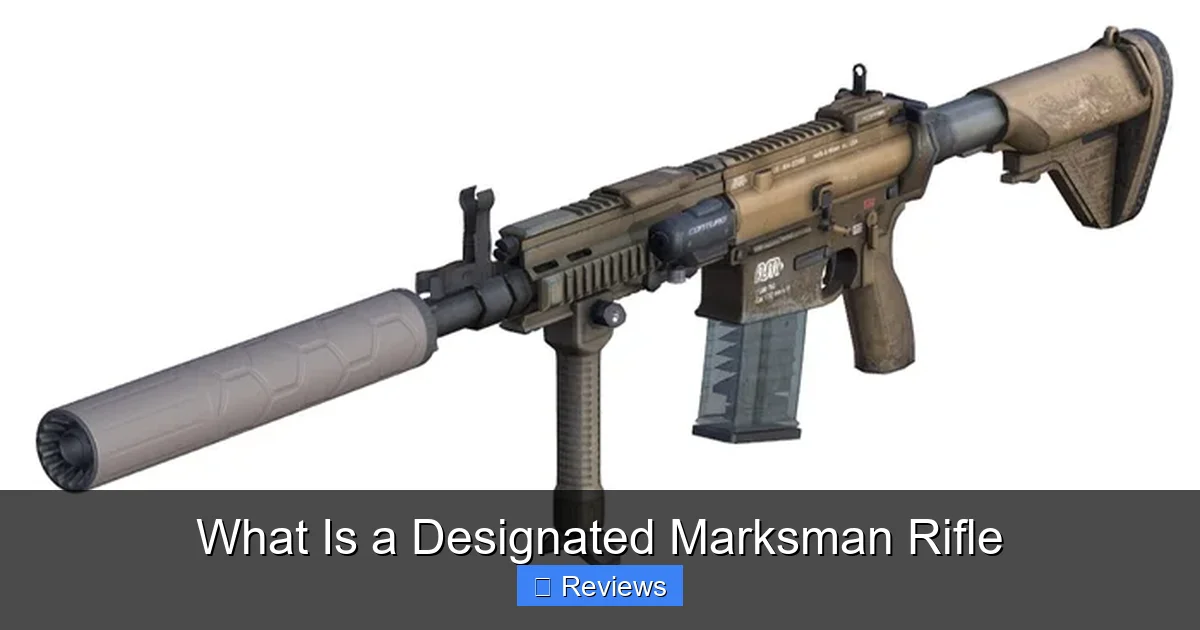
Visual guide about What Is a Designated Marksman Rifle
Image source: slm-assets.secondlife.com
What exactly makes a designated marksman rifle different from other firearms? It’s a combination of specific design choices and features aimed at achieving that sweet spot of accuracy and usability.
Enhanced Accuracy: Precision Barrels
One of the most significant upgrades in a designated marksman rifle is its barrel. Standard service rifle barrels are built for durability and mass production. DMR barrels, however, are typically heavier, made from higher-quality steel, and often “free-floated.” A free-floated barrel means it only touches the receiver and not the handguard. This prevents any pressure or flex from the handguard affecting the barrel’s harmonics, leading to much more consistent accuracy.
Twist rates (how quickly the rifling inside the barrel spins the bullet) are also optimized for heavier, more aerodynamic bullets, which perform better at longer ranges. Lengths vary, but they are often longer than a standard assault rifle barrel, usually between 18 and 24 inches, to maximize velocity and stability.
Optics: The Eyes of the Marksman
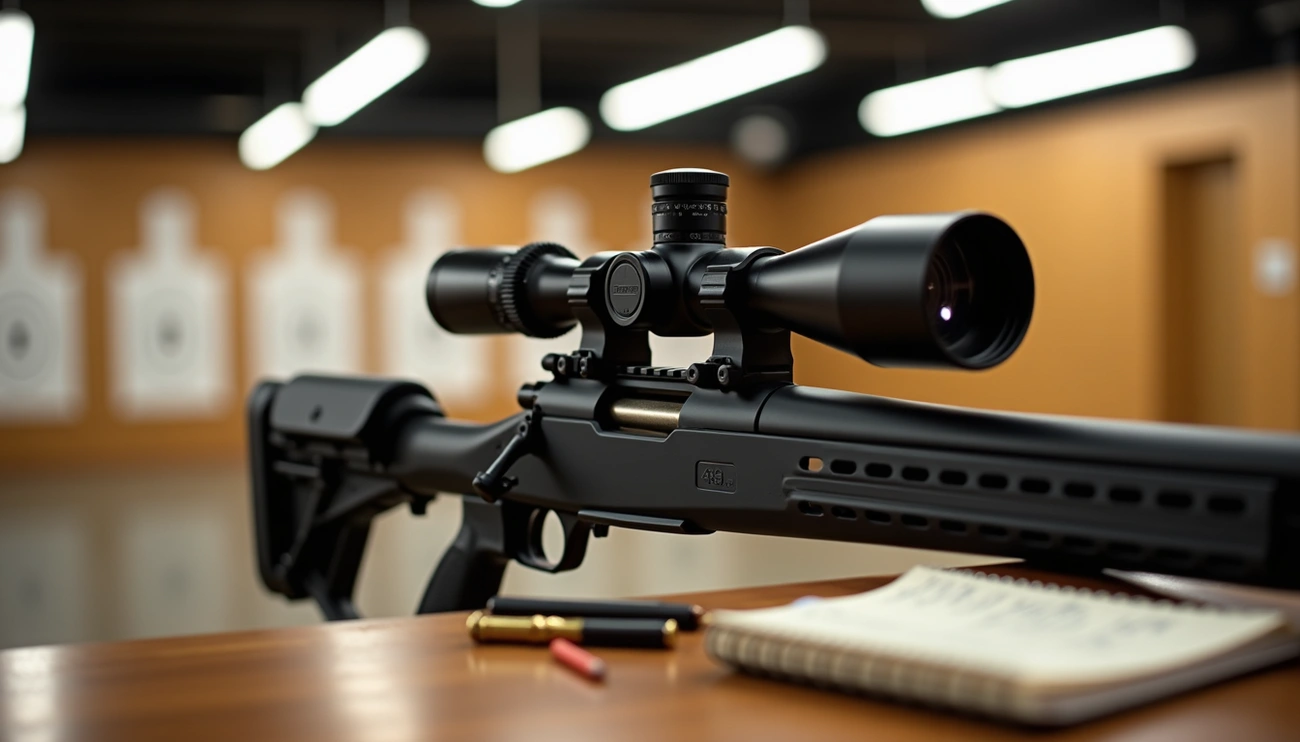
A designated marksman rifle is almost always equipped with a high-quality scope. This isn’t just any scope, though. It’s typically a variable-power optic, meaning the magnification can be adjusted. Common ranges include 2.5-10x, 3-9x, or even 4-16x. This allows the marksman to use a lower magnification for wider situational awareness and rapid target acquisition at closer ranges, and then dial up the magnification for precise shots at a distance.
These optics often feature advanced reticles (the aiming pattern inside the scope) with holdover points for bullet drop compensation or ranging features. They are also rugged, clear, and designed to withstand harsh battlefield conditions.
Ammunition: The Right Round for the Job
Accuracy isn’t just about the rifle; it’s about the ammunition too. Designated marksman rifles often use match-grade or specialized ammunition. While a standard military rifle might use M193 or M855 5.56mm rounds, a DMR might use something like 77-grain OTM (Open Tip Match) 5.56mm or 168-grain/175-grain OTM .308 Winchester ammunition. These bullets are manufactured to tighter tolerances, have more consistent powder charges, and are designed for superior aerodynamic performance, all contributing to better accuracy at range.
Ergonomics and Accessories
While maintaining the semi-automatic nature and often the common operating system of an assault rifle, DMRs often feature ergonomic enhancements. This can include adjustable stocks for better shooter fit, improved pistol grips, and bipods for stable shooting from a prone position or off a rest. A good trigger is also critical for precision, so DMRs often boast crisp, lighter-pull triggers compared to standard service rifles. Sound suppressors can also be added to reduce muzzle flash and noise, which helps with follow-up shots and concealment.
The Role of the Designated Marksman Rifle in Combat and Sport
The designated marksman rifle is a versatile tool, finding its purpose in a variety of environments beyond just military applications.
Military Applications: Squad Support
The original and primary role of the designated marksman rifle is in military service. Within an infantry squad, the designated marksman acts as a force multiplier. They can quickly and accurately neutralize threats that are out of reach for other squad members. This might include:
- Engaging enemy combatants at range: Taking out specific individuals who pose a threat, such as enemy leaders or specialized weapon operators.
- Suppressing enemy positions: Placing accurate fire on an enemy strongpoint to keep their heads down, allowing other squad members to maneuver.
- Providing overwatch: Observing an area and engaging targets of opportunity or supporting the advance of their squad.
- Targeting vital equipment: Disabling enemy communications gear, vehicles, or optics with precision shots.
The designated marksman rifle allows the squad to handle a wider array of threats without having to call in dedicated snipers, which are usually a much rarer, higher-echelon asset.
Law Enforcement: Specialized Needs
In law enforcement, designated marksman rifles are often used by SWAT teams or specialized response units. Their role is similar to military use, but adapted to urban or close-quarters scenarios.
- Hostage situations: The ability to place a precise shot on a threat without endangering hostages.
- Barricaded suspects: Engaging a threat from a safe distance or disabling a vehicle.
- Perimeter security: Providing overwatch and maintaining situational awareness from a distance.
The semi-automatic nature is particularly beneficial here, offering the flexibility for rapid follow-up shots if the situation escalates or multiple threats emerge.
Civilian Use: Competition and Recreation
The principles behind a designated marksman rifle translate perfectly into the civilian shooting world. Enthusiasts often build or buy DMR-style rifles for:
- Long-range target shooting: Competing in precision rifle matches or simply enjoying the challenge of hitting targets at extended distances.
- Hunting: For ethical hunting, where accurate shot placement is paramount at various ranges.
- Tactical training: For individuals who want to train with a versatile precision rifle that mirrors military or law enforcement applications.
Many civilian designated marksman rifles are built on popular AR-10 or AR-15 platforms, making them highly customizable and allowing shooters to leverage a vast aftermarket of parts and accessories.
Popular DMR Platforms and Examples
Over the years, various rifles have been adapted or specifically designed to serve as designated marksman rifles. Here are some notable examples:
AR-10/SR-25 Derivatives
Perhaps the most ubiquitous designated marksman rifle family comes from the AR platform. The Stoner Rifle-25 (SR-25) by Knight’s Armament Company is a prime example. It’s essentially an AR-10 chambered in .308 Winchester (7.62x51mm NATO), optimized for accuracy with a heavy barrel and excellent trigger. Many militaries, including the US, use variants like the M110 SASS (Semi-Automatic Sniper System), which functions as a DMR. Civilian AR-10s built with precision components also fall into this category.
M14/M21/M39 EMR
The venerable M14 rifle, a .308 Winchester battle rifle, has seen extensive service as a designated marksman rifle. Its robust action and powerful cartridge make it a solid choice. The M21 SWS (Sniper Weapon System) was an early adaptation for the US Army, and the M39 Enhanced Marksman Rifle (EMR) saw service with the US Marine Corps, both featuring improved stocks, optics mounts, and barrels for enhanced precision.
H&K G3 Variants (e.g., MSG90, PSG1)
Heckler & Koch, a German firearms manufacturer, also developed designated marksman rifle variants based on their G3 battle rifle. The MSG90 and especially the PSG1 (Precision Sniper Rifle, though often used in a DMR role due to its semi-auto nature and mid-range capabilities) are renowned for their exceptional accuracy, albeit at a very high cost. They are often seen in law enforcement and special operations units.
AK Platform DMRs (e.g., SVD Dragunov)
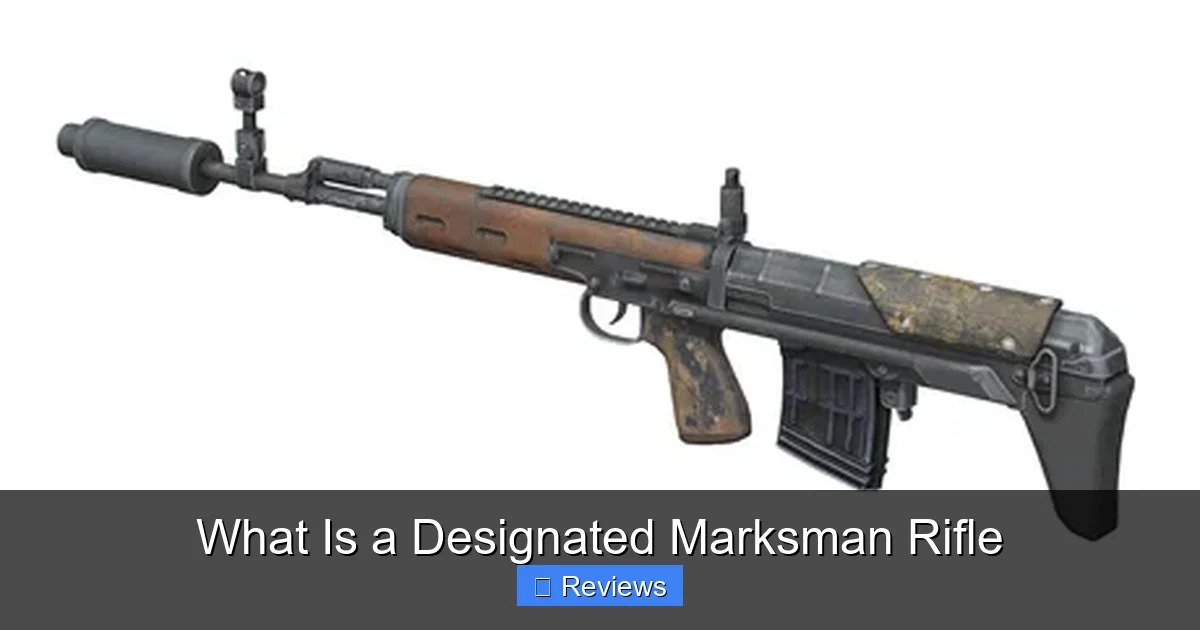
Not all designated marksman rifles are Western designs. The Soviet-designed SVD Dragunov is arguably one of the most iconic DMRs in history. Chambered in 7.62x54R, it’s a semi-automatic rifle specifically designed from the ground up for the designated marksman role, rather than being an adaptation of an existing service rifle. It combines decent accuracy with reliability in harsh conditions and has been widely adopted by numerous countries.
Modern Adaptations (e.g., SCAR-H, FN FAL)
Many modern battle rifles also have DMR configurations. The FN SCAR-H (Heavy) in .308 Winchester can be fitted with a precision barrel and optic to serve as an effective designated marksman rifle. Similarly, the FN FAL, another famous battle rifle, has been adapted by various nations for precision roles. These platforms offer robust performance and can be optimized for precision.
Building or Customizing Your Own Designated Marksman Rifle
For many shooting enthusiasts, the idea of owning or even building a designated marksman rifle is incredibly appealing. It combines the fun of customizing a firearm with the satisfaction of achieving precision at range. Here’s what you might consider if you’re looking to get into the DMR world.
Starting Platform: The Foundation
The most common starting points for a civilian designated marksman rifle build are AR-10 or AR-15 platforms.
- AR-10: If you want to shoot heavier calibers like .308 Winchester or 6.5 Creedmoor, an AR-10 is your go-to. These cartridges offer superior ballistic performance at longer ranges.
- AR-15: For 5.56x45mm (or .223 Wylde for better accuracy with both 5.56 and .223 Rem ammo), a quality AR-15 can be built into a very effective DMR, especially out to 600 yards.
Other platforms like the M1A (civilian M14) or modern modular designs can also serve as excellent foundations, but AR platforms offer the most aftermarket support.
Barrel Selection: The Heart of Accuracy
This is where you’ll make a significant investment. Look for:
- Length: 18-24 inches is common for good velocity without being unwieldy.
- Profile: Heavy or medium-heavy profiles enhance stiffness and reduce heat-induced “walk.”
- Material: Stainless steel is often preferred for precision, but quality chrome-moly vanadium (CMV) barrels can also be very accurate.
- Rifling: Button-rifled or cut-rifled barrels are typically more accurate than hammer-forged for precision applications.
- Chamber: A .223 Wylde chamber is ideal for AR-15 DMRs as it can safely and accurately shoot both .223 Remington and 5.56 NATO ammunition.
- Free-float: Ensure your handguard is free-floated to maximize accuracy.
Trigger Group: Crispness Matters
A gritty, heavy trigger pull can ruin an otherwise perfect shot. Upgrading to a quality aftermarket trigger designed for precision shooting is highly recommended. Look for triggers with a crisp break, minimal overtravel, and a pull weight typically between 2.5 and 4.5 pounds. Two-stage triggers are also popular, offering a take-up stage before a clean break.
Optics and Mounts: Clarity and Consistency
Choose a variable-power scope with clear glass and a reticle that suits your shooting style. Consider features like:
- First Focal Plane (FFP): The reticle scales with magnification, making holdovers accurate at any power.
- Second Focal Plane (SFP): Reticle remains the same size, but holdovers are only accurate at a specific magnification. Usually more affordable.
- Good eye relief: Important for comfortable and consistent shooting.
- Durable mount: A solid, one-piece scope mount is crucial to ensure your optic holds zero.
Ammunition Experimentation: Finding the Sweet Spot
Even with the best components, a rifle will only shoot as accurately as the ammunition it’s fed. You’ll need to experiment with different brands and bullet weights of match-grade ammunition to find what your designated marksman rifle “likes” best. Hand-loading can take this a step further, allowing you to fine-tune powder charges, seating depth, and bullet types for ultimate precision.
DMR vs. Sniper Rifle vs. Assault Rifle: A Clear Distinction
To wrap things up, let’s solidify the differences between these three often-confused rifle categories. Understanding these distinctions is key to appreciating the specific role of the designated marksman rifle.
Assault Rifle: Close to Mid-Range Firepower
- Purpose: Standard infantry weapon for general combat.
- Effective Range: ~0-400 meters for individual accuracy.
- Action: Semi-automatic (and often full-automatic/burst fire capable).
- Caliber: Intermediate cartridges (e.g., 5.56x45mm, 7.62x39mm).
- Optics: Often red dots, holographic sights, or low-power variable optics (LPVOs) for rapid target acquisition.
- Accuracy: “Good enough” for combat, typically 2-4 MOA (Minute of Angle) with standard ammo.
An assault rifle is a workhorse, designed for versatility and high volume of fire in dynamic engagements.
Sniper Rifle: Dedicated Long-Range Precision
- Purpose: Extreme long-range precision engagement of specific targets.
- Effective Range: ~800+ meters (often much further).
- Action: Primarily bolt-action for ultimate consistency, some semi-auto large caliber examples exist.
- Caliber: Powerful, specialized long-range cartridges (e.g., .308 Win, .300 Win Mag, .338 Lapua Mag, .50 BMG).
- Optics: High-magnification, fixed or variable power scopes (e.g., 10-25x, 5-25x) with advanced reticles.
- Accuracy: Sub-MOA (often 0.5 MOA or better) with match-grade ammunition.
A sniper rifle is a specialized tool for maximum accuracy at extreme distances, requiring immense skill and dedicated support.
The DMR Niche: Precision for the Squad
- Purpose: Precision fire support for an infantry squad at extended ranges.
- Effective Range: ~300-800 meters.
- Action: Semi-automatic.
- Caliber: Often full-power rifle cartridges (e.g., .308 Win, 7.62x54R) or enhanced intermediate cartridges (e.g., specialized 5.56mm loads, 6.5 Grendel).
- Optics: Variable-power scopes (e.g., 2.5-10x, 3-9x) balancing field of view and magnification.
- Accuracy: Significantly better than an assault rifle (1-2 MOA is common with match ammo), but not always as refined as a dedicated sniper rifle.
The designated marksman rifle is the agile middle ground, giving a frontline soldier the ability to make precise, impactful shots without sacrificing the quick follow-up shots needed in a fluid combat environment.
Conclusion
The designated marksman rifle is more than just a specific type of firearm; it represents a tactical concept. It’s about empowering a regular infantry squad with enhanced precision, allowing them to effectively engage threats at distances that would be challenging for standard rifles. From the battlefields where it supports soldiers to the shooting ranges where enthusiasts push their skills, the DMR has carved out a vital and respected place.
Whether you’re interested in military history, tactical firearms, or simply the pursuit of accuracy, understanding what a designated marksman rifle is opens up a fascinating world. It’s a testament to the ongoing evolution of firearms design, always striving for that perfect balance of power, precision, and practicality. So the next time you hear “DMR,” you’ll know you’re talking about a truly special weapon designed to hit the mark, every time.
🎥 Related Video: Designated Marksman Rifle (DMR) 5.56?
📺 Warrior Tribe Tactical
Shop My Original Warrior Tribe T-Shirt Designs Here: https://warriortribetactical.square.site/ Shop My Amazon Storefront …
Frequently Asked Questions
What makes a designated marksman rifle more accurate than a standard assault rifle?
A designated marksman rifle achieves superior accuracy through several key features. These include heavier, often free-floated barrels that don’t touch the handguard, enhanced trigger systems for a crisp pull, and optimization for match-grade ammunition. These elements collectively contribute to much tighter shot groups at extended ranges.
Are designated marksman rifles fully automatic?
No, designated marksman rifles are typically semi-automatic. This allows for rapid follow-up shots while maintaining a high degree of precision, a crucial balance for the designated marksman’s role within an infantry squad. Full-automatic fire would significantly reduce accuracy and control.
What is the typical effective range of a designated marksman rifle?
The typical effective range of a designated marksman rifle falls between 300 to 800 meters (approximately 330 to 875 yards). This range allows the designated marksman to engage targets beyond the capabilities of standard infantry rifles but usually not at the extreme distances a dedicated sniper rifle operates at.
How does a designated marksman rifle contribute to an infantry squad?
A designated marksman rifle significantly enhances an infantry squad’s capabilities by providing precision fire support. The designated marksman can quickly neutralize high-value targets like enemy machine gunners or grenadiers, suppress enemy positions, or provide overwatch at distances where standard rifles would be less effective, without needing to call in a specialized sniper team.
What are some famous examples of designated marksman rifles?
Some famous examples of designated marksman rifles include the KAC SR-25/M110 SASS, the M14/M21/M39 EMR, and the iconic Soviet SVD Dragunov. These rifles, or their derivatives, have served in numerous conflicts worldwide, demonstrating the enduring utility of the DMR concept.
Can a standard AR-15 be converted into a designated marksman rifle?
Yes, a standard AR-15 can certainly be converted into a designated marksman rifle. This usually involves replacing the barrel with a heavier, precision-grade free-floated barrel, upgrading the trigger to a match-grade unit, and fitting it with a suitable variable-power optic. These modifications significantly improve the rifle’s accuracy for longer-range engagements.