A centerfire rifle is a type of firearm that uses cartridges with their primer located in the center of the cartridge base. This design allows for significantly more power, reliability, and versatility compared to rimfire cartridges, making centerfire rifles the preferred choice for a wide range of applications from big-game hunting to competitive shooting and self-defense. They are also known for their reloadability and the vast array of calibers available.
Hey there! Have you ever wondered about the difference between various types of rifles? Or perhaps you’ve heard terms like “rimfire” and “centerfire” thrown around and felt a little lost? Well, you’re in the right place! Today, we’re going to dive deep into the world of the centerfire rifle. It’s a term you’ll encounter a lot in the shooting sports and hunting communities, and for good reason.
A centerfire rifle isn’t just a fancy name; it represents a fundamental design choice in ammunition that unlocks incredible power, versatility, and reliability. This type of rifle and its corresponding ammunition are the workhorses of the shooting world, favored by hunters, sport shooters, and even military and law enforcement professionals around the globe. Understanding what a centerfire rifle is will demystify a huge segment of firearms and help you appreciate their capabilities.
So, grab a comfortable seat, and let’s explore everything you need to know about what makes a centerfire rifle so special. We’ll break down how it works, what sets it apart, its many uses, and even offer some friendly advice for anyone considering getting one. By the end of this article, you’ll have a solid grasp of this incredibly important firearm category.
Key Takeaways
- Definition: A centerfire rifle fires ammunition where the primer (the ignition component) is located in the center of the cartridge’s base, distinct from rimfire ammunition.
- Firing Mechanism: When the firing pin strikes the primer, it ignites the propellant (gunpowder) inside the cartridge, forcing the bullet out of the barrel at high velocity.
- Key Advantages: Centerfire rifles offer superior power, greater range, enhanced reliability, and the ability to be reloaded, making them highly versatile for various uses.
- Versatility & Uses: They are the standard for hunting large game, long-range target shooting, competitive sports, and self-defense due to their robust construction and diverse caliber options.
- Rimfire Comparison: Unlike rimfire, which has the primer around the cartridge rim, centerfire cases are stronger, can handle higher pressures, and come in a much wider array of powerful calibers.
- Reloadability: Many centerfire cartridges can be reloaded by replacing the primer, propellant, and bullet, offering cost savings and allowing for customized ammunition.
- Safety and Responsibility: Due to their power, responsible ownership, proper training, and adherence to safety protocols are paramount when handling any centerfire rifle.
Quick Answers to Common Questions
What is the primary difference between centerfire and rimfire ammunition?
The primary difference lies in the primer’s location; centerfire ammunition has the primer in the center of the cartridge base, while rimfire ammunition has the primer compound spun into the rim of the case.
Can you reload centerfire ammunition?
Yes, one of the significant advantages of centerfire ammunition is that the brass cases can typically be reloaded multiple times by replacing the primer, propellant, and bullet, saving costs and allowing customization.
Are centerfire rifles more powerful than rimfire rifles?
Generally, yes. Centerfire rifles and their ammunition are designed to handle much higher pressures and larger propellant charges, resulting in significantly greater power and range compared to rimfire.
What are common uses for a centerfire rifle?
Centerfire rifles are commonly used for hunting medium to large game, long-range target shooting, competitive shooting sports, and self-defense due to their superior power and versatility.
Is a .22LR considered a centerfire rifle?
No, a .22LR (Long Rifle) is a rimfire cartridge, meaning rifles chambered for it are considered rimfire rifles, not centerfire rifles.
📑 Table of Contents
The Core Mechanism: How a Centerfire Rifle Works
At the heart of every centerfire rifle’s operation is its unique ammunition. Unlike its cousin, the rimfire cartridge, the centerfire design places a small, sensitive primer in the very center of the cartridge’s base. This seemingly small detail is what allows for the robust performance and versatility that define the centerfire rifle.
The Anatomy of a Centerfire Cartridge
Let’s break down a typical centerfire cartridge into its key components. Understanding these parts will make the firing process much clearer.
- The Case: This is the brass (or sometimes steel or aluminum) container that holds all the other components together. It’s usually bottle-necked for rifle cartridges to accommodate a specific bullet size while holding a larger volume of propellant.
- The Primer: Located in the exact center of the case’s base, the primer is a small, sensitive cup containing a tiny amount of explosive compound. This is the “ignition switch” for the cartridge.
- The Propellant (Gunpowder): Inside the case, sitting above the primer, is the gunpowder. When ignited, this powder burns rapidly, producing a large volume of hot gases.
- The Bullet: This is the projectile itself, seated securely in the mouth of the case. It’s the part that travels down the barrel and hits the target.
The Firing Pin’s Role
Now, let’s trace the journey from pulling the trigger to the bullet leaving the barrel in a centerfire rifle.
- Trigger Pull: When you pull the trigger, a series of mechanical actions are set into motion inside the rifle.
- Hammer or Striker Release: This action ultimately releases a spring-loaded component, either a hammer or a striker.
- Firing Pin Strike: The hammer or striker drives the firing pin forward with considerable force. The tip of the firing pin then impacts the primer squarely in the center of the cartridge base.
- Primer Ignition: The impact causes the sensitive compound in the primer to detonate. This creates a small, but powerful, flash of flame.
- Propellant Ignition: This flash of flame from the primer travels through a small hole (the flash hole) into the main body of the cartridge, igniting the primary propellant (gunpowder).
- Gas Expansion: As the gunpowder burns, it rapidly produces a large volume of high-pressure gases. These gases have nowhere to go but forward.
- Bullet Propulsion: The expanding gases push with immense force against the base of the bullet. This pressure forces the bullet out of the cartridge case and down the rifle’s barrel.
- Rifling Engagement: As the bullet travels down the barrel, it engages with the rifling – helical grooves cut into the barrel’s interior. The rifling imparts a spin to the bullet, stabilizing it in flight and making it more accurate.
- Bullet Exit: The bullet exits the muzzle of the rifle at high velocity, traveling towards its target.
This entire process happens in a fraction of a second, demonstrating the incredible engineering behind every shot from a centerfire rifle.
Why Centerfire Reigns Supreme: Key Advantages
The centerfire design isn’t just a technical curiosity; it offers a suite of significant advantages that make centerfire rifles the go-to choice for serious shooting applications.
Unmatched Power and Range
This is perhaps the most obvious benefit. Centerfire cartridges are designed to handle much higher pressures than their rimfire counterparts. This means they can contain significantly more propellant, launching heavier bullets at much higher velocities.
- Hunting: For hunters, this translates to the power needed to humanely take down medium to large game, from deer to elk and even dangerous game, at considerable distances.
- Long-Range Shooting: For target shooters, this power means greater effective range and flatter trajectories, allowing for accurate shots at hundreds, or even thousands, of yards.
- Ballistic Performance: The increased velocity and bullet weight also contribute to superior ballistic performance, meaning the bullet retains more energy downrange and is less affected by wind and gravity.
Reloadability and Customization
One of the most practical advantages of a centerfire rifle is the reloadability of its ammunition.
- Cost Savings: Once fired, the brass case of a centerfire cartridge can be resized, decapped, re-primed, filled with new powder, and topped with a new bullet. This “handloading” or “reloading” process can significantly reduce the cost per round compared to buying factory new ammunition.
- Custom Performance: Handloaders can also customize their ammunition to achieve specific performance goals. This might include fine-tuning bullet weight, powder charge, and seating depth to create ultra-accurate loads for a specific rifle, or developing specialized loads for particular hunting scenarios. This level of customization is largely impossible with rimfire ammunition.
Reliability and Durability
Centerfire cases are inherently more robust. The thick brass case and centralized primer design stand up better to repeated firing and adverse conditions.
- Consistent Ignition: The centralized primer ensures a consistent and powerful strike from the firing pin, leading to reliable ignition shot after shot.
- Case Strength: The thicker brass of centerfire cases can withstand higher internal pressures, reducing the risk of case ruptures, which is a critical safety factor for powerful cartridges.
- Longevity: A well-maintained centerfire rifle and quality centerfire ammunition are built to last, providing years of dependable service.
Caliber Versatility
The world of centerfire rifle calibers is vast and incredibly diverse. From small, fast varmint rounds to heavy-hitting big-game cartridges, there’s a centerfire option for virtually every shooting purpose imaginable. This versatility is a direct result of the design’s ability to handle varying levels of pressure and propellant volumes.
Centerfire vs. Rimfire: A Clear Distinction
To truly understand the centerfire rifle, it’s helpful to compare it directly to its counterpart: the rimfire rifle. While both types of firearms are incredibly popular, they serve different purposes due to fundamental differences in their ammunition design.
Where the Primer Sits
The most significant difference, as you might guess from their names, lies in the primer’s location.
- Centerfire: The primer is a separate component pressed into the center of the cartridge’s base. The firing pin strikes this central primer directly.
- Rimfire: The primer compound is spun into the hollow rim of the cartridge case itself. When the firing pin strikes the rim, it crushes the rim, detonating the primer compound inside.
Performance Differences
This design distinction leads to significant performance variations:
- Power: Centerfire ammunition can generate vastly more power and pressure than rimfire. Rimfire cartridges are typically smaller and use less propellant, making them suitable for lighter tasks.
- Caliber Range: Rimfire calibers are limited, with the .22 Long Rifle being by far the most common. Centerfire, on the other hand, boasts an enormous range of calibers, from .17 Hornet to .50 BMG.
- Accuracy: While high-quality rimfire rifles can be incredibly accurate at shorter ranges, centerfire rifles offer superior accuracy at extended distances due to their power, bullet design, and the ability to custom-load ammunition.
- Cost: Generally, rimfire ammunition is much cheaper to produce and purchase than centerfire ammunition, making it ideal for high-volume practice and casual plinking.
- Reloadability: Rimfire cases are typically non-reloadable because the act of firing deforms the rim, making it impossible to insert a new primer. Centerfire cases, as discussed, are often reloadable.
Choosing the Right One for You
Understanding these differences helps you choose the right tool for the job:
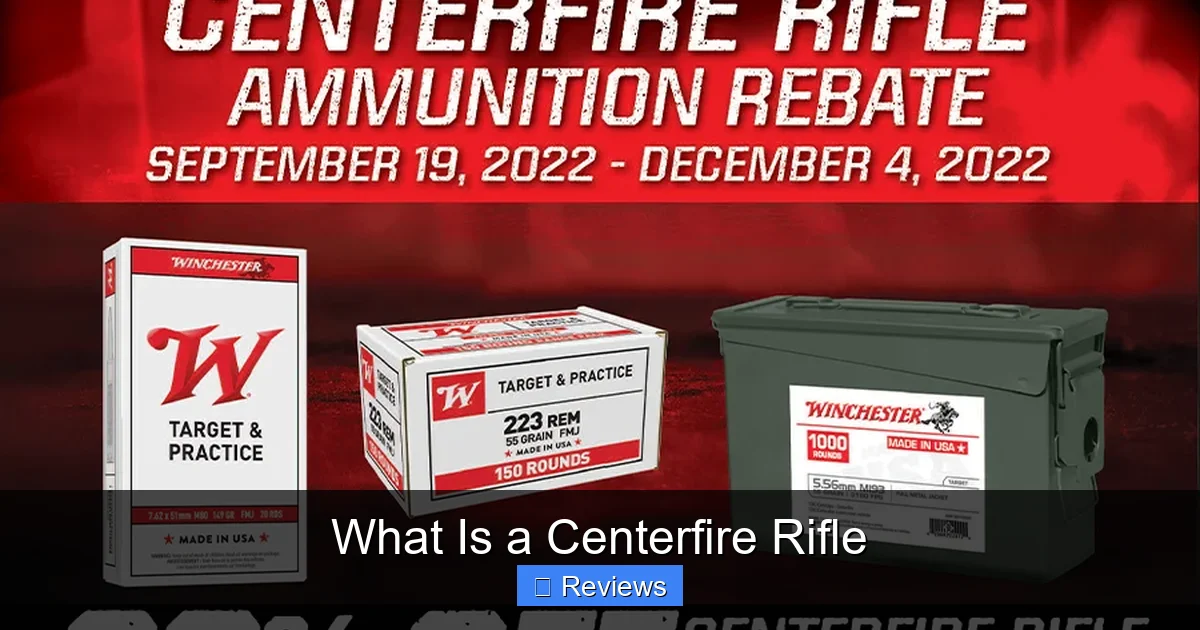
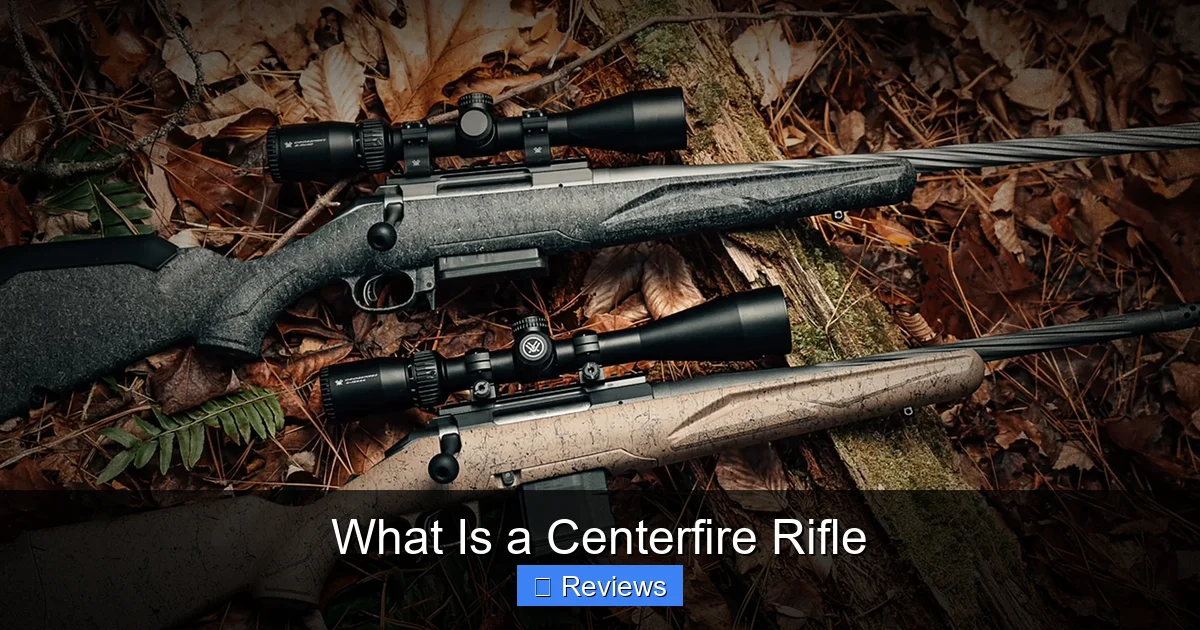
Visual guide about What Is a Centerfire Rifle
Image source: b2777740.smushcdn.com
- Rimfire Rifles are great for: Beginner shooters, inexpensive practice, small game hunting (squirrels, rabbits), pest control, and casual plinking. The low recoil and report make them very approachable.
- Centerfire Rifles are essential for: Medium to large game hunting, long-range target shooting, competitive shooting, self-defense, and situations requiring significant power and range.
Both types of rifles have their place, but when power, range, and versatility are paramount, the centerfire rifle is the undisputed champion.
Common Uses and Popular Calibers
The versatility of the centerfire rifle means it’s employed in a wide array of activities. Let’s look at some of its primary uses and some of the popular calibers that facilitate them.
Hunting Applications
Hunting is perhaps the most traditional and widespread use for a centerfire rifle.
- Big Game: For hunting deer, elk, moose, and bear, a centerfire rifle is indispensable. Calibers like the .30-06 Springfield, .308 Winchester, 7mm Remington Magnum, and the increasingly popular 6.5 Creedmoor are staples in this category, offering the power and accuracy needed for ethical kills.
- Varmint Hunting: Smaller, faster centerfire calibers like the .223 Remington (5.56x45mm NATO), .22-250 Remington, and .204 Ruger are perfect for taking down small predators or pests like coyotes and groundhogs at longer ranges.
Target Shooting and Competition
From local shooting ranges to prestigious national competitions, the centerfire rifle excels at precision and long-range accuracy.
- Precision Rifle Series (PRS): Competitors often use high-precision bolt-action centerfire rifles chambered in cartridges like 6.5 Creedmoor, .308 Winchester, or specialized rounds like 6mm Creedmoor to hit small targets at extreme distances.
- Benchrest Shooting: This discipline focuses on ultimate accuracy, with highly specialized centerfire rifles and handloaded ammunition creating incredibly tight groups at various ranges.
- Service Rifle Competition: Rifles like the AR-15 platform, chambered in .223 Remington / 5.56x45mm, are used in competitions designed to simulate military marksmanship.
Self-Defense and Home Protection
While handguns are more common for concealed carry, a centerfire rifle can be a highly effective tool for home defense or in situations where greater range and stopping power are required.
- AR-15 Style Rifles: Often chambered in .223 Remington / 5.56x45mm, these semi-automatic centerfire rifles are popular for their reliability, modularity, and ease of use, making them a common choice for personal defense.
- Shotguns vs. Rifles: While shotguns are also popular for home defense, a centerfire rifle offers superior range and often better control for specific defensive scenarios, especially in rural settings or larger properties.
Choosing Your First Centerfire Rifle: Tips for Beginners
If you’re thinking about getting your first centerfire rifle, it can feel a bit overwhelming with all the options out there. But don’t worry, here are some friendly tips to guide you.
Consider Your Purpose
Before you even think about calibers or actions, ask yourself: “What do I want to do with this rifle?”
- Hunting? What kind of game? Small varmints or big deer? This will heavily influence your caliber choice.
- Target Shooting? Casual plinking, competitive shooting, or long-range precision?
- Home Defense?
Your primary purpose will narrow down your options considerably for a centerfire rifle.
Caliber Selection Matters
This is one of the most critical decisions.
- Recoil: Bigger, more powerful calibers often mean more recoil. For a first centerfire rifle, consider something with manageable recoil like a .223 Remington (for varmints/target) or a .308 Winchester (for deer/general purpose). While powerful, a .308 offers a good balance of effective range and manageable recoil for many new shooters.
- Ammunition Cost & Availability: Popular calibers like .223/5.56 and .308 are widely available and often more affordable. Less common calibers can be harder to find and more expensive.
- Local Laws: Always be aware of any local or state restrictions on specific calibers or rifle types.
Rifle Action Types
The “action” refers to how the rifle loads, fires, and ejects cartridges.
- Bolt-Action: Known for their accuracy, reliability, and simplicity. You manually cycle a bolt to load a new round. Great for hunting and precision shooting. Examples: Remington 700, Ruger American, Savage 110.
- Semi-Automatic: Fires one shot per trigger pull and automatically loads the next round. Faster follow-up shots. Examples: AR-15 platforms (various manufacturers), Ruger Mini-14. Often used for sport, defense, and some hunting.
- Lever-Action: Classic “Old West” design, where you cycle a lever to load. Popular for brush hunting and a nostalgic shooting experience. Examples: Marlin 336, Winchester 94.
For a beginner, a bolt-action centerfire rifle is often recommended as a great starting point due to its simplicity and focus on deliberate, accurate shots.
Essential Accessories and Safety
Don’t forget the other bits and bobs!
- Optics: A good scope can transform your centerfire rifle’s accuracy. Research what’s best for your intended use (magnification, reticle type).
- Cleaning Kit: Essential for maintaining your rifle’s performance and longevity.
- Safe Storage: Always store your centerfire rifle securely, unloaded, and separate from ammunition. A gun safe is a wise investment.
- Training: Take a safety course! Learn proper handling, shooting fundamentals, and range etiquette. This is paramount for any firearm owner.
Maintenance and Care for Your Centerfire Rifle
Owning a centerfire rifle comes with the responsibility of proper maintenance. A well-cared-for rifle is a safe, reliable, and accurate rifle.
Regular Cleaning Routine
Cleaning your centerfire rifle isn’t just about keeping it shiny; it’s about preserving its function and accuracy.
- After Every Use: At a minimum, wipe down the exterior, clean the bore, and remove any carbon buildup from the bolt and chamber. This prevents corrosion and ensures smooth operation.
- Deep Clean: Periodically, depending on how much you shoot, a more thorough cleaning of all components, including disassembling the bolt, might be necessary.
- Lubrication: Always apply appropriate gun oil or lubricant to moving parts after cleaning to prevent wear and ensure smooth cycling.
A good cleaning kit with a bore snake or cleaning rod, brushes, patches, and quality solvents and oils is a must-have for any centerfire rifle owner.
Proper Storage
How you store your centerfire rifle is critical for safety and longevity.
- Secure Location: Always store your rifle unloaded, in a secure gun safe or cabinet, inaccessible to unauthorized individuals, especially children.
- Ammunition Storage: Store ammunition separately from the firearm.
- Environment: Keep your rifle in a cool, dry place to prevent rust. Consider using desiccants or a dehumidifier in your gun safe if you live in a humid climate.
Ammunition Handling
Safe handling of your centerfire ammunition is just as important as handling the rifle itself.
- Correct Caliber: Always double-check that you are using the correct caliber ammunition for your specific centerfire rifle. Using the wrong ammunition can be incredibly dangerous and cause catastrophic damage.
- Storage: Store ammunition in its original packaging in a cool, dry place. Avoid extreme temperature fluctuations.
- Inspection: Before loading, quickly inspect each cartridge for any signs of damage, corrosion, or defects.
Following these maintenance and care tips will ensure your centerfire rifle remains a safe, reliable, and enjoyable tool for years to come.
And there you have it! From the intricate dance of the firing pin and primer to the diverse applications in hunting and sport, the centerfire rifle stands as a testament to effective firearm design. It’s a category defined by power, precision, and unparalleled versatility, setting it apart as the workhorse of the shooting world.
Whether you’re a seasoned shooter or just starting your journey, understanding what a centerfire rifle is opens up a world of possibilities. Remember, with great power comes great responsibility. Always prioritize safety, seek proper training, and enjoy the incredible capabilities that a centerfire rifle brings to the table. Happy shooting!
🎥 Related Video: Centerfire vs Rimfire – The REAL Difference
📺 Ron Spomer Outdoors
Centerfire vs Rimfire – The REAL Difference Subscribe to my channel: http://bit.ly/RonSpomerOutdoorsSubscribe Affiliate Links: …
Frequently Asked Questions
What makes a centerfire rifle “centerfire”?
A centerfire rifle is “centerfire” because of the design of its ammunition. The small, sensitive primer, which ignites the gunpowder, is located in the exact center of the base of the cartridge case, allowing the firing pin to strike it directly.
Are centerfire rifles suitable for beginners?
Yes, centerfire rifles can be suitable for beginners, especially when starting with a manageable caliber like .223 Remington or .308 Winchester, and with proper instruction. Bolt-action models are often recommended for their simplicity and focus on fundamental marksmanship.
What are some popular centerfire rifle calibers?
Some of the most popular centerfire rifle calibers include .223 Remington (and 5.56x45mm NATO), .308 Winchester, .30-06 Springfield, 6.5 Creedmoor, and 7mm Remington Magnum, each suited for different applications from varmint hunting to large game and long-range shooting.
How does a centerfire rifle handle recoil compared to a rimfire?
Centerfire rifles typically produce significantly more recoil than rimfire rifles because they use larger charges of gunpowder and heavier bullets, generating much more energy. The amount of recoil varies greatly between different centerfire calibers.
Can centerfire rifles be used for self-defense?
Yes, centerfire rifles are effective for self-defense and home protection, particularly semi-automatic models like the AR-15 platform. Their high capacity, effective range, and stopping power make them a viable option, though training and responsible use are crucial.
What kind of maintenance does a centerfire rifle require?
A centerfire rifle requires regular cleaning of the bore, chamber, and moving parts after each use to prevent corrosion and maintain accuracy. Proper lubrication of moving components and secure, dry storage are also essential for its longevity and reliable function.