A bullpup rifle is a distinctive firearm design where the action (bolt, chamber, and magazine) is located behind the trigger group. This innovative configuration allows for a significantly shorter overall length while retaining a standard-length barrel, leading to enhanced maneuverability and often a more balanced feel. While offering advantages in compactness and ballistics, bullpups also present unique ergonomic and operational considerations for shooters.
Ever walked into a gun store or scrolled through firearm forums and seen a rifle that just looked… different? Maybe it seemed too short for its barrel, or the magazine was tucked in an unusual spot near the stock? Chances are, you were looking at a bullpup rifle. These firearms stand out in a crowd, not just for their distinctive looks, but for a revolutionary design philosophy that challenges centuries of conventional rifle architecture.
For many shooters accustomed to the classic layout of an AR-15 or a traditional hunting rifle, the bullpup design can seem a bit alien. But don’t let its unconventional appearance fool you. The bullpup configuration isn’t just a stylistic choice; it’s a clever engineering solution aimed at solving some very practical problems. It’s about getting more performance in a smaller, more manageable package. Let’s dive deep into what makes a bullpup rifle tick, why it exists, and whether one might be the right choice for your arsenal.
Key Takeaways
- Unique Design: A bullpup rifle positions its firing action and magazine behind the trigger, dramatically shortening the firearm’s overall length without sacrificing barrel length.
- Enhanced Maneuverability: Their compact size makes bullpup rifles exceptionally agile, ideal for close-quarters environments, vehicle operations, and situations where space is limited.
- Retained Ballistics: Despite being shorter than traditional rifles, bullpups typically maintain full-length barrels, ensuring optimal bullet velocity and accuracy, unlike carbine versions of standard rifles.
- Ergonomic Learning Curve: Shooters often need to adapt to a bullpup’s different balance, trigger characteristics (due to the linkage system), and magazine change procedures, which can differ from conventional rifles.
- Ambidextrous Challenges: Ejection port location can be a concern for left-handed shooters, though many modern bullpup rifles offer ambidextrous ejection or easy conversion kits.
- Popularity & Diversity: Bullpup rifles are used globally by military forces and are increasingly popular in the civilian market, with various models like the Tavor X95, Steyr AUG, and Kel-Tec RDB offering distinct features.
- Consider Before Buying: It’s crucial to physically handle and, if possible, shoot a bullpup rifle before purchase to assess its ergonomics, trigger feel, and suitability for your intended use.
Quick Answers to Common Questions
What is the main benefit of a bullpup rifle?
The main benefit is its exceptional compactness. By placing the action behind the trigger, a bullpup rifle can achieve the overall length of a carbine while retaining the ballistic performance of a full-length rifle barrel.
Are bullpup rifles less accurate than conventional rifles?
Not inherently. While some older bullpups had trigger linkage systems that could affect accuracy, modern bullpup rifles are capable of excellent accuracy, often comparable to conventional rifles with similar barrel lengths.
Are bullpup rifles safe for left-handed shooters?
Many modern bullpup rifles are designed with ambidextrous features, such as configurable ejection ports (left or right), forward ejection, or downward ejection, making them safe and comfortable for left-handed shooters. Always check the specific model.
What is the typical trigger pull like on a bullpup rifle?
Due to the mechanical linkage required between the trigger and the action, bullpup triggers can sometimes be heavier or have a longer take-up compared to direct-action rifle triggers. However, many modern designs have significantly improved trigger characteristics, and aftermarket upgrades are often available.
Why is the magazine located in the rear on a bullpup?
The magazine is located in the rear as part of the overall design to move the action behind the trigger. This allows the receiver and barrel to extend further back into the stock area, effectively shortening the entire rifle while maximizing barrel length.
📑 Table of Contents
What Exactly Makes a Rifle a “Bullpup”?
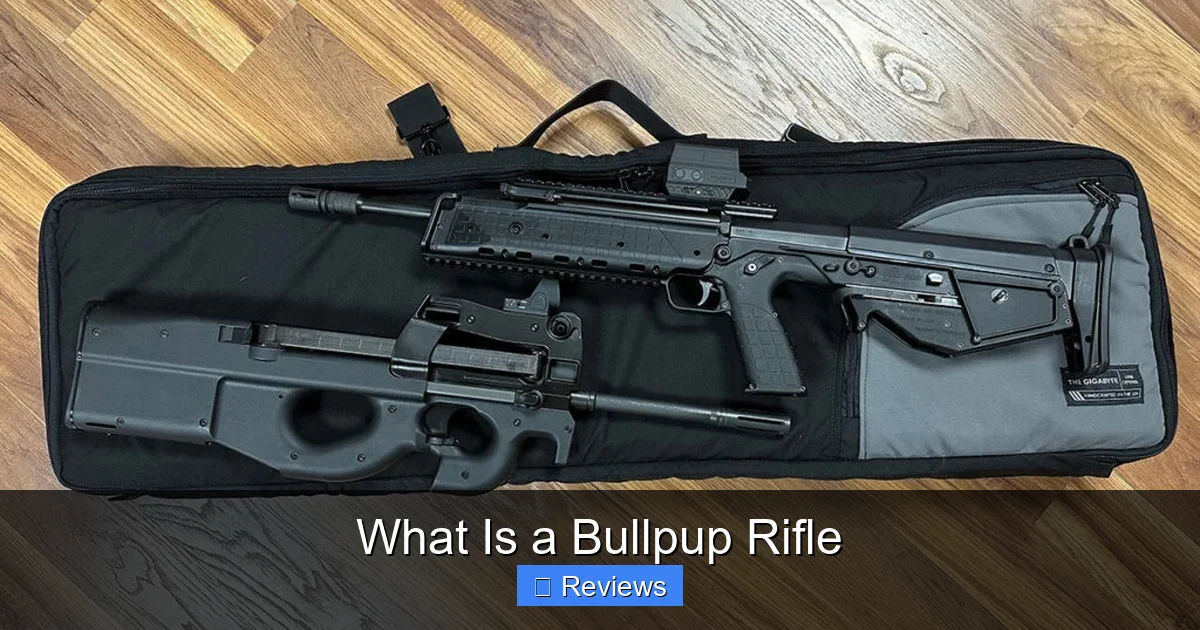
At its heart, the definition of a bullpup rifle is surprisingly simple, yet profoundly impactful. The distinguishing feature is the placement of the firing action – which includes the bolt, chamber, and often the magazine – behind the trigger group. Think about a traditional rifle: the trigger is forward, the magazine is usually directly in front of or below the trigger guard, and then the action and buttstock extend further back. With a bullpup, this order is essentially reversed or compacted.
The Core Design Principle: Action Behind the Trigger
Imagine holding a standard rifle. Your dominant hand is on the pistol grip, your trigger finger on the trigger. Everything from the chamber where the bullet is loaded, through the bolt mechanism that cycles the rounds, to the magazine feeding new cartridges, is usually located forward of your trigger hand. Now, picture that entire assembly — the heart of the rifle — shifted rearward, so it sits *inside* what would normally be the buttstock. That’s the bullpup principle.
This re-arrangement is what allows for the magic of the bullpup design. By moving the heaviest part of the rifle (the action and often the magazine) closer to the shooter’s body and behind the primary grip, the overall length of the firearm shrinks dramatically. Yet, crucially, the barrel length remains unaffected. This means you get the ballistic performance of a full-length rifle barrel in a package that’s often as compact as a carbine.
How it Differs from Conventional Rifles
Let’s do a quick comparison. Take a standard AR-15 with a 16-inch barrel. Its overall length might be around 32-36 inches, depending on the stock. Now, consider a popular bullpup rifle like the IWI Tavor X95, also with a 16.5-inch barrel. Its overall length is just 26.1 inches! That’s a huge difference in footprint for essentially the same barrel length and ballistic performance. This compactness is the primary driver behind the bullpup concept.
Conventional rifles often have a longer sight radius and a more traditional balance point forward of the trigger. Bullpups, by contrast, tend to have their weight shifted rearward, which can feel different but often results in a very natural point of balance right at the pistol grip. This can make them feel lighter and quicker to maneuver, even if their actual weight is similar to a conventional rifle.
Historical Context: Not as New as You Think
While bullpups often feel futuristic, the concept isn’t brand new. Early prototypes date back to the early 20th century, with significant developments emerging post-WWII. The British EM-2 rifle, developed in the late 1940s, is often cited as an early pioneer, though it never saw widespread adoption. The Steyr AUG, introduced in 1977, was one of the first commercially successful and militarily adopted bullpup rifles, truly bringing the design into the modern era. Since then, various nations and manufacturers have explored and refined the bullpup concept, leading to the diverse range of bullpup rifles we see today.
The Advantages of the Bullpup Design
The bullpup configuration isn’t just about looking different; it offers several compelling practical advantages that appeal to various types of shooters, from military personnel to civilian enthusiasts.
Visual guide about What Is a Bullpup Rifle
Image source: lynxdefense.com
Compactness and Maneuverability
This is arguably the most significant advantage of a bullpup rifle. Imagine navigating tight corridors, clearing rooms, or operating from inside a vehicle. A shorter firearm is simply easier to manage in confined spaces. Conventional rifles, especially those with longer barrels, can be cumbersome, snagging on doorways or vehicle interiors. A bullpup rifle, being significantly shorter while maintaining its barrel length, excels in these environments. It allows for faster target acquisition and easier movement without compromising on ballistic performance.
Barrel Length Retention: Performance Without the Length
As mentioned, a bullpup rifle allows for a full-length rifle barrel (e.g., 16-20 inches) within an extremely compact overall package. Why is this important? Barrel length directly impacts bullet velocity and, consequently, terminal ballistics and effective range. When you shorten a conventional rifle to a carbine length (e.g., a 10.5-inch AR-15 barrel), you often sacrifice hundreds of feet per second in muzzle velocity. This can reduce the bullet’s effectiveness at longer ranges. A bullpup rifle avoids this compromise, giving you carbine-like maneuverability with rifle-like ballistic performance. This is a huge win for those who need both compactness and power.
Improved Balance and Handling
Because the heavy action and magazine are located closer to the shooter’s body, many bullpup rifles exhibit an excellent center of gravity. This often results in a rifle that feels exceptionally well-balanced, almost “pivoting” around the primary grip. This balance can make the bullpup rifle feel lighter in hand, reducing shooter fatigue during extended periods of carry or aiming. It can also contribute to quicker transitions between targets and more stable off-hand shooting.
Aesthetic Appeal (Subjective, but a Factor)
While not a performance advantage, the futuristic and often sleek appearance of a bullpup rifle is undeniably appealing to many. They stand out from the crowd of traditional AR-pattern rifles and offer a unique visual flair that can be a draw for collectors and enthusiasts looking for something different. This distinctive look is a big part of the bullpup rifle’s identity.
Understanding the Disadvantages and Challenges
No design is perfect, and the bullpup rifle, for all its innovations, comes with its own set of trade-offs. It’s important to be aware of these before committing to a bullpup platform.
Ergonomics and Controls: A New Learning Curve
Because the action is so far back, many of the controls on a bullpup rifle are located differently than what conventional shooters are used to. Magazine releases might be closer to the buttstock, safety selectors could be ambidextrous levers or buttons in unusual places, and bolt releases might require more deliberate indexing. This simply means there’s a learning curve to mastering a bullpup. Practicing reloads and manipulations is crucial to build muscle memory.
Ejection Port Concerns: Lefties Beware (Sometimes)
One of the most common complaints about bullpup rifles historically has been the ejection port location. Since the action is so far back, the spent brass ejects directly beside the shooter’s face. If the rifle is designed only for right-hand ejection, a left-handed shooter would have hot brass ejecting across their face, which is, to put it mildly, unpleasant and unsafe. Thankfully, many modern bullpup rifles have addressed this. Some offer ambidextrous ejection (e.g., the FN FS2000 ejects forward), while others allow for easy user conversion of the ejection side (e.g., IWI Tavor X95, Steyr AUG, Desert Tech MDRX). Always check a specific bullpup rifle’s capabilities if you’re a left-handed shooter.
Reloading Learning Curve: It’s Different
With the magazine well located at the rear of the rifle, magazine changes are inherently different from those on conventional rifles. For shooters accustomed to feeling for the magazine well near the trigger guard, reaching back to the buttstock can feel awkward and slower initially. Again, this is a matter of practice and training. Some shooters develop extremely fast bullpup reloads, but it requires dedicated effort. You’ll often see specific techniques developed for bullpups, like using the non-dominant hand to guide the magazine rather than the dominant hand.
Aftermarket Support and Customization: Less Than ARs
While the bullpup market is growing, it still doesn’t compare to the vast aftermarket support available for AR-pattern rifles. If you love to heavily customize every aspect of your firearm with endless parts and accessories, a bullpup rifle might offer fewer options. That’s not to say there’s *no* aftermarket, but it’s typically more limited to specific manufacturers and popular models. However, many bullpups come quite well-appointed from the factory, often needing fewer immediate upgrades.
Trigger Pull Characteristics: The Linkage System
Because the trigger is so far forward of the action, a mechanical linkage rod is required to transfer the trigger pull to the firing mechanism. This linkage can sometimes result in a trigger pull that is longer, heavier, or less crisp than what shooters might expect from a direct-impingement or short-stroke piston conventional rifle. While modern bullpup rifle designs have significantly improved trigger pulls, and aftermarket trigger packs are available for some models, it’s still a common characteristic to consider. Don’t expect a match-grade trigger out of the box on every bullpup.
Popular Bullpup Rifles You Might Encounter
The world of bullpup rifles is diverse, with several iconic designs having made their mark in both military service and the civilian market. Here are a few notable examples:
Iconic Military & Civilian Examples
- Steyr AUG (Armee-Universal-Gewehr): Perhaps the most recognizable bullpup rifle, the Austrian-made AUG was introduced in 1977 and is famous for its distinctive integrated optic, quick-change barrel system, and modularity. It’s seen service with numerous militaries worldwide and is beloved by enthusiasts for its innovative design and reliability.
- IWI Tavor X95 / SAR: From Israel Weapon Industries (IWI), the Tavor family of bullpup rifles has gained immense popularity, especially in the civilian market. The X95 is a refined version of the original Tavor SAR, known for its superb ergonomics, reliability, and relatively good trigger pull for a bullpup. It’s a top contender for a modern bullpup rifle.
- FN FS2000: A civilian version of the Belgian FN F2000, this bullpup stands out with its unique forward ejection system, which addresses the ambidextrous shooting issue by ejecting spent brass out a chute near the muzzle. While no longer in production, it’s a fascinating and effective design.
- Desert Tech MDRX (Modular Sniper Rifle eXtreme): An American-made bullpup rifle designed for extreme modularity, allowing users to quickly change calibers and barrel lengths. The MDRX also features ambidextrous forward ejection, a truly innovative solution for brass control. It’s a high-end option known for its precision.
- Kel-Tec RDB: Kel-Tec is known for its unconventional and often innovative designs. The RDB (Rifle, Downward-ejecting Bullpup) features a unique downward ejection system, making it completely ambidextrous without needing any conversion. It’s often lauded for its excellent trigger pull (for a bullpup) and affordability.
- Springfield Armory Hellion (HS Produkt VHS-2): A relatively new entry to the US market, the Hellion is based on the Croatian VHS-2 rifle. It boasts excellent ergonomics, fully ambidextrous controls, and a robust design, quickly earning a reputation as one of the best modern bullpup rifles available.
Each of these bullpup rifles brings its own unique set of features and design philosophies, showcasing the versatility and continued evolution of the bullpup concept.
Is a Bullpup Right for You? Considerations for Buyers
Deciding if a bullpup rifle is the right choice isn’t just about reading a spec sheet. It’s about understanding how it fits your needs, shooting style, and preferences. Here are some key considerations:
Intended Use: What Will You Do With It?
Think about the primary purpose of your rifle.
- Home Defense / CQB: A bullpup rifle shines here due to its compactness and maneuverability. Its shorter overall length makes it much easier to navigate hallways and doorways than a traditional full-length rifle.
- Range Shooting / Competition: While many bullpups are accurate, some shooters prefer the ergonomics and traditional trigger feel of conventional rifles for precision shooting or certain competitive disciplines. However, for dynamic or run-and-gun stages, a bullpup’s maneuverability can be an advantage.
- Hunting: For hunting in thick brush or from a blind, the compact nature of a bullpup can be very beneficial. Ensure the chosen caliber is appropriate for your game.
- Vehicle Operations: If you anticipate needing to operate your firearm from a vehicle (e.g., ranch work, law enforcement), the bullpup’s size advantage is significant.
Ergonomic Fit: Try Before You Buy
This cannot be stressed enough: if at all possible, try to handle a bullpup rifle before purchasing. What feels good to one shooter might feel awkward to another. Pay attention to:
- Balance: Does the rearward weight distribution feel natural to you?
- Controls: Can you easily and intuitively operate the safety, magazine release, and bolt release?
- Length of Pull: Bullpups often have a fixed or less adjustable length of pull due to the design. Ensure it fits your body comfortably.
- Grip Angle: While most use a standard pistol grip, the overall feel can be different.
If a friend has one, ask to try it. Visit a local gun store that carries them and ask to shoulder them. Some ranges even offer bullpup rentals. This hands-on experience is invaluable.
Budget and Availability
Bullpup rifles can vary widely in price. While some, like the Kel-Tec RDB, are relatively affordable, others, such as the Desert Tech MDRX or even the Tavor X95, can be premium-priced firearms. Factor in the cost of optics and any desired accessories. Also, consider local availability. While popular models are widely distributed, some more niche bullpups might be harder to find.
Left-Handed Shooters: A Crucial Check
As discussed, if you’re a left-handed shooter, carefully research the ejection system of any bullpup rifle you’re considering. Look for ambidextrous forward ejection, downward ejection, or easily convertible side ejection. This is a non-negotiable safety and comfort factor.
Maintenance and Disassembly
Disassembling a bullpup rifle for cleaning can sometimes be different from a conventional rifle, though not necessarily more difficult. Some designs, like the AUG, are incredibly simple, while others might have more nuanced procedures. Review manuals or watch disassembly videos for models you’re interested in to ensure you’re comfortable with the process.
Conclusion: The Bullpup’s Place in the Modern Firearm World
The bullpup rifle is a testament to innovative firearm engineering, offering a unique blend of compactness, maneuverability, and full-size ballistic performance. While they present a distinct ergonomic and operational learning curve, their advantages in specific scenarios, particularly close-quarters combat or operating in confined spaces, are undeniable. For many, the futuristic aesthetics and efficient design are also a significant draw.
Whether you’re a seasoned shooter looking for a new experience or someone seeking a highly compact yet powerful defensive firearm, a bullpup rifle offers a compelling alternative to conventional designs. Just remember to do your research, prioritize hands-on experience, and understand that while different, “different” can often be incredibly effective. Embracing the bullpup design means embracing a rifle that truly stands apart from the rest.
🎥 Related Video: The Terrifying Truth About the Next Generation of Rifles
📺 The Infographics Show
When the deadliest rifles on Earth meet, survival isn’t guaranteed. From frozen warzones to claustrophobic city streets, the AK-12, …
Frequently Asked Questions
Are bullpup rifles good for home defense?
Yes, bullpup rifles are often considered excellent for home defense due to their compact size and maneuverability. Their shorter overall length makes them easier to handle in confined spaces like hallways, while still offering the ballistic performance of a longer barrel.
Do bullpup rifles have more recoil?
No, a bullpup rifle typically does not have more recoil than a conventional rifle firing the same cartridge. In fact, because the action and magazine add weight to the rear, the rifle’s balance can sometimes make the felt recoil seem more manageable.
What does “bullpup” actually mean?
The origin of the term “bullpup” for firearms isn’t definitively known, but it’s often attributed to the visual comparison of a compact, powerful firearm to a bulldog puppy – small in stature but robust and potent. It describes the specific design where the action is located behind the trigger.
Are bullpup rifles legal in all states?
The legality of bullpup rifles varies by state and local jurisdiction, similar to other types of firearms. Some states have “assault weapon” bans that may include features commonly found on bullpups. Always check your local and state laws before purchasing any firearm.
Is it harder to reload a bullpup rifle?
Reloading a bullpup rifle can present a learning curve because the magazine well is located at the rear of the firearm, requiring a different manipulation technique compared to conventional rifles. However, with practice, shooters can achieve proficient and fast reloads.
Can you suppress a bullpup rifle?
Yes, you can absolutely suppress a bullpup rifle. The compact nature of a suppressed bullpup is one of its highly attractive features, as it keeps the overall length manageable even with a suppressor attached. Ensure your suppressor is rated for the rifle’s caliber.