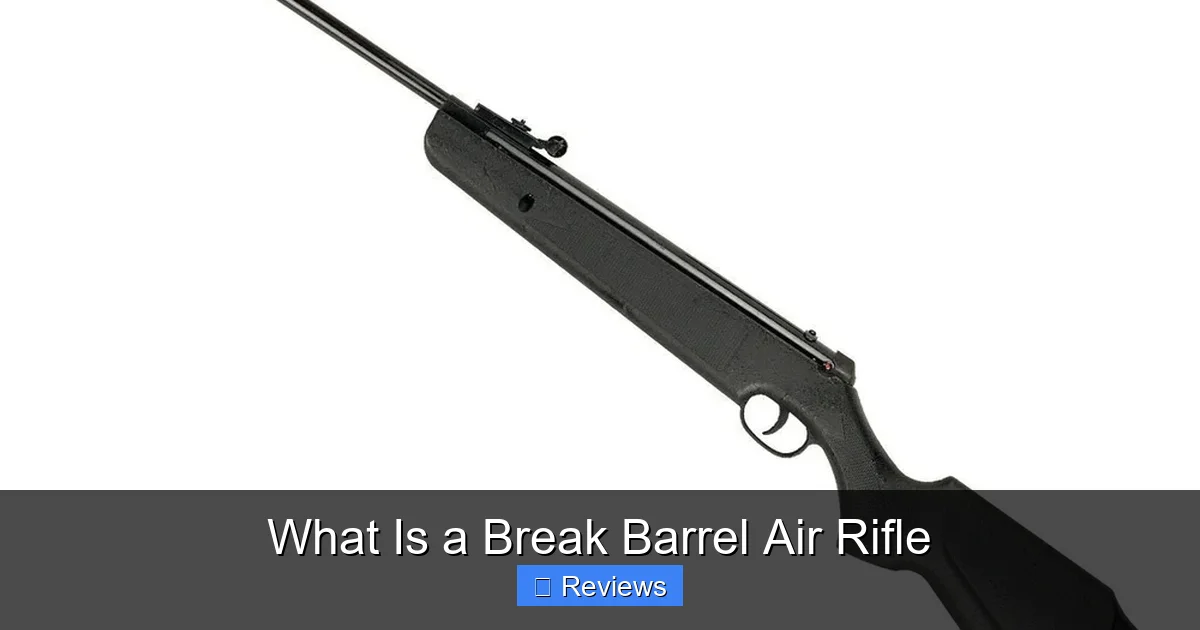
A break barrel air rifle is a popular type of airgun known for its self-contained power system and ease of use. To operate, the barrel is “broken” downwards to cock an internal spring or gas piston, which then propels a pellet when fired, making it a reliable and versatile choice for various shooting activities.
When you think about air rifles, images of various designs might come to mind. Maybe you picture sleek, modern rifles, or perhaps something that looks a bit more traditional. Among the vast world of airguns, one design stands out for its simplicity, reliability, and sheer popularity: the break barrel air rifle. It’s a design that has been around for ages and continues to be a favorite among enthusiasts, beginners, and seasoned shooters alike.
But what exactly is a break barrel air rifle? If you’re new to airgunning, or just curious about this particular type, you’ve come to the right place. We’re going to dive deep into understanding this classic air rifle, exploring its mechanics, its many advantages, and why it might just be the perfect airgun for your needs. Whether you’re dreaming of backyard plinking, sharpening your target shooting skills, or looking for an effective tool for pest control, the humble break barrel air rifle often provides an excellent solution.
So, let’s pull back the curtain and take a closer look at what makes the break barrel air rifle such a timeless and beloved piece of equipment in the airgun community. We’ll uncover how it works, what makes it unique, and all the reasons why so many people choose this straightforward yet powerful option. Get ready to understand everything there is to know about this fantastic piece of engineering.
Key Takeaways
- Simple & Self-Contained: Break barrel air rifles are entirely self-sufficient, requiring no external air tanks or CO2 cartridges, making them easy to use anywhere.
- Manual Cocking Mechanism: The user manually cocks the rifle by “breaking” the barrel downwards, compressing a spring or gas piston that powers the shot.
- Versatile Applications: These air rifles are excellent for target shooting, plinking, small game hunting (where legal), and pest control due to their power and accuracy.
- Cost-Effective & Reliable: Generally affordable and built for durability, they offer a great entry point into the world of air gunning with minimal ongoing costs.
- Available in Various Calibers: Common calibers like .177, .22, and .25 allow shooters to choose the right rifle for their specific needs, from high velocity to greater impact.
- Requires Practice for Accuracy: Due to recoil characteristics and the manual cocking process, consistent accuracy with a break barrel air rifle benefits significantly from proper technique and practice.
- Low Maintenance: With basic cleaning and care, a break barrel can provide years of reliable service, making it a practical choice for many shooters.
Quick Answers to Common Questions
What is the main advantage of a break barrel air rifle?
The main advantage is its self-contained power source, meaning you don’t need external pumps, tanks, or CO2 cartridges. It’s ready to shoot with just a pellet and the manual cocking action.
Are break barrel air rifles powerful enough for hunting?
Yes, especially in .22 or .25 caliber, break barrel air rifles can be powerful enough for small game hunting and pest control, where legal, provided the shooter practices good shot placement and understands the rifle’s effective range.
How do I load a break barrel air rifle?
You load a break barrel air rifle by pivoting the barrel downwards (breaking it), which exposes the breech. You then insert a single pellet directly into the barrel, and return the barrel to its original position to lock it.
What is the difference between spring-piston and gas-piston break barrels?
Spring-piston rifles use a coiled metal spring, while gas-piston (gas ram) rifles use a sealed cylinder of compressed gas. Gas pistons generally offer a smoother shot cycle, less recoil, and can be more consistent than traditional springs.
Is a break barrel air rifle good for beginners?
Yes, break barrel air rifles are often recommended for beginners due to their simplicity, affordability, and the fundamental shooting skills they help develop, particularly in managing recoil and trigger control.
📑 Table of Contents
What Exactly Is a Break Barrel Air Rifle?
At its core, a break barrel air rifle is a single-shot airgun that uses a self-contained power source, usually a spring-piston or gas-piston system. The term “break barrel” refers directly to its distinctive cocking mechanism. Unlike other air rifles that might use pumps, CO2 cartridges, or pre-charged pneumatic (PCP) systems, the break barrel relies on good old-fashioned muscle power to prepare it for firing.
The Core Mechanism Explained
Imagine a rifle where the barrel isn’t fixed rigidly in place. Instead, it’s hinged at the receiver. To cock a break barrel air rifle, you literally “break” or pivot the barrel downwards, away from the rifle’s stock. This action does two crucial things simultaneously:
- Compresses the Power Source: As the barrel pivots, it pushes against a piston located inside the compression chamber. This piston, in turn, compresses a powerful coil spring or a sealed gas piston. This compression stores the energy needed to propel your pellet.
- Opens the Breech: When the barrel is fully pivoted, the breech (the part of the barrel where the pellet is loaded) becomes exposed. This allows you to easily insert a single pellet directly into the barrel.
Once the pellet is loaded, you simply return the barrel to its original, straight position, locking it securely in place. The rifle is now cocked, loaded, and ready to fire. When you pull the trigger, the compressed spring or gas piston is released, forcing the piston forward. This rapid movement creates a burst of highly compressed air, which rushes down the barrel, pushing the pellet out at high velocity. It’s a remarkably simple, elegant, and effective system.
Spring-Piston vs. Gas Piston (Gas Ram)
Within the break barrel category, you’ll mainly encounter two types of internal power plants:
- Spring-Piston: This is the traditional design. A heavy coil spring is compressed when you break the barrel. When fired, the spring rapidly expands, driving the piston forward. Spring-piston rifles are known for their classic feel but can produce a distinct recoil often described as “twangy” or “bouncy.” This unique recoil, sometimes called “double recoil,” means the gun recoils forward as the piston moves, then backward as the pellet exits the barrel.
- Gas Piston (Gas Ram/Nitrogen Piston): A more modern evolution, gas piston systems replace the coil spring with a sealed cylinder containing inert gas (usually nitrogen). When you break the barrel, this gas is compressed. Upon firing, the compressed gas expands, driving the piston. Gas piston break barrel air rifles generally offer a smoother cocking cycle, less vibration, and a more consistent shot-to-shot performance compared to springers. They also tend to be less susceptible to temperature changes and can often be left cocked for longer periods without damage to the power plant (though it’s generally still not recommended for extended times).
Both types deliver reliable performance, but gas pistons often come with a slightly higher price tag due to their advanced design and smoother shooting characteristics.
Why Choose a Break Barrel? Advantages & Benefits
Visual guide about What Is a Break Barrel Air Rifle
Image source: d2cdo4blch85n8.cloudfront.net
So, with various airgun options out there, why do so many people gravitate towards the break barrel air rifle? The answer lies in a combination of practical benefits and an enjoyable shooting experience.
Simplicity and Reliability
One of the biggest draws of a break barrel air rifle is its sheer simplicity. There are no complex gauges, no external tanks to fill, and no multiple pumps required per shot. This straightforward design translates directly into high reliability. Fewer moving parts mean less can go wrong, making them incredibly durable and robust tools. They are ready to go with just a pellet and the strength to cock them.
Self-Contained Power (No External Tanks)
This is a huge advantage for many users. You don’t need to carry extra CO2 cartridges, an air pump, or a bulky scuba tank. Everything you need to power the shot is built right into the rifle. This makes a break barrel air rifle ideal for taking out into the field, whether for hunting (where legal), pest control, or just some casual plinking in the backyard or woods. You’re completely self-sufficient.
Cost-Effectiveness
Generally speaking, break barrel air rifles are among the most affordable entry points into the world of airgunning. Not only is the initial purchase price often lower than PCP or even some multi-pump models, but the ongoing costs are minimal. All you need are pellets. There are no expenses for CO2, high-pressure air fills, or specialty pumps, which can add up significantly over time with other airgun types.
Portability and Ease of Use
Because they are self-contained, break barrel air rifles are highly portable. They are typically lighter than many PCP rifles and don’t require any cumbersome accessories. Learning to operate a break barrel is also quite intuitive. The cocking motion becomes second nature very quickly, making them accessible even for those new to shooting sports.
A Great Learning Tool
The unique recoil characteristics of a spring-piston break barrel air rifle, in particular, make it an excellent training tool. Mastering a springer often requires developing good shooting fundamentals – a consistent hold, proper trigger control, and follow-through. Once you can shoot a break barrel accurately, you’ll likely find other types of rifles easier to master. It truly teaches you discipline and good form.
Understanding the Components and Calibers
Knowing the different parts of your break barrel air rifle and the types of ammunition it uses can help you choose the right model and get the most out of your shooting experience.
Essential Parts
While designs vary, all break barrel air rifles share some fundamental components:
- Barrel: This is where the pellet travels. Break barrel rifles typically have rifled barrels, meaning spiral grooves inside that impart spin to the pellet for accuracy.
- Breech: The opening at the rear of the barrel where the pellet is loaded.
- Receiver/Action: Houses the piston, spring/gas ram, and trigger mechanism.
- Stock: The part you hold, often made of wood, synthetic polymer, or laminate. It includes the foregrip and buttstock.
- Trigger: Controls the release of the compressed power plant. A good trigger can significantly improve accuracy.
- Sights: Most break barrel air rifles come with open sights (front and rear) and often have a dovetail or Picatinny rail for mounting an optical scope.
- Safety: A mechanism to prevent accidental firing. Always engage the safety until you are ready to shoot.
Popular Calibers (.177, .22, .25) and Their Uses
The caliber of your break barrel air rifle refers to the diameter of the pellet it fires. The choice of caliber often depends on your primary intended use:
- .177 Caliber (4.5mm): This is the smallest and most common caliber. .177 pellets are lightweight, which means they can achieve very high velocities (often 1000+ feet per second, or FPS). They are excellent for target shooting, plinking, and pest birds at close range. Their flatter trajectory at shorter distances makes them a favorite for accuracy competitions.
- .22 Caliber (5.5mm): A bit larger and heavier, .22 pellets generally travel at lower velocities than .177s but carry significantly more energy. This makes them a popular choice for pest control (rats, squirrels) and small game hunting (rabbits, larger birds) where legal. The added mass provides better knockdown power, though their trajectory is more arched at longer distances, requiring more compensation for drop.
- .25 Caliber (6.35mm): The largest of the commonly available break barrel calibers, .25 pellets deliver the most energy and impact. While velocities are the lowest, their greater mass is highly effective for larger pests or small game. The .25 caliber offers excellent knockdown power but is less common and usually found in higher-end break barrel air rifles.
Consider what you’ll primarily be using your break barrel air rifle for before deciding on a caliber. Many shooters often own rifles in different calibers for different applications.
Common Uses and Applications
The versatility of a break barrel air rifle makes it suitable for a wide range of activities. From casual fun to serious pest management, these airguns are surprisingly capable.
Plinking and Recreational Shooting
For many, the joy of a break barrel air rifle starts with plinking. Setting up soda cans, plastic bottles, or reactive targets in a safe backyard environment provides hours of fun. It’s a great way to unwind, enjoy the outdoors, and just enjoy the simple act of shooting without the high cost or noise of firearms. The single-shot nature encourages thoughtful shooting rather than rapid-fire spraying.
Pest Control (Where Legal)
In many areas, break barrel air rifles are a legal and effective tool for humane pest control. Rats, mice, squirrels, and certain birds can be managed responsibly with a well-placed shot from a .22 or even a powerful .177 caliber break barrel. Always check your local laws and regulations regarding airgun use for pest control, and ensure you have a safe backdrop.
Small Game Hunting (Where Legal)
For those interested in ethical small game hunting, a break barrel air rifle, especially in .22 caliber, can be a capable tool. Rabbits, opossums, and groundhogs can be taken cleanly within appropriate ranges. Success in air rifle hunting relies heavily on shot placement, understanding your rifle’s capabilities, and practicing extensively to ensure humane kills. Again, always verify local hunting regulations and ensure you have proper licensing.
Target Practice and Skill Development
The break barrel air rifle is an excellent platform for developing fundamental shooting skills. Its manual cocking, single-shot nature, and distinctive recoil (especially with springers) demand precision, consistency, and good trigger discipline. Many competitive airgun disciplines, particularly in field target shooting, feature break barrel air rifles, showcasing their potential for accuracy in skilled hands.
Tips for Choosing and Maintaining Your Break Barrel
Getting the right break barrel air rifle and keeping it in top condition will ensure years of enjoyment and reliable performance.
What to Look For
When shopping for a break barrel air rifle, consider these factors:
- FPS (Feet Per Second) & Energy: While high FPS numbers look impressive, consistent accuracy is often more important. Match the power to your intended use. A super-fast .177 might be great for paper targets, but a slower, heavier .22 might be better for pest control.
- Accuracy: Read reviews and watch videos. A rifle that can consistently group shots tightly is far more valuable than one with high velocity but poor precision.
- Trigger Quality: A crisp, predictable trigger pull is crucial for accuracy. Look for adjustable triggers if possible.
- Weight and Balance: Handle the rifle if you can. Ensure it feels comfortable and balanced for you. A heavy rifle can be steady but tiring; a too-light one might be harder to hold still.
- Ergonomics: Does the stock fit you well? Is the cocking effort manageable for you?
- Sights/Optics Rail: Decide if you prefer open sights or plan to mount a scope. Ensure the rifle has a suitable rail.
Remember that an expensive break barrel doesn’t always guarantee immediate accuracy. User skill and practice play a huge role.
Essential Maintenance
Proper care will extend the life and performance of your break barrel air rifle:
- Barrel Cleaning: Periodically clean the barrel to remove lead fouling. Use airgun-specific cleaning kits, being careful not to damage the rifling or crown.
- Lubrication: Lightly lubricate pivot points on the barrel and action with appropriate airgun oil. Avoid over-lubricating the internal compression chamber, as this can cause “dieseling.”
- Stock Care: Keep the stock clean and dry. Treat wooden stocks with gun oil or wax.
- Storage: Store your break barrel air rifle in a cool, dry place, ideally in a gun case or cabinet. Never store it cocked for extended periods, as this can weaken the spring or gas piston.
- Check Screws: Periodically check and tighten any loose screws, especially those holding the stock and action together, as recoil can loosen them over time.
Break-in Period
New break barrel air rifles, especially spring-piston models, often require a “break-in” period. This means shooting several hundred pellets before the rifle settles down and delivers its most consistent accuracy. During this time, you might experience:
- Dieseling: A “crack” or “smoke” from the barrel. This is caused by residual lubricants igniting in the compression chamber and usually subsides after 50-100 shots. It’s normal for new springers.
- Inconsistent Velocity: Shots might vary in speed as the spring and seals settle.
- Changing Point of Impact: Your pellets might hit different spots on the target as the rifle breaks in. Don’t worry, it will stabilize!
Be patient during this period, and focus on consistent technique.
Safety First: Responsible Air Rifle Ownership
While air rifles are generally safer than firearms, they are not toys and demand the same respect and adherence to safety rules. Responsible ownership is paramount.
Always Treat as if Loaded
This is the cardinal rule of firearm and airgun safety. Assume your break barrel air rifle is always loaded and ready to fire. This mindset prevents complacency and reinforces safe handling habits. Never point it at anything you are not willing to destroy.
Know Your Target and What’s Beyond It
Pellets can travel surprisingly far and can ricochet off hard surfaces. Before every shot, be absolutely certain of your target and what lies behind it. Ensure there’s a safe backstop that will stop and contain your pellet, such as a sturdy pellet trap, a thick wooden fence, or a natural earth berm.
Proper Storage and Handling
Store your break barrel air rifle securely and unloaded. Keep it out of reach of children and unauthorized users. Never leave it unattended. When handling, always keep your finger off the trigger until your sights are on the target and you are ready to shoot.
Understanding Local Laws
Airgun laws vary significantly by region, country, state, and even municipality. Before purchasing or using a break barrel air rifle, familiarize yourself with all applicable local regulations regarding ownership, transportation, open carry, shooting locations, and power limits. Some areas classify air rifles as firearms, while others have specific restrictions on their use for hunting or pest control.
Conclusion
The break barrel air rifle stands as a testament to effective, straightforward design. Its self-contained power source, ease of use, and robust nature make it an enduring choice for a wide variety of shooters. Whether you’re just starting your journey into airgunning, looking for an economical way to enjoy target practice, or needing a reliable tool for pest control, a break barrel air rifle offers a compelling package.
From the satisfying snap of cocking the barrel to the precise thud of a pellet hitting its mark, there’s a unique charm to these airguns. They teach patience, demand good technique, and reward consistent practice with impressive accuracy. By understanding their mechanics, choosing the right caliber, and committing to safe and responsible use, you’ll find that the break barrel air rifle is far more than just a simple airgun; it’s a versatile, enjoyable, and effective tool that can provide years of rewarding experiences. So go ahead, break that barrel, load a pellet, and experience the classic appeal for yourself!
🎥 Related Video: World's Most Powerful Break Barrel Air Rifle! #gun #airgunning #airgun #shorts
📺 BLOCKETH OUTDOORS
Frequently Asked Questions
How accurate are break barrel air rifles?
The accuracy of a break barrel air rifle can vary, but with practice, proper technique, and a quality rifle, they can be surprisingly accurate. Many shooters can consistently hit small targets at 20-30 yards, and skilled shooters can achieve even greater precision, making them suitable for target shooting and pest control.
Do break barrel air rifles require CO2 cartridges?
No, break barrel air rifles do not use CO2 cartridges. They are powered by an internal spring or gas piston that is manually compressed by “breaking” the barrel, making them self-sufficient and eliminating the need for external power sources.
What kind of pellets should I use in my break barrel?
You should always use lead or lead-free diabolo-shaped pellets specifically designed for air rifles. Experiment with different brands and pellet weights in your chosen caliber, as each break barrel air rifle can “prefer” a specific type of pellet for optimal accuracy.
How much maintenance does a break barrel air rifle need?
Break barrel air rifles are relatively low maintenance. Regular cleaning of the barrel, light lubrication of pivot points, and ensuring all screws are tight will keep it in good working order. Avoid over-lubricating the compression chamber, which can cause dieseling.
Can I leave a break barrel air rifle cocked?
It is generally not recommended to leave a break barrel air rifle cocked for extended periods. While gas ram rifles are more tolerant, prolonged compression can weaken the spring or gas piston over time, potentially reducing power and consistency. Only cock the rifle when you are ready to shoot.
What is “dieseling” in a break barrel air rifle?
Dieseling is a phenomenon where residual oil or lubricant in the compression chamber ignites from the sudden pressure increase during firing, creating a small “explosion.” It often produces smoke and a louder crack, and while common in new break barrel air rifles during their break-in period, excessive dieseling can damage the rifle and should be avoided.