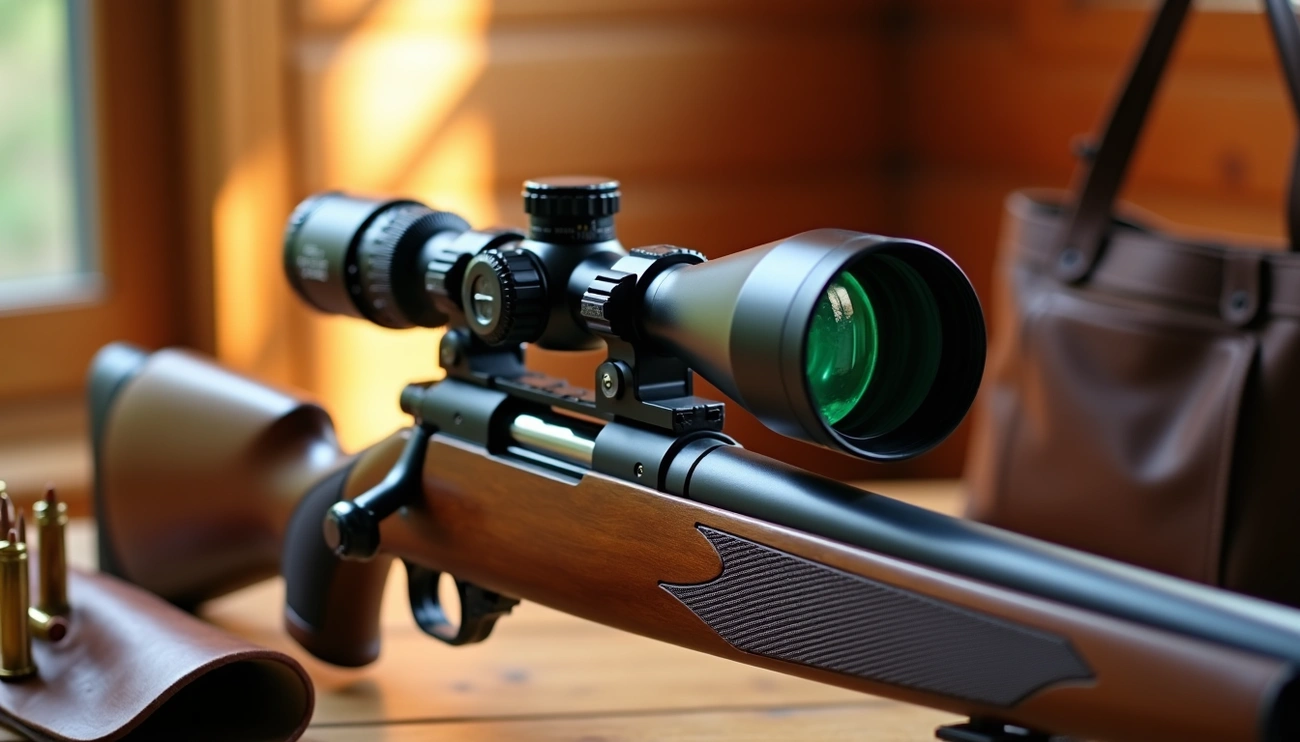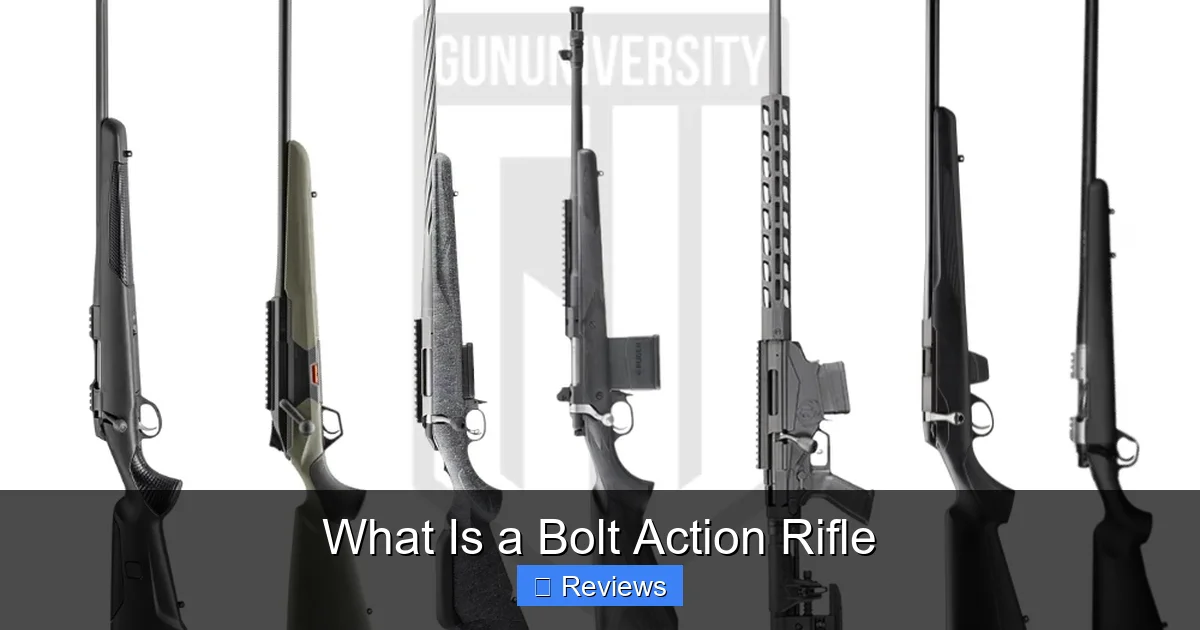
A bolt action rifle is a timeless firearm known for its robust simplicity and exceptional accuracy. It operates by manually cycling a bolt mechanism to load, chamber, extract, and eject cartridges, providing unparalleled control over each shot. Highly favored by hunters, target shooters, and military forces for over a century, its reliability and precision make it an enduring and respected choice for a wide array of shooting disciplines.
Have you ever watched a skilled shooter at the range, methodically working the lever on their rifle, then hitting a bullseye with satisfying precision? Or perhaps you’ve seen a hunter carefully chambering a round, knowing that one shot might be all they get? Chances are, you were witnessing the classic operation of a bolt action rifle.
The bolt action rifle is more than just a firearm; it’s a testament to engineering elegance, reliability, and precision. It stands as a cornerstone in the world of shooting sports, hunting, and even military history. If you’re curious about what makes this type of rifle so special, or if you’re considering owning one, you’ve come to the right place. We’re going to break down everything you need to know about what is a bolt action rifle, from its fundamental mechanics to its enduring appeal.
Key Takeaways
- Manual Operation: A bolt action rifle requires the shooter to manually manipulate a bolt to load a new cartridge, cock the firing pin, and eject the spent casing, providing direct control over the firing cycle.
- Exceptional Accuracy: The simple, rigid design of a bolt action contributes significantly to its inherent accuracy, as fewer moving parts mean less vibration and greater consistency from shot to shot.
- Reliability and Durability: With fewer complex mechanisms compared to semi-automatic rifles, bolt actions are renowned for their ruggedness, reliability, and ease of maintenance, performing well even in harsh conditions.
- Safety Features: Most bolt action rifles incorporate robust safety mechanisms, often including a manual safety switch and the ability to unload the chamber without cycling a new round, enhancing user safety.
- Versatility in Calibers: They are produced in a vast array of calibers, from small varmint rounds to powerful magnum cartridges, making them suitable for everything from target shooting to big-game hunting.
- Common Applications: Bolt action rifles are primarily used for hunting, competitive precision shooting (like benchrest and long-range shooting), and in many military and law enforcement sniper roles due to their precision.
- Historical Significance: The bolt action rifle design has a rich history, serving as the primary infantry rifle for many nations through two World Wars and remaining a cornerstone of modern civilian shooting.
Quick Answers to Common Questions
What is the main difference between a bolt action rifle and a semi-automatic rifle?
A bolt action rifle requires the shooter to manually cycle the bolt for each shot, while a semi-automatic rifle automatically ejects the spent casing and loads a new round after each shot, using the energy from the previous shot.
Are bolt action rifles good for beginners?
Yes, bolt action rifles are often recommended for beginners because their manual operation encourages deliberate shooting, focus on fundamentals, and safer handling practices.
Why are bolt action rifles considered very accurate?
Their simple design minimizes moving parts during the firing sequence, which leads to less vibration and greater consistency from shot to shot, contributing to superior accuracy.
Can you hunt with a bolt action rifle?
Absolutely. Bolt action rifles are one of the most popular choices for hunting worldwide due to their accuracy, reliability, and the wide range of calibers available for different game.
Do bolt action rifles have magazines?
Yes, bolt action rifles typically have magazines, which can be either internal (integral to the rifle and loaded from the top or bottom) or detachable (a removable box magazine).
📑 Table of Contents
What Exactly Is a Bolt Action Rifle? (The Basics)
At its core, a bolt action rifle is a type of firearm where the operator manually cycles a bolt mechanism to load, chamber, and eject cartridges. Unlike semi-automatic rifles that use gas or recoil to cycle automatically, the bolt action rifle requires direct human interaction for each shot. This manual operation is not a drawback; rather, it’s a defining feature that contributes to its legendary accuracy and reliability.
Manual Operation Defined
Imagine a straight tube with a handle on the side. That’s essentially the “bolt.” To prepare the rifle for firing, you grab this handle, lift it up, pull it back, push it forward, and lock it down. Each of these steps performs a critical function: ejecting the spent casing, extracting a new cartridge from the magazine, pushing it into the firing chamber, and locking it securely in place, ready to be fired. This simple, direct method ensures complete control over the firing process, making a bolt action rifle a favorite for many.
Components of a Bolt Action Rifle
While designs can vary, the key components of a bolt action rifle remain largely consistent:
- The Stock: This is the part of the rifle you hold against your shoulder and grip. It can be made from wood, synthetic materials, or laminates, and influences comfort and aesthetics.
- The Barrel: The long, metal tube through which the bullet travels. Its quality and length significantly impact accuracy.
- The Receiver (or Action): This is the heart of the rifle, housing the bolt and the trigger mechanism. It’s often where the serial number is located and is considered the “firearm” part of the rifle.
- The Bolt: The moving part that cycles cartridges. It contains the firing pin, extractor, and ejector.
- The Trigger Assembly: The mechanism that, when pulled, releases the firing pin to strike the primer of the cartridge.
- The Magazine: Holds the cartridges. This can be an internal box magazine (loaded from the top or bottom) or a detachable box magazine.
- Sights/Optics: While some have iron sights, most modern bolt action rifles are designed to be used with scopes for enhanced precision.
How Does a Bolt Action Rifle Work? (The Mechanics Explained)
Understanding the simple, yet effective, mechanics of a bolt action rifle demystifies its operation and highlights why it’s so dependable. Let’s walk through the firing cycle of a typical bolt action rifle.
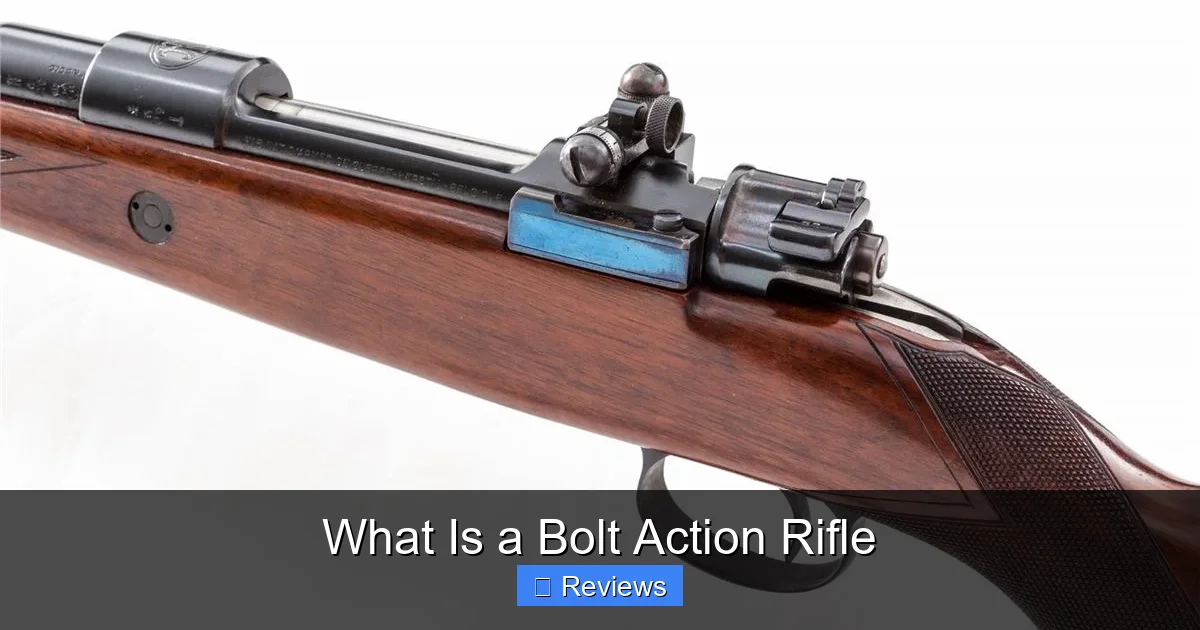
Visual guide about What Is a Bolt Action Rifle
Image source: dygtyjqp7pi0m.cloudfront.net
The Cycle of Operation
- Loading: Cartridges are loaded into the rifle’s magazine, which can be either internal (a fixed box integral to the rifle) or detachable (a removable box).
- Chambering a Round: The shooter lifts the bolt handle up (unlocking the bolt), then pulls the bolt fully rearward. This action extracts a fresh cartridge from the magazine and positions it in line with the barrel.
- Forward Stroke: The shooter pushes the bolt forward. As the bolt moves forward, it strips a cartridge from the magazine and pushes it into the firing chamber at the rear of the barrel. During this process, the firing pin assembly is usually cocked, making the rifle ready to fire.
- Locking the Bolt: Once the cartridge is fully seated, the shooter pushes the bolt handle down. This rotates the bolt, engaging locking lugs into corresponding recesses in the receiver, sealing the breech and ensuring the rifle can safely contain the pressure of firing.
- Firing: With the safety off, pulling the trigger releases the firing pin, which strikes the primer of the cartridge, igniting the propellant and firing the bullet down the barrel.
- Extraction and Ejection: After firing, the shooter repeats the first step: lifting the bolt handle and pulling it rearward. This action simultaneously extracts the spent cartridge casing from the chamber and ejects it from the rifle through an ejection port, clearing the way for the next round.
This systematic, manual process ensures that the shooter is directly involved in every step, fostering a deliberate and precise approach to shooting. It’s why a bolt action rifle feels so intuitive once you get the hang of it.
Locking Mechanism
The locking mechanism is a crucial safety and performance feature of a bolt action rifle. When the bolt handle is pushed down, locking lugs (often two, but sometimes three or more) on the bolt engage with corresponding recesses within the receiver. This securely locks the bolt in place, forming a robust barrier that contains the immense pressure generated by the burning gunpowder when a cartridge is fired. A strong and consistent lock-up is a significant factor in a bolt action rifle’s renowned accuracy, as it minimizes movement and flexing during the critical moment of bullet ignition.
The Unmatched Advantages of a Bolt Action Rifle
While other rifle designs exist, the bolt action rifle continues to be a top choice for discerning shooters. Why? Because its design inherently offers several compelling advantages.
Pinpoint Precision
This is arguably the most celebrated trait of a bolt action rifle. The simple, rigid design minimizes moving parts during the firing sequence. When you pull the trigger on a semi-automatic, various springs, buffers, and gas systems move around, potentially introducing minute vibrations or inconsistencies. With a bolt action, once the bolt is locked, the only major movement is the firing pin striking the primer. This static platform, combined with often heavier barrels and precise manufacturing, allows for exceptional accuracy, making it ideal for long-range shooting and hunting where every shot counts.
Unwavering Reliability
Fewer moving parts mean fewer things can go wrong. A bolt action rifle is a mechanical workhorse. It’s less susceptible to malfunctions caused by dirt, debris, or extreme weather conditions compared to gas-operated firearms. If a cartridge fails to extract, the shooter can simply apply more force to the bolt. This rugged simplicity makes it incredibly reliable in challenging environments, a characteristic highly valued by hunters and military personnel operating in remote or harsh conditions. The manual control over each step of the firing cycle also means that a shooter can often diagnose and clear a malfunction more easily.
Enhanced Safety
With a bolt action rifle, the chamber can be easily checked and visually confirmed empty. The manual operation also means there’s no risk of an accidental second shot unless the shooter deliberately cycles the bolt again. Many bolt actions also feature robust safety mechanisms that directly block the firing pin or the trigger, adding another layer of security. This direct, manual control provides a greater sense of security and responsibility for the shooter, making it an excellent choice for learning responsible firearm handling.
Versatility in Calibers
The robust construction of bolt action rifle actions allows them to be chambered in an incredibly wide range of calibers, from small rimfire rounds suitable for plinking and small game, all the way up to powerful magnum cartridges designed for large, dangerous game at long distances. This versatility means you can find a bolt action rifle perfectly suited for almost any shooting need, whether it’s varmint hunting, deer hunting, competitive target shooting, or extreme long-range challenges.
Common Uses and Applications
Given its advantages, it’s no surprise that the bolt action rifle finds itself in a variety of roles across the shooting world.
Hunting Companion
For many hunters, the bolt action rifle is the quintessential hunting firearm. Its accuracy ensures clean, ethical kills, and its reliability means it performs when it matters most, whether tracking game through dense woods or making a crucial shot across an open field. From whitetail deer to elk, moose, and even dangerous game, there’s a bolt action rifle chambered for every hunting scenario. The single-shot, deliberate nature of the bolt action also encourages careful shot placement and good marksmanship, which are crucial for responsible hunting.
Precision Sport Shooting
Competitive shooters, especially those involved in long-range shooting, benchrest competitions, and F-Class, heavily rely on the bolt action rifle. The unparalleled accuracy potential of these rifles allows competitors to achieve incredibly tight groups and hit distant targets with consistency. Custom bolt action rifles, often built to exacting standards, dominate these disciplines, showcasing the absolute pinnacle of rifle precision.
Tactical and Military Applications
Despite the prevalence of semi-automatic and automatic rifles in modern militaries, the bolt action rifle still plays a vital role in specialized units. Sniper rifles, often purpose-built bolt action platforms, are chosen for their extreme accuracy and reliability at extended ranges. They allow highly trained marksmen to engage targets with precision, minimizing collateral damage and providing crucial overwatch in conflict zones. Many police forces also utilize bolt action rifles for designated marksmen roles.
Types and Variations of Bolt Action Rifles
While the basic principle remains, bolt action rifles aren’t a one-size-fits-all category. There are several significant variations that influence their feel, function, and performance.
Mauser-Style Actions
The Mauser 98 action, designed by Paul Mauser in the late 19th century, is arguably the most influential bolt action design ever created. It’s characterized by its controlled-feed mechanism (which we’ll discuss next), large non-rotating claw extractor, and robust locking lugs. Many modern bolt action rifles, particularly hunting rifles, draw heavily from the Mauser 98’s design, a testament to its enduring strength and reliability. Rifles like the Winchester Model 70 (pre-1964) and many custom actions are often based on the Mauser pattern.
Push-Feed vs. Controlled-Feed
This distinction refers to how a cartridge is picked up from the magazine and fed into the chamber:
- Controlled-Feed: In this design (epitomized by the Mauser), a large extractor claw grasps the rim of the cartridge as it leaves the magazine. The cartridge is “controlled” by the bolt from the moment it leaves the magazine until it is fully chambered or ejected. This provides very reliable feeding and extraction, especially when the rifle is held at awkward angles, as the cartridge is always held firmly by the bolt.
- Push-Feed: In a push-feed design (common in rifles like the Remington 700), the bolt pushes the cartridge forward, and the extractor only snaps over the rim as the cartridge fully enters the chamber. This design is simpler to manufacture and typically allows for smoother bolt operation. However, if the rifle is turned upside down or violently shaken during the feeding process, the cartridge could potentially fall out before the extractor can grip it. Both designs are highly effective, with preferences often coming down to tradition or specific application.
Magazine Types (Internal vs. Detachable)
- Internal Box Magazine: Many traditional bolt action rifles feature an internal magazine, integral to the rifle’s receiver. These are typically loaded from the top (through the ejection port) or, less commonly, from the bottom via a hinged floorplate. They offer a sleek profile with no protruding magazine to snag on brush.
- Detachable Box Magazine (DBM): Modern bolt action rifles, especially those geared towards tactical or competitive shooting, often utilize detachable box magazines. These can be quickly swapped out for a loaded magazine, offering faster reloading capabilities. They are also easier to unload and clean.
Caring for Your Bolt Action Rifle (Maintenance Tips)
A well-maintained bolt action rifle will last a lifetime and perform consistently. Proper care is essential for safety, reliability, and accuracy.
Regular Cleaning Routine
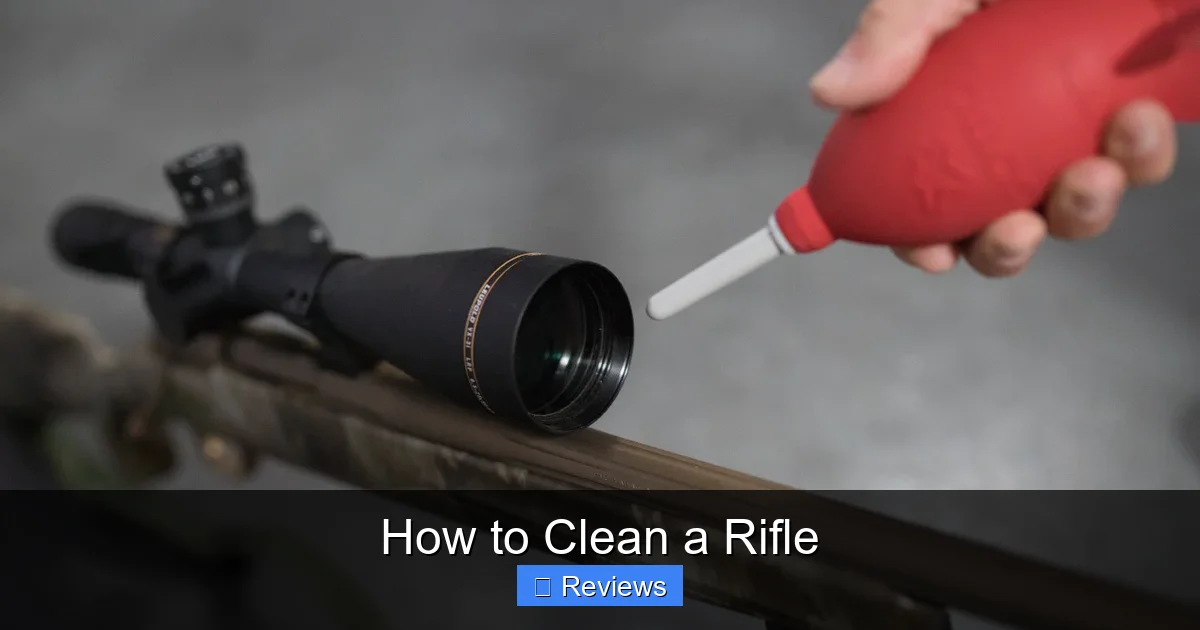
After every shooting session, especially if you’ve been in wet or dirty conditions, your bolt action rifle needs cleaning. This typically involves:
- Disassembly: Remove the bolt from the receiver. Many bolt action rifles are designed for easy bolt removal without tools.
- Bore Cleaning: Use a cleaning rod, bore brush, and patches with a good quality bore solvent to clean the inside of the barrel. Always clean from the breech end if possible, to avoid damaging the crown of the barrel (the very end where the bullet exits).
- Chamber Cleaning: Use a chamber brush to clean the chamber area, where the cartridge sits.
- Bolt Cleaning: Clean the bolt body, paying attention to the extractor, ejector, and firing pin channel. Remove any carbon buildup or old grease.
- Lubrication: Apply a light coat of gun oil to moving parts, such as the bolt lugs, bolt body, and inside the receiver. Avoid over-lubricating, as excessive oil can attract dirt.
- Wipe Down: Wipe down all external metal surfaces with an oiled cloth to prevent rust.
Proper Storage
Store your bolt action rifle in a cool, dry place to prevent rust and damage. A quality gun safe is ideal, offering protection from theft and unauthorized access. Ensure the rifle is unloaded before storage, and consider using a dehumidifier in your safe if you live in a humid climate. For long-term storage, a light coat of preservative oil on all metal surfaces is recommended.
Conclusion
So, what is a bolt action rifle? It is a monument to mechanical ingenuity, a firearm that combines simplicity with profound effectiveness. It represents a deliberate choice for accuracy, reliability, and a deep connection between the shooter and the rifle. Whether you’re a seasoned hunter, a competitive target shooter, or someone simply appreciating the craftsmanship of a well-made tool, the bolt action rifle holds a special place in the world of firearms.
Its manual operation fosters a disciplined approach to shooting, encouraging mastery of fundamentals and precise shot placement. Its ruggedness ensures performance in conditions where more complex firearms might falter. And its legacy, spanning over a century, continues to evolve while retaining the core principles that made it legendary. If you’re looking for a rifle that embodies tradition, precision, and unwavering dependability, a bolt action rifle might just be the perfect companion for your shooting journey.
🎥 Related Video: Testing a new 222 bolt action design. Hopefully it will have a Scout Rifle look
📺 Garage Guy .30-06
Just a new rifle I’m working on. Finally got the magazine to work. #firearms #garage #metalworking.
Frequently Asked Questions
What does “bolt action” refer to?
The term “bolt action” refers to the manual mechanism used to load, chamber, and eject cartridges in the rifle. The shooter operates a bolt, which is a cylindrical component that slides back and forth, to perform these actions for each shot fired.
Is a bolt action rifle generally safer than other types of rifles?
Bolt action rifles are often considered very safe due to their manual operation. The shooter has direct control over loading and unloading, making it easy to visually confirm an empty chamber and preventing unintentional rapid firing.
What calibers are commonly available for bolt action rifles?
Bolt action rifles are incredibly versatile and are chambered in a vast array of calibers. Common choices include .22LR, .223 Remington, .308 Winchester, .30-06 Springfield, 6.5 Creedmoor, and powerful magnum calibers like .300 Winchester Magnum.
Do bolt action rifles have a strong recoil?
The recoil of a bolt action rifle depends heavily on the specific caliber and the weight of the rifle. While some powerful calibers can produce significant recoil, the rifle design itself doesn’t inherently make it recoil more than other types of rifles firing the same cartridge.
How often should I clean my bolt action rifle?
It’s generally recommended to clean your bolt action rifle after every shooting session, especially if you’ve fired a lot of rounds or been in dusty/wet conditions. Regular cleaning prevents carbon buildup, ensures reliability, and maintains accuracy.
Are bolt action rifles good for long-range shooting?
Yes, bolt action rifles are exceptionally well-suited for long-range shooting. Their inherent accuracy, robust design, and ability to handle powerful, precise cartridges make them the preferred choice for competitive long-range shooting and precision applications.