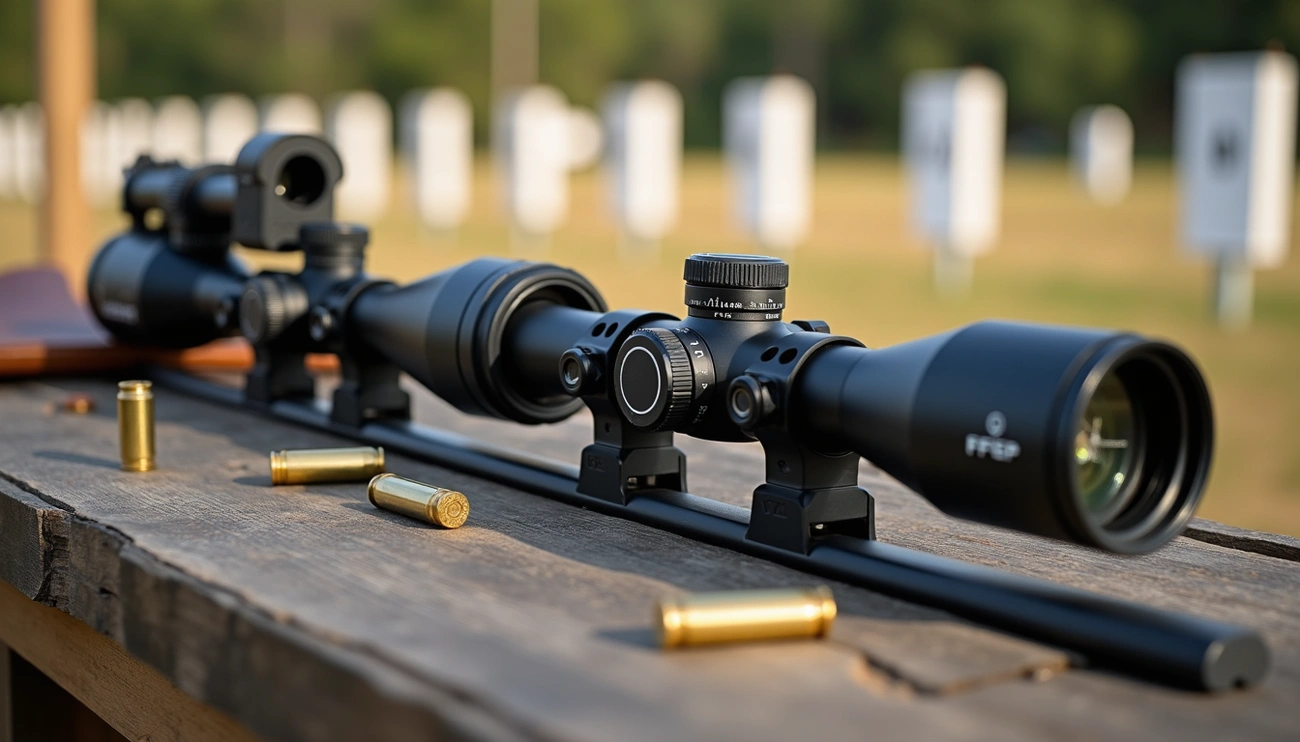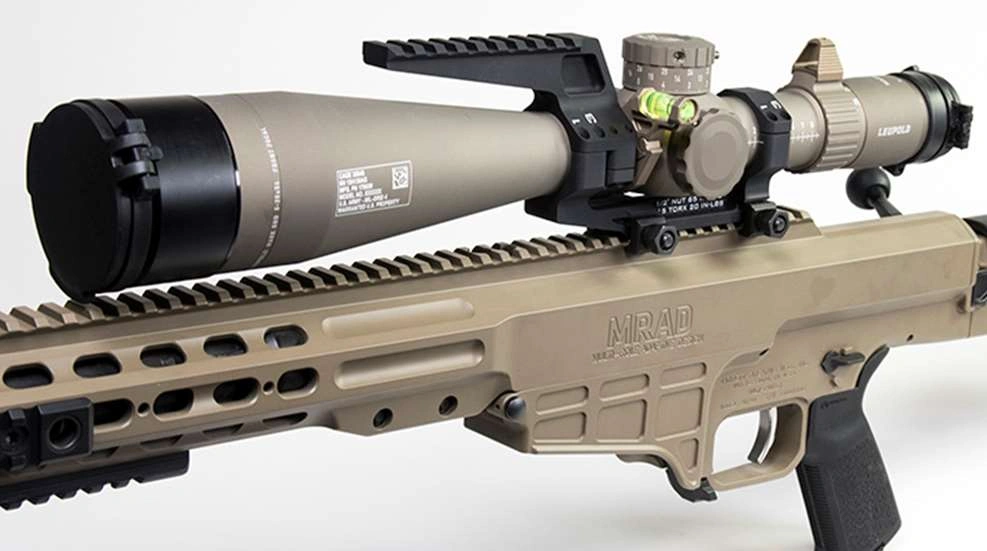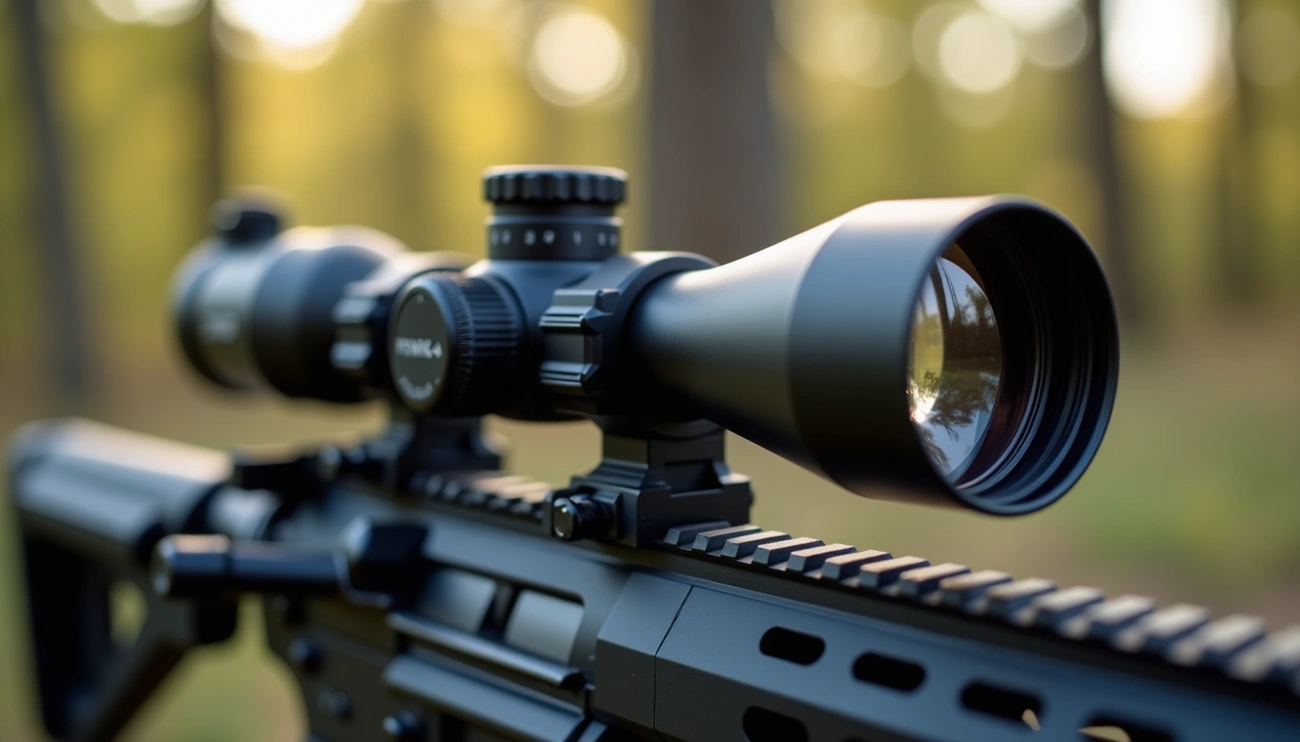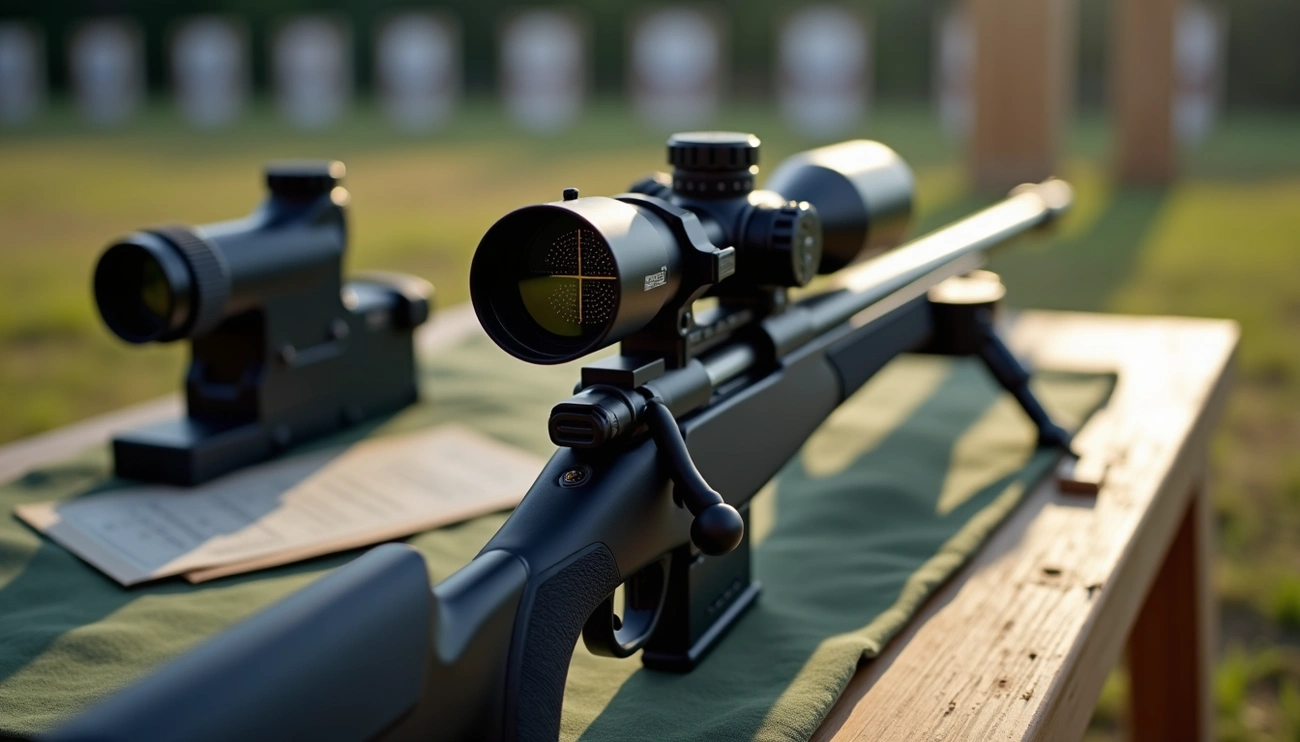
EG on a rifle scope means Electronic Green reticle. An EG reticle uses battery-powered green illumination, often with adjustable brightness, to improve target visibility in low-light conditions. Some EG scopes also offer red or white illumination. The numbers on the scope indicate magnification and objective lens size, such as 5×47.
In this guide, we’ll explore how to read rifle scope numbers properly, with special focus on explaining what EG means and why it matters. Whether you’re a hunting enthusiast or simply looking to understand your equipment better, we’ll break down rifle scope numbers explained in simple terms anyone can understand.
What Do Scope Numbers Mean?
The numbers on a rifle scope tell you a lot about its capabilities. Understanding these numbers is essential for selecting the right scope for your shooting needs.
Magnification explained
Magnification is the degree to which a target appears closer when viewed with a magnifying lens than with the naked eye. For example, at 4x magnification, the target appears 4 times its normal size. Rifle scopes come in two magnification types:
- Fixed magnification: Offers a single, unchangeable power setting (like 4×32). These scopes provide clearer images, are generally less expensive, and are excellent for beginners.
- Variable magnification: Provides an adjustable range (like 3-9×40). The first numbers (3-9x) indicate that you can adjust the magnification to 3-9 times the size you see with your naked eye.
The relationship between the maximum and minimum magnification is called the zoom ratio. A VX-5HD scope with a 5:1 zoom ratio, for instance, offers options such as 1-5x, 2-10x, or 3-15x power.
Objective lens diameter
The number after the “x” represents the objective lens diameter in millimetres. This lens gathers light for your scope – generally, larger lenses allow more light to enter, improving image brightness and clarity, especially in low-light conditions.
However, bigger isn’t always better. A larger objective lens makes for a heavier, bulkier scope. Additionally, you’ll likely need taller mounts to prevent the scope from touching your rifle.
How to read rifle scope numbers
Looking at a scope marked 3-9×40:
- “3-9x” indicates variable magnification from 3x to 9x power
- “40” means the objective lens diameter is 40mm.
For fixed magnification scopes, you’ll see a format like 4×32, where 4x is the fixed power, and 32 is the objective lens diameter.
Understanding these numbers helps determine if a scope suits your needs. For most Midwest hunters shooting under 200 yards, a classic 3-9x, 4-12x, or 2.5-10x magnification range works perfectly. For longer distances or precision shooting, higher magnification options become necessary.
Remember that higher magnification reduces your field of view and makes the scope more sensitive to movement. Choose a scope that fits your primary shooting situation rather than trying to cover every possible scenario.
What Does EG Mean on a Rifle Scope?
If you’ve spotted “EG” on a rifle scope and wondered what it means, you’re about to discover an important feature that affects your shooting experience. After understanding the magnification and objective lens numbers, let’s unravel this additional specification.
Definition of EG (Etched Glass)
EG on a rifle scope stands for “Etched Glass” reticle. Unlike traditional reticles, the crosshairs or aiming points on an EG reticle are precisely etched into a glass element inside the scope. This manufacturing technique creates a permanent, precisely defined aiming point that cannot be easily damaged or displaced.
Etched glass technology represents a more sophisticated approach to reticle construction. First developed for high-end optics, EG reticles have now become more accessible, with quality options available even in sub-$100 scopes.
How EG reticles differ from wire reticles
The primary alternative to etched glass is the wire reticle, which uses thin metal wires or blades physically positioned inside the scope to form crosshairs. While often called “wire reticles,” they’re actually thin metal bars or blades arranged to form the aiming point.
Wire reticles are typically found in budget-friendly scopes, particularly in smaller configurations like 3×15 or 4×20. Nevertheless, EG scopes differ fundamentally in their construction and durability. The etching process permanently bonds the reticle pattern to the glass, creating a single integrated unit.
Benefits of EG in low light and durability
Notably, EG reticles offer significant advantages for serious shooters:
- Superior durability – Since the reticle is etched into the glass itself, it cannot “fall apart” or become misaligned. This makes EG scopes more reliable under heavy recoil or rough handling.
- Compatibility with illumination – Etched glass reticles work exceptionally well with illumination systems, allowing for better visibility in varying light conditions.
- Precision – The etching process enables more intricate, precise reticle designs than wire can achieve.
According to experienced users, EG scopes are considered the higher-end option because they provide reliable performance in demanding shooting environments.
How EG Affects Scope Performance
The quality of your scope’s glass and reticle significantly influences shooting performance. EG technology represents a major advancement in scope design, affecting several critical performance aspects.
Impact on clarity and precision
EG scopes offer exceptional optical clarity, allowing shooters to see targets with greater detail. The glass-etched reticles provide finer, more precise aiming points than traditional wire reticles. Furthermore, they maintain their zero even after significant impacts or recoil, ensuring consistent accuracy over time. High-quality EG scopes exhibit minimal optical distortion, even at the edges of the field of view, consequently improving long-distance shooting precision.
Compatibility with illuminated reticles
One of the greatest advantages of EG scopes is their superior performance with illumination systems. Most EG reticles offer multiple brightness settings, typically 5 levels. This versatility makes them ideal for shooting in a wide range of lighting conditions. The illumination enhances contrast against dark targets without obscuring small details at extreme ranges, essentially providing the best of both worlds—visibility and precision.
Use cases: hunting, tactical, long-range
EG scopes excel across diverse shooting applications. During hunting, their durability withstands field conditions while maintaining clear sight pictures during critical dawn and dusk periods. For tactical applications, EG scopes provide fast target acquisition combined with precision at various ranges. Long-range shooters benefit from EG’s ability to maintain reticle integrity under heavy recoil and provide consistent performance. These scopes are particularly valuable for precision rifles, where maintaining zero and a clear sight picture at extreme distances is paramount.
Choosing the Right Scope with EG
Selecting the ideal scope involves balancing several factors specific to your shooting needs. Making an informed decision about whether an EG scope is right for you requires understanding its unique benefits.
When to choose an EG scope
EG scopes excel in situations demanding reliability under harsh conditions. Choose an EG scope if you frequently hunt at dawn or dusk, as illuminated EG reticles offer superior visibility in low light. Likewise, if you’re using a high-recoil rifle, the durability of etched glass prevents reticle displacement. EG scopes are also ideal for precision shooting, where complex reticle patterns assist with holdover and windage calculations.
Comparing EG vs non-EG scopes
EG scopes typically cost more than wire reticle alternatives but offer substantial advantages. First, they’re far more durable, maintaining zero even after significant impacts. Second, EG scopes support more complex reticle designs, enabling precise range estimation. Furthermore, they integrate seamlessly with illumination systems, whereas wire reticles often appear as simple black crosshairs regardless of lighting conditions.
Tips for beginners buying their first scope
Consider your budget realistically – quality scopes require investment, but remember your setup is only as good as its weakest component. Determine your primary use case instead of seeking a do-it-all scope. Evaluate magnification needs based on shooting distances – 3-9x works well for most hunting situations under 300 yards. Finally, prioritize optical clarity over excessive features that you may never use.
Conclusion
Understanding rifle scope specifications might seem daunting at first, but after breaking down the numbers and terminology, we can see how these details significantly impact shooting performance. The magnification power and objective lens diameter work together to determine how clearly you’ll see your target and how much light enters your scope.
As we’ve discovered, EG or Etched Glass represents a substantial upgrade in reticle technology. Unlike traditional wire reticles, these precision-etched markings offer unmatched durability, especially under heavy recoil. Additionally, EG scopes excel in low-light conditions and pair exceptionally well with illumination systems, making them perfect for dawn or dusk hunting.
Though EG scopes generally come with a higher price tag, their benefits often justify the investment. After all, the reliability of your optics can make the difference between a successful shot and a missed opportunity. For beginners, starting with a scope that matches your specific needs rather than chasing excessive features will serve you better in the long run.
When selecting your first scope, consider what type of shooting you’ll primarily do. Most hunters working within 300 yards will find a 3-9x magnification range perfectly adequate, while those pursuing long-range precision might benefit from higher magnification and the enhanced durability of an EG reticle.
Ultimately, the right scope enhances your shooting experience, improves accuracy, and helps you make ethical shots. Whether you choose an EG scope or a traditional wire reticle depends on your shooting conditions, budget, and personal preferences. Now that you understand what those mysterious letters and numbers mean, you’ll make a more informed choice for your next rifle scope.