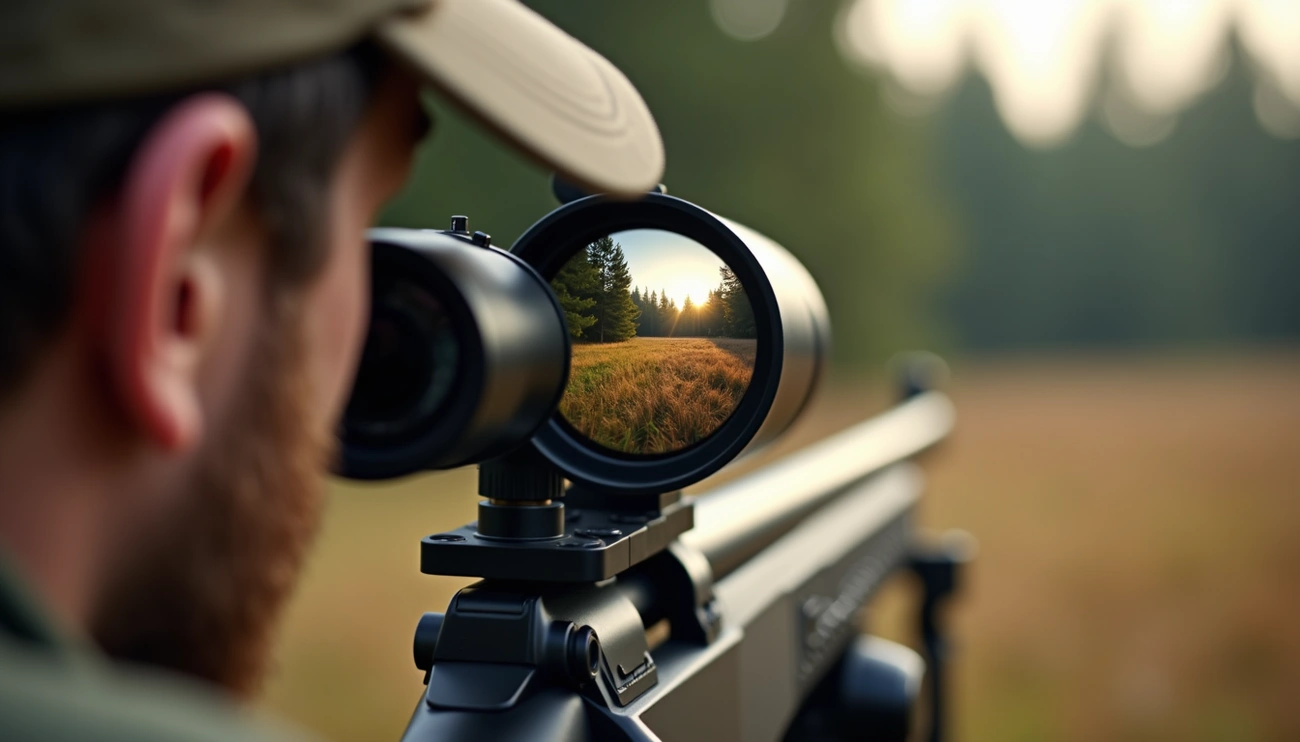
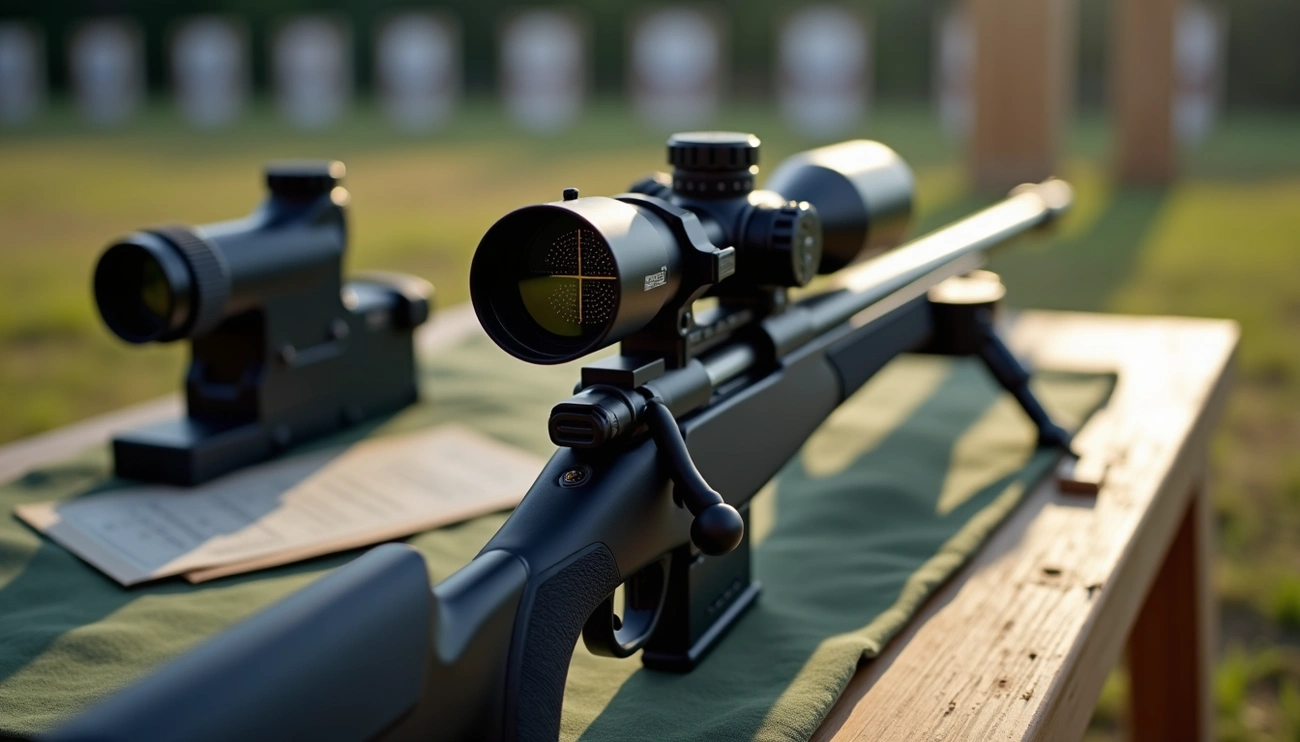
The numbers on a rifle scope indicate magnification and objective lens size. The first number shows how much the target is magnified, while the second number shows the objective lens diameter in millimeters. For example, 3–9×40 means variable magnification from 3x to 9x with a 40 mm objective lens.
Understanding Scope Magnification
Magnification is the core feature of any rifle scope – it’s why we mount these optics on our firearms in the first place. Let me break down this critical component so you can better understand what you’re looking at when shopping for scopes.
Fixed vs variable magnification
Rifle scopes come in two magnification types: fixed and variable. Fixed scopes offer a single, unchangeable magnification level, typically available in powers like 2.5x, 4x, or 6x. Their simpler design provides some distinct advantages – they’re generally lighter, more durable, and often have sharper image quality at a lower price point.
Variable scopes, conversely, offer a range of magnification powers you can adjust based on your shooting scenario. They’ve largely taken over the market due to their versatility. With a variable scope, you can dial down for close targets or crank up for distant ones, making them ideal for hunters who encounter game at varying distances.
What does 3-9x mean?
When you see numbers like “3-9×40” on a scope, the first set (3-9x) indicates the magnification range. The “3” means at its lowest setting, your target appears three times closer than with the naked eye. The “9” shows that at maximum power, the target appears nine times closer.
This flexibility is why variable scopes are so popular. You can adjust between these extremes based on your specific needs – setting it to lower magnification for a wider field of view when hunting in dense forest, or higher magnification for precise shots across open terrain.
How magnification affects field of view
Field of view (FOV) and magnification have an inverse relationship – as magnification increases, your field of view decreases. At lower magnification, you get a wider viewing area, making it easier to find and track moving targets. Additionally, lower magnification typically provides better light transmission for brighter images in dim conditions.
At higher magnification, while you gain detail and precision for long-range shots, you sacrifice FOV and some brightness. This narrower view can make it challenging to quickly acquire targets, particularly moving ones. It’s a classic trade-off that every shooter needs to consider.
For most hunters operating between 50 and 500 yards, a 3-15x magnification range generally provides sufficient versatility. Remember that having the highest possible magnification isn’t always beneficial – the ideal scope balances magnification with your typical shooting environment and target distance.
Objective Lens Diameter Explained
The objective lens sits at the front end of your rifle scope, farthest from your eye, and plays a crucial role in your optical system. Let’s decode what these numbers actually mean for your shooting performance.
What does the number after ‘x’ mean?
The second number in scope specifications (the one after the “x”) indicates the objective lens diameter measured in millimeters. In a scope labeled 3-9×40, the objective lens is 40mm in diameter. This measurement directly reflects the physical size of that front-facing lens—nothing more, nothing less.
Most rifle scopes feature objective lenses ranging from 32mm to 56mm, with each size offering different benefits depending on your shooting style. Importantly, this number doesn’t affect magnification—it’s strictly about the lens diameter.
How lens size affects light transmission
The primary function of the objective lens is light transmission—larger lenses allow more light to enter the scope. This creates brighter, clearer images, especially during dawn or dusk hunting.
Understanding “exit pupil” helps explain how lens size impacts brightness. To calculate it, simply divide the objective diameter by the magnification. For instance, a 3-15×50 scope at 10x magnification has a 5mm exit pupil, while at 15x, it drops to 3.33mm. Since the human eye can only dilate to about 7mm in darkness, extremely large exit pupils offer diminishing returns.
Furthermore, quality matters as much as size. A 42mm scope with exceptional glass will outperform a 50mm scope with average glass in low-light conditions.
Trade-offs between large and small lenses
Larger objective lenses (50mm+) offer distinct advantages—they provide brighter images at higher magnifications and reduce parallax error. Nevertheless, they come with noteworthy drawbacks: they’re heavier, bulkier, and often require taller mounting rings to clear your rifle barrel.
Medium-sized lenses (40-44mm) strike an excellent balance between light transmission and practicality. They’re popular among all-purpose shooters because they’re compact yet effective, offering good depth of field without excessive weight.
Smaller objective lenses (<28mm) excel in tactical applications where weight and speed matter more than light gathering. Despite their compact size, high-quality glass can still provide adequate brightness for most shooting scenarios.
Turret Adjustments and Reticle Systems
Beyond magnification and lens size, understanding turrets and reticles is crucial for accurate shooting. These components help you dial in precise adjustments for elevation and windage.
MOA vs MIL: what’s the difference?
MOA (Minute of Angle) and MIL (Milliradian) are angular measurement systems for scope adjustments. MOA divides a circle into 360 degrees with 60 minutes per degree. One MOA equals approximately 1.047 inches at 100 yards, often rounded to 1 inch for simplicity. MIL, alternatively, is based on the radian system with 6,283.6 mils in a circle. One MIL equals 3.6 inches at 100 yards.
How to read turret click values
Turrets adjust your scope’s internal components to change point of aim. Each click represents a specific measurement in either MOA or MIL. Most MOA scopes adjust in 1/4 MOA per click (0.25 inches at 100 yards), whereas MIL scopes typically adjust in 1/10 MIL per click (0.36 inches at 100 yards). For example, moving a point of impact 12 inches at 600 yards requires a 2 MOA adjustment, or 8 clicks on a 1/4 MOA turret.
Using reticles for holdover and windage
Reticles (crosshairs) complement turret adjustments. Graduated reticles with MOA or MIL markings enable quick aiming adjustments without dialing turrets. Many shooters “dial for elevation and hold for wind” because wind changes rapidly. Holdover reticles have reference points for both windage and elevation, ideal for long-range shooting.
Advanced Features and Scope Numbers
Beyond the basic specs, rifle scopes feature additional numbers that enhance precision and usability. These advanced features can significantly impact your shooting experience.
Zoom ratio and model naming conventions
Zoom ratio represents the relationship between a scope’s maximum and minimum magnification. For example, a scope with a 5:1 zoom ratio means its maximum magnification is five times greater than its minimum. Manufacturers often incorporate this ratio into model names—like Leupold’s VX-6HD with its 6:1 ratio or the Mark 5HD with a 5:1 ratio. This naming convention helps quickly identify a scope’s versatility without diving into specifications.
Parallax adjustment and its markings
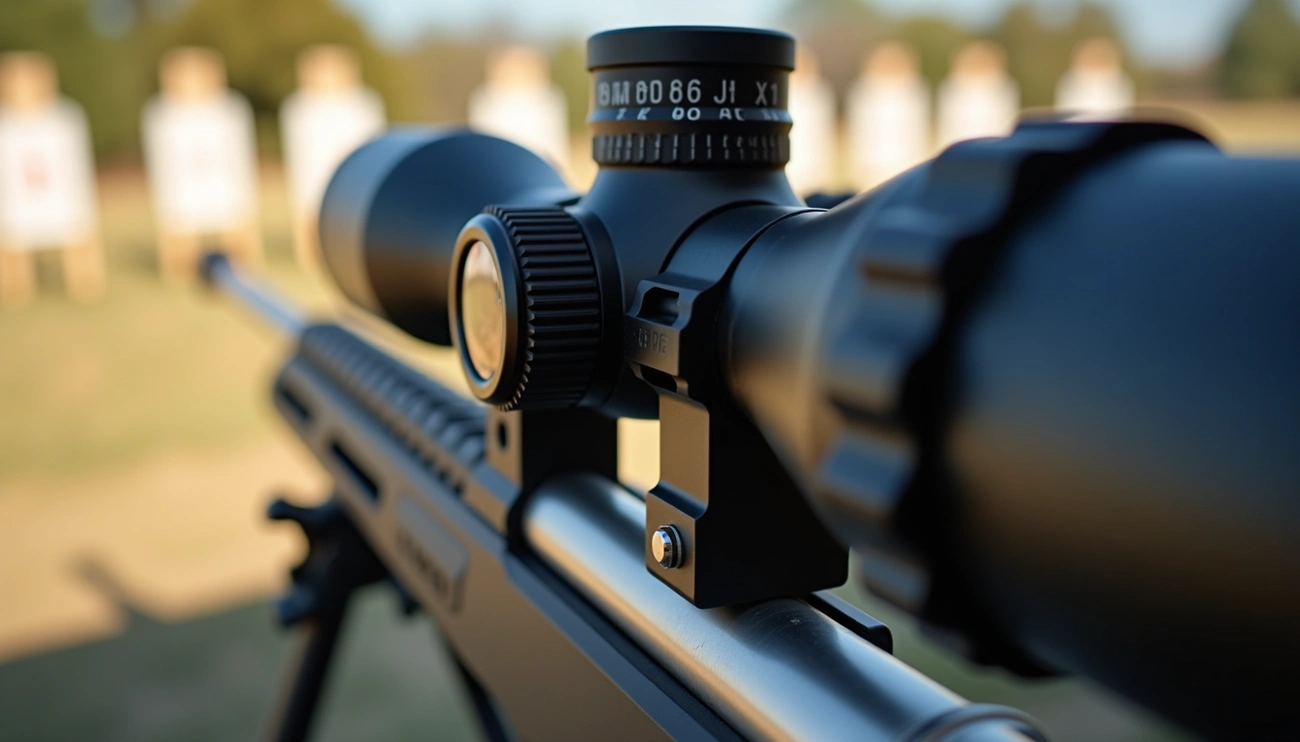
Parallax error occurs when your reticle appears to move relative to your target as you shift your head position. Modern scopes feature parallax adjustment dials (often called “side focus”) marked with yardage increments of 50-100 yards. Rather than focusing on these numbers exactly, adjust until both reticle and target appear in focus simultaneously. At longer distances, proper parallax correction becomes increasingly important for accuracy.
Field of view and eye relief explained
Field of view (FOV) indicates the width of visible area at a specific distance—for instance, 14.1 feet at 100 yards on low magnification. Meanwhile, eye relief is the optimal distance between your eye and the scope’s eyepiece—typically 3-4 inches. Longer eye relief (4.5+ inches) proves essential for high-recoil firearms.
How to read rifle scope numbers in full
In essence, a scope labeled 4-12×40 indicates variable magnification from 4x to 12x with a 40mm objective lens. Additional specifications might include parallax adjustment ranges, eye relief measurements, and field of view values. Understanding these numbers enables you to select the perfect scope for your specific shooting needs.
Conclusion
Understanding rifle scope numbers no longer needs to be confusing or intimidating. Throughout this guide, we’ve broken down each component of scope specifications from magnification power to objective lens diameter, turret systems, and advanced features.
Essentially, rifle scope numbers tell a complete story about what you can expect from your optic. The magnification range (3-9x) determines how close your targets appear, while the objective lens diameter (40mm) dictates light transmission and image brightness. Meanwhile, turret adjustments in MOA or MIL allow precise aiming adjustments based on distance and environmental factors.
Before purchasing your next scope, take time to consider your specific shooting needs. High-powered magnification works great for long-range precision but sacrifices field of view. Similarly, larger objective lenses gather more light yet add weight and bulk to your setup.
Ultimately, the perfect scope balances these factors against your typical shooting environment, target distance, and rifle type. Whether you’re hunting at dawn, competing in long-range matches, or practicing at the range, understanding scope numbers will help you select an optic that enhances rather than hinders your shooting experience.
After all, the best rifle scope isn’t necessarily the most expensive or feature-packed—it’s the one that best matches your specific requirements and shooting style. Armed with this knowledge, you can now confidently navigate scope specifications and make an informed choice for your next optic purchase.