Deciding what caliber hunting rifle should I get is a pivotal choice for any hunter. It’s not just about power, but matching the rifle to your target game, hunting environment, and personal comfort with recoil. This comprehensive guide helps you navigate popular calibers and crucial considerations to ensure you make an informed decision for a successful and ethical hunt.
So, you’ve caught the hunting bug! The thought of spending time outdoors, stalking game, and putting food on the table is exciting. But then comes a big decision that can feel a bit overwhelming: what caliber hunting rifle should I get? It’s a question that sparks endless debates around campfires and in sporting goods stores. And for good reason! Your rifle caliber is a critical choice that impacts everything from your shooting comfort to your success in the field and, most importantly, the ethics of your hunt.
Choosing a hunting rifle isn’t just about picking the biggest, fastest, or most expensive option. It’s about finding the perfect partner for your specific hunting style, the type of game you pursue, and your personal abilities. There’s a vast ocean of calibers out there, each designed with different purposes and strengths. Don’t worry, though; you don’t need to become an expert on every single one. Our goal here is to equip you with the knowledge and confidence to narrow down the options and make an informed decision about what caliber hunting rifle should I get that’s right for you.
This guide is designed to cut through the jargon and give you practical, straightforward advice. We’ll explore the key factors that should influence your decision, demystify popular calibers, and offer tips to ensure your first (or next) hunting rifle is a choice you’ll be happy with for years to come. Let’s dive in and answer that burning question: what caliber hunting rifle should I get?
Key Takeaways
- No Single “Best” Caliber: The ideal caliber depends entirely on your specific hunting needs, target game, and personal preferences, not on a universal superior choice.
- Consider Your Target Game: Different calibers are optimized for small game, medium-sized deer, large elk, or dangerous game. Matching the caliber to the animal ensures ethical and effective humane kills.
- Evaluate Hunting Environment & Range: Open plains requiring long shots benefit from flat-shooting calibers, while dense woods with shorter ranges allow for heavier, slower bullets.
- Recoil Tolerance is Crucial: A rifle you can shoot comfortably and accurately is always better than one with excessive recoil that leads to flinching and poor shot placement. Don’t let ego dictate your choice.
- Ammunition Availability & Cost Matter: Especially for new hunters, choosing a common caliber means easier access to ammo for practice and hunting, often at a more affordable price.
- Beyond Caliber: Rifle fit, shooter skill, and ethical shot placement are just as important, if not more so, than the caliber itself. A perfect caliber won’t compensate for poor marksmanship.
- Start Versatile for Beginners: Calibers like the .308 Winchester or .30-06 Springfield offer excellent versatility for a wide range of medium to large game across various conditions, making them great starting points.
Quick Answers to Common Questions
What is the most versatile hunting rifle caliber?
Many hunters consider the .30-06 Springfield or the .308 Winchester to be among the most versatile. Both are effective on a wide range of medium to large game across various terrains and conditions, with ample ammunition choices.
Is 6.5 Creedmoor good for deer?
Yes, the 6.5 Creedmoor is an excellent choice for deer. It offers mild recoil, superb accuracy, and sufficient energy to ethically harvest deer and similar-sized game, often at extended ranges.
What caliber is best for a first-time hunter?
For a first-time hunter, calibers with manageable recoil like the .243 Winchester, 6.5 Creedmoor, or .308 Winchester are often recommended. These allow the hunter to focus on developing good shooting fundamentals without being intimidated by heavy kick.
Can I hunt elk with a .308 Winchester?
Yes, a .308 Winchester can be effective for elk, especially at moderate ranges (under 300 yards) and with appropriate heavy, well-constructed bullets. However, many experienced elk hunters prefer more powerful calibers like the .30-06 Springfield or .300 Winchester Magnum for added margin and performance at longer distances.
What is “stopping power” in hunting?
“Stopping power” refers to a bullet’s ability to quickly incapacitate an animal, usually through a combination of kinetic energy, penetration, and tissue damage. It’s crucial for ensuring a humane kill and preventing dangerous animals from retaliating.
📑 Table of Contents
Understanding Caliber Basics: What Do the Numbers Mean?
Before we jump into specific recommendations, let’s clarify what “caliber” actually means and what those numbers are telling you. Simply put, caliber generally refers to the diameter of the bullet or the bore of the barrel measured in fractions of an inch (like .30-06, .270) or millimeters (like 6.5mm, 7mm). But there’s more to it than just diameter.
Bullet Diameter vs. Case Design
Often, a caliber name includes more than just the bullet diameter. For instance, a .30-06 Springfield uses a .30-caliber (approximately 7.62mm) bullet, and the “06” refers to the year it was adopted (1906). A .308 Winchester also uses a .30-caliber bullet, but its cartridge case is shorter and designed differently, leading to different ballistic performance. The case design dictates the powder capacity, which in turn influences muzzle velocity, energy, and trajectory.
Muzzle Velocity, Energy, and Trajectory
- Muzzle Velocity: How fast the bullet leaves the barrel. Faster bullets often shoot flatter and reach the target quicker.
- Energy: The bullet’s kinetic energy, which is crucial for delivering a humane kill. More energy generally means more stopping power, assuming proper bullet construction and placement.
- Trajectory: The bullet’s path through the air. A “flat-shooting” caliber maintains a straighter path over longer distances, requiring less compensation for bullet drop.
When considering what caliber hunting rifle should I get, you’re essentially looking for the right combination of these factors for your intended purpose. A small bullet traveling very fast might be perfect for varmints, while a heavier, slower bullet with significant energy might be necessary for larger game.
Factors to Consider When Choosing Your Caliber
This is where the rubber meets the road. Instead of asking “what’s the best caliber?”, a better question is “what’s the best caliber for me and my hunting situation?” Here are the crucial factors to weigh:
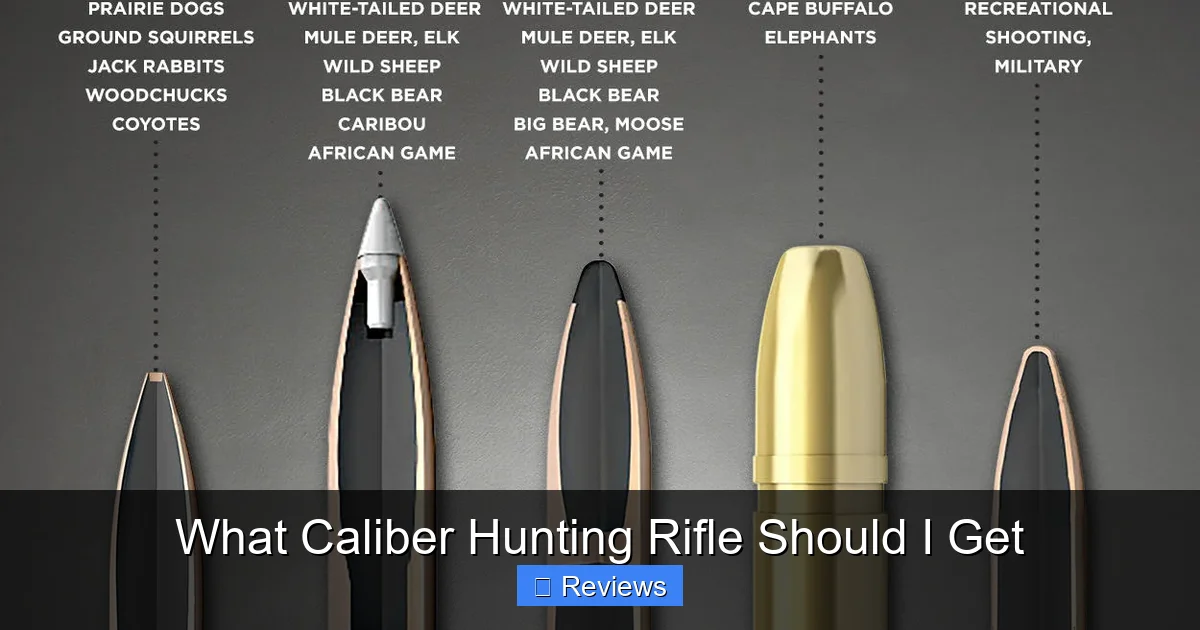
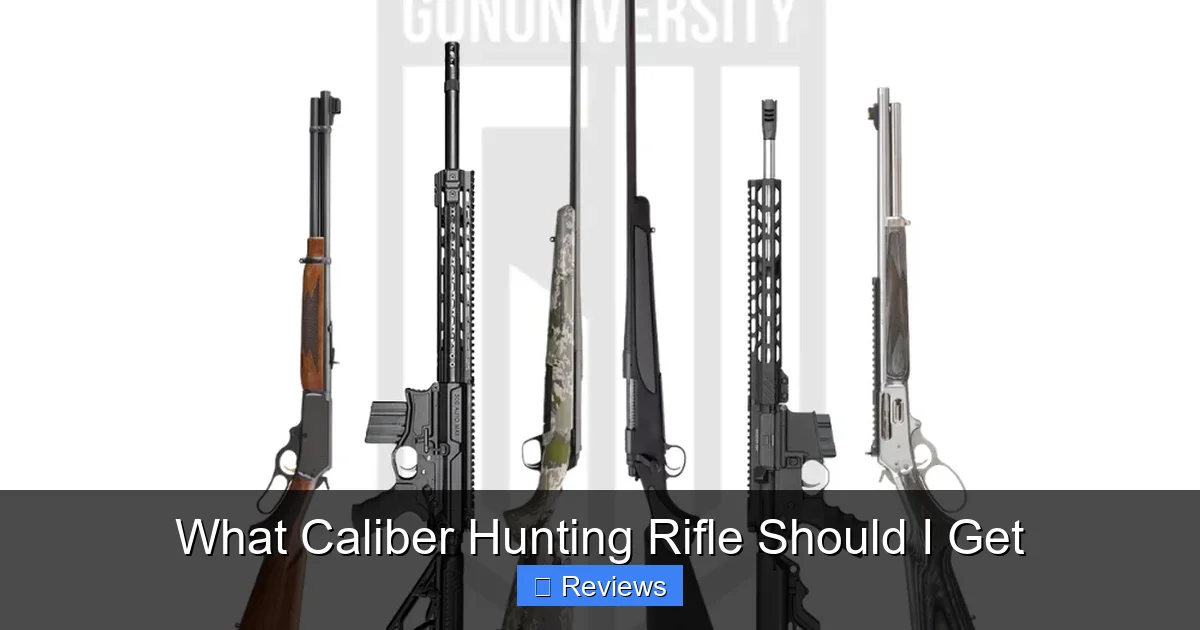
Visual guide about What Caliber Hunting Rifle Should I Get
Image source: 1source.basspro.com
1. Your Target Game Animal
This is arguably the most important factor. You wouldn’t use a fly swatter to kill a bear, and similarly, you shouldn’t use a varmint rifle for an elk. Different animals require different levels of kinetic energy and bullet construction to ensure a quick, humane kill. Ethical hunting dictates using enough power to dispatch the animal efficiently.
- Small Game/Varmints (Rabbits, Squirrels, Coyotes, Prairie Dogs): You need a small, fast bullet that’s highly accurate and causes minimal damage to edible meat (if applicable). Overkill is wasteful and unethical.
- Medium Game (Deer, Antelope, Wild Hogs): This category covers the most popular hunting in North America. You need a caliber that delivers sufficient energy to penetrate vital organs and cause rapid incapacitation, typically at ranges out to a few hundred yards.
- Large Game (Elk, Moose, Bear): These animals are tough, with heavy bones and dense muscle. You need calibers that deliver substantial energy, deep penetration, and use robustly constructed bullets to reach vital organs reliably.
- Dangerous Game (Grizzly Bear, African Buffalo): While less common for most hunters, this category demands maximum stopping power and penetration, often with heavy, tough bullets to prevent the animal from fighting back.
2. Hunting Environment and Expected Range
Where you hunt significantly influences what caliber hunting rifle should I get.
- Dense Woods/Brush: Shots are usually close (under 150 yards). A heavy, slower bullet that can punch through light brush might be advantageous, and a flat trajectory isn’t as critical. Recoil can be higher since you’re not shooting repeatedly at long range.
- Open Plains/Mountains: Shots can be very long (200-500+ yards). Here, a flat-shooting caliber that maintains energy at extended ranges is highly desirable. Wind drift also becomes a major consideration.
- Mixed Terrain: Many hunters encounter a mix, requiring a versatile caliber that performs well at moderate ranges but can still stretch out if needed.
3. Your Recoil Tolerance and Experience Level
This is often overlooked, but it’s paramount. A rifle that kicks too hard will make you flinch, lead to poor shooting habits, and ultimately make you less accurate and less confident. Accuracy trumps raw power every single time. If you can’t hit what you’re aiming at, even the most powerful magnum is useless.
- New Hunters/Recoil Sensitive: Starting with a lighter-recoiling caliber allows you to develop good shooting fundamentals without being intimidated. Calibers like the .243 Winchester or 6.5 Creedmoor are excellent choices here.
- Experienced Hunters: If you’re accustomed to recoil and can handle heavier-kicking rifles without flinching, then you have more options. Still, choose wisely; unnecessary recoil is just that – unnecessary.
Remember, a well-placed shot from a moderately recoiling rifle is far more effective than a poorly placed shot from a magnum.
4. Ammunition Availability and Cost
For practice and general hunting, common calibers are usually easier to find on store shelves and are often more affordable. If you choose a rare or specialized caliber, you might struggle to find ammo, especially during peak hunting seasons, and it can be expensive. For someone wondering what caliber hunting rifle should I get for general use, common calibers are a safe bet.
5. Local Hunting Regulations
Always check your local and state hunting regulations. Some areas have minimum caliber requirements for certain game, or restrictions on using certain types of ammunition (e.g., lead-free zones). Others may have specific rules regarding semi-automatic rifles or magazine capacity.
Popular Calibers for Different Game Types
Let’s look at some common and effective calibers across various game categories. This isn’t an exhaustive list, but it covers the main contenders you’ll likely encounter.
For Small Game and Varmints
- .22 Long Rifle (.22 LR): The classic. Perfect for squirrels, rabbits, and plinking. Minimal recoil, very inexpensive ammo. Not for anything larger than small critters.
- .223 Remington / 5.56 NATO: Extremely popular, especially for coyotes, prairie dogs, and similar-sized varmints. Low recoil, good accuracy, and widely available ammo. Some hunters use it for deer in areas where legal and with proper bullet selection, but it’s generally considered on the lighter side for deer.
- .22-250 Remington: A step up from the .223 in terms of velocity. Excellent for longer-range varminting. Flatter trajectory but more recoil and expense than a .223.
For Medium Game (Deer, Antelope, Hogs)
This is where most hunters will spend their time. Many calibers excel here, offering a balance of power, trajectory, and manageable recoil. When asking what caliber hunting rifle should I get for deer, these are your primary choices.
- .243 Winchester: A fantastic starter deer caliber, especially for youth or recoil-sensitive hunters. It’s accurate, has low recoil, and is effective on deer and antelope out to moderate ranges. Can also double as a varmint rifle with lighter bullets.
- 6.5 Creedmoor: The darling of modern shooters. Excellent accuracy, mild recoil, and superb ballistic performance at longer ranges. Very effective on deer, antelope, and even elk with proper bullet selection and shot placement. Ammo can be slightly more expensive than older calibers.
- .270 Winchester: A classic for a reason. Flat-shooting, powerful enough for most North American medium game, and widely available. Recoil is moderate but manageable for most hunters. Great for deer, sheep, and goats.
- .308 Winchester: Another hugely popular and versatile cartridge. Known for its inherent accuracy, compact rifle actions, and widespread ammo availability. Excellent for deer, hogs, and black bears. It’s a fantastic choice for a hunter asking what caliber hunting rifle should I get that does a bit of everything.
- .30-06 Springfield: The venerable American classic. Extremely versatile and powerful, capable of taking down virtually all North American game with the right bullet. More recoil than a .308, but still manageable for most. If you want one rifle for everything from deer to moose, the .30-06 is a top contender.
- 7mm Remington Magnum: A powerful magnum known for its flat trajectory and excellent long-range performance. Great for elk, moose, and sheep in open country. Comes with a noticeable increase in recoil and ammo cost.
For Large and Dangerous Game (Elk, Moose, Bear, African Plains Game)
These calibers deliver significant punch, often with increased recoil, and are designed for bigger, tougher animals.
- .300 Winchester Magnum: A very popular magnum for larger game. Offers increased velocity and energy over the .30-06, making it excellent for elk, moose, and large bears, especially at longer ranges. Recoil is substantial, requiring practice to master.
- .338 Winchester Magnum: A serious thumper for the largest North American game and tough African plains game. Delivers immense energy and deep penetration. Recoil is heavy, best suited for experienced shooters.
- .375 H&H Magnum: Often considered the entry-level for dangerous game in Africa, but also an excellent choice for Alaskan brown bears. Offers extreme reliability and stopping power. Very heavy recoil.
The “Perfect” Caliber Doesn’t Exist
You’ll hear passionate arguments for why one caliber is “the best.” The truth is, there is no single perfect caliber that excels in every situation for every hunter. The ideal choice is a personal one, a balance of the factors we’ve discussed. For a hunter asking what caliber hunting rifle should I get, the answer is usually a compromise.
Versatility vs. Specialization
Some calibers, like the .30-06 Springfield or .308 Winchester, are incredibly versatile. They can handle a wide range of game with different bullet weights and types, making them excellent choices if you only want one rifle for diverse hunting scenarios. Others, like the .22-250 or the .338 Win Mag, are more specialized, excelling in their niche but less ideal for general use.
If you’re starting out and mainly hunting deer, a .243 Winchester, 6.5 Creedmoor, or .308 Winchester are often recommended due to their manageable recoil, effectiveness, and widespread availability. As you gain experience, you might branch out to more specialized calibers if your hunting pursuits dictate it.
Beyond Caliber: Rifle Fit, Skill, and Ethics
While caliber is important, it’s only one piece of the puzzle. A great caliber in a poorly fitting rifle, or in the hands of an inexperienced shooter, will yield poor results. When you’re thinking about what caliber hunting rifle should I get, also consider these crucial elements:
Rifle Fit and Ergonomics
A rifle that fits you well is easier to shoot accurately. This means the length of pull (distance from the trigger to the buttstock) is correct, the scope is mounted at the right height for your eye, and the rifle feels comfortable and natural to shoulder. Try shouldering different rifles at a gun shop. A rifle that feels good in your hands will instill confidence.
Shooter Skill and Practice
No caliber can compensate for poor shooting. Regular practice at the range is essential. Learn to consistently place your shots accurately, understand your rifle’s capabilities, and know your effective range. This builds muscle memory, reduces flinching, and makes you a more ethical hunter. Invest more time and money in practice ammunition than in the biggest, baddest caliber.
Ethical Shot Placement
Ultimately, a humane kill comes down to precise shot placement into the animal’s vital organs. Even the most powerful magnum will only wound if the shot is poorly placed. Understanding animal anatomy and knowing your limits is paramount. Choose a caliber you can shoot accurately, and then commit to only taking shots you are confident in making.
Conclusion: Making Your Informed Choice
The journey to decide what caliber hunting rifle should I get is an exciting one. It’s a decision that combines personal preference, practical considerations, and ethical responsibilities. By carefully evaluating your target game, hunting environment, recoil tolerance, and the practicalities of ammunition, you can confidently select a caliber that will serve you well for years to come.
Don’t let the sheer number of options overwhelm you. Start by identifying your primary hunting goals. If you’re a beginner, lean towards versatile, moderately recoiling calibers like the .308 Winchester or 6.5 Creedmoor. If you’re seasoned and after bigger game, then the magnums might call your name. Remember, the best caliber is the one you can shoot accurately and confidently, ensuring an ethical and successful hunt every time. Good luck, stay safe, and happy hunting!
🎥 Related Video: The Best Survival Rifle
📺 Ron Spomer Outdoors – Podcast
The Best Survival Rifle Welcome to the Ron Spomer Outdoors Podcast! Affiliate Links – help support the channel at no additional …
Frequently Asked Questions
What’s the difference between a .308 and a .30-06?
Both the .308 Winchester and .30-06 Springfield use a .30-caliber bullet, but the .30-06 has a longer cartridge case, allowing for more powder and generally higher velocities and energy. The .308 typically comes in a shorter, lighter action, offers slightly less recoil, and is known for its accuracy, while the .30-06 provides more power for larger game at longer ranges.
Do I need a magnum caliber for deer hunting?
No, a magnum caliber is generally not necessary for deer hunting. Calibers like the .243 Winchester, 6.5 Creedmoor, .270 Winchester, .308 Winchester, or .30-06 Springfield are perfectly adequate and often more comfortable to shoot accurately. Magnum calibers often introduce excessive recoil and expense without providing a significant advantage for deer-sized animals.
Is bullet type more important than caliber for hunting?
Both caliber and bullet type are critically important. The caliber determines the basic power and projectile size, while the bullet’s construction (e.g., soft point, bonded, monolithic) dictates how it performs upon impact – its expansion, penetration, and weight retention. Using the correct bullet type for your chosen caliber and game is essential for ethical hunting.
How does rifle barrel length affect caliber performance?
Generally, longer rifle barrels allow for more complete burning of gunpowder, resulting in higher muzzle velocities and therefore more kinetic energy and a flatter trajectory for a given caliber. Shorter barrels might slightly reduce velocity but offer better maneuverability in dense cover. The ideal barrel length often balances ballistic performance with practical handling.
Should I prioritize recoil or power when choosing a caliber?
You should prioritize recoil you can comfortably manage. A slightly less powerful caliber that you can shoot accurately and consistently will always be more effective than a more powerful one that causes you to flinch or shoot poorly. Accuracy and ethical shot placement are paramount over raw power.
Can I use the same rifle for varmints and big game?
It depends on the caliber. A versatile caliber like the .243 Winchester can be used for both varmints (with lighter bullets) and smaller big game like deer (with heavier bullets). However, a dedicated varmint rifle (e.g., .223 Rem) is too light for large game, and a heavy big game rifle (e.g., .300 Win Mag) is overkill and impractical for varmints.