The term “assault rifle” often sparks strong feelings, yet its precise definition is frequently misunderstood. True assault rifles are military firearms capable of select-fire (semi-automatic and automatic bursts), chambered for an intermediate-power cartridge, and fed by a detachable magazine. Civilian rifles, even those with similar appearances, are typically semi-automatic only and differ fundamentally from their military counterparts.
Have you ever found yourself in a conversation about firearms, and the term “assault rifle” comes up? It’s a phrase that often carries a lot of weight, stirring up strong opinions and, frankly, a good deal of confusion. You might see images of military personnel holding powerful weapons, or hear news reports about civilian incidents, and the same label is applied. But what exactly are assault rifles? What makes a rifle an “assault rifle” versus just, well, a rifle?
It’s a really important question, because understanding the precise definition is key to cutting through the noise. Without a clear understanding, discussions about gun control, military hardware, and even historical events can quickly become muddled. This article is here to help you clear up that confusion, diving into the nitty-gritty of what assault rifles truly are, where they came from, and how they differ from other types of firearms.
So, let’s embark on this journey together. We’ll explore the technical definitions, historical context, and common misconceptions. By the end, you’ll have a much clearer picture, making it easier to understand the role these firearms play and the conversations surrounding them. We’ll strip away the sensationalism and get down to the facts, so you can speak about this topic with confidence and clarity.
Key Takeaways
- Military Definition: A true assault rifle is defined by three key characteristics: select-fire capability (semi-automatic and full-automatic/burst fire), an intermediate-power cartridge, and a detachable magazine.
- Historical Origin: The concept of the assault rifle emerged during World War II, designed to bridge the gap between submachine guns and full-power battle rifles, providing effective firepower at various ranges.
- Intermediate Cartridge Importance: Unlike full-power rifle cartridges, intermediate cartridges offer a balance of manageable recoil in automatic fire and sufficient range for most combat engagements.
- Civilian vs. Military: Most rifles commonly referred to as “assault weapons” in civilian contexts, like the AR-15, are *not* assault rifles by the military definition because they lack select-fire capability; they are semi-automatic only.
- The AR-15 Platform: The AR-15 is a popular semi-automatic rifle platform in the U.S., sharing cosmetic similarities with military rifles like the M16/M4 but fundamentally different in its operational mechanism.
- Legal and Political Debate: The definition and regulation of assault rifles and “assault weapons” are central to ongoing legislative and public discussions, often leading to confusion due to varying interpretations of terminology.
Quick Answers to Common Questions
What is the key defining feature of a military assault rifle?
The key defining feature is its select-fire capability, meaning it can switch between semi-automatic (one shot per trigger pull) and full-automatic or burst-fire modes.
Are civilian AR-15 rifles considered true assault rifles?
No, civilian AR-15 rifles are not considered true assault rifles because they are semi-automatic only and lack the select-fire capability of military versions.
What type of cartridge do assault rifles typically use?
Assault rifles typically use an intermediate-power cartridge, which is more powerful than a pistol cartridge but less powerful than traditional full-power rifle cartridges, offering a balance of recoil and range.
When did the concept of the assault rifle originate?
The concept of the assault rifle originated during World War II with the German Sturmgewehr 44 (StG 44), which influenced subsequent military rifle designs.
Why are assault rifles important for military infantry?
Assault rifles are important for military infantry because their versatility allows soldiers to engage targets effectively at various ranges, providing both accurate single shots and suppressive automatic fire with manageable recoil.
📑 Table of Contents
- Defining the Term: What Exactly is an Assault Rifle?
- Key Characteristics: What Makes a Rifle an “Assault Rifle”?
- Common Misconceptions and the AR-15
- The Role of Assault Rifles in Military and Modern Warfare
- The Legal and Political Landscape Surrounding Assault Rifles
- Understanding the Impact: Beyond the Technicalities
- Conclusion
Defining the Term: What Exactly is an Assault Rifle?
The term “assault rifle” isn’t just a catchy phrase; it has a very specific technical definition rooted in military history and firearm design. To truly understand what are assault rifles, we need to look at these core characteristics. It’s a combination of features that makes a rifle an “assault rifle,” not just one single thing.
The Three Pillars of an Assault Rifle
When firearm experts and military strategists talk about assault rifles, they’re generally referring to a weapon that possesses three key attributes:
- Select-Fire Capability: This is perhaps the most defining feature. A true assault rifle can operate in both semi-automatic mode (one shot per trigger pull) and full-automatic mode (continuous firing as long as the trigger is held, until the magazine is empty) or burst-fire mode (a fixed number of rounds, like three, per trigger pull). This ability to switch between firing modes is crucial.
- Intermediate-Power Cartridge: This is a fascinating aspect. Unlike older, full-power battle rifles (think World War I or II bolt-action rifles), assault rifles use a cartridge that’s less powerful. It’s more powerful than a pistol cartridge but less powerful than a traditional rifle cartridge. Examples include the 7.62x39mm (used in the AK-47) or the 5.56x45mm NATO (.223 Remington) (used in the M16/M4). This “intermediate” power is a game-changer because it makes the weapon much more controllable during automatic fire.
- Detachable Box Magazine: Assault rifles are designed to be reloaded quickly and efficiently in combat. They achieve this with a removable magazine, typically holding 20, 30, or more rounds, which can be swapped out in seconds.
Without all three of these characteristics, a firearm is technically not considered an assault rifle by this widely accepted military definition.
A Brief History of the Term
The concept of the assault rifle emerged during World War II. The German term “Sturmgewehr,” meaning “storm rifle” or “assault rifle,” was coined to describe the StG 44. This groundbreaking weapon combined the high rate of fire of a submachine gun with the accuracy and range of a rifle, all while using a more manageable intermediate cartridge. It was a revolutionary design, influencing virtually all subsequent military rifle development. The idea was to give soldiers a versatile weapon effective at the typical combat ranges of 100-300 meters, where most engagements actually took place, rather than the much longer ranges often associated with traditional rifles.
Key Characteristics: What Makes a Rifle an “Assault Rifle”?
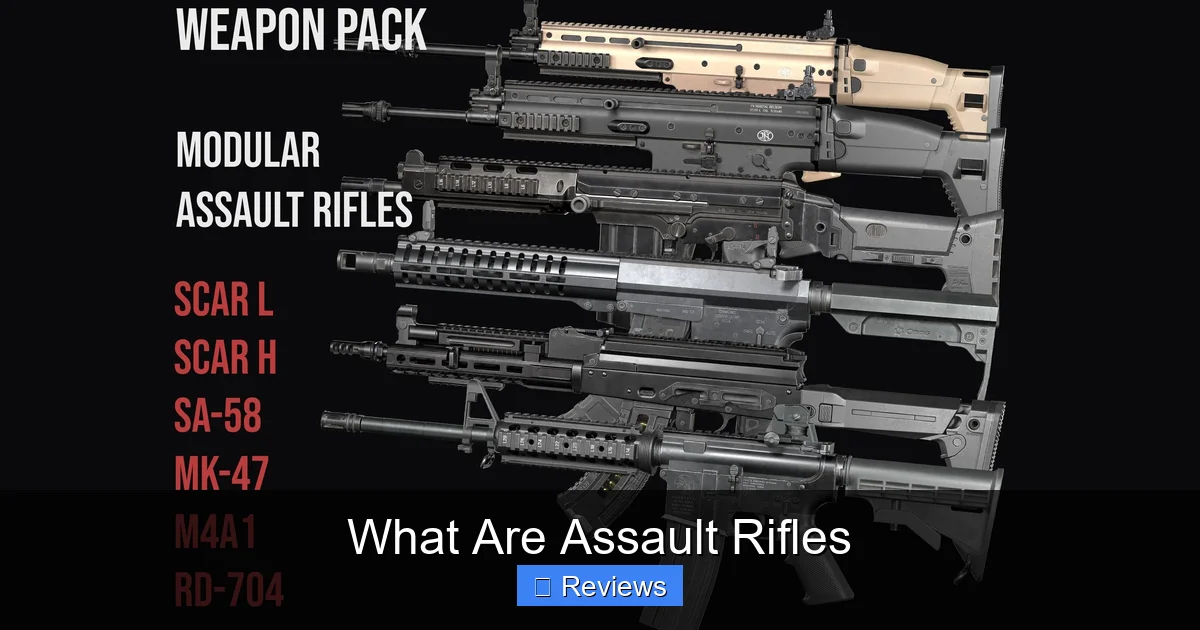
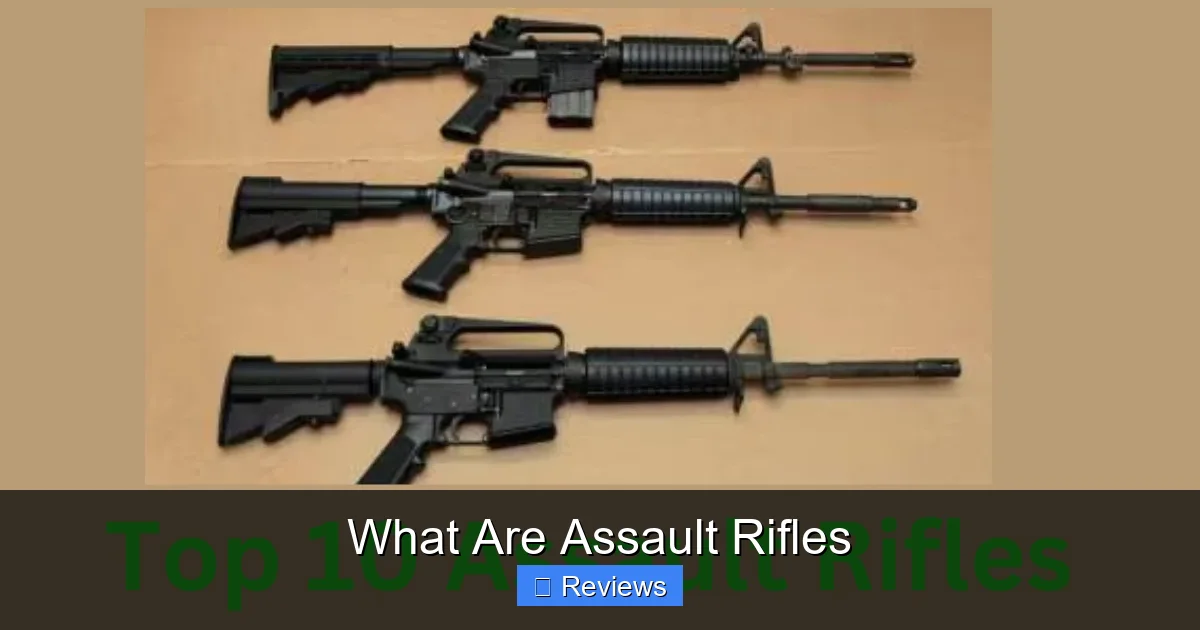
Visual guide about What Are Assault Rifles
Image source: img-new.cgtrader.com
Let’s dig a bit deeper into those defining characteristics. Understanding these features helps us distinguish true military assault rifles from other firearms, especially those that might look similar but function differently.
The Power of Select-Fire
Imagine being in a combat situation. Sometimes you need precise, single shots, like when aiming at a distant target. Other times, you need to suppress an enemy position with a rapid spray of bullets. Select-fire capability allows a soldier to switch between these modes instantly.
- Semi-automatic: Each pull of the trigger fires one round. This is great for accuracy and conserving ammunition.
- Full-automatic/Burst: Holding the trigger down fires continuously (full-auto) or a set number of rounds (burst-fire). This provides high volume of fire, crucial for close-quarters combat or suppressing enemy movement.
This versatility is a cornerstone of what are assault rifles and why they became so effective on the battlefield.
The Intermediate Cartridge: A Smart Compromise
Before assault rifles, militaries largely used two types of firearms: rifles firing powerful, long-range cartridges (like the .30-06 Springfield or 8mm Mauser) and submachine guns firing pistol cartridges.
- Full-power rifle cartridges were very accurate and powerful at long distances, but their heavy recoil made them nearly impossible to control in automatic fire.
- Pistol cartridges were easy to control in automatic fire but lacked the range and power needed for most rifle engagements.
The intermediate cartridge (like the 5.56x45mm or 7.62x39mm) was the brilliant solution. It had enough power and range for typical combat distances but significantly less recoil, making automatic fire much more controllable. This balance of power, range, and controllability is a hallmark of what are assault rifles.
The Detachable Magazine: Fast and Efficient
Older military rifles often used fixed internal magazines, which were loaded slowly using stripper clips. The detachable box magazine, a key feature of assault rifles, changed everything.
- Speed: A soldier can drop an empty magazine and insert a full one in just a few seconds, drastically reducing reload time in a firefight.
- Capacity: Magazines typically hold 20-30 rounds, providing a substantial amount of firepower before needing a reload.
This design allows soldiers to maintain a high volume of fire and adapt quickly to changing combat conditions.
Common Misconceptions and the AR-15
When people ask “what are assault rifles,” one of the biggest areas of confusion often revolves around the AR-15 and similar civilian firearms. It’s vital to understand the difference between a true military assault rifle and a semi-automatic rifle designed for civilian use.
The “Assault Weapon” vs. “Assault Rifle” Debate
In political and media discourse, the term “assault weapon” is frequently used. This term, however, often refers to semi-automatic civilian rifles that have certain cosmetic features resembling military firearms (like pistol grips, adjustable stocks, or flash suppressors). Crucially, these civilian rifles *do not* have select-fire capability. They fire only one round per trigger pull, just like many hunting rifles or handguns.
The AR-15: A Civilian Semi-Automatic Rifle
The AR-15 is perhaps the most famous example of a firearm commonly, yet often inaccurately, labeled as an “assault rifle.”
- Origin: The AR-15 was originally designed by ArmaLite in the 1950s. It was later licensed to Colt, which developed the select-fire military version, the M16.
- Civilian Version: The AR-15 sold to civilians is *always* semi-automatic. It fires one shot per trigger pull, just like a standard pistol or hunting rifle. It cannot fire in full-automatic or burst modes.
- Similar Appearance: The AR-15 looks very similar to the military M16 or M4 because it shares the same basic platform and many parts. This is why it’s often confused with military assault rifles. However, the internal mechanisms for firing are distinctly different to prevent automatic fire.
- Popularity: The AR-15 platform is incredibly popular in the United States for various reasons, including sport shooting, hunting, home defense, and competitive events. Its modular design allows for extensive customization, which adds to its appeal.
Think of it like this: a high-performance sports car (like a Ferrari) might look very similar to its race-track counterpart. They share a common design philosophy and many aesthetic elements. But the street-legal version has fundamental differences (like speed governors, passenger seats, and emission controls) that distinguish it from a pure racing machine. Similarly, the civilian AR-15 is a different class of machine compared to military assault rifles.
The Role of Assault Rifles in Military and Modern Warfare
Understanding what are assault rifles isn’t complete without looking at their impact on military strategy and their evolution in modern warfare. These weapons fundamentally changed how infantry fought and continue to be the primary service rifles for militaries worldwide.
Revolutionizing Infantry Tactics
When the StG 44 debuted, and later the AK-47 and M16, they changed battlefield dynamics. Before assault rifles, infantry units typically had a mix of long-range, accurate rifles and short-range, high-volume submachine guns. This created a gap in effective firepower at intermediate ranges.
- Increased Firepower: Assault rifles allowed a single soldier to engage targets effectively at ranges up to 300-400 meters with reasonable accuracy, and also provide suppressive fire in close quarters. This meant more consistent firepower across the entire squad.
- Versatility: Soldiers no longer needed to carry different weapons for different situations. A single assault rifle could handle most combat scenarios, from open-field engagements to urban warfare.
- Lighter Load: While not universally lighter than older rifles, the combination of an intermediate cartridge and a more compact design sometimes allowed soldiers to carry more ammunition for the same weight, or reduce their overall load.
These advantages led to a rapid adoption of assault rifles by almost every military force globally.
Evolution and Modern Adaptations
Since their inception, assault rifles have continued to evolve. While the core principles remain, modern designs incorporate new materials, modularity, and advanced sighting systems.
- Modularity: Many modern assault rifles, like the M4 carbine (a shorter version of the M16) or various AK variants, feature modular designs. This means components like stocks, handguards, and sights can be easily swapped out to adapt to specific missions or user preferences. This also allows for the easy attachment of accessories like grenade launchers, lights, or laser pointers.
- Ergonomics: Designs have improved ergonomics to make the weapons more comfortable and intuitive to use, reducing fatigue and improving marksmanship.
- Materials: The use of lighter, stronger polymers and advanced alloys has reduced the weight of many modern assault rifles without sacrificing durability.
- Optics: While iron sights are still standard, modern military doctrines heavily integrate optical sights (like red dot sights or low-power variable optics) onto assault rifles, significantly enhancing a soldier’s ability to acquire targets quickly and accurately.
Today, assault rifles like the AK-47/AKM, M16/M4, FN SCAR, and HK416 remain the workhorses of infantry units around the world, embodying the principles laid out by their predecessors.
The Legal and Political Landscape Surrounding Assault Rifles
The debate around what are assault rifles and “assault weapons” is incredibly complex, touching on legal definitions, constitutional rights, and public safety concerns. It’s a topic that frequently dominates news cycles and political discussions, especially in countries like the United States.
Varying Legal Definitions
One of the primary sources of confusion is that legal definitions often differ from the military-technical definition of an assault rifle.
- U.S. Federal Law: In the U.S., the term “assault weapon” is primarily a legal and political one. The now-expired Federal Assault Weapons Ban of 1994 defined “assault weapons” not by their select-fire capability (which is already heavily regulated under the National Firearms Act of 1934), but by a combination of semi-automatic operation and cosmetic features (like a pistol grip, bayonet lug, flash hider, or telescoping stock).
- State Laws: Many U.S. states have their own “assault weapon” bans, with varying definitions. Some states might ban specific firearms by name (like “AR-15”), while others use feature-based definitions similar to the federal ban.
- International Laws: Regulations regarding automatic firearms (true assault rifles) are typically very strict worldwide, often limiting ownership to military and law enforcement, or requiring special licenses that are difficult to obtain. Civilian ownership of semi-automatic rifles that look like assault rifles also varies greatly by country, from relatively permissive to outright banned.
This patchwork of definitions makes it challenging to have a consistent national or international discussion about what are assault rifles and their civilian counterparts.
The Core of the Debate
The political debate often centers on several key points:
- Public Safety: Proponents of “assault weapon” bans argue that these firearms, even in semi-automatic form, are designed for rapid, high-volume killing and pose an unacceptable risk in civilian hands, particularly in the context of mass shootings.
- Second Amendment Rights: Opponents argue that such bans infringe upon the Second Amendment right to bear arms, stating that these firearms are commonly owned for self-defense, sport, and hunting, and that cosmetic features do not dictate their danger. They also emphasize that true assault rifles (automatic) are already heavily regulated.
- Effectiveness of Bans: There’s ongoing debate about whether bans on “assault weapons” effectively reduce crime and violence, with different studies reaching different conclusions.
Understanding these different perspectives is crucial for anyone trying to navigate the complex discourse surrounding these firearms. It highlights the gap between a technical definition and a political or legal one.
Understanding the Impact: Beyond the Technicalities
Beyond the technical specifications and legal jargon, assault rifles and the broader category of “assault weapons” have a profound societal impact. They are symbols, tools, and subjects of intense discussion, reflecting our values, fears, and aspirations regarding security and liberty.
Symbolism and Perception
For many, the image of an assault rifle evokes power, danger, and conflict. It’s a symbol deeply ingrained in our collective consciousness, often representing military might or, tragically, mass violence. This symbolism shapes public perception far more than the technical distinctions between semi-automatic and full-automatic fire. When someone hears “assault rifle,” they often picture the consequences, not the mechanics.
Role in Global Conflicts
True military assault rifles have been central to conflicts around the globe for decades. The AK-47, for example, is one of the most widely produced firearms in history and has been used in countless wars, insurgencies, and liberation movements. Its reliability and ease of use made it an iconic weapon, profoundly influencing geopolitical events and the lives of millions. These weapons are not just tools; they are instruments of war that define eras.
Civilian Ownership and Rights
In countries like the United States, the right to own firearms, including semi-automatic rifles that resemble military assault rifles, is a deeply held belief for many. For these individuals, owning such a rifle can be about self-defense, participation in shooting sports, hunting, or collecting historical firearms. They often see these weapons as a testament to personal freedom and the ability to protect oneself and one’s family. The debate here is not just about the gun itself, but about the fundamental rights and responsibilities of citizens.
The Need for Clear Communication
Given the emotional and political weight of the topic, clear and accurate communication is more important than ever. When discussing what are assault rifles, using precise terminology helps bridge divides and fosters more productive conversations. Confusing military assault rifles with civilian semi-automatic “assault weapons” can inadvertently heighten tensions and misinform the public. Educating ourselves and others on the specific definitions and characteristics is a vital step toward constructive dialogue.
By looking beyond just the technical parts of what are assault rifles, we can appreciate the broader human context—the history, the politics, the fears, and the freedoms—that make this topic so compelling and so critical to understand.
Conclusion
We’ve journeyed through the complex world of assault rifles, from their precise military definition to their societal impact. We started by asking “what are assault rifles?” and discovered that a true assault rifle is a select-fire, intermediate-cartridge, detachable-magazine firearm, designed primarily for military use. This technical understanding is crucial, helping us differentiate between military hardware and civilian firearms.
We also tackled the common misconception surrounding the AR-15 platform, understanding that while it shares a similar appearance with military versions, civilian AR-15s are semi-automatic only, lacking the full-auto capability that defines a true assault rifle. This distinction is not just a matter of semantics; it’s fundamental to the design and legal classification of these weapons.
Ultimately, discussions about firearms, especially those labeled as “assault rifles” or “assault weapons,” are often layered with strong emotions and deeply held beliefs. By arming ourselves with accurate information and precise terminology, we can engage in these conversations with greater clarity and a more informed perspective. Understanding the facts is the first step towards meaningful dialogue, whether you’re interested in military history, gun rights, or public safety.
🎥 Related Video: Top 10 Deadliest Assault Rifles
📺 MILITARY CYPHER
In this video, we present the **Top 10 Deadliest Assault Rifles in the World**, used by militaries and special forces globally.
Frequently Asked Questions
What is the difference between an “assault rifle” and an “assault weapon”?
A military “assault rifle” is a select-fire firearm (capable of automatic fire) chambered for an intermediate cartridge. An “assault weapon” is primarily a legal term for a semi-automatic civilian firearm that often has cosmetic features similar to military rifles, but it cannot fire automatically.
Why do military assault rifles use an intermediate cartridge?
Military assault rifles use an intermediate cartridge because it provides a balance of sufficient power and range for most combat engagements while having less recoil than full-power rifle cartridges, making the weapon controllable during automatic fire.
Are automatic assault rifles legal for civilians to own in the United States?
Automatic assault rifles are highly regulated in the United States under the National Firearms Act (NFA) of 1934. While technically legal in some states, ownership requires extensive background checks, federal registration, and often a substantial tax stamp, with civilian transfer of newly manufactured full-auto firearms generally prohibited since 1986.
What makes the AR-15 so popular among civilian owners?
The AR-15 is popular among civilian owners due to its modular design, allowing for extensive customization. It’s also praised for its accuracy, light recoil, and versatility for various uses like sport shooting, hunting, and home defense.
How did assault rifles change warfare?
Assault rifles revolutionized warfare by providing individual soldiers with a versatile weapon capable of both precise semi-automatic fire and effective suppressive automatic fire at typical combat ranges, bridging the gap between older rifles and submachine guns.
Is the term “assault rifle” politically charged?
Yes, the term “assault rifle,” and especially “assault weapon,” is often highly politically charged. Its use can evoke strong emotional responses and frequently leads to confusion between the precise military definition and broader, often feature-based, legal or public definitions, impacting policy debates.