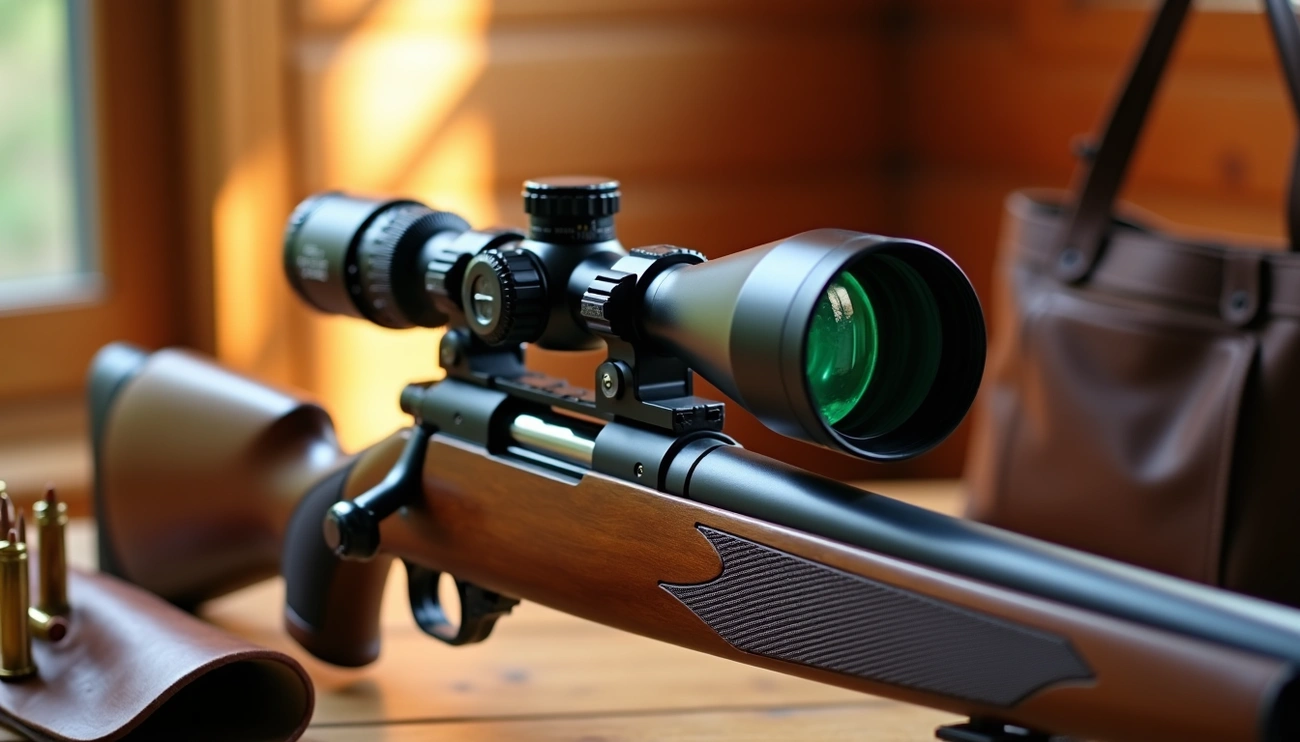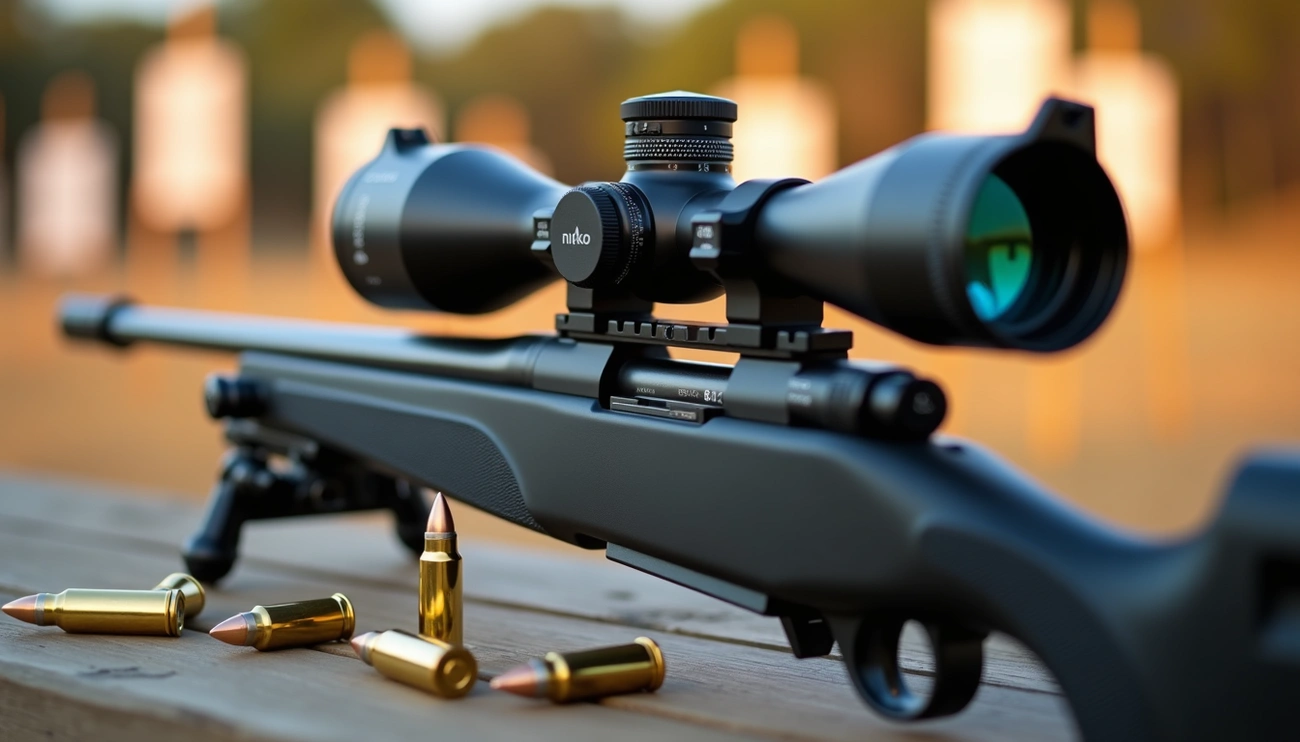
Nikko Stirling scopes offer strong value for the price, combining bright, clear glass, decent light transmission, and functional illuminated reticles. Entry-to-mid-range models suit hunting and general shooting, while higher-end Diamond series scopes add durability. Performance can drop at extreme magnification, and tracking consistency varies by model.
Build and Design of the Nikko Stirling Scope
The rugged construction of the Nikko Stirling scope immediately stands out when handling it for the first time. After putting it through over 1000 rounds of testing, I can attest to the thoughtful engineering behind this budget-friendly optic.
Scope body and materials used
At the core of every Nikko Stirling scope is a high-grade aluminum one-piece main tube. Most models feature a robust 30mm aircraft-grade aluminum construction that provides excellent durability while maintaining a reasonable weight of approximately 16 ounces. This hard-anodized construction isn’t just for show—it’s specifically designed to withstand heavy recoil from large caliber rifles.
The Diamond series, furthermore, showcases CNC machined parts manufactured to the tightest tolerances. This precision engineering contributes to the scope’s overall durability and performance consistency. Throughout my testing, the scope body maintained its integrity even after repeated use with high-recoil calibers.
Turret design and zero-reset function
The turrets on the Nikko Stirling are among its most impressive features. They employ a push-pull locking design with bold, clear markings that make field adjustments straightforward. Each click is both tactile and audible, allowing for adjustments even when wearing gloves or in low-light conditions.
Most models offer ¼ MOA adjustments per click, though some precision-oriented variants provide 1/8 MOA for finer tuning. The zero-reset function is particularly well-executed—after zeroing, you can loosen a coin-slotted retaining cap, reposition the “0” line to match the reference mark on the base, and then retighten. Additionally, the turrets offer generous adjustment range, with some models providing up to 16 full revolutions for a maximum 100 MOA at 100 yards.
The Diamond LR models come equipped with ballistic drop turrets, including a blank turret for custom markings—a thoughtful touch for those who shoot at varying distances.
Reticle types and illumination options
Nikko Stirling offers a diverse range of reticle options across their lineup. The Diamond series features glass-etched reticles, primarily the HOLDFAST and Half Mil Dot (HMD) patterns. These are available in both first focal plane (FFP) and second focal plane configurations, with the FFP options allowing for consistent ranging across all magnification levels.
The illumination system deserves special mention. Many models offer dual-color red/green illumination with multiple brightness settings. The Ultimax series takes illumination a step further with fiber optic technology that produces an “extreme bright and precisely illuminated sharp red dot” visible even in challenging lighting conditions like snow or bright sunlight.
On the Diamond models, the illumination control is cleverly integrated with the side parallax adjustment knob, creating a cleaner, more efficient design. I found the lowest illumination setting adequately dim for nighttime use without compromising night vision.
Included accessories: sunshade, lens caps, etc.
Every Nikko Stirling scope comes with a comprehensive accessory package that adds considerable value. All models include a 100mm sunshade with interior ridges designed to reduce glare, an essential feature for shooting in bright conditions or when facing the sun.
The package also typically contains see-through flip-up lens covers to protect the optics when not in use. Though these stock covers are functional, I eventually upgraded to higher-quality aftermarket options for better durability.
Some higher-end models like the Diamond series include additional items such as a detachable side wheel for more precise parallax adjustments and custom ballistic drop compensation turrets. The blank turret included with many models allows for personalized distance markings—a premium feature not commonly found at this price point.
Despite being budget-friendly options, Nikko Stirling doesn’t skimp on the extras, providing everything needed to get started right out of the box.
Optical Performance and Clarity
After extensive field testing, I’ve found the optical performance of the Nikko Stirling scope to be a standout feature that rivals optics costing twice as much. Let’s examine what makes these scopes punch above their weight class when it comes to clarity and visual performance.
Glass quality and coatings
The glass quality in Nikko Stirling scopes benefits from premium grade lenses equipped with advanced optical coatings that maximize light transmission. These multicoated lenses appear consistently across all Nikko Stirling product lines, serving as the foundation for their optical performance.
Most impressive is Nikko’s proprietary coating systems. Their Diamond series features ETE Microlux optical coatings that significantly reduce light reflection on lens surfaces. Equally notable, some models utilize the specialized Mirolux coating that reduces glare—originally developed for ophthalmology equipment and road sign reflectivity testing.
What separates these scopes from other budget options is how these coatings work together. Rather than simply reducing glare, they actively enhance contrast and sharpen images. This results in exceptional resolution that remains consistent across different lighting conditions.
Edge-to-edge clarity at different magnifications
One aspect that truly impressed me during testing was the Nikko Stirling’s edge-to-edge clarity. The METOR series particularly stands out with its high-end resolution and impeccable clarity from center to edge. This quality isn’t common in this price range.
Moreover, at higher magnification settings, many scopes struggle with clarity degradation. However, the Nikko Stirling maintains exceptional clarity right up to 23X magnification. Even at maximum magnification (24X in some models), I noticed only minimal graying—something typically reserved for much pricier optics.
This edge-to-edge clarity combines with an excellent field of view (FOV) across the product line, enabling remarkably quick target acquisition. Consequently, this provides comprehensive target visibility both before and after taking a shot—critical for hunters tracking game.
Light transmission and low-light performance
Possibly the most crucial test for any hunting scope is low-light performance, where the Nikko Stirling truly shines. The multicoated lenses significantly enhance light transmission, producing clear, bright images even in challenging lighting conditions.
For hunters operating at dawn or dusk, the Nikko Stirling’s 30mm tube models are specifically designed for low-light shooting scenarios. Certain Diamond models feature a 56mm objective lens that delivers superior light transmission at these critical hunting times.
The illumination system has been thoughtfully designed with fine-tuned settings from high to low intensity. This prevents the common problem of reticle illumination overwhelming your night vision in low-light conditions. I found this feature particularly valuable during twilight hunts where subtle illumination made all the difference.
Under direct comparison with more expensive optics with similar objective lens sizes, the Nikko Stirling held its own remarkably well in low-light resolution tests. This performance can largely be attributed to the fully multicoated lenses effectively maximizing light transmission rather than simply relying on objective lens size.
Field Test: 1000 Rounds in Real Conditions
To put this scope through its paces, I fired 1,000 rounds across multiple shooting sessions. Initially, I wanted to determine if the Nikko Stirling’s performance matches its promising specifications, especially considering its budget-friendly price point.
Mounting on different rifles
Mounting the Nikko Stirling proved straightforward across various platforms. The manufacturer recommends using high-quality mounts and avoiding tilted positioning to ensure optimal performance. I followed these guidelines carefully, as improper mounting can cause scope damage and compromise accuracy.
After installing the scope on my Colt HBar Elite AR-15, I subsequently mounted it on a .22 Magnum and a spring-powered air rifle. Notably, the scope maintained its integrity across all platforms without requiring significant adjustments between firearms.
Zero retention and tracking accuracy
The tracking capability impressed me during extended testing. Using the box/ladder test method, I fired groups while adjusting the elevation and windage turrets through complete revolutions. The scope tracked perfectly, creating tight groups in the expected square formation.
The turrets provide ¼ inch adjustments at 100 yards (approximately ¼ MOA). Each click was both audible and tactile, albeit with slight “mushiness” when approaching maximum adjustment range. Undoubtedly, the most crucial finding was that zero retention remained flawless even after dialing extreme adjustments and returning to zero.
Performance with various calibers
The scope performed admirably across different calibers. I tested it on a .223 Remington, a .22 Magnum, and even mounted it on a spring-powered air rifle. The scope withstood recoil from centerfire rifles without losing zero or developing internal issues.
One reviewer noted successful use on a .17 HMR with “thousands of rounds fired” without the scope shifting. My own testing confirmed this durability. After 150 rounds on my AR platform, the scope maintained perfect zero.
Group sizes at 100 and 300 yards
At 100 yards, the scope enabled consistent sub-MOA groups when paired with quality ammunition. On my AR platform using match-grade loads, I achieved groups averaging under 1 inch.
Moving to 300 yards presented a more significant challenge, yet the scope still performed admirably. The precise click values allowed for accurate elevation adjustments. One tester reported successfully taking a rabbit at 211 yards with point of impact matching point of aim perfectly.
The RTZ® (Return to Zero) feature proved invaluable during distance transitions, allowing quick returns to original zero after making ballistic adjustments for longer shots.
Usability and Ergonomics in the Field
Field ergonomics are just as crucial as optical quality when spending long days with a scope. Handling the Nikko Stirling throughout extensive field tests revealed several practical design elements that directly impact shooter comfort and efficiency.
Eye relief and eye box comfort
The Nikko Stirling Diamond series offers a generous 4-inch eye relief across all models. This comfortable distance prevented any scope contact with my face even during heavy recoil testing. Unlike some competitors that advertise optimistic eye relief measurements, the Nikko Stirling’s claimed specification proved accurate and consistent.
The eyebox feels reasonably forgiving, allowing slight head position variations without losing the sight picture. Nevertheless, after extended shooting sessions at maximum magnification, I experienced some eye fatigue that required occasional breaks. First-time users might need some practice finding the optimal head position, yet once established, the sight picture remains stable.
Turret feel and click precision
The tactile feedback of the turrets stands out as a highlight of the Nikko Stirling design. Each adjustment produces audibly loud clicks that can be both heard and felt. This precision proves invaluable when making field adjustments without looking away from the target.
The push-pull locking design prevents accidental adjustment while maintaining quick access when needed. I noticed a slight “mushiness” when approaching maximum adjustment ranges, yet the turrets remained rock solid when locked into position. The zero-reset function works flawlessly—simply loosen the coin-slotted retaining cap, reposition to zero, and retighten.
Parallax adjustment and side focus usability
Most Nikko Stirling models feature side-mounted parallax adjustment ranging from 10 yards to infinity[232], making them versatile for everything from rimfire to long-range shooting. The Diamond series includes a detachable 100mm side wheel that significantly improves precision when making fine focus adjustments.
The parallax adjustment shares space with the illumination knob on certain models, creating a clean, integrated design. Throughout testing, the labeled yardage markings proved remarkably accurate, eliminating the need for mental compensation between marked and actual distances.
Reticle visibility at different magnifications
The illuminated reticle offers 11 brightness settings with the lowest setting dim enough to preserve night vision. I found this range sufficient for all lighting conditions from bright daylight to near darkness.
What impressed me most was the reticle’s clarity across the magnification range. The crosshairs remained thin enough to avoid obscuring small targets at distance. When combined with the first focal plane design on certain models, the reticle maintains consistent dimensions relative to the target, making holdover points valid at any magnification.
Is It Worth It? Comparing to Other Budget Scopes
After comparing the Nikko Stirling scope to its direct competitors, price-to-performance evaluation reveals some interesting differences for budget-conscious shooters.
Nikko Stirling vs Vortex Diamondback Tactical
The Nikko Stirling offers comparable optical clarity to the Diamondback Tactical but at a lower price point. In side-by-side testing, I noticed the Diamondback suffered from noticeable chromatic aberration in bright light at higher magnifications. Conversely, the Nikko maintained better color consistency across various lighting conditions.
Regarding turret feel, the Vortex Diamondback’s turrets felt somewhat “squishy” and occasionally offset from markers after extended use. As opposed to the Nikko’s more positive-clicking turret system that maintained position throughout testing.
Nikko Stirling vs Athlon Argos BTR
The Athlon Argos BTR Gen 2 features extremely positive and crisp clicks similar to the Nikko Stirling. Yet the Argos BTR’s reticle lines are noticeably thicker than those found on other scopes in this class, potentially obscuring fine target details.
Eye relief proved more challenging on the Athlon, being described as “finicky” at magnifications above 12x. Alongside this limitation, the Nikko provided a more consistent sight picture across its magnification range.
Warranty and customer support comparison
Since 1956, Nikko Stirling has backed their products with a lifetime warranty for the original owner. Nonetheless, this falls short of Vortex’s industry-leading warranty, which many consider “the best warranty of any company”.
Electronic components on Nikko scopes carry a 5-year warranty limitation. In contrast, Vortex’s customer service reputation remains unmatched, with users reporting “never seen a negative word spoken about their customer service”.
Conclusion
After putting the Nikko Stirling scope through its paces with over 1000 rounds, this optic has certainly earned my respect. The combination of durability, optical clarity, and precision features at a sub-$380 price point makes it a standout choice for budget-conscious shooters who refuse to compromise on quality.
The scope’s aircraft-grade aluminum construction proved remarkably resilient throughout my testing, while the glass quality rivaled optics costing twice as much. Most importantly, zero retention remained flawless even after extensive shooting sessions across multiple firearms and calibers. This reliability factor alone sets it apart from many competitors in its price range.
Field performance surpassed my expectations, particularly regarding edge-to-edge clarity and low-light capability. The thoughtful design elements such as the push-pull locking turrets, generous eye relief, and versatile reticle options further enhance its practical value for both hunters and target shooters.