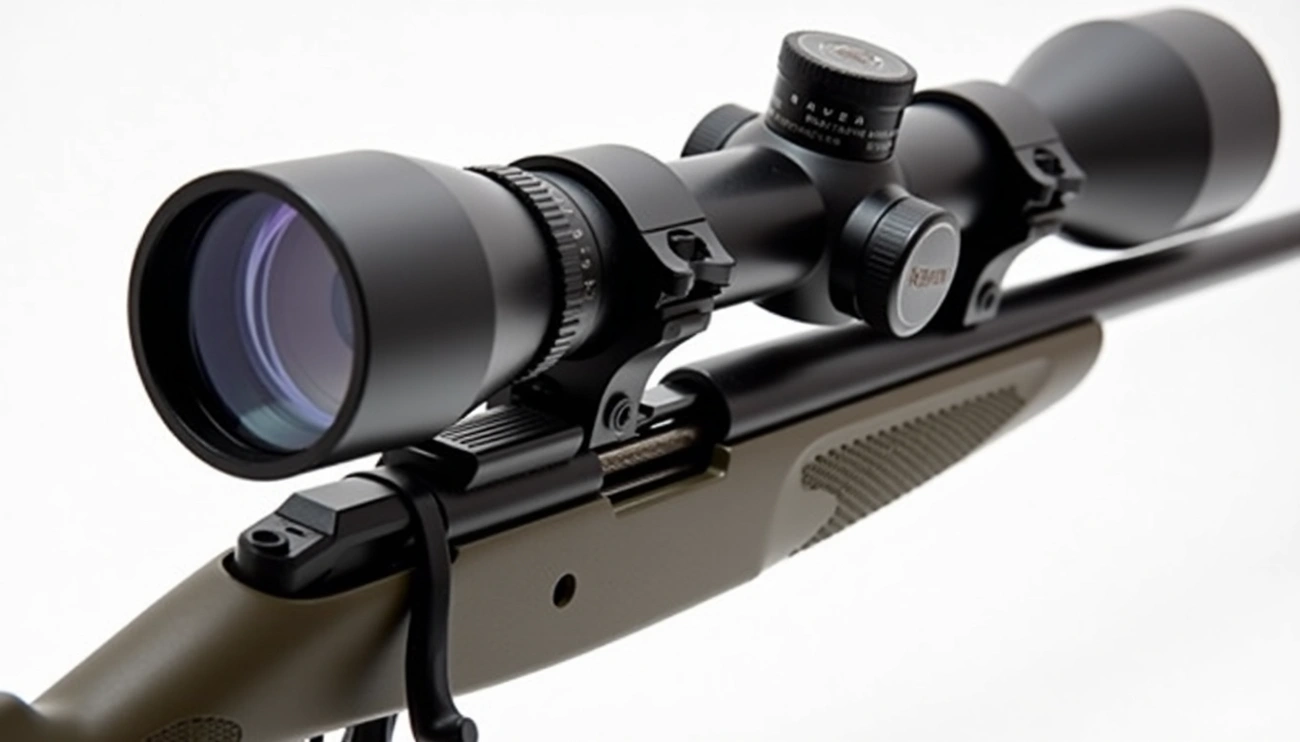
Maven rifle scopes deliver excellent optical clarity, precise tracking, and durable construction at a competitive price. Built with Japanese glass and minimalist designs, Maven scopes perform well for hunting and long-range shooting. Direct-to-consumer pricing allows high-end performance without the premium cost of legacy brands.
Real-World Testing of Maven Scopes
To thoroughly assess maven scopes, I put them through extensive real-world testing across diverse conditions. My evaluation goes beyond simple range testing to determine if these optics truly deliver on their promises.
Field conditions and environments used
Maven scopes have proven themselves across demanding environments. For three consecutive days, I purposely subjected the RS.3 to rough treatment—tossing it in and out of my truck and taking several long hikes with it strapped to my backpack. Furthermore, I tested the scopes across varied hunting scenarios, including Idaho whitetail and mule deer hunts, Idaho elk expeditions, and Arizona Coues deer pursuits. This provided excellent opportunities to evaluate performance in different lighting conditions and weather situations.
Rifles and calibers paired with Maven scopes
During my testing, I mounted the maven scopes on multiple rifle platforms to gage versatility. Notably, one RS model was mounted on three different rifles throughout a year-long evaluation. I tested an RS.5 on both a Tikka .243 during load development and subsequently remounted it on a Ruger 7mm Rem Mag to assess performance under heavier recoil. The RS.3 performed admirably when mounted to a Savage Model 110 .270 WSM. Each pairing revealed different aspects of the maven scope’s capabilities.
Mounting and setup process
Setting up maven scopes requires attention to detail but isn’t overly complicated. I used Warne’s MountainTech 30mm High Scope Rings for mounting on the Savage rifle, finding the attachment process straightforward. Proper torque settings are crucial—20 inch-pounds on ring caps and 65 inch-pounds on the base provides optimal stability without damaging the scope. After mounting, a quick bore sight made zeroing at 100 yards remarkably simple, thanks to the toolless turrets with precision-milled adjustments.
During extended load development sessions at the range, I truly appreciated the clarity these scopes offer, especially when creating dope cards for various distances from 100 to 600 yards.
Key Features and Technical Specs
Maven scopes pack impressive technical features that directly impact field performance. Let’s examine what makes these precision optics stand out among competitors in various price ranges.
Magnification range and focal plane
Maven offers versatile magnification options across their scope lineup. The popular RS.1 features a 2.5-15x zoom range with a 44mm objective lens, providing excellent versatility for various hunting scenarios. For more demanding long-range applications, the RS.4 boasts an impressive 5-30x magnification with a larger 56mm objective.
Most Maven scopes utilize first focal plane (FFP) reticles, where the reticle size adjusts proportionally with magnification changes. This ensures holdover subtensions maintain constant values regardless of magnification setting. The exception is their more budget-friendly RS.2, which features a second focal plane design with 2-10x magnification.
Turret design and adjustment precision
The turret systems on Maven scopes offer precise adjustments with tactile feedback. The RS.1 provides 0.25 MOA per click adjustments with 20 MOA per turret revolution. Total adjustment ranges are generous, with the RS.1 offering 100 MOA elevation and 70 MOA windage travel.
Higher-end models like the RS.4 include advanced features such as mechanical zero stops with positive stops to ensure returning to original zero after dialing. The RS1.2 adds user-friendly features like an illuminated reticle and capped windage turret.
Reticle options and clarity
Maven offers multiple reticle choices tailored to different shooting styles. Common options include the SHR-W and MOA-2 for MOA-based systems, along with SHR-MIL and CFR-MIL for those preferring milliradian measurements. The glass quality is outstanding, with Maven using extra-low dispersion ED glass that delivers exceptional clarity, brightness, and color fidelity.
The RS.1 achieves 89% light transmission, while the RS.4 pushes this to an impressive 91.84%, resulting in excellent low-light performance.
Build quality and weight
Maven scopes feature durable construction with robust anodizing to resist damage. Weight varies by model – the compact RS.2 weighs just 12.4 oz, while the feature-rich RS.4 tips the scales at 35.4 oz. Most models utilize a 30mm main tube, though the RS.4 employs a larger 34mm tube for increased internal adjustment range.
All Maven scopes are nitrogen purged for fogproofing and waterproof to a depth of 3 meters. They function across a wide temperature range from -4°F to 158°F.
Parallax and eye relief
Parallax adjustment capabilities differ between models. The RS.1 offers side parallax adjustment from 10 yards to infinity, whereas the RS.4 starts at 15 yards. This feature proves particularly valuable for precision shooting at varying distances.
Eye relief measurements remain consistent across magnification ranges, with the RS.1 providing 86-100mm of eye relief throughout its zoom range. Field of view is generous, with the RS.1 offering 41.7 feet at 100 yards on its lowest power setting.
Performance in the Field
After extensive field testing, the actual performance of Maven scopes reveals why many hunters swear by them. Let’s examine how these optics deliver when it matters most.
Tracking accuracy and zero retention
The tracking precision of Maven scopes stands out as a defining characteristic. When put through rigorous box tests, the RS.3 maintained perfect accuracy, hitting targets exactly where expected after multiple adjustment cycles. Even more impressive, the RS.1 demonstrated exceptional zero retention after being subjected to the brutal Rokslide drop test, maintaining sub-MOA groups despite being deliberately dropped onto hard surfaces. Additionally, Maven’s zero-stop mechanism operates flawlessly, requiring only three screws to be loosened on the clutch plate, allowing for straightforward adjustment without special tools.
Image clarity and edge-to-edge sharpness
Maven’s commitment to optical quality becomes evident when glassing targets at distance. The extra-low dispersion (ED) glass delivers exceptional color fidelity and minimal chromatic aberration – no purple or yellow fringing around high-contrast edges even in challenging lighting. The RS.5 maintains impressive edge-to-edge clarity throughout its magnification range, showing no noticeable degradation at maximum power. Remarkably, when compared side-by-side with premium European optics, the Maven RS.5 slightly outperformed the Zeiss Conquest V4 in optical clarity.
Low light and weather performance
Maven scopes excel precisely when conditions deteriorate. The RS.5 achieves an impressive 90.10% light transmission, while larger objective models like the RS.4 with its 56mm lens demonstrate outstanding light-gathering capability during dawn and dusk hunts. The nitrogen purging ensures complete waterproofing and fog resistance down to 3 meters depth, proven during rainy range days where clarity remained uncompromised. The twilight factor measurements (14.1 at 4x to 34.64 at 24x) confirm the scope’s exceptional low-light performance.
Ease of use during hunting scenarios
In actual hunting situations, Maven scopes offer practical functionality. The illuminated reticle with 10 brightness levels provides visibility in varying conditions, although some models feature stiff illumination controls that prove challenging in cold weather. The side parallax adjustment operates smoothly from 15 yards to infinity, with labeled distance markers for quick reference. Consequently, these scopes prove themselves reliable throughout multi-day hunts across changing weather and rough field conditions.
Pros and Cons of Maven Rifle Scopes
After putting these optics through rigorous testing, the real question emerges: are Maven rifle scopes worth your investment? Let’s examine what makes these scopes stand out—and where they fall short.
What users love about Maven scopes
Maven’s direct-to-consumer business model delivers exceptional value compared to traditional retail options. The Japanese glass in their scopes outperforms competitors in the same price range. Undeniably, their lifetime warranty provides peace of mind for long-term users. The RS.1 offers impressive image quality with sharp clarity and accurate color reproduction. Moreover, the tracking on Maven scopes is remarkably precise—when tested, the RS.4 maintained perfect accuracy with shots keyholing the target after multiple elevation adjustments. Users specifically praise the distinctive SHR-MIL reticle for being easier to pick up than those on comparable scopes.
Common complaints and limitations
Admittedly, Maven scopes aren’t without drawbacks. The illumination on the RS1.2 is described as “underwhelming” by some users. In comparison, the weight—particularly the RS1.2 at 26oz—exceeds similar-spec scopes from competitors that weigh 20-22oz. Several users report issues with turret caps coming loose during field use. Additionally, the included neoprene scope cover receives consistent criticism for being impractically tight and difficult to use. For higher-end models, the accessory costs can add up significantly since items like throw levers and sun shades must be purchased separately.
Comparison with similar scopes in the price range
Against comparable optics, Maven generally delivers superior value. The RS.1 at USD 1,200 ranks just behind premium European optics costing twice as much in terms of clarity and features. Interestingly, when tested alongside the Zeiss Conquest V4, the Maven RS.5 performed slightly better optically. The CRS.1, priced at USD 375, offers substantially better optical quality than other scopes in that range. The company’s occasional flash sales further enhance this value proposition. Overall, Maven scopes consistently outperform Philippine-made options like the Burris Veracity while closely rivaling more expensive alternatives from Leupold and Swarovski.
Conclusion
After five months of testing Maven rifle scopes across challenging field conditions, these optics certainly deserve consideration for serious hunters and long-range shooters. The RS.3 and RS.5 models stand out with their impressive magnification ranges, first focal plane reticles, and exceptional light transmission capabilities.
What makes these scopes particularly noteworthy? First and foremost, the build quality exceeds expectations for their price point. The Japanese-manufactured glass delivers remarkable edge-to-edge clarity that rivals European optics costing twice as much. Additionally, the tracking accuracy remains consistently reliable—a critical factor when making precise adjustments for long-range shots.
The direct-to-consumer business model allows Maven to offer premium features at more competitive prices than traditional retail brands. Though some minor issues exist with illumination brightness and weight in certain models, these drawbacks pale in comparison to the overall performance benefits.