The question of “is an AR-15 an assault rifle” sparks intense debate among the public, politicians, and gun owners alike. Technically, the AR-15 is a semi-automatic rifle, meaning it fires one round per trigger pull, fundamentally distinct from military “assault rifles” which are capable of fully automatic fire. While it shares cosmetic similarities with military firearms, its internal function places it in a different category, making the term “assault rifle” a point of contention often used in political discourse rather than precise technical definition.
Few firearms ignite as much debate and confusion as the AR-15. You hear about it constantly in the news, on social media, and in political discussions. But what exactly is it? And perhaps the biggest question swirling around this rifle is, “is an AR-15 an assault rifle?” It’s a question that often carries significant emotional weight and misunderstanding, leading to passionate arguments on all sides.
The truth is, the answer isn’t as simple as a yes or no, because the definition of “assault rifle” itself is often misunderstood and misused. What one person means by the term might be vastly different from another’s interpretation. This article aims to cut through the noise, providing a clear, unbiased look at the AR-15, its history, its mechanics, and why it’s at the center of such a heated national conversation. We’ll explore the technical specifications, the evolution of terminology, and the various perspectives that contribute to the ongoing debate.
By the end of our chat, you should have a much clearer understanding of what an AR-15 truly is, how it functions, and the nuanced reasons behind why the question “is an AR-15 an assault rifle” continues to be such a pivotal and divisive point in discussions about firearms. Let’s dig into the facts, put aside the preconceptions for a moment, and discover the reality behind this iconic rifle.
Key Takeaways
- Semi-Automatic Function: The AR-15 is a semi-automatic rifle, firing only one round with each pull of the trigger. This is a crucial distinction from true military “assault rifles” which have select-fire capabilities (fully automatic or burst fire).
- Misleading Terminology: The term “assault rifle” has a specific military definition (selective fire, intermediate cartridge, removable magazine). The AR-15 does not meet the “selective fire” criterion. The term “assault weapon” is a political and legal classification, not a technical firearm definition.
- Historical Roots: The “AR” in AR-15 stands for ArmaLite Rifle, the company that originally designed it, not “Assault Rifle.” It was designed for civilian markets, evolving from a military predecessor (the M16).
- Aesthetics vs. Mechanics: Much of the confusion stems from the AR-15’s external appearance, which resembles military-issue rifles. However, its internal operating mechanism is legally and functionally different from an automatic military weapon.
- Popularity and Versatility: The AR-15 platform is incredibly popular in the United States for a wide range of civilian uses, including sport shooting, hunting, home defense, and competitive shooting, largely due to its modularity, accuracy, and ease of use.
- Legal vs. Technical: Whether an AR-15 is an assault rifle often depends on whether one is using a technical firearm definition or a legal/political one. Technically, it is not. Legally, some jurisdictions classify it as an “assault weapon” based on features.
Quick Answers to Common Questions
What does the “AR” in AR-15 stand for?
The “AR” stands for ArmaLite Rifle, named after the company ArmaLite that originally designed the rifle, not “Assault Rifle.”
Is an AR-15 a machine gun?
No, a civilian AR-15 is not a machine gun. It is a semi-automatic rifle, meaning it fires one bullet per trigger pull, unlike a machine gun which fires continuously as long as the trigger is held down.
Are AR-15s illegal to own in the United States?
AR-15s are legal to own in most parts of the United States. However, some states and local jurisdictions have “assault weapon” bans that restrict or prohibit the sale and/or possession of AR-15 style rifles based on certain features.
Why is the AR-15 so popular among gun owners?
The AR-15 is popular due to its modular design, accuracy, relatively low recoil, and versatility for various uses such as sport shooting, hunting, and home defense. It’s also highly customizable with a wide range of aftermarket parts.
What is the main functional difference between an AR-15 and a military M16/M4 rifle?
The main functional difference is the firing mode: the civilian AR-15 is strictly semi-automatic (one shot per trigger pull), while the military M16/M4 has select-fire capabilities, allowing it to switch between semi-automatic, burst fire, and/or fully automatic modes.
📑 Table of Contents
- Setting the Record Straight: What *Is* an AR-15?
- Understanding “Assault Rifle”: Military vs. Civilian Definitions
- Why the Confusion? The Role of Aesthetics and Perception
- The AR-15’s Popularity and Versatility
- The Legal Landscape: “Assault Weapon” Bans and Debates
- Conclusion: Moving Beyond the Label
Setting the Record Straight: What *Is* an AR-15?
To truly understand whether an AR-15 is an assault rifle, we must first understand what an AR-15 actually is. At its core, the AR-15 is a lightweight, semi-automatic rifle. This means that for every single pull of the trigger, it fires one single round. To fire another round, you must release the trigger and pull it again. It does not continue to fire as long as the trigger is held down. This is perhaps the most critical distinction we need to make right from the start.
The “AR” in AR-15
One of the most common misconceptions about the AR-15 starts with its name. Many people mistakenly believe the “AR” stands for “Assault Rifle.” This is incorrect. The “AR” actually stands for ArmaLite Rifle, named after the company ArmaLite, which designed and produced the rifle in the late 1950s. The “15” simply refers to the model number. ArmaLite later sold the design to Colt, which then further developed it into the M16 for military use, and simultaneously marketed a civilian version as the AR-15.
Semi-Automatic vs. Fully Automatic
This difference is not just a technicality; it’s a fundamental operational distinction that lies at the heart of the debate over whether an AR-15 is an assault rifle.
- Semi-Automatic: Fires one round per trigger pull. After each shot, the rifle automatically chambers a new round, ready for the next trigger pull. Most common handguns, shotguns, and rifles owned by civilians are semi-automatic.
- Fully Automatic (or “Machine Gun”): Fires continuously as long as the trigger is held down and ammunition remains in the magazine. These are military-grade weapons designed for sustained suppressive fire.
It is important to emphasize that AR-15s sold to civilians are strictly semi-automatic. Owning a fully automatic weapon in the United States by a civilian is heavily restricted, requiring special licenses, extensive background checks, and compliance with the National Firearms Act (NFA) of 1934 and the Firearm Owners’ Protection Act (FOPA) of 1986. Civilian ownership of newly manufactured machine guns has been effectively banned since 1986. The AR-15 simply does not fall into this category.
Understanding “Assault Rifle”: Military vs. Civilian Definitions
The term “assault rifle” itself has a very specific meaning within military and technical firearm circles. However, in public discourse and legal contexts, its meaning often deviates significantly. This divergence is a primary source of confusion when discussing whether an AR-15 is an assault rifle.
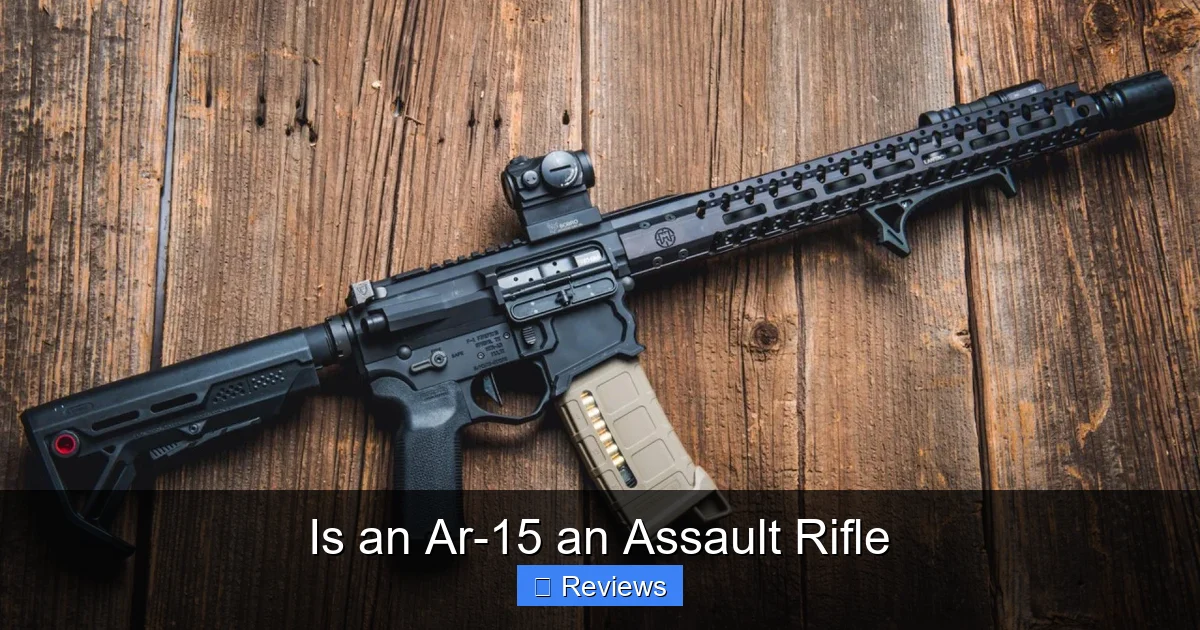
Visual guide about Is an Ar-15 an Assault Rifle
Image source: img.goodfon.com
The Military Standard for an Assault Rifle
According to military and technical definitions, a true “assault rifle” possesses three key characteristics:
- Select-fire capability: It can switch between semi-automatic fire and fully automatic or burst fire. This is the most crucial defining feature.
- Uses an intermediate cartridge: It fires ammunition that is less powerful than a full-power battle rifle round (like .30-06 or .308) but more powerful than a handgun cartridge. Examples include 5.56x45mm NATO or 7.62x39mm.
- Detachable, high-capacity magazine: It uses a removable magazine that typically holds 20 rounds or more.
When we look at these criteria, the civilian AR-15 immediately fails the first and most critical point: select-fire capability. It is not capable of fully automatic fire. Therefore, by the universally accepted military and technical definition, the civilian AR-15 is simply not an “assault rifle.”
The Rise of the Term “Assault Weapon”
If the AR-15 isn’t an “assault rifle” by technical definition, then why do so many people refer to it as one? This is where the term “assault weapon” comes into play. “Assault weapon” is a legal and political term, not a technical one used by gun manufacturers or military professionals. It was largely popularized during the debate leading up to the 1994 Federal Assault Weapons Ban.
This ban defined “assault weapons” based on cosmetic features that make a rifle *look* like a military rifle, regardless of its internal semi-automatic mechanism. Such features include:
- A pistol grip
- A collapsible or folding stock
- A flash suppressor
- A bayonet lug
- A grenade launcher mount (even if non-functional)
Under these legal definitions, a semi-automatic rifle like the AR-15, which shares many external similarities with its military M16/M4 cousins, could be classified as an “assault weapon.” This classification doesn’t change its functional capabilities—it still fires only one round per trigger pull—but it places it into a category for potential regulation or prohibition based on its appearance. This legal terminology is where much of the public confusion regarding “is an AR-15 an assault rifle” originates.
Why the Confusion? The Role of Aesthetics and Perception
The visual resemblance of the AR-15 to military rifles is undeniably a major factor in the public perception and the ongoing debate. It looks “military,” therefore many assume it functions like a military weapon. This superficial judgment often overshadows the technical realities.
Design Origins and Modern Appearances
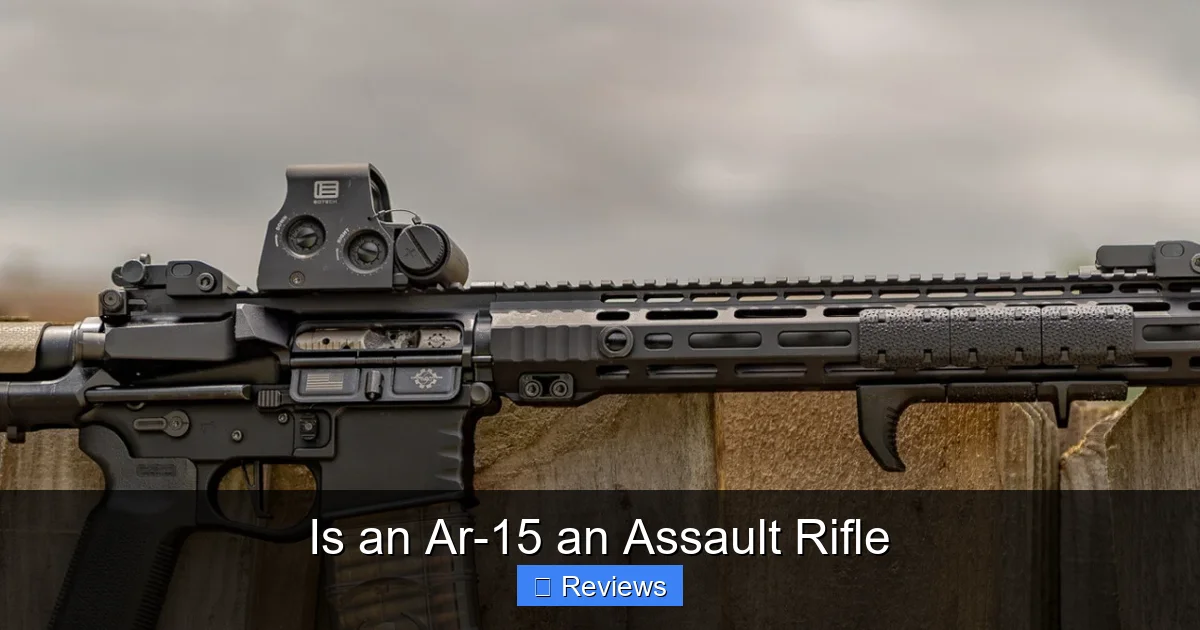
The original ArmaLite AR-15 was indeed the predecessor to the M16 rifle, which became the standard service rifle for the U.S. military. As such, the civilian AR-15 retains many of the M16/M4’s external design elements: the pistol grip, the distinct carrying handle (though many modern versions have flat-top receivers for optics), the general profile, and the use of detachable magazines. These features are often functional and ergonomic, but they also contribute to its “military look.”
Manufacturers design these rifles with modularity in mind. The AR-15 platform is highly customizable, allowing owners to change stocks, handguards, optics, and other accessories. This adaptability is one of its selling points, making it suitable for various shooting disciplines. However, these customizable features, often identical to those found on military rifles, further blur the lines in the public’s mind about whether an AR-15 is an assault rifle or merely a sporting firearm.
Media Portrayals and Public Perception
Media coverage, particularly surrounding tragic events, frequently uses the term “assault rifle” interchangeably with “AR-15” or “assault weapon.” This often happens without clarification of the technical distinctions, inadvertently cementing the misconception that the AR-15 is a military-grade automatic weapon. Images of military personnel carrying M16s or M4s are often shown alongside news reports discussing civilian AR-15s, further conflating the two in the public consciousness.
For individuals without a background in firearms, these visual and linguistic cues strongly reinforce the idea that the AR-15 is inherently an “assault rifle,” capable of rapid, sustained, and indiscriminate firing. Understanding this gap between technical definition and public perception is key to navigating the debate around whether an AR-15 is an assault rifle.
The AR-15’s Popularity and Versatility
Despite the controversy, the AR-15 platform has become immensely popular in the United States. It’s often referred to as America’s most popular rifle, with millions in circulation. This widespread ownership isn’t just about controversy; it’s also due to the rifle’s inherent design advantages and versatility for a variety of civilian uses.
More Than Just a “Black Rifle”
The AR-15 is often stereotyped as a “black rifle” primarily used for nefarious purposes. However, its real-world applications for law-abiding citizens are broad. Many gun owners use AR-15s for:
- Sport Shooting: Competitive shooting events like 3-Gun competitions regularly feature AR-15 style rifles due to their accuracy, low recoil, and ease of handling.
- Hunting: The AR-15, typically chambered in .223 Remington/5.56 NATO, is widely used for hunting small to medium-sized game, such as coyotes, groundhogs, and even deer in some jurisdictions and with appropriate calibers. Its modularity allows for customization to specific hunting needs.
- Home Defense: Many choose the AR-15 for home defense due to its effectiveness, ease of use, and relatively low recoil compared to some other rifle types. Its magazine capacity and ability to mount lights or optics are also seen as advantages.
- Training: Due to its popularity, the AR-15 platform is frequently used for firearms training, allowing shooters to develop skills that can be transferred to other rifle types.
Its adaptability means that a single AR-15 lower receiver (the serialized part considered the firearm) can be paired with different upper receivers to change caliber, barrel length, or purpose, making it a highly customizable and economical choice for many enthusiasts.
Customization and Modular Design
The AR-15’s modular design is a significant draw. It’s often compared to “Legos for adults” because of the vast array of aftermarket parts and accessories available. Owners can easily swap out components like:
- Stocks: Adjustable stocks to fit various body types or fixed stocks for stability.
- Handguards: Different lengths and styles to accommodate accessories like lights, lasers, and vertical grips.
- Optics: Red dot sights, holographic sights, or magnified scopes, depending on the shooting application.
- Trigger groups: Aftermarket triggers can improve feel and accuracy.
This level of customization allows owners to tailor their AR-15 to their specific needs, preferences, and shooting activities. It also fosters a strong community of enthusiasts who enjoy building and modifying their rifles. This deep engagement with the platform is a testament to its design and utility, further complicating the simple narrative of “is an AR-15 an assault rifle?” by showcasing its diverse civilian applications.
The Legal Landscape: “Assault Weapon” Bans and Debates
The question of “is an AR-15 an assault rifle” is deeply intertwined with the legal and political landscape surrounding firearm ownership in the United States. While technically incorrect to label it an “assault rifle,” many jurisdictions have legally classified AR-15 style firearms as “assault weapons,” leading to bans and restrictions.
The 1994 Federal Assault Weapons Ban
From 1994 to 2004, the United States had a federal ban on certain semi-automatic firearms classified as “assault weapons,” including many AR-15 variants. This ban targeted firearms that had specific cosmetic features (like a pistol grip, bayonet lug, or flash suppressor) and high-capacity magazines (over 10 rounds). It’s crucial to remember that this ban did not change the mechanical operation of these rifles; they remained semi-automatic. The ban was based on appearance and accessory features, not on their ability to fire automatically.
When the ban expired in 2004, the manufacture and sale of these firearms without the feature restrictions resumed. The efficacy of the ban in reducing gun violence remains a highly debated topic, with studies offering mixed conclusions. However, its existence cemented the term “assault weapon” into the national lexicon, often conflating it with the technical definition of an “assault rifle.”
Ongoing Debates and State-Level Legislation
Today, the debate over “assault weapons” continues fiercely, particularly after high-profile mass shootings where AR-15 style rifles were used. Many states have implemented their own “assault weapon” bans, often mirroring or expanding upon the expired federal ban. States like California, New York, Massachusetts, and Connecticut have some of the strictest laws, prohibiting the sale and sometimes even possession of AR-15 style rifles based on specific features.
These state-level bans often lead to complex compliance issues for gun owners, requiring modifications to rifles (e.g., fixed magazines, “featureless” grips) or registration. Opponents of these bans argue they target cosmetic features rather than functionality, unfairly penalize law-abiding citizens, and are ineffective at deterring crime. Proponents argue that such weapons, regardless of technical classification, pose a unique threat due to their capacity for rapid fire (even if semi-automatic) and detachable magazines.
The legal battles surrounding these bans are ongoing, often reaching the Supreme Court. The question of whether an AR-15 is an assault rifle, or more precisely, an “assault weapon” in the legal sense, remains a central point of contention in Second Amendment litigation and legislative efforts across the country.
Conclusion: Moving Beyond the Label
The question “is an AR-15 an assault rifle” is more than just a debate about semantics; it’s a reflection of deeper societal divides concerning gun control, personal rights, and public safety. What we’ve learned is that, by precise military and technical definitions, a civilian AR-15 is emphatically *not* an “assault rifle.” It lacks the critical select-fire capability that defines true military assault rifles, functioning instead as a semi-automatic firearm, firing one shot per trigger pull.
The confusion stems largely from the rifle’s external appearance, its historical lineage to military weapons, and the adoption of the term “assault weapon” in political and legal discourse. This term, unlike “assault rifle,” is a legal classification based on cosmetic features, not a technical one based on operational mechanics. The AR-15’s immense popularity and versatility for a wide range of legitimate civilian uses, from sport shooting to hunting and home defense, further complicates the narrative.
Ultimately, a clear understanding of the technical distinctions between semi-automatic and fully automatic firearms, and the difference between a “military assault rifle” and a legally defined “assault weapon,” is crucial for anyone engaging in discussions about firearm policy. Moving beyond emotionally charged labels and focusing on accurate terminology can help foster more productive and informed conversations about the AR-15 and its place in our society. The rifle itself is a tool, and understanding its true nature, rather than succumbing to misinformation, is the first step toward meaningful dialogue.
🎥 Related Video: AR-15 vs AR-10! ( whats the difference?) #civtac #gun #fullautofriday #demoranch
📺 Civilian Tactical
Frequently Asked Questions
Is the AR-15 exceptionally powerful compared to other rifles?
While effective, the AR-15 typically fires an intermediate cartridge (like .223 Rem/5.56 NATO) which is less powerful than many traditional hunting rifle calibers (e.g., .30-06, .308 Win). Its power is adequate for many civilian uses, but it’s not uniquely “high-powered” in the broader rifle landscape.
Can civilians legally own fully automatic weapons in the U.S.?
Civilians can legally own fully automatic weapons (machine guns) in the U.S., but it’s extremely difficult and rare. Ownership is heavily restricted by the National Firearms Act (NFA) of 1934 and the Firearm Owners’ Protection Act (FOPA) of 1986, which effectively banned the civilian ownership of newly manufactured machine guns after 1986.
What caliber does an AR-15 typically fire?
The most common caliber for an AR-15 is .223 Remington, which is dimensionally identical to 5.56x45mm NATO (though with slightly different pressure specifications). However, the modular design allows for AR-15 platforms to be chambered in a wide variety of other calibers, from 9mm to .458 SOCOM.
Is the AR-15 a good hunting rifle?
Yes, many hunters use the AR-15 for hunting small to medium-sized game like coyotes, wild pigs, and even deer, depending on the caliber and local regulations. Its accuracy, low recoil, and ability to be customized for specific hunting scenarios make it a practical choice for many.
How is the AR-15 commonly used for self-defense?
For home defense, the AR-15 is valued for its maneuverability, the relatively low recoil of its typical .223/5.56 rounds, and its capacity to mount accessories like tactical lights and optics. Many owners find it an effective and controllable option for personal and home protection.
What is the “modern sporting rifle” designation?
“Modern Sporting Rifle” (MSR) is a term coined by the National Shooting Sports Foundation (NSSF) to accurately describe AR-15 style rifles and similar semi-automatic firearms. This term emphasizes their use in various sporting activities and distinguishes them from military “assault rifles,” aiming to reduce public confusion and highlight their civilian applications.