The question “Is an AK-47 an assault rifle?” is often misunderstood due to varying definitions. Technically, the original, military-grade AK-47, capable of selective fire (both semi-automatic and full-automatic), *is* an assault rifle. However, the vast majority of AK-style firearms available to civilians in the United States are semi-automatic-only variants, which, by strict military definition, are not assault rifles, though they are often labeled “assault weapons” by political and media terms. Understanding this distinction is crucial for clear discussions.
Welcome, friend! You’ve probably heard the term “AK-47” countless times, often in the same breath as “assault rifle.” It’s an iconic weapon, instantly recognizable, and deeply ingrained in popular culture, from movies to video games. But this widespread recognition often comes with a significant amount of confusion and misunderstanding, particularly when it comes to its classification. Is an AK-47 an assault rifle? It’s a question that sparks debate, often fueled by strong emotions and differing interpretations.
This isn’t just about semantics; it’s about understanding the nuances of firearm terminology, which can be critical in policy debates, legal discussions, and even everyday conversations. Many terms used in gun discourse are thrown around without a clear, universally accepted definition, and “assault rifle” is perhaps one of the most prominent examples. Let’s peel back the layers and look at the history, mechanics, and legal definitions to clear up the muddled waters surrounding the AK-47.
The AK-47: A Global Icon
The AK-47, officially known as the Avtomat Kalashnikova (Kalashnikov’s automatic rifle), was designed in the Soviet Union by Mikhail Kalashnikov in the mid-20th century. It quickly became renowned for its simplicity, ruggedness, and reliability, especially in harsh conditions. Its design was revolutionary, leading to its widespread adoption by military forces worldwide and its eventual production in dozens of countries. From its inception, the AK-47 was a military weapon, designed for combat scenarios. Understanding this origin is the first step in unraveling its true classification.
Key Takeaways
- Technical Definition Matters: A true “assault rifle” (military definition) fires an intermediate cartridge, uses a detachable magazine, and is capable of selective fire (semi-auto and full-auto).
- Original AK-47 Qualifies: The original, military-issued AK-47 meets the technical definition of an assault rifle because it is selective-fire.
- Civilian AKs Differ Significantly: Most AK-style rifles sold to civilians are semi-automatic only, meaning they fire only one round per trigger pull. They lack the full-auto capability that defines a military assault rifle.
- “Assault Weapon” is a Political/Legal Term: The term “assault weapon” is primarily a legal and political designation, not a technical firearm classification. It often describes semi-automatic rifles with certain cosmetic features, regardless of their operational mechanism.
- Misinformation is Common: Public perception is often shaped by media and political discourse, leading to confusion between actual military assault rifles and civilian semi-automatic sporting rifles.
- Understanding Key Differences is Crucial: Distinguishing between military-spec firearms and civilian variants, and between technical definitions and political terminology, is essential for informed discussions on firearms.
Quick Answers to Common Questions
Can a civilian legally own a full-automatic AK-47 in the US?
Generally, no. New full-automatic firearms have been banned for civilian ownership since 1986. Only those manufactured and registered before that date can be legally owned, and they are extremely rare, expensive, and subject to intense federal regulation.
What’s the main difference between a military AK-47 and a civilian AK-style rifle?
The main difference is the firing mode. A military AK-47 is selective-fire (semi-automatic and full-automatic), while a civilian AK-style rifle is semi-automatic only, firing one shot per trigger pull.
Is an AR-15 considered an “assault rifle” by the military definition?
No, an AR-15 is a semi-automatic rifle. The military version, the M16 or M4, is selective-fire (full-auto or burst-fire) and is therefore an assault rifle. The AR-15 itself, as a civilian firearm, is not.
Are all “assault weapons” full-automatic?
No. The term “assault weapon” is a legal and political designation often applied to semi-automatic firearms with certain cosmetic features, not necessarily because they are full-automatic.
Why do civilian AKs look so similar to military ones?
Civilian AK-style rifles are designed to replicate the appearance and ergonomic feel of their military counterparts. While they share the outward aesthetics, their internal firing mechanisms are legally and functionally different, restricted to semi-automatic only.
📑 Table of Contents
What is an AK-47, Really? Unpacking its Design and History
To truly answer “is an AK-47 an assault rifle?”, we need to start with the rifle itself. The original AK-47 was a gas-operated, selective-fire firearm. What does “selective-fire” mean? It means it could fire in two modes: semi-automatic (one shot per trigger pull) and full-automatic (continuous firing as long as the trigger is held down and ammunition remains). This feature is central to its military design.
The Kalashnikov’s Legacy
Mikhail Kalashnikov’s goal was to create a rifle that was easy to manufacture, simple to operate, and incredibly reliable, even with minimal maintenance. He succeeded beyond measure. The AK-47 uses an intermediate cartridge, specifically the 7.62x39mm round. This cartridge was more powerful than a pistol round but less powerful than a traditional full-power rifle round, making it effective at medium ranges without producing excessive recoil in full-automatic fire. The rifle also featured a detachable magazine, allowing for quick reloading, crucial in combat situations. Its impact on military tactics and small arms development cannot be overstated.
Key Features of the Original AK-47
Let’s break down the core features that made the original AK-47 a groundbreaking military weapon:
- Selective Fire: The ability to switch between semi-automatic and full-automatic fire. This is a defining characteristic of military assault rifles.
- Intermediate Cartridge: Firing the 7.62x39mm round, which offered a balance of power and controllability.
- Detachable Magazine: Designed for high-capacity magazines (typically 30 rounds) for rapid reloading.
- Gas-Operated Action: A highly reliable mechanism that uses the expanding gases from a fired round to cycle the action.
- Rugged Simplicity: Built to withstand extreme conditions, requiring minimal cleaning and maintenance.
Given these features, particularly its selective-fire capability and intermediate cartridge, the original, military-issue AK-47 absolutely fits the technical definition of an “assault rifle.”
Defining “Assault Rifle”: Military vs. Civilian Terms

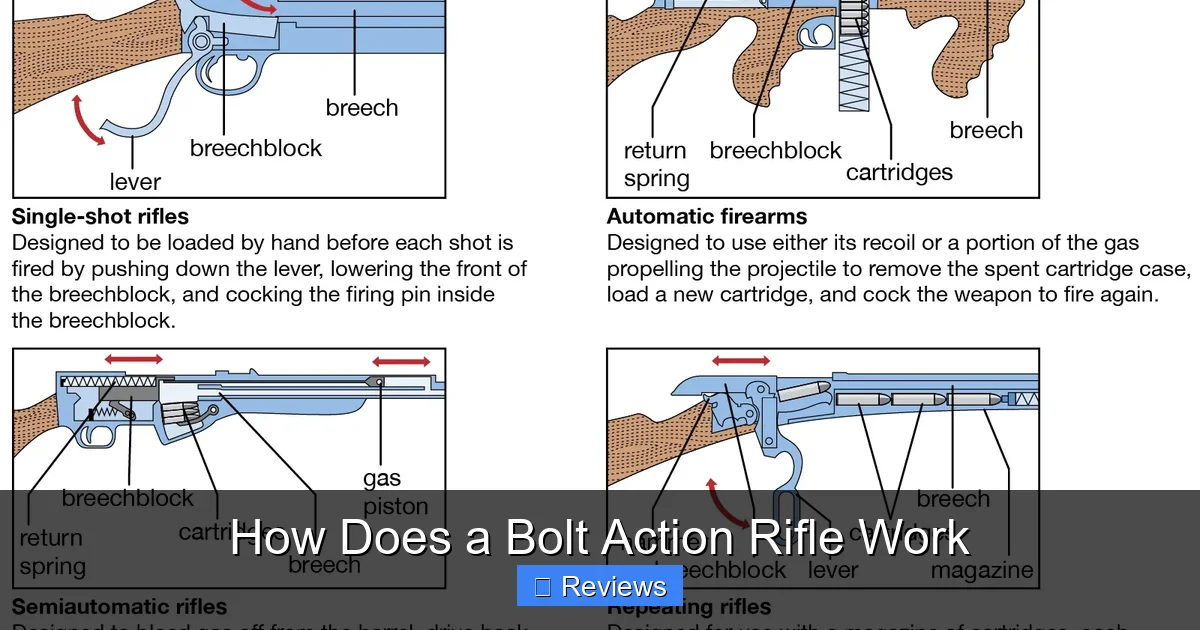
Visual guide about Is an Ak-47 an Assault Rifle
Image source: irongatearmory.com
Here’s where the confusion often begins. The term “assault rifle” has a very specific, historically recognized technical meaning within military and firearm expert circles. However, its usage has dramatically diverged in public discourse and legal contexts.
The Military Definition
From a military perspective, an “assault rifle” is generally defined by these three core criteria:
- Intermediate Cartridge: It must fire a cartridge that is less powerful than a traditional battle rifle cartridge (like a .30-06 or 7.62x51mm NATO) but more powerful than a pistol cartridge. Examples include 7.62x39mm (AK-47), 5.56x45mm NATO (M16/AR-15), or 5.45x39mm (AK-74).
- Detachable Box Magazine: It must feed from a removable magazine, typically with a high capacity (e.g., 20 or 30 rounds).
- Selective Fire Capability: Crucially, it must be capable of both semi-automatic fire (one shot per trigger pull) AND full-automatic fire (continuous firing with a single trigger pull) or burst fire (a fixed number of shots per trigger pull).
If a rifle meets all three of these criteria, it is, by military definition, an assault rifle. The original AK-47 perfectly fits this description.
Why the Distinction Matters
Understanding this technical definition is vital because it highlights a key difference between firearms designed for military combat and those sold to civilians. The selective-fire capability is the functional heart of what makes a rifle an “assault rifle” in the eyes of military strategists and firearm engineers. It allows a soldier to rapidly lay down suppressive fire, a capability generally not found in civilian firearms.
The Civilian AK Variant: Semi-Automatic Rifles
Now, let’s talk about the AK-style firearms you typically find available to civilians in places like the United States. These are almost universally *not* military-grade assault rifles. They are semi-automatic-only variants.
The Legal Landscape in the US
In the United States, civilian ownership of new, fully automatic firearms has been heavily restricted since 1986 by the Firearm Owners’ Protection Act. Fully automatic weapons manufactured and registered *before* 1986 can be legally owned by civilians in many states, but they are extremely expensive, heavily regulated, and require extensive background checks and approvals from the Bureau of Alcohol, Tobacco, Firearms and Explosives (ATF). The vast majority of AK-pattern rifles sold today are manufactured as semi-automatic from the start and cannot be readily converted to full-automatic.
Features of Civilian AKs
A civilian AK-style rifle looks very much like its military counterpart. It uses the same intermediate cartridge (or sometimes other calibers), has a detachable magazine, and shares many of the aesthetic features like the pistol grip, adjustable stock, and flash hider. However, the critical distinction is its firing mechanism:
- Semi-Automatic Only: Each pull of the trigger fires one shot, and you must release the trigger and pull it again to fire the next shot. This is the same operating principle as most handguns and many common hunting rifles.
- No Full-Automatic Capability: The internal components are designed specifically to prevent full-automatic fire, and often, parts are modified or redesigned to prevent easy conversion.
So, while it *looks* like an AK-47, and it *is* an AK-pattern rifle, a civilian semi-automatic AK technically *does not* fit the military definition of an “assault rifle” because it lacks selective-fire capability. It is, by definition, a semi-automatic rifle.
The “Assault Weapon” Term: A Political Definition
This is where much of the confusion stems from. In the 1980s and 1990s, with increasing public concern over firearm violence, political and media figures began using the term “assault weapon” to describe certain semi-automatic rifles and pistols. This term is distinct from the military “assault rifle” definition. An “assault weapon” designation in legislation typically relies on a list of cosmetic or functional features, such as:
- A pistol grip
- A detachable magazine
- A folding or telescoping stock
- A bayonet lug
- A flash hider
Under these “assault weapon” bans, a rifle like a civilian AK-style firearm, or an AR-15, might be categorized as an “assault weapon” not because it’s full-auto, but because it possesses a certain number of these “military-style” features. This designation is a legal and political construct, not a technical classification of a firearm’s operating mechanism or power. It’s designed to regulate specific types of firearms that are perceived as dangerous due to their appearance or capacity, even if their internal function is semi-automatic.
The Impact of Terminology and Media: Shaping Perceptions
The way terms are used by the media, politicians, and even advocacy groups significantly shapes public perception. When the phrase “AK-47 assault rifle” is used without clarification, it often implies a fully automatic weapon of war in the hands of civilians, even if the actual firearm in question is a semi-automatic model.
Media Portrayals
Movies, TV shows, and news reports often depict AK-47s in a military context, firing rapidly on full-automatic. This reinforces the image of the AK-47 as a machine gun. When civilian versions, which look identical externally, are involved in incidents, the distinction between semi-automatic and full-automatic is rarely made clear, leading to the public assuming all AKs are selective-fire “assault rifles.”
Emotional vs. Technical Language
The term “assault weapon” itself is emotionally charged. It evokes images of military assault and combat, regardless of the rifle’s actual function. This emotional language can overshadow technical facts and make rational discussion about firearm regulation much more challenging. Understanding the difference between a technical term (assault rifle) and a political/legal term (assault weapon) is a practical tip for engaging in more productive conversations. Always ask for clarification: “Are we talking about selective-fire capability or cosmetic features?”
Legal Classifications and Consequences
The differences in classification have direct legal consequences for firearm owners and manufacturers. It’s not just academic; it dictates what can be legally bought, sold, and owned.
Federal vs. State Laws
At the federal level in the United States, the National Firearms Act (NFA) of 1934 and the Firearm Owners’ Protection Act (FOPA) of 1986 primarily regulate machine guns (which includes selective-fire “assault rifles”). As mentioned, new machine guns have been banned for civilian ownership since 1986. States, however, have their own laws. Some states have “assault weapon” bans that prohibit or restrict the sale and ownership of semi-automatic rifles that possess certain cosmetic features, even though these rifles are not selective-fire. For example, a civilian AK-style rifle might be perfectly legal in one state but banned or heavily restricted in another, simply based on its features and how “assault weapon” is defined in that state’s law.
The NFA and Machine Guns
Under the NFA, machine guns are classified as a special category of firearms subject to stringent regulations, including registration with the ATF, a specific tax stamp, and a lengthy approval process. This is the legal framework that controls actual military “assault rifles.” Civilian AK variants, being semi-automatic, generally fall under standard firearm regulations, unless a state or local law specifically bans them as “assault weapons” based on their features.
Practical example: If you were to purchase a semi-automatic AK-style rifle today in a state without an “assault weapon” ban, it would be treated legally much like a hunting rifle or a pistol for a background check. If you somehow acquired a genuine, pre-1986 fully automatic AK-47, the legal hoops would be vastly more complex, reflecting its classification as a machine gun under federal law.
Dispelling Myths and Fostering Clarity
It’s crucial to approach these discussions with precision. When someone asks, “Is an AK-47 an assault rifle?”, the most accurate answer requires a qualification. If they are referring to the original, military-issue selective-fire model, then yes, it absolutely is. If they are referring to the vast majority of AK-style rifles owned by civilians today, then no, by the technical definition of an “assault rifle,” it is not, because it is semi-automatic only. It may, however, be classified as an “assault weapon” under certain political or legal definitions based on its features.
In conclusion, the question “Is an AK-47 an assault rifle?” is more complex than a simple yes or no. The original, military-grade AK-47, with its selective-fire capability, undeniably fits the technical definition of an assault rifle. However, the semi-automatic AK-style firearms widely available to civilians do not. They are semi-automatic rifles, and while they might be colloquially called “AK-47s” or legally defined as “assault weapons” based on cosmetic features, they lack the selective-fire function that defines a true military assault rifle. Understanding these precise definitions is not just about being technically correct; it’s about fostering clearer, more informed discussions on firearms and policy, moving beyond sensationalism to factual understanding.
🎥 Related Video: Evolution of Kalashnikov Rifles (1947–2018) | From AK-47 to AK-15
📺 The Comparison Zone
Discover the legendary evolution of the Kalashnikov rifle series — from the iconic AK-47 to the modern AK-12 and AK-15. In this …
Frequently Asked Questions
What does “selective fire” mean?
Selective fire refers to a firearm’s ability to switch between different firing modes, typically semi-automatic (one shot per trigger pull) and full-automatic (continuous firing as long as the trigger is held down). This capability is a hallmark of military assault rifles.
Is the AK-47 the most common “assault rifle” in the world?
The AK-47 and its numerous variants are widely considered among the most widespread and recognizable military rifles globally. Its prevalence in conflicts and among various armed forces makes it one of the most common “assault rifles” in the military sense.
Do “assault weapons” fire faster than other semi-automatic rifles?
No, “assault weapons” are generally semi-automatic rifles, meaning they fire one round per trigger pull, just like many hunting rifles or pistols. Their rate of fire is limited by how quickly the shooter can pull the trigger, not by the rifle’s inherent full-automatic capability.
Why is the term “assault weapon” controversial?
The term “assault weapon” is controversial because it’s largely a political and legal term, not a technical one used by firearm experts to describe function. Critics argue it’s an emotionally charged term used to misrepresent semi-automatic firearms and focus on cosmetic features rather than operational mechanics.
Are high-capacity magazines legal for civilian AK-style rifles?
The legality of high-capacity magazines (typically over 10 rounds) for civilian AK-style rifles varies by jurisdiction. Some states and localities have bans or restrictions on magazines exceeding a certain capacity, regardless of the rifle’s type.
How does an AK-47 compare to an AR-15?
Both AK-47 and AR-15 style rifles are popular semi-automatic platforms, but they differ in design origin, ergonomics, and caliber options. The AK-47 (and its civilian variants) is known for its ruggedness and 7.62x39mm round, while the AR-15 is famed for its modularity, accuracy, and use of 5.56x45mm NATO/.223 Remington rounds.