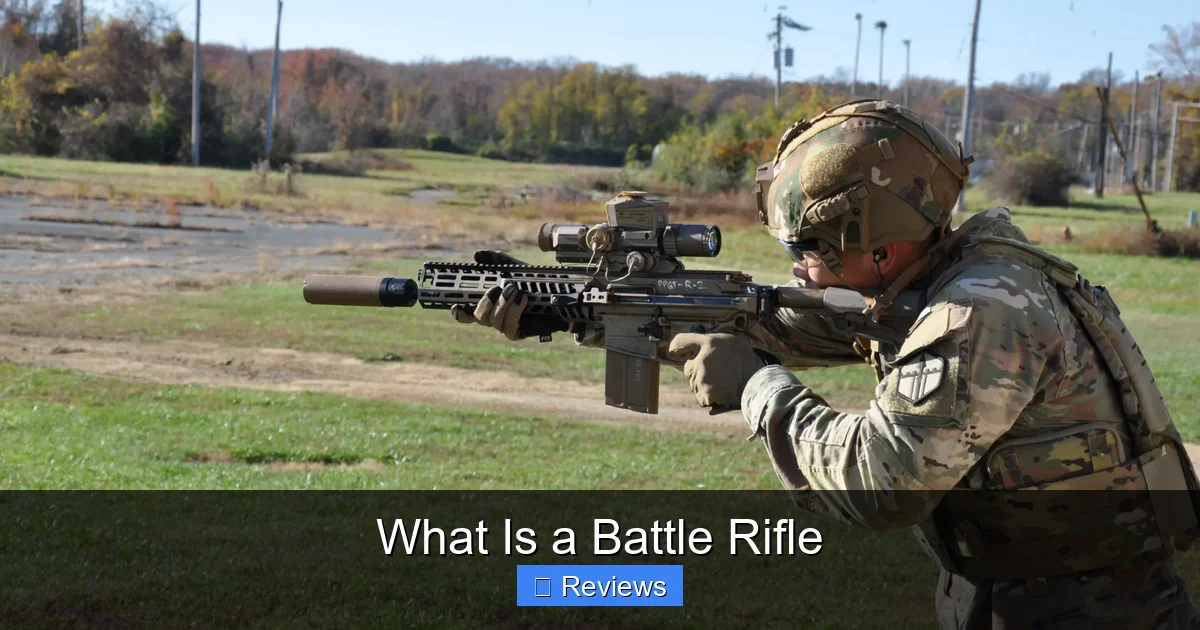
Yes, unequivocally, a rifle is a gun. The term “gun” is a broad category encompassing various projectile-firing devices, and a rifle is a specific type of firearm designed with a rifled barrel for enhanced accuracy. Understanding this fundamental classification is crucial for legal compliance, safe handling, and informed discussions about firearms.
You might be asking a question that, on the surface, seems incredibly simple: “Is a rifle a gun?” For many, the answer is an immediate, resounding “Yes!” It feels like stating the obvious, much like asking if a car is a vehicle or if a cat is an animal. Yet, this seemingly straightforward query often underpins deeper questions about firearm classification, legal definitions, and even public perception. So, let’s dive into this topic with the clarity it deserves, cutting through any potential confusion.
The short and undeniable answer is indeed yes, a rifle is absolutely a gun. But to truly understand why this question comes up and why the distinction (or lack thereof) matters, we need to explore the definitions, the mechanics, the legal frameworks, and the everyday language surrounding firearms. This isn’t just an exercise in semantics; it’s about building a solid foundation for understanding the tools we discuss, whether for sport, defense, or policy.
Key Takeaways
- Fundamental Classification: A rifle is definitively a type of gun, fitting under the broader category of “firearm” or “gun” which refers to any device designed to propel a projectile by explosive force.
- Defining Characteristics: What makes a rifle unique among guns is its rifled barrel (grooves that spin the bullet for accuracy) and typically a long stock designed to be fired from the shoulder.
- Legal Context: Federal and state laws consistently classify rifles as firearms. Understanding these legal definitions is crucial for responsible ownership, licensing, and transportation.
- Beyond the Obvious: While the answer “is a rifle a gun” seems straightforward, the question often arises from nuances in public perception, media representation, or specific legal distinctions between different *types* of guns (e.g., handguns vs. long guns).
- Importance of Precision: Using accurate terminology like “rifle,” “shotgun,” “handgun,” and the overarching term “firearm” or “gun” is vital for clarity in safety discussions, legal interpretations, and effective public policy debates.
- Safety and Training: Regardless of its specific classification, any firearm, including a rifle, demands rigorous safety protocols, proper training, and responsible storage to prevent accidents.
Quick Answers to Common Questions
Is a rifle considered a firearm?
Yes, absolutely. A rifle is a type of firearm, which is the legal and technical term for a gun that expels a projectile by the action of an explosive.
What is the main difference between a rifle and a shotgun?
The main difference is the barrel. A rifle has a rifled (grooved) barrel to spin a single projectile for accuracy, while a shotgun has a smoothbore barrel typically designed to fire multiple small pellets (shot) or a single slug.
Can a rifle be semi-automatic?
Yes, many rifles are semi-automatic. A semi-automatic rifle fires one round with each pull of the trigger and automatically loads the next cartridge from its magazine.
Are all guns considered rifles?
No, not all guns are rifles. “Gun” is a broad category. Rifles are a specific type of gun, alongside handguns (pistols, revolvers) and shotguns.
Why is a rifle called a “long gun”?
A rifle is called a “long gun” because it has a longer barrel and stock compared to handguns, and it is designed to be fired from the shoulder using two hands for stability and accuracy.
📑 Table of Contents
- Demystifying the Basics: What Exactly is a Gun?
- The Distinctive Features of a Rifle: Why It’s a Specific Type of Gun
- Firearm Family Tree: Where Rifles Fit In
- Beyond the Obvious: Legal and Regulatory Definitions
- Common Misconceptions and Public Dialogue
- The Practical Side: Why Understanding the Terminology Matters
Demystifying the Basics: What Exactly is a Gun?
To understand if a rifle is a gun, we first need to get clear on what a “gun” is. The term “gun” is a broad umbrella, covering a vast array of devices designed to propel a projectile. Think about it: everything from a small handgun to a massive artillery cannon can be called a “gun.” At its core, a gun is a tool that uses a contained explosive force (or compressed gas, in some cases) to launch a projectile, often a bullet, slug, or shot, at a target.
The Broad Definition of “Gun”
When most people say “gun,” they are usually referring to a “firearm.” A firearm, by definition, is a portable gun that uses an explosive charge to fire a projectile. This definition is pretty consistent across dictionaries and legal codes, though specific wording might vary slightly. Within this expansive category of firearms, you find many different types, each designed for particular purposes and possessing unique characteristics. A rifle, as we’ll soon see, is one of the most prominent members of this family.
Different Types of Guns
Just as “vehicle” includes cars, trucks, motorcycles, and buses, “gun” includes handguns, shotguns, and, yes, rifles. Each type has distinct features that make it suitable for different applications:
- Handguns: Designed to be held and fired with one hand, typically smaller and more concealable (e.g., pistols, revolvers).
- Shotguns: Characterized by a smoothbore barrel, primarily designed to fire multiple small pellets (shot) or a single large projectile (slug) (e.g., pump-action, semi-automatic shotguns).
- Rifles: Distinguished by a rifled barrel, designed for accuracy over longer distances, and typically fired from the shoulder (e.g., bolt-action, semi-automatic rifles).
So, when you consider the overarching definition, it becomes abundantly clear that a rifle fits perfectly into the category of “gun” because it is a device that propels a projectile using an explosive force.
The Distinctive Features of a Rifle: Why It’s a Specific Type of Gun
While a rifle is a gun, it’s also a very specific *kind* of gun. What makes a rifle unique and gives it its name? The answer lies in its barrel and how it’s designed to be used. These features aren’t just technical curiosities; they dictate the rifle’s performance and application.

Visual guide about Is a Rifle a Gun
Image source: content.propertyroom.com
The Importance of the Rifled Barrel
The defining characteristic of a rifle is its “rifled” barrel. This means the inside of the barrel isn’t smooth (like a shotgun’s smoothbore barrel), but instead has helical grooves cut into it. When a bullet travels down this barrel, these grooves, known as rifling, impart a spin to the bullet. Think of a perfectly thrown football or a spinning top; this rotation stabilizes the projectile in flight, significantly increasing its accuracy and range compared to a smoothbore weapon firing a similar projectile. This is precisely why a rifle is a gun chosen for precision shooting over distance.
Designed for Accuracy and Power
Beyond the rifled barrel, rifles typically share several other characteristics:
- Longer Barrel: Compared to handguns, rifles usually have much longer barrels. This extra length allows more time for the burning propellant to accelerate the bullet, resulting in higher muzzle velocity and greater kinetic energy.
- Stock: Rifles are designed to be fired from the shoulder. They feature a “stock” or “buttstock” that allows the shooter to brace the weapon against their shoulder for stability, further aiding accuracy.
- Ammunition: While specific calibers vary widely, rifles are generally chambered for cartridges designed to harness higher pressures and velocities, making them powerful tools for hunting, target shooting, and self-defense.
These features collectively make a rifle a formidable and precise firearm. So, when people talk about “guns,” and specifically mention “rifles,” they are narrowing down the conversation to a particular type of gun known for its accuracy and power.
Firearm Family Tree: Where Rifles Fit In
To further solidify the understanding that a rifle is a gun, let’s look at the broader classification of firearms. Just like biology categorizes species into kingdoms, phyla, and classes, firearms can be categorized to help us understand their relationships and functions. Rifles occupy a significant branch in this family tree.
Long Guns vs. Handguns
A primary division in firearm classification is between “long guns” and “handguns.”
- Handguns: As discussed, these are firearms designed to be operated with one hand. They are typically smaller, more compact, and include pistols and revolvers.
- Long Guns: This category includes firearms designed to be fired from the shoulder and requiring two hands for proper operation. Rifles and shotguns both fall under the “long gun” umbrella.
So, not only is a rifle a gun, but it’s specifically a *long gun*, distinguishing it from the handgun category based on its design for two-handed, shoulder-fired operation. This distinction is often important in legal contexts, as different regulations can apply to long guns versus handguns.
Varieties of Rifles
Within the rifle category, there are also numerous sub-types, showcasing the versatility of this gun:
- Bolt-Action Rifles: Known for their robust design and extreme accuracy, often used for hunting and precision shooting.
- Lever-Action Rifles: Iconic firearms, often associated with the American West, typically used for hunting and sport.
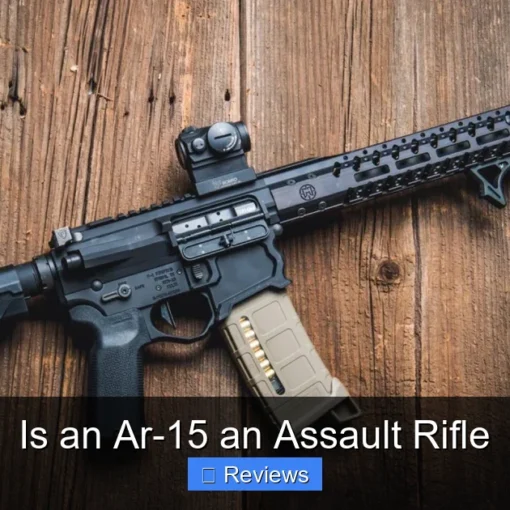
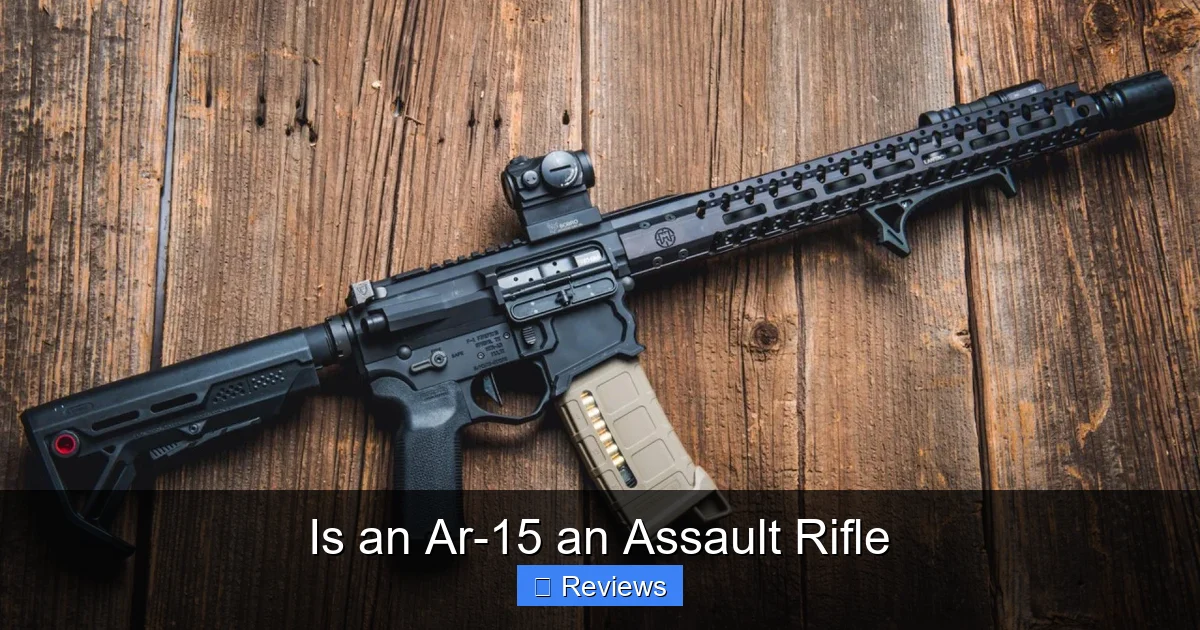
- Semi-Automatic Rifles: These rifles fire one round with each pull of the trigger and automatically load the next round from a magazine. Popular examples include AR-15 style rifles and hunting semi-autos.
- Single-Shot Rifles: Simple designs that must be manually reloaded after each shot, often favored by beginners or for traditional hunting.
Each of these is undeniably a rifle, and therefore, each is unequivocally a gun. The functional principle remains the same: a rifled barrel propels a bullet, fired from the shoulder, using an explosive charge.
Beyond the Obvious: Legal and Regulatory Definitions
While the mechanical definition clearly states that a rifle is a gun, the legal landscape often adds layers of specific terminology. For anyone asking “is a rifle a gun,” understanding these legal definitions is paramount, as they govern ownership, sale, and use.
Federal Definitions
In the United States, federal law, primarily through the Bureau of Alcohol, Tobacco, Firearms and Explosives (ATF), defines a “firearm” broadly. The Gun Control Act of 1968 (GCA) defines “firearm” as:
“Any weapon (including a starter gun) which will or is designed to or may readily be converted to expel a projectile by the action of an explosive; (B) the frame or receiver of any such weapon; (C) any firearm muffler or firearm silencer; or (D) any destructive device.”
Under this definition, a rifle clearly falls squarely within the category of a “firearm.” The GCA then specifically defines “rifle” as:
“A weapon designed or redesigned, made or remade, and intended to be fired from the shoulder and designed or redesigned to use the energy of an explosive to fire only a single projectile through a rifled bore for each single pull of the trigger.”
This legal language explicitly states that a rifle is a weapon (a type of gun) designed to fire a projectile via an explosive through a rifled bore. There is no ambiguity here: a rifle is a gun under federal law.
State and Local Laws
While federal law provides a baseline, individual states and even local municipalities can have their own specific definitions and regulations. However, these laws typically build upon or add to the federal definitions, rather than contradicting the fundamental classification. For instance, a state might have additional licensing requirements for rifles or certain types of rifles (like “assault weapons”), but they will still legally recognize that a rifle is a gun and thus a firearm.
Practical Tip: Always research and understand the specific firearm laws in your state and local area. While a rifle is a gun everywhere, the rules for owning, transporting, and using that specific type of gun can vary significantly.
Common Misconceptions and Public Dialogue
If the answer “is a rifle a gun” is so clear-cut, why does the question even arise? Often, it stems from a combination of media portrayal, evolving public discourse, and sometimes, intentional semantic distinctions.
Media Portrayal and Terminology
The media sometimes uses “gun” as a generic term without specifying the type, or sometimes uses “weapon” which is even broader. In other instances, to highlight perceived dangers, specific types of rifles (e.g., “assault rifles” or “AR-15 style rifles”) are singled out, creating a mental separation from other “guns.” This can inadvertently lead some to believe that these specific rifles are somehow *not* guns in the traditional sense, but something entirely different. However, an AR-15 *is* a semi-automatic rifle, and therefore, an AR-15 *is* a gun.
Focus on Specific Features
Another reason for confusion might be the emphasis on certain features. When people focus on the military appearance, magazine capacity, or semi-automatic nature of some rifles, they might mentally categorize them differently from a traditional wooden-stock hunting rifle. Yet, mechanically and legally, both are rifles, and both are guns. The difference is in their specific characteristics and design, not their fundamental classification as a firearm.
The “Firearm” vs. “Gun” Debate
Some people prefer the term “firearm” over “gun” in formal discussions, viewing “firearm” as more precise and less colloquial. While “firearm” is indeed a more technical and legally defined term, it doesn’t change the fact that a gun is a more general term that includes all firearms. So, whether you say “rifle” or “rifle firearm” or “rifle gun,” you are referring to the same object. The fundamental truth remains: a rifle is a gun.
The Practical Side: Why Understanding the Terminology Matters
Beyond settling a semantic debate, clearly understanding that a rifle is a gun has significant practical implications for everyone, from enthusiasts and owners to policymakers and the general public.
For Responsible Firearm Owners
For those who own or plan to own rifles, knowing that a rifle is a gun means accepting the full responsibilities that come with firearm ownership. This includes:
- Safety: Adhering to the cardinal rules of firearm safety applies universally to all guns, including rifles. Treat every gun as loaded. Never point a gun at anything you are not willing to destroy. Keep your finger off the trigger until your sights are on the target. Be sure of your target and what is beyond it.
- Training: Proper training for safe handling, shooting, and maintenance is essential for any gun, and rifles are no exception.
- Legal Compliance: Understanding that a rifle is a gun, and thus a “firearm” under the law, means you must comply with all local, state, and federal laws regarding purchase, possession, storage, and transportation. This includes background checks, potentially licensing, and safe storage requirements.
- Storage: Secure storage, whether locked in a safe, with a trigger lock, or unloaded and separated from ammunition, is crucial for preventing unauthorized access and accidents. This applies equally to rifles as it does to any other gun.
For Public Discourse and Policy
Accurate terminology is the bedrock of productive conversations, especially on sensitive topics like firearm regulation. When discussing gun control, for example, distinguishing between specific types of firearms (e.g., handguns, rifles, shotguns) while also understanding their overarching classification as “guns” or “firearms” is crucial. Misleading or imprecise language can hinder understanding, lead to ineffective policies, and deepen divisions. When someone says, “We need to address gun violence,” they are talking about violence committed with firearms, which includes rifles.
Promoting Clarity and Understanding
Ultimately, answering “is a rifle a gun” with a clear “yes” helps to promote clarity and understanding. It strips away confusion and allows for more focused discussions on what differentiates types of firearms, what their capabilities are, and how they should be regulated, used, and respected. This foundational understanding is key to informed decisions and safe practices.
So, there you have it. The question “is a rifle a gun” might seem trivial, but exploring its answer leads us through the fascinating world of firearm classification, legal definitions, and the importance of precise language. A rifle is unequivocally a gun, a specific and highly capable member of the broader firearm family. By embracing this fundamental truth, we can foster safer practices, clearer communication, and more informed conversations about these powerful tools.
🎥 Related Video: Why Soldiers Put Mirrors on Rifles 🪞
📺 The Art Of War
Frequently Asked Questions
Is an AR-15 a rifle?
Yes, an AR-15 is a type of rifle. Specifically, it is a semi-automatic rifle, characterized by its rifled barrel and design to be fired from the shoulder. Therefore, an AR-15 is also a gun.
Do all rifles have scopes?
No, not all rifles have scopes. While many rifles, especially those used for hunting or precision target shooting, are equipped with telescopic sights (scopes) to enhance accuracy, other rifles might use open sights, iron sights, or red dot sights.
Are air rifles considered guns?
Legally, air rifles are often treated differently from firearms (which use explosive propellants). While they are devices that propel projectiles and thus fit a broad definition of “gun” in a general sense, they are typically not classified as “firearms” under federal or most state laws in the U.S. and often have fewer regulations.
What is the primary use of a rifle?
Rifles are primarily used for applications requiring accuracy and range. Common uses include hunting game, target shooting sports, competitive shooting, and military or law enforcement applications.
Are rifles subject to background checks for purchase?
Yes, in the United States, rifles purchased from licensed firearm dealers (FFLs) are subject to federal background checks through the National Instant Criminal Background Check System (NICS). State laws may add further requirements.
Can a rifle be used for self-defense?
Yes, a rifle can be used for self-defense. Their accuracy, power, and capacity can make them effective for home defense, though training and understanding safety protocols are paramount for responsible use in such scenarios.