Yes, the .308 Winchester is an excellent deer rifle choice, widely regarded as one of the best for North American whitetail and similar-sized game. Its balanced ballistics provide sufficient power for clean kills within typical hunting ranges, while its manageable recoil makes it comfortable for most shooters. This versatility, combined with a vast array of available rifles and ammunition, cements its status as a consistently good and highly popular option for deer hunters.
Stepping into the world of deer hunting can be incredibly exciting, but also a little overwhelming. One of the first, and perhaps most important, decisions you’ll face is choosing the right rifle. Ask any seasoned hunter, and you’ll quickly hear a few calibers mentioned more often than others. Among these, the .308 Winchester consistently rises to the top, often sparking the question: “Is a 308 a good deer rifle?”
The short answer, without beating around the bush, is a resounding yes! The .308 Winchester isn’t just a good deer rifle; it’s often considered one of the best all-around cartridges for deer and medium-sized game in North America. Its reputation isn’t just anecdotal; it’s built on decades of proven performance in the field, reliable ballistics, and a sweet spot of power and user-friendliness that makes it a favorite for hunters from beginners to veterans. Let’s dive deeper into why this cartridge has earned its stellar reputation and why it might just be the perfect companion for your next deer hunt.
Key Takeaways
- Exceptional Versatility: The .308 Winchester handles a wide range of bullet weights effectively, making it suitable for various hunting scenarios and deer sizes, from whitetail to mule deer.
- Optimal Ballistics for Deer: It delivers ample energy and a flat trajectory out to 300-400 yards, ensuring ethical and clean kills on deer-sized game within practical hunting distances.
- Manageable Recoil: Compared to larger magnum cartridges, the .308 offers a mild and comfortable recoil impulse, which improves shooter accuracy and makes it suitable for new hunters and those sensitive to heavy kick.
- High Accuracy Potential: The cartridge itself is inherently accurate, and it’s chambered in a vast selection of precise bolt-action and semi-automatic rifles, contributing to consistent shot placement.
- Abundant Ammunition and Rifle Options: Due to its immense popularity, .308 ammunition is readily available in many different loads specifically designed for deer, and virtually every major rifle manufacturer offers excellent firearms chambered in .308.
- Ethical Hunting Choice: When paired with the right bullet and proper shot placement, the .308 Winchester is more than capable of delivering humane one-shot kills on deer, provided the hunter knows their limitations and practices regularly.
Quick Answers to Common Questions
Can a .308 kill an elk?
Yes, a .308 can ethically kill an elk, especially with heavier, well-constructed bullets (like 180-grain bonded or monolithic) and precise shot placement within reasonable ranges (under 300 yards). While not typically considered a dedicated elk cartridge like a .300 Win Mag, it is certainly capable.
What is the effective range of a .308 for deer?
The effective range of a .308 for deer hunting is generally considered to be 0-300 yards for most hunters. With practice, good optics, and ideal conditions, skilled shooters can extend this to 400 yards, but beyond that, bullet drop and wind drift become significant challenges.
Is a .308 too powerful for deer?
No, a .308 is not too powerful for deer. It delivers an appropriate amount of energy for quick, humane kills without being excessive. The goal is to have enough power for penetration and expansion, and the .308 achieves this perfectly for deer-sized game.
What grain bullet is best for .308 deer hunting?
For .308 deer hunting, 150-grain and 165/168-grain bullets are generally considered the best all-around choices. 150-grain offers flatter trajectory, while 165/168-grain provides good penetration and often handles wind slightly better. The “best” will also depend on what your specific rifle shoots most accurately.
Is the .308 better than a .270 for deer?
Both the .308 and .270 Winchester are excellent deer cartridges, with slight differences. The .270 offers a flatter trajectory at longer ranges with lighter bullets, while the .308 typically has more energy with heavier bullets and produces less recoil. Choosing between them often comes down to personal preference, specific rifle availability, and hunting conditions rather than one being definitively “better.”
📑 Table of Contents
The .308 Winchester: A Brief History and Overview
To truly appreciate the .308 as a deer rifle, it helps to understand its origins. This isn’t just some run-of-the-mill cartridge; it has a storied past that speaks to its robust design and capabilities.
Origins and Military Adoption (M14)
The .308 Winchester, as we know it today, actually has its roots in military development. It emerged in the early 1950s as a commercial variant of the 7.62x51mm NATO cartridge. The U.S. military was looking for a shorter, lighter cartridge than the venerable .30-06 Springfield, but one that could deliver similar ballistic performance in a more compact package. This led to the development of the 7.62x51mm NATO, which was adopted for the M14 rifle. The goal was improved automatic fire capability and lighter ammunition loads for soldiers in the field.
Transition to Civilian Market
Winchester, seeing the potential in this new, efficient military cartridge, quickly introduced its commercial version in 1952, two years before the NATO variant was officially adopted. They called it the .308 Winchester. It wasn’t long before hunters and sport shooters recognized its incredible balance of power, accuracy, and relatively mild recoil. Its compact nature also allowed for shorter, lighter rifle actions, making for more portable and maneuverable firearms.
Key Cartridge Specifications
At its core, the .308 Winchester is a short-action cartridge, meaning it fits into rifle receivers designed for shorter cartridges than, say, the .30-06. It fires a .308-inch diameter bullet, typically weighing between 125 and 180 grains for hunting purposes, with 150-grain and 165/168-grain being the most popular for deer. It’s known for its efficient powder burn and consistent velocities, making it a highly reliable performer.
Why the .308 Shines for Deer Hunting
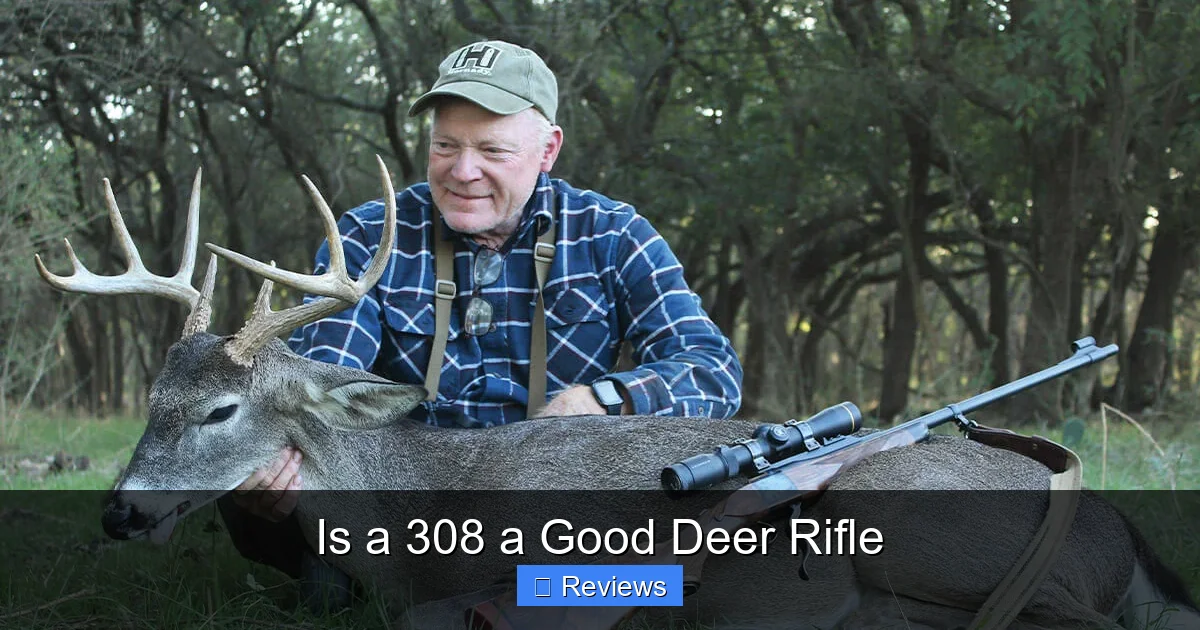
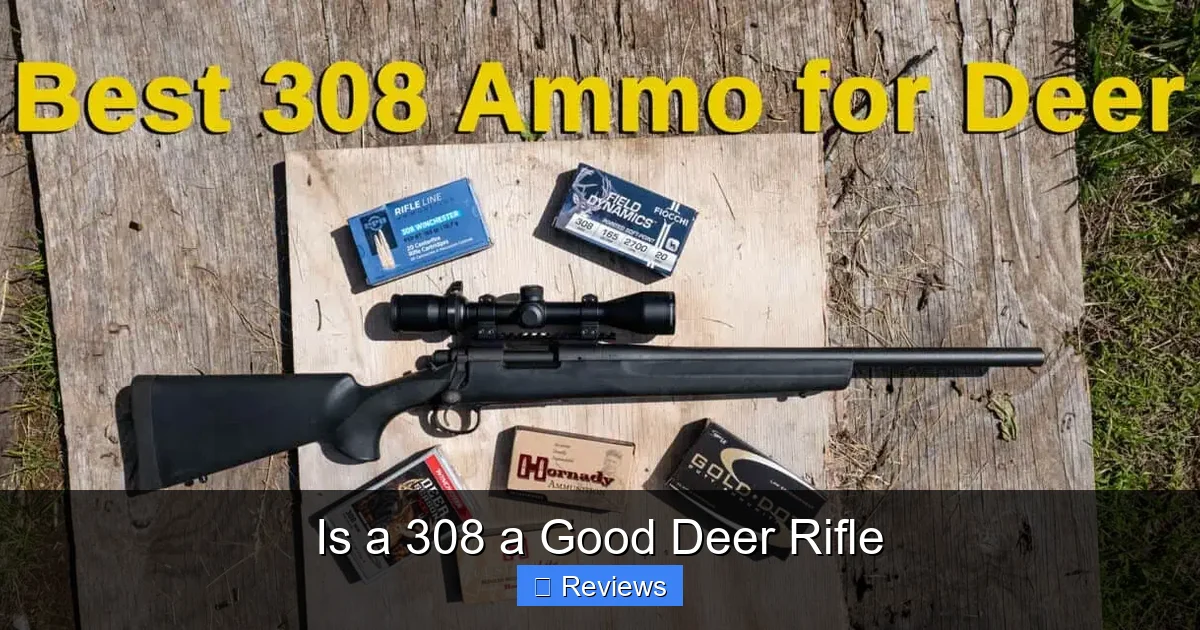
Visual guide about Is a 308 a Good Deer Rifle
Image source: content.osgnetworks.tv
So, what specifically makes the .308 such a standout choice when you’re thinking about a good deer rifle? It boils down to a few key performance characteristics that align perfectly with the demands of deer hunting.
Ballistics That Work (Trajectory, Energy)
For deer hunting, you need a cartridge that can deliver enough kinetic energy to humanely dispatch the animal and a trajectory that isn’t overly complicated to manage. The .308 Winchester hits this sweet spot beautifully. With a typical 150-grain bullet, it leaves the muzzle at around 2,800 feet per second (fps). This translates to over 2,600 foot-pounds (ft-lbs) of energy at the muzzle and still retains over 1,500 ft-lbs at 200 yards. Most experts agree that 1,000 ft-lbs of energy is sufficient for deer-sized game, so the .308 has plenty in reserve for clean, ethical kills within typical hunting ranges. Its trajectory is relatively flat out to about 250 yards, making holdovers simple for most hunters.
Manageable Recoil
One of the most significant advantages of the .308 is its manageable recoil. Compared to larger magnum cartridges like the .300 Win Mag or even its older brother, the .30-06, the .308 offers a much softer “kick.” This isn’t just about comfort; it directly impacts accuracy. Less recoil means less flinching, more consistent shooting form, and the ability to spend more time at the range practicing without developing bad habits or soreness. For new hunters, younger shooters, or those sensitive to heavy recoil, this makes the .308 an ideal starting point and a pleasure to shoot.
Versatile Bullet Selection
The .308’s popularity means that ammunition manufacturers produce a vast array of bullet types and weights for it. For deer, you can choose anything from lighter, faster 125-grain bullets for open country, through the incredibly popular 150-grain and 165/168-grain options, all the way up to heavier 180-grain bullets for larger deer or elk in a pinch. This versatility allows you to fine-tune your load for specific conditions, bullet preferences, or even just what your rifle shoots best. Whether you prefer traditional soft points, bonded bullets for deep penetration, or monolithic copper projectiles, there’s a .308 load for you.
Accuracy Potential
The .308 Winchester is inherently an accurate cartridge. Its case design is efficient, leading to good internal ballistics and consistent pressure. This inherent accuracy is why it’s a popular choice not only for hunting but also for target shooting and tactical applications where precision is paramount. When paired with a quality rifle and good shooting technique, the .308 is capable of exceptional accuracy, often delivering sub-minute-of-angle (MOA) groups, meaning shots within 1 inch at 100 yards. This precision is crucial for placing shots exactly where they need to go for a humane harvest.
Optimal Range and Conditions for the .308
While the .308 is highly versatile, understanding its optimal range and the conditions where it performs best will help you maximize its effectiveness as a deer rifle.
Short to Medium Range Dominance (0-250 yards)
The .308 truly excels in the short to medium range – anywhere from an up-close 50-yard shot in dense woods to a 250-yard open-field crossing. In these scenarios, its flat trajectory means minimal bullet drop, making holdovers simple. The energy delivered at these distances is more than sufficient for a clean pass-through and rapid incapacitation of deer. This is where most deer are harvested, making the .308 a perfect fit for the vast majority of hunting situations.
Pushing the Limits (250-400 yards with practice)
With a skilled shooter, good optics, and an accurate rifle, the .308 can be effective out to 300-400 yards. Beyond 250 yards, bullet drop becomes more significant, requiring the hunter to know their dope (data on previous engagements) and make precise adjustments or holdovers. Practice is absolutely key here. If you plan to take shots at these extended ranges, extensive time at the shooting range, using a ballistic calculator, and understanding wind drift are non-negotiable. You need to be intimately familiar with your rifle and ammunition’s performance at these distances.
When to Consider Other Options (very long range, very large game)
While a good deer rifle, the .308 does have its limits. For consistent ethical kills much beyond 400 yards, especially in windy conditions, other cartridges with flatter trajectories and more retained energy might be more suitable. Similarly, while it can take elk with proper bullet selection and shot placement, it wouldn’t be my first choice for brown bear or Cape buffalo. It shines brightest on deer, antelope, and similar-sized game.
Choosing the Right Ammunition for Deer
Selecting the correct ammunition is just as important as choosing the rifle itself. The right bullet ensures ethical performance from your .308 deer rifle.
Bullet Construction Matters
Not all bullets are created equal, even within the same caliber. For deer, you want a bullet designed for controlled expansion.
- Soft Point (SP): A classic. It has an exposed lead tip that initiates expansion upon impact, creating a wide wound channel. Good for general deer hunting.
- Bonded Bullets: These bullets have their lead core chemically bonded to the copper jacket. This prevents separation, ensuring deep penetration even after hitting bone, and maintaining a high weight retention. Examples include Federal Fusion or Hornady InterLock. Excellent for deer and potentially larger game.
- Monolithic Copper Bullets: Made entirely of copper (or copper alloy), these bullets expand in a controlled manner, retaining virtually all their weight. They offer deep penetration and are lead-free, making them popular in areas with lead restrictions. Examples include Barnes TSX or Hornady GMX.
Avoid purely varmint-style bullets, which are designed for rapid fragmentation, and match-grade target bullets, which are designed for precision but often don’t expand reliably on game.
Popular Deer Loads (150-grain, 165/168-grain)
For deer, 150-grain and 165/168-grain bullets are overwhelmingly popular and highly effective.
- 150-grain: Offers a slightly flatter trajectory and higher velocity, making it a great choice for open country or when you anticipate longer shots. Still provides plenty of energy for deer.
- 165/168-grain: A bit heavier, these bullets often buck the wind a little better and provide excellent penetration. They are a superb all-around choice for various deer hunting environments. Many rifles also show a preference for this weight in terms of accuracy.
Specific Brand Examples
Many manufacturers make excellent .308 ammunition for deer. Some tried-and-true favorites include:
- Federal Fusion: A bonded soft point known for reliable expansion and deep penetration.
- Hornady American Whitetail (InterLock): A classic soft point design that delivers excellent terminal performance on deer.
- Winchester Deer Season XP: Designed specifically for deer, with a large-diameter polymer tip for rapid, devastating expansion.
- Nosler AccuBond/Partition: Premium options offering excellent weight retention and penetration, suitable for deer and larger game.
- Barnes VOR-TX (TSX/TTSX): All-copper bullets for deep penetration and those who prefer lead-free options.
Experiment to find what your particular rifle shoots most accurately.
Shot Placement is Paramount
No matter how powerful your cartridge or how advanced your bullet, shot placement remains the single most critical factor for an ethical harvest. A perfectly placed shot with a .308 will be far more effective than a poorly placed shot with a .300 Win Mag. Aim for the vital organs – the heart and lungs – which are typically located behind the front shoulder. Practice aiming for these vitals on a target to build confidence.
Pairing the .308 with the Right Rifle
The .308 Winchester is chambered in an enormous variety of rifles, which is another reason it’s such a good deer rifle. You’ll find a platform to suit almost any preference or budget.
Bolt-Action Rifles
Bolt-action rifles are the quintessential hunting rifle, known for their accuracy, reliability, and simplicity. They are the most common choice for a .308 deer rifle.
- Remington 700: A classic American design, highly customizable, and extremely accurate.
- Savage 110/Axis: Known for out-of-the-box accuracy, often at a very competitive price point, with adjustable AccuTrigger.
- Ruger American Rifle: A fantastic budget-friendly option that delivers surprising accuracy and reliability.
- Tikka T3x: A popular Finnish rifle known for its exceptional out-of-the-box accuracy and smooth action.
- Bergara B-14: Combines Spanish craftsmanship with Remington 700 compatibility, offering excellent value.
Semi-Automatic Options (AR-10 platform)
While less traditional for deer hunting in some areas, modern sporting rifles built on the AR-10 platform chambered in .308 are becoming increasingly popular. They offer quick follow-up shots, modularity, and can be very accurate. However, they are often heavier than bolt-actions and might not be legal for hunting in all jurisdictions. Examples include the DPMS LR-308, Ruger SR-762, or various custom AR-10 builds.
Scopes and Optics
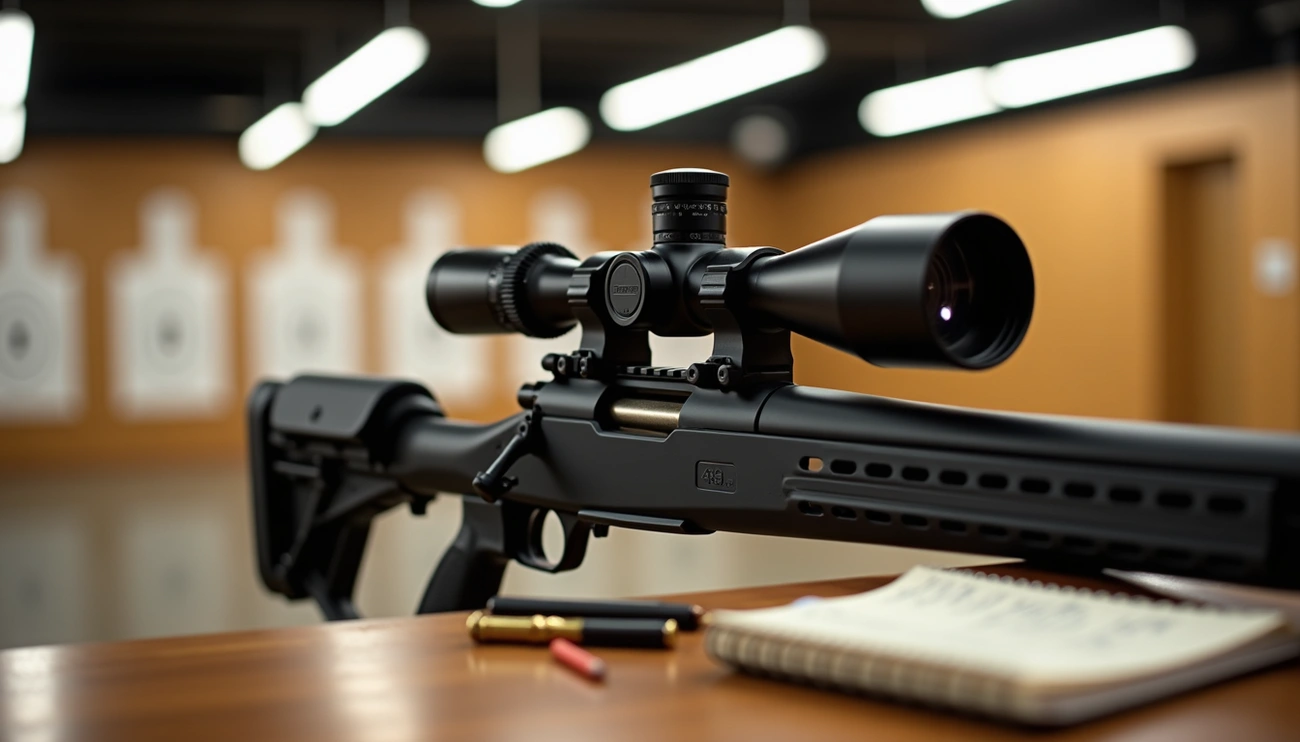
A good rifle deserves good glass. For deer hunting with a .308, a variable power scope with a magnification range like 3-9x40mm or 4-12x40mm is ideal. This offers enough magnification for longer shots while providing a wide field of view for closer encounters. Ensure your scope has good light-gathering capabilities for dawn and dusk hunting. Mount it securely with quality rings and bases.
Essential Accessories
Don’t forget the supporting cast for your .308 deer rifle setup:
- Sling: Essential for carrying your rifle comfortably in the field.
- Bipod/Shooting Sticks: Helps stabilize your shot, especially for longer distances or when shooting from a prone position.
- Cleaning Kit: Regular maintenance ensures accuracy and longevity.
- Hearing Protection: Always, always protect your ears.
- Quality Case: To protect your rifle during transport.
Practical Tips for Hunting Deer with a .308
Having the right rifle and ammo is only part of the equation. Here are some practical tips to make your .308 deer hunting experience successful and ethical.
Practice, Practice, Practice
This cannot be stressed enough. Spend time at the shooting range, not just punching paper but practicing real-world shooting scenarios. Shoot from different positions (standing, kneeling, sitting, prone), simulate cold bore shots, and practice quickly acquiring your target. Know your rifle’s zero at different distances. The more familiar you are with your .308, the more confident and accurate you’ll be in the field.
Know Your Rifle and Your Ammo
Every rifle is unique, and it might “like” certain ammunition more than others. Test various brands and bullet weights to find the most accurate load for your specific firearm. Once you find it, stick with it. Understand your rifle’s capabilities and, more importantly, your own. Don’t take shots in the field that you haven’t confidently made on the range.
Ethics of the Shot (Broadside, Vitals)
Always strive for a clean, ethical kill. The best shot placement for deer is typically a broadside or slightly quartering-away shot aiming for the heart and lungs. Avoid risky shots like head-on or extreme quartering angles, which reduce the chance of hitting vitals and increase the risk of wounding the animal. Be patient, wait for the right shot opportunity, and if it doesn’t present itself, let the deer walk.
Field Dressing and Recovery
After a successful shot with your .308, give the deer a few minutes (10-30 minutes, depending on the shot) before tracking, especially if it didn’t drop immediately. This allows the animal to expire peacefully. Once recovered, field dress the deer promptly to start the cooling process and preserve the meat. Knowing basic tracking and field dressing skills will greatly enhance your hunting experience.
Conclusion
So, is a 308 a good deer rifle? Without a doubt, yes. The .308 Winchester stands as a testament to intelligent cartridge design, offering an almost perfect balance of power, trajectory, manageable recoil, and accuracy for deer hunting. Its versatility, combined with the vast array of quality rifles and ammunition available, makes it an outstanding choice for both new and experienced hunters targeting whitetail, mule deer, and similar-sized game.
From its military lineage to its widespread adoption in hunting camps across the globe, the .308 has proven itself time and again. If you’re looking for a reliable, effective, and enjoyable cartridge to carry into the deer woods, you’d be hard-pressed to find a better option than the dependable .308 Winchester. Practice regularly, choose appropriate ammunition, and focus on shot placement, and your .308 will serve you well for many successful deer seasons to come.
Frequently Asked Questions
What kind of recoil does a .308 have?
The .308 Winchester has moderate and manageable recoil, significantly less than many magnum cartridges like the .300 Win Mag. This makes it comfortable for most shooters, including beginners, and allows for extended practice sessions without discomfort, which helps improve accuracy.
Is a .308 good for beginners?
Absolutely, the .308 is an excellent choice for beginners. Its manageable recoil, inherent accuracy, and widespread availability of affordable rifles and ammunition make it very user-friendly. It allows new hunters to focus on developing good shooting fundamentals without being intimidated by heavy kick.
Can I use a .308 for other game besides deer?
Yes, the .308 Winchester is very versatile and can be used for a wide range of other game. It’s effective for hogs, black bear, antelope, and even elk with proper bullet selection and shot placement. It’s often considered one of the best all-around North American hunting cartridges.
How does the .308 compare to the .30-06 for deer?
Both the .308 and .30-06 are fantastic deer cartridges. The .30-06 generally offers slightly more velocity and energy with heavier bullets, giving it a bit more reach and power for larger game. However, the .308 achieves very similar performance in a more compact case, with less recoil, making it equally effective for deer in most hunting scenarios.
Is .308 ammunition expensive?
Compared to many specialized or magnum cartridges, .308 ammunition is relatively affordable and widely available. Its popularity ensures competitive pricing across various brands and bullet types, from budget-friendly practice rounds to premium hunting loads, making it an economical choice for regular shooting and hunting.
What is the minimum recommended energy for deer hunting?
While there’s no universally agreed-upon legal minimum, most experts and ethical hunters agree that a bullet should deliver at least 1,000 foot-pounds (ft-lbs) of kinetic energy upon impact for a humane kill on deer-sized game. The .308 Winchester easily surpasses this threshold out to 250-300 yards with most hunting loads.