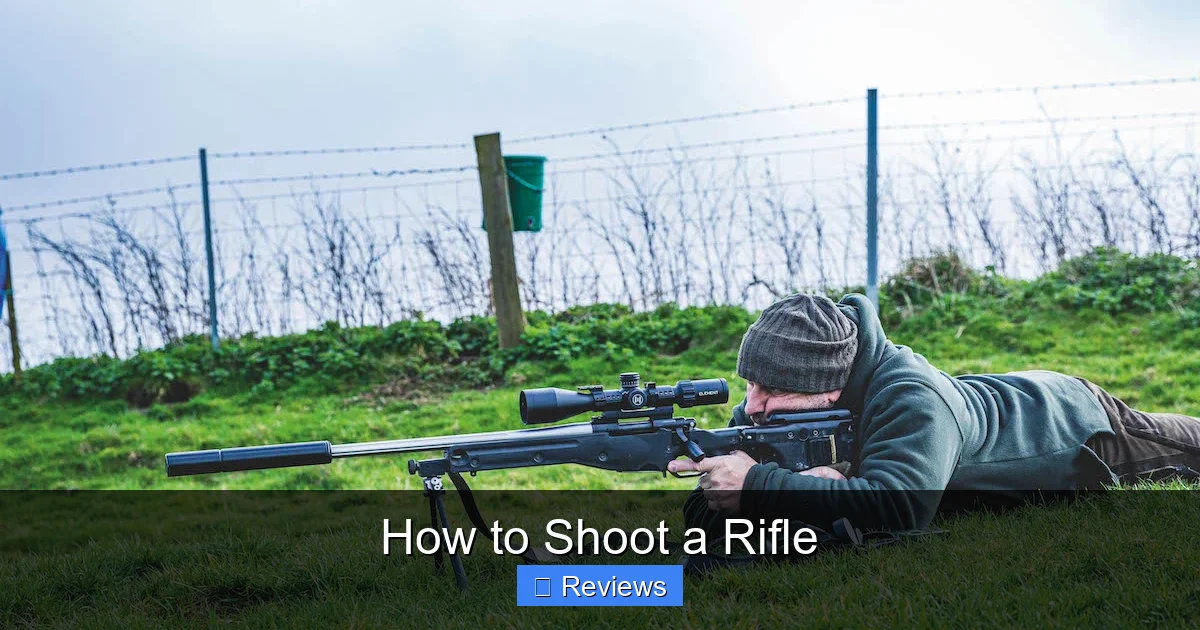
Learning how to shoot a rifle can be a rewarding experience, but safety must always come first. This comprehensive guide walks you through everything from understanding your firearm and basic safety rules to mastering marksmanship fundamentals like sight alignment and trigger control. We’ll help you develop the skills needed for accurate and responsible rifle shooting.
How to Shoot a Rifle
Have you ever been curious about shooting a rifle? Maybe you’re interested in hunting, competitive shooting, or simply want to understand firearms better. Whatever your reason, learning how to shoot a rifle can be an incredibly rewarding skill. It demands focus, discipline, and a deep respect for safety. It’s not just about pulling a trigger; it’s about mastering a sequence of precise actions that lead to accuracy.
Getting started might seem a bit daunting, with all the different types of rifles, ammunition, and techniques out there. But don’t worry! This guide is designed to break down the process into easy-to-understand steps, making it accessible for absolute beginners. We’ll cover everything from the most critical safety rules to the fundamental techniques that seasoned shooters use every day. Our goal is to equip you with the knowledge and confidence to approach the firing range safely and effectively.
So, if you’re ready to embark on this journey and discover the satisfaction of hitting your target, let’s dive in. We’ll walk through each stage of learning how to shoot a rifle, ensuring you build a solid foundation from the ground up. Remember, patience and practice are your best friends as you develop this new skill. Let’s learn how to shoot a rifle the right way!
Key Takeaways
- Safety is Paramount: Always follow the four fundamental rules of firearm safety to ensure a safe shooting experience for yourself and others.
- Understand Your Rifle: Familiarize yourself with your rifle’s basic anatomy, different types, and the correct ammunition to use before heading to the range.
- Master Marksmanship Fundamentals: Focus on proper stance/position, grip, sight picture, breath control, and trigger control for consistent accuracy.
- Practice Consistently: Regular practice, including dry firing and live-fire drills, is crucial for developing muscle memory and refining your shooting skills.
- Proper Maintenance and Storage: Learn basic rifle cleaning and responsible storage methods to keep your firearm safe, functional, and ready for use.
- Seek Professional Guidance: Consider taking lessons from a certified instructor to correct bad habits early and accelerate your learning process.
Quick Answers to Common Questions
What is the most important rule of gun safety?
The most important rule is to always treat every firearm as if it were loaded, even if you believe it’s not. This mindset prevents complacency and reinforces safe handling habits.
Should I use iron sights or a scope to learn how to shoot a rifle?
For beginners, starting with iron sights can teach fundamental sight alignment without the complexities of a scope. However, a low-magnification scope or red dot can also simplify aiming for new shooters, especially on a bench rest.
How often should I clean my rifle?
You should perform a basic cleaning of your rifle after every shooting session. This prevents carbon buildup and corrosion, ensuring your rifle remains reliable and accurate.
What is “dry firing”?
Dry firing is practicing the mechanics of shooting (stance, grip, sight alignment, trigger control) without live ammunition. It’s a safe and effective way to build muscle memory and improve technique at home.
What is “zeroing” a rifle?
Zeroing a rifle means adjusting its sights or scope so that the point where the bullet hits (point of impact) matches your point of aim at a specific distance, typically 50 or 100 yards.
📑 Table of Contents
Safety First, Last, and Always: The Golden Rules
Before you even touch a rifle, you must understand and commit to memory the four fundamental rules of firearm safety. These aren’t suggestions; they are absolute requirements that ensure the safety of everyone around you, as well as your own. Ignoring even one of these rules can have catastrophic consequences. When learning how to shoot a rifle, safety is the number one priority.
Always Treat Every Firearm As If It Were Loaded
This rule is simple yet profound. Even if you’ve personally checked and confirmed a rifle is unloaded, act as if it’s ready to fire. This mindset prevents accidental discharges by building a habit of caution. Before handling any firearm, verify its status. Open the action, visually inspect the chamber and magazine well, and then feel with your finger to ensure no ammunition is present. This is a critical step when you’re learning how to shoot a rifle.
Never Point The Muzzle At Anything You Are Not Willing To Destroy
The muzzle is the front end of the barrel where the bullet exits. Always be mindful of where your muzzle is pointing. This means keeping it pointed in a safe direction – typically downrange at the target or towards the ground at your feet if you’re not actively shooting. Never let the muzzle sweep across people, pets, or anything you don’t intend to shoot. This rule is often called “muzzle discipline” and is a cornerstone of learning how to shoot a rifle safely.
Keep Your Finger Off The Trigger Until Your Sights Are On The Target
This is perhaps the most violated rule among new shooters, and it’s responsible for countless accidental discharges. Your finger should rest alongside the frame of the rifle, outside the trigger guard, until your sights are aligned with the target and you are ready to fire. Only then should your finger move to the trigger. This prevents “negligent discharges” from startling or fumbling the rifle. Mastering trigger discipline is essential for anyone who wants to learn how to shoot a rifle responsibly.
Be Sure Of Your Target And What Is Beyond It
Before you pull the trigger, you must positively identify your target. Is it what you intend to shoot? Are you certain? More importantly, consider what is *behind* your target. Bullets can travel great distances and pass through many materials. Ensure there’s a safe backstop that will stop your bullet effectively, such as a proper berm at a shooting range. Never shoot at sounds, movement, or indistinct targets. This rule is vital in all shooting scenarios, especially in hunting, and is part of learning how to shoot a rifle ethically.
Understanding Your Rifle: Getting Started
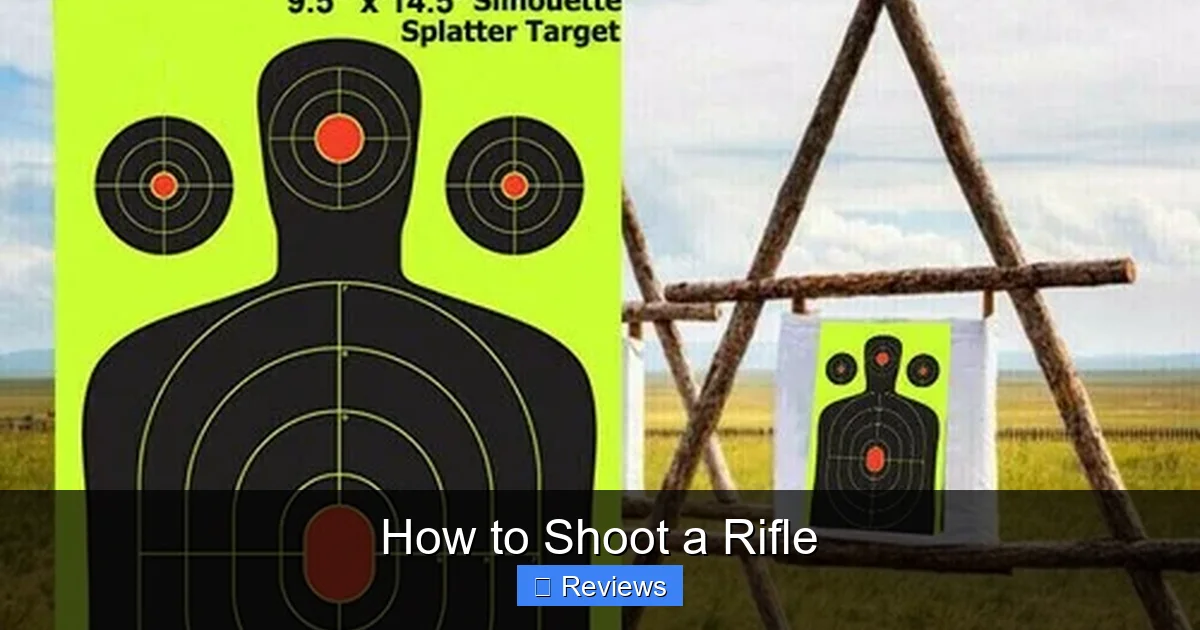
Visual guide about How to Shoot a Rifle
Image source: i.ebayimg.com
Before you hit the range, it’s incredibly helpful to know a little about the tool you’ll be using. Understanding your rifle’s basics will make the learning process much smoother and safer.
Types of Rifles
Rifles come in many shapes and sizes, each designed for different purposes.
- Bolt-Action Rifles: These are very common, especially for hunting and precision shooting. They are manually operated, meaning you cycle a bolt to load a new round after each shot. They are known for their accuracy.
- Semi-Automatic Rifles: These rifles automatically load a new round after each shot, allowing for faster follow-up shots. You still pull the trigger for each shot. Examples include the AR-15 platform.
- Lever-Action Rifles: Often associated with the Old West, these rifles are operated by cycling a lever, which ejects a spent casing and loads a new round.
- Pump-Action Rifles: Similar to pump-action shotguns, these require you to manually pump a forend to cycle rounds.
For beginners learning how to shoot a rifle, a bolt-action rifle or a semi-automatic rifle (like a .22LR rimfire) can be excellent choices due to their generally lower recoil and ease of use.
Rifle Anatomy Basics
You don’t need to be a gunsmith, but knowing the main parts of your rifle will help you understand instructions and operate it safely.
- Stock: The part you hold and shoulder. It usually includes the buttstock (rests against your shoulder) and the forearm (where your support hand holds).
- Receiver: The central part of the rifle, housing the operating parts like the bolt and trigger mechanism.
- Barrel: The tube through which the bullet travels.
- Muzzle: The end of the barrel where the bullet exits.
- Action: The mechanism that loads, fires, and ejects cartridges.
- Trigger: The lever you pull to fire the rifle.
- Trigger Guard: The loop surrounding the trigger to prevent accidental discharges.
- Magazine: Holds the ammunition. Can be internal or detachable.
- Sights: Used for aiming. Can be iron sights (front and rear posts) or optical sights (scopes).
- Safety: A mechanism designed to prevent the rifle from firing accidentally. Always know how to operate your rifle’s safety.
Ammunition Fundamentals
Ammunition, often called “ammo” or “cartridges,” consists of four main components:
- Bullet: The projectile that exits the barrel.
- Casing: The metal container holding all components.
- Propellant (Gunpowder): Ignites to create gas pressure, pushing the bullet.
- Primer: A small explosive that ignites the propellant when struck by the firing pin.
It is absolutely critical to use the correct ammunition for your rifle. The rifle’s caliber (e.g., .22LR, .308 Winchester, 5.56x45mm) is usually stamped on the barrel. Using the wrong ammunition can cause serious injury or damage to the rifle. Always double-check the caliber markings on your rifle and the ammunition box. This is a non-negotiable step when learning how to shoot a rifle.
The Fundamentals of Marksmanship: Aim, Hold, and Fire
Now that you understand the safety rules and your equipment, it’s time to learn the core techniques that will make you an accurate shooter. These fundamentals are universal, whether you’re learning how to shoot a rifle for sport or for self-defense.
Proper Stance/Position
Your position provides the foundation for stability. For beginners, a bench rest or prone position (lying down) offers the most stability, making it easier to focus on other fundamentals.
- Bench Rest: This is excellent for learning. You sit at a bench, resting the rifle’s forearm on a sandbag or bipod. Your non-shooting hand can support the buttstock with another sandbag or just lightly hold it. This minimizes body movement.
- Prone Position: Lying on your stomach, body angled slightly to the target, with elbows supporting the rifle. This is very stable and often used for precision shooting.
- Standing (Offhand): This is the most challenging position. Stand with your feet shoulder-width apart, non-shooting shoulder pointing slightly towards the target. The non-shooting arm supports the rifle’s forearm, while the shooting hand grips the stock. Balance is key.
Regardless of the position, your goal is to be relaxed yet stable, allowing the rifle to move as little as possible.
Grip and Shoulder Placement
Your grip on the rifle should be firm but not too tight. The shooting hand grips the stock, aligning your finger naturally with the trigger. Your non-shooting hand supports the rifle’s weight, typically under the forearm or magazine.
When shouldering the rifle, the buttstock should fit snugly into the pocket of your shoulder. This helps absorb recoil and positions your eye correctly for the sights. Avoid placing it on your collarbone or upper arm, as this will be uncomfortable and reduce control. Proper shoulder placement is vital for managing recoil when learning how to shoot a rifle.
Sight Picture and Sight Alignment
This is where you aim. It involves two key concepts:
- Sight Alignment: If you’re using iron sights, align the front sight post centrally within the notch of the rear sight, with the top of both sights level. If using a scope, ensure your eye is centered in the eyepiece, and the reticle (crosshairs) is clear.
- Sight Picture: Once sights are aligned, place them on the target. For most shooting, you want to focus your eye on the front sight (if using iron sights) or the reticle (if using a scope). The target will appear slightly blurry, but that’s okay. Your brain prioritizes the sharpest image, and it needs to be the sights for precision.
When learning how to shoot a rifle, this is arguably the most crucial visual skill to develop.
Breath Control
Your breathing causes your body to move, which in turn moves the rifle. To minimize this, use a technique called the “respiratory pause.”
- Breathe naturally.
- Inhale, then exhale about two-thirds of the air.
- Pause your breathing. This is the most stable point in your respiratory cycle.
- During this brief pause (typically 5-8 seconds), you execute the shot.
- Avoid holding your breath for too long, as it can cause tension and an unsteady hold.
Trigger Control
This is the moment of truth. Good trigger control is about pressing the trigger smoothly and steadily straight to the rear, without disturbing your sight picture. It’s not about jerking or slapping the trigger.
- Place the pad of your index finger (or the crease of the first joint, depending on comfort and rifle) on the trigger.
- Apply gentle, continuous pressure, increasing it gradually.
- Don’t anticipate the shot. Let it surprise you.
- Keep your focus on the front sight (or reticle) as you press.
- If your sights move off target significantly, stop, reset, and start again.
Mastering trigger control is perhaps the biggest challenge when learning how to shoot a rifle accurately.
Follow Through
After the rifle fires, it’s natural to want to immediately look up and see where your shot went. Resist this urge! “Follow through” means maintaining your shooting position, sight picture, and trigger pressure for a brief moment after the shot. This ensures that any flinching or anticipation doesn’t affect the bullet’s path as it leaves the barrel. It’s like a golfer holding their swing or a basketball player holding their follow-through shot.
Practice Makes Perfect: Drills and Improvement
Understanding the fundamentals is one thing; applying them consistently is another. Regular, focused practice is key to truly learning how to shoot a rifle.
Dry Firing Practice
Dry firing means practicing trigger control and sight alignment without live ammunition. It’s an invaluable tool for beginners and experienced shooters alike.
- Ensure your rifle is absolutely, 100% unloaded. Double-check, triple-check. Remove all ammo from the room.
- Aim at a safe backstop (like a blank wall) or a small target at home.
- Practice your stance, grip, sight alignment, breath control, and trigger press.
- Watch your front sight (or scope reticle) as you press the trigger. If it moves off target, you know you have a problem with your trigger control.
Dry firing builds muscle memory without the recoil or expense of live rounds. It’s a fundamental part of learning how to shoot a rifle well.
Grouping Drills
Once at the range with live ammunition, your primary goal should be to shoot tight groups, not necessarily to hit the bullseye every time.
- Set up a target at a short distance (e.g., 25 yards).
- Fire a group of 3-5 shots, focusing intently on your fundamentals.
- Analyze your group. Are the shots close together? Where are they landing relative to each other?
- Make small adjustments to your technique, not necessarily your sights, and shoot another group.
Consistency in your group size is a sign of good fundamental application.
Zeroing Your Rifle
Zeroing means adjusting your rifle’s sights (or scope) so that the point of impact (where the bullet hits) matches your point of aim (where you’re looking) at a specific distance.
- Shoot a group, as described above.
- If your group is consistently hitting, say, two inches low and one inch left, you’ll adjust your sights accordingly. Most sights have “clicks” for adjustment: “UP” moves the impact up, “DOWN” moves it down, “LEFT” moves it left, “RIGHT” moves it right.
- Consult your rifle’s manual for specific adjustment instructions (e.g., “1 click = 1/4 inch at 100 yards”).
Zeroing ensures your rifle shoots where you aim, which is crucial for accurate shooting, especially when learning how to shoot a rifle for specific purposes like hunting.
Range Etiquette
When at a shooting range, always be mindful of others.
- Listen to the Range Safety Officer (RSO): Their word is law.
- Keep firearms unloaded and cased until you’re at your designated firing line.
- Maintain muzzle discipline at all times.
- Only uncase and handle your rifle when the range is “hot” (safe to shoot).
- Never handle firearms when the range is “cold” (ceasefire for target changes).
- Clean up your brass and targets.
Maintenance and Storage: Keeping Your Rifle Ready
Proper care and storage of your rifle are just as important as knowing how to shoot a rifle. It ensures reliability, longevity, and, most importantly, safety.
Basic Cleaning
After each shooting session, especially with corrosive ammunition, clean your rifle.
- Safety First: Ensure the rifle is unloaded.
- Gather Supplies: Cleaning rod, bore brush, patches, solvent, gun oil.
- Clean the Barrel: Run a solvent-soaked patch through the bore, followed by a bore brush, then dry patches until clean.
- Clean the Action: Use a brush and solvent to remove carbon and debris from the bolt and receiver area.
- Lightly Oil: Apply a thin coat of gun oil to moving parts to prevent rust and ensure smooth operation.
Regular cleaning prevents malfunctions and maintains accuracy, making it easier to consistently shoot a rifle effectively.
Safe Storage Practices
When not in use, your rifle must be stored safely and securely.
- Unloaded: Always store firearms unloaded. Keep ammunition separate.
- Locked Up: Use a gun safe, locked cabinet, or trigger lock to prevent unauthorized access, especially from children.
- Responsible Ownership: You are responsible for preventing your firearm from falling into the wrong hands.
Safe storage is a critical aspect of responsible gun ownership and complements learning how to shoot a rifle.
Conclusion
Learning how to shoot a rifle is a journey that combines discipline, precision, and an unwavering commitment to safety. We’ve covered the crucial groundwork, from the fundamental safety rules that protect everyone to the core marksmanship techniques like sight alignment and trigger control. We’ve also touched upon the importance of consistent practice and proper rifle maintenance.
Remember, every expert was once a beginner. Be patient with yourself, focus on mastering one fundamental at a time, and don’t be afraid to seek guidance from experienced shooters or certified instructors. They can provide personalized feedback that accelerates your learning process. The satisfaction of consistently hitting your target, knowing you’ve done so safely and responsibly, is incredibly rewarding. So, go forth, practice safely, and enjoy the experience of learning how to shoot a rifle! Stay safe, stay respectful, and happy shooting!
🎥 Related Video: Learn how to shoot a sniper rifle like a Marine
📺 Military Times
marines #marinecorps #sniperrifles #military #defense #troops #veterans.
Frequently Asked Questions
Is it hard to learn how to shoot a rifle?
Learning the basics of how to shoot a rifle isn’t inherently hard, but becoming proficient takes practice and patience. The key is to start with fundamental safety rules and gradually build your skills through consistent training and attention to detail. Many beginners find it easier than they expect with proper instruction.
What caliber rifle is best for beginners?
For beginners, a .22LR rimfire rifle is often recommended. It has very low recoil, affordable ammunition, and is easy to handle, making it ideal for learning the fundamentals of marksmanship without developing a flinch from recoil.
Do I need ear and eye protection when shooting a rifle?
Absolutely, yes! Ear and eye protection are non-negotiable safety equipment when shooting any firearm, including rifles. The noise from a rifle shot can cause permanent hearing damage, and eye protection guards against brass, debris, and potential malfunctions.
How far can a rifle bullet travel?
The exact distance a rifle bullet can travel varies greatly depending on the caliber, bullet type, and atmospheric conditions, but many rifle bullets can travel several miles. This is why it’s crucial to always be aware of your backstop and what lies beyond your target.
Can I teach myself how to shoot a rifle, or do I need an instructor?
While this guide provides a solid foundation, receiving instruction from a certified firearms instructor is highly recommended. An instructor can provide personalized feedback, correct bad habits before they become ingrained, and teach advanced techniques more effectively than self-study alone.
What is the proper way to hold a rifle?
The proper way to hold a rifle involves a firm but relaxed grip with your shooting hand on the stock and your non-shooting hand supporting the forearm. The buttstock should be snug in your shoulder pocket, and your head positioned comfortably to align with the sights. The goal is stability and comfort.