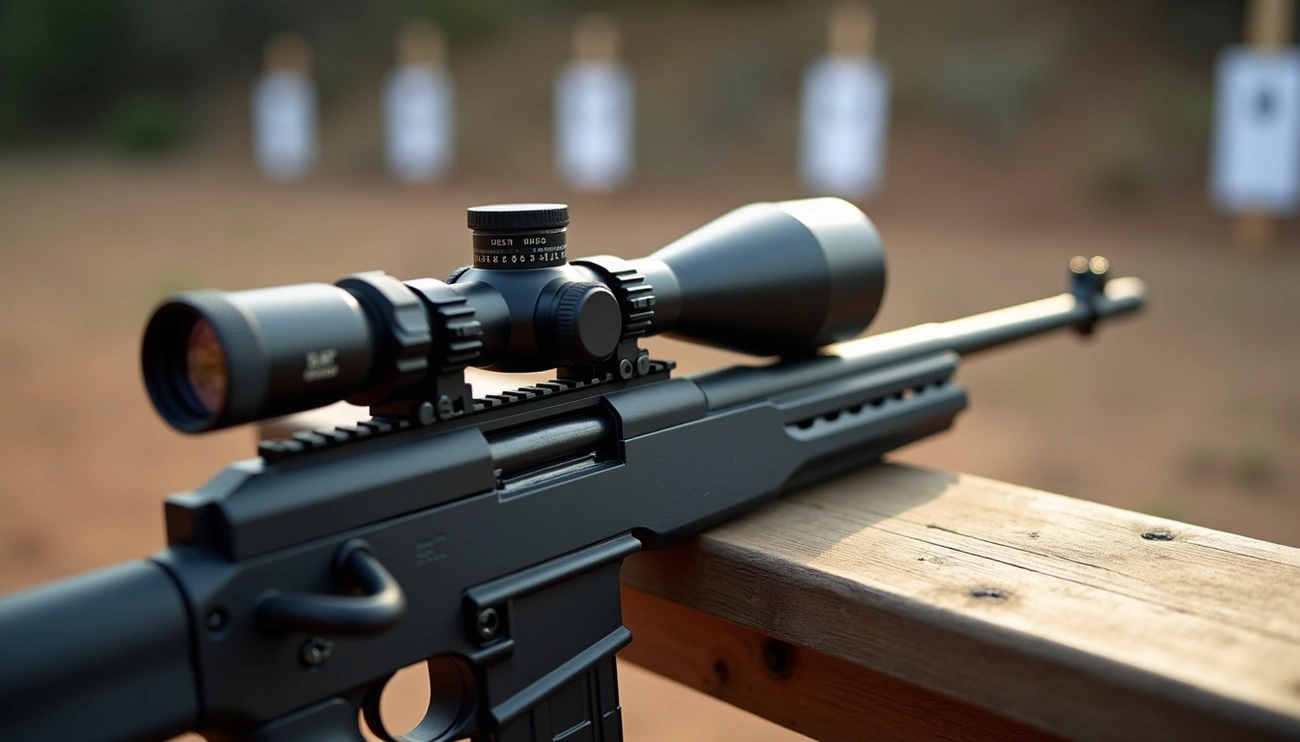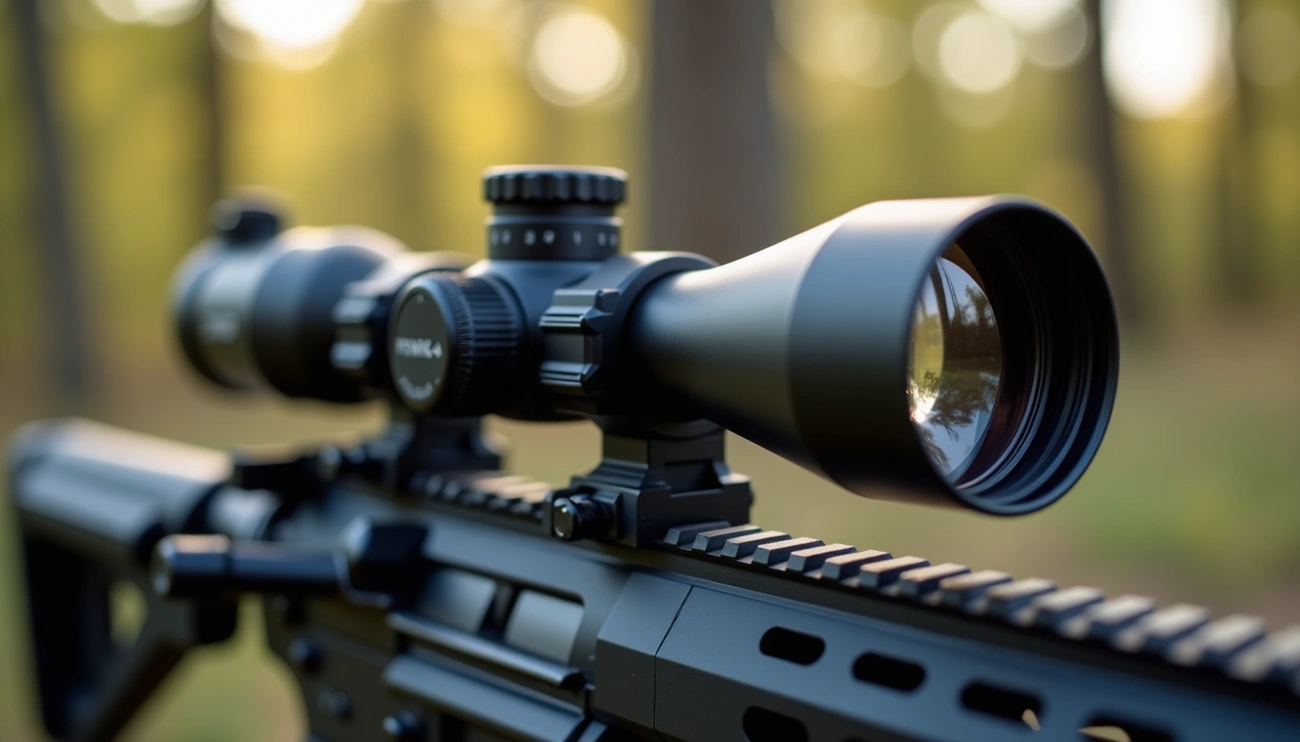
Shim a rifle scope by placing thin material, such as plastic or aluminum shims, under the scope base or rings to correct alignment when you run out of elevation or windage. A rear shim lowers point of impact, while a front shim raises point of impact. Adjustable mounts provide a better long-term solution.
Why Shim a Rifle Scope?
Shooters often face a frustrating situation when trying to sight in their rifles – the elevation turret reaches its maximum adjustment but the bullet still impacts below the target. This common problem occurs with various scopes, even after replacements, and is the primary reason for shimming a rifle scope.
When elevation turrets max out
Running out of elevation adjustment is particularly troublesome for long-range shooting. If your bullet impacts low and you’ve dialed your scope all the way up, you’re left with limited options. That strange feeling in your stomach when you can’t dial any further signals the need for intervention. Even at moderate distances of 50-100 yards, some shooters find their turrets completely maxed out while still shooting several inches low[43]. Without a solution, your expensive rifle and scope combination becomes practically unusable for accurate shooting.
Benefits of using scope mount shims
Shimming offers several distinct advantages:
- Cost-effectiveness: Shims cost only pennies compared to purchasing new equipment
- Custom adjustments: Unlike standardized MOA rails, shims allow for precise, customized height adjustments
- Quick implementation: When properly done, shimming provides an immediate solution
- Home fabrication: Simple materials like soda cans can be fashioned into effective shims
Furthermore, properly placed shims can maximize your scope’s range of adjustment by allowing you to set the elevation adjustment near the middle of its limits, giving you more flexibility in both directions.
Scope shimming vs. MOA rails
Factory “MOA rails” typically come in standardized 10-MOA, 20-MOA, or 30-MOA configurations, whereas shims can be customized to any elevation needed. Although dedicated rails offer a permanent, professional solution, they typically cost significantly more than the DIY shimming approach.
Nevertheless, opinions on shimming vary among experts. Some consider it an outdated practice from “back in the old days” when scopes had more limited adjustment ranges. Others caution that improper shimming may apply bending stress to the scope tube, potentially damaging expensive optics.
In contrast, Leupold’s Technical Service recognizes the legitimacy of shimming, offering purpose-built mounting shims for vertical alignment that they ship free of charge within the US. This endorsement from a major scope manufacturer underscores that when done correctly, shimming remains a valid solution for elevation issues.
How to Calculate the Right Shim Thickness
Calculating the proper shim thickness requires precision and understanding of some basic mathematical principles. Getting this right initially prevents wasted time and materials during your rifle scope alignment process.
Understanding MOA and its impact
MOA (minute of angle) is the standard measurement unit for scope adjustments. Essentially, one MOA equals approximately 1.047 inches at 100 yards, though it’s commonly rounded to 1 inch for practical purposes. This means a 1 MOA adjustment changes your bullet’s point of impact by about 1 inch at 100 yards.
When your scope runs out of elevation adjustment, each additional MOA you need requires a specific thickness of material under your scope mount. The relationship between physical shim thickness and MOA change is directly proportional but varies based on your specific setup.
The formula for shim thickness
The precise formula for calculating shim thickness is straightforward:
- Measure the distance between your scope rings (in inches)
- Multiply that distance by 2
- Multiply the result by pi (3.14159)
- Divide by 360 (degrees in a circle)
- Divide by 60 (arcminutes in a degree)
This gives you the shim thickness needed per 1 MOA of adjustment.
Mathematically expressed: (Ring spacing × 2 × π) ÷ 360 ÷ 60 = shim thickness per MOA
Different ring spacings require different shim thicknesses. For example:
- 3″ spacing requires approximately 0.0009″ per MOA
- 5″ spacing requires approximately 0.0015″ per MOA
- 7″ spacing requires approximately 0.0020″ per MOA
Example calculation for 20 MOA
To illustrate this practically, consider a scope with rings spaced 3 inches apart:
- Step 1: 3 × 2 = 6
- Step 2: 6 × 3.14159 = 18.84954
- Step 3: 18.84954 ÷ 360 = 0.05235
- Step 4: 0.05235 ÷ 60 = 0.00087 inches per MOA
Therefore, to achieve a 20 MOA adjustment, you would need a shim approximately 0.0174 inches thick (0.00087 × 20). According to one shooter’s experience, about 0.013″ of shim provided roughly 13 MOA of elevation change, demonstrating that real-world results often align closely with the calculated values.
Choosing and Preparing Shim Materials
Selecting quality materials is crucial for successful scope shimming. When approaching this task, I need to consider durability, precision, and cost-effectiveness before making my final choice.
Steel vs. brass shim stock
Steel and brass present distinct advantages for scope shimming. Stainless steel offers superior strength and corrosion resistance due to its chromium content. For precision applications requiring tight tolerances, spring steel (1095) delivers exceptional hardness and strength. Brass, meanwhile, provides similar functionality at a comparable cost. The debate between these materials often comes down to personal preference, as functionally there’s no significant difference for most shooting applications.
Where to buy scope base shims
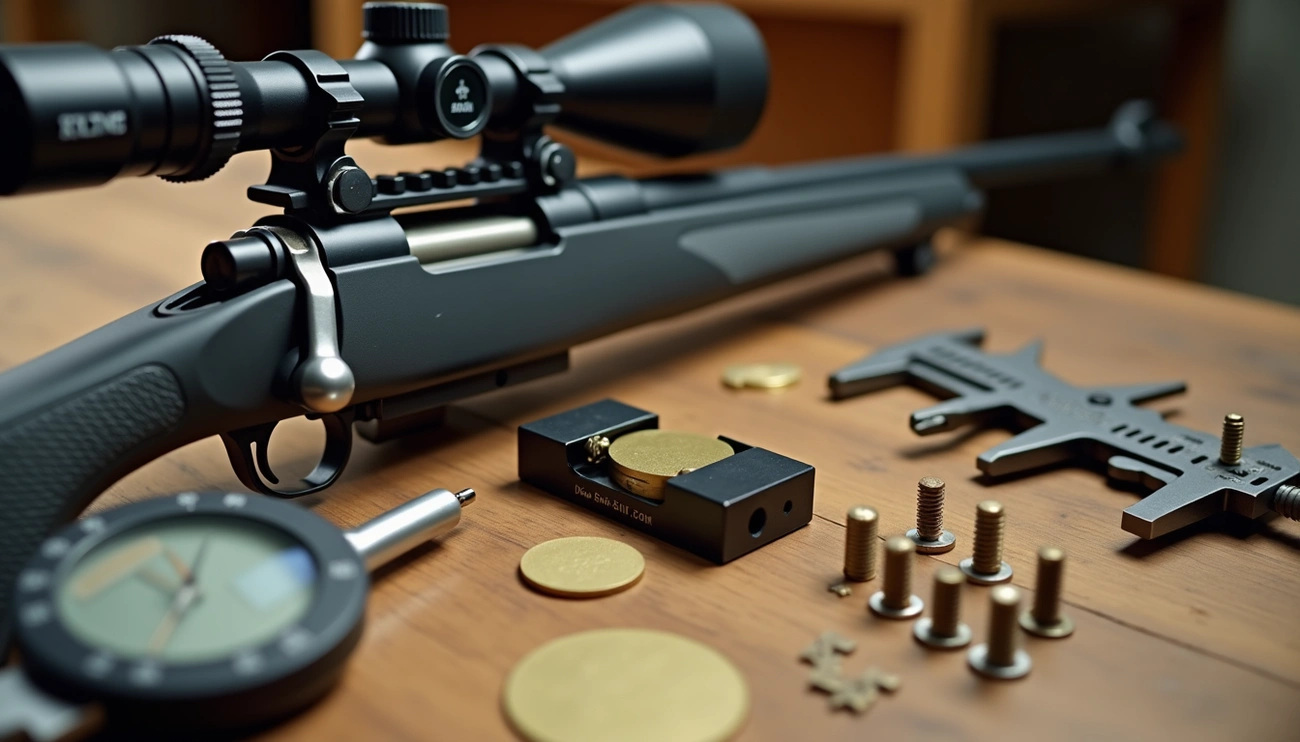
Commercial options include purpose-made scope base shims like those from Burris, which are specifically designed for universal hole spacing between .330-.860 inches. These pre-made shims measure approximately 1.240 x .735″ with .010″ thickness and come in packs of 10. Alternatively, many shooters opt for DIY solutions using materials readily available, including flashing, soda cans, metal beer bottles, and even inner tubes. This homemade approach can save significant money compared to commercial MOA rails.
Cutting and drilling tips
When preparing DIY shims, precise cutting and drilling become essential. First, I mark the exact shape needed, typically matching the footprint of my scope base. For drilling, alignment with existing mounting holes is critical to prevent scope tube stress. Some experienced shooters recommend drilling slightly oversized holes to allow minor adjustments during installation.
Stacking shims for custom thickness
Since achieving the exact calculated thickness might be challenging with a single shim, stacking multiple thin shims often provides more precise control. This method allows for incremental adjustments until I reach the desired elevation change.
Installing the Shim and Aligning the Scope
Once you’ve determined the necessary shim thickness, the actual installation begins. Proper alignment at this stage ensures your scope functions correctly afterward without damaging expensive optics.
Marking and cutting the shim
Placing your rail or base directly on the shim stock provides an ideal template. Insert a pointed punch through the mounting hole and press to create a dimple on the shim stock. Subsequently, score around the edge with the scribe to mark your cutting lines. This approach creates a perfect-fitting shim that won’t interfere with mounting.
Drilling mounting holes accurately
For precise drilling, clamp the shim stock to a piece of wood first. Drill through the marked dimples with light pressure so the drill cuts rather than punches through. Afterward, dress the hole edges with a fine file if necessary. This method yields cleaner holes than punching, which can create “funneled” material preventing the shim from lying flat.
Installing on one-piece vs. two-piece bases
One-piece bases are generally preferable for shimming because they isolate the scope tube from action flexion and recoil. Conversely, shimming two-piece mounts requires additional caution as it places bending stress on the scope tube. If using two-piece bases, consider shimming only the rear base to achieve the desired elevation adjustment.
Using Burris Signature rings for two-piece mounts
Burris Signature rings with Pos-Align inserts offer an excellent solution for two-piece mounts. These rings guarantee perfect centering without damaging scope finish. Moreover, they virtually eliminate the need for expensive tapered bases through their offset inserts, which can provide up to 20 MOA correction.
Checking for scope tube stress
Following installation, inspect for any signs of scope tube stress. Primarily, look for uneven gaps between the scope and rings or difficulty securing the scope without excessive tightening. Proper alignment should allow the scope to sit naturally without forcing it into position.
Conclusion
Shimming a rifle scope ultimately provides shooters with a practical, cost-effective solution for elevation adjustment problems. Throughout this guide, we’ve seen how this technique addresses the frustrating issue of maxed-out elevation turrets that prevent accurate targeting, especially for long-range shooting. Additionally, we’ve explored how calculating the precise shim thickness using the formula based on ring spacing ensures optimal results without wasting materials.
Despite what some purists might claim, shimming remains a legitimate approach endorsed by major manufacturers like Leupold. After all, the ability to create custom adjustments for pennies instead of spending $30+ on standardized MOA rails makes shimming particularly attractive for budget-conscious shooters.
Materials matter significantly when creating effective shims. Whether you choose stainless steel for durability, brass for malleability, or repurpose household items like soda cans, the key lies in precise cutting and drilling. Careful installation prevents any potential scope tube stress, which could otherwise damage your expensive optics.