Identifying Civil War rifles requires keen attention to detail, understanding historical context, and familiarity with key manufacturers and their specific models. Look for features like ignition type, caliber, barrel length, and distinctive markings to determine origin and authenticity, separating Union from Confederate arms. This guide will help you navigate the fascinating world of these historic firearms.
Stepping into the world of Civil War history is an exciting journey, and few artifacts connect us to that pivotal era quite like the firearms carried by the soldiers themselves. Imagine holding a piece of steel and wood that witnessed the roar of battle, that was wielded by a Union “Billy Yank” or a Confederate “Johnny Reb.” It’s an incredibly tangible link to the past. But how do you know if that old rifle you’ve found or inherited is genuinely from the Civil War? And if it is, what kind of Civil War rifle is it?
Identifying Civil War rifles isn’t just a matter of curiosity; it’s a skill that combines historical knowledge with keen observation. Whether you’re a seasoned collector, a budding enthusiast, or simply someone who stumbled upon an old firearm in the attic, knowing how to properly identify these historical treasures can be incredibly rewarding. It helps you distinguish genuine articles from reproductions, understand their historical significance, and appreciate the craftsmanship and innovations of the era. This comprehensive guide will walk you through the essential steps, features, and tips to confidently identify Civil War rifles.
Key Takeaways
- Understand the Basics: Before diving into specific models, familiarize yourself with fundamental Civil War rifle characteristics, including their typical muzzle-loading percussion lock systems, common calibers like .58 and .577, and the presence of rifling.
- Distinguish Union vs. Confederate: Union forces primarily used rifles from well-established armories like Springfield and Sharps, often with clear manufacturing stamps. Confederate forces relied on captured Union arms, imported British Enfields, and domestically produced rifles (like Richmonds) that often show cruder finishes or unique markings due to wartime constraints.
- Examine Markings Closely: Authentic Civil War rifles almost always bear manufacturer names, dates, serial numbers, and inspection stamps (e.g., “US,” “V P eagle”). These markings are crucial for verifying authenticity and identifying the specific model and era.
- Focus on Key Features: Pay attention to the overall design, lock plate shape, barrel bands, bayonet lugs, and sight configurations. Each rifle model has distinct characteristics that, once learned, become unmistakable indicators of its identity.
- Research Common Models: Familiarize yourself with the most prevalent Civil War rifles, such as the Springfield Model 1861, Enfield P-1853, Sharps Carbine, and Spencer Repeating Rifle. Knowing their specific traits will significantly aid in identification.
- Assess Condition and Provenance: While not direct identification features, the rifle’s condition, originality of parts, and documented history (provenance) can greatly influence its value and authenticity. Be wary of “restored” or “pieced-together” firearms without proper documentation.
- Seek Expert Opinion: When in doubt, especially with significant investments, consult with reputable antique firearms dealers, specialized appraisers, or historical societies. Their expertise can provide definitive identification and authenticity verification.
Quick Answers to Common Questions
What was the most common rifle used by Union soldiers?
The most common rifle used by Union soldiers was the U.S. Model 1861 or 1863 Springfield Rifle-Musket, a .58 caliber percussion firearm.
How can I tell if a rifle is a Springfield or an Enfield?
Look for markings: Springfields usually have “U.S.” and an eagle on the lock plate, while Enfields often have “ENFIELD” or “TOWER” with a crown. Also, Springfields typically have spring-retained barrel bands, whereas Enfields often use screw-retained bands.
Were repeating rifles common during the Civil War?
While innovative repeating rifles like the Spencer and Henry were introduced and highly prized, they were not as common as single-shot rifle-muskets due to higher cost and limited production. They were often issued to cavalry or specialized units.
What does “C.S.” on a rifle mean?
“C.S.” on a rifle stands for “Confederate States” and indicates that the firearm was either manufactured or officially issued by the Confederate government, making it a valuable Confederate artifact.
Should I clean an antique Civil War rifle if it’s rusty?
It’s generally advised not to aggressively clean or restore antique Civil War rifles, especially if you’re unfamiliar with preservation techniques. Over-cleaning can damage original finishes and reduce historical value. Consult with a professional conservator or antique firearms expert for proper care.
📑 Table of Contents
Why Identifying Civil War Rifles Matters
Before we dive into the nitty-gritty details, let’s consider why accurate identification is so important. First, it’s about historical accuracy. Each rifle tells a story about its origin, its user, and its role in the conflict. Knowing these details enriches our understanding of the war. Second, for collectors, authenticity is paramount. The value of Civil War rifles can vary wildly depending on their type, originality, condition, and rarity. A reproduction, a civilian model, or a rifle from a different conflict might look similar but carries a vastly different historical and monetary value. Finally, responsible ownership demands knowledge. Understanding what you possess ensures proper care, display, and legal compliance.
The Thrill of Discovery
There’s a unique thrill in piecing together the puzzle of an old firearm. Each scratch, each marking, each design choice can provide a clue. You become a historical detective, unearthing the story behind the metal and wood. This guide will equip you with the magnifying glass and the knowledge base to make those discoveries yourself, focusing on how to identify Civil War rifles with confidence.
Understanding the Basics: Ignition, Caliber, and Rifling

Visual guide about How to Identify Civil War Rifles
Image source: i5.walmartimages.com
To accurately identify Civil War rifles, we need to understand the fundamental characteristics that defined firearms of that period. The mid-19th century was a time of transition in firearms technology, moving away from flintlocks towards more reliable ignition systems and improved accuracy.
Ignition Systems: Percussion Locks Dominant
The vast majority of Civil War rifles, especially military issues, utilized the **percussion lock system**. This was a significant improvement over the older flintlock. Here’s how it works:
- Percussion Cap: A small, copper cup filled with an explosive compound is placed on a hollow “nipple” or “cone” at the rear of the barrel.
- Hammer: When the trigger is pulled, a hammer strikes the percussion cap.
- Flash: The impact ignites the compound in the cap, sending a flash of flame down the nipple, into the barrel, and igniting the main powder charge.
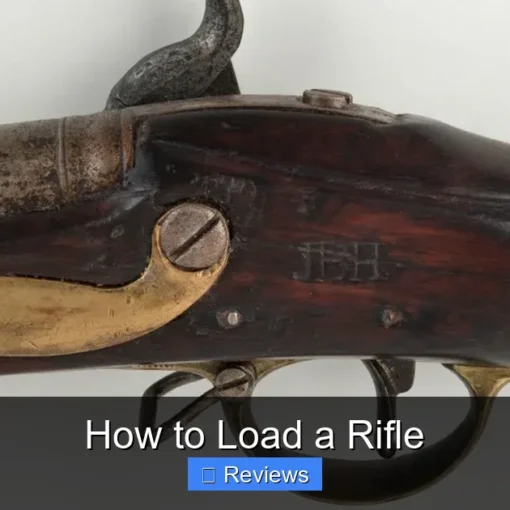
You’ll typically see a prominent hammer and a nipple on the right side of the lock plate. If a rifle has a flintlock mechanism (a striking hammer with a piece of flint clamping down onto a frizzen), it’s almost certainly pre-Civil War, though some very early war units might have temporarily used older flintlock conversions.
Caliber: What Size Bullet Did It Shoot?
Caliber refers to the internal diameter of the barrel and, consequently, the size of the bullet it fires. For Civil War rifles, two calibers dominate:
- .58 Caliber: This was the standard caliber for the primary Union infantry rifle, the Springfield Model 1861/1863 rifle-musket. Many Confederate copies also used this caliber, aiming for ammunition compatibility.
- .577 Caliber: This was the standard for the British Enfield rifle-muskets, which were heavily imported by both sides, especially the Confederacy.
Other calibers exist, particularly in breech-loading carbines or repeating rifles (like the .52 Spencer or .44 Henry), but if you’re looking at a standard rifle-musket, it’s likely .58 or .577. Measuring the bore can give you a clue, but identifying manufacturer markings is more definitive.
Rifling: The Spin for Accuracy
Most Civil War military long arms were **rifled**, meaning the inside of the barrel had spiral grooves. These grooves impart a spin on the bullet, stabilizing it in flight and dramatically increasing accuracy and effective range compared to smoothbore muskets. If the barrel is smooth inside, it’s likely an older smoothbore musket, perhaps converted to percussion, or a civilian fowling piece. Civil War rifles almost universally featured rifling.
Spotting Union Stalwarts: Popular Rifles of the North
The Union had a more robust industrial base and relied heavily on federally-produced or domestically manufactured rifles. When trying to identify Civil War rifles used by the North, you’ll primarily encounter these well-known models:
The Iconic Springfield Rifle-Musket
The **Springfield Model 1861** and its subsequent improved variants (Model 1863 Type I and Type II) were the backbone of the Union infantry.
- Key Features:
- Muzzle-loading, single-shot, percussion lock.
- .58 caliber.
- Approximately 56 inches long with a 40-inch barrel.
- Three barrel bands, usually spring-retained.
- Lock plate typically marked “U.S.” with an eagle, “SPRINGFIELD” (or other contractor name like “COLT”), and a date (e.g., “1861”, “1863”).
- Nipple protector on a chain often present.
- Three-leaf rear sight.
- Identification Tip: Look for the “US” and eagle motif on the lock plate, along with the date. The overall sleek profile and three barrel bands are strong indicators. Many private contractors also produced Springfield-pattern rifles under license; their names would appear on the lock plate instead of “Springfield.”
Sharps Rifles: Breech-Loading Innovations
While not as common for standard infantry, Sharps rifles and carbines were prized for their innovative **breech-loading design**, allowing faster reloading. They were heavily used by cavalry, sharpshooters, and specialized units.
- Key Features:
- Falling-block action, operated by a lever that doubles as a trigger guard.
- Often .52 caliber.
- Distinctive mechanism where the block lowers to insert a cartridge.
- Markings typically include “SHARPS PATENT” and “C. SHARPS RIFLE MFG. CO.” on the tang or receiver.
- Carbines are shorter, making them easier to handle on horseback.
- Identification Tip: The unique lever-action falling block is unmistakable. If you see this mechanism, you’re likely looking at a Sharps, especially if it’s stamped with the company name.
Spencer Repeating Rifles: The Seven-Shot Wonder
The **Spencer Repeating Rifle** was another significant technological leap, offering a seven-shot tubular magazine in the buttstock. Issued later in the war, it was highly valued for its rapid-fire capability.
- Key Features:
- Lever-action, repeating rifle.
- .56-56 Spencer rimfire cartridge.
- Tubular magazine accessed via a trapdoor in the buttplate.
- “SPENCER REPEATING RIFLE CO. BOSTON, MASS. PAT’D MARCH 6, 1860” typically found on the receiver or barrel.
- Identification Tip: The combination of lever action and the distinctive buttstock magazine (often with a “Blakeslee” quick loader still present) immediately points to a Spencer.
Decoding Confederate Arms: Rifles of the South
The Confederacy faced significant challenges in arming its troops, relying on a mix of captured Union weapons, imported foreign arms, and domestically produced copies. When you aim to identify Civil War rifles from the Southern perspective, you’ll see more variety and often, evidence of wartime expediency.
The British Enfield P-1853 Rifle-Musket
The **Enfield Pattern 1853** was arguably the most common rifle-musket on both sides, with vast numbers imported by the Confederacy.
- Key Features:
- Muzzle-loading, single-shot, percussion lock.
- .577 caliber.
- Similar in length to the Springfield (approximately 55 inches long with a 39-inch barrel).
- Three barrel bands, often screw-retained (unlike the Springfield’s spring clips).
- Lock plate typically marked “ENFIELD” with a crown and a date, or “TOWER” (for Tower of London, a major proof house).
- Graduated rear sight, often longer than the Springfield’s three-leaf sight.
- Ramrod often has a prominent “cup” or “swell” near the tip for easier bullet seating.
- Identification Tip: Look for the “ENFIELD” or “TOWER” mark, the .577 caliber, and particularly the screw-retained barrel bands. The longer, graduated rear sight is also a good clue.
Richmond Rifle-Musket: Confederate Production
The **Richmond Rifle-Musket** was the most prolific Confederate-made infantry rifle, essentially a copy of the U.S. Model 1855/1861 Springfield.
- Key Features:
- Muzzle-loading, single-shot, percussion lock.
- .58 caliber.
- Often cruder finish than Union Springfields due to wartime material shortages and less refined manufacturing.
- Lock plate marked “C.S. RICHMOND, VA.” with a date (e.g., “1862”).
- Hammer often has a distinct “hump” or flattened profile different from the Springfield.
- Barrel bands are usually plain and may be screw-retained or friction-fit, sometimes lacking springs.
- Identification Tip: The “C.S. RICHMOND, VA.” marking is the clearest sign. Also, look for signs of less refined production, such as tool marks, less polished surfaces, and slight variations in hardware.
Austrian Lorenz Rifle
Another significant foreign import, especially for the Confederacy, was the **Austrian Lorenz Rifle**.
- Key Features:
- Muzzle-loading, single-shot, percussion lock.
- Originally .54 caliber, but many were rebored to .58 caliber for ammunition commonality.
- Distinctive “faceted” barrel (octagon at the breech, transitioning to round).
- Back-action lock plate (the mainspring is located behind the hammer rather than in front).
- Often features a small, unusual long-range rear sight.
- Identification Tip: The faceted barrel and the back-action lock are the most immediate visual cues for a Lorenz.
Beyond the Barrel: Markings, Condition, and Authenticity
While knowing specific models is crucial, a deeper dive into the nuances of markings, overall condition, and the importance of authenticity will significantly improve your ability to identify Civil War rifles.
Decoding the Markings
Markings are perhaps the most critical element in identifying Civil War rifles. Always look for:
- Manufacturer Name: “Springfield,” “Colt,” “Sharps,” “Spencer,” “Enfield,” “Tower,” “Richmond,” etc.
- Dates: Often found on the lock plate or barrel. This helps place the rifle within the war period.
- U.S. or C.S. Markings: “U.S.” or an eagle stamp indicates Union issue. “C.S.” (Confederate States) or “C.S.A.” (Confederate States of America) are rare but definitive for Confederate arms.
- Inspector’s Marks: Small initials or stamps (e.g., “V P” over an eagle for proof marks, “H” for inspection) often appear on the barrel or stock. These indicate military acceptance.
- Serial Numbers: Some rifles, especially repeaters and breech-loaders, had serial numbers. These can sometimes be used to trace production batches or specific units.
The Importance of Originality
Many older firearms have been repaired, modified, or had parts replaced over their long lifespan. To accurately identify Civil War rifles, look for:
- Matching Parts: Are the lock plate, barrel, and stock from the same period? Are they numbered similarly if applicable?
- Original Finish: Original bluing or browning on metal, and the original oil finish on wood, are highly desirable. Be wary of re-blued parts or refinished stocks, which can detract significantly from value.
- Repairs and Modifications: Period repairs are part of a rifle’s history, but extensive or modern repairs might indicate a “franken-gun.”
Beware of Reproductions and Fakes
The popularity of Civil War history means there are many reproductions on the market, some of which can be quite convincing.
- Modern Reproductions: Companies like Armi Sport, Euroarms, and Uberti produce excellent quality firing reproductions, often marked with their own names and modern proof marks. These are great for re-enactors but are not original Civil War rifles.
- Fakes: Less scrupulous individuals might try to “age” a reproduction or add fake markings to increase value. Always compare markings against known authentic examples. Look for crisp, uneven stamping, and wear that doesn’t match the purported age.
Caring for Your Piece of History
Once you’ve managed to identify Civil War rifles in your possession, understanding how to care for them is essential. These aren’t just old guns; they are fragile historical artifacts.
- Proper Storage: Store in a climate-controlled environment to prevent rust and wood warping. Avoid direct sunlight.
- Handling: Always handle with clean hands. Fingerprints can leave corrosive oils.
- Cleaning: For antique firearms, less is often more. Gently wipe down metal with an oiled cloth. Do NOT attempt to aggressively clean or restore finishes yourself, as you could damage historical value. Consult an expert for proper preservation techniques.
- Documentation: If your rifle has a known history or “provenance” (e.g., passed down through a family, linked to a specific soldier), document it thoroughly. This adds immensely to its historical significance and value.
Identifying Civil War rifles is a captivating blend of history, forensics, and appreciation for craftsmanship. By understanding the core characteristics, familiarizing yourself with major Union and Confederate models, meticulously examining markings, and learning to spot originality, you can confidently identify these profound links to America’s past. Each rifle holds a piece of a story, waiting for you to uncover it. Happy hunting, and may your historical detective work be fruitful!
🎥 Related Video: Enfield Pattern 1853 Rifle – The Confederate Army’s Primary Weapon Weapons of the American Civil War
📺 See U in History / Mythology
Enfield Pattern 1853 Rifle – The Confederate Army’s Primary Weapon – Weapons of the American Civil War – Confederate Army If …
Frequently Asked Questions
What were the main types of firearms used during the Civil War?
The main types of firearms during the Civil War were single-shot rifle-muskets (like the Springfield and Enfield), carbines (shorter rifles for cavalry), revolvers (for officers and cavalry), and a smaller number of advanced repeating rifles. Smoothbore muskets were largely phased out but still saw some use early in the war.
How can I identify a Confederate-made rifle?
Confederate-made rifles often have specific markings such as “C.S. RICHMOND, VA.” or “COOK & BROTHER”. They might also exhibit a somewhat cruder finish compared to Union arms due to wartime production limitations, and some models like the Austrian Lorenz have distinctive features such as a faceted barrel or back-action lock.
What is the significance of the .58 caliber for Civil War rifles?
The .58 caliber was significant because it was the standard for the U.S. Army’s primary rifle-musket, the Springfield Model 1861. This standardization allowed for easier ammunition supply and interchangeability among Union forces, and many Confederate arms were also produced in or converted to this caliber.
Are all Civil War-era rifles rifled?
Most military-issue long arms by the time of the Civil War were indeed rifled, meaning their barrels had spiral grooves to impart spin on the bullet for greater accuracy. However, some older smoothbore muskets, particularly those converted from flintlock to percussion, were still in limited use, especially early in the war or by militia units.
What should I do if I find a Civil War rifle?
If you find a Civil War rifle, first ensure it is safe by having a qualified gunsmith check it. Then, research its markings and features using resources like this guide. If you believe it’s authentic and valuable, consider consulting an antique firearms appraiser or a historical society for expert identification and advice on preservation.
How do I differentiate between a real Civil War rifle and a modern reproduction?
To differentiate, examine the markings carefully: reproductions will often have modern manufacturer names (e.g., “Armi Sport”) and modern proof marks, sometimes obscured to look old. Look for signs of age-appropriate wear and patina, and study construction details; modern reproductions are typically made with more precise manufacturing methods and materials than 19th-century firearms.