Learning how to grip a rifle correctly is a foundational skill for any shooter, significantly impacting accuracy, recoil management, and overall safety. A proper grip ensures consistent shot placement, reduces fatigue, and allows for quicker, more controlled follow-up shots. This comprehensive guide will walk you through the nuances of both strong and support hand placement, helping you master this essential technique.
How to Grip a Rifle
Ever wonder what separates a good shot from a great one? While fancy optics and custom parts certainly help, one of the most fundamental yet often overlooked aspects of accurate shooting is incredibly simple: how you grip your rifle. It’s not just about holding onto it; it’s about forming a seamless connection between you and the firearm, transforming it into an extension of your body. A proper rifle grip is the bedrock upon which consistency, control, and confidence are built.
Many new shooters, and even some experienced ones, tend to adopt a “grab-and-go” approach, focusing more on getting rounds downrange than on optimizing their connection with the rifle. But trust me, once you understand the principles behind a truly effective grip, you’ll feel a profound difference in your shooting. You’ll notice tighter groups, smoother recoil management, and a general sense of being more in command of your firearm. This isn’t just theory; it’s a practical skill that directly translates to better performance, whether you’re at the range, in a competition, or out in the field.
So, if you’re ready to elevate your shooting game, you’ve come to the right place. This comprehensive guide will break down everything you need to know about how to grip a rifle, covering both your strong (dominant) and support (non-dominant) hands, discussing the critical interplay with stance and stock weld, and offering practical tips to help you find your perfect hold. Let’s dive in and unlock the secret to a more stable, accurate, and enjoyable shooting experience.
Key Takeaways
- Strong Hand Placement is Crucial: Position your strong hand high up on the pistol grip, ensuring the web of your hand is firmly seated to maximize control and leverage over the rifle.
- Isolate Your Trigger Finger: The trigger finger should operate independently, with the remaining fingers wrapped firmly around the grip without excessive tension.
- Support Hand Varies by Discipline: Your non-dominant hand might employ a “C-clamp” for aggressive control, a traditional hold on the handguard, or even support the magazine well, depending on the rifle and shooting style.
- Grip Pressure is a Balancing Act: Apply firm, consistent pressure – enough to control the rifle, but not so much that it induces tremors or fatigue. Avoid the “death grip.”
- Integrate Grip with Stance and Stock Weld: A proper grip works in harmony with a stable stance and a consistent cheek weld, forming a solid shooting platform that enhances accuracy and recoil absorption.
- Adapt Your Grip: Different rifle types (ARs vs. hunting rifles) and shooting positions (standing vs. prone) require slight adjustments to your grip for optimal performance and comfort.
- Practice and Experiment: Finding your perfect grip isn’t a one-size-fits-all. Regular practice and a willingness to experiment with subtle changes will help you discover what works best for you.
Quick Answers to Common Questions
What is the most important part of my strong hand grip?
The most important part is getting the web of your hand as high as possible into the pistol grip or small of the stock. This provides maximum leverage and control over the rifle.
Should my strong hand grip be a “death grip”?
No, a “death grip” (excessive tension) leads to muscle fatigue and tremors. Your strong hand grip should be firm and consistent enough for control, but not so tight that it causes shaking or discomfort.
What is the C-clamp grip, and when should I use it?
The C-clamp grip involves extending your support arm forward with your thumb over the top of the handguard, creating a “C” shape. It’s often used with modern sporting rifles for aggressive control, faster target transitions, and better recoil management.
How does my grip affect recoil management?
A proper grip, especially with both hands working together, allows you to absorb and redirect recoil more effectively, keeping the rifle on target or bringing it back quickly for follow-up shots. A weak grip makes the rifle jump excessively.
Is there one universal best way to grip a rifle?
No, there isn’t a single universal “best” grip. The ideal grip can vary based on the rifle type (e.g., AR vs. traditional hunting rifle), shooting position, and individual body mechanics. Experimentation and practice are key to finding what works best for you.
📑 Table of Contents
Why Your Grip Matters So Much
Before we get into the “how,” let’s spend a moment understanding the “why.” You might think, “It’s just a handle, right?” Not quite. Your grip is the primary interface between you and the rifle, and its quality dictates many crucial aspects of your shooting. Mastering how to grip a rifle is about more than just comfort; it’s about performance and safety.
Accuracy and Consistency
Imagine trying to write your name with a pen you can barely hold. Your handwriting would be messy and inconsistent, wouldn’t it? The same principle applies to shooting. A poor or inconsistent grip introduces instability and subtle movements that get amplified downrange. Even a tiny shift in your strong hand or a wobbly support hand can throw your shot off by inches or even feet at longer distances. A consistent, firm grip provides a stable platform, minimizing unwanted movement and ensuring that the rifle behaves predictably with every shot. This consistency is the foundation of accuracy.
Recoil Management and Follow-Up Shots
Rifles, especially larger calibers, generate significant recoil. How you grip a rifle directly impacts your ability to manage this energy. A proper grip allows you to absorb and redirect recoil effectively, keeping the rifle on target or bringing it back quickly for follow-up shots. A weak or incorrect grip can lead to the rifle jumping excessively, throwing off your aim, and making it harder to get back on target swiftly. This is particularly important in dynamic shooting situations where speed and precision are paramount.
Control and Safety
Ultimately, your grip is about control. A firm, confident grip gives you complete command over the firearm. This isn’t just for shooting; it’s for safe handling at all times. If you have a secure grip, you’re less likely to drop the rifle, lose control during movement, or accidentally point it in an unsafe direction. When you know how to grip a rifle properly, you enhance both your personal safety and that of those around you.
Reducing Fatigue and Increasing Comfort
Trying to compensate for a poor grip with excessive muscle tension is a recipe for fatigue. A well-executed grip, on the other hand, distributes the rifle’s weight and recoil forces more efficiently across your body. This reduces strain on individual muscles, allowing you to shoot longer, more comfortably, and with less physical exertion. When you’re comfortable, you’re more relaxed, and a relaxed shooter is a more accurate shooter.
The Fundamentals of Your Strong Hand (Dominant Hand)
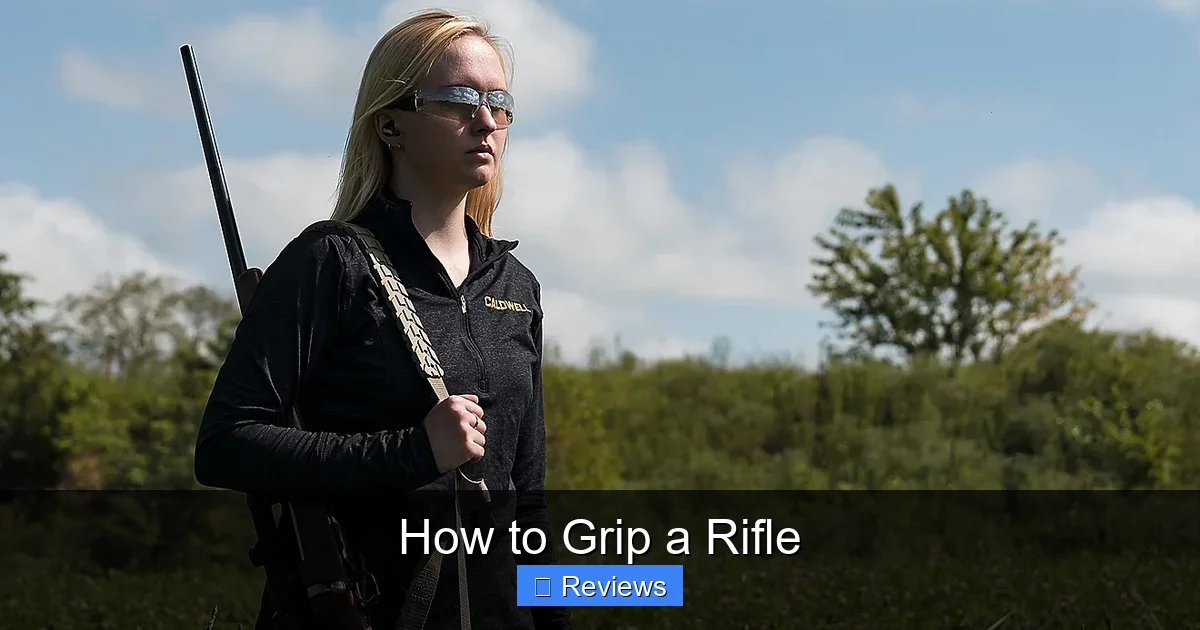
Visual guide about How to Grip a Rifle
Image source: academy.scene7.com
Your strong hand, or dominant hand, is the primary interface for operating the trigger and controlling the rifle’s direction. Getting this right is absolutely critical when learning how to grip a rifle.
The “Web” or “Pocket” Grip: High and Tight
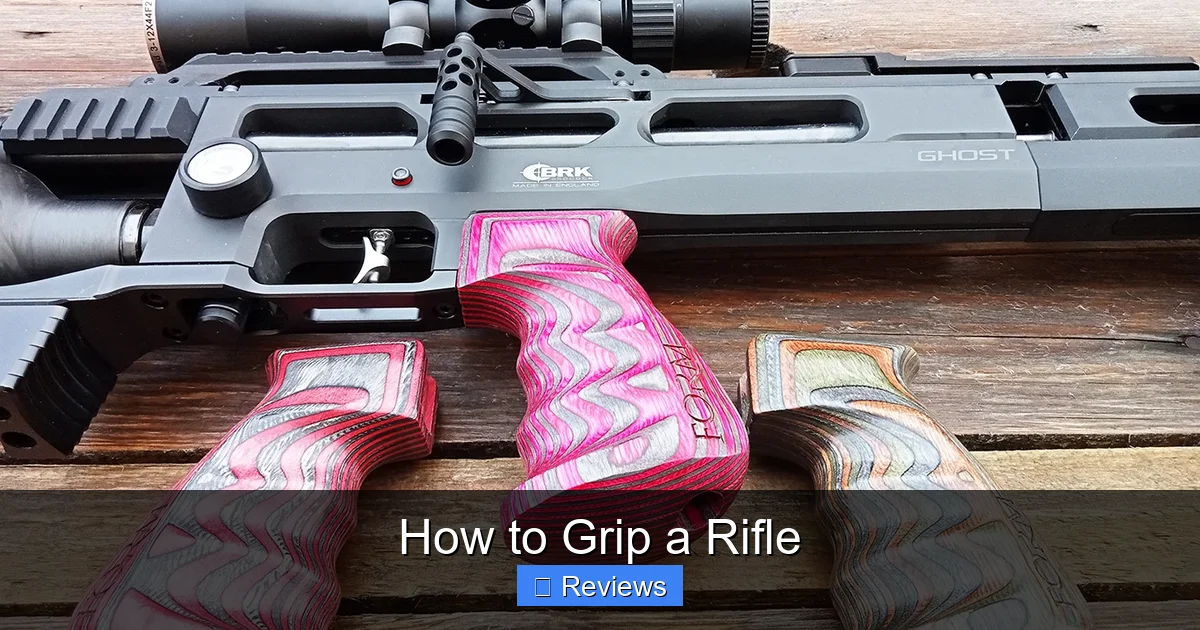
This is perhaps the most important aspect of your strong hand grip. You want to get the rifle’s pistol grip (or the small of the stock on a traditional rifle) as high as possible into the “web” of your hand – the fleshy area between your thumb and index finger. Think of it as sliding the grip deeply into that pocket.
Why high? Because it gives you maximum leverage over the rifle. The higher your hand is on the grip, the more direct control you have over the rifle’s movement, and the better positioned your trigger finger will be. If your hand is too low, the rifle will feel ‘floppy,’ making it harder to maintain a consistent point of aim and control recoil. This high grip helps anchor the rifle.
Finger Placement: Isolate the Trigger Finger
Once your hand is high on the grip, let’s talk about your fingers.
- Trigger Finger: This finger needs to operate independently. It should extend naturally forward, making contact with the trigger. The exact part of the finger that touches the trigger varies – some prefer the pad, others the first joint – but the key is that it should be able to press the trigger straight back without disturbing the rest of the rifle. The remaining fingers should not be squeezing the trigger finger against the grip.
- Remaining Fingers: Your middle, ring, and pinky fingers should wrap firmly around the pistol grip. Apply consistent, moderate pressure. You’re not trying to crush the grip, but you want enough tension to maintain control and prevent the rifle from shifting in your hand. Avoid a “death grip” – too much tension can lead to muscle tremors and fatigue, negatively impacting your accuracy. The goal is firm stability, not maximum squeeze.
Thumb Position: High, Low, or Wrap?
Your thumb’s position often generates a lot of discussion, and different styles work for different shooters and rifles.
- High Thumb: Common with modern sporting rifles (like AR-15s) with a straight wrist. The thumb rests along the receiver or even forward, sometimes pointing towards the target. This can provide added stability by pushing into the rifle, helping to drive it forward into the shoulder pocket.
- Low Thumb: The thumb wraps around the grip in a more traditional fashion, similar to how you’d hold a pistol. This is often more natural for rifles with more angled, traditional grips.
- Wrap-Around: The thumb wraps fully around the grip, meeting the tips of your fingers. This provides a very secure hold but might not be ideal for all rifle designs or trigger finger isolation.
The best thumb position is one that allows for maximum control without interfering with the trigger finger or creating undue tension. Experiment to see what feels most natural and provides the best stability for your particular rifle and hand size when learning how to grip a rifle.
Grip Pressure: Firm, Not Fatal
As mentioned, your strong hand grip should be firm, but not a white-knuckle squeeze. Think of it like holding a hammer when you’re about to drive a nail – you hold it securely, but you’re not trying to crush the handle. Too much pressure can cause your hand to shake, leading to what shooters call “sympathetic muscle tension” where other muscles tense up unnecessarily. Aim for consistent pressure that feels stable and comfortable without causing fatigue.
Mastering Your Support Hand (Non-Dominant Hand)
While your strong hand handles the trigger, your support hand plays an equally vital role in stability, balance, and recoil management. How you grip a rifle with your support hand can vary significantly depending on the rifle type, shooting position, and your personal preference.
The C-Clamp Grip: Aggressive Control
Popularized by tactical and competitive shooters, the C-clamp grip is aggressive and effective, especially on modern sporting rifles with extended handguards.
- Execution: Extend your support arm fully or nearly fully forward along the handguard. Your thumb wraps over the top of the handguard, creating a “C” shape, while your fingers grip the bottom.
- Benefits: This grip pulls the rifle back into your shoulder pocket and helps drive it forward, resisting muzzle rise. It offers excellent control for rapid target transitions and quick follow-up shots. It also places your arm in a natural position to absorb recoil.
- Considerations: It requires a rifle with a long enough handguard and can be tiring for sustained holds. It might not be practical for traditional hunting rifles.
Traditional Support Hand: Balance and Comfort
For many shooting disciplines and rifle types, a more traditional support hand grip is preferred.
- On the Handguard: Your support hand rests comfortably on the handguard. You can cup it from underneath, wrap your fingers around the sides, or simply let it rest. The key is to provide stable support without introducing tension.
- Magazine Well Grip: Some shooters find gripping the magazine well comfortable and stable, especially for shorter rifles or when a forward grip feels too extended. While effective, ensure you’re not inadvertently interfering with magazine function or creating an unstable leverage point.
- Under the Stock: For prone or bench shooting, your support hand might move further back, even under the stock, to adjust elevation or provide fine-tuned stability, sometimes by resting on a bag or monopod.
Forward vs. Rearward Placement: Impact on Balance
The position of your support hand along the handguard significantly impacts the rifle’s balance and your ability to control muzzle movement.
- Forward Placement: Moving your hand further forward generally gives you more leverage over the muzzle. This can help stabilize the rifle and reduce muzzle rise, making it easier for quick target acquisition. It’s often favored in dynamic shooting.
- Rearward Placement: A more rearward grip (closer to the receiver) can make the rifle feel lighter and more maneuverable, but you’ll have less leverage over the muzzle. This might be preferred for slower, more deliberate shots or when carrying the rifle.
Experiment with different positions to find the sweet spot that offers the best balance of stability and maneuverability for your shooting style.
Elbow Position: Tucked or Flared?
Your support arm’s elbow position also plays a role.
- Tucked In: Tucking your support elbow into your body creates a more compact and stable platform, often preferred for accuracy-focused shooting or when shooting from supported positions.
- Flared Out: Flaring your elbow out can allow for quicker transitions and a more athletic stance, common in competitive shooting. This can also help in absorbing recoil more directly.
Again, the “best” position depends on the context and your body mechanics. Find what provides you with the most stable and comfortable platform without compromising your natural point of aim. Remember, learning how to grip a rifle is a personal journey.
Integrating Grip with Stance and Stock Weld
Your grip doesn’t exist in isolation. It’s part of a larger system that includes your stance and how you shoulder the rifle. These elements must work in harmony to create a truly stable and repeatable shooting platform.
Stance Synergy: Building a Solid Foundation
Your stance is the foundation of your shooting. Whether you’re using an aggressive, bladed stance for dynamic shooting or a more squared-up stance for bench rest, your grip needs to complement it.
- Natural Point of Aim: Your grip, combined with your stance, should allow the rifle to naturally point towards your target without muscle strain. If you have to fight your body to align the sights, your grip or stance needs adjustment.
- Balance: A good grip contributes to overall body balance. You should feel stable and centered, able to absorb recoil and maintain your position without wobbling. Your support hand’s position, for example, directly affects the rifle’s balance and how it feels in your hands.
The Importance of Stock Weld: Consistent Cheek Contact
Your stock weld – the consistent contact of your cheekbone to the rifle’s stock – is paramount for accuracy. It ensures that your eye is in the exact same position behind the optic or iron sights for every single shot.
- Grip’s Role: Your strong hand grip, particularly how high it is on the pistol grip, influences how naturally the rifle comes up to your eye line. A properly high grip helps guide the rifle into that consistent cheek weld.
- Head Position: Avoid craning your neck or lifting your head to meet the sights. The rifle should come to you. Your grip should facilitate this natural alignment. If you’re struggling to get a consistent stock weld, re-evaluate your strong hand grip and perhaps your stance.
Shoulder Pocket Integration: Seating the Rifle Butt
The rifle butt should be firmly seated in the “pocket” of your shoulder – the soft tissue area where your shoulder meets your chest. This maximizes recoil absorption and prevents the buttstock from slipping.
- Strong Hand Influence: Your strong hand grip helps to drive the rifle into this shoulder pocket, ensuring a snug fit. A firm, forward pressure with your support hand (like with a C-clamp) further enhances this integration.
- Avoid the Collarbone: Never rest the buttstock on your collarbone or biceps; this will result in uncomfortable recoil and poor control.
Adapting Your Grip for Different Rifle Types and Shooting Positions
There’s no single “perfect” grip for every rifle or every situation. The best way to grip a rifle often involves subtle adaptations.
AR-Platform Rifles: Versatility and Aggression
AR-style rifles, with their inline stock design and pistol grips, lend themselves to more aggressive, upright stances and grips.
- Strong Hand: Typically a high grip, with the thumb either high along the receiver or wrapped, depending on preference and accessory placement (like safety selectors).
- Support Hand: Often a C-clamp on an extended handguard, allowing for maximal control and forward pressure. Vertical foregrips or angled foregrips are also common, providing a natural resting point and additional leverage.
Traditional Hunting Rifles: Natural Point of Aim
Bolt-action or lever-action hunting rifles often have more traditional stocks with a distinct pistol grip area.
- Strong Hand: A high web grip is still desired, ensuring the hand fills the grip comfortably. Thumb typically wraps around the small of the stock.
- Support Hand: Usually rests naturally on the fore-end, cupping it or wrapping the fingers around for support. The focus here is often on a relaxed, stable hold for precise, deliberate shots, rather than aggressive recoil management for rapid fire.
Pistol Caliber Carbines (PCCs): Fast and Flat
PCCs combine the maneuverability of a pistol with the stability of a carbine. Recoil is generally softer than rifle calibers, but the emphasis is often on speed and quick target transitions.
- Grip: Often mirrors AR-platform techniques – high strong hand, C-clamp or foregrip support hand – but with an added focus on driving the gun forward to minimize the already light recoil, keeping the sights flat.
Standing Position: Balance and Support
Shooting unsupported while standing demands the most from your grip and body mechanics.
- Strong Hand: Must maintain a strong, consistent hold to prevent the rifle from wobbling.
- Support Hand: Plays a critical role in balancing the rifle and creating a stable triangle with your body. Often, the support elbow is tucked or braced against the torso.
Prone/Bench Position: Maximizing Stability
When shooting from a prone position or off a bench, the goal is to eliminate as much human input (muscle tension) as possible.
- Strong Hand: Still firm, but often more relaxed. The focus shifts to precise trigger control, as the rifle’s weight is largely supported.
- Support Hand: Often becomes a means of fine-tuning elevation or stability, resting on sandbags, bipods, or a monopod. The “grip” here is more about gentle pressure and adjustment than active support.
Common Grip Mistakes and How to Fix Them
Even with the best intentions, it’s easy to fall into bad habits. Recognizing these common errors is the first step to correcting them and truly learning how to grip a rifle effectively.
The “Death Grip” (Too Much Tension)
This is one of the most prevalent mistakes. Squeezing the rifle with excessive force, especially with your strong hand.
- Problem: Leads to muscle tremors, fatigue, and can even pull your shots off target. It also makes it harder to isolate the trigger finger.
- Fix: Consciously relax your grip to a firm but comfortable level. Imagine you’re holding a raw egg – you want to hold it securely without crushing it. Practice dry firing, focusing solely on the sensation of a relaxed yet firm grip.
Low Grip on Strong Hand
Not getting the web of your strong hand high enough into the pistol grip.
- Problem: Reduces your leverage and control over the rifle, making it feel less stable and harder to manage recoil. It can also lead to an uncomfortable or inconsistent trigger finger placement.
- Fix: When shouldering the rifle, actively push the grip deep into the web of your hand. Think “high and tight.” Ensure there’s no gap between the top of your hand and the tang or backstrap of the grip.
Floppy Support Hand
A weak, inconsistent, or passive support hand.
- Problem: Leads to an unstable shooting platform, excessive muzzle movement, and poor recoil management. The rifle will feel like it’s “floating.”
- Fix: Engage your support hand. Whether it’s a C-clamp or a traditional hold, apply consistent, purposeful pressure to stabilize the rifle. Ensure your support arm is actively involved in creating a stable triangle with your body.
Inconsistent Grip
Changing your grip position or pressure between shots or shooting sessions.
- Problem: This is an accuracy killer. If your interface with the rifle changes, your point of impact will shift.
- Fix: Develop a repeatable process for gripping the rifle. Practice dry firing and live firing with the same grip every time. Pay attention to the subtle cues – where your fingers land, the pressure you apply, the feeling of the stock in your shoulder. Build muscle memory.
Ignoring Body Mechanics and Stance
Treating the grip as separate from the rest of your shooting form.
- Problem: A great grip can be undermined by a poor stance or inconsistent stock weld, leading to overall instability and discomfort.
- Fix: Always think of your grip in context. Does your grip allow you to achieve a consistent stock weld? Does it integrate smoothly with your stance to create a balanced, natural point of aim? If not, adjust the whole system, not just one part. Remember, how to grip a rifle is part of a larger picture.
Conclusion
Mastering how to grip a rifle is truly a game-changer. It’s one of those fundamental skills that, once learned and practiced, unlocks a whole new level of accuracy, control, and enjoyment in your shooting. From the high, firm hold of your strong hand to the supportive, stabilizing force of your non-dominant hand, every element works together to create a unified platform between you and your firearm.
Remember, there’s no single “perfect” grip that applies universally to every shooter, every rifle, and every situation. The journey to finding your ideal grip is personal and involves a bit of experimentation. Pay close attention to how the rifle feels, how it reacts to recoil, and most importantly, how consistently you can place your shots. Don’t be afraid to try different hand positions, thumb placements, and levels of pressure.
The key is consistency. Once you find a grip that feels stable, comfortable, and repeatable, practice it until it becomes second nature. Whether you’re a seasoned competitor, a passionate hunter, or a recreational shooter, dedicating time to perfect how you grip a rifle will undoubtedly lead to improved performance and a more confident, satisfying experience every time you head to the range. Happy shooting!
🎥 Related Video: How To Hold A Rifle
📺 Johnny Q
Frequently Asked Questions
How does a rifle grip improve accuracy?
A proper rifle grip improves accuracy by creating a more stable and consistent platform for the firearm. It minimizes unwanted movement, reduces muscle tension that can cause tremors, and ensures that the rifle points in the same direction shot after shot, leading to tighter groupings.
Should my grip change between different shooting positions?
Yes, your grip should often adapt slightly between different shooting positions like standing, prone, or bench. For example, in prone, your support hand might primarily aid elevation, while standing requires more active support and balance from both hands.
What’s the difference between a strong hand and a support hand grip?
The strong (dominant) hand primarily operates the trigger and provides the main control over the rifle’s back end. The support (non-dominant) hand provides stability, balances the rifle, and helps manage recoil, typically by gripping the handguard or fore-end.
How tight should my strong hand grip be on a rifle?
Your strong hand grip should be firm enough to maintain control and prevent the rifle from shifting, but not so tight that it causes muscle tension or tremors. Think of it as a consistent, comfortable squeeze rather than a white-knuckle “death grip.”
Does the type of rifle matter when considering how to grip it?
Absolutely. The type of rifle significantly influences the ideal grip. Modern sporting rifles like ARs often allow for more aggressive grips (e.g., C-clamp) due to their design, while traditional hunting rifles usually favor a more relaxed, natural hold on the fore-end.
How can I practice improving my rifle grip without live firing?
You can effectively improve your rifle grip through dry firing practice. Focus on consistent hand placement, proper finger isolation, and maintaining a firm yet relaxed grip. Practice shouldering the rifle, acquiring a sight picture, and pressing the trigger, paying close attention to your grip mechanics each time.