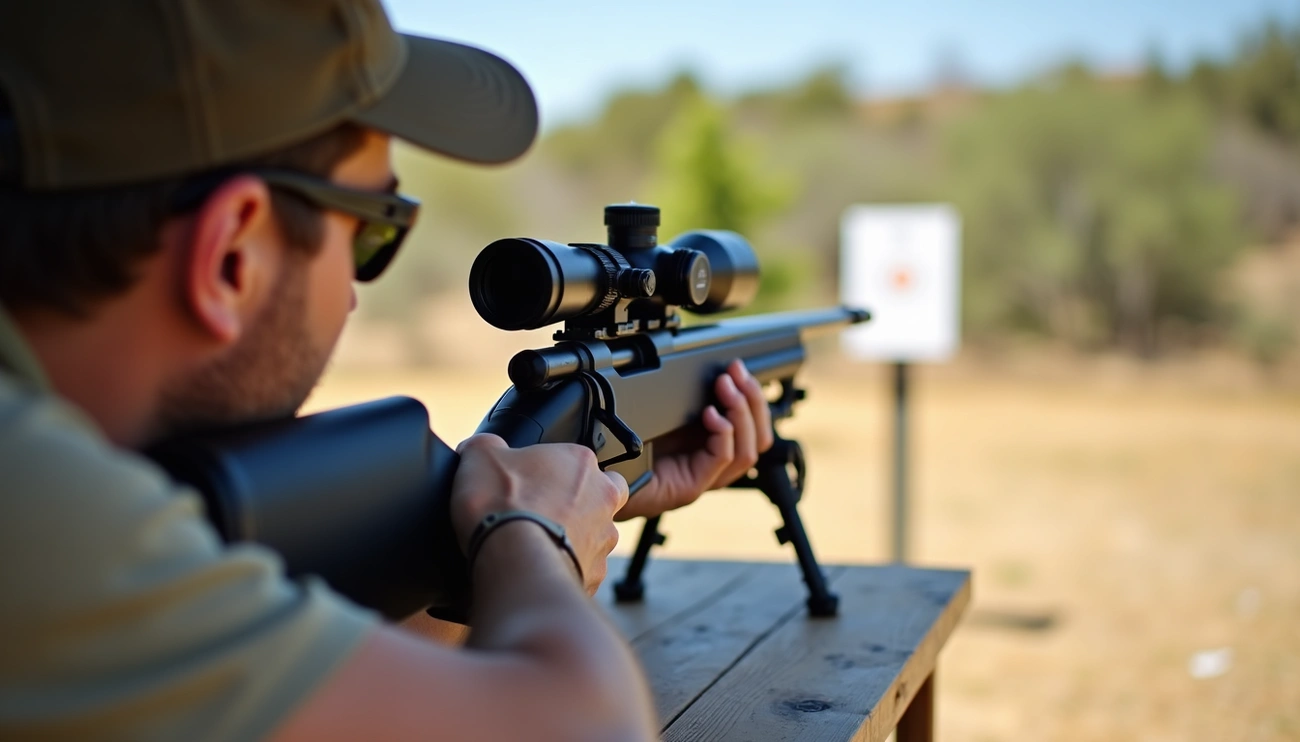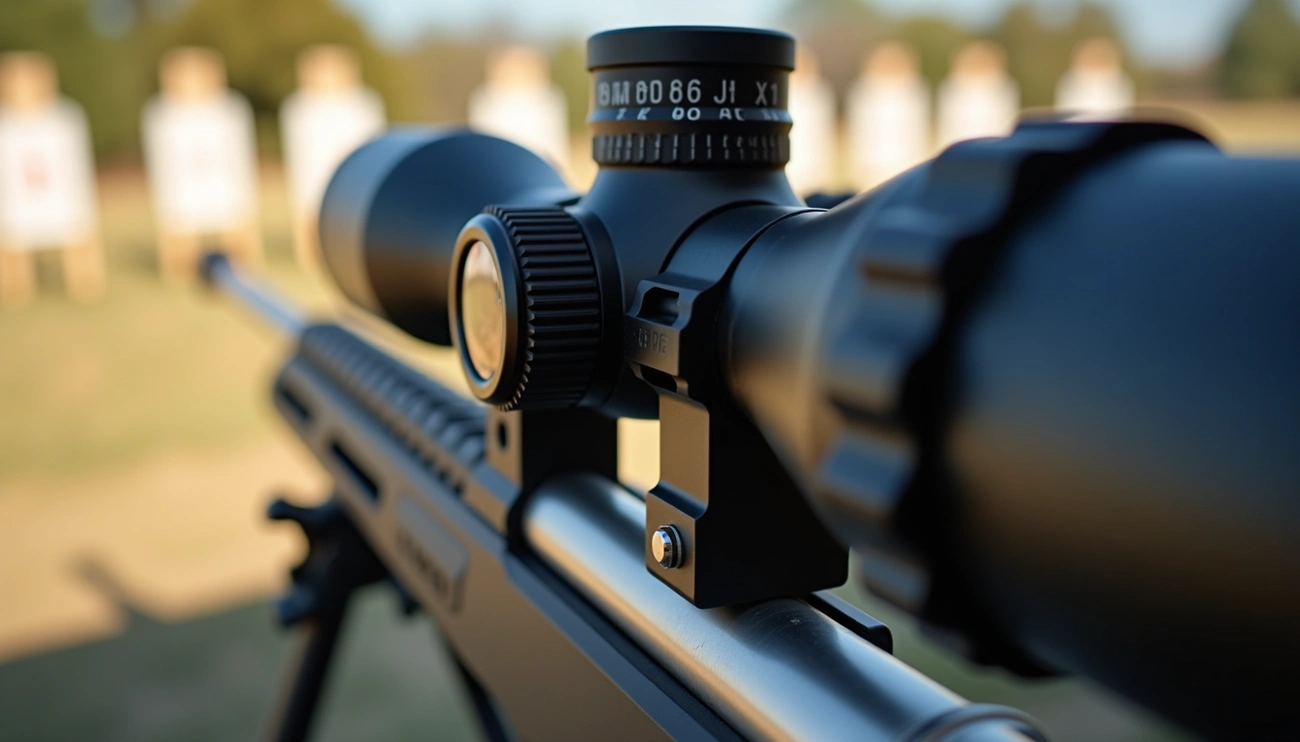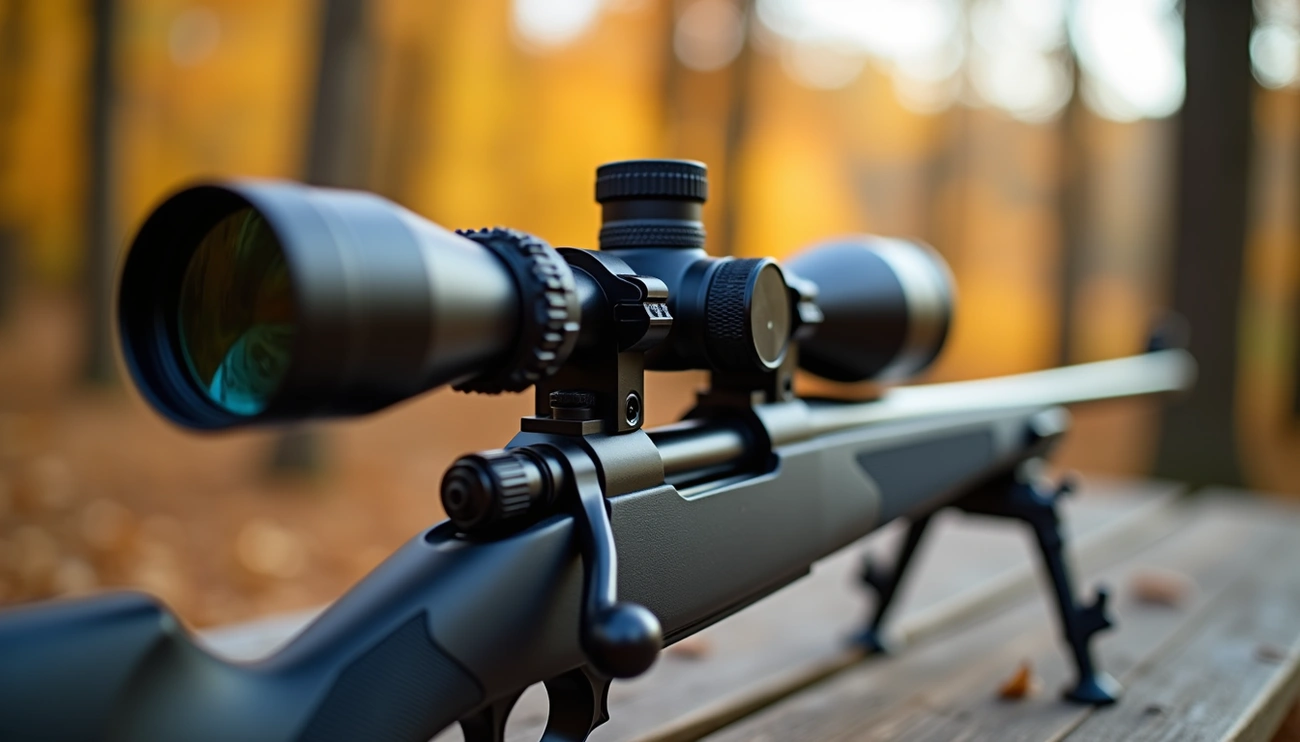
Choose a rifle scope for deer hunting by prioritizing low-light clarity, durability, and versatile magnification. A 3-9x40mm or 3-9x50mm scope is the standard choice. A 3-9x zoom balances close shots in thick cover and longer shots in open fields, while a 30mm tube improves dawn and dusk light transmission.”
Understand the Basics of Rifle Scopes
Understanding rifle scope basics is essential before investing in an optic for your deer rifle. The difference between a successful hunt and going home empty-handed often comes down to the quality and suitability of your scope for the hunting environment.
What is magnification and how it works
Magnification represents how many times larger an object appears compared to what your naked eye sees. When you see “3x” on a scope, it means the target appears three times closer than without magnification. Scope magnification is typically displayed as numbers like “3-9×40” – the first numbers (3-9) indicate the magnification range, while the “40” represents the objective lens diameter in millimeters.
There are two types of magnification: fixed and variable. Fixed scopes provide a single, unchangeable magnification (typically 2.5x, 4x, or 6x), offering a sharper image and lower price point. Variable scopes, alternatively, allow you to adjust magnification within a range, providing flexibility for different shooting scenarios.
The zoom ratio determines how broad your magnification range can be. For example, with a 3:1 zoom ratio, the highest magnification can only be three times greater than the lowest (like in 3-9x, 4-12x, or 5-15x scopes).
What size scope for deer hunting is ideal
For deer hunting, the ideal scope size depends primarily on your hunting environment:
- Low magnification (1-4x or 2-7x): Perfect for close-range hunting in thick timber, providing a wider field of view and faster target acquisition
- Mid-range magnification (3-9x or 4-12x): Most versatile for typical deer hunting scenarios from 50-500 yards, making them ideal for hunters who hunt varied terrain
- High magnification (5-25x and above): Best suited for open plains and long-range hunting, but with a narrower field of view that makes them poor choices for shots under 200 yards
For most deer hunters who shoot between 50 and 500 yards, a 3-15 magnification range is generally sufficient. Remember that more magnification isn’t always better. Higher magnification narrows your field of view and amplifies any movement, making it harder to stay on target.
How objective lens affects light and clarity
The objective lens (the front lens facing the target) determines how much light enters your scope. Larger objective lenses don’t actually “gather” more light as commonly believed – they transmit it. The objective lens size impacts three key aspects:
- Light transmission: Contrary to popular belief, a larger tube diameter (30mm vs. 1-inch) doesn’t increase light transmission; it’s the objective lens size and quality that matter.
- Exit pupil: This determines image brightness and is calculated by dividing the objective lens diameter by the magnification. For example, a 50mm objective at 10x creates a 5mm exit pupil. Since the human eye’s pupil dilates to about 7mm maximum in very low light, an exit pupil approaching this size provides optimal brightness at dawn and dusk.
- Field of view: Lower magnification provides a wider field of view. For example, at 1x you might see 100 feet at 100 yards, but at 10x this narrows to just 8 feet.
The quality of glass and coatings on the lenses fundamentally affects clarity more than size alone. For hunting in low light conditions, look for fully multi-coated lenses that reduce glare and maximize light transmission.
Choose the Right Magnification for Your Hunt
Selecting the right magnification for your hunting environment makes the difference between a successful harvest and a missed opportunity. Learning how to choose a rifle scope for deer hunting requires matching your optics to the terrain you’ll be hunting.
Best magnification for deer hunting in dense woods
In dense forests and woodlands where visibility is limited, lower magnification provides a crucial advantage. For these environments, scopes in the range of 2-7x or 3-9x are ideal. This lower power offers a significantly wider field of view, which helps you locate and track deer moving through thick cover.
The classic 3-9×40 has earned its reputation as perhaps the best scope for deer hunting in woodlands primarily because its 3x setting provides an excellent field of view (approximately 34 feet at 100 yards). Additionally, some hunters prefer the newer 2.5-10×42 options that provide even more versatility with an extremely wide FOV (35 feet) at the low end.
For tree stand hunters working in dense eastern forests, a 2.5-10mm scope gives you the perfect shooting window from 15-25 yards that can adjust to see at 80-100 yards. Furthermore, keeping your scope set on the lowest magnification until needed ensures you won’t miss close, surprise encounters.
Magnification for open field or long-range shots
Open terrain demands different optical capabilities. For western hunting or open fields where shots may extend beyond 200 yards, scopes with 4-12x or 4-16x magnification range are substantially more effective. These higher powers allow precise aiming at distance without sacrificing too much field of view.
Midwestern hunters typically benefit from the classic 3-9x, 4-12x, or 2.5-10x magnification ranges. Conversely, western big game hunters might prefer 4-16x, 6-24x or ranges in between, especially if they need long-range capability.
One practical rule of thumb: you only need enough magnification to see your target clearly. For hunting around 100 yards, 1-4×32 scopes work perfectly, whereas 200+ yard shots might require 12x or 14x magnification in open fields.
Why more magnification isn’t always better
Despite what marketing might suggest, excessive magnification often creates more problems than it solves. Here’s why:
- Field of view dramatically decreases as magnification increases:
- At 1x: approximately 100 feet visible at 100 yards
- At 6x: only 18 feet visible
- At 10x: merely 8 feet visible
This narrowed field of view makes it extremely difficult to locate deer, especially in dynamic hunting situations.
High magnification amplifies every tiny movement from your breathing, heartbeat, and muscle contractions, making the crosshairs jump dramatically. Consequently, it’s often easier to hold steady with a 4x scope than one cranked to 24x.
A scope with 6X maximum magnification provides enough magnification for most reasonable hunting shots in the hands of an experienced shooter. Oftentimes, hunters miss close targets entirely with high-powered scopes because they see only part of the animal, unable to determine what they’re aiming at.
Compare Reticle Types and Their Uses
Reticles serve as your aiming system and can dramatically impact your hunting success. The right reticle choice is just as crucial as proper magnification when deciding how to choose a rifle scope for deer hunting.
Duplex vs. BDC vs. MOA reticles
The duplex reticle remains the most popular choice among deer hunters due to its simplicity and effectiveness. Featuring thicker outer bars that naturally draw your eye to the fine center crosshairs, the duplex provides both quick target acquisition and precise aiming in a single design. This reticle excels in woodland environments where shot opportunities often come quickly.
Bullet Drop Compensating (BDC) reticles offer additional aiming points below the center crosshair specifically designed to compensate for bullet drop at extended ranges. Unlike a basic duplex, BDC reticles let you hold directly on target at various distances without adjusting turrets. Typically, each dot below center might represent 100-yard increments, starting from your zero distance. Yet it’s worth noting that BDC reticles are calibrated for specific cartridges and velocities—they aren’t universally accurate across all ammunition types.
MOA (Minute of Angle) reticles provide a more technical approach with precise measurement references. These reticles feature graduation marks in 1 MOA increments (approximately 1.047 inches at 100 yards), allowing for methodical adjustments. The Christmas Tree style MOA reticles offer markings for both elevation and windage corrections, making them particularly valuable for longer-range deer hunting in open terrain.
When to use illuminated reticles
Illuminated reticles prove invaluable during dawn and dusk—prime deer movement times when black reticles often disappear against dark backgrounds. They’re particularly effective when hunting dark-colored deer against shadowy backdrops or in dense timber where visibility is limited. Indeed, many experienced hunters consider illuminated reticles essential for ethical shooting in low-light conditions.
Modern illuminated reticles typically feature adjustable brightness settings that allow precise customization based on ambient light. The ideal setting provides just enough illumination to see the reticle clearly without overpowering your target or compromising your natural night vision.
How reticles affect aiming and accuracy
Your reticle choice fundamentally impacts both target acquisition speed and shooting precision. Simpler reticles like the duplex promote faster target engagement—crucial for close-range shots in dense woods. Conversely, more complex reticles with reference points facilitate precise holds for wind and elevation at longer ranges.
First focal plane (FFP) reticles maintain consistent measurements regardless of magnification setting, whereas second focal plane (SFP) reticles only provide accurate measurements at specific magnifications (typically the highest setting). This distinction matters particularly when using BDC or MOA reticles for holdover calculations.
The ultimate reticle choice depends on your hunting environment, typical shooting distances, and personal preference. As with all aspects of choosing the best scope for deer hunting, match your reticle to your specific hunting scenario.
Evaluate Build Quality and Durability
The physical construction of your scope often determines your hunting success in harsh conditions. A scope’s durability directly influences its performance and longevity, ensuring it withstands rigorous use without compromising accuracy.
What to look for in a rifle scope build
Most rifle scopes feature a 1-inch tube diameter, though some European models use 30mm tubes. The larger tube size offers enhanced durability and a larger range of windage and elevation adjustments—ideal for hunters who need precise adjustments in changing environments.
High-quality materials are crucial for longevity. Premium scopes typically use aircraft-grade aluminum, which balances strength and weight effectively. Internal components made from stainless steel or brass resist deformation under recoil. Moreover, the overall construction should feel solid, with turrets that provide positive, tactile clicks.
One often overlooked factor: simpler scopes with fewer moving parts tend to be more reliable. Fixed-power scopes, for instance, typically outlast variable-power models with more complex internals.
Weatherproofing and fog resistance
Hunting often means facing unpredictable weather, making weatherproofing essential. Look for these critical features:
- O-ring seals that prevent moisture, dust, and debris from entering
- Gas purging with nitrogen or argon that eliminates internal fogging
- Quality lens coatings that shed water and resist scratches
For deer hunters braving dawn or dusk hunts, fog-proof scopes are non-negotiable. When moving between environments with different temperatures, internal fogging can ruin shot opportunities. Gas-purged scopes maintain clear views despite temperature fluctuations.
Weight and balance considerations
A scope’s weight affects both carrying comfort and shooting stability. Larger objective lenses and variable power scopes tend to be heavier—something to consider for long treks. Accordingly, if you plan extended wilderness hunts, a lightweight, fixed-power scope may better serve your needs.
The balance point matters equally. Front-heavy rifles with bulky scopes tend to “hang” on target better when shooting offhand, potentially improving accuracy in field positions. Nonetheless, excessive front weight makes the rifle difficult to carry and slower to bring to the ready.
Ultimately, choose a scope that complements your rifle’s handling characteristics without sacrificing durability or optical performance.
Balance Budget with Performance
Finding the perfect deer hunting scope means striking a balance between what you can afford and what you need in the field. The days when quality rifles cost $300 are long gone, yet finding an excellent scope within a reasonable budget remains possible.
Best scope for deer hunting under $300
The Vortex Diamondback 3-9×40 stands out as an exceptional value at around $250. Despite its affordable price tag, it delivers decent resolution, good color fidelity, and surprisingly effective low-light performance. This scope is particularly popular among whitetail hunters in eastern and southern regions.
Another standout performer, the Burris Fullfield IV, offers consistent performance across all testing categories without excelling in any single area. Its rock-solid tracking means it returns to zero reliably after adjustment. For hunters needing illumination, the Hawke Vantage provides an illuminated reticle plus excellent warranty coverage for under $300.
When to invest in premium optics
Invest more primarily when hunting in challenging light conditions or when extreme durability is required. Premium glass genuinely makes a difference at dawn and dusk—prime deer movement times. As one hunter reported, “I learned the hard way about cheap scopes when I whiffed on a bruiser buck last December”.
For most deer hunters, a $500 scope will provide all the performance needed. Yet those requiring excellent low-light capability or taking shots beyond 400 yards might benefit from higher-end options. Ultimately, match your investment to your hunting environment and shooting distances.
Lifetime warranties and brand support
Warranty protection has become the industry standard among reputable manufacturers. Leupold’s legendary warranty covers performance issues regardless of ownership history—no proof of purchase required. Likewise, Vortex backs their products with an unlimited, transferable warranty that even covers accidental damage.
Hawke offers their “No-Fault Lifetime Warranty” covering repairs at no charge regardless of how damage occurred. These comprehensive warranties reflect manufacturer confidence in their products and provide peace of mind for your investment.
Conclusion
Selecting the perfect rifle scope fundamentally changes your deer hunting experience. After considering all factors, most hunters find that matching their optic to their specific hunting environment yields the best results. Though fancy features and high prices might catch your eye, practical considerations should guide your final decision.
Remember that the best magnification for deer hunting depends on your terrain. Woodland hunters benefit greatly from 2-7x or 3-9x scopes with wider fields of view, while open-field hunters might need 4-12x or higher for longer shots. Additionally, simpler reticles like the duplex work effectively for quick shots in dense cover, whereas BDC or MOA reticles serve better for calculated long-range shooting.